2026 UK Trades: Defeat No-Shows with Bulletproof Digital Evidence
Jump To...
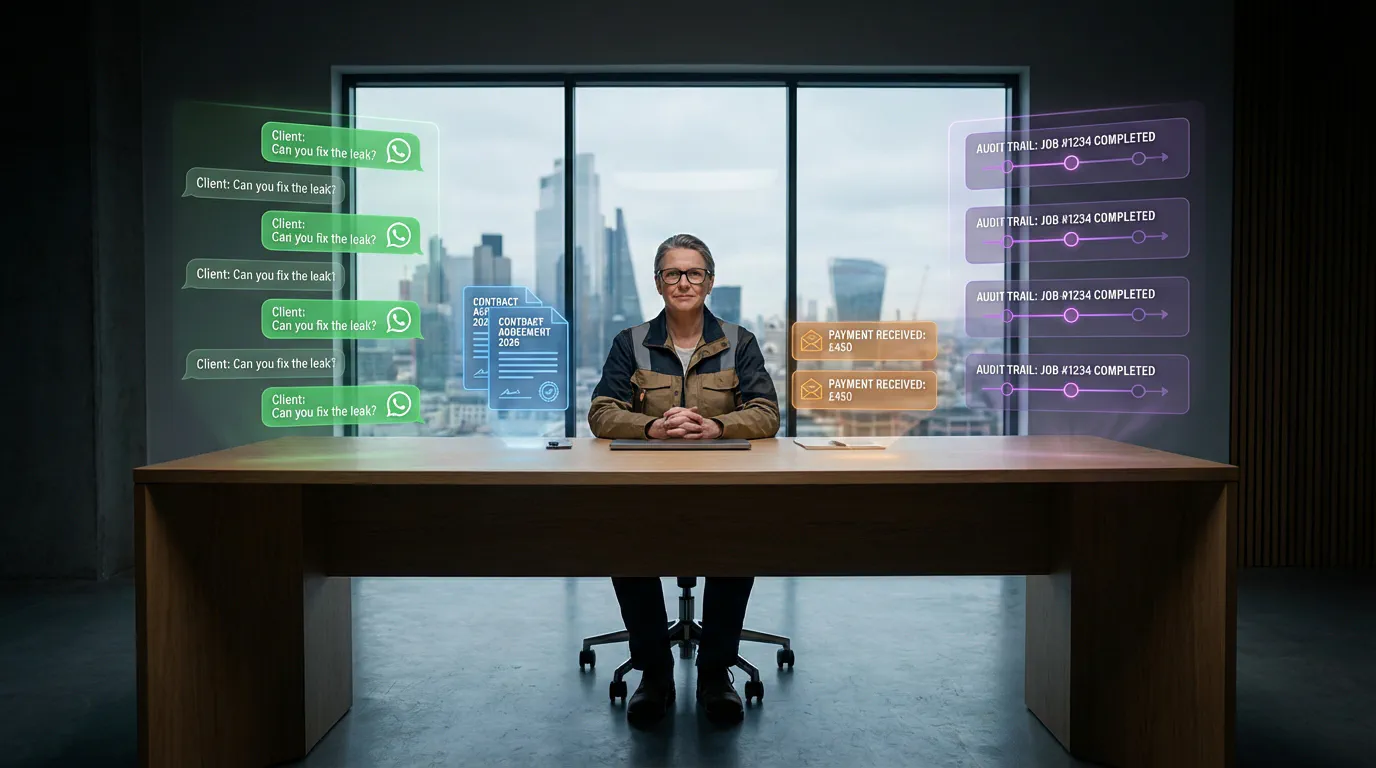
A modern UK trades business owner surrounded by live WhatsApp messages, digital audit logs, signed contracts and payment notifications, capturing how 2026 firms are defending against no-shows with data rather than arguments.
Who this is for
- Small UK trades businesses: plumbing, electrical, HVAC, joinery, maintenance, cleaning and fit‑out.
- One‑man bands and micro firms who run bookings via WhatsApp, SMS or Facebook but want enforceable no‑show terms.
- Office managers and operations leads using tools like ServiceM8, BigChange, Commusoft, Powered Now, PlanRadar or SafetyCulture.
- Anyone who has been burnt by “no access” visits, surprise cancellations or chargebacks and wants to get paid without breaching consumer law.
What this guide covers
- How 2026 UK consumer law (CRA, CMA guidance, DMCC) treats no‑show and late cancellation fees.
- How to write a fair, enforceable policy and communicate it digitally so it stands up in court and with the CMA.
- The minimum digital evidence you should capture on every job (WhatsApp, photos, job logs, invoices).
- Recommended app stack and workflows for automating proof, reminders and fee collection.
- Practical small‑claims and dispute‑handling tactics that avoid bad reviews, ombudsman referrals and regulatory risk.
The 2026 legal landscape: why “may charge a fee” is no longer enough
The rules have hardened. No‑shows still hurt, but in 2026 how you charge for them is under the microscope.
Three pillars matter:
Consumer Rights Act 2015 (CRA, Part 2 – unfair terms): your no‑show or late cancellation clause must be transparent, prominent and proportionate. If a customer only finds it in tiny footer text or after the event, it’s at serious risk of being unfair.
Competition and Markets Authority (CMA) unfair terms and price transparency guidance: the CMA is refreshing its unfair contract terms guidance and has a dedicated price transparency focus. Hidden or “drip” fees – including surprise no‑show charges – are firmly in scope.
- Unfair contract terms: GOV.UK – unfair contract terms guidance consultation
- Price transparency: GOV.UK – draft price transparency guidance
Digital Markets, Competition and Consumers Act 2024 (DMCC): from April 2025 the CMA can fine businesses directly (up to 10% of global turnover) for breaches such as misleading pricing or unfair terms – without going through the courts first. No‑show clauses that are hidden or clearly disproportionate are now not just a small‑claims risk; they’re a regulatory risk.
Key older cases still bite. The High Court in Ashbourne Management Services (2011) knocked out “pay in full on cancellation” clauses as unfair, while ParkingEye v Beavis (2015) confirmed that a fee can be lawful if it is clearly signposted and protects a legitimate business interest, and is proportionate.
For trades, that translates to:
- You can charge a no‑show or late cancellation fee.
- You must show it clearly before booking.
- You must be able to justify the amount by real loss: time, travel, wasted slots, special‑order materials.
- A blanket “full job value if you cancel” is high‑risk unless it can be fully justified.
From gut feel to evidence: building a defensible no‑show policy
A strong policy in 2026 has three moving parts: clear wording, a rational fee structure, and a digital audit trail that proves the customer saw it.
Drafting the clause
Base wording around:
- Specific window: e.g. “less than 24 hours’ notice” or “same‑day cancellation”.
- Specific amount or formula: a fixed call‑out fee, a percentage of the job, or banded fees by job type.
- Rationale: “to cover travel time, reserved slot and administration”.
For example:
“If you cancel or reschedule your appointment with less than 24 hours’ notice, or are not present at the agreed time, a fee of £60 will be charged. This reflects the engineer’s travel time, reserved booking slot and associated administration. All charges are displayed before booking and confirmed in writing.”
Avoid vague “may be charged” language and avoid “no refunds under any circumstances”. Under both the CRA and the DMCC, surprise or absolute terms are exactly what the CMA is hunting.
Making it visible at booking
For compliance and enforcement you need proof of disclosure as much as proof of attendance. Do all of the following as standard:
- Put the clause on your website booking form and any online quote/accept page in clear text.
- For phone/WhatsApp bookings, send a written confirmation that includes:
- Appointment time and date.
- The no‑show/cancellation rule and amount.
- A link to your full terms on your site.
A simple WhatsApp confirmation template:
“Booking confirmed: Tues 16 April, 10:00–12:00, at 24 High Street. If you cancel with less than 24 hours’ notice or we can’t gain access, a £60 fee applies to cover reserved engineer time. Full details: [link to your terms]. Please reply YES to confirm.”
That “YES” reply is gold in a dispute.
If you want more structure, the TrainAR Academy guide Jobber to WhatsApp UK automate booking confirmations with Make.com and cut no‑shows explains how to wire automated confirmations directly into messaging, with full audit logging:
Jobber to WhatsApp UK automate booking confirmations with Make.com and cut no-shows
Designing your digital proof stack
In court, in front of an ombudsman, or responding to a CMA inquiry, you’re not arguing opinions – you’re laying out a digital trail.
Two standards frame what “good” looks like:
BS 10008:2020 – evidential weight and legal admissibility of electronically stored information.
BSI overviewISO/IEC 27037:2012 – guidelines for identifying, collecting and preserving digital evidence.
IEC publication
You don’t need to be certified, but you should behave as if a judge or regulator will ask: “Can I trust these records?”
At a minimum, your workflow should automatically capture:
- Time‑stamped booking trail: WhatsApp/SMS export, CRM or job app record showing when the booking was made and the policy was sent.
- Reminders: automated 48‑ and 24‑hour reminders from systems like ServiceM8, Powered Now, BigChange or similar, logged against the job.
- Arrival proof: time‑ and geo‑stamped photos or check‑ins on arrival when access is refused or nobody is home.
- Job log: notes, call attempts, voice notes, and actions taken, stored against the job and exportable as a PDF or report.
- Invoice trail: time‑stamped invoices and statements, ideally with links to the evidence stored in your app.
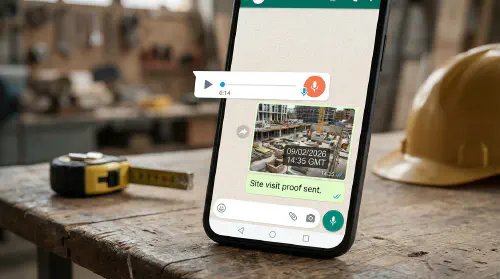
Capturing a WhatsApp arrival photo and voice note with visible timestamps gives you a fast, low-friction way to document that you attended the property when you say you did, turning a “he said, she said” argument into a simple timeline.
This is where using structured platforms beats screenshot chaos. A Reddit user recently wrote about coding a Python script rather than screenshotting years of chats; the pain is real. You want exportable logs, not a camera roll full of unlabeled evidence.
Recommended tools and how to use them in practice
You don’t need to adopt every product in the market. But you do need at least one job management tool plus a disciplined WhatsApp workflow.
Field and job management platforms
From the research, several UK‑friendly platforms stand out:
ServiceM8 – jobs, before/after photos, site diary, WhatsApp/SMS reminders, exportable logs.
ServiceM8 featuresBigChange and Commusoft – full field‑service suites with engineer apps, signatures, photo timestamps and secure document storage.
BigChange mobile workforce
Commusoft engineer appPlanRadar / SafetyCulture (iAuditor) – excellent for photographic and audio evidence, snagging and incident records with audit logs.
PlanRadar punch list
SafetyCulture iAuditor
Pair one of these with Powered Now if you want tight invoicing and Making Tax Digital (MTD) compliance:
Powered Now MTD and VAT overview

Think of your WhatsApp chats, calendar reminders, geo-tagged photos and app audit logs as one connected ecosystem, all feeding into a single, defensible record of what happened on every job.
If you want a deeper dive into joining site evidence with invoicing systems like Xero or QuickBooks, the TrainAR article Disputeproof invoicing for trades attach site evidence to Xero or QuickBooks and stop arguments before they start is worth a read:
Disputeproof invoicing for trades attach site evidence to Xero or QuickBooks and stop arguments before they start
Evidence capture on the day
On every job that risks a no‑show or no‑access, train engineers to follow a simple script:
Arrival check‑in
- Use the job app’s “arrived” button, which logs GPS and time, or
- Take a geotagged photo of the door or meter location via PlanRadar/SafetyCulture or your phone camera.
Contact attempt
- Call the customer; if no answer, leave a brief voicemail.
- Drop a WhatsApp or SMS: “Here now at [address] – no answer at the door. Please contact us within 10 minutes or a no‑access fee may apply as per your booking confirmation.”
Voice note / job note
- Record a 15–30 second voice note describing the situation (“On site at 10:12, no answer, dog barking inside, neighbour confirms owner is away”) logged against the job.
Close‑out
- After a reasonable wait, log “No access, left card / message sent at [time]”.
- Trigger a no‑show fee invoice from your job or invoicing app referencing the policy.
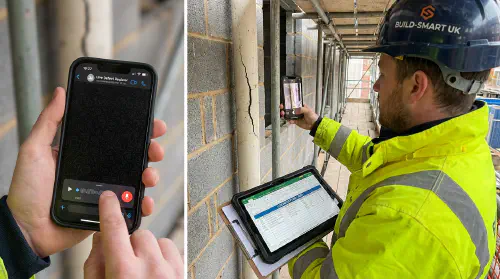
Training engineers to capture quick on-site photos and voice notes through a job app or WhatsApp turns every visit into a structured, time-stamped record instead of a memory test weeks later.
The TrainAR piece 6 photo protocol for site evidence what to photograph for snagging and disputes goes further on exactly which photos make the biggest difference in arguments over access, damage and quality:
6 photo protocol for site evidence what to photograph for snagging and disputes
Communicating fees without blowing up customer trust
The legal bar is one thing. The reputational bar is another.
If your first explanation of the policy is an invoice for a no‑show, expect fireworks – and negative posts on r/UKPersonalFinance or r/LegalAdviceUK.
Two habits dramatically reduce grief:
Pre‑emptive clarity: Make the fee part of your sales pitch, not a gotcha. “We’ll send you SMS/WhatsApp reminders and hold the slot just for you. In return, if you cancel last minute or we can’t get access, there’s a £60 fee. It keeps the diary fair for everyone.”
One‑time goodwill: In genuine emergencies (family illness, police incident, gas leak elsewhere) consider waiving or reducing the fee once, while clearly logging why. That note may matter if a pattern emerges.
A Reddit quote from a customer who only discovered the fee in fine print – “Dodgy AF” – is exactly the sentiment you want to avoid. Transparent policies plus solid evidence will also make you look reasonable when customers seek guidance on r/TradesUK or r/UKPersonalFinance.
If you want to think bigger about how digital trust and proof underpin resilient, solo operations, this 2026‑oriented YouTube breakdown is a useful watch:
And for a reflection on why human, on‑site roles that generate rich digital proof are hard to replace, this video gives useful context for how your evidence workflows also future‑proof your trade:
Small claims and ombudsman reality: what actually decides cases
Most disputed no‑show fees either die in your inbox or end up in:
- County Court small claims, or
- A complaint to local Trading Standards or the CMA, or
- A bank/PayPal chargeback investigation.
In all three, the questions are similar:
Was the policy fair and clear up front?
- Screenshots or exports of initial WhatsApp/Email with the fee visible.
- Website capture showing the clause near the booking button.
- Any signed acceptance (digital or physical).
Is the amount proportionate?
- Simple cost breakdown: typical hourly rate, travel time, slot length, overheads.
- Evidence of actual loss (e.g. engineer timesheet, fuel receipts not re‑used on another job).
Did you actually attend?
- Time/geo‑stamped photos.
- Job app arrival logs.
- Call and message attempts logged at the right time.
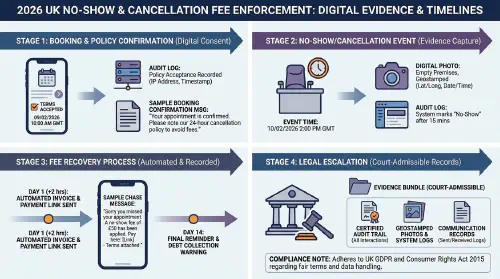
Use this enforcement journey infographic-style layout as a mental checklist: clear terms and reminders, on-site proof, and an evidence-backed invoice give you a clean line from booking to recovery if a no-show turns into a dispute.
A recent success example from the research: a London electrician won a no‑show fee claim in January 2026 using:
- ServiceM8 geo‑stamped arrival photo.
- WhatsApp thread with confirmation and reminders.
- Clearly worded, upfront fee clause.
The judge explicitly mentioned the transparency and audit log as decisive.
By contrast, a Manchester plumber lost in late 2025 even with arrival photos, because the fee was hidden in small print and never mentioned in booking messages. Under the DMCC and CMA guidance, a surprise term is increasingly dead on arrival.
When in doubt about consumer‑rights angles, the community knowledge base at r/LegalAdviceUK can give you a feel for how judges and ombudsmen are leaning – but your best defence is always a boringly consistent evidence workflow.
Making Tax Digital and long-term record keeping
From April 2026, Making Tax Digital for Income Tax Self Assessment (MTD ITSA) starts to apply to many sole traders over £50k turnover (dropping to £30k from 2027).
HMRC – one year until Making Tax Digital for Income Tax launches
This matters for no‑show fees because:
- Your fee income is trading income – it needs to be recorded digitally, not on the back of an envelope.
- HMRC’s penalty points regime for late submissions will punish sloppy record keeping over time.
HMRC – penalties for late submission
Best practice:
- Keep relevant WhatsApp/email exports, job logs and invoice PDFs for at least six years, aligned with HMRC guidance.
- Store them in your job app, accounting system or structured cloud folders, not just on individual phones.
- Use MTD‑ready tools like Powered Now, Xero or QuickBooks so fee invoices and payments flow straight into your tax records.
That way, if a dispute surfaces years later, you’re not trying to resurrect half‑remembered jobs – you have the timeline at your fingertips.
FAQs
How much can I legitimately charge for a no-show in 2026?
There’s no fixed cap, but you must be able to justify the amount as a genuine pre‑estimate of loss: travel time, reserved slot, admin, any materials you can’t re‑use. For most domestic trades, a flat call‑out style fee in line with your hourly rate plus travel is easier to defend than a full job value charge.
Is a WhatsApp screenshot enough evidence?
On its own, it’s weak. Courts and regulators prefer full exports and audit logs that show the whole conversation, not cherry‑picked screens. Use the WhatsApp export function and, where possible, rely on logs from job apps like ServiceM8 or BigChange which are harder to tamper with.
Do I need a signed contract for every small job?
Not necessarily. For many domestic jobs, a clear booking message with fee terms, plus the customer replying “YES” or confirming the appointment, will be enough. For bigger works or repeat contracts, use proper digital signatures in platforms like Commusoft, BigChange or DocuSign.
What if a customer posts a bad review over a no-show fee?
Respond calmly and factually. Reference your upfront policy, the reminders sent and the evidence you hold, and offer a one‑time partial or full waiver if there were genuine mitigating circumstances. Document the discussion in your job system; it may help if the dispute escalates.
Can I refuse future work for repeat offenders?
Yes, provided you’re not breaching discrimination laws. Make sure your terms allow you to refuse bookings from customers with unpaid fees or repeated no‑shows, and keep a note in your CRM or job app so office staff can see the history before accepting work.
Want to slash training times and increase revenue per Engineer? Join our Waitlist: https://trainar.ai/waitlist
Training and resources
Core legal and regulatory references
- Consumer unfair terms guidance (refresh consultation). GOV.UK
- Price transparency guidance (draft). GOV.UK
- How to write fair contracts. GOV.UK
- Practice Direction 57AD – disclosure in the Business and Property Courts. Justice.gov.uk
- BS 10008:2020 digital evidence code of practice. BSI
- ISO/IEC 27037:2012 – digital evidence handling. IEC
- Making Tax Digital for ITSA – timeline and penalties.
GOV.UK – MTD ITSA
GOV.UK – penalties for late submission
Tools and platforms mentioned
- PlanRadar – defect and evidence management. PlanRadar
- SafetyCulture (iAuditor) – inspections, checklists and photo logs. SafetyCulture iAuditor
- ServiceM8 – field service and reminders. ServiceM8
- BigChange – mobile workforce management. BigChange
- Commusoft – field service engineer app. Commusoft
- Powered Now – invoicing and MTD. Powered Now
TrainAR Academy resources
- 6 photo protocol for site evidence what to photograph for snagging and disputes.
TrainAR Academy - Disputeproof invoicing for trades attach site evidence to Xero or QuickBooks and stop arguments before they start.
TrainAR Academy - Jobber to WhatsApp UK automate booking confirmations with Make.com and cut no-shows.
TrainAR Academy - Cut no-access visits with WhatsApp confirm and photo triage a step-by-step playbook for trades.
TrainAR Academy
Community and further reading
- r/UKPersonalFinance – consumer experiences of fees and disputes. Reddit
- r/LegalAdviceUK – practical guidance on small claims and evidence. Reddit
- r/TradesUK – peer‑to‑peer advice for UK trades. Reddit
Ready to Transform Your Business?
Turn every engineer into your best engineer and solve recruitment bottlenecks
Join the TrainAR Waitlist