
Quick Answer
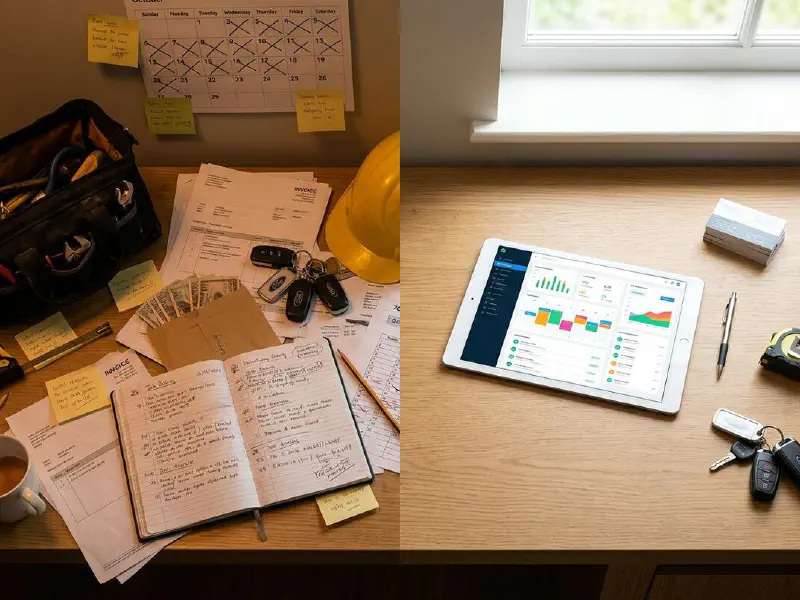
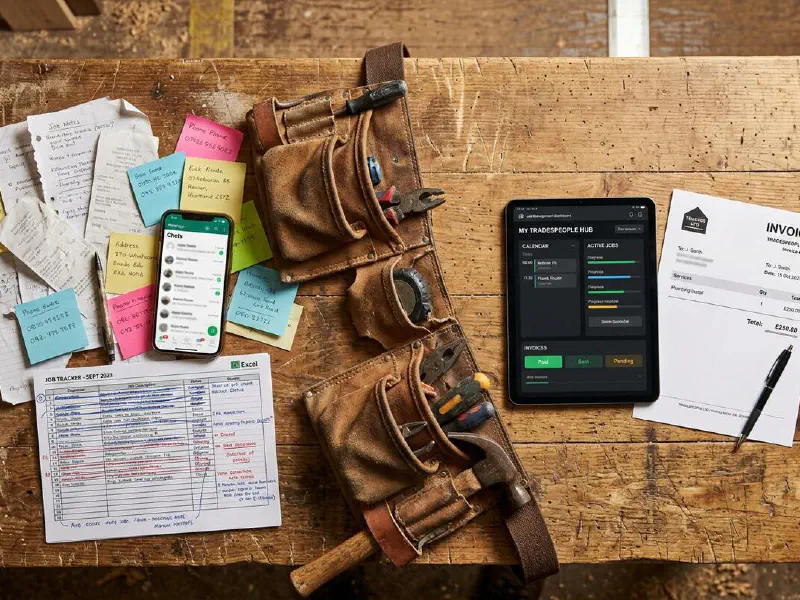
Begbies Traynor's Q1 2026 Red Flag Alert found 9,466 UK construction businesses in critical financial distress, up 49% year on year. The five clearest warning signs are: you do not know your profit margin on every job, your invoices routinely go out late, you are funding materials from personal savings, you have stopped tracking weekly enquiry numbers, and you are still on the tools full time while trying to run the business. If two or more of those sound familiar, you need to act now, not next month.
Table of Contents
- The scale of the crisis
- Why construction is the worst-hit sector
- Warning sign 1: You do not know your numbers
- Warning sign 2: Your invoices go out late
- Warning sign 3: You are borrowing to survive, not to grow
- Warning sign 4: Your pipeline has gone quiet and you have not noticed
- Warning sign 5: You are still on the tools and nothing else gets done
- Timeline: how distress builds
- What tradespeople are saying
- Recommended videos
- Frequently asked questions
- My verdict
The scale of the crisis
I have been coaching trades and construction businesses since 2010, and I have never seen figures like this. Begbies Traynor's Red Flag Alert for Q1 2026 recorded 9,466 UK construction companies in critical financial distress. That is a 49% increase on the 6,367 recorded in the same quarter last year. Another 95,355 firms sit in the significant distress category, the highest of any sector in the country.
These are not abstract numbers. Each one represents someone who started a business because they were brilliant at their trade. They did not set out to fail. But somewhere along the line, the business side got away from them.
Construction has accounted for 17% of all UK insolvencies for the past 12 months, with 3,851 firms going under in the year to February 2026. That figure is nearly 20% higher than pre-pandemic levels. And those are just the ones that formally entered insolvency. The Red Flag data tells us thousands more are teetering on the edge.
Begbies Traynor classifies businesses using court judgments, payment defaults, and financial filings. "Critical" means a company faces imminent insolvency risk. "Significant" means material financial difficulty that could worsen. Both categories saw sharp rises in Q1 2026.
Julie Palmer, managing partner at Begbies Traynor, put it bluntly: "Construction has always been a barometer for the UK economy and with thousands of businesses in distress this could ripple wider if a turnaround doesn't happen soon." She pointed to fuel prices, material inflation, supply chain disruption, elevated interest rates, planning delays, and workforce shortages as compounding pressures.
The domestic building and electrical installation subsectors have been hit hardest, with 55% and 51% jumps respectively. If you run a small plumbing, heating, electrical, or general building firm, you are in the most exposed part of the most exposed sector in the UK economy right now.
Why construction is the worst-hit sector
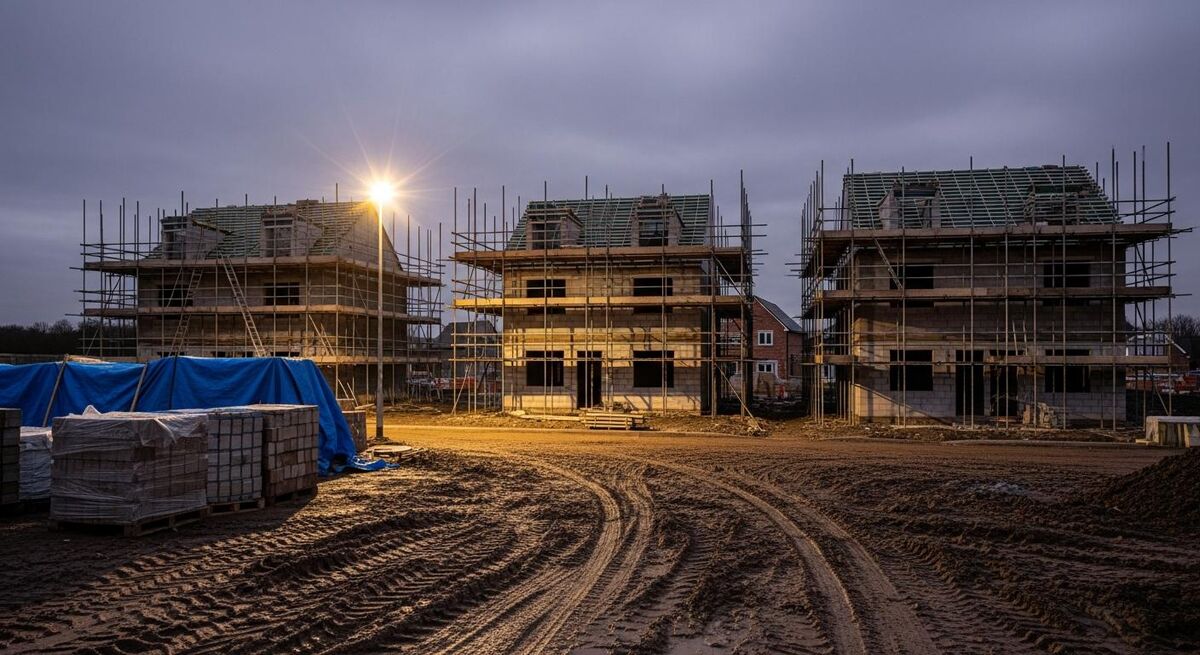
I wrote in my book Build and Grow that 70% of all insolvencies in the UK come from the construction and trades sectors. People are always surprised by that. But when you understand how this industry works, it makes complete sense.
Most tradespeople were trained to be brilliant at their craft. Nobody taught them how to read a P&L, manage cash flow, or price a job properly. They start a business, do great work, get busy through word of mouth, and before they know it they are running a company with employees, vans, and overheads. But they are still treating it like a one-person operation.
The FMB's latest State of Trade Survey paints a grim picture. Three quarters (75%) of construction SMEs raised concerns about higher material costs in the second half of 2025. Over half (51%) reported lower-than-expected profits or outright losses. One in five (20%) feared their business viability was under threat. And 72% were affected by the shortage of skilled tradespeople, with carpenters (30%), bricklayers (29%), and plumbers (23%) the hardest roles to fill.
On top of all that, 13% of firms reported frequent late payments from clients. In an industry where margins are already razor thin, one late payment from a main contractor can set off a chain reaction that puts a subcontractor under within weeks.
Material costs should sit between 28% and 35% of your sales. Total labour and subcontractor costs should not exceed 40%. If your materials are above 35%, either you are not charging enough or there is wastage in the business. I see this constantly. The numbers do not lie, but you have to look at them first.
Chris Bristow, a restructuring adviser at Real Business Rescue, summarised it well: "Once cash flow, margins, and reserves are all compromised, the risk of insolvency is high." The problem is that most small construction firms do not monitor any of those three things until it is too late.
Warning sign 1: You do not know your numbers

If there is only one thing you take away from this article, please let it be this: you have to know your numbers. I say this to every client I work with, and I will keep saying it until I am blue in the face.
How well do you know your profit margin on each job? Do you know your gross profit percentage? Can you tell me your overheads as a percentage of sales? Most trades business owners I meet cannot answer any of those questions. They are too busy doing the work to look at what the work is actually earning them. Implementing the right tools and job management software can transform how you track profitability.
I worked with a garage owner called Lee who was convinced it was impossible to make money ethically in his industry. When we got under the skin of his numbers, I discovered his materials were running at 60% of sales. No wonder he was stressed. That left only 40% for absolutely everything else: rent, salaries, heating, marketing, his own wages. There simply was not enough to make any profit.
Within six months of getting his numbers sorted, implementing accounting software, and calculating the right price for each job, Lee had grown sales by 24%, given himself and his business partner a salary increase, and made a profit of 7% compared to breaking even the previous year.
That story is not unusual. It is what happens when you stop guessing and start measuring.
Track these weekly, not monthly: (1) number of new enquiries, (2) number of quotes submitted, (3) conversion rate from quote to job. These are your early warning system. If any of them start dropping, you have time to react before it hits your bank balance.
Warning sign 2: Your invoices go out late
Business failures in construction typically result from poor cash flow rather than insufficient work. I have said this for years and the data backs it up. You can be profitable on paper and still run out of cash if your invoices are sitting in a pile on the passenger seat of your van.
The general pattern I see is business owners rushing around seeing customers, checking on jobs, and running off to get materials. They get home in the evening, prepare quotes, and the invoicing takes a back seat. It gets done too far down the line. If you need to order two thousand pounds worth of materials for a job but you are not invoicing the customer for six weeks, that is six weeks you are carrying that cost.
The FMB survey found that only 57% of construction SMEs had invoices paid within agreed terms. Nearly a third experienced variable payment timelines. That means your already-late invoice is landing on a desk where the person receiving it may not pay you on time either.
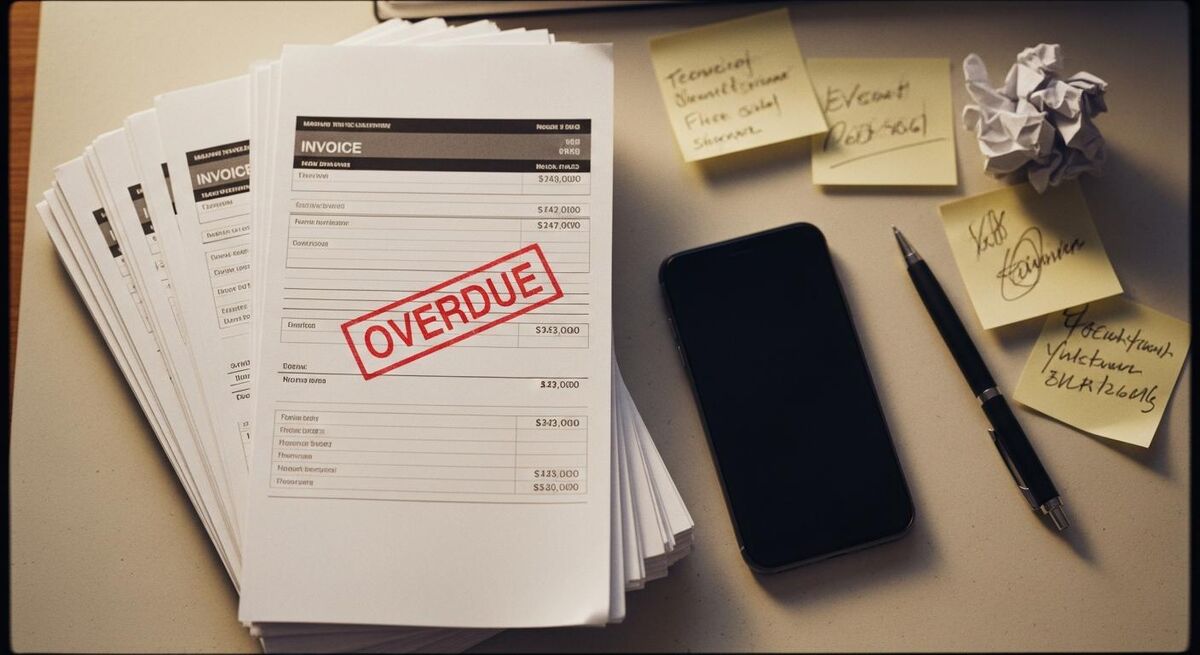
Cash is king. We need it in the bank account as soon as possible. My top tips for fixing this: send invoices on the day the job is finished, request deposits on larger projects to cover material costs, invoice large jobs in stages, set up automatic payment reminders through your accounting software, and have written terms and conditions that set clear expectations from day one.
The reminders should never be sent by you personally, for two reasons. First, you instantly appear to be a one-person operation and lose credibility. Second, it can damage your relationship with the customer. Get a bookkeeper, virtual assistant, or let the software handle it. Many trades businesses are discovering that digital transformation in their admin processes saves hours every week.
Warning sign 3: You are borrowing to survive, not to grow
Nearly 40% of small businesses that borrowed money in late 2019 used the cash to survive rather than invest in growth, according to the Federation of Small Businesses. I compared cashflow borrowing to payday loans at the time, and I stand by that. It can trap businesses in a downward spiral of debt that many can never escape from. It does not solve the problem. It merely kicks it up the road without tackling the root cause.
There is a massive difference between borrowing to buy a new van that will generate revenue and borrowing to pay last quarter's VAT bill. The first is investment. The second is a warning siren.
The FMB found that 42% of firms changed contractors during the second half of 2025, and nearly a quarter of those changes were driven by insolvencies or firms going bust. When your suppliers and subcontractors start disappearing, the pressure on your own cash flow intensifies. You end up paying more for materials because you have lost your account terms. You take on work at thinner margins because you are desperate for turnover. The spiral tightens.
Open a separate bank account for tax. Every month, move 19% of your net profit into it for Corporation Tax, and set aside your VAT obligations. Use accounting software to track your year-to-date profit and loss so you can calculate the liability in real time. This one step alone prevents the most common cash crisis I see in trades businesses.
Do you have enough working capital? As a general rule, you should have three times your monthly overheads sitting in the bank. If it costs you six thousand pounds a month to operate, you need eighteen thousand in reserve. I recently met with a construction firm building homes in the two to five million bracket that was operating with almost nothing in reserve. One late payment from a customer and the business would have gone under. This is one reason why there are so many insolvencies in this sector.
Warning sign 4: Your pipeline has gone quiet and you have not noticed
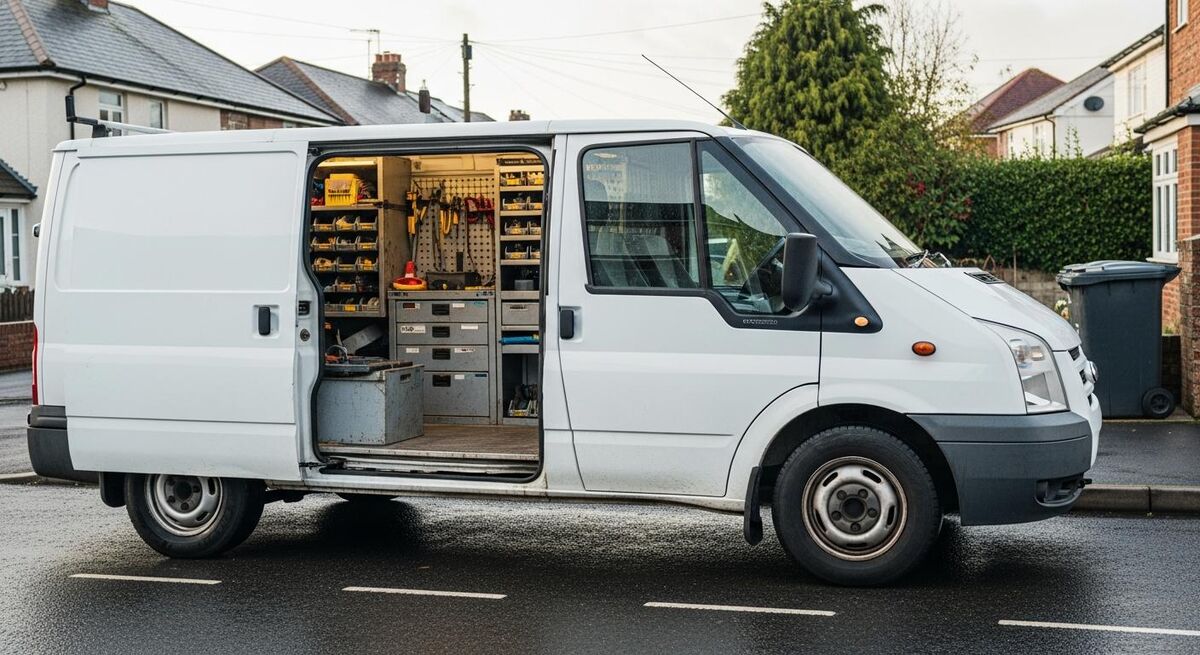
When you are busy doing the work, it is easy to miss that the phone has gone quieter. Your diary is full for the next three weeks, so everything feels fine. But when those three weeks pass and there is nothing behind them, panic sets in. By then you have lost four to six weeks of potential sales that you cannot get back.
EY reported that profit warnings from UK-listed construction companies in Q1 2025 were five times higher than the same period the year before. Over half cited weaker confidence and delays in contract starts. If the big firms are seeing pipelines slow down, you can bet it is hitting smaller firms too, just without the formal profit warning.
The construction sector marked its 12th consecutive month of contraction according to the S&P/CIPS Construction PMI in December 2025. That is the weakest sustained performance since the global financial crisis. Private housing repair and maintenance dropped 3.7% in the three months to November 2025. Your pipeline is not quiet because you have done something wrong. The market is softer than it has been in years. But you still need to track it. Understanding how the Future Homes Standard will change the market can help you adapt your services for the recovery.
Keep a simple weekly record of new enquiries and sales. It does not need to be complicated. A column in a spreadsheet is enough. If you see a downward trend over two or three weeks, that is your signal to invest time in marketing, follow up on old quotes, or pick up the phone to past customers. Do not wait until the diary is empty.
The FMB found 72% of construction SMEs were affected by a lack of skilled tradespeople. If you are struggling to recruit, your competitors probably are too. That means there is demand out there for quality work. The firms that will survive are the ones actively marketing themselves, not waiting for the phone to ring.
Warning sign 5: You are still on the tools and nothing else gets done
This is the one I feel most strongly about, because it underpins everything else. You cannot track your numbers if you are on a roof all day. You cannot chase invoices from the back of a van. You cannot plan your marketing strategy while fitting a boiler.
Coming off the tools is the hardest but most important step any trades business owner can take. Charlie Mullins, the founder of Pimlico Plumbers, wrote the foreword to my book. He said coming off the tools was "the hardest, yet most important part of my journey" and described it as "feeling like a tiger in a cage." He also said that if he could do things differently, he would have come off the tools sooner, because it is what enabled him to build and grow the business.
I see the same pattern again and again. The owner takes people on, often friends or family. They end up running a business while still doing the work themselves. Invoicing, chasing payments, managing people, all of it takes a back seat. The result is stress for the owner, poor customer experience, and poor cash flow. Most businesses in this industry do not go under due to lack of demand. Far from it. It is because the owner is trying to do everything and none of it gets done properly.

Find someone who can manage the back-of-house operation efficiently. It does not have to be a full-time employee. A part-time bookkeeper or virtual assistant can transform your cash flow by getting invoices out on time, chasing payments, and giving you visibility of your numbers. That one hire will more than pay for itself.
Mark from Command Electrical told me that he used to feel that unless he was on the tools earning money, he was not doing a day's work. Once he let go and gave his team defined roles, "conversations were going on in the company that he did not even know about, because the people he had in place knew their roles." Problems were reported, solved, and rectified without going through him. That is what growth looks like.
Timeline: how distress builds
Month 1-3: The blind spot
You are busy with work. Materials costs creep up but you have not adjusted your prices. Invoices go out a week or two late. You feel busy so you assume everything is fine. Your profit margin quietly drops from 10% to 6%.
Month 4-6: The cash squeeze
VAT is due and there is not enough in the account. You dip into personal savings or take a short-term loan. Two large invoices are still unpaid. You take on a job at a lower margin because you need the cash flow. Working capital drops below one month of overheads.
Month 7-9: The spiral
Supplier credit terms get shortened because your payments have slowed. You cannot take on a good job because you cannot fund the materials. Your best subcontractor starts taking work elsewhere. HMRC sends a letter about overdue returns.
Month 10-12: Critical distress
You are one bad month away from insolvency. The phone is quieter but you are too stressed to market the business. Sleep is affected. Relationships at home are strained. You consider closing down but do not know where to start. This is where 9,466 businesses found themselves in Q1 2026.
What tradespeople are saying
Recommended videos

Why Are UK Construction Companies Going Bankrupt?
Metroun Quantity Surveying

5 Warning Signs Your Business Could Go Bust
James Sinclair
Accountant Explains: Why Construction Companies Go Bankrupt
Davie Mach

Cashflow Management Explained for Small Business UK
Sarah Harkness

Master Cash Flow Management for Your Construction Business
Jesse Lane

Do Not Let Growth Wreck Your Cash Flow
Contractor Success Forum

Operating Costs Set to Explode: Fix Your Cash Flow Now
Darren Fell, Crunch Accounting UK
Frequently asked questions
Begbies Traynor defines it as a company facing county court judgments, winding-up petitions, or payment defaults that indicate imminent insolvency risk. It is the last stage before formal insolvency proceedings begin. If your business is in this category, you need professional advice today, not next week.
Profit and cash are two different things. Profit is what your accounts show after costs. Cash is what is actually in your bank. If your invoices go out late or customers pay slowly, you can be profitable and still run out of money. It is the single most common problem I see in trades businesses.
Three times your monthly overheads. If your business costs six thousand a month to run, you need eighteen thousand in reserve. Anything less and one late-paying customer or one unexpected cost can push you into crisis. It sounds like a lot, but build it up gradually by putting a fixed percentage aside each month.
You cannot afford not to. A part-time bookkeeper for a few hours a week costs far less than the invoices you are not sending, the payments you are not chasing, and the tax penalties you will face. Run the numbers. Work out how much revenue you lose each week by doing admin instead of billable work. The answer will surprise you.
Yes. The Lighthouse Construction Industry Charity offers a 24-hour helpline for workers and business owners dealing with financial or mental health pressures. Your accountant can refer you to an insolvency practitioner for formal restructuring advice. HMRC also has a Time to Pay scheme for businesses struggling with tax debts. The earlier you ask for help, the more options you have.
My verdict
9,466 businesses in critical distress means thousands of owners who are going through a horrible time right now. But distress is not insolvency. There is still time to act. Know your numbers, get your invoices out on time, stop borrowing to survive, track your pipeline weekly, and find a way to come off the tools so you can actually run your business. If you do even two of those things this month, you will be in a stronger position than most of your competitors. Please do let me know how you get on.