
Quick Answer
The trades have an image problem, not a pay problem. Average construction earnings sit around £42,224, FMB members average £1m turnover, and 48% of teenagers now say a skilled trade is more aspirational than office management. The fix is fixing what young people actually hear: better school engagement, clean social proof, modern equipment, structured mentoring, and using the apprenticeship grants that already exist (£2,500 a year via CITB, up to £2,000 government incentive from October 2026 for SMEs). This guide shows you exactly how to do it without a recruitment budget.
Table of Contents
- The scale of the problem (and why it matters to you)
- What the industry's image problem actually is
- What young people actually want from work
- Fix your shopfront: how you look to a 17-year-old
- Get into schools (it's easier than you think)
- The money: apprenticeship grants and funding in 2026
- Keep them once you have them: the retention problem
- Reaching the half of the population the industry forgot
- What tradespeople are saying
- Recommended videos
- Frequently asked questions
- My verdict
The scale of the problem (and why it matters to you)
I started in heating and plumbing. I've hired apprentices, I've lost apprentices, and I've watched the industry talk about a skills crisis for two decades while doing very little to fix the bit that actually matters: how teenagers see us.
The numbers are bleak. Roughly 35% of construction workers are over 50, and the sector needs about 47,860 additional workers a year between 2025 and 2029. Apprentice intake fell 14% from its 2021/22 peak. Nearly half of those who start drop out before completion. Meanwhile your van bookings are stretching out, your good lads are being poached, and customers are getting quoted six weeks for a boiler swap.
This isn't a marketing problem for trade bodies to solve. It lands on every small firm that needs a third pair of hands. If you don't recruit a 17-year-old this year, you'll be doing the same hours yourself next year, and probably with worse knees.
Why the same old fixes haven't worked
Career fairs, glossy brochures, levy adverts on the side of buses. None of it moves the needle because none of it changes the conversation a teenager has with their parents at the kitchen table. The conversation that ends with "you don't want to be on the tools, son, you've got better options than that." That's where the battle gets lost, and that's where this guide focuses.
What the industry's image problem actually is
It's not one thing. It's four:
- The "dirty job" hangover. Parents who came of age in the 80s and 90s remember unregulated work, no qualifications, no progression. They don't see a Vaillant ADVANCE engineer with a Surface tablet, a heat pump scheme, and £55,000 take-home. They see a bloke up to his elbows in a bath panel.
- School careers advice that points one way. The Federation of Master Builders found that only 47% of UK adults would encourage their child to pursue a career as a builder. Schools mirror that. Just 13% of young people in the On the Tools research said they were encouraged at school to consider trade career options. The rest got UCAS leaflets.
- No visible progression. A 17-year-old who picks medicine sees the path: foundation year, junior doctor, registrar, consultant. A 17-year-old who picks plumbing sees a labourer, a van, and a vague "you can have your own business one day."
- The wrong people doing the talking. The industry's loudest voices are 55-year-old company owners on LinkedIn. The audience they need is on TikTok watching #TradiesofTikTok, which has more than 47,000 posts and is where 58% of Gen Z now go for trade content.
What young people actually want from work

The Barratt Redrow study of 2,000 13-28 year olds in February 2026 found:
- 62% would rather master a hands-on skill than play office politics.
- 52% are likely to choose an apprenticeship.
- 46% are drawn to "hands-on experience".
- 43% want to "earn money from day one".
- 34% are running scared from student debt (and rightly so, average graduate debt is now £45,600).
- 48% say worries about AI have put them off office work.
Read that list back. It's a description of an apprenticeship. The product you're selling is exactly the product they're trying to buy. The problem is they don't know your firm exists. For more on what motivates this generation, see our guide to Gen Z expectations at work.
The AI factor (and why it works in your favour)
For the first time in a generation, office work feels riskier than trades work. A 19-year-old looking at a paralegal job knows GPT-5 is doing legal research. A 19-year-old looking at a plumbing apprenticeship knows no AI is going to crawl under a boiler. Use it. When you talk about the trade, be explicit: the job is recession-proof and AI-proof, because it's physical and on-site.
Fix your shopfront: how you look to a 17-year-old
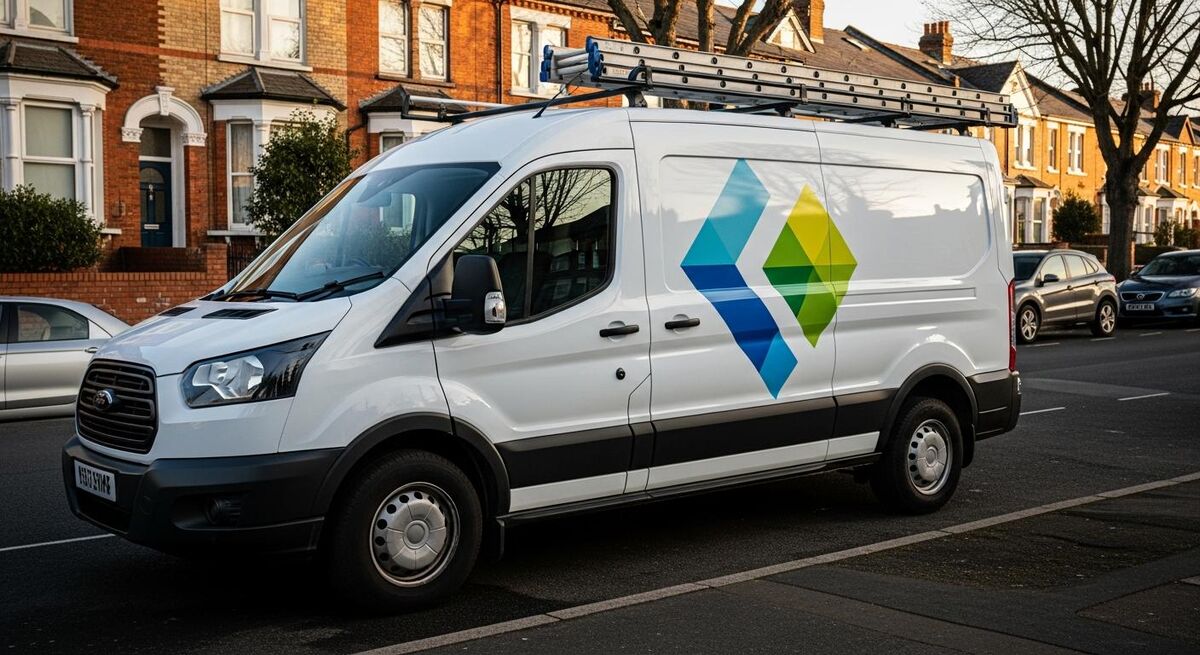
Before you spend a penny on recruitment, look at what a school-leaver sees when they Google your firm. Most small trades fail this test in under thirty seconds.
The 30-second audit
- Google your company name from a phone. Does anything come up before the third result? Most don't.
- Click your website. Is there a single photo of a person under 30? Is there a "careers" or "join us" link in the top nav?
- Search Instagram and TikTok for your business name. Found nothing? You're invisible to the audience you need.
- Look at your van. Is the logo legible from the next lane on the motorway? Is the paintwork wiped down?
- Read your Google Reviews. Do any of them mention your team by name? "James was brilliant" is recruitment gold. Customers describing your people by name is the proof a parent needs.
The five-job-pack a school-leaver wants to see
You don't need a marketing department. You need five short videos and five photos that show what the job actually looks like, edited well enough that a teenager doesn't cringe. Get an apprentice or younger team member to film:
- Morning van prep: tools, route, brew, set off.
- A "before and after" on a customer install or repair.
- A 60-second explainer of one tricky job, in plain English.
- The pay conversation. "First-year apprentice on our team takes home £X. Qualified engineer year four takes home £Y. Senior with a heat pump cert: £Z." Honest numbers.
- The training day: college, manufacturer training, a manufacturer's tech rep visit, whatever you do that isn't installing.
Get into schools (it's easier than you think)
Schools are desperate for people who actually do the job to come in. They have a statutory duty under the Provider Access Legislation (often called the Baker Clause) to give pupils encounters with employers and providers of technical education, six times by year 13. They are usually failing it.
You don't need a polished presentation. You need:
- A 20-minute talk on what you do and what you earn.
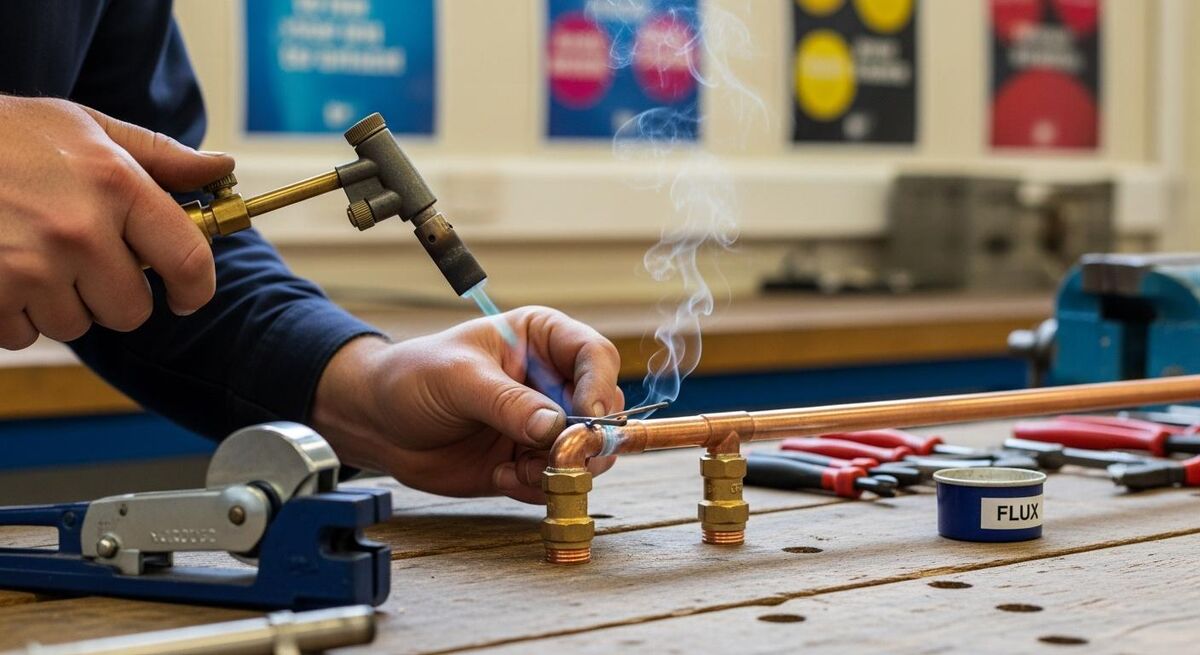
- One or two practical demos: a piece of copper, a soldering joint, a wired junction box, a quick "find the fault" on a fan unit.
- An "ask me anything" Q&A. Teenagers ask the questions adults won't: how much do you earn, what's the worst thing you've ever pulled out of a drain, do you have to start at 7am.
- Your business cards and an honest "we'll have apprentice slots open in September, here's how to apply".
Three routes in
- Your local secondary school's careers lead. Email the school office, ask for the "careers leader" or "Gatsby coordinator". Offer a one-hour talk. Most will say yes.
- The local FE college. Plumbing, electrical, joinery and carpentry departments need employer partners for work placements (T-Level placements are now 315 hours and most colleges are short of slots). Take one student for two weeks. You'll know in three days if they're worth offering an apprenticeship.
- National Apprenticeship Week (every February). Schools and colleges run open events. Turn up, take a stand, take a video, post it. National Apprenticeship Week 2026 ran 10-16 February and the next one is February 2027. Put it in your diary now.
The money: apprenticeship grants and funding in 2026

The thing nobody tells you when you're starting out: hiring an apprentice in the UK is heavily subsidised, and if you're a small firm under the £3m payroll levy threshold, almost all of the training cost is paid for you. Here's what's on the table in 2026:
CITB apprenticeship grants (England)
If you're a CITB-registered employer and up to date with your Levy Returns, CITB pays you £2,500 per year for each apprentice on a construction Level 2 or Level 3 standard, paid every 13 weeks while they're on programme. On successful completion of a programme lasting at least 12 months, you get a one-off £3,500 achievement grant. So over a 3-year apprenticeship, that's £7,500 + £3,500 = £11,000.
Travel-to-train support pays 80% of accommodation costs for eligible apprentices who attend college with overnight stays, plus excess travel costs over £20 a week.
Government training funding (non-levy SMEs)
From August 2026, the co-investment changes: non-levy employers will need to contribute 25% of training costs once their levy balance is exhausted (up from 5%). But from the 2026/2027 academic year, apprenticeships for non-levy payers will be fully funded for under-25s. If you take on a 17 or 18-year-old, you pay nothing for the training. Government covers it.
The £2,000 SME incentive (from October 2026)
From October 2026, non-levy paying employers can claim up to £2,000 when recruiting a new apprentice aged 16 to 24, provided they joined within the past three months. This is per apprentice, on top of CITB grants. Apply via gov.uk.
- £2,500/year x 3 years CITB attendance grant: £7,500
- £3,500 CITB completion grant: £3,500
- £2,000 government SME incentive: £2,000
- Training course fees: £0 (under-25 SME-fully funded)
- Total in-pocket support over 3 years: £13,000
Apprentice minimum wage
The apprentice minimum wage from April 2026 is £7.55 per hour for under-19s, or apprentices in the first year of their apprenticeship regardless of age. After the first year and aged 19 or over, they move to the normal age-related National Minimum Wage. Most small firms pay above this. The benchmark to recruit well in 2026 is £8.50-£10.50/hour for a 17-year-old first-year construction apprentice in most regions.
Keep them once you have them: the retention problem

The headline number: 47% of apprentices dropped out in 2023-24. Construction is worse: completion rates fell from 65% to 41% in a single year. That's a workforce crisis dressed up as a recruitment crisis. You can recruit perfectly and still lose half of them.
The reasons are predictable: poor mentoring on site, no clear progression, isolation from peers, being treated as cheap labour rather than a future tradesperson. Fix those four and your retention is solved.
The first 90 days
- Pair them with a named mentor, not "whoever's around". One experienced engineer is responsible for them on every site. That mentor gets a quiet 15-minute weekly check-in with you, on the diary, not in the van.
- Don't let them touch the kettle. Yes, really. The fastest way to lose a Gen Z apprentice is to make them feel like cheap labour. They're there to learn. If they want to make brews, fine, but it shouldn't be the only thing they do for their first month.
- Set clear three-month, six-month and year-one milestones. "By month three you'll be wiring single sockets unaided. By month six you'll have your IPAF. By year one you'll have your CSCS." Print it. Stick it to the back of their van seat.
- Invest in their first toolkit. Spend £200-400 on a starter toolkit on their first day. It's symbolic and practical. A Toughbuilt or DeWalt starter set says "you matter".
- Pay them on the dot, every month. Trades-wide, late payroll is the number one reason young apprentices leave in year one. AI-driven payroll tools, or even just a Xero direct debit, fixes it.
Why mental health matters more than it used to
Construction has one of the highest suicide rates of any UK occupation. A 17-year-old joining your firm in 2026 has grown up reading about it. They will quietly judge you on whether you take it seriously. You don't need a policy document. You need to know what your local Mates in Mind or Lighthouse Construction Industry Charity number is, and you need to mention it, casually, in their first month. Investing in mental health support is part of understanding what tools and systems support modern apprentices.
Reaching the half of the population the industry forgot

2-3% of on-site skilled trade roles are held by women. That's not a pipeline problem any more, that's a culture problem. 37% of construction apprenticeship enquiries now come from women, up from 6% in 2015. The enquiries are landing. The conversions are not.
If you've never employed a female apprentice, here's the unglamorous reality: you don't need a "women in trades" initiative. You need a basic, professional working environment. Most firms that say "we've tried and it didn't work" mean "we never changed anything and were surprised when she left."
The four-thing checklist most firms fail
- A toilet. On every site, including the van overflow days. If your site provision is "go in the bushes", you can't hire women, and frankly you shouldn't be hiring men either.
- PPE that fits. The standard kit is sized for a 5'10" man. Order a women's-fit set. Snickers, Mascot and DeWalt all do them. £150 spend.
- Zero tolerance on banter that's actually harassment. One incident, one warning, second incident, gone. Make it explicit in the first week.
- Visible women in your firm's marketing. If your website has 14 photos of men in branded fleeces and zero women, female applicants will assume they'll be the only one. They won't apply.
What tradespeople are saying
Recommended videos

How To Become An Electrician in the UK (and why it's worth it!)
Real-world UK perspective on routes in, costs and earning potential. Useful to share with parents.

Do This to Land an Electrical Apprenticeship in 2025
A working West Midlands spark walks through what gets candidates hired. Honest, current, no PR gloss.

Day in the Life of an Apprentice Electrician (Part 2)
Useful to show prospective apprentices what the day actually looks like, hour by hour. Set realistic expectations.

How To Apply for UK Apprenticeships
Step-by-step walkthrough of the find-an-apprenticeship service. Share this with parents who don't know where to start.

£50K Electrician Salary, Worth It or Not?
Honest UK earnings breakdown. Use the link in school visits and parent conversations.

What It's (actually) Like to be an Electrician
The bits the recruitment brochures don't mention. Worth watching before committing a teenager to a 4-year apprenticeship.
Frequently asked questions
For the £2,500 CITB attendance grant and £3,500 completion grant, yes. Registration is free for in-scope construction firms, and most small builders, plumbers, electricians and joiners are in scope. The government's separate £2,000 SME incentive (from October 2026) and the under-25 free training are open to any employer.
Email the school office and ask for the careers leader by name. Offer one hour. Take a tool bag and one practical demo. National Apprenticeship Week (mid-February) is the easiest entry point because schools are actively looking for guests that week.
Compete on what you actually have. A small firm offers variety of work, real mentoring with the owner, faster progression, less paperwork and more responsibility. Be explicit about that in your job advert. The teenagers who pick a big national contractor for the brand are not the ones who'll stay anyway.
Yes. T-Level industry placements are 315 hours (around 9 weeks). You get to try someone out, see if they fit, and most colleges will then funnel that student into an apprenticeship application with you. It's a risk-free trial run.
The legal apprentice minimum from April 2026 is £7.55 per hour. To recruit and keep a good 17-year-old in a competitive area, budget £8.50-£10.50/hour, which works out at £16,500-£20,500 a year for a 38-hour week. Most regions sit around £9/hour.
Treating them like cheap labour rather than a future tradesperson. The job is to teach a 17-year-old to be a competent engineer in three to four years. If you're using them mainly to lug materials and brew tea, they'll quit, and you'll have wasted £20,000+ of training investment.
Both. T-Levels are college-based with industry placements, suited to 16-19 year olds who want a structured classroom learning experience first. Apprenticeships are work-based with day or block release. Most firms benefit from offering T-Level placements to test candidates, then hiring the best ones onto apprenticeships at 18 or 19.
Three places. First, gov.uk's find-an-apprenticeship service (free, government-run, used by every careers leader). Second, your local FE college's employer board (email the head of construction). Third, a 30-second TikTok or Instagram reel on your own page. Skip Indeed for apprenticeships, it's flooded and underwhelming for under-19s.
My verdict
The cultural wind has changed: half of UK teenagers now actively prefer hands-on work to office careers. The money is there, the funding is there, the apprentices are out there looking. The firms that win in the next five years will be the ones who fix their shopfront, get into one local school a term, claim the grants they're already entitled to, and treat first-year apprentices like the engineers they're trying to become. The firms that don't will be working into their late 60s, on the same jobs they were doing at 35, wondering where everyone went.
Pick one school, pick one apprentice, and start in September. That's the whole strategy.