
Quick Answer
UK residential battery storage is a genuine growth market for electricians willing to get qualified. Systems cost between £4,500 and £11,500 installed, LFP chemistry dominates, and the 0% VAT window closes March 2027. Get your City & Guilds 2923 qualification, register with MCS, and you have got a revenue stream that most of your competitors have not even started thinking about. The numbers work, the demand is there, and the technology is mature enough to install with confidence.
Table of Contents
- The UK battery storage market in 2026
- Battery systems compared: what is actually worth installing
- LFP vs NMC: why chemistry matters
- Regulations, certifications and compliance
- Getting qualified: training routes and costs
- Smart tariffs and AI energy management
- ROI and the business case for your clients
- V2G and vehicle-to-home: what is coming next
- Installation best practice and common mistakes
- What installers and homeowners are saying
- Recommended videos
- Frequently asked questions
- My verdict
The UK battery storage market in 2026

The residential battery market in the UK has shifted from early-adopter curiosity to mainstream demand. An estimated 120,000 to 150,000 home battery systems will be installed this year, up from roughly 95,000 in 2025. That is 25-30% growth, year on year, with no sign of slowing down.
Three things are driving it. First, electricity prices. The Ofgem cap sits at 24.67p/kWh from April 2026, and households have not forgotten those 34p peaks. Second, smart tariffs. Octopus Agile and Intelligent Go have made battery ownership financially worthwhile in a way that was not possible three years ago. Third, the 0% VAT window on residential solar and storage installations runs until March 2027, saving customers £400 to £1,000 on a typical install.
For installers, the maths is straightforward. The UK battery storage market is valued at £1.2 to £1.5 billion in 2026. MCS recorded 369,000 certified installations across all renewable technologies in 2025. Grid-scale capacity grew 45% last year, reaching 12.9 GWh cumulative. The infrastructure is scaling. The supply chain is maturing. And there are not enough qualified installers to keep up with demand.
Residential battery storage installations currently attract 0% VAT, but this reverts to 5% from 1 April 2027. That is a selling point worth £400 to £1,000 per install. If you are not mentioning this on every quote, you are leaving money on the table.
Battery systems compared: what is actually worth installing
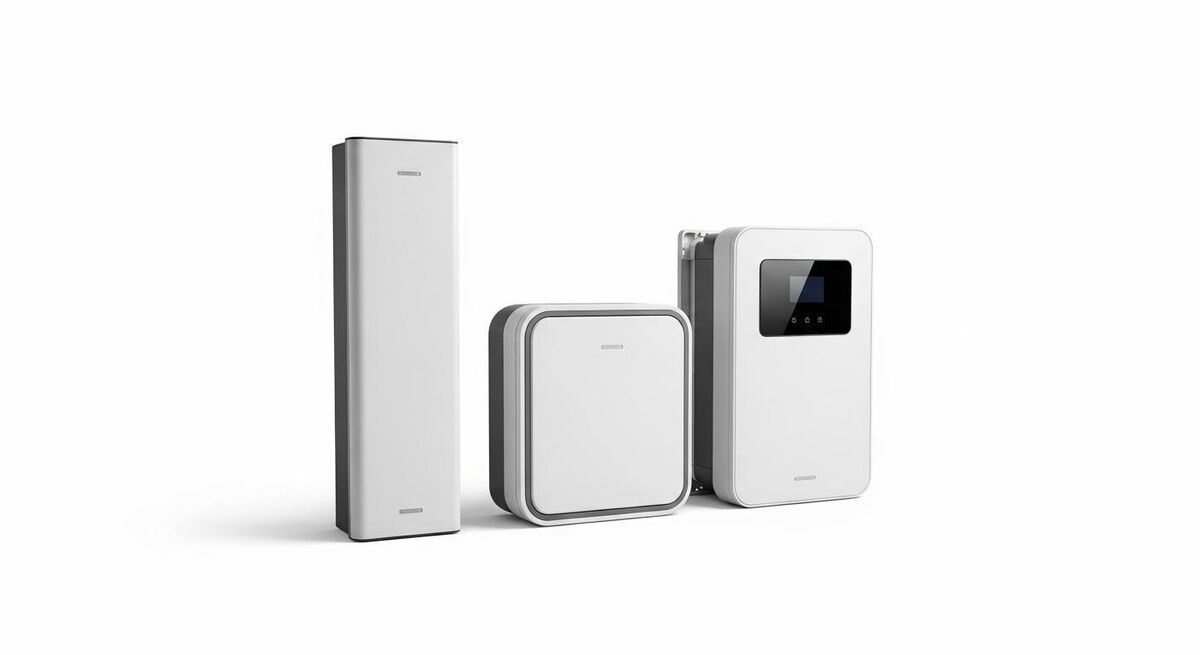
I have spoken to installers fitting these systems week in, week out. The market has consolidated around six serious contenders for UK residential work. Here is what each one actually offers, with real prices.
Tesla Powerwall 3
13.5 kWh usable capacity with a built-in hybrid inverter that delivers 11.5 kW continuous. That is more than double the Powerwall 2. You can expand up to 54 kWh with three additional DC modules. The integrated inverter means one less box on the wall, which customers appreciate. LFP chemistry. 10-year warranty with unlimited cycles, though it requires an internet connection to stay valid.
Installed price: £9,000 to £11,500. Tesla is currently offering up to £750 in rebates. The unit itself runs £7,000 to £7,800, with installation adding £1,500 to £2,500.
GivEnergy All-in-One
This is the one most UK installers are fitting. Newcastle-based company, strong UK support, and prices that undercut Tesla by £2,000 to £3,000 for comparable capacity. The All-in-One range covers 5 kWh, 8.2 kWh, 9.5 kWh, and 13.5 kWh. The 9.5 kWh model includes a 6 kW inverter. LFP chemistry. 12-year warranty, which beats the industry standard by two years.
Installed price: £4,500 to £6,500 for the All-in-One range. The GivEnergy Cloud app handles smart tariff integration natively, and the installer portal is brilliant.
Enphase IQ Battery 5P
5 kWh per unit, AC-coupled, so it works with any existing solar PV system. Microinverter architecture means no single point of failure. 15-year warranty, the longest in the market. The trade-off is price: roughly £5,000 to £6,500 installed per 5 kWh unit, making it the most expensive option per kWh.
SolarEdge Energy Bank
9.7 kWh usable with 100% depth of discharge and over 94.5% round-trip efficiency, which is among the highest available. DC-coupled for maximum efficiency when paired with SolarEdge optimisers. 5 kW continuous, 7.5 kW peak. Installed: £6,000 to £8,000. Best for customers already in the SolarEdge ecosystem.
BYD Battery-Box Premium HVM
The installer's favourite for flexibility. Modular from 8.3 kWh to 22.1 kWh in the HVM range, configurable in 2.76 kWh increments. Works with Fronius, SMA, Goodwe, and most hybrid inverters. LFP chemistry. Installed: £4,500 to £9,000 depending on configuration. Requires a separate inverter, which adds complexity but also gives you more control over the system design.
Fox ESS
The budget option. Their ECS range starts at £1,500 installed for 2.88 kWh, making it the cheapest entry point in the UK market. The EP11 at 10.36 kWh runs £9,000 to £9,500 installed. Good hybrid inverter range. Solid choice for price-sensitive customers who want battery storage without the premium price tag.
| System | Capacity | Installed (GBP) | GBP/kWh | Warranty | Chemistry |
|---|---|---|---|---|---|
| Tesla Powerwall 3 | 13.5 kWh | £9,000–£11,500 | £667–£852 | 10 years | LFP |
| GivEnergy All-in-One | 9.5 kWh | £4,500–£6,500 | £474–£684 | 12 years | LFP |
| Enphase IQ 5P | 5 kWh | £5,000–£6,500 | £1,000–£1,300 | 15 years | LFP |
| SolarEdge Energy Bank | 9.7 kWh | £6,000–£8,000 | £619–£825 | 10 years | LFP |
| BYD HVM | 8.3 kWh | £4,500–£7,000 | £542–£843 | 10 years | LFP |
| Fox ESS ECS | 2.88 kWh | £1,500–£3,500 | £521–£1,215 | 10 years | LFP |
LFP vs NMC: why chemistry matters
Every system on that list uses LFP (lithium iron phosphate) batteries. That is not a coincidence. LFP has won the UK residential market for three reasons: safety, longevity, and cost.
LFP cells hit thermal runaway at 270 to 300 degrees Celsius. NMC (nickel manganese cobalt) cells start at 150 to 210 degrees. When you are mounting a battery on a garage wall inside someone's home, that 120-degree margin matters. PAS 63100:2024 fire safety guidance already restricts where you can install batteries, banning lofts, bedrooms, stairwells, and small cupboards. LFP makes compliance far easier.
On cycle life, LFP delivers 3,000 to 5,000 cycles versus 800 to 2,000 for NMC. With daily cycling for tariff arbitrage, that translates to 10 to 15 years of practical lifespan. NMC would need replacing in 3 to 6 years under the same regime.
LFP: safer (270°C thermal runaway), longer life (3,000-5,000 cycles), 30% cheaper at cell level, cobalt-free. NMC: higher energy density (250 vs 160 Wh/kg), marginally better in extreme cold. For UK residential, LFP wins on every metric that matters to installers and homeowners.
Cost tells the same story. LFP cells have dropped to £65 to £80 per kWh at cell level in 2026, versus £95 to £120 for NMC. The lifetime cost per kWh is 30 to 40% lower. NMC still has a role in applications where weight and energy density matter, such as electric vehicles, but for a box bolted to a wall, LFP is the clear choice.
Regulations, certifications and compliance
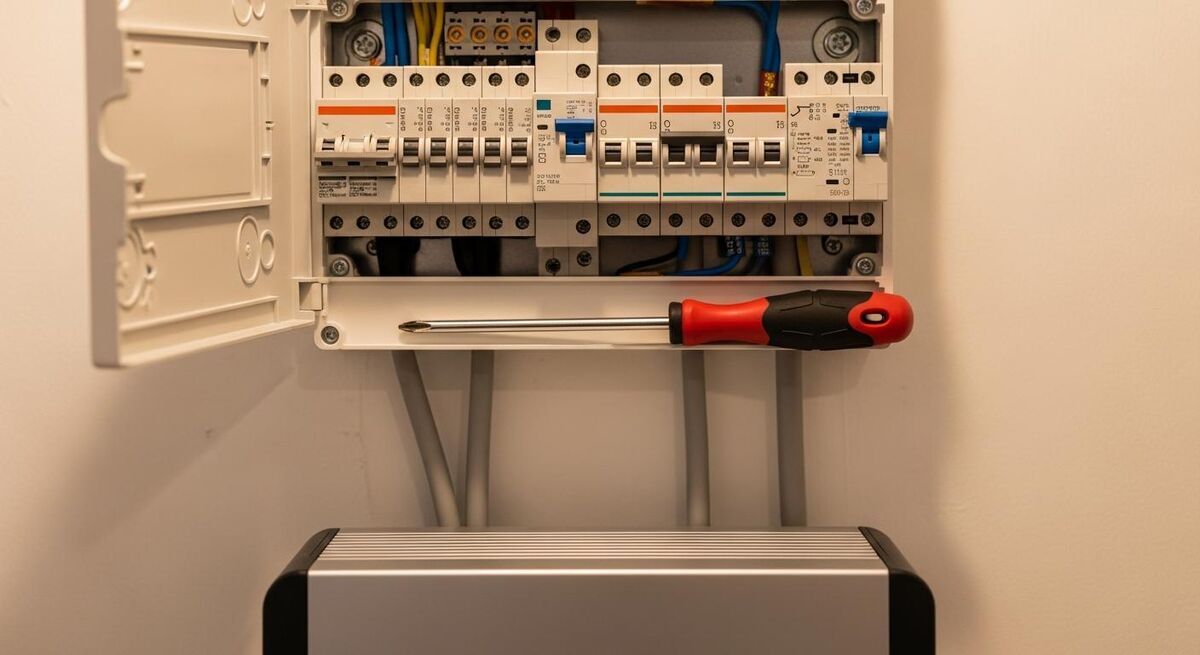
Battery storage installation is notifiable work under Part P of the Building Regulations in England and Wales. You need to be registered with a Competent Person Scheme, whether that is NICEIC, NAPIT, or ELECSA. All work must comply with BS 7671:2018+A2:2022.
MCS certification is the other non-negotiable. Without it, your customers cannot access Smart Export Guarantee payments, cannot confirm VAT relief eligibility, and cannot use most DNO fast-track connection processes. The MCS Battery Installation Standard is MIS 3012, which covers installations up to 50 kW across four classes.
Class 1 covers all-in-one units like the GivEnergy. Class 2 covers separate enclosures from the same manufacturer linked by DC cable. Class 3 is mixed-manufacturer setups where the installer determines compatibility. Class 4 is full custom, all components from different manufacturers. Most residential work falls into Class 1 or 2. Class 3 and 4 require more documentation and engineering judgement.
Grid connection: G98 vs G99
Systems under 3.68 kW per phase fall under G98: install first, notify the DNO within 28 days. Above 3.68 kW per phase, or where battery storage changes the export behaviour, you need G99 approval before installation. G99 Issue 2 came into force on 1 March 2026 with new mandatory requirements for power generating modules that incorporate electricity storage.
Adding a battery to an existing solar PV system nearly always requires a new or updated DNO notification. Do not skip this step. The customer's MCS certification depends on it, and so does their eligibility for SEG payments.
Batteries must not be installed in lofts, bedrooms, stairwells, or small cupboards. They must be in safe, ventilated locations. This caught out a number of early installers who were used to mounting inverters wherever there was wall space. Check the guidance before every site survey.
Getting qualified: training routes and costs

If you are already a qualified electrician with your 18th Edition, adding battery storage to your services is a relatively short journey. The core qualification is City & Guilds 2923-34, Level 3 Award in Design, Installation and Commissioning of Small Electrical Energy Storage Systems. It is a 2-3 day course covering the IET Code of Practice for EESS and MCS Battery Standard MIS 3012.
The smart move is the Renewable Triple Combo: City & Guilds 2921 (EV charging), 2922 (solar PV), and 2923 (battery storage) in one week. You save roughly £358 compared to booking each course separately, and you come out qualified across all three renewable technologies. That is a much stronger proposition for customers who want the full package.
After the qualification, you need your business registered with NICEIC or NAPIT as a Competent Person, and then MCS certification for the business itself. Individual manufacturer training is worth doing too. Tesla, GivEnergy, and Enphase all run installer programmes that give you access to better trade pricing and priority technical support.
NAPIT also offers their own Level 3 Award in Design, Installation and Commissioning of EESS as an alternative to City & Guilds. Both are recognised by MCS.
The triple qualification in EV charging, solar PV, and battery storage lets you offer complete home energy packages. A 4 kW solar array plus 9.5 kWh battery plus 7 kW EV charger is a single job worth £12,000 to £18,000. That is a week's work for two people.
Smart tariffs and AI energy management
This is where batteries become properly exciting for homeowners, and where your sales pitch gets a lot easier. Smart tariffs turn a battery from a backup device into a money-making machine.
Octopus Intelligent Go
Fixed off-peak rate of 3.49 to 8p/kWh between 11:30pm and 5:30am. That overnight rate dropped by nearly 50% thanks to increased UK offshore wind capacity. Charge the battery overnight, discharge during the day. The spread between off-peak and standard rate (24.67p/kWh) means 16 to 21p of arbitrage per kWh, every single day.
Octopus Agile
Half-hourly pricing that follows the wholesale market. Prices can go negative when renewable output is high, meaning you literally get paid to charge the battery. Capped at £1/kWh to protect against spikes. An AI-managed battery on Agile can save £150 to £300 per year above flat-rate tariffs.
Octopus Flux
Built specifically for homes with solar and battery storage. Octopus manages your battery through the Kraken platform, automatically charging with cheap green energy and exporting when rates are highest. Three time bands with different import and export rates. This is the set-and-forget option for customers who do not want to think about it.
GivEnergy Cloud integrates directly with Octopus tariffs and auto-optimises charge and discharge cycles. Users report an additional £100 to £200 per year in savings from AI optimisation versus manual scheduling. The technology does what it promises. Batteries paired with smart tariffs are not a nice-to-have any more. They are a financial instrument.
ROI and the business case for your clients

The payback numbers vary depending on the setup, but they all tell the same story: batteries pay for themselves, it just takes patience.
Solar plus battery (most common)
A 4 kW solar PV system with a 5 kWh battery costs roughly £10,000 installed. Annual savings run £500 to £800 from self-consumption and SEG export. With a premium SEG tariff at 15p/kWh, payback drops to 8 to 10 years. On Octopus Flux with AI optimisation, some users report payback in 6 to 9 years.
Battery only with time-of-use tariff
A 5 kWh battery on a smart tariff delivers £300 to £600 in annual savings from tariff arbitrage alone. Charge at 3.49 to 8p/kWh overnight, discharge at 24 to 34p/kWh during peak. That is £292 to £548 per year on a single daily cycle. Payback: 7 to 12 years depending on the system cost.
Best case: solar plus battery plus smart tariff
Self-consume solar during the day, charge the battery at cheap overnight rates, export at peak. Annual savings of £800 to £1,200. Payback: 6 to 9 years for the complete system. Factor in the 0% VAT saving and rising electricity prices, and the numbers only get better.
The Smart Export Guarantee is worth highlighting to every customer. The best fixed SEG rates as of April 2026: Good Energy at 25p/kWh (premium tier), Octopus Outgoing, OVO Energy, and E.ON Next all at 15p/kWh. Variable and Agile export rates can hit 25 to 35p/kWh during peak demand between 4pm and 7pm.
GivEnergy 9.5 kWh All-in-One: £5,500 installed. Annual savings on Intelligent Go: £450 to £650. Payback: 8.5 to 12 years. Add 4 kW solar PV (£4,500): total £10,000, annual savings £900 to £1,200, payback 8 to 11 years. These are conservative estimates using current tariff rates.
V2G and vehicle-to-home: what is coming next
Vehicle-to-grid is no longer theoretical. Octopus launched the Power Pack tariff in April 2026, the UK's first domestic V2G offering. Early users are saving £620 to £850 per year, getting free EV charging in exchange for allowing their car battery to export to the grid during peak demand.
UK Power Networks became the first UK network operator to automatically approve V2G connection requests within seconds, back in March 2026. That removes the biggest friction point for installers.
Compatible vehicles are still limited but growing. Nissan has gained G99 Grid Code certification for AC-based V2G. Volkswagen's ID range with 77 kWh batteries is "BiDi ready" via a software update. Renault is extending V2G to the UK market this year. The Zaptec Go 2 is the first V2G-ready AC charger on general sale in the UK, launched September 2025, supporting up to 22 kW three-phase.
For installers, V2G is an adjacent revenue stream. You need both EV charging and battery storage qualifications, which is another reason the triple combo qualification makes sense. The market is early but growing fast.
Installation best practice and common mistakes

A standalone battery install takes 3 to 4 hours minimum, up to 8 hours. Battery plus solar PV is a 1 to 2 day job. Multi-battery or complex retrofits may need a second day. Here are the things that catch installers out.
Location, location, location
PAS 63100 is specific. No lofts. No bedrooms. No stairwells. No small cupboards. You want a garage wall, a utility room, or a sheltered external location. The battery needs ventilation, and the homeowner needs to be able to reach the isolator without climbing over furniture. Survey the location properly before quoting. Moving a battery after installation is expensive and embarrassing.
Consumer unit capacity
Many older properties need a consumer unit upgrade to accommodate battery storage. Check the existing board has spare ways and adequate ratings before committing to an install date. A £300 consumer unit swap should be on the quote, not a surprise on day two.
CT clamp positioning
Generation and export metering requires CT clamps in the right positions. Get these wrong and the battery's AI cannot optimise properly, because it does not know what the house is actually consuming. Check and double-check CT placement during commissioning.
DNO notifications
Every battery installation needs a DNO notification or G99 application. Skipping this step risks the customer's MCS certification and SEG eligibility. Build the notification into your installation checklist, not as an afterthought.
Adding a battery to an existing solar system almost always requires a new DNO notification, even if the original solar install had G98 approval. The battery changes the export behaviour. Get caught without it and your customer loses SEG payments and could face enforcement action.
Keep your toolkit current. You need your standard electrical kit plus brand-specific commissioning apps. GivEnergy Cloud, the Tesla app, and the Enphase Installer Toolkit are all required for their respective systems. Download them before you arrive on site. Nothing kills customer confidence faster than watching an installer fiddle with app downloads while the meter is ticking.
What installers and homeowners are saying
Recommended videos

Which All-In-One Home Battery is Best Value?
Spirit Energy
Huge Domestic Battery Storage Install
Artisan Electrics
Solar Panels and Battery Storage: Prosumer Installation
eFIXX ENERGY

Octopus Smart Tariffs Explained: What is Best For You?
Gary Does Solar

Vehicle-to-Grid is Finally Here
Everything Electric CARS

Solar PV and Battery Storage Installation Walkthrough
Electrical Innovations
My Ultimate Home Storage Battery
The EV Puzzle

Solar Panels and Battery Storage: GivEnergy All in One
Mark The Sparky Allison
Frequently asked questions
Standalone battery: 3 to 8 hours depending on cable runs and consumer unit work. Battery plus solar PV: 1 to 2 days. Budget a full day for a straightforward retrofit and you will not be rushed.
Technically you can install without MCS, but your customer loses SEG payments, VAT relief confirmation, and DNO fast-track. It is not worth doing without it. Get MCS certified or do not bother.
GivEnergy for most residential installs. Best value, 12-year warranty, excellent installer support, and they are UK-based. Tesla Powerwall 3 if the customer wants the brand name and integrated inverter. BYD if you need flexibility for unusual configurations.
Yes, and it is more common than you might think. A battery on a smart tariff like Octopus Intelligent Go saves £300 to £600 per year through tariff arbitrage alone. The payback is longer than solar-plus-battery, but it works.
Level 3 NVQ in Electrotechnical Systems, 18th Edition, and City & Guilds 2923 or NAPIT equivalent for EESS. Plus Competent Person Scheme registration and MCS certification for the business. The triple combo course (EV, solar, battery) in one week is the most efficient route.
Early days but the numbers are promising. Octopus Power Pack users are saving £620 to £850 per year. Vehicle and charger compatibility is still limited, so it is a niche service for now. Worth keeping an eye on, not worth building a business around yet.
My verdict
The market is growing 25-30% per year. The technology is mature. The qualifications are achievable in a week. And there are not enough qualified installers to meet demand. If you are an electrician who has not looked at battery storage yet, you are leaving a real revenue stream on the table. Get your City & Guilds 2923, register with MCS, and start quoting. The customers are already asking for it. The 0% VAT window closes in March 2027. The smart tariffs make the ROI case practically sell itself. This is not speculative any more. It is the direction the entire industry is heading, and the installers who move first will build the reputation and the customer base that carries them for the next decade.
I spent years fitting boilers and heating systems. The transition from gas to electric is not something coming in the future. It is happening now, in kitchens and garages across the country. Battery storage is the practical, profitable side of that transition. The fight against climate change really does start at home, and installers are the ones making it happen, one wall-mounted box at a time.
Related reading: The AI-First Trades Business covers how technology adoption is separating successful trades businesses from those falling behind. And if you are looking at expanding your service offering, our van fitout guide covers how to organise your vehicle for multi-service work.