
Quick Answer
Four British Standards have moved in the last 18 months. BS 7671 Amendment 4 (the Orange Book) was published 15 April 2026 and becomes mandatory on 15 October 2026, adding new chapters on battery storage, Power over Ethernet and medical locations. BS 5839-1:2025 came into force 30 April 2025 and now requires red fire-resistant cable for all fire alarm mains supplies. MIS 3005 was split into separate Design (3005-D) and Installation (3005-I) standards on 1 January 2025. BS 6891 sits behind the gas pipework rules every Gas Safe engineer already works to, and the supporting IGEM UP/2 Edition 4 was published in July 2025. If you are an electrician, gas engineer or heating installer working in the UK, every one of these affects something you are quoting next month.
Table of Contents
- What has actually changed and when
- BS 7671 Amendment 4: the Orange Book
- BS 5839-1:2025: the fire alarm rewrite
- MIS 3005: the heat pump standard split
- BS 6891 and IGEM UP/2: gas pipework
- What this costs you in cash and time
- Deadlines you cannot miss
- What tradespeople are saying
- Recommended videos
- Frequently asked questions
- My verdict
What has actually changed and when

Four British Standards have moved between April 2024 and April 2026. Most engineers I speak to know one or two of them well and have only a vague idea about the others. That is not safe. If you hold a Gas Safe registration and also do EICRs, two of these apply to you. If you fit heat pumps and run fire-rated cabling in commercial jobs, all four apply.
The changes are not theoretical. They cover what cable colour you buy, how you design a heat loss calculation, how you protect a battery storage system, and how you write the next EICR. They are also tied to deadlines, and the deadlines are close. The Orange Book becomes mandatory on 15 October 2026. BS 5839-1:2025 already is.
This guide walks through each standard in turn, what changed, what it costs you, and what you do about it before the deadline. I have kept it practical. The full standards run to hundreds of pages. The bit you need is short.
Standards are published by BSI. The wiring regs are co-published with the IET. MCS, NAPIT and NICEIC are scheme operators and certification bodies, not standards authors. If anyone tells you what the rule is, ask which clause of which standard and which date.
BS 7671 Amendment 4: the Orange Book
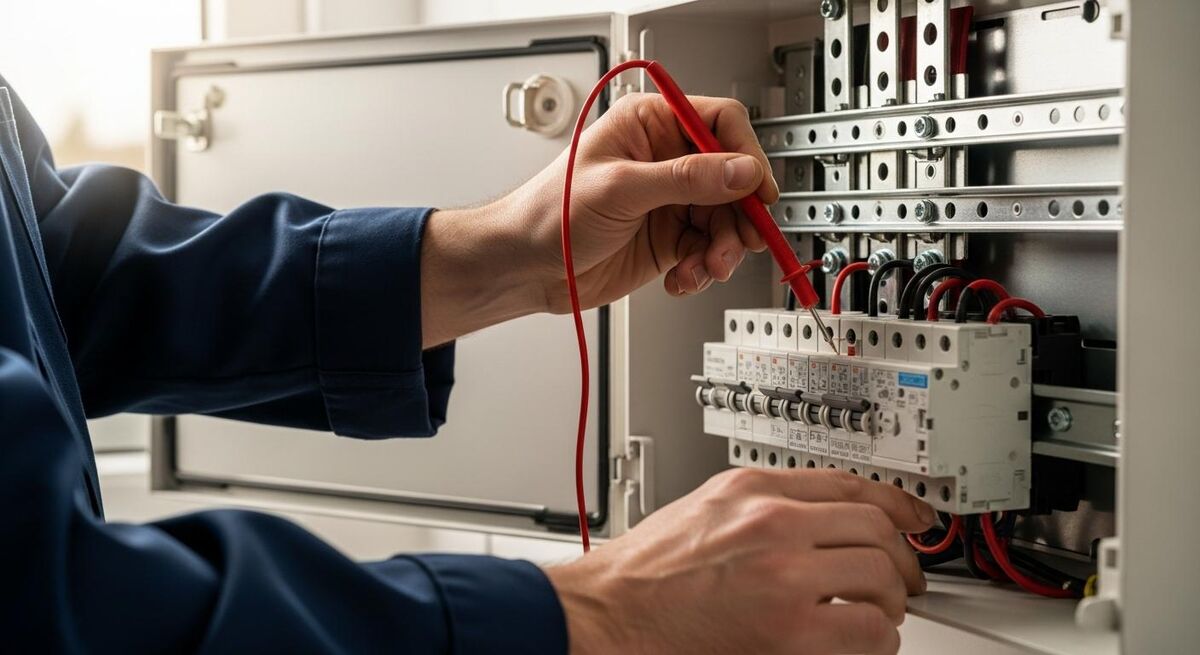
BS 7671:2018 + A4:2026 was officially published by the IET and BSI on 15 April 2026. The trade calls it the Orange Book because of its cover. It replaces the Brown Book (BS 7671:2018 + A2:2022) and the free A3:2024 PDF bolt-on with a single consolidated standard, and it becomes mandatory for all new design work on 15 October 2026.
The previous edition stays valid up to that October date. So during the transition you can choose which one you work to, as long as you do not mix and match within a single design. After 15 October 2026, every new EICR, EIC and MEIWC has to reference Amendment 4.
The real new content
Five areas are genuinely new rather than cosmetic.
Stationary secondary batteries. Chapter 57 is new. It covers design, bidirectional energy flow, ventilation and fire risk for battery energy storage systems. This is the chapter that has been missing since battery storage became mainstream. If you fit a Tesla Powerwall, GivEnergy or Fox ESS unit, this is the chapter you are now responsible for.
Power over Ethernet. Section 716 is new and brings PoE inside the wiring regs for the first time. It sets cable and connector selection rules for SELV and PELV systems where Ethernet cable is carrying both data and DC power. PoE can now reach 90 W per port, which is enough to power LED lighting and small loads, and the heat that comes off bundled cable runs has caught people out on commercial jobs.
ICT functional earthing and bonding. A revised Section 545 distinguishes functional earthing from protective earthing for information and communications equipment. This matters for data cabinets, smart building installations and any structured cabling work feeding into the same fabric as the power.
Medical locations. Section 710 has been heavily revised. It introduces a new schedule for recording supplementary protective equipotential bonding conductor resistance. If you work on dental practices, GP surgeries, veterinary clinics or any clinical room, this affects how you test and document.
EICR coding. The reporting rules around Further Investigation (FI) codes have been tightened. The intent is to stop the lazy 10-minute EICR where everything gets coded FI because the inspector cannot be bothered to lift a board cover.
Unlike Amendment 3, which was a free PDF bolt-on, Amendment 4 is a paid publication. The IET price is £125 for the printed standard. NAPIT and NICEIC sell training packages on top. Budget for both.
Mark Coles, Head of Technical Regulations at the IET, summed it up well: "The days of the 'evergreen electrician' are gone. Changes in technology, installation practices and developments in standardisation are happening so quickly. It is essential that installers and designers stay well informed of what is happening in the industry."
He is right. The standard now turns over fast enough that staying on a 2018 book without updates is a real liability.
BS 5839-1:2025: the fire alarm rewrite
BS 5839-1:2025 came into force on 30 April 2025, replacing the 2017 edition. It covers fire detection and alarm systems in non-domestic premises. If you wire commercial buildings, schools, care homes or HMOs, it applies to you.
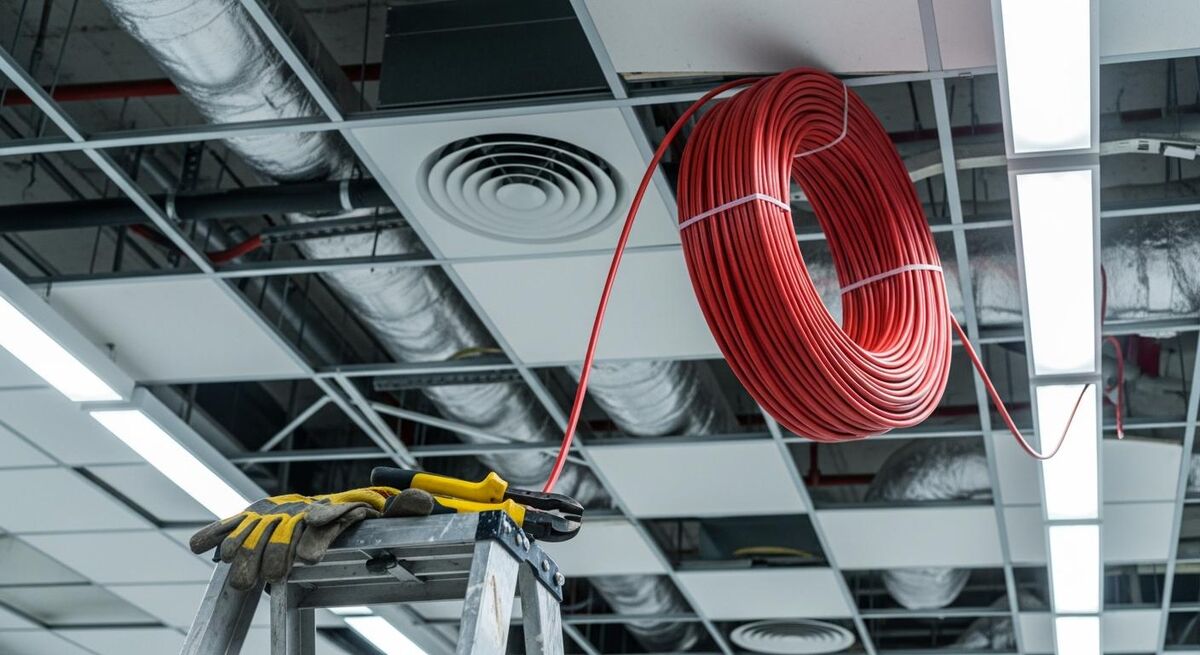
The single biggest change is cabling. All mains power circuits dedicated to the fire alarm must now use red, fire-resistant cable. Grey or white twin and earth is no longer compliant for the supply, even if it is mechanically protected. The intent is simple: anyone working on the system later should be able to see at a glance which cable is the fire alarm supply.
Other changes worth knowing
A few less-publicised changes have caught installers out.
- Smoke detectors are now preferred over heat alarms in sleeping rooms for L2 systems, on the grounds that smoke gives earlier warning.
- L4 systems now require detection at the top of lift shafts. This was a common omission in older designs.
- Battery backup sizing uses a revised calculation, which usually results in larger batteries than the 2017 standard demanded.
- Subclause numbering has been completely reworked under the BSI house style. Anything you reference on a certificate against the 2017 clause numbers needs updating.
- The philosophy of the standard shifted from supporting a "fire safety strategy" to supporting a "fire evacuation strategy." Subtle, but it changes how the recommendations apply when you are designing for a building with phased evacuation.
If you finish a fire alarm install in 2026 with white T&E on the mains supply, you will fail commissioning. There is no transition period for the cabling rule. Order red FR cable as standard from now on.
Some installers I have spoken to assume because they do mostly domestic work they can ignore this. They cannot. As soon as you take a job in a building that is not a single private dwelling, the non-domestic standard applies. HMOs above two storeys, holiday lets, offices above a shop, all of it.
MIS 3005: the heat pump standard split

The biggest structural change for heat pump installers came on 1 January 2025. MCS split the old MIS 3005 into two separate standards: MIS 3005-D for design and MIS 3005-I for installation. This was announced in 2022 but only became the current version in 2025.
The point of the split is practical. Design and install are different skill sets. Plenty of competent installers have been signing off heat loss surveys they were not really set up to do, and plenty of competent designers have been forced to also hold installer certification they did not need. Now you can choose.
MCS-certified contractors can carry both, just installation, or just design. If you only want to install systems someone else has designed, you can do that and partner with a separate licensed designer. If you want to focus on design and let other contractors install, you can do that too. Existing contractors can stay as they are or switch at their next surveillance evaluation.
What sits inside MIS 3005-I 2025
The installation standard covers heat pumps up to 70 kWth total design heat load, with no single unit exceeding 45 kWth. Design heat load has to be calculated to BS EN 12831-1:2017. Both monobloc and split refrigerant systems are in scope.
The mandatory documents in MIS 3005-D are now the audit trail for any MCS-certified install. Heat loss calculation, system design, performance estimate. If those are missing, the install does not stand up. This is where most of the complaints I have seen are now landing.
The Renewable Heating Hub recorded 25 forum posts about poor installation quality in 2021. In 2024 the same forum recorded 475. That is a 24-fold rise in three years. The split into design and installation standards is partly a response to that.
If you are a Gas Safe engineer thinking about transitioning to heat pumps, this matters for how you plan your training. Around 100,000 Gas Safe registered engineers work in the UK against roughly 4,000 active heat pump installers, and government targets need that ratio to flip. The Start with Grant scheme and other funded routes make the certification cheaper than it has been in years.
BS 6891 and IGEM UP/2: gas pipework
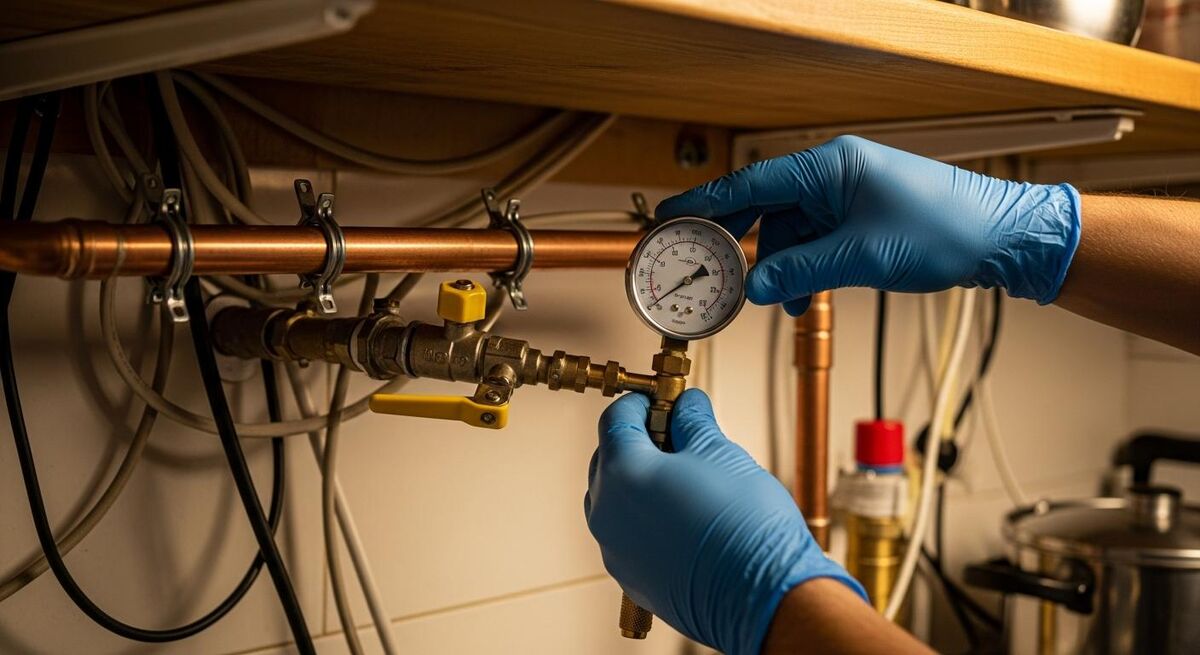
This one needs care. BS 6891 has not been formally re-issued in 2025 the way the wiring regs have. The current published version remains BS 6891:2015 + A1:2019, covering the installation and maintenance of low pressure gas installation pipework up to 35 mm on domestic premises, for 2nd family (natural gas) and 3rd family (LPG).
What did move in 2025 is IGEM UP/2 Edition 4, published in July. UP/2 is the installation pipework standard for industrial and commercial premises. The two standards work together: BS 6891 for domestic, UP/2 for industrial and commercial, with significant overlap in working pressures and pipe sizing methodology.
The practical points
Standard nominal operating pressures stay the same:
- Natural gas (2nd family): 21 mbar inlet, with a maximum 1.25 mbar drop across the meter and a further 1 mbar across the installation. Minimum at appliance: about 19 mbar.
- LPG butane: 28 mbar nominal.
- LPG propane: 37 mbar nominal.
Pipe support rules people regularly get wrong: 22 mm copper supported every 2.5 m vertical and 2 m horizontal. 15 mm copper every 2 m vertical and 1.5 m horizontal. Get this wrong on a commercial install and the inspector will fail it before they even pressure test.
Gas Safe publishes Technical Bulletins that interpret how BS 6891 and the Gas Safety (Installation and Use) Regulations apply in specific situations. TB 156 (pipework support for metering installations) and TB 161 (testing inlet operating pressure on cookers) are both recent. Read the bulletins for your week's work, not the whole back catalogue at once.
If you are signed up to Gas Safe, the bulletins land in your registered account. Check them. Most of the "BS 6891 has changed" rumours I hear from engineers turn out to be a Technical Bulletin clarifying an existing clause, not a new edition of the standard itself.
What this costs you in cash and time

Here is what the four standards actually cost a working sole trader to get current, before lost billable time. These are realistic numbers based on current IET, NAPIT and BPEC pricing.
| Standard | What you need | Approximate cost (GBP) |
|---|---|---|
| BS 7671 + A4:2026 | Orange Book + 18th Edition update training | £125 + £180 to £350 training |
| BS 5839-1:2025 | Standard + fire alarm CPD course | £238 + £200 to £400 training |
| MIS 3005-I 2025 | Free standard (MCS website) + Level 3 heat pump qualification | £0 standard + £1,400 to £2,500 training |
| BS 6891 + IGEM UP/2 | Existing Gas Safe ACS renewal covers this | Included in ACS recert: £450 to £600 |
For a single trader covering electrical and heating, getting fully current across all four standards in 2026 is realistically a £2,000 to £4,000 outlay including training. For an established firm, the cost per technician is similar but the lost van time hurts more.
The way to absorb this is to spread it across the year and book training during quieter weeks. Booking a Level 3 heat pump course in November when the boiler servicing diary is rammed is a planning failure, not a compliance failure.
Deadlines you cannot miss

Stop hunting for these in trade press articles. Here are the dates that matter.
Already mandatory. If you have done a fire alarm job since then on white T&E, the install does not meet the current standard. Red FR cable is now the only compliant option for the mains supply.
MIS 3005-D and MIS 3005-I are the current standards. Existing certified contractors can switch at next surveillance review.
The Orange Book is available and can be used immediately for new designs. Existing designs to the Brown Book remain valid through the transition period.
The Brown Book is withdrawn. Every new EIC, EICR and MEIWC must reference Amendment 4. CPD and update training should be done by this date, not after.
Two of these are already live. The other two are within nine months. There is no honest way to put off the planning past this summer.
What tradespeople are saying
Forum threads and review platforms tell you more about how these changes are landing than any press release. Here is a small sample of what installers and the homeowners they work for are posting publicly.
The pattern across all of these: where standards exist but enforcement is weak, the complaint volume grows fast. The MIS 3005 split and the tighter EICR coding in Amendment 4 are partly responses to exactly this kind of public pressure.
Recommended videos
Six videos worth your CPD time. The official IET launch sessions are dry but accurate. The eFIXX and BSI content is the easiest to digest in a van between jobs.
Amendment 4: 2026 to BS 7671:2018 launch
IET
What You Need to Know About BS 7671 Amendment 4 (2026)
BSI Group

Revealed: What is Inside BS 7671 Amendment 4?
eFIXX
Major Changes to Fire Alarm Standards: BS 5839-1
Scolmore Group

BS 5839-1:2025 Explained: EAL Level 3 Fire Alarm Course
Cube Group Training
Gas pipe sizing to BS 6891 within the UK
MGL Plumbing Training
BS 7671 Amendment 4: Power over Ethernet
IET

BS 7671 Amendment 4: key changes and what is coming
NICEIC
Frequently asked questions
Yes, eventually. The Brown Book is withdrawn on 15 October 2026. Every new certificate after that date references Amendment 4. You can use the Brown Book up to October but you cannot operate without an Orange Book after that. Buy it now and start the CPD work.
No. BS 5839-1 is for non-domestic premises. Domestic fire detection sits under BS 5839-6. HMOs sit awkwardly between the two depending on size and layout, so check the specific guidance for the property type before you quote.
Yes, since 1 January 2025. The split into MIS 3005-D and MIS 3005-I means you can hold installation certification only and partner with a separate licensed designer. Useful if you want to focus on the physical install and not own the heat loss survey work.
No. The current published version is still BS 6891:2015 + A1:2019. What did move in July 2025 is IGEM UP/2 Edition 4, the parallel standard for industrial and commercial pipework. Most of the "BS 6891 has changed" chatter you see is people confusing the two, or referencing a Gas Safe Technical Bulletin.
There is not one. BS 5839-1:2025 came into force 30 April 2025 with no transition period for the cabling rule. Red fire-resistant cable is mandatory for fire alarm mains supplies from that date. If you have wired anything else since, that install does not meet the current standard.
Yes. Domestic battery installations fall under Part P notification through your competent person scheme. From October 2026 they also have to be designed and tested against Chapter 57 of BS 7671 Amendment 4. Both apply.
My verdict
The four standards that have moved are not a coincidence. Energy storage, smart buildings, heat pumps, and fire safety are all areas where the industry has been ahead of the standards for years. The standards have now caught up. If you plan the training spend now and book your update slots before September, the October 2026 deadline is not a problem. If you wait until August, the good training providers will be fully booked and you will be paying double for last-minute slots. The cost of being current is small. The cost of being two amendments behind on an EICR is your business.
Read the standards that apply to your trade. Read them properly, not just the trade press summary. Then put two dates in your diary: one for booking training, one for the October 2026 cut-over. The rest of compliance is just admin.
For more on the wider regulatory picture, see our guides on the Level 3 EICR qualification deadline, the EICR renewal cliff, building control notifications, and the Part L changes that interact with all of this. Also worth a read: our Gas Safe Register guide if you are weighing up the heat pump transition.