
Quick Answer
Part L 2026 (the Future Homes Standard) was published on 24 March 2026 and comes into force on 24 March 2027, with a 12 month transitional period to 24 March 2028. Any new home registered after the deadline must produce at least 75% less carbon than a 2013 home. In practice that means a heat pump or heat network instead of a gas boiler, solar PV equivalent to 40% of the ground floor area, an airtightness target tightening from 8 to 4 m³/h·m², SAP 10.3 (and eventually the Home Energy Model) instead of SAP 10.2, and a BREL report with geotagged photographic evidence of every key build stage. Get the paperwork wrong and the property will not sign off. Get the install wrong and you are looking at deconstruction, retrofit, and a bill that swallows the job margin.
Table of Contents
- What changed and when
- The headline numbers
- The fabric changes that affect every site
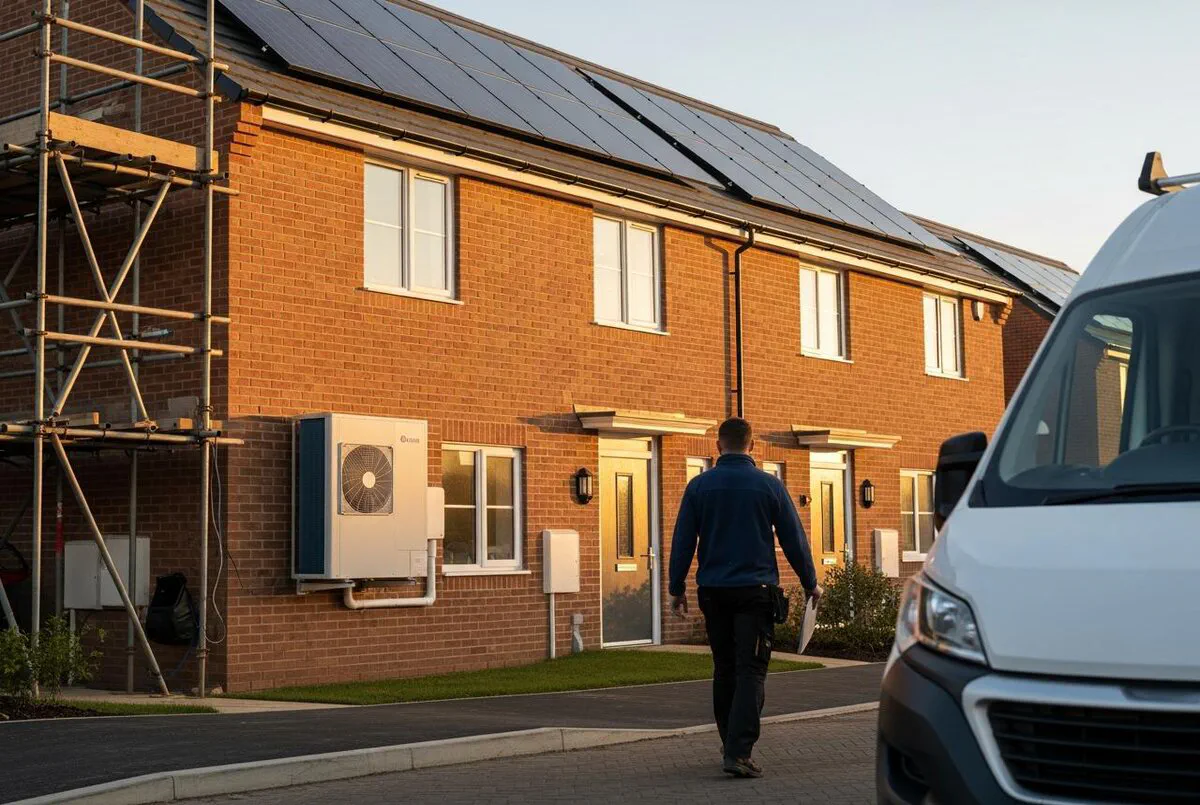
- Low-carbon heating: gas out, heat pumps in
- Solar PV is now a default, not an upgrade
- SAP 10.3, HEM and how compliance is calculated
- BREL reports and photographic evidence
- What non-compliance actually costs
- AI tools that take the pain out of SAP and BREL
- A 90 day action plan for builders and installers
- What tradespeople are saying
- Recommended videos
- Frequently asked questions
- My verdict
What changed and when

The Ministry of Housing, Communities and Local Government published the final Approved Documents for the Future Homes Standard on 24 March 2026. The standard sits on top of Part L (Conservation of Fuel and Power), Part F (Ventilation), Part S (Infrastructure for Charging Electric Vehicles) and Part O (Overheating). For builders and installers the headline date is 24 March 2027, when the regulations come into force.
There is a 12 month transitional period to 24 March 2028. Any project where a building notice, initial notice or full plans application has been submitted before 24 March 2027 can build to Part L 2021, provided work has commenced before the deadline and is completed within the transitional window. After that the new standard applies in full.
The phrase “commenced work” is doing a lot of heavy lifting here. Building control bodies are already signalling that token excavation will not count. They want to see a real start: foundations dug, oversite prepared, formal site inspections logged. If the plot is registered late and the build then stalls, the developer will be pulled onto the new standard mid-build. That is where the costly rework starts.
The headline numbers
If you do not have time to read 380 pages of statutory guidance, these are the numbers that matter on site:
- At least 75% lower carbon emissions than an equivalent home built to 2013 standards. The previous uplift in Part L 2021 was 30%.
- Notional dwelling U-values: 0.15 W/m²K external walls, 0.11 W/m²K floors, 0.11 W/m²K roofs, 1.2 W/m²K windows, 1.0 W/m²K doors. The previous notional was 0.18 / 0.13 / 0.11 / 1.2 / 1.0.
- Airtightness target of 4 m³/h·m² @ 50 Pa for the notional dwelling. The previous benchmark was 5, and the worst legal value used to be 8. Many builders will need a parge coat, taped membranes or improved detailing to hit this.
- Heat pump or heat network as the default heating system. Gas boilers will not pass the new TER calculation on a typical new build.
- Solar PV array equivalent to 40% of the ground floor area on most dwellings. Battery storage is not mandatory but is strongly recommended.
- SAP 10.3 from launch, with the Home Energy Model (HEM) replacing it in due course. The DER, TER and Dwelling Fabric Energy Efficiency (DFEE) metrics all remain.
- BREL report with geotagged photographic evidence on every plot, signed off by an On Construction Domestic Energy Assessor (OCDEA) before completion.
The fabric changes that affect every site
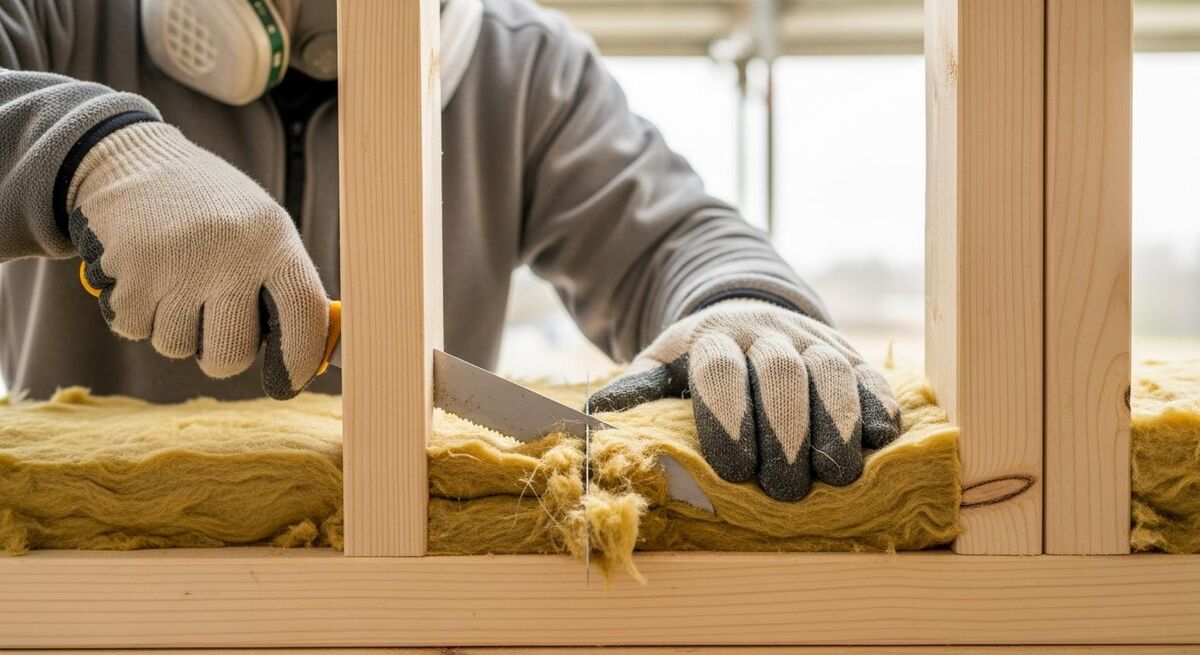
The U-values themselves are tighter, but they are not radical. The bigger change is the airtightness target and what that means at trade interfaces. Plumbers, electricians, sparks, joiners and plasterers all share responsibility for the result. One badly sealed soil pipe penetration, one row of unmarked sockets without back boxes parged, one careless top plate on a stud wall, and the property fails the air test.
Working out where the leaks come from is a job in itself. CDM-style coordination across trades is no longer a nicety. The principal contractor (or principal designer on smaller domestic jobs) needs an airtightness strategy in the construction phase plan that names who is sealing what.
External walls
A typical timber frame meets 0.15 W/m²K with a 140 mm stud cavity filled with mineral wool, plus 50 mm PIR or wood fibre as an internal liner. Masonry achieves the same with a 150–175 mm full-fill cavity using high performance bead or batt. Both work. Neither is cheap.
Floors and roofs
The 0.11 W/m²K target on floors and roofs means thicker PIR (typically 150–180 mm on a ground bearing slab), or beam-and-block with insulated screed. Roof construction is straightforward at warm roof level but only if the eaves detail is sealed. Bird stops, soffit strips and overhang detailing all become air-leakage points if done in a hurry.
Glazing and doors
1.2 W/m²K windows are well within the range of standard double glazed Argon units with low-e coatings; triple glazing is not formally required. 1.0 W/m²K doors are a step up: most off-the-shelf composite doors meet it, but cheap timber doors and older patio sliders do not. Specify before ordering.
Airtightness, the real test
Air pressure testing is now done on every plot rather than a sample. A blower door test takes 90 minutes and runs around £250–£400 per dwelling. The pulse test method, accepted under the Approved Documents since 2021, is faster but still single-plot.
Low-carbon heating: gas out, heat pumps in
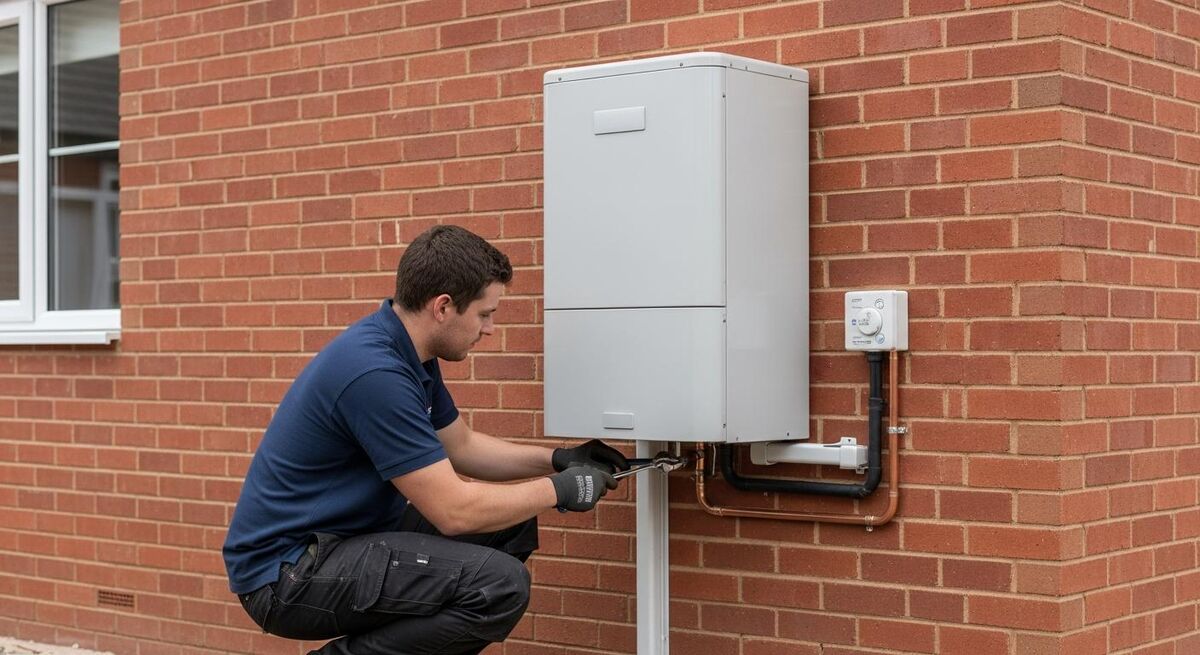
This is the part that has the heating trade either rubbing its hands or worried sick, depending on what work the business actually does. Gas and oil boilers will not meet the new Target Emission Rate on a typical new home. Communal and district heat networks are permitted; hybrid systems can work in specific cases; but for a standard semi or detached, the realistic route is an air source heat pump (ASHP) or, more rarely, a ground source unit.
Henrik Juhl Hansen, Managing Director of Vaillant Group UK and Ireland, called the publication “a hugely positive step and a clear signal of the Government’s commitment to the transformation towards low carbon heating solutions.” That is the manufacturer view. The installer view is more cautious. Neil Sawers, Commercial Technical Manager at Grant UK, was blunt in the same news cycle: “adding a potential 200,000 heat pump installations per annum overnight would not be possible.”
That gap between policy and capacity is the opportunity for the trades who do qualify. The UK has roughly 3,000 MCS-certified heat pump installers today. Government modelling suggests we need around 7,000 by the end of the decade. The companies that get their staff trained now will pick the jobs they want.
Pipework sizing matters more than ever. Heat pumps need low flow temperatures (typically 35–45°C) to hit a good Seasonal Coefficient of Performance. That changes radiator sizing, and most new builds are now designed with underfloor heating to the ground floor as the default heat emitter. Gas Safe registration is still required for any gas appliance work, but the work itself will shrink over the next decade.
Solar PV is now a default, not an upgrade
The notional dwelling under the Future Homes Standard includes a solar PV array equivalent to 40% of the ground floor area. For a 90 m² semi that is a 36 m² array, roughly 4–5 kWp depending on panel choice. For a 60 m² flat with limited roof access there are realistic alternatives, including communal solar or wider site arrays.
Ben Rowlands, head of solar PV at the National Federation of Roofing Contractors, has flagged the practical issue: “rooftop solar is a roofing system decision as much as an electrical one, and the current accreditation framework does not reflect that.” The reality is that the roofer and the electrician have to coordinate or someone is back on the scaffold the week after handover fixing a flashing detail or a junction box.
Most installers should be looking at integrated systems (in-roof rather than on-roof) for new build. They look better, they leave the warranty cleaner, and they avoid the slate-lifting that on-roof brackets sometimes cause. MCS certification is mandatory for the install to count toward Future Homes Standard compliance.
SAP 10.3, HEM and how compliance is calculated

The Standard Assessment Procedure is the method used to demonstrate compliance. In February 2026 MHCLG confirmed that SAP 10.3 would be the methodology at launch, with the Home Energy Model (HEM) replacing it once the wider modelling ecosystem catches up.
The three energy efficiency metrics retained from Part L 2021 are:
- Dwelling Emission Rate (DER): predicted annual CO&sub2; emissions in kgCO&sub2;/m².
- Target Emission Rate (TER): the regulatory benchmark, calculated from the notional dwelling.
- Dwelling Fabric Energy Efficiency (DFEE): heat loss through the fabric.
Compliance requires the DER to be lower than the TER. A new metric, the Primary Energy Rate (DPER), is also retained from 2021 to capture the total upstream energy use including fuel production.
The shift to HEM, when it lands, is significant. HEM models the building on an hourly basis (8,760 calculations per dwelling per year) rather than monthly. That captures heat pump performance, smart controls and battery storage more accurately than SAP ever could. It also makes it much easier to fail by accident: if your design assumes 35°C flow temperature on a heat pump but the radiators are sized for 50°C, HEM will catch it.
BREL reports and photographic evidence
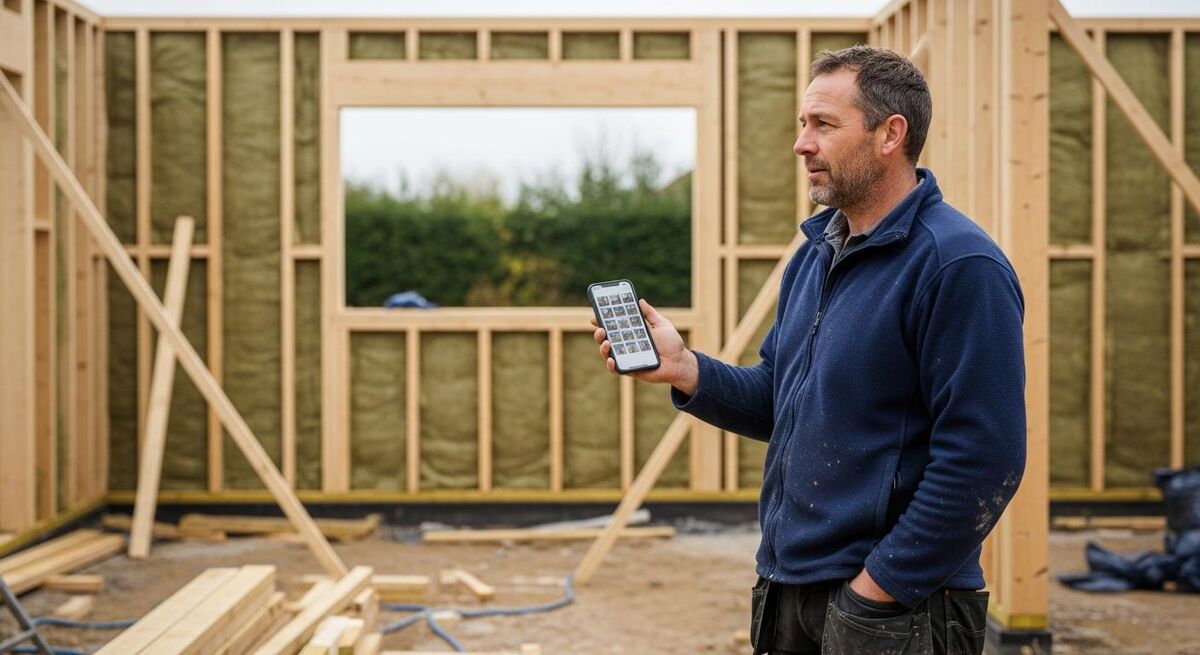
This is the change that catches builders out. The Buildings Regulations England Part L (BREL) report was introduced in June 2022 as part of Part L 2021. Under Part L 2026 it stays, and the photographic evidence requirement is enforced harder than ever.
The BREL pack needs photos of every key construction stage, plot by plot, with geolocation, date and time. The OCDEA reviews the pack and signs the report. Building control will not issue a completion certificate without it.
The standard photographic record covers:
- Foundations: thermal continuity at the perimeter, insulation under the slab.
- External walls: insulation correctly fitted, no gaps at openings.
- Roofs: insulation thickness, eaves continuity, ventilation detailing.
- Openings: window and door reveals insulated, sealed and taped.
- Airtightness barriers: membranes, parge coats, sealant beads at penetrations.
- Services: boilers, heat pumps and MVHR units labelled with manufacturer and model.
- Renewables: solar PV array installed, inverter labelled, isolator and meter visible.
Most builders are now using a smartphone app (Sablono, AutoBREL, Zutec, Asite or similar) where the trades take the photos as they work, tagged automatically. That is the cheapest way to keep the pack clean. The expensive way is to leave it until handover and pay a consultant to chase the photos retroactively.
What non-compliance actually costs
The headline penalty for a Building Regulations breach is up to £5,000 per offence under section 35 of the Building Act 1984, with additional £50 daily fines for continued non-compliance. In practice the fine is rarely the largest cost. The bigger cost is remediation.
Three scenarios builders should plan for:
- BREL pack incomplete at handover. Building control refuses completion. The property cannot be sold or let. The developer pays consultants £1,000–£3,000 to investigate, plus any opening-up costs. A delayed sale on a single plot can cost £5,000–£10,000 in carrying costs alone.
- Airtightness test fails. Common on the first plot of a site as trades work out the detailing. Costs typically include resealing penetrations, additional taping at joins, and a re-test (£250–£400). On a serious failure, internal finishes have to come off.
- Heating system underperforms. The DER exceeds the TER. The heat pump may be undersized, or the flow temperature design wrong. Fixing it can mean a larger heat pump, larger radiators, or an additional UFH circuit. Costs run from £1,500 to £10,000 per plot.
For the cost implications of working on higher-risk buildings (anything over 18 m or 7 storeys) read our companion guide on the Building Safety Act. For the certification side of getting on site in the first place, our building control notifications guide sets out the notice and inspection process.
AI tools that take the pain out of SAP and BREL
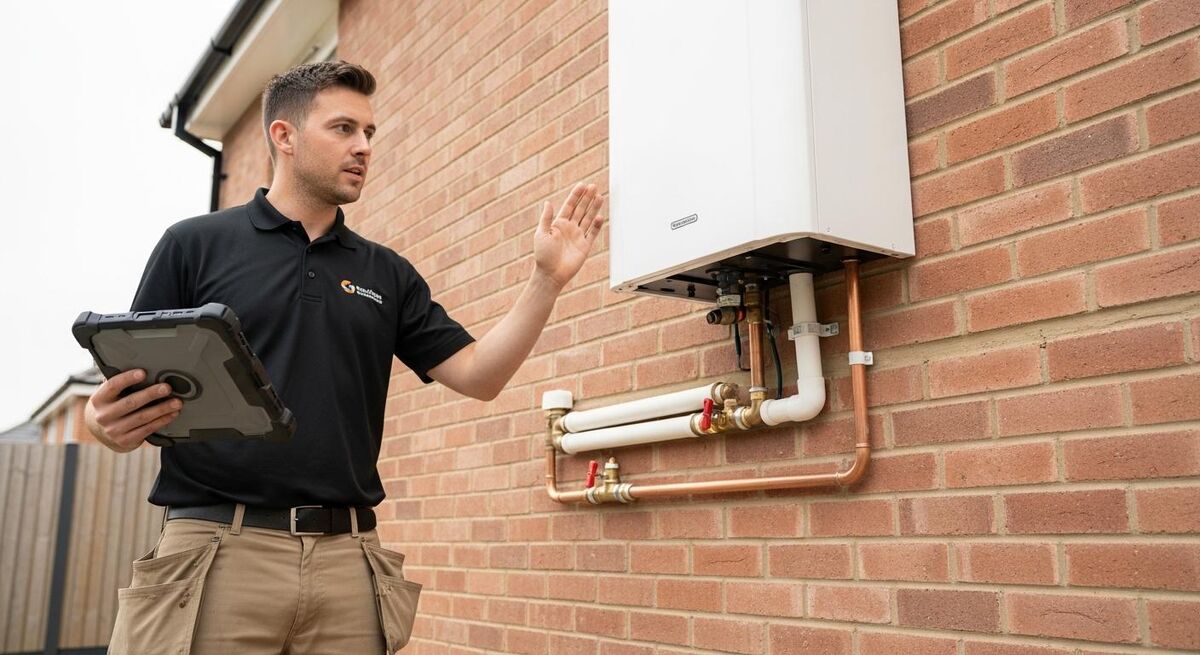
SAP calculations and BREL evidence packs have historically been the architect and energy assessor’s problem. Under Part L 2026 they are also the builder’s problem. AI tools are starting to bridge that gap.
There are three categories worth knowing about.
SAP and HEM assistants
Tools like AutoBREL and dynamic SAP modelling plug-ins are starting to use AI to flag compliance risks at design stage. Upload the architect’s drawings and the U-value spec, and the tool tells you whether the build will pass before the foundations are dug. That used to be an iterative process; SAP assessor, three reworks, two weeks. The AI version does it in an hour.
BREL photo capture and auto-tagging
Apps from Sablono, Zutec, Asite and Sitemate let trades take photos in-app. The AI auto-categorises each photo against the BREL schedule (foundations, walls, openings, services) and flags any missing items. The OCDEA reviews the pack in a fraction of the time, and the site team know in real time whether the pack is complete.
ChatGPT and Claude for the technical reading
Approved Document L Volume 1 runs to over 200 pages. The Government Response document, regulations, and supplementary technical guidance push the total past 800 pages. Drop the relevant PDFs into ChatGPT-5 or Claude 4.5 and ask plain English questions. “What is the U-value target for a curtain wall under FHS?” “Does the airtightness test have to be done before the EPC?” “What evidence does building control accept for a battery storage installation?” You will get a faster, more accurate answer than reading the whole document.
None of this replaces the OCDEA, the building control officer or your own judgement. It replaces the slow, painful bits in the middle.
A 90 day action plan for builders and installers
If you are running a small to medium trades business and want to be ready for Part L 2026 before the deadline, here is the timeline I would work to. The deadline is March 2027. That is closer than it looks.
Days 1–30: Audit
- List every project on the books with a likely completion after March 2027. Confirm which side of the transitional period each one sits.
- Identify the gaps in your own qualifications. MCS for heat pump installers. NICEIC or NAPIT MCS PV for electricians. Part P already covers most domestic electrical work.
- Read the Approved Documents (or feed them into an AI assistant and ask focused questions). Know your U-value targets, airtightness target and BREL photo schedule cold.
- Identify your OCDEA. Build the relationship now, not when you need the first BREL pack.
Days 31–60: Training and tooling
- Book any missing certifications. MCS heat pump training runs three to five days and costs £1,500–£2,500. Solar PV MCS training is similar.
- Pick a BREL evidence app. Trial it on a Part L 2021 job first so the team has the muscle memory when the deadline lands.
- Run a toolbox talk on airtightness with every trade in your supply chain. Cover the simple things: parge coats behind sockets, sealing soil pipe penetrations, taped membranes at openings.
Days 61–90: Pricing and contracts
- Update your standard quotes to include a line for SAP and BREL fees. £200–£500 per plot, billed to the developer.
- Add airtightness testing as a line item. £250–£400 per plot.
- Add a contract clause that identifies who carries the risk if a plot fails air test or BREL review on first attempt.
- Get your suppliers to confirm in writing that the products they are quoting will meet the new U-values. Cheap PIR alternatives that worked under 2021 may not work under 2026.
What tradespeople are saying
Recommended videos

Why Heat Pumps WIN in the Future Homes Standard
eFIXX

Heat pumps explained: the future of home heating
Nesta

The Future of Home Heating: Heat Pumps vs Gas Boilers
The Outspoken Engineer
Air Tightness Testing: UK Building Compliance
UK Building Compliance

What happens during an air pressure test?
ATSPACE

Air pressure testing: when should it be done in your build?
ATSPACE
Frequently asked questions
It applies to any new dwelling where a full plans application, building notice or initial notice is submitted on or after 24 March 2027. There is a 12 month transitional period to 24 March 2028 for plots registered before the deadline and meaningfully started. If you are quoting a new build today that will hand over after spring 2028, plan for Part L 2026.
Not in name. They are banned in practice. The Target Emission Rate cannot be met by a gas boiler on a typical new build. There is no outright legal prohibition; the regulations just make the compliance maths fail. Hybrid systems can work on specific properties (rural off-gas grid, for example) but they will not be the default.
Yes, but the targets are softer. Approved Document L Volume 1 covers new dwellings. Existing dwellings (extensions, conversions, retrofit) fall under separate guidance with more flexible U-value targets. Major renovations that exceed 25% of the surface area of the building still trigger fabric upgrade requirements.
The developer pays the OCDEA, typically £200–£500 per plot. The trades do the photographing. If a trade refuses to take photos at the right time, the rework cost ends up with whoever the contract says is responsible. Get this in writing before starting.
SAP 10.3 is the existing methodology, modified for Future Homes Standard compliance, and runs on monthly time steps. HEM (Home Energy Model) replaces it once the modelling ecosystem catches up; it runs hourly and captures heat pump performance, smart controls and battery storage more accurately. From launch, you can use SAP 10.3 only. HEM becomes mandatory once MHCLG publishes the transition date.
For Boiler Upgrade Scheme grants, yes. For new build under Future Homes Standard, MCS certification is not the only route but it is the most straightforward. Without MCS the developer needs to find an alternative compliance pathway, which most will not bother doing. If you want the new build work, get MCS.
You reseal and re-test. The cost is yours (or the developer’s, depending on contract) and runs £250–£400 per re-test. On a serious failure, finishes have to come off and the airtightness barrier rebuilt. The first plot on a new site is the most likely to fail. Treat it as a learning exercise and budget for one re-test per site.
No. Solar PV is required at 40% of ground floor area on most new builds. Battery storage is permitted, encouraged and rewarded in the SAP / HEM calculations, but it is not mandatory. On smaller homes where roof space is limited, a battery improves the overall numbers and may push a borderline build over the line.
They are separate but overlapping. Part L is about energy performance. The Building Safety Act is about safety and fire risk in higher-risk buildings (HRB). Both feed into the same construction phase plan and the golden thread of documentation on HRB projects. On a standard low-rise new build, Part L is the live one. On anything above 18 metres or 7 storeys, both apply and the workload roughly doubles. See our Building Safety Act guide for the full picture.
My verdict
Part L 2026 looks daunting on paper. In practice the build itself is not radically different; it is the paperwork, the airtightness discipline and the heating system that change. The companies that train their teams on heat pumps and solar PV now, that pick a BREL evidence app and use it on every Part L 2021 job between now and the deadline, that build airtightness toolbox talks into every site meeting, will be quoting confidently when their competitors are still working out what an OCDEA does.
The cost is real. £1,500–£2,500 for MCS training. A subscription for an evidence app. An OCDEA on speed dial. A specification meeting on every new build instead of a phone call. The return is straightforward: when developers are looking for a contractor in spring 2028 who can hit the new standard first time, you want to be on that shortlist. Not on the “we’ll see if they can” list. Book the training, set up the tooling, and start practising on Part L 2021 jobs now. The deadline only feels distant until it lands on the next quote.