
Quick Answer
The Building Safety Levy starts on 1 October 2026 in England. It applies to any new residential development of 10 or more dwellings (or 30+ bedspaces for purpose-built student accommodation). Rates run from £12.70 per square metre in County Durham to £100.35 per square metre in Kensington and Chelsea, with a 50 percent discount on previously developed (brownfield) land. The charge is based on Gross Internal Area, billed by the local authority, and your completion certificate will not be issued until it is paid. The Home Builders Federation estimates an average impact of around £3,000 per plot, so it needs to be in your land appraisal and your tender price now, not in October.
Table of Contents
- What the Building Safety Levy actually is
- Who pays it, who is exempt
- The rates, the £3,000-per-plot figure, and the postcode lottery
- How the calculation works (GIA, brownfield, worked examples)
- Timing, payment, and the completion certificate trap
- Factoring it into project budgets and tenders
- What it means if you are a subcontractor, not a developer
- Preparing your business before 1 October 2026
- What the industry is saying
- Recommended videos
- Frequently asked questions
- My verdict
What the Building Safety Levy actually is

The Building Safety Levy is a new tax on residential development in England. It was created under the Building Safety Act 2022 and is given effect through the Building Safety Levy (England) Regulations 2025. The government wants to raise around £3.4 billion over a 10-year period to fund the remediation of unsafe cladding and other building safety defects exposed by Grenfell.
It is collected by local authorities, not HMRC. Your local council is the collecting authority for any development in its area. Once the levy is unpaid, the building control authority is not allowed to issue a completion certificate. No certificate means no occupation, no sale, no end of contract. That is the enforcement teeth, and it works because the certificate is the moment cash actually moves.
Two important boundaries to be clear about before anything else. First, this is an England-only tax. Scotland is developing its own version (the Scottish Bill is at Stage 1), Wales and Northern Ireland are not in scope. Second, it applies on top of the Residential Property Developer Tax, the 4 percent tax on developer profits above £25 million. It is not a replacement for any existing charge, it is an additional one.
Who pays it, who is exempt

The person liable for the levy is the client on the building control application. In practice that is almost always the developer. The contractor building the homes is not directly liable, and the subcontractors definitely are not. But "not directly liable" is not the same as "not affected", and we will come back to that in the tenders section.
Scope is wider than most people think. The levy is not just for high-rise developments or higher-risk buildings under the Building Safety Regulator. It applies to all residential development of 10 or more dwellings (or 30+ bedspaces for purpose-built student accommodation), regardless of height. A two-storey housing estate of 12 homes is caught. So is a 30-bedspace student block. So is a build-to-rent scheme, a co-living development, and most mixed-use schemes with residential floorspace.
What is exempt
The government has carved out a handful of important exemptions:
- Developments of fewer than 10 dwellings (or fewer than 30 PBSA bedspaces). This is the SME-protection threshold the National Federation of Builders and the FMB pushed hard for. It is not generous, but it is real.
- Affordable housing, provided there is a planning obligation tying the units to no more than 80 percent of market rent or 70 percent of market sale price.
- Supported housing, exempt accommodation, and homes built by non-profit registered providers of social housing.
- NHS hospitals and certain care home formats.
- Domestic extensions and refurbishments, because the levy only bites on new dwellings.
The grey area: mixed-use schemes
Mixed-use schemes are the trickiest. If your scheme has commercial floorspace on the ground floor and residential above, only the residential GIA counts towards the charge. Communal residential areas (lobbies, corridors used by residents, shared amenity space) are included. Communal areas used wholly by commercial tenants are not. You need to be able to draw that line cleanly on your area schedule, because if you cannot, the local authority will draw it for you and they will not draw it in your favour.
The rates, the £3,000-per-plot figure, and the postcode lottery
Rates are set per local authority in Schedule 3 of the official Building Safety Levy guidance. They are calibrated to local house prices, which means London and the South East pay far more than the North and the Midlands. The full undiscounted range is £12.70 to £100.35 per square metre, with a mean of around £33 per square metre.
| Local authority area | Standard rate (£/m²) | Brownfield rate (£/m²) |
|---|---|---|
| Kensington and Chelsea | £100.35 | £50.17 |
| Westminster | ~£95 | ~£47.50 |
| Most of Outer London | £45 – £70 | £22.50 – £35 |
| South East / South West average | £30 – £50 | £15 – £25 |
| Midlands average | £20 – £35 | £10 – £17.50 |
| North West / Yorkshire average | £15 – £25 | £7.50 – £12.50 |
| County Durham | £12.70 | £6.35 |
The full table runs across all 296 English local authorities. Always look up your specific LA on the GOV.UK rates schedule before you put a number on a tender, because regional averages mask significant within-region variation.
The Home Builders Federation puts the average impact at around £3,000 per plot. That is the headline figure quoted everywhere, but it hides huge variation. The widely-cited worked example is a four-bedroom, two-storey, 124 m² house on greenfield land. In County Durham, that house attracts a levy of £1,574.80. The same house in Kensington and Chelsea attracts £12,443.40. Same building. Same risk. Nearly eight times the levy.
How the calculation works (GIA, brownfield, worked examples)
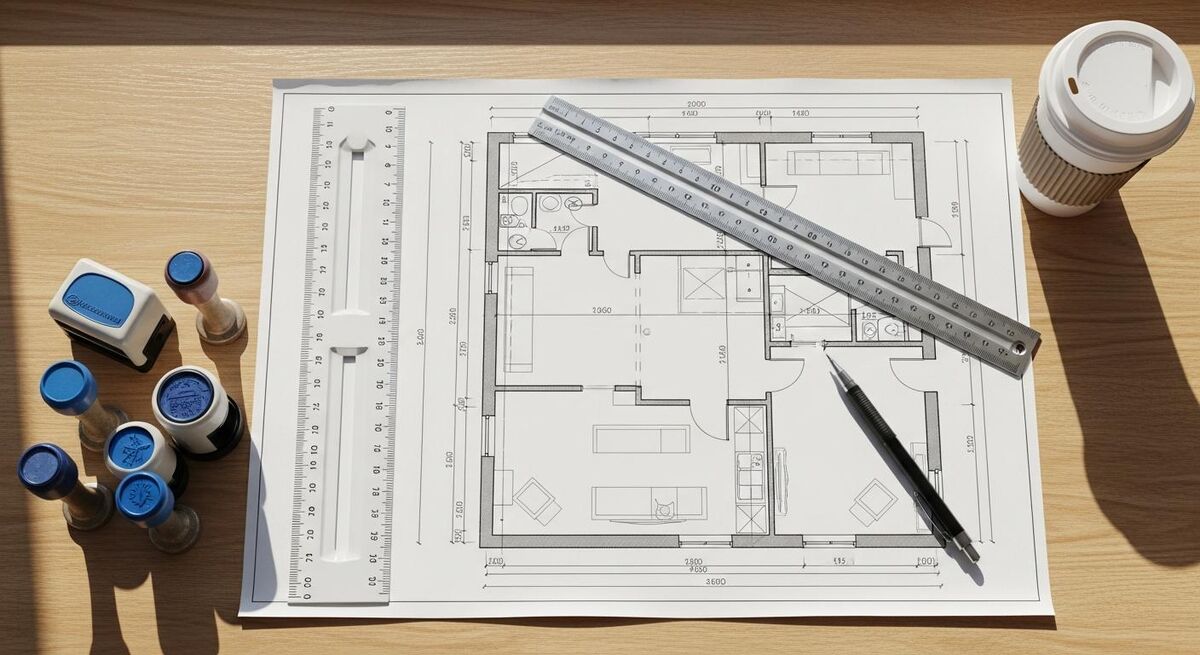
The calculation is straightforward. It is the chargeable Gross Internal Area, multiplied by the applicable rate per square metre, with a 50 percent discount applied if the site meets the previously developed land definition.
Gross Internal Area follows the RICS Code of Measuring Practice (6th Edition). You measure to the internal face of the perimeter walls at every floor. You include all habitable floorspace of every chargeable unit, and you include communal areas that are used wholly or mainly by residents (lobbies, internal corridors, residents-only amenity). You exclude open balconies, the open structure of external decks, and commercial-only floorspace in mixed-use schemes.
The brownfield discount
The 50 percent discount applies on land that meets the definition of "previously developed". That definition has a specific test. The land must have had a building on it at some point since July 1948, and at least 75 percent of the consented site must be previously developed for the discount to apply across the whole scheme. A site that is 60 percent brownfield does not get a partial discount. It pays the full standard rate.
Three worked examples
12 × 110 m² four-bed detached = 1,320 m² GIA (residential only).
1,320 × £12.70 = £16,764 total levy, or £1,397 per plot.
24 × 65 m² apartments + 180 m² communal corridors and lobby = 1,740 m² GIA.
Using a Manchester standard rate of approximately £32/m², the brownfield rate is £16/m².
1,740 × £16 = £27,840 total levy, or £1,160 per unit.
40 × 95 m² + 600 m² communal = 4,400 m² GIA.
At a Westminster standard rate of around £95/m² (no discount, because the site is only 60 percent previously developed):
4,400 × £95 = £418,000 total levy, or £10,450 per unit.
Three points to take from the worked examples. The per-plot cost varies wildly by location. The mix of brownfield/greenfield matters at a scheme level, not a parcel level. And communal floorspace is real chargeable area, so on apartment schemes with generous lobbies and corridors you pay more per unit than the headline rate suggests.
Timing, payment, and the completion certificate trap

The levy is not a single one-off charge on a single date. It is sequenced across a few key moments in the building control process.
- Building control application: You declare expected GIA, whether any exemptions apply, and whether the site is on previously developed land. The local authority calculates a provisional levy.
- Liability notice issued: The collecting authority sends a formal levy liability notice with the calculated amount. You can pay any time between this notice and completion.
- Works commencement (CIL-style notification): You confirm the start of works to the local authority, which locks in the chargeable parameters.
- Final GIA confirmation: Before completion, you confirm the actual GIA against the design figure. If the building got bigger, the levy is recalculated upward. If it got smaller, you can apply for a refund (but the local authority can be slow at this end).
- Payment due: Before the earlier of occupation or completion. No completion certificate will be issued by either the local authority or a registered building control approver until the levy has been paid in full.
What if the levy is not paid?
If the levy goes unpaid past the deadline set in the liability notice, the local authority can issue a final demand. Persistent non-payment can trigger a charge against the land, which is registered against title and rolls up interest at the standard local authority recovery rate. The certificate gate is the primary enforcement mechanism, but the land charge is the long-term one. You cannot wash this off the title without paying.
Factoring it into project budgets and tenders
This is where the levy actually changes how you bid work. The £3,000-per-plot headline only matters if it sits in the right cost line of your appraisal and the right rate of your tender. Get it wrong in one of three ways and either you eat the cost, or you lose the job, or your funding stack collapses.
For developers building speculative schemes
Treat the levy as a fixed acquisition-stage cost. It lives in the land appraisal alongside Section 106, CIL, Section 278 highways works, and statutory undertaker payments. Run the calculation against the actual scheme GIA at the masterplan stage, not the average. If you are paying agents commission on land deals, the levy comes off the residual land value, so it directly reduces what you can offer.
For developers tendering to a fixed selling price
The levy is a sunk cost that does not reduce your build cost, but it does reduce your gross development profit. On marginal schemes with thin margins (under 15 percent on GDV), an extra £3,000 per plot can flip viability. The HBF has been clear that some sites in the North and Midlands will become unviable specifically because of this charge. The honest answer on those schemes is to model it before you commit to the land deal and to walk away from sites where it will not work, rather than discovering it in the build phase.
For main contractors quoting design and build
Read the contract carefully. If the developer is the client on the building control application, the levy stays with them. If you are the client on the building control application (single-stage D&B contracts where the contractor is named as the client), it shifts to you. In that scenario you need a clear contractual flow-down with the developer for who actually carries the cost.
For trades and subcontractors
You are not liable for the levy. But you are exposed to a developer who is, and who is going to look for £3,000 per plot back somewhere. That somewhere is rarely their margin. It is usually preliminaries, contingencies, and prelims to subcontractor rates. Be ready for the conversation, and be ready to push back politely but firmly. The levy is a developer tax. It is not a trades cost. We will come back to this in the next section.
What it means if you are a subcontractor, not a developer
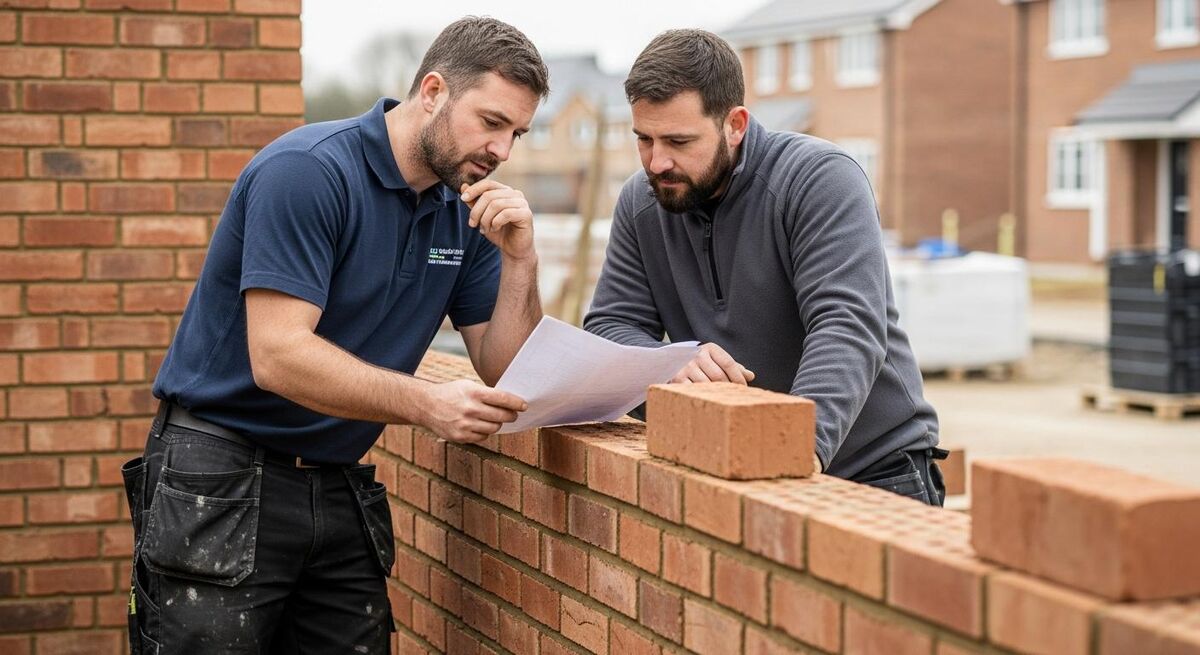
If you are a bricklayer, electrician, plumber, plasterer, roofer, or any other trade subcontracting on residential schemes, you do not have a direct liability under the Building Safety Levy. The regulations are clear about that. The client on the building control application is the chargeable person, and that is not you.
What you do have is exposure to three indirect effects that are worth being awake to.
1. Margin pressure on residential work from October 2026
Developers will look to recover the levy from somewhere. Some will absorb it. Some will pass it to land values. Some will try to claw it back from subcontractor rates and material specifications. If you are tendering to a developer who suddenly wants 5 percent off your day rate "to deal with the new levy", that is a conversation, not a fact. The levy is their tax. Hold your margin.
2. Slower payment cycles around completion
Because the levy must be paid before the completion certificate is issued, developers with stretched cashflow will be slower to confirm completion on a building. That can ripple into delayed retention release for you. If you are working on a residential scheme with completion dates in late 2026 and into 2027, build longer payment terms into your forecast and chase retention more actively than you would normally.
3. Smaller schemes becoming more attractive
The 10-dwelling threshold creates a clear behavioural incentive. Schemes of 9 units or fewer are exempt. Expect a wave of small developers consciously sizing schemes at 8 or 9 units to dodge the levy entirely. That is good news for trades who work small-site residential, and bad news for trades whose pipeline is concentrated on 20-to-50-unit schemes. The mix of work coming through is going to shift.
Preparing your business before 1 October 2026
You have a window between now and 1 October 2026 to get your house in order. Use it. The work is not difficult, but it is detailed, and it cannot be done in a panic over a long weekend in September.
For developers, a five-point checklist
- Audit your live pipeline. For every scheme that has a building control application going in after 1 October 2026, run the levy calculation now. Look up your specific local authority rates. Apply the brownfield discount only where you can prove the 75 percent test.
- Update your appraisal templates. Add a dedicated Building Safety Levy line to the cost schedule. Put it next to CIL and Section 106. Make it visible to anyone reading the appraisal.
- Review your funding agreements. Levy costs are not covered by standard development finance facilities written before 2025. Talk to your lender about whether the levy is a permitted cost under your facility or whether you need a side letter.
- Brief your legal team on contracts. Any D&B contract being signed for post-October 2026 commencement should explicitly identify who is the client on the building control application and therefore who carries the levy.
- Consider whether to accelerate live schemes. If you have a scheme that is realistically capable of getting a building control application submitted before 1 October 2026, the levy savings can justify the cost of pulling the design forward.
For main contractors, three things to do
- Train your estimators. Anyone pricing residential work needs to know the levy exists, who is liable, and how to write the standard exclusion into a tender.
- Update your contract templates. Add the levy exclusion clause to your standard tender qualifications. Make it boilerplate, not an afterthought.
- Map your residential pipeline. Identify any contracts where you (not the developer) are the client on building control. That is the contractual position to renegotiate.
For subcontractors and small trades, two things
- Know the regulations. Read at least the GOV.UK summary so you can hold the line in any tender conversation where a developer tries to push the cost onto your rates.
- Track your residential exposure. If most of your work is on 10+ unit residential schemes, expect more pricing pressure from autumn 2026. If your work is mostly on smaller projects, refurbishments, or commercial, the impact is minimal.
For broader context on the wider Building Safety Act regime, see our guide to Building Safety Act compliance requirements and cost implications. If your residential schemes are renovating older stock, our asbestos surveys guide walks through the survey work you need to commission before the build phase begins. And the BSI standards changes guide covers the trade-specific compliance moves that landed alongside the levy. The other regulatory moving piece is the building control notification process itself, which we cover in detail in the building control notifications guide.
What the industry is saying
Recommended videos

THE BUILDING SAFETY LEVY 2026
SOCOTEC Building Control

The Ground Rules: Building Safety Levy
Shakespeare Martineau
The Building Safety Levy
Mills & Reeve

Building Safety Remedies: Getting to the money
Fenwick Elliott LLP

Stage 1 Debate: Building Safety Levy (Scotland) Bill
The Scottish Parliament

The Cladding Crisis: Why is progress so slow?
ITV News
Frequently asked questions
No. The 1 October 2026 levy applies in England only. Scotland is taking a different version through its own Parliament with its own bill and rate structure. Wales and Northern Ireland have not announced equivalent charges. If your scheme is outside England, you are not in scope of the English levy.
You escape the levy on that scheme entirely. The trigger is the date the building control application is submitted, not the date works commence or complete. A complete and valid application submitted before 1 October 2026 sits outside the levy regime even if it takes three years to build out.
No. The regulations explicitly anti-fragment. The threshold is tested against the planning permission, not the building control application. A 12-unit consent split into two six-unit phases is still in scope. The government anticipated the workaround and closed it before the rates were even published.
RPDT is a 4 percent tax on residential developer profits above £25 million per year, applied at the corporate level. The Building Safety Levy is a per-square-metre charge applied at the project level. They are two different taxes, both funding building safety remediation, and developers in scope of both will pay both.
Yes, where it is used wholly or mainly by residents. Internal corridors, residents' lobbies, residents-only gyms or amenity space, plant rooms serving residential units, and shared circulation all count. Public retail concourses and commercial-tenant-only space do not. Get your area schedule right at design stage, because retro-arguing the split with a local authority is a slow process.
Not directly. The regulations are clear that the chargeable person is the client on the building control application. A developer cannot legally transfer the statutory liability to a subcontractor through contract. They can try to push the commercial cost onto your rates, which is a separate negotiation. Hold your margin and refer to the regulations if a developer tries to make you carry it.
The final GIA confirmation step before completion catches the difference. If you ended up with more chargeable area than planned (typical on schemes where balconies got enclosed or attic space got converted), the levy is recalculated upward and the additional amount is due before completion certificate. If the area shrank, you can apply for a refund.
Take expected unit count, multiply by a representative average GIA per unit (75 m² for apartments, 110 m² for houses), add 8 to 12 percent for residential communal areas if it is an apartment scheme, then multiply by your local authority rate (halved if you confidently meet the 75 percent brownfield test). That gets you within 10 percent for appraisal purposes. Refine once you have a design.
My verdict
The Building Safety Levy is not going away. The rates are confirmed, the regulations are in force, and the political consensus that someone needs to pay for cladding remediation has held across three governments now. If you are building residential work in England, the levy is a fixed cost line in your appraisal from 1 October 2026, and the right time to bake it into your tendering process is the next bid you write, not the week before it goes live.
The honest take is this. For developers building in low-cost areas it is roughly £1,500 a plot, an irritation but absorbable. For developers building in central London it can be £10,000 a plot or more, which kills viability on schemes that were already marginal. For trades and subcontractors it is an indirect pressure that you will feel in tender conversations and in slower payment cycles around completion, not a direct charge on your invoices. The most important practical move for anyone in the trade who is not a developer is to know the rules well enough that nobody can quietly push the cost onto your day rate.