
Quick Answer
The Building Safety Levy starts on 1 October 2026. It is a charge per square metre of residential floorspace on new developments of 10 dwellings or more in England, paid by the developer before a building control completion certificate is issued. Rates range from £12.70 per square metre in County Durham to £100.35 in Kensington and Chelsea, with a 50 percent discount on previously developed land. Affordable housing, care homes and developments under 10 dwellings are exempt. Government wants the levy to raise £3.4 billion over ten years to fund cladding remediation. If you are a developer, builder or main contractor on residential schemes, this is real money you need to price into your appraisals now.
Table of Contents
- What the Building Safety Levy actually is
- The big picture: scale, dates, money
- Who pays and who is exempt
- The rates by local authority
- How the calculation works
- Timeline and key dates
- Factoring the levy into project budgets
- What this means for subcontractors
- What the industry is saying
- Recommended videos
- Frequently asked questions
- My verdict
What the Building Safety Levy actually is

The Building Safety Levy is a new tax on residential development in England. It was created by the Building Safety Act 2022 and confirmed in the Building Safety Levy (England) Regulations 2025. The Government postponed it twice before settling on a start date of 1 October 2026.
The purpose is straightforward. After Grenfell, the Government needed to fund the remediation of unsafe cladding and other building defects on residential buildings over 11 metres. Some of that bill is being paid by big housebuilders through self-remediation pledges and the existing 4 percent Residential Property Developer Tax. The levy is the rest. Government wants to raise £3.4 billion from new development over the next decade and feed it into the remediation programme.
If you are reading this as a developer or a main contractor on residential schemes, you need to think about this as another line on the cost plan. Not a corporation tax. Not a stamp duty. A direct charge per square metre of residential floorspace, payable to the local authority before they will sign off your completion certificate. No payment, no certificate. No certificate, no occupation.
It is collected by local authorities, but the rules are set centrally in Schedule 3 of the Regulations. So while the rates vary by area, the mechanism is the same across England.
The big picture: scale, dates, money
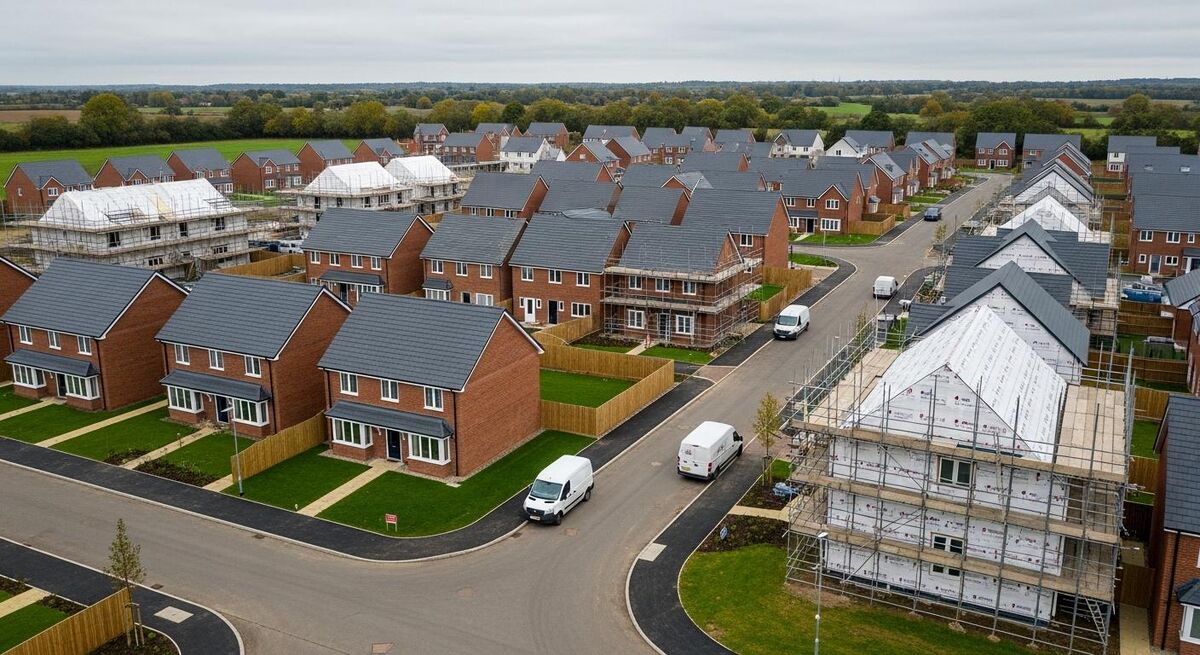
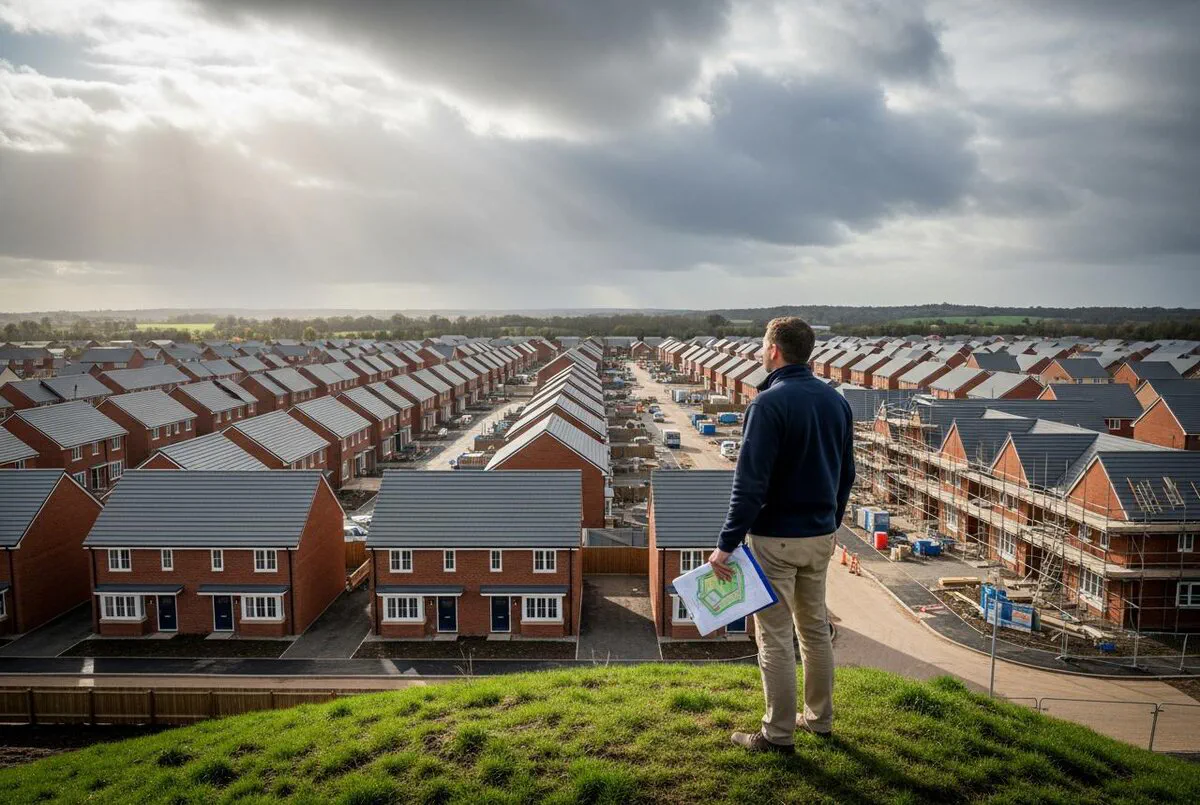
The numbers tell you why this matters. Government is targeting £3.4 billion of receipts over ten years. To raise that, the levy has to land hard on the schemes that go ahead, because half the smaller builders are exempt and brownfield sites get a 50 percent discount.
The headline rate range is broad. County Durham sits at the bottom at £12.70 per square metre on greenfield land, falling to £6.35 on brownfield. Kensington and Chelsea sits at the top at £100.35 per square metre on greenfield, £50.17 on brownfield. That is an eight times spread, driven by local house prices.
Translate that into project totals. A 500 home scheme of standard three-bed semis with roughly 47,500 square metres of floorspace would pay around £1.17 million in Leeds, around £4.66 million in Westminster. A 40 unit apartment scheme in Manchester would pay around £57,000. The HBF has been clear in its public response that this adds "thousands of pounds to the cost of new homes." That figure varies hugely by location but it is real on every scheme in scope.
You also need to know how this sits alongside other costs. Industry already pays a 4 percent Residential Property Developer Tax on profits over £25 million. Larger housebuilders signed a self-remediation pledge worth around £6 billion. The new levy is on top. It is a third lever on the same pool of residential development.
Who pays and who is exempt
Liability sits with the "named client" on the building control application. In practice that is the developer or, for self-build, the homeowner. Main contractors and subcontractors are not directly liable, but the cost will land in the appraisal one way or another, and you will see it in your contracts. More on that below.
Who is in scope
- New residential buildings with 10 or more dwellings
- Conversions and extensions that create 10 or more new dwellings
- Purpose-built student accommodation schemes with 30 or more bedspaces
- Senior living and retirement housing, unless classed as supported housing
- Mixed-use schemes, but only on the residential floorspace
Who is exempt
- Developments under 10 dwellings. This is the SME exemption. The Government inserted it to protect smaller housebuilders, though it does not protect main contractors who deliver larger schemes for someone else.
- Affordable housing. Including social rent, affordable rent, shared ownership, and other tenures that meet the planning definition.
- Non-profit registered providers of social housing and their wholly-owned subsidiaries. Joint ventures are only exempt if every party qualifies.
- Care homes, children's homes, supported housing, domestic abuse refuges, military and criminal justice accommodation, hotels.
The rates by local authority

Schedule 3 of the Regulations sets the rate for every local authority in England. The lower number is the brownfield rate (previously developed land where 75 percent or more of the redline boundary qualifies). The higher number is the standard rate. Both are pounds per square metre of chargeable floorspace.
Here is a snapshot of rates across major cities and high-cost London boroughs. Use this for indicative budgeting only; check the official Schedule 3 for the latest published figure on your specific site.
| Local authority | Brownfield rate (£/m²) | Standard rate (£/m²) |
|---|---|---|
| Kensington and Chelsea | 50.17 | 100.35 |
| Westminster | 49.01 | 98.01 |
| Hammersmith and Fulham | 45.94 | 91.87 |
| Camden | 43.56 | 87.12 |
| Islington | 39.52 | 79.04 |
| Hackney | 35.75 | 71.51 |
| Bristol | 21.48 | 42.97 |
| Birmingham | 14.62 | 29.23 |
| Manchester | 14.22 | 28.44 |
| Leicester | 13.64 | 27.29 |
| Leeds | 12.29 | 24.57 |
| Sheffield | 11.88 | 23.76 |
| Nottingham | 11.77 | 23.55 |
| Liverpool | 10.81 | 21.61 |
| Newcastle | 9.85 | 19.71 |
| County Durham | 6.35 | 12.70 |
The pattern is what you would expect. Areas with the highest sales values carry the highest rates. The Government argued this was the fair way to spread the burden, because schemes in expensive areas have more margin to absorb the cost. Whether that holds in practice is something we will only know once schemes start hitting completion in 2027.
How the calculation works
The maths is simpler than the politics. You take the chargeable floorspace of the development, measured in Gross Internal Area (GIA) as defined by the RICS Code of Measuring Practice, and multiply it by the relevant local authority rate.
A few rules sit underneath that:
- GIA includes communal areas. Lobbies, corridors and shared circulation in apartment blocks count, even though you cannot sell them. For mixed-use schemes you apportion communal areas based on the share of chargeable versus exempt floorspace.
- GIA excludes public-facing commercial space. A ground floor retail unit in a residential building is not chargeable. Neither is a basement car park.
- Brownfield discount. You get the 50 percent discounted rate if at least 75 percent of the land inside the redline boundary qualifies as Previously Developed Land. Permitted development conversions get the brownfield rate by default.
- Phased developments. The levy is charged on each phase as it comes through building control. You do not pay the whole estate up front.
- Payment trigger. The local authority issues a Liability Notice within five weeks of the building control submission. You can pay any time before completion, but the building control completion certificate will not be issued until the levy is paid in full.
Worked examples
Three quick worked examples to make the maths concrete.
Example 1: A 12-unit greenfield scheme in Leeds. Twelve homes at 90 m² each. Chargeable floorspace: 1,080 m². Standard rate: £24.57/m². Levy: 1,080 × £24.57 = £26,536. That is around £2,211 per plot.
Example 2: A 40-unit brownfield apartment block in Manchester. Forty apartments at average 65 m² plus 280 m² of shared communal space. Chargeable floorspace: 2,880 m². Brownfield rate: £14.22/m². Levy: 2,880 × £14.22 = £40,954. Roughly £1,024 per unit.
Example 3: A 50-unit greenfield scheme in Westminster. Fifty apartments at 75 m² each. Chargeable floorspace: 3,750 m². Standard rate: £98.01/m². Levy: 3,750 × £98.01 = £367,538. That is around £7,350 per unit. In Westminster, the levy alone is more than the average kitchen specification on a mid-market apartment.
Timeline and key dates
The dates that matter for any developer with a residential scheme in the pipeline:
- Now to September 2026. Get Initial Notices and full plans applications submitted before the levy starts. Applications already submitted by 1 October 2026 are not subject to the levy, provided works commence within three years.
- 1 October 2026. Levy goes live in England. All new building control applications for in-scope developments fall within the regime.
- Five weeks from submission. Local authority issues a Liability Notice with the calculated levy figure.
- Anytime up to completion. Pay the levy. Most developers will pay as late as cash flow allows, but no later than the day before they need the completion certificate.
- Year 2 onwards (2028). The Secretary of State will review the rates every three years to reflect revenue flow, remediation costs and housing market conditions.
Factoring the levy into project budgets
This is where the practical work happens. The levy needs to land in three places in your numbers: the appraisal, the cash flow, and the contract sum.
1. Build it into the appraisal at land buy stage
The levy is a real cost. Treat it like Community Infrastructure Levy or Section 106 contributions. If you are buying land on a residual valuation, the levy reduces what you can pay. Some smaller landowners will not accept a lower offer on the basis of the levy, especially in the first six months when it feels theoretical. That is fine. Walk away and let someone else overpay.
For a scheme in a typical regional market with rates around £15 to £25/m², the levy will sit somewhere between 0.3 percent and 1 percent of build value. In London at £85 to £100/m² it is closer to 1.5 to 2.5 percent. Not enormous on its own, but combined with everything else hitting development right now, it is the marginal difference between a viable site and a stalled one.
2. Plan the cash gap
The levy is paid before completion. On a scheme that funds itself from unit sales, you may have to find this from working capital, development finance or an equity top-up. For a 50 unit scheme paying £150,000 in levy, that is a meaningful cash spike at exactly the moment your build programme is most cash-hungry. Talk to your funder early. Some development finance lenders are starting to include the levy in the funded cost line; others are not.
3. Decide who carries it in the contract
If you are the developer engaging a main contractor on a design and build basis, the levy is your cost, not theirs. Make sure the building contract is clear that you, as the named client on building control, pay the levy direct to the local authority. Avoid letting the main contractor sit between you and the LA on this. Cashflow gets confused, and if the contractor goes into administration with the levy not yet paid, you still need to pay it to get the certificate.
4. Build the levy into your pricing for new sales
You will not be able to pass 100 percent of the levy onto buyers, especially in price-sensitive markets. But on a scheme where you have pricing power, factor the average per-unit levy figure into your starting price and absorb the rest through value engineering. The trade press has been clear that job-by-job profitability matters more than headline turnover. The levy is the kind of cost that quietly turns a 12 percent margin into a 9 percent margin if you do not stay on top of it.
What this means for subcontractors and trades
You are not legally liable for the Building Safety Levy unless you are the named client on the building control application. That means most groundworkers, M&E contractors, roofers, plasterers and finishing trades are off the hook directly.
The indirect effect is where it bites:
- Tighter main contractor margins. Developers will push some of the levy cost onto main contractors through more aggressive pricing. Main contractors will push some of that onto specialist subbies. Expect tougher tender returns on residential schemes from late 2026 onwards.
- More design and build, less traditional procurement. Developers want certainty on cost. That tends to favour D&B contracts, which means subbies are working under a main contractor's design responsibilities, not the architect's. Read your sub-contract carefully.
- Slower payment cycles on contested certificates. If the developer is short on cash because they have just paid a big levy bill, retentions and final accounts get squeezed. Get your applications in on time and chase hard.
- Scheme cancellations on marginal sites. The HBF is openly warning of fewer homes, particularly affordable homes. Quieter pipelines in 2027 to 2028 are a real possibility on sites that were already marginal.
What the industry is saying
The Government has held its line on the levy through two postponements and over 100 housebuilders publicly objecting. The industry response has been consistent and public. These are real, on-the-record statements from named people, sourced from trade press and official organisation websites.
Recommended videos

The Building Safety Levy 2026
SOCOTEC Building Control

The Ground Rules - Building Safety Levy
Shakespeare Martineau
The Building Safety Levy
Mills & Reeve

Remediation Contribution Orders and Remediation Orders
4 New Square Chambers
The Building Safety Act: What Do You Need To Know?
Irwin Mitchell
Navigating the Building Safety Act: What Contractors Need to Know
Constructionline
Frequently asked questions
No. The threshold is 10 or more dwellings. A single self-build is well clear of that and not in scope. The same applies to extensions and conversions that do not create 10 new dwellings.
Not directly. The liability sits with the named client on the building control application, which is almost always the developer. But you will see the cost in tighter tender margins, more aggressive pre-construction value engineering and slower payment cycles on developers who are stretched. Plan for it.
The building control completion certificate cannot be issued until the levy is paid. If the developer collapses, the levy debt sits on the property. Whoever takes over the scheme to complete it inherits the liability before they can get sign off. This is part of why funders are starting to ringfence the levy in development facilities.
Yes. The Regulations include a review and appeal mechanism. You can challenge the calculation, the area measurement, the brownfield classification, or whether the scheme is in scope at all. There are tight deadlines, so if you think the notice is wrong, do not sit on it.
The Secretary of State reviews rates every three years from year 2, considering revenue flow, remediation costs and market conditions. If the £3.4 billion target slips because development volumes drop, the temptation will be to increase rates. The opposite is also possible if the remediation programme costs less than forecast. Plan for stability in the first cycle and uncertainty thereafter.
Yes, if they create 10 or more dwellings. Permitted development conversions automatically get the brownfield rate, so the per-square-metre charge is halved. That is a small concession but it materially helps on town centre office-to-resi schemes.
The English levy does not. Scotland is progressing its own Building Safety Levy Bill on a similar model but with different rates and a separate timeline. Wales and Northern Ireland have not announced equivalent levies. If you develop across the home nations, watch the Scottish Bill closely.
For corporation tax purposes the levy will normally form part of the development cost of the property, capitalised into the project until disposal, then deducted from sale proceeds when calculating taxable profit. Speak to your accountant on the specific accounting treatment for your business; if you are already managing CIS and complex tax positions, this is one more line to track.
My verdict
I have spent twenty years in trades and tech. I have seen plenty of new taxes land on the industry. Most are absorbed and forgotten within two years. The Building Safety Levy is different because it is geographically variable, tied to the building control process, and timed to land on a sector that is already squeezed on materials, labour and finance.
If you are a developer, get your viable schemes through the door before 1 October 2026 if you can do so honestly. For schemes that will straddle the date, work the levy into your appraisal at the right rate for your local authority, and into your cash flow at the right moment in the build programme. If you are a main contractor or a subbie, the levy will not appear on your invoices, but it will appear in your client's tone, their tender returns and their payment behaviour. Track it.
The £3.4 billion target is a political number, not a market one. Government will defend it. Industry will object. Schemes will get built, but the marginal ones will not. For the rest of us, the work is the same as it has always been: know your numbers, price for the cost you can see, and have a plan for the cost you cannot.