

Quick Answer
Capital allowances let you write off the cost of business kit, vans, tools and integral building features against your taxable profit. The Annual Investment Allowance (AIA) gives you 100 percent relief on up to £1 million of qualifying spend per year, and that limit is now permanent. Full expensing gives limited companies an uncapped 100 percent first-year deduction on new plant and machinery. From April 2026 the main pool writing down rate drops from 18 percent to 14 percent, and from January 2026 leased vans qualify for a new 40 percent first-year allowance. Sole traders on cash basis can deduct most kit as a normal expense and skip allowances entirely, except on cars.
Table of Contents
- What capital allowances actually are
- The three routes: AIA, full expensing, writing down
- The 2026 rule changes you need to plan around
- Vans, cars and the pickup reclassification
- Tools, equipment and the £150 question
- Integral features and the special rate pool
- Cash basis vs traditional accounting
- AI-powered tax categorisation and MTD
- How to claim, step by step
- Common mistakes that cost you money
- What tradespeople are saying
- Recommended videos
- Frequently asked questions
- My verdict
Most tradespeople I speak to treat tax relief on kit as one of those things the accountant sorts in January. That works, until it stops. A van bought in March, a £4,000 plumbing rig, an electric pickup, a new diagnostic laptop, each of those purchases has a different tax treatment, and getting one wrong costs you real money. Sometimes thousands.
The system is not as complicated as it looks. There are three routes for relieving capital spend, a handful of carve-outs, and a couple of changes landing in 2026 that everyone running a trades business needs to understand. This guide walks through all of it in plain English, with the numbers and the practical decisions that actually matter on a return.
What capital allowances actually are

When you spend money on the business, HMRC splits it into two buckets. Day-to-day running costs (fuel, materials, phone bills, insurance) go straight against your profit as expenses. Bigger purchases that last more than a year (vans, machinery, computers, fitted equipment) are capital. They are not expenses. You cannot just deduct them.
Instead, you claim capital allowances. The allowance gives you tax relief over time, or all in one go, depending on which route applies. The principle is the same as depreciation in accounting, except HMRC sets the rules rather than your accountant. Book depreciation is added back when you file. Capital allowances are deducted in its place.
This matters because the gap between the two is where most trades businesses leave money on the table. A £25,000 van depreciated over five years at straight-line gives you £5,000 of book cost a year. A £25,000 van claimed under AIA gives you the full £25,000 deduction in year one. At basic rate that is roughly £5,000 of tax saved upfront rather than £1,000.
The three routes: AIA, full expensing, writing down
There are three ways to get tax relief on a capital purchase. Which one applies depends on what you bought, whether you are a sole trader or a company, and how much you have already spent in the year.
Annual Investment Allowance (AIA)
The headline relief. AIA gives you a 100 percent deduction on qualifying plant and machinery, up to £1 million per accounting period. Available to sole traders, partnerships, and limited companies. New and second-hand kit both qualify. The £1 million limit was made permanent in the 2024 Autumn Budget, so the cliff-edge planning that dominated previous years is gone.
The trap: AIA must be claimed in the period the kit is brought into use. You cannot carry an unclaimed AIA forward. And if your accounting period is shorter than 12 months, the limit gets pro-rated. A six-month first period gives you £500,000 of AIA, not the full million.
Full expensing (companies only)
Full expensing is the limited company version of AIA, made permanent in 2023. It gives you 100 percent relief in year one on new and unused main-rate plant and machinery, with no upper limit. Companies pay corporation tax at 19 percent or 25 percent depending on profits, so every £1 of qualifying spend reduces tax by 19p or 25p the same year.
Sole traders cannot use full expensing. It is companies only. There is also a 50 percent first-year allowance on new special rate pool kit (integral features, long-life assets, thermal insulation) which most trades businesses will rarely touch.
Writing down allowances (WDA)
Once you exceed the AIA cap, or buy something that does not qualify for the headline reliefs (most cars, second-hand assets for a company claiming full expensing, kit with private use), the cost goes into a pool and gets relieved at a fixed annual rate on a reducing balance.
Main pool: 18 percent, dropping to 14 percent from 1 April 2026 for companies (6 April for income tax). Special rate pool: 6 percent. The balance reduces each year, so a £10,000 main pool addition gives £1,800 of relief in year one, then £1,476 the year after, and on it goes until the pool falls below £1,000 and can be written off.
The 2026 rule changes you need to plan around

Three changes land in 2026 and they do not coordinate with each other, which is part of why so many trades businesses are getting tripped up.
1 January 2026: 40 percent first-year allowance on leased plant
From 1 January 2026, a new 40 percent first-year allowance applies to qualifying main-rate expenditure where full expensing is not available, mainly assets bought for leasing. For leased vans this is significant: the allowance is claimed by the leasing company, not by you, but it changes the economics of contract hire and influences quotes you will see in 2026.
1 April 2025: Double-cab pickups reclassified as cars
This one already happened but trips people up because the transition rules are messy. From 1 April 2025 (6 April for income tax), double-cab pickups with a payload of 1 tonne or more are treated as cars, not vans. No more AIA. No more full expensing. They go into the car pool based on CO2 emissions, and the company van benefit charge no longer applies (the much higher company car BIK does instead).
Pickups ordered, leased, or purchased before the transition date stay on the old van-style treatment for their useful life. So contract dates on your fleet matter. If you were planning a pickup upgrade and missed the window, the tax impact across a five-year hold is genuinely material.
1 April 2026: Main pool writing down rate cut from 18% to 14%
Confirmed in the 2025 Autumn Budget, the main pool WDA drops by 4 percentage points. Accounting periods that straddle 1 April 2026 get a hybrid rate based on days before and after the change.
For most trades businesses that stay within the £1 million AIA, this is irrelevant. AIA still gives 100 percent in year one. But if you have legacy pool balances from years where AIA was lower (the limit was £200,000 from 2016 to 2018), or you run a kit-heavy operation that regularly exceeds the cap, the slower writeoff costs real money.
6 April 2026: Making Tax Digital for Income Tax
Not a capital allowances change as such, but it changes how you record purchases. MTD for Income Tax becomes mandatory from 6 April 2026 for sole traders and landlords with combined gross income above £50,000. Quarterly digital submissions instead of the single annual return. The threshold drops to £30,000 in 2027 and £20,000 in 2028.
Capital allowances are still calculated at year-end as part of the final declaration. The quarterly updates are just summary figures of income and expenses. But the rule is that all transactions, including capital purchases, must be recorded digitally from the start of the period.
Vans, cars and the pickup reclassification
Vehicles are the area where trades businesses lose most money to bad capital allowances treatment. The rules differ by vehicle type, ownership method, and propulsion, and there are at least four common combinations worth knowing.
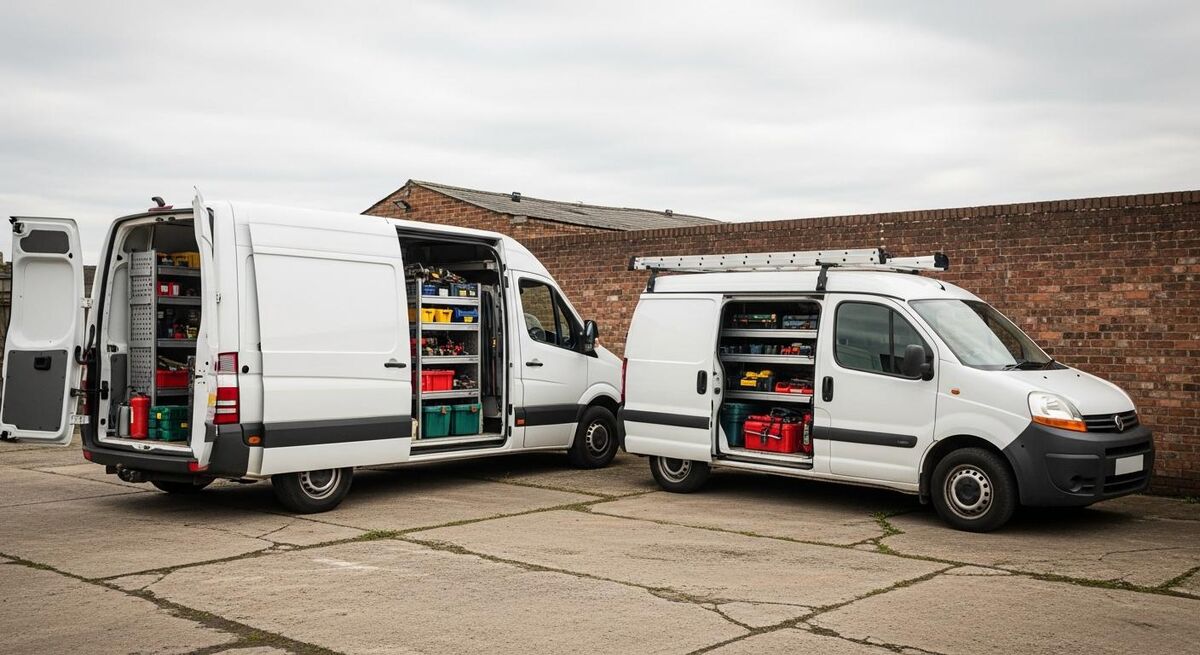
Vans owned outright
A van bought for the business, used wholly for business, qualifies for AIA in full in the year of purchase. New or used, makes no difference. If the company pays corporation tax and the van is new, full expensing also applies. Private use of a sole trader's van requires you to restrict the claim by the private-use percentage.
Vans on hire purchase
HP is treated as ownership for tax purposes. You can claim AIA in full in the year the van is brought into use, even though you are paying it off over four years. MoneySavingExpert forum users regularly ask about this and the answer is the same: HP qualifies, contract hire does not.
Vans on contract hire (operating lease)
You do not own the asset, so no capital allowances for you. The monthly lease payments are deducted as a normal trading expense instead. From 1 January 2026 the leasing company can claim the new 40 percent first-year allowance on the asset, which they may or may not pass on through cheaper rentals.
Cars
Cars never qualify for AIA. Capital allowances on cars are based on CO2 emissions:
- Zero-emission cars: 100 percent first-year allowance (extended to April 2026, then under review)
- Cars with CO2 of 50g/km or less: main pool, 18 percent (14 percent from April 2026)
- Cars with CO2 above 50g/km: special rate pool, 6 percent
For sole traders, private use of a car restricts the claim. For companies, no private-use restriction on capital allowances, but the driver pays company car BIK on the personal benefit.
Double-cab pickups (post-April 2025)
The big change. Any pickup with a payload of 1 tonne or more bought new from 1 April 2025 is taxed as a car, not a van. That means CO2-based capital allowances, company car BIK on private use, and no AIA. The transition rules let pre-April 2025 contracts continue on the old treatment, but for anything new, the maths has changed.
Tools, equipment and the £150 question
A long-running question on the trade forums: at what point does a tool stop being an expense and start being a capital item? Industry guides threads put the practical line around £150, but HMRC do not set a hard threshold. The test is whether the item has lasting use (more than two years, broadly) and whether your business treats it consistently.
Practically, most one-person trades businesses run a sensible policy:
- Consumables (drill bits, screws, gloves, blades, fuel, tape, sealant): straight expense, no allowance needed.
- Small tools under roughly £100: expense them, write off in the year.
- Larger kit (cordless drill sets, multi-tools, generators, jet washers, diagnostic equipment, racking, lockable van vault): capital allowance via AIA.
- Major investments (van, refrigerated trailer, plant, scaffolding stock): capital, claim AIA up to the limit.
The choice between expensing small tools and treating them as capital is largely about admin. AIA still gives you 100 percent relief in year one, so there is rarely a tax saving from choosing one route over the other for typical trades kit. Stay consistent and document the policy.
Tools introduced from personal use
This catches a lot of new sole traders. Kit you owned before going self-employed (or before VAT registration) does not qualify for AIA, because there is no actual expenditure in the trading period. You can still bring it onto the books at market value and claim writing down allowances on the pool, but the 100 percent upfront relief is gone. If you are about to start, buy any new tools in the name of the business after the trading start date.
Integral features and the special rate pool
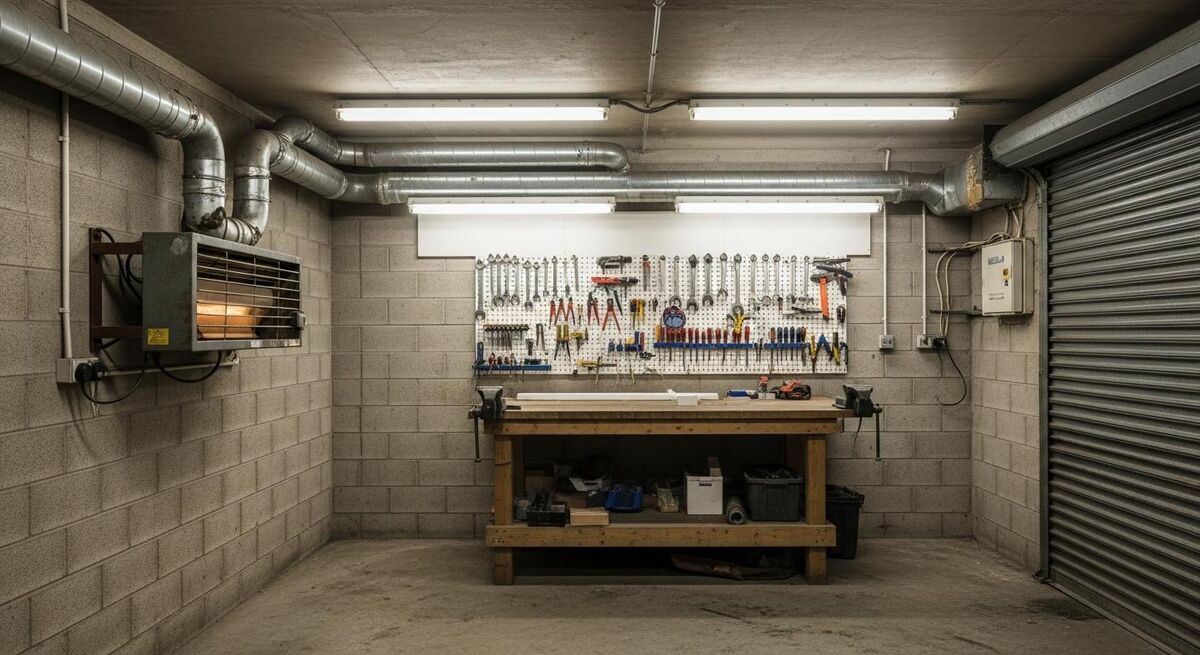
If you own commercial premises (a workshop, depot, training centre, retail unit), there is a second pool that catches what HMRC calls integral features: the electrical, heating, cooling, ventilation, lift, and water systems that are part of the building rather than free-standing equipment.
These go into the special rate pool. The writing down rate is 6 percent, unchanged by the 2026 reforms. AIA can be claimed on integral features (a quirk worth knowing), but full expensing for companies cannot. For most one-person trades businesses operating out of a leased unit, this rarely comes up, since you are not the building owner. For anyone with a freehold workshop or depot, claim it properly.
Heat pumps and other thermal insulation upgrades have specific rules. Heat pumps installed in commercial premises typically qualify as integral features (special rate pool). Some energy-efficient kit historically qualified for 100 percent ECAs (Enhanced Capital Allowances), but that scheme closed in 2020. The current 100 percent first-year allowance on zero-emission goods vehicles and electric vehicle charge points (extended to April 2026) is the residual benefit worth checking.
Cash basis vs traditional accounting
The cash basis became the default method for sole traders and partnerships from the 2024/25 tax year onwards. Under cash basis, you record income when you receive it and expenses when you pay them, and the concept of capital allowances largely goes away for most kit.
Here is how it splits:
| Asset | Cash basis treatment | Traditional accruals treatment |
|---|---|---|
| Tools, equipment, vans (business use) | Full deduction as expense in year paid | Capital allowance via AIA |
| Cars | Capital allowances apply (only car exception) | Capital allowances apply |
| Hire purchase items | Deduct payments as you make them | Full AIA in year of purchase |
| Mixed-use assets | Restrict deduction by private use % | Restrict capital allowance by private use % |
| Stock and work in progress | Not recognised, deducted when paid | Adjustments for stock movement |
For a sole-trader plumber or electrician under £150,000 turnover, cash basis is usually simpler and the tax result is the same in steady state. The exception is hire purchase. Under cash basis you only deduct the payments you make in the year. Under traditional accounting, AIA gives you 100 percent of the full purchase price in year one, even though you only paid a few months of HP instalments. That can be a much bigger upfront deduction.
Limited companies cannot use cash basis. They must use accruals accounting and claim capital allowances properly. If you are growing, the cash-basis-to-accruals switch is one of the conversations to have when you incorporate.
AI-powered tax categorisation and MTD

The bookkeeping software market has changed quickly in the run-up to MTD. Xero is rolling out AI-powered data capture directly into the platform for UK customers from March 2026, removing the need for third-party tools like Hubdoc for most jobs. QuickBooks, Sage, and Dext all now offer machine-learning categorisation that learns your patterns and suggests the right account for each transaction.
For routine spending, this is a real productivity gain. A photo of a Screwfix receipt gets parsed, coded to "consumables" or "tools", and posted to the ledger in seconds. Over a year you save dozens of hours that used to go on manual data entry.
The bit AI still gets wrong, consistently, is the capital vs revenue split. The software sees a Screwfix transaction and assumes consumables. It cannot tell you that the £900 in that transaction was a SDS Max breaker that belongs in capital allowances, not a box of nails. Same for vehicle work: a £4,000 invoice for "van service" might actually be replacement bodywork from an accident, which is a repair (revenue), or it might be a roof rack and ply lining, which is capital.
For MTD specifically, the quarterly submissions are summary figures. You do not have to do the capital allowances calculation each quarter. But the underlying data has to be in digital form from day one, so your categorisation discipline matters. Get it wrong all year and the final declaration in January becomes a four-day reconciliation job, not a four-hour one.
Software that handles capital additions properly
All the major UK platforms have a fixed assets register feature that tracks individual items, the date you bought them, the cost, and the depreciation method. Xero's is built in. QuickBooks calls it "Fixed Asset Manager". Sage has a standalone module. Use it. The alternative is a spreadsheet that gets out of sync the moment you sell a van or write off a stolen tool, and HMRC expects you to have the records.
How to claim, step by step
The mechanics differ depending on your structure.
Sole traders and partnerships
- Identify capital purchases in the period: anything over a sensible threshold (£150-£200) that will last more than two years.
- Decide on AIA vs writing down: AIA is almost always preferable. The only time to defer is if you have already used up the AIA cap or you have low profits and the relief would be wasted (capital allowances reduce taxable profit, not taxable income to nil, and unused relief carries forward in the pool).
- Restrict for private use: a van used 80 percent for business and 20 percent personal gets 80 percent of the allowance.
- Enter on SA103: the self-employment pages of your tax return have boxes for AIA claims and writing down allowances. Total capital allowances flow into the taxable profit calculation.
- Keep the fixed assets register: HMRC can ask for it. You need date, cost, description, business use percentage, and disposal details for everything you have claimed on.
Limited companies
- Capital purchases go on the balance sheet as fixed assets, not in the P&L.
- Choose AIA or full expensing: for new kit, full expensing has no cap. For used kit, AIA up to £1 million. Special rate items get the 50 percent first-year allowance if new, or AIA, or special rate pool WDA at 6 percent.
- Add to the CT600 capital allowances computation: this sits behind your corporation tax return as a separate schedule.
- Adjust for accounting depreciation: book depreciation gets added back, capital allowances are deducted in its place.
- Track disposals: when you sell a van that was in the pool, the proceeds reduce the pool balance. If proceeds exceed the pool, you have a balancing charge (taxable).
Common mistakes that cost you money
The mistakes I see most often:
- Treating a van lease as capital. Contract hire payments are revenue expenses. Only HP and outright purchase give you capital allowances. Getting this wrong means double-deducting and triggers a correction.
- Missing the AIA window on a year-end purchase. A van bought on 30 March needs to be brought into use by your year-end (31 March for most companies) to qualify for AIA in that period. A van that arrives on 1 April pushes the relief into next year.
- Not restricting private use. A sole trader who claims 100 percent AIA on a van used 30 percent for school runs gets the claim disallowed on enquiry. Restrict it from the start.
- Claiming AIA on a pickup ordered after 1 April 2025. Pickups are now cars. No AIA, no full expensing, just CO2-based WDA.
- Forgetting integral features in commercial premises. If you bought a freehold workshop and never claimed on the heating, electrical, and ventilation systems, those allowances are still available. A specialist capital allowances review can recover relief on assets going back to the purchase date.
- Cash basis sole trader buying a van on HP. Deducting only the year-one HP payments instead of switching to traditional accounting to claim full AIA. Often the single largest tax mistake a growing sole trader makes.
- No fixed assets register. Without a record, you cannot prove anything to HMRC, and you cannot calculate balancing charges when you sell.
What tradespeople are saying
Recommended videos

What is the Annual Investment Allowance (AIA)?
Tax Queen

£1 Million Capital Allowances claim - AIA
UK Property Investment Show

Introduction to capital allowances
RSM UK

What are Capital Allowances? Everything You Need to Know
Joshua Tharby

Capital Allowances - Depreciation or AIA For The Self Employed?
Tax Talk UK

Capital allowances
ANNA Money

Making Tax Digital UK Explained - 2026 Guide
Your Company Formations Ltd

The NEW Tax System Coming in 2026: Making Tax Digital
Kiran Kaur
For deeper context on related tax topics, the academy has guides on the 10 most commonly missed tax deductions, limited company vs sole trader trade-offs, the MTD automation playbook, and cash flow forecasting for trades. The Building Safety Act financial impact guide covers how regulatory compliance costs interact with capital planning.
Frequently asked questions
Yes. AIA is available on new and used plant and machinery, vans included. Full expensing (companies only) requires new and unused, but AIA does not.
Depreciation is an accounting concept used to spread the cost of an asset in your management accounts. It is added back when you compute taxable profit. Capital allowances are HMRC's tax equivalent and are deducted instead. The same purchase often has different book and tax treatments running in parallel.
No. Capital allowances are optional. You can choose not to claim in a year (useful if your profits are below the personal allowance and the relief would be wasted), and the assets stay in the pool ready to claim against future profits.
The disposal proceeds reduce the pool balance. If they exceed the pool, you have a balancing charge added to taxable profit. Keep a fixed assets register so you can calculate this properly when you sell.
Not AIA. Pre-trading assets brought onto the books at market value go into the main pool and get writing down allowances at 18 percent (14 percent from April 2026). The exception is kit bought specifically in anticipation of starting the trade, which can qualify as pre-trading expenditure and get AIA in the first period.
No. AIA still gives 100 percent in year one. The rate cut from 18 percent to 14 percent only affects the main pool balance, which is what is left after AIA, full expensing, and first-year allowances have been claimed.
Not on the building structure itself, but yes on the integral features inside it: electrical systems, heating, ventilation, water systems, lift, thermal insulation. These go in the special rate pool. AIA is available against the special rate pool, which is a useful planning point on commercial property purchases.
The quarterly submissions are summary figures of income and expenses, with no capital allowances calculation required. The capital allowances still get computed at year-end as part of the final declaration. The change is that the underlying transactions must be recorded digitally from the start of the period, so categorising capital additions correctly throughout the year matters more than it did under annual filing.
Generally no. Under cash basis, most kit is simply deducted as an expense in the year you pay for it, and capital allowances do not apply. The exception is cars, which always use capital allowances regardless of accounting method. If you are buying a major asset on HP, switching to traditional accruals accounting that year often gives a much bigger upfront deduction.
From 1 April 2025, new double-cab pickups (1 tonne payload and over) are taxed as cars, not vans. That means no AIA, CO2-based WDA at 6 percent or 14 percent, and full company car BIK on any private use. The numbers no longer stack up for most trades operators compared to a panel van. Existing pickups on the road before the transition date stay on the old van treatment.
My verdict
The system rewards businesses that plan purchases around their accounting periods, run a proper fixed assets register, and review the capital vs revenue split every quarter rather than every January. With AIA permanent at £1 million and full expensing locked in for companies, the relief is generous and predictable. The 2026 changes (14 percent WDA cut, leased-van FYA, MTD) tighten the edges but do not change the headline reliefs.
The mistakes that cost real money are the small structural ones: cash-basis sole traders buying vans on HP without switching accounting method, contract hire payments wrongly treated as capital, pickups bought without checking the April 2025 reclassification, AIA missed because a purchase landed a day after year-end. None of these are sophisticated. All of them are avoidable with a half-hour conversation with your accountant before the purchase, not after.
AI-driven bookkeeping helps with the volume side: receipts captured, transactions coded, MTD submissions filed. It does not replace the judgement call between an expense and a capital item, and it does not plan around your year-end. That part is still on you, and it is worth the time.