Quick Answer
CDM 2015 (Construction Design and Management Regulations) applies to virtually every construction project in the UK. It places legal duties on five groups: clients, principal designers, principal contractors, contractors, and workers. Projects lasting more than 30 working days with more than 20 concurrent workers, or exceeding 500 person-days, are "notifiable" and must be registered with the HSE. Every project, regardless of size, needs a Construction Phase Plan. Non-compliance carries fines of up to £900,000 and potential imprisonment.

Table of Contents
- What is CDM 2015?
- The five duty holders explained
- What makes a project notifiable?
- CDM documents you must have
- Contractor duties in detail
- How AI is automating CDM compliance
- Common CDM breaches and penalties
- CDM timeline: from planning to handover
- Learning resources
- What the community thinks
- Frequently asked questions
- Our verdict
What is CDM 2015?
The Construction (Design and Management) Regulations 2015, universally known as CDM 2015, are the UK's primary health and safety framework for the construction industry. They replaced CDM 2007 and came into force on 6 April 2015. Every construction project in Great Britain, from a single-trade extension to a multi-million-pound commercial development, falls within their scope.
The regulations exist because construction remains the UK's most dangerous industry by a distance. In 2024-25, 35 workers died on UK construction sites. That number, while an improvement on previous years, still accounts for roughly 28% of all workplace fatalities despite construction employing around 8% of the workforce. CDM exists to drive that number down by making sure every project is properly planned, managed, and coordinated before the first shovel hits the ground.
CDM 2015 covers all building and construction work, including new build, demolition, refurbishment, extensions, conversions, repair, and maintenance. The only work that does not attract CDM duties is work that is not genuinely "construction". Changing a lightbulb, for example, or painting a wall you own yourself does not count.
What changed in 2015? The biggest shift was the replacement of the CDM Coordinator role with the Principal Designer. Previously, a coordinator sat slightly outside the design process and often had limited influence. The Principal Designer is now embedded in design, with real responsibility for pre-construction health and safety. Clients also gained clearer, stronger duties, and the notification threshold was changed so that smaller projects are less likely to require HSE registration while genuinely significant projects are caught more reliably.

The five duty holders explained
CDM 2015 assigns duties to five distinct groups. Understanding which role you occupy on any given project is the starting point for compliance. On smaller single-trade jobs, one person may occupy several roles simultaneously.
1. The client
The client is whoever is having construction work carried out for them. On commercial projects, client duties sit firmly with the business commissioning the work. On domestic projects (homeowners), client duties transfer to the principal contractor or sole contractor. This transfer happens automatically by law, not by agreement. Clients must appoint a Principal Designer and Principal Contractor in writing for projects with more than one contractor, ensure adequate welfare provision, and give sufficient time and resources for the project to be delivered safely.
2. The principal designer
The Principal Designer is appointed during the pre-construction phase on projects with more than one contractor. They plan, manage, monitor, and coordinate all pre-construction health and safety. Their key output is the Pre-Construction Information pack, which collects all known hazards (asbestos surveys, ground conditions, existing utilities) and passes them to contractors. They also prepare the Health and Safety File, which is handed to the client at project completion.
3. The principal contractor
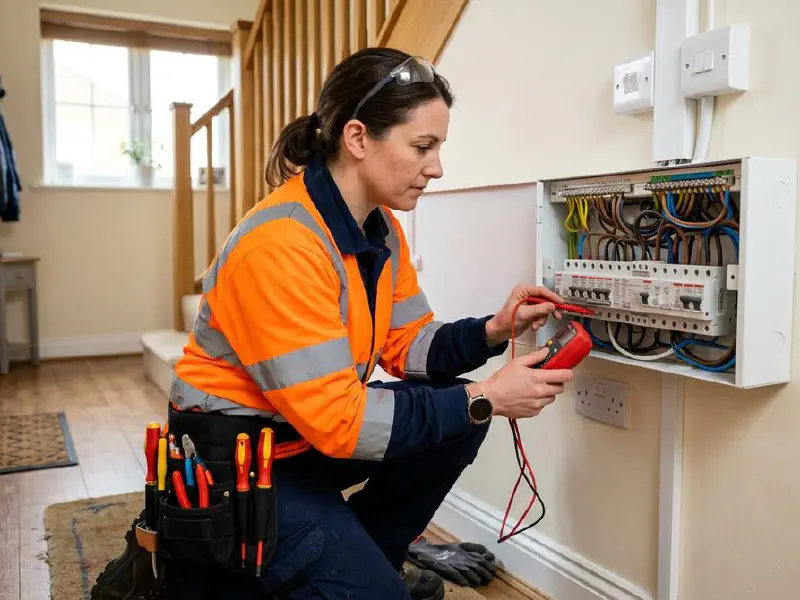
The Principal Contractor takes over coordination once construction starts. If you are the main contractor on a multi-trade site, this is almost certainly you. Your core duties include preparing the Construction Phase Plan before work starts, managing all contractors on site, running site inductions, preventing unauthorised access, consulting workers on health and safety, and providing welfare facilities. The Principal Contractor must also liaise with the Principal Designer to keep pre-construction information current during the build.
4. Contractors
Contractors are anyone who carries out, manages, or controls construction work. This includes sole traders doing their own physical work. If you are a sub-contractor brought onto a site managed by another firm, you are a contractor. Your duties include planning and managing your own work, ensuring you only deploy workers with the right skills and training for their tasks, sharing your risk assessments with the Principal Contractor, and cooperating with everyone else on site. On single-contractor domestic projects, you also take on the client's duties automatically.
Single-contractor domestic jobs
If you are the only contractor on a domestic project, such as fitting a bathroom, rewiring, or building an extension on your own, you automatically take on the client's CDM duties in addition to your contractor duties. You need a Construction Phase Plan (which can be simple and proportionate), suitable welfare facilities, and a clear plan for managing risks. You do not need to notify the HSE unless the project crosses the notification thresholds.
5. Workers
Workers must cooperate with their employer and others, take care of their own health and safety and that of those around them, report hazards promptly, and participate in health and safety consultations. Workers can also refuse to carry out work they believe presents serious and imminent danger to themselves or others.
- Client: Commissions the work. On domestic projects, client duties pass to the Principal Contractor. Must ensure Principal Designer and Principal Contractor are appointed and performing.
- Principal Designer: Appointed pre-construction on multi-contractor projects. Coordinates design-phase safety, produces Pre-Construction Information pack, prepares Health and Safety File.
- Principal Contractor: Appointed for the construction phase on multi-contractor projects. Manages site safety, prepares Construction Phase Plan, runs inductions, coordinates all contractors.
- Contractor: Any business or sole trader carrying out construction work. Must plan and manage their own work, verify worker competence, share risk information, cooperate on site.
- Worker: Must cooperate, take reasonable care, report hazards, and participate in safety consultations. Can refuse genuinely dangerous work.
What makes a project notifiable?
Not every project needs to be registered with the Health and Safety Executive, but plenty of medium-sized jobs do cross the threshold. Get this wrong and you face enforcement action even if everything else on site is in order.
A project is notifiable when it will last more than 30 working days and have more than 20 workers simultaneously at any point, or when it will exceed 500 person-days of work. These thresholds are not huge. A bathroom and kitchen renovation with four trades on site concurrently could hit 500 person-days on a large house. A shop refurbishment with a four-week programme using several crews might cross the 30-day/20-worker threshold comfortably.
| Factor | Not Notifiable | Notifiable (HSE must be told) |
|---|---|---|
| Duration | Under 30 working days | More than 30 working days with 20+ concurrent workers |
| Person-days | Under 500 person-days | 500+ person-days total across all workers |
| HSE registration | Not required | F10 notification form required before construction starts |
| Principal Designer needed | Only if multiple contractors | Yes, required |
| Construction Phase Plan | Required on all projects | Required on all projects (must be more detailed) |
| Health and Safety File | Not required | Required; handed to client at completion |
The F10 notification must be submitted online via the HSE website before the construction phase begins, not after. It requires the contact details of the client, principal designer, and principal contractor, plus the planned duration, estimated maximum concurrent workers, and planned contractor count. There is no fee. The client must sign a declaration confirming they are aware of their CDM duties.
Common mistake: submitting F10 after work starts
Many contractors submit the F10 mid-project or forget to do it entirely. The HSE checks site notices for F10 reference numbers during inspection visits. Failing to notify a notifiable project is itself a breach of CDM, separate from any site conditions. The Principal Contractor is responsible for ensuring notification happens and that an F10 notification notice is displayed on site.

CDM documents you must have
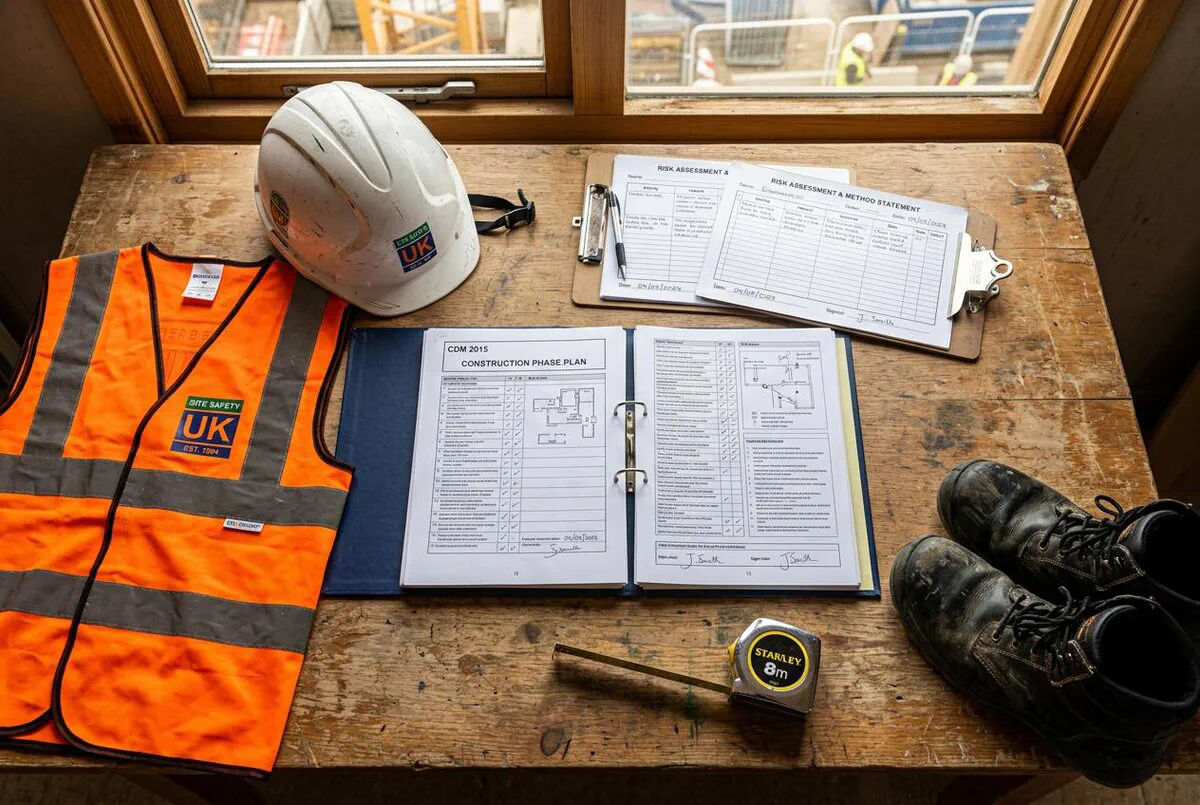
CDM is paper-heavy by design. The documentation trail is how the HSE assesses whether a project was properly managed. Here are the key documents and who is responsible for them.
Construction Phase Plan (CPP)
Every construction project, notifiable or not, must have a CPP before work starts. On single-contractor domestic jobs, the contractor prepares it. On multi-contractor projects, the Principal Contractor owns it. The CPP does not need to be a 40-page document for a small job, but it must be proportionate to the risks involved. At minimum it should cover: project description and key contacts, the management arrangements (who does what), the site rules, any significant hazards identified, and the emergency procedures.
Pre-Construction Information (PCI)
The client must provide Pre-Construction Information to all tenderers and appointees. This covers existing hazards the designer and contractor need to know about: asbestos surveys, structural surveys, existing services plans, ground investigation data, any existing Health and Safety File from previous work on the building. If you are a contractor on a multi-contractor project and you have not been given a PCI pack, ask for one before pricing or starting work.
Health and Safety File
The Principal Designer prepares the Health and Safety File throughout the project and hands it to the client at completion. It documents anything that future occupiers, maintenance workers, or demolition contractors need to know about the structure: as-built drawings, records of hazardous materials, maintenance requirements, testing records. Clients must keep this file and make it available to anyone carrying out future construction work on the building.
Risk Assessments and Method Statements (RAMS)
RAMS are not technically a CDM document, but every HSE inspection expects to see them. They must be specific to the actual work being done, not generic templates printed from the internet. A method statement for working at height on a pitched roof in January is not the same as one for working at height on a commercial flat roof in summer. The HSE takes generic RAMS very seriously as a sign that actual risk management has not been done.
The RAMS trap: generic templates get people fined
One of the most common CDM enforcement actions results from contractors using off-the-shelf RAMS that do not reflect the actual work, site, or conditions. An inspector will ask workers questions about hazards to check whether they have actually read and understood the documents. If workers cannot explain their own RAMS, the HSE will conclude the documents are window dressing. Write RAMS for each job, specific to what you are actually doing and where.
Contractor duties in detail
Most tradespeople reading this are contractors. Here is what the regulations actually require from you, in plain terms.
Plan and manage your work
Before starting any construction work, you must plan, manage, and monitor it to prevent health and safety risks. This means thinking through the work sequence, identifying the hazards, and putting controls in place before your crew shows up. It does not mean writing a dissertation, but it does mean actually thinking about it rather than just cracking on.
Check worker competence
You must only use workers who have the skills, knowledge, experience, and training for their tasks. In practice, this means checking CSCS cards for the relevant trade and level, verifying trade-specific certifications (Gas Safe registration, IPAF card, NAPIT/NICEIC membership, CITB cards), and keeping records. If you put an apprentice on a task beyond their training without adequate supervision and something goes wrong, you are liable.
Coordinate and cooperate on site
On multi-trade sites you must share your risk assessments with the Principal Contractor, attend safety meetings, and coordinate your activities with other trades. If you are drilling through a floor that an electrician is about to run cables beneath, you need to know that before you drill. The Principal Contractor is responsible for the overall coordination, but you are responsible for engaging with it.
Provide and maintain welfare facilities
If you are the sole contractor on a domestic project, you must ensure there are toilet and washing facilities with running water available. On multi-contractor sites, the Principal Contractor normally provides these, but you must verify they are in place before work starts. Workers cannot be sent to knock on a customer's door to use the bathroom. That is a CDM breach.

How AI is automating CDM compliance
CDM compliance is one of the most document-intensive parts of running a construction business. Risk assessments, method statements, Construction Phase Plans, site inspection records, induction logs, and competency records. The paperwork can easily consume days of management time on a mid-sized project. AI is starting to change that.
Software like CDM ToolKit CS Cloud from AI Solutions Ltd, CheckFile.ai, and SafetyCulture are among the platforms now integrating AI to automate significant parts of the documentation pipeline. These tools can generate project-specific RAMS based on work type and site conditions, track worker competence records across projects, flag expiring certifications before they lapse, and create Construction Phase Plans from structured project data in minutes rather than hours.
AI for CDM documentation: where it actually saves time
The biggest time saving is in generating first-draft RAMS and CPPs that are genuinely project-specific rather than generic templates. You still need to review and sign them off, because AI cannot accept legal responsibility, but having a well-structured, relevant first draft cut production time from two hours to twenty minutes on a typical mid-sized project. AI also helps with monitoring: flagging subcontractors whose CSCS cards or trade certifications are about to expire, tracking site induction records, and generating site safety reports from inspection checklists.
General AI tools like Claude and ChatGPT can also help draft RAMS and CPPs if you feed them the right information. The key is specificity: rather than asking "write a method statement for roofing work," ask for "a method statement for stripping a clay tile pitched roof on a 1930s semi-detached house in Bristol during winter, using two workers with mobile scaffolding, adjacent to an occupied property." The output is vastly better and far closer to a document that would satisfy an HSE inspector.
One caution: no AI tool can accept legal responsibility for your CDM documents. Whatever is generated must be reviewed by a competent person before it is used. AI speeds up the drafting; it does not replace the judgement of someone who has actually seen the site and understands the work.

Common CDM breaches and penalties
The HSE takes CDM enforcement seriously. Since 2015, there have been 191 prosecutions resulting in over £16 million in total fines. In 2022, a single prosecution resulted in a £900,000 fine, the largest under CDM 2015 to date. In October 2023, a client, principal designer, and principal contractor were all convicted and fined a combined £410,000 after a slate tile fell from a hotel roof and injured a three-year-old child.
Most frequently prosecuted CDM failures
- Generic RAMS: Template risk assessments and method statements that don't match the actual work, site, or hazards
- Missing Construction Phase Plan: Starting work without any CPP, or a CPP so thin it provides no meaningful safety guidance
- Unqualified workers: Deploying workers without verifying their competence records or CSCS cards for the relevant task
- No site induction: Workers starting work without being briefed on the site-specific hazards and emergency procedures
- Failure to notify: Failing to submit an F10 for a notifiable project, or submitting it after construction has started
- No welfare facilities: Running a site without accessible toilet and washing facilities before work begins
- Poor coordination: Multiple contractors working on the same site without sharing risk information or coordinating activities
The range of penalties reflects the severity of the breach. Minor paperwork failures may result in an Improvement Notice giving 21 days to fix the problem. Persistent or serious breaches trigger Prohibition Notices, stopping work immediately until compliance is demonstrated. Criminal prosecutions result in fines starting at £20,000 for lower-level offences and potentially unlimited fines for serious violations, as well as up to two years' imprisonment for individuals responsible for the most serious failures.
The reputational risk is often worse than the fine
A CDM prosecution is a public record. It appears in HSE prosecutions databases that clients, tender assessors, and prequalification schemes such as CHAS and Constructionline actively check. A fine of £35,000 on a company's record can cost far more in lost contracts over the following years than it did to pay. CDM compliance is a commercial issue as much as a safety one.
CDM timeline: from planning to handover
CDM duties do not all kick in at once. Different duty holders become responsible at different stages of the project lifecycle. Knowing when your responsibilities start is as important as knowing what they are.
- Pre-project (design stage): Client appoints Principal Designer. Principal Designer gathers Pre-Construction Information, coordinates design-phase risk elimination, and starts the Health and Safety File.
- Pre-construction: Client appoints Principal Contractor in writing. For notifiable projects, F10 submitted to HSE before construction begins. F10 notice displayed on site. Principal Contractor receives PCI from Principal Designer and prepares the Construction Phase Plan.
- Construction start: CPP must exist before a single spade goes in the ground. Site inductions for all workers. Welfare facilities operational. Principal Contractor runs site coordination meetings. All contractors share RAMS with Principal Contractor.
- During construction: Regular site inspections and safety meetings. CPP updated if works scope changes significantly. Ongoing liaison between Principal Contractor and Principal Designer. Worker competence records maintained and monitored.
- Project completion: Principal Designer finalises Health and Safety File. H&S File handed to client. Client retains H&S File for the life of the building. Lessons learned documented for future projects.
Learning resources: CDM explained on video
The Basics of CDM Regulations 2015
CITB
87,822 views · 2:08

Introduction to CDM: The Basics in 10 Minutes
Rebranding Safety
20,312 views · 10 min

Callsafe's Guide to CDM 2015
UK Construction Media
35,577 views
CDM: Contractor Duties and the Principal Contractor Role
Rebranding Safety
7,257 views
CDM 2015: Role of the Principal Designer
STORMConsultancy
16,824 views

CDM 2015 Overview
Marshel Rozario
9,181 views

CDM Regulations Training: Module 01
Training Express
4,909 views

BSG Podcast: CDM Regulations 2015
The Building Safety Group
5,352 views
What the community thinks
Frequently asked questions
CDM 2015 applies to all construction work in Great Britain, including small single-trade jobs. There is no minimum project size below which CDM duties disappear. However, the duties are proportionate. A sole trader doing a bathroom fit for a homeowner needs a Construction Phase Plan, must ensure welfare facilities are available, and must manage risks, but does not need a Principal Designer or to notify the HSE unless the project crosses the notification thresholds.
The key difference for small jobs is that the contractor automatically takes on the domestic client's duties in addition to their own contractor duties. Keep it simple, proportionate, and documented.
A Principal Designer must be appointed on any project that will involve more than one contractor at any point during the construction phase. The client makes this appointment, which must be in writing. If the client fails to appoint a Principal Designer when one is required, the client takes on the Principal Designer's duties themselves, which is rarely what commercial clients want.
On notifiable projects, the Principal Designer's details must be included in the F10 notification submitted to the HSE before work starts.
Failing to notify the HSE of a notifiable project is itself a breach of CDM 2015. The HSE checks that a valid F10 has been submitted and that the F10 notification notice is displayed on site. If inspectors find a notifiable project without prior notification, they will treat it as a serious breach, typically resulting in an Improvement Notice at minimum, and potentially a Prohibition Notice stopping work until notification and compliance are demonstrated.
Subsequent prosecution for failure to notify carries fines that have historically ranged from £20,000 to over £100,000 depending on the size of the project and the company involved. The notice of project must also be displayed where it can be read by anyone entering the site, not just filed in a drawer.
CDM 2015 applies to maintenance work that involves construction activities. Replacing roof tiles, repairing structural elements, re-roofing, replastering, re-wiring, and replacing drainage are all construction work and attract CDM duties. The regulations also cover maintenance work that requires temporary structures such as scaffolding.
The work that does not attract CDM is purely maintenance with no construction element. Changing a lightbulb, cleaning gutters from a ladder, or painting a wall are not construction in the CDM sense. The test is whether the work involves building, alteration, conversion, fitting out, commissioning, renovation, repair, upkeep, redecoration, demolition or dismantling of a structure.
Using generic, identical RAMS across multiple jobs is one of the most common CDM enforcement triggers. Risk assessments and method statements must be specific to the actual hazards, conditions, and methods of the specific job. You can use a template as a starting point, but every RAMS must be reviewed and adapted for each individual site and project.
When HSE inspectors visit a site, they will quiz workers on their RAMS. If workers cannot explain the hazards and controls listed in their documents, or if the documents clearly do not match the work being done, the HSE will treat this as a serious breach. Job-specific RAMS are not optional; they are the evidence that you have actually thought about the risks before starting work.
Our verdict
CDM 2015 is not bureaucracy for its own sake. The regulations exist because construction consistently kills and seriously injures more UK workers than any other industry. The five duty holder framework distributes responsibility sensibly across everyone involved in a project. The documentation requirements (CPP, RAMS, PCI, H&S File) are the paper trail that proves safety was actually managed rather than just assumed.
Most commonly missed: Starting without a Construction Phase Plan, using generic RAMS, and failing to notify the HSE of notifiable projects
Biggest risk area: Multi-contractor projects where coordination is poor and duty holder appointments are informal or unwritten
AI opportunity: Generating project-specific RAMS and CPPs from site data, monitoring subcontractor certification, and automating site inspection reporting
Where to start: Read the HSE's free L153 guide to CDM 2015, check whether your next project is notifiable, and review whether your RAMS are actually job-specific