
Quick Answer
CDM 2015 applies to every construction project in Great Britain, no matter how small. There is no exemption for domestic work, sole traders, or single-contractor jobs. What changes is proportionality: a kitchen refit needs a simple one-page construction phase plan, not the 40-page pack you would write for a tower block. Domestic client duties transfer automatically to the contractor. You only notify the HSE if the project exceeds 30 working days with 20+ workers simultaneously, or 500 person-days total. Most small projects fall well below that threshold, but the core duties still apply.
Table of Contents
- What are the CDM 2015 regulations?
- CDM timeline: how we got here
- When do CDM regulations apply to small projects?
- CDM duty holders and what each role means
- The notification threshold explained
- What a small project actually needs
- Domestic client rules and automatic duty transfer
- Common CDM misconceptions that catch small contractors
- HSE enforcement and penalties
- How AI tools are changing CDM compliance
- What tradespeople are saying
- Recommended videos
- Frequently asked questions
- My verdict
What are the CDM 2015 regulations?
The Construction (Design and Management) Regulations 2015, known as CDM 2015, are the main set of regulations for managing health, safety and welfare on construction projects in Great Britain. They replaced CDM 2007 on 6 April 2015.
CDM 2015 covers all construction work. New builds, demolitions, refurbishments, extensions, maintenance and repairs. The regulations place duties on everyone involved in a construction project, from the client commissioning the work through to the contractors on site.
The single biggest change from CDM 2007 was the removal of the domestic client exemption. Previously, homeowners having work done on their own property were largely outside CDM scope. That is no longer the case. CDM 2015 applies to domestic projects in full, though the domestic client's duties transfer automatically to other duty holders.
For a comprehensive overview of CDM for all project sizes, see our complete CDM regulations guide. This article focuses specifically on what CDM means for smaller projects, where confusion is most common.
CDM timeline: how we got here
CDM 1994 introduced
First CDM regulations came into force. Applied only to commercial and notifiable projects. Domestic work and small projects were largely exempt.
CDM 2007 replaced the original
Streamlined the original regulations and introduced the CDM co-ordinator role. Domestic clients remained exempt from most duties. Small projects still fell through the cracks.
CDM 2015 came into force
Major overhaul. Removed the domestic client exemption entirely. Replaced CDM co-ordinator with principal designer role. Applied to all construction work regardless of size, value, or duration.
Building Safety Act 2022
Introduced additional dutyholder requirements for higher-risk buildings. Reinforced the golden thread principle alongside existing CDM duties. Increased regulatory scrutiny across construction.
Enhanced enforcement and AI compliance tools
HSE achieved 96% conviction rate in 2024/25 with over £33 million in fines. AI-powered compliance platforms launched for small contractors, making CDM documentation more accessible.
When do CDM regulations apply to small projects?
The short answer: always. CDM 2015 applies to every piece of construction work in Great Britain. There is no minimum project size, no minimum value, and no duration threshold below which CDM stops applying.
A sole trader replacing a boiler in a terraced house is covered. A two-person team fitting a bathroom is covered. A builder extending a kitchen is covered. The regulations do not switch off for small jobs.
What changes with project size is the level of documentation and the number of duty holders involved. CDM 2015 uses a principle of proportionality: the effort you put into compliance should match the complexity and risk of the work.
For most small projects, compliance is straightforward. A simple construction phase plan, basic risk assessment, and clear communication about hazards. It does not require a mountain of paperwork. The HSE guidance is clear: proportionality is the key principle.
CDM duty holders and what each role means

CDM 2015 defines five duty holder roles. On a large commercial project, these will be five different organisations. On a small domestic job, one or two people may wear multiple hats.
Client
The person or organisation commissioning the construction work. On a domestic project, this is the homeowner. The client must ensure that the project is set up correctly, that pre-construction information is provided, and that a construction phase plan exists before work starts. For domestic clients, these duties transfer automatically (more on this below).
Principal designer
Required only when there is more than one contractor. The principal designer plans and manages health and safety during the pre-construction phase, coordinates design work, and starts the health and safety file. On a small extension where the architect and a single builder are involved, the architect often takes this role.
Principal contractor
Also required only when there is more than one contractor. The principal contractor plans, manages and monitors the construction phase, produces the construction phase plan, and coordinates the work of all contractors on site.
Designer
Anyone who prepares or modifies a design for a construction project. This includes architects, structural engineers, and even contractors who design temporary works. Designers must eliminate or reduce foreseeable risks through their design choices.
Contractor
Anyone who carries out, manages or controls construction work. This includes subcontractors, sole traders, and self-employed workers. Contractors must plan, manage and monitor their own work to ensure it is carried out safely.
The notification threshold explained
Not all construction projects need to be notified to the HSE. Notification is only required when a project crosses one of two thresholds.
Threshold 1: The 30/20 rule
The construction phase will last more than 30 working days AND at any point during the project, more than 20 workers will be on site simultaneously.
Both conditions must be met. A project lasting 60 days with 3 workers on site is not notifiable under this threshold. A project lasting 10 days with 25 workers is not notifiable under this threshold either.
Threshold 2: The 500 person-days rule
The total construction work exceeds 500 person-days. This is calculated by multiplying the number of workers by the number of days they work.
A team of 5 working for 100 days equals 500 person-days, making it notifiable. A team of 2 working for 60 days equals 120 person-days, well below the threshold.
When a project is notifiable, the client must submit an F10 notification to the HSE before the construction phase begins. The building control notifications guide covers the notification process in detail.
Being non-notifiable does not mean CDM does not apply. It simply means you do not need to tell the HSE about the project. All other CDM duties remain in force.
What a small project actually needs
This is where most small contractors get confused. They hear "CDM" and imagine ring binders full of paperwork. For a small project, the reality is much simpler.
Pre-construction information
The client (or whoever holds the client duties) must provide designers and contractors with information about the site and the project before work starts. For a domestic extension, this might be as simple as: the house has asbestos artex ceilings, there is a gas main running under the back garden, and the property is on a slope with drainage issues.
It does not need to be a formal document. A conversation confirmed in writing, an email, or a marked-up site plan will do. The point is that hazard information flows to the people who need it before they start work.
Construction phase plan
Every project needs a construction phase plan before the construction phase begins. For a small, single-contractor project, this can be based on the contractor's existing knowledge and the information supplied by the client.
The HSE is clear: a simple plan before the work starts is usually enough to show that you have thought about health and safety. This does not need to be complicated. For a bathroom refit, it might be a single side of A4 covering: what work is being done, what the main hazards are (working at height, electrics, asbestos), what control measures are in place, and who is responsible.
Health and safety file
A health and safety file is only required on projects with more than one contractor, where a principal designer has been appointed. It records information about the completed project that is useful for future maintenance or demolition. For single-contractor domestic projects, a health and safety file is not required.
If you are also navigating Building Safety Act requirements, the documentation demands stack up quickly. Getting your CDM processes right is the foundation that everything else builds on.
Domestic client rules and automatic duty transfer
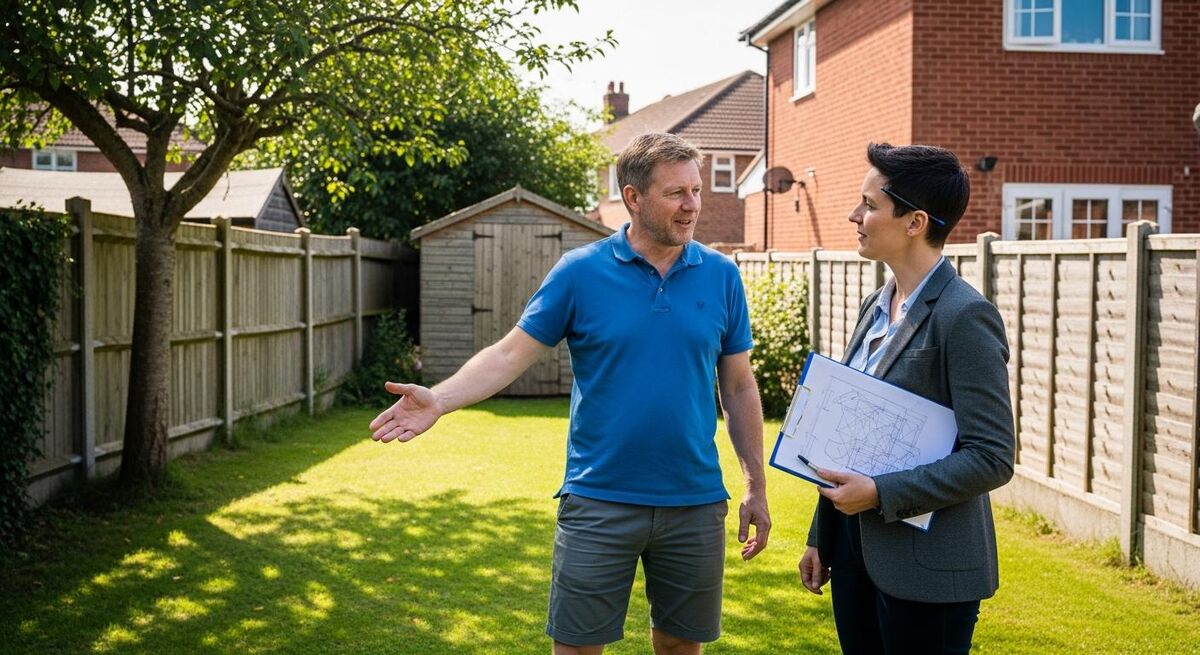
A domestic client is someone who has construction work carried out on their own home, or the home of a family member, where the work is not done as part of a business.
Under CDM 2015, domestic clients have the same duties as commercial clients. But the regulations recognise that a homeowner having their kitchen done is unlikely to know what pre-construction information is, let alone how to produce it. So the law provides an automatic transfer mechanism.
Single contractor project
The domestic client's duties transfer automatically to the contractor. The contractor takes on the legal responsibility for ensuring a construction phase plan exists, that pre-construction information has been considered, and that the work is planned and managed safely. In practice, this should involve little more than what a competent contractor does anyway.
Multi-contractor project
The domestic client's duties transfer automatically to the principal contractor. If there is no principal contractor appointed, the contractor in control of the construction phase takes on these duties.
Written agreement with a designer
A domestic client can choose to have a designer (typically the architect) take on the client duties instead. This requires a written agreement. Without that written agreement, the duties pass to the contractor or principal contractor by default.
The key point for contractors: if you are working on a domestic project and the homeowner has not appointed a principal designer with a written agreement, you are carrying the client duties. Knowing this matters.
Common CDM misconceptions that catch small contractors
Misconception 1: CDM does not apply to small jobs
Wrong. CDM applies to all construction work regardless of size, value, or duration. A one-day painting job is covered. A fence replacement is covered. There is no lower limit.
Misconception 2: Non-notifiable means non-applicable
Wrong. The notification threshold determines whether you need to tell the HSE about the project. It does not determine whether CDM applies. Most small projects are non-notifiable but CDM still applies in full.
Misconception 3: Sole traders are exempt
Wrong. CDM applies to every contractor, including sole traders and self-employed workers. If you are carrying out construction work as part of a business, CDM applies to you.
Misconception 4: The construction phase plan has to be a big document
Wrong. The HSE expects proportionality. For a small domestic project, a one-page plan covering the key hazards and control measures is sufficient. Copying a 40-page template from a commercial project is not what the HSE wants to see; they want evidence that you have thought about the specific risks of the specific job.
Misconception 5: Only the main contractor has CDM duties
Wrong. CDM places duties on everyone involved: client, designers, principal designer, principal contractor, and every contractor and subcontractor on site. The duties vary by role, but nobody is exempt.
HSE enforcement and penalties
The HSE does not just write guidance and hope people follow it. They enforce CDM with inspections, improvement notices, prohibition notices, and criminal prosecutions.
In 2024/25, the HSE achieved a 96% conviction rate across all health and safety prosecutions, securing over £33 million in fines. Construction remains a priority sector. Since CDM 2015 came into force, there have been 197 prosecutions specifically for CDM failures, with 17 in the last 12 months alone.
Fines are calculated using sentencing guidelines that consider the organisation's turnover, the severity of harm, and the degree of culpability. Small businesses are not immune. A sole trader convicted of CDM failures can face fines of several thousand pounds, and in serious cases, imprisonment.
In October 2023, a client, principal designer and principal contractor were all convicted for health and safety failings after a slate tile fell from a hotel roof during renovation works, injuring a three-year-old child. The combined fine was £410,000. All three duty holders were prosecuted, not just the contractor on site.
The HSE issued 1,141 enforcement notices in 2024/25. Their priority areas include fall protection failures, inadequate risk assessments, and poor pre-construction planning. A fire safety regulations guide covers the overlapping enforcement landscape for construction sites.
How AI tools are changing CDM compliance

For years, CDM compliance for small contractors meant either paying a consultant or struggling through templates. That landscape shifted in 2025-2026 with AI-powered compliance platforms built specifically for small firms.
The Site Book, designed for sole traders and firms of 1-10 people, offers the full CDM document pack from £30 per month. Their AI generates construction phase plans, RAMS, COSHH assessments, and induction documents from plain-English briefs. Type a description of the job and the AI produces a site-specific document in minutes.
Construction AI launched in March 2026 as the first AI-native project management platform for UK construction SMEs. The platform includes an industry knowledge base trained on UK construction standards and CDM requirements. Every module is built around AI that understands construction context, not generic chatbot technology bolted onto a project management tool.
On the enterprise side, Trimble acquired Document Crunch in April 2026 to add AI-powered risk management and document compliance across its construction ecosystem. While aimed at larger firms, the technology is filtering down to smaller contractors through partner integrations.
None of these tools replace the need to understand your CDM duties. But they remove the excuse that compliance documentation is too expensive or too complicated for small contractors. At £30 a month, there is no financial barrier to having proper CDM paperwork.
What tradespeople are saying
Recommended videos
The basics of Construction (Design and Management) Regulations 2015
CITB

Introduction to CDM: The Basics in 10 Minutes
Rebranding Safety with James MacPherson
The Most Confusing Construction Regulations Explained
HSE with Barbara Derecka
CDM 2015 Documents Explained
HSE with Barbara Derecka
Health and Safety on a Construction Site: CDM Regulations
Build It and Prosper
Construction, Design and Management Regulations (CDM 2015)
Craven Consultancy Services Ltd
Frequently asked questions
Yes. CDM applies to all construction work carried out as part of a business. A sole trader replacing a boiler, fitting a bathroom, or repairing a roof is covered. The level of documentation should be proportionate, a brief construction phase plan covering the main hazards is sufficient for small jobs.
Probably not. Most domestic extensions involve fewer than 20 workers and generate fewer than 500 person-days. Unless your project is unusually large or long-running, notification is unlikely to be required. CDM duties still apply regardless.
On a multi-contractor domestic project, if the homeowner does not make the required appointments, the duties fall to the contractor in control of the construction phase. You end up carrying the principal contractor duties by default. Worth knowing before you start the job.
A template is a reasonable starting point, but it must be adapted to the specific project. The HSE does not want to see a photocopied generic document. They want evidence that you have identified the actual hazards on the actual site and planned how to manage them. A site-specific one-pager beats a generic 20-page template every time.
Fines are calculated using sentencing guidelines based on turnover, harm severity, and culpability. Small businesses can face fines in the thousands. Serious cases can result in imprisonment. The HSE has a 96% conviction rate. "I did not know" is not a defence.
CDM 2015 applies across Great Britain (England, Wales and Scotland). Northern Ireland has its own version, CDM (NI) 2016, which is broadly similar but has some procedural differences. Check the HSENI website if you work in Northern Ireland.
My verdict
I spent years on the tools before moving into tech, and compliance was always something that felt like it was designed for big firms with safety departments. CDM 2015 changed that by making proportionality the core principle. A small contractor does not need a consultant or expensive software to comply. You need a clear understanding of the hazards on your site, a simple written plan for managing them, and the discipline to follow through. The documentation burden for a typical domestic project is one page, maybe two. The cost of not doing it, as 197 prosecutions and a 96% conviction rate demonstrate, is considerably higher. Get the basics right. Write the plan. Keep it proportionate. Move on to the next job.