
Crew Crisis, Solved: 2026 Digital Rota & Emergency Callout Mastery
Jump To...

Who this is for
- UK plumbing, heating, electrical, HVAC and maintenance firms dealing with winter surges and storm seasons
- Operations managers, schedulers and team leaders who juggle callouts, rota gaps and no‑shows
- Directors who want digital control of emergency work without burning out crews or breaching UK rules
What this guide covers
- The rota and job‑management tools that actually help in a crisis
- How to use WhatsApp and Telegram for triage, video estimates and compliant rota comms
- The real drivers of emergency jobs in 2026 and what “good” response performance looks like
- A light playbook for overtime consent, short‑notice incentives and crew morale
- Templates and further training so you can build your own crisis‑ready rota system
The 2026 reality: more emergencies, thinner crews
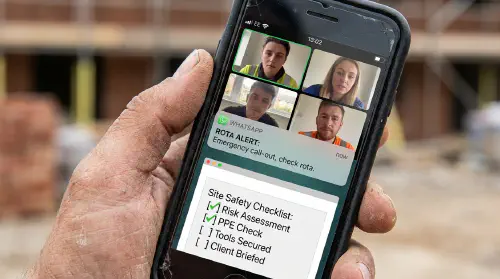
By 2026, UK trades are in a perfect storm. Record rainfall, frequent freeze‑thaw cycles and stronger wind events are loading the system with burst pipes, leaks, fallen trees and damaged electrics. The Environment Agency now puts surface flood risk at over 4.6 million homes, and early 2026 brought the wettest January in Northern Ireland in almost 150 years.
At the same time, sickness absence spikes above 5 percent in winter for many site‑based roles, while turnover in trades remains stubbornly high. The result is simple: you are running emergency‑level demand on a rota designed for a normal Tuesday.
Winning firms are not just “working harder.” They are tightening the rota, switching to digital triage, and rewiring how they ask for overtime and short‑notice shifts so it feels controlled, not chaotic.
To see how other sectors are re‑tooling emergency logistics, it is worth watching “Britain’s Emergency Logistics Deal Changes Everything”:
The sector is different, but the playbook for dispatch, prioritisation and live re‑routing is directly relevant to trade crews.
Choosing rota tools that behave under pressure
There are dozens of job apps on the market. In a crisis, the question is narrower: which tools let you reshuffle engineers in seconds, protect rest time and still give you an audit trail of who agreed to what.
In 2026, five platforms stand out for UK trades:
- Tradify – Strong for small to mid‑size firms that need speed more than complexity. The 2026 release made adding jobs to the rota and attaching compliance forms faster, with UK‑centric templates. Last‑minute changes are straightforward, and engineers generally see clear, updated day plans.
- Joblogic – Built for multi‑engineer, reactive environments with SLAs. The priority triage and timeline view make it easier to slot in gas leaks, no‑heat calls or power faults alongside planned work, while protecting contractual response targets.
- Commusoft – A heavier option with full SLA logic, route optimisation and client portals. Suits mid‑market and social‑housing contractors that need to evidence response times under frameworks like Awaab’s Law.
- ServiceM8 (iOS only) – Flexible, credit‑based model with unlimited users, making it appealing for seasonal surge teams and subcontractor-heavy operations. Good for fast rescheduling and adding temporary crew without wrestling with licences.
- RotaCloud – Rota‑first rather than job‑first. Useful when you run formal on‑call shifts, complex leave rules and hourly cover, then push confirmed shifts into your job system.
Across these, the pattern is clear: top performers combine a rota engine that can move people in real time with job logic that respects SLAs and travel time. What you still need to layer on is clean consent: explicit rules for who can be moved within 48 hours, what uplift applies, and how that is logged.
If you are still on spreadsheets, pair this article with our internal guide “Assign the Right Engineer Every Time: A Simple Skills-Matching Rota That Lifts First-Time Fix” at https://academy.trainar.ai/assign-the-right-engineer-every-time-a-simple-skillsmatching-rota-that-lifts-firsttime-fix. Skills tagging and first‑time fix logic cut re‑visits, which is the cheapest way to free capacity when storms hit.
Using WhatsApp and Telegram without losing control
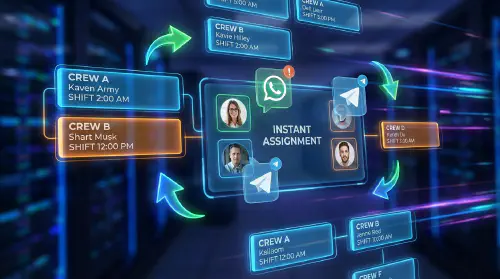
In 2026, your engineers already live in WhatsApp and, increasingly, Telegram. The question is whether you harness those tools or let them run you.
WhatsApp now supports:
- Group video calls with up to 32 people, with screen sharing and speaker spotlight
- Group Events with title, time and RSVP, ideal for on‑call rotas and toolbox talks
- Channels and business tooling, including paid broadcast features and per‑template pricing for automated notifications
Operationally, this means you can:
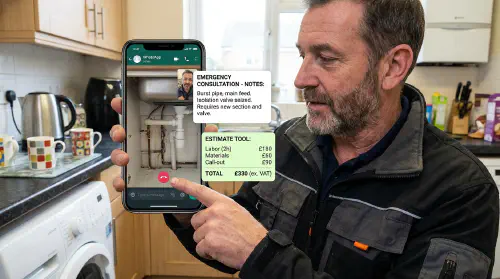
- Run video triage for burst pipes or no‑heat calls before dispatch, cutting wasted travel and filtering truly urgent work
- Use Events to signal who is on call, then confirm with a rota app for the audit trail
- Send templated shift offers (with pay uplift and scope) to pre‑consented lists
But there are catches. Meta is tightening broadcast limits, and businesses pay per template. GDPR applies, and the UK High Court has already confirmed that WhatsApp exchanges can form binding contracts. If you are changing shifts or agreeing overtime, treat it like any other written agreement.
Telegram is attractive for more advanced setups. With Telegram Business features and bots, you can schedule messages, offer quick‑reply buttons for “Accept overtime” or “Cannot cover this shift” and push that straight into your rota system. Used correctly, this gives you both speed and structure.
For teams that want to go deeper on message-driven workflows, see our internal playbook “Cut No-Access Visits with WhatsApp Confirm and Photo Triage: A Step-by-Step Playbook for Trades” at https://academy.trainar.ai/cut-no-access-visits-with-whatsapp-confirm-and-photo-triage-a-stepbystep-playbook-for-trades. The same scripts that cut no‑access jobs can be adapted to confirm emergency attendance and windows.
Why emergencies are exploding in 2026
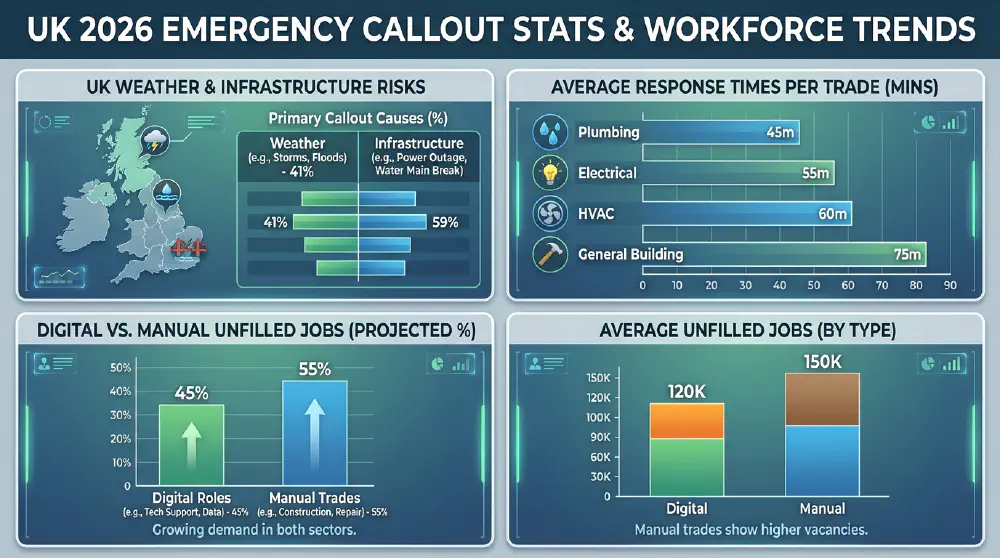
Three environmental trends are driving reactive work:
- Flood and storm events driving ingress, damaged electrics and structural issues
- Freeze‑thaw sequences causing burst pipes and failed heating systems, with average burst‑pipe claims now in the tens of thousands of pounds
- Heat and drought leading to HVAC breakdowns and subsidence‑related repairs
Public sector analysis suggests reactive jobs cost 25 to 50 percent more than planned maintenance, and prices can spike by 50 to 150 percent during peak surges. The more of your diary that drifts into emergency mode, the worse your margins become.
Which is why callout performance matters. Statutory and quasi‑statutory benchmarks now include:
- Gas leaks – Ofgem requires networks to attend almost all uncontrolled gas escapes within 1 hour and controlled escapes within 2
- Power outages – Guaranteed Standards of Service expect supply restoration within 12 hours for smaller incidents and 24 hours for larger ones
- Social housing emergencies – Under Awaab’s Law, social landlords must make safe serious hazards within 24 hours, with detailed guidance on timeframes on GOV.UK
Private firms are not bound to those exact numbers, but customers and housing providers increasingly see them as the bar. British Gas and HomeServe routinely advertise same or next‑day attendance on emergencies, with 2‑hour targets for uncontrollable leaks.
An infographic view of these drivers, and how digital tools are changing fill rates, can be helpful when you are winning internal buy‑in:
The human side: consent, uplifts and rota psychology
The operational mechanics are the easy part. The hard part is asking a tired engineer to take one more burst pipe at 20:30, again.
Firms that hold morale together tend to follow a simple framework:
- 48‑hour lock window – Schedules are “locked” inside 48 hours except for genuine emergencies. Within that window, any change is treated as a negotiation, not an instruction.
- Short‑notice uplift – Any job added or shifted inside 24 or 48 hours carries a 20 to 30 percent pay uplift or a fixed bonus. The rule is written, applied consistently and visible in payslips.
- Protected rest – Explicit rules on minimum rest periods, in line with Working Time Regulations, plus clear red lines around nights and weekends.
- Daily huddle – A short “war‑room” stand‑up during crisis periods, reviewing yesterday’s hits/misses and today’s likely flashpoints. Engineers see the bigger picture instead of being hit with random pings.
Pair this with clear, written WhatsApp templates using a simple 4C structure: Context, Change, Compensation, Care. For example:
“Context: We have three no‑heat calls in your patch and one sick engineer.
Change: We need to add a 19:30 job to your run, ETA 60 to 90 minutes.
Compensation: This hour will be paid at 1.3x and you will start 1 hour later tomorrow.
Care: Reply YES to confirm, or NO and we will move to the next engineer.”
Crucially, you log those replies. Exporting WhatsApp or Telegram chats into your rota or HR system means you can evidence voluntary overtime, rest decisions and fair allocation. That matters if disputes reach ACAS, r/LegalAdviceUK or an employment tribunal.
Community insight and peer practice
You are not the only one wrestling with rota chaos. On r/UKJobs, zero‑hours workers frequently ask how to push back on last‑minute changes. The consistent advice from HR‑savvy users is to get everything in writing and refer to contract terms.
Trade‑specific subs such as r/askaplumberUK and r/electricians host frank discussions on whether emergency callouts are worth the money, and what counts as fair uplift. Mining those threads gives you a reality check on what your competitors are paying and how they are treating on‑call time.
For a different angle on rapid operational change, the Eicher Motors Q3 2026 coverage on YouTube is useful, even though it is not a trade firm:
Listen for how they talk about fleet utilisation, digital reporting and handling surges in demand. The same principles apply when your vans are stuck in flooded streets instead of on the test track.
FAQs
Can I rely on WhatsApp as my main rota tool?
You can rely on it for alerts and triage, but not for full scheduling. Use it as the “front end” for urgent comms, then sync final decisions into a rota platform that stores shifts, rest periods and job history.
Is a WhatsApp video estimate enough to price emergency jobs?
It is usually enough to triage and give a range, not a fixed price. Treat it as a structured survey: walk the customer through specific checks, capture stills, then follow up with a written quote that allows for hidden issues.
What is fair pay for last‑minute emergency callouts?
Across Reddit and trade forums, 20 to 30 percent uplift plus a minimum callout is common. Some firms add a flat “disturbance fee” for any call accepted within 24 hours. Whatever you choose, publish it and stick to it.
What if an engineer opts out of WhatsApp messages?
You must respect opt‑outs. Provide alternative official channels such as SMS or email, and ensure that refusing a digital channel does not in itself reduce contractual hours or opportunities, unless your contracts and policies are crystal clear.
Does “seen” on WhatsApp count as acceptance of a rota change?
Not reliably. A read receipt just shows the message was opened. For shifts and overtime, always ask for an explicit written YES/NO and export that to your rota or HR system.
Want to slash training times and increase revenue per Engineer? Join our Waitlist: https://trainar.ai/waitlist
Training and resources
Sources used
- Tradify 2026 release notes and UK pricing
- Joblogic February 2026 release information
- Commusoft UK pricing and testimonials
- ServiceM8 UK pricing
- RotaCloud leave and rota feature updates
- Met Office and Environment Agency flood and rainfall updates
- Welsh Water guidance on burst pipes following thaws
- Ofgem standards on gas emergency response and power outage restoration
- Awaab’s Law guidance on emergency repairs in social housing
- British Gas and HomeServe emergency cover detail
- Case studies from BigChange, Commusoft and Martin Port on digital scheduling
- High Court decision on WhatsApp messages forming a binding contract
Recommended further reading
- GOV.UK – Awaab’s Law: guidance for social landlords, including emergency timeframes
- GOV.UK – Working Time Regulations overview (rest breaks and maximum weekly working time)
- TrainAR Academy – “Automate HSE Safety Alerts into WhatsApp & Teams: Setup Scripts and Audit Trail” at
https://academy.trainar.ai/automate-hse-safety-alerts-into-whatsapp-and-teams-setup-scripts-and-a-tidy-audit-trailfor building compliant digital comms - TrainAR Academy – “SpeedQuote Formula: Turn WhatsApp Enquiries Into Paid Jobs in 15 Minutes” at
https://academy.trainar.ai/speedquote-formula-turn-whatsapp-enquiries-into-paid-jobs-in-15-minutesfor structured video and photo quoting workflows - Relevant Reddit communities: r/UKJobs, r/LegalAdviceUK, r/askaplumberUK, r/electricians
Ready to Transform Your Business?
Turn every engineer into your best engineer and solve recruitment bottlenecks
Join the TrainAR Waitlist