
Quick Answer
If you are a domestic roofer or builder doing residential surveys, the DJI Mini 4 Pro (from £569 standard, £979 Fly More Combo) is the right tool. It is sub-249g, sits in the C0 class for the lightest regulatory category, shoots 4K HDR good enough for defect spotting, and pays for itself on the first job. If you run a commercial survey operation working on industrial roofs, listed buildings, or structural reports for insurers, the Mavic 3 Enterprise (from £2,567 base, £3,166 with RTK) is built for the work: 4/3 CMOS sensor, mechanical shutter, 56x zoom, and centimetre-accurate RTK mapping. From 1 January 2026 the regulations changed, the A2 sub-category is now called Near People, and class marking arrived. For most UK trades, the Mini 4 Pro plus an A2 CofC (£97 to £159) and proper third-party insurance is enough to take you from no drone capability to charging £200 to £450 per residential roof survey. The trades gave me everything, and this is one of the cleanest revenue extensions I have seen for a small operator.
Table of Contents
- Why drones matter for trades in 2026
- The 2026 regulatory picture in plain English
- DJI Mini 4 Pro: the lightweight workhorse
- DJI Mavic 3 Enterprise: the commercial survey tool
- Head-to-head: spec and price comparison
- Software stack: Hammer Missions, Pix4D, and AI defect detection
- A realistic survey workflow from quote to report
- ROI: what you can charge and what it costs you
- Which drone should you actually buy?
- What tradespeople are saying
- Recommended videos
- Frequently asked questions
- My verdict
 DJI
DJI Hammer Missions
 Pix4D
Pix4DWhy drones matter for trades in 2026
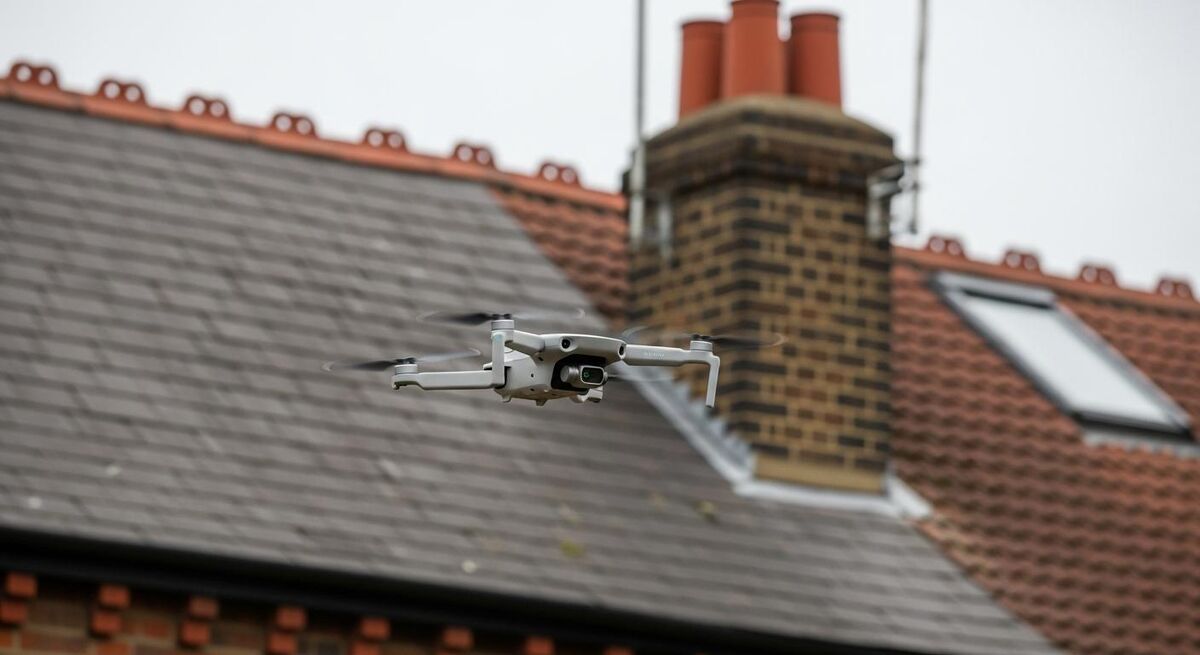
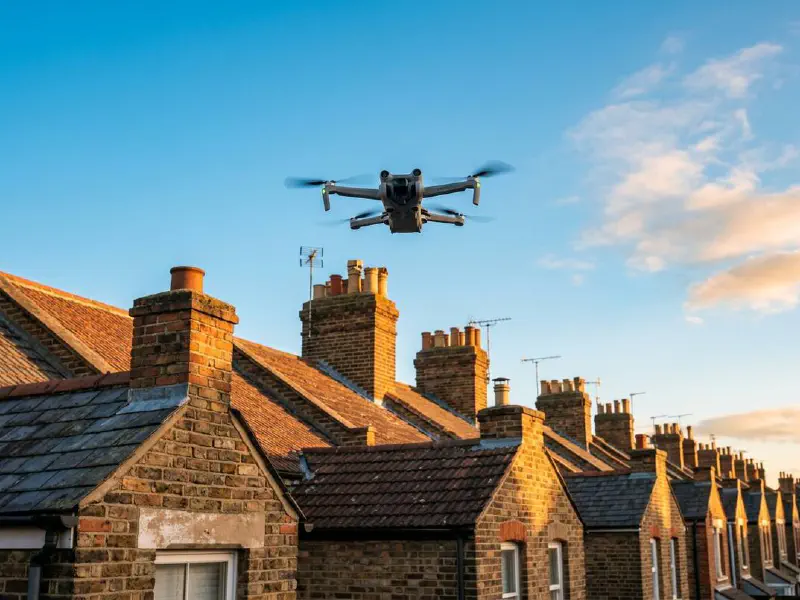
The economics are no longer arguable. Scaffold for a single residential roof inspection still costs £1,000 to £2,500 a week to hire, takes a day to put up and another to take down, and blocks the customer's driveway in between. A drone gets you the same visual information in under ten minutes for the cost of a battery cycle. That is not a marginal improvement. That is a different business model.
Two things have made 2026 the year drones go from useful to essential for UK trades. First, the regulations got cleaner. From 1 January the messy transitional rules ended, class marking arrived, and the A2 sub-category was renamed Near People with sensible distance limits. If you are flying a sub-249g drone with a C0 mark, you can fly over uninvolved people in the A1 sub-category. That covers most domestic work. Second, the software caught up. Hammer Missions, Pix4D, and DJI Terra now run AI defect detection on roof models that flags ponding, staining, slipped tiles, and structural damage directly on the 3D output. You used to need a structural engineer to interpret raw imagery. Now you need a tradesperson with a tablet and a half-decent eye.
The trades gave me my start. I spent years on roofs as a gas and heating engineer before I went into technology, and the thing I always come back to is whether a tool actually saves a tradesperson time and money. Drones do both. For an established roofer or builder, adding survey capability is one of the cleanest revenue extensions available. You already have the customers, the credibility, and the trade knowledge to interpret what the drone shows you. The drone just gets you the data without the ladder.
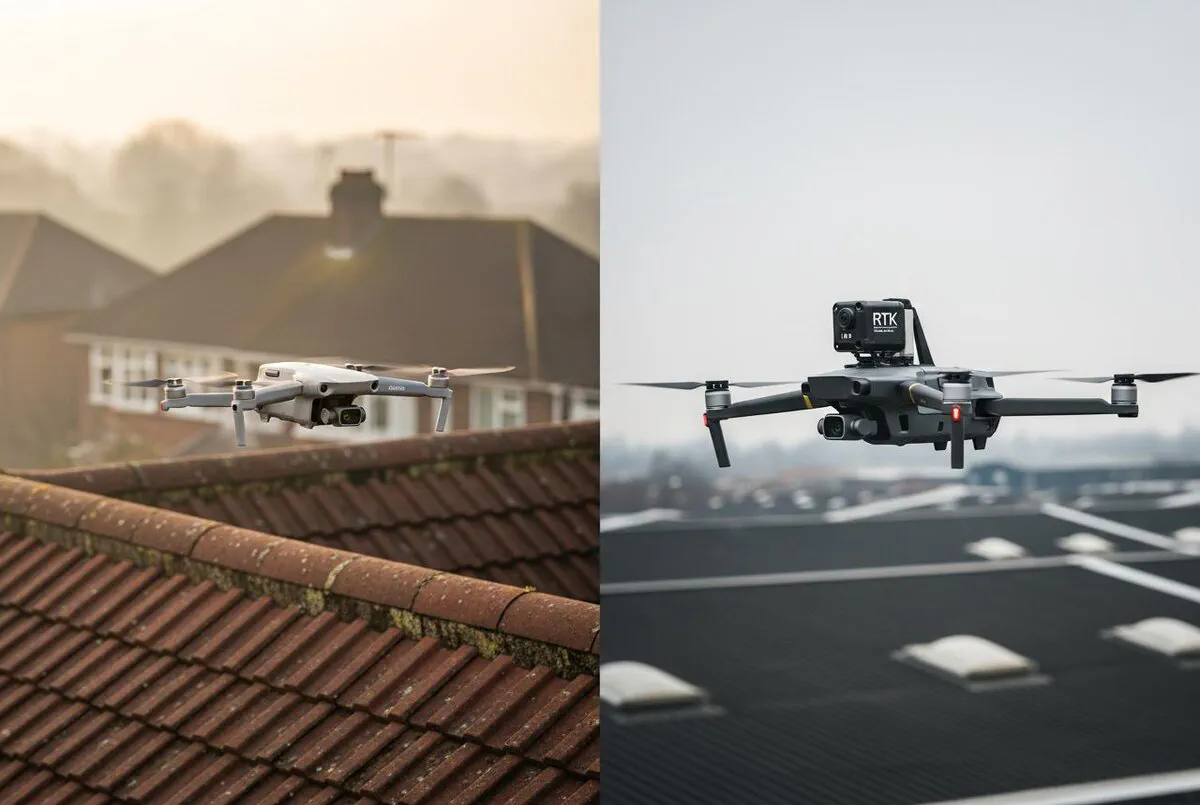
The DJI Mini 4 Pro and Mavic 3 Enterprise sit at opposite ends of the survey drone market. One costs £569, weighs less than a tin of beans, and gets a small builder started. The other costs over £3,000, weighs almost a kilo, and produces survey-grade data that commercial clients expect. Picking the wrong one wastes money in two directions.
The 2026 regulatory picture in plain English
From 1 January 2026, three things changed for UK drone operators. The Open A2 sub-category was renamed Near People (A2). The UK class marking system (UK0 to UK6) launched, replacing the old self-certified weight categories. And Remote ID became mandatory for class-marked drones. None of it is dramatic on its own. Stacked together, it formalises what was already happening.
For trades, the practical picture is this. You need an Operator ID (£12.34 a year, paid to the CAA). You need a Flyer ID (free, after a short online test). If your drone is under 250g and has a C0 class mark, you can fly in the A1 sub-category, which lets you operate over uninvolved people though never deliberately. The DJI Mini 4 Pro sold in the UK in 2026 carries the C0 label, so this is the route most domestic roofers will take.
Step up to the Mavic 3 Enterprise and you are in C2 territory. That means you need an A2 Certificate of Competency (A2 CofC) to operate close to people, or a General Visual Line of Sight Certificate (GVC) for full commercial flexibility. Expect to pay £97 to £159 for an A2 CofC, and £500 to £1,200 for a GVC with Operational Authorisation. The GVC is the qualification you want if you are surveying construction sites, congested urban areas, or industrial estates, because it lets you apply for an Operational Authorisation that can drop minimum distances to people to 30m on take-off.
EU C-class marks are still recognised in the UK until 31 December 2027, so a drone bought now with an EU C0 mark is treated as UK0. After that, only UK-class-marked aircraft can be placed on the market. If you are buying second-hand or importing, check the label before you spend the money.
The moment you charge a customer for a survey, you need EC 785/2004 compliant third-party liability insurance. Expect £200 to £600 a year for a single pilot operating sub-2kg drones. Without it, your survey is not legal and your professional indemnity probably will not cover a claim.
DJI Mini 4 Pro: the lightweight workhorse
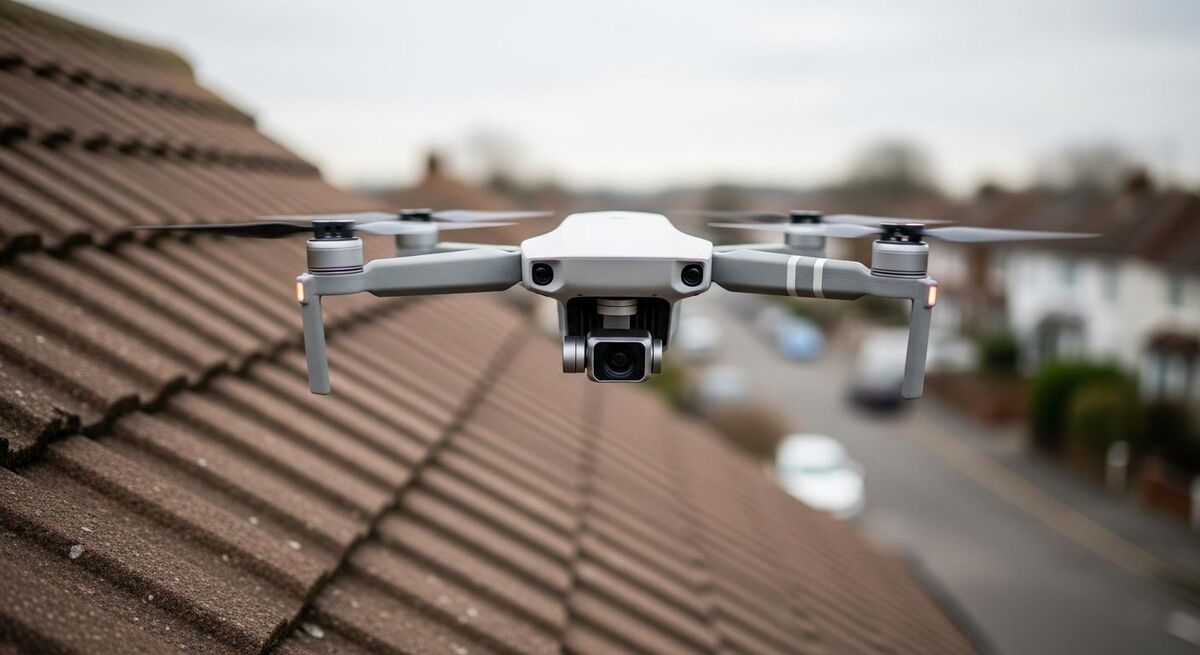
The Mini 4 Pro is the drone you buy if your work is residential and you want to stay in the friendliest regulatory bracket. It weighs 249g on the dot, which is deliberate. Sub-250g means C0 class, which means you can operate over uninvolved people on residential streets without falling foul of the rules. That single fact makes it the right starting point for most UK roofers, chimney sweeps, gutter cleaners, and general builders.
The spec sheet does the rest of the work. A 1/1.3 inch 48 megapixel sensor with an f/1.7 aperture shoots 4K HDR at 60fps. True vertical shooting matters for tall buildings and chimneys where you need a clean upright frame. Omnidirectional obstacle sensing means it will not put itself into a gable end if you are concentrating on the screen. Flight time is up to 34 minutes per battery, which is more than enough for several residential surveys per outing. OcuSync 4 gives 20km FHD video transmission, though you will never need that on a roof survey.
Pricing in 2026 has settled to the point where the value is hard to ignore. The standard Mini 4 Pro with RC 2 controller and a single battery is £569 to £869 depending on retailer. The Fly More Combo with three batteries, charging hub, and shoulder bag is £979 at Currys. For a tradesperson, the Fly More Combo is the right purchase. You need the spare batteries for back-to-back surveys, and the bag matters when the drone lives in a van and goes through real weather.
What the Mini 4 Pro will not do is replace a full commercial survey rig. It does not have a mechanical shutter, so fast forward flight produces rolling shutter distortion in photogrammetry. It does not have RTK, so positional accuracy is consumer-grade GPS, not centimetre. And the sensor, while excellent for visual inspection, is not large enough for the kind of detailed photogrammetric output a chartered surveyor would sign off. None of that matters for the bread-and-butter residential work most trades will use it for.
DJI Mavic 3 Enterprise: the commercial survey tool
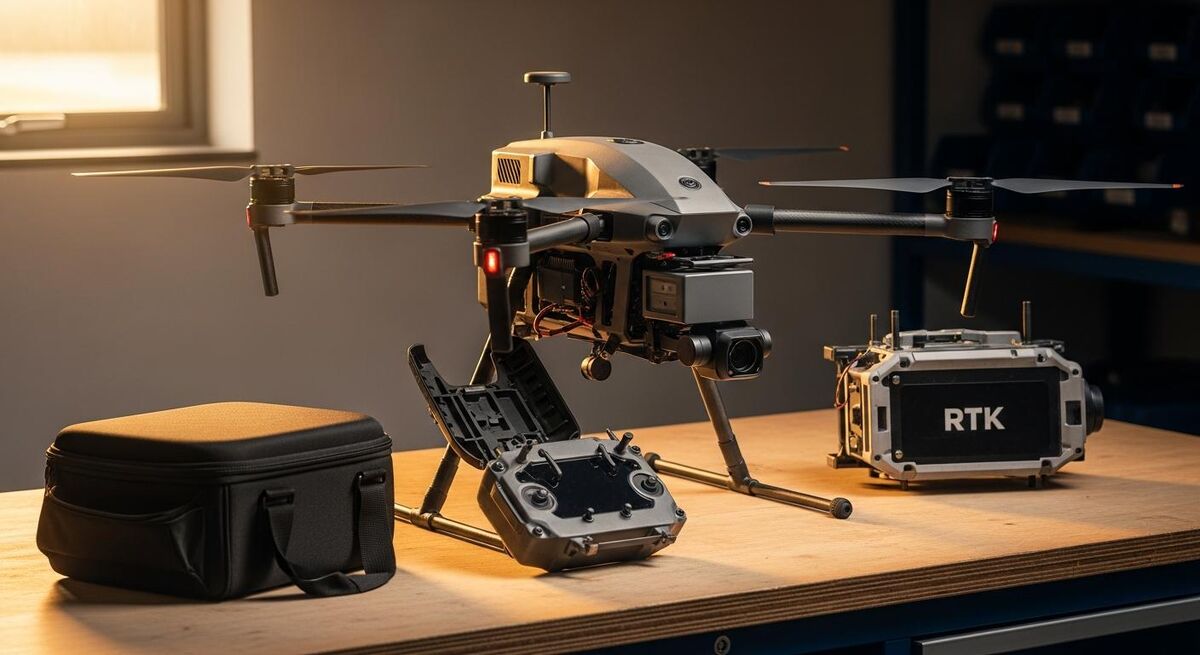
The Mavic 3 Enterprise (M3E) is what you buy when the customer expects a survey-grade output, the building is industrial, or there is real money on the table for accurate measurement work. It carries a 4/3 CMOS sensor with 20 megapixel effective resolution, a mechanical shutter (which matters for clean photogrammetry), and a 56x zoom camera that can read serial numbers off rooftop plant from 80m away. The RTK module bolts on the top and gives positioning accuracy of 1cm + 1ppm horizontal and 1.5cm + 1ppm vertical. That is centimetre-accurate in the proper engineering sense, and it changes what you can offer commercially.
The thermal version, the M3T (now called Mavic 3 Thermal Advance in 2026), swaps a small portion of the visual sensor for a 640 by 512 thermal imager. For commercial roofing on flat industrial buildings, thermal is gold. You can pinpoint moisture ingress, missing insulation, and live water leaks during a flyover. Insurers and facilities managers pay extra for thermal reports because they convert directly into capital expenditure decisions.
Flight time is up to 45 minutes on a clean configuration, dropping to 32 to 36 minutes once you have the RTK module attached and any wind to fight. That is still nearly twice what most pilots need for a typical commercial roof.
UK pricing in 2026 is where the M3E earns or loses its place. The base M3E from Coptrz is £2,567, with the standard combo (drone plus RC Pro Enterprise controller plus accessories) closer to £3,166 including VAT. The RTK module is an additional £709 to £850. The thermal variant pushes the package to £4,839 including VAT at Coptrz. Add a D-RTK 2 mobile base station for centimetre-accurate work without a network correction signal and you are spending another £3,600. Comfortably £7,000 to £9,000 for a full commercial rig.
That sounds expensive until you compare it to the per-job revenue. Commercial roof surveys on a 30,000 square foot industrial unit price in at £1,200 to £3,500 each. Two or three jobs and the kit is paid for.
The Mavic 3 Multispectral (M3M) is the agriculture sibling, but it has surveyor uses for green roof inspections and biological growth mapping. UK price is around £3,926 inc VAT. Niche, but worth knowing if you do specialist work on living roofs or large estate properties with mixed vegetation and structures.
Head-to-head: spec and price comparison
I have laid both drones out side by side below. The point is not which is better in the abstract. The point is which is right for the work you actually do.
| Feature | DJI Mini 4 Pro | DJI Mavic 3 Enterprise |
|---|---|---|
| Weight | 249g (C0 class) | 915g without RTK (C2 class) |
| UK starting price | £569 (drone + RC 2) | £2,567 (drone + RC Pro Ent) |
| Sensor | 1/1.3" 48MP, f/1.7 | 4/3" CMOS, 20MP effective |
| Shutter | Rolling (electronic) | Mechanical |
| Zoom | 4x digital | 56x zoom (1/2" CMOS) |
| RTK positioning | No | Optional module (1cm + 1ppm) |
| Thermal imaging | No | Available on M3T variant |
| Flight time | 34 mins | 45 mins (32–36 with RTK) |
| Obstacle sensing | Omnidirectional | Omnidirectional |
| Transmission | 20km FHD (OcuSync 4) | 15km FHD (O3 Enterprise) |
| Pilot qualification | Operator ID + Flyer ID | A2 CofC or GVC |
| Best for | Residential roof surveys, gutter checks, chimney inspections | Commercial roofs, structural reports, photogrammetry, thermal |
The most important line in that table is not the price. It is the qualification row. The Mini 4 Pro lets a tradesperson with no flying background be operationally legal within an afternoon. The M3E requires real training and either an A2 CofC for limited commercial work or a GVC plus Operational Authorisation for serious survey contracts. Factor in two weeks of study time for the GVC.
Software stack: Hammer Missions, Pix4D, and AI defect detection
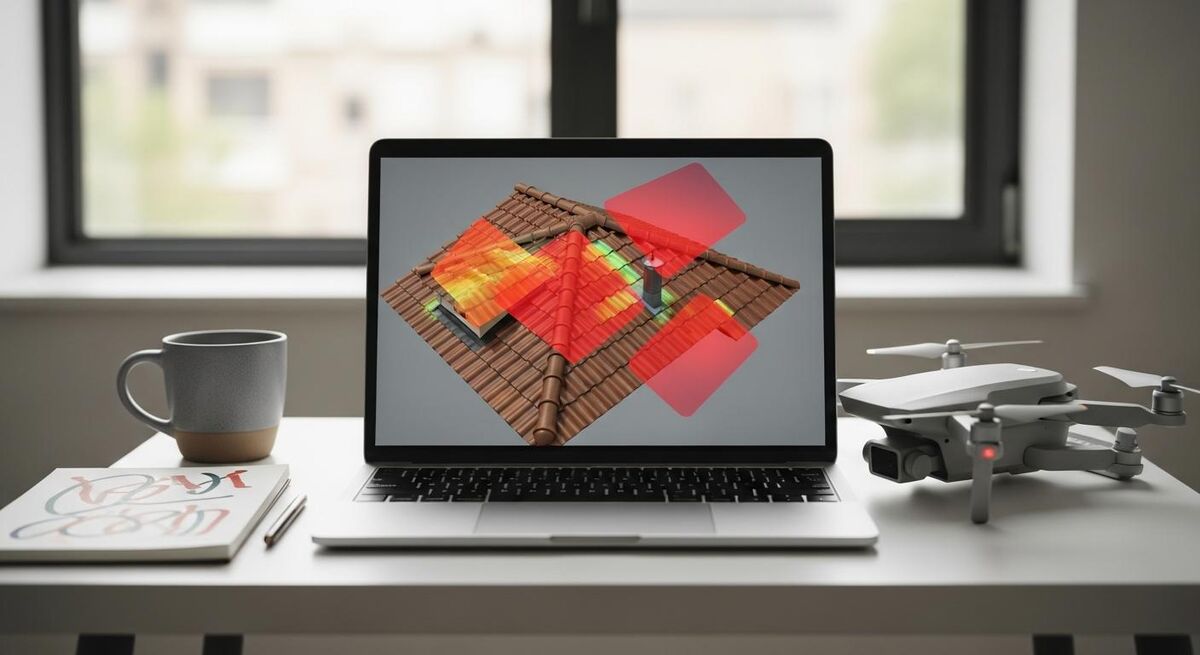
The drone is the easy part. What you do with the data is where the value sits. Three pieces of software cover almost every UK trades use case.
Hammer Missions is the closest thing to a turnkey solution for roofers and surveyors. It supports every major DJI drone including the Mini 4 Pro, runs over 15 mission types optimised for roof and facade inspection, and applies AI to flag ponding, staining, slipped tiles, and structural damage directly on 2D and 3D outputs. Subscription pricing sits in the £100 to £500 per month range depending on processing volume. For a single-operator residential surveyor, the entry tier is enough. For a small commercial outfit running multiple drones, the higher tier pays for itself in time saved on manual review. The strength is the AI defect overlay. You stop staring at imagery and start reviewing flagged areas.
Pix4D is the surveyor-grade option. Pix4Dmapper and Pix4Dmatic produce orthomosaics, 3D meshes, point clouds, and full survey-grade outputs that a RICS-qualified surveyor will accept. Pricing is enterprise tier (over £200 a month for the cloud option, several thousand pounds for desktop perpetual licences) and the learning curve is real, but the outputs are professional-grade. This is what you bolt onto a Mavic 3 Enterprise with RTK if you are competing for serious commercial survey work.
DJI Terra ships from DJI itself and handles photogrammetry, point cloud generation, and basic mapping. It is the default starting point if you bought the Mavic 3 Enterprise and want to do mapping without third-party software. Functional, but Hammer Missions and Pix4D produce better-looking deliverables.
For the small operator just starting out with a Mini 4 Pro, my honest view is this: do not buy software in month one. Take a couple of dozen surveys in DJI Fly, get used to manoeuvring the drone over real roofs, and put together your own reports in a basic word processor with annotated photos. Once you are getting bookings, add Hammer Missions. The AI defect detection saves real time at that point, and you will know enough about your own workflow to choose the right tier.
A realistic survey workflow from quote to report
Here is what a residential roof survey actually looks like in 2026, from the customer enquiry to the invoice. This is the same workflow whether you use the Mini 4 Pro or the M3E. The only difference is the depth of the deliverable.
- Enquiry and quote. Customer asks about a roof survey. You quote £200 to £450 for a residential property with a written report. Half upfront if they are new. Confirm the address, postcode, and any access constraints (overhead trees, neighbour boundary, schools nearby).
- Pre-flight site check. Use Drone Assist (the CAA's app) and AirNav to check the airspace. Most residential addresses are fine in Open category. Note any restrictions (within 5km of an aerodrome, FRZ, controlled airspace) and either reschedule or apply for permission.
- Customer briefing on the day. Two minutes on the doorstep. Where will you stand, what airspace you will use, when you will be on the property. Confirm there is no one on the roof, in the loft, or planning to come out the back door mid-flight.
- The flight itself. Six to ten minutes for a standard semi-detached. Capture 360 degree orbit, top-down at three altitudes, and close-in shots of ridges, valleys, hips, chimneys, flashing, gutters, and any visible defects. With Hammer Missions, the app handles automated mission planning for full coverage.
- Battery swap and second pass. Replace the battery while you review the first set of imagery on the tablet. Identify gaps and shoot a focused second pass on any areas of concern (close-up on slipped tiles, lifted lead flashing, blocked gutters). This is where the Mini 4 Pro's nimbleness shines. For larger operations managing multiple drones and batteries, see our guide on battery storage and management for installers.
- Report production. Back at base, the report takes 45 to 90 minutes if you do it manually, or 15 to 30 minutes if you let Hammer Missions' AI defect detection do the heavy lifting on the model. Include annotated images, a defect summary, recommended remedial actions, and a cover sheet with your CAA Operator ID for legitimacy.
- Deliver and invoice. PDF report by email, balance invoice attached. Most domestic customers want the survey in their inbox the same day.
Two minutes explaining what you are doing puts the customer at ease and protects you legally. Neighbours notice drones. A polite knock on the next door before you fly costs nothing and prevents the call to the police that wastes your afternoon.
ROI: what you can charge and what it costs you
The numbers below are what UK operators were actually getting in early 2026. Quote your own market, but use these as a sanity check.
Now the cost side. A Mini 4 Pro Fly More Combo, an A2 CofC, an Operator ID, a year of commercial insurance, and Hammer Missions for six months comes to under £2,000 all in. Three residential surveys in your first month pays the kit off. The Mavic 3 Enterprise rig is a different scale: £7,000 to £9,000 for the drone, RTK, base station, GVC training, and commercial software for a year. Two commercial industrial surveys clears the lot.
The other line on the spreadsheet most operators forget is the avoided cost. If your business is roofing repairs and you previously paid £1,000 to £2,500 a week for scaffold just to do a visual inspection on a job you might not even win, drone surveying eliminates that. The drone is also the lead generator for the repair work. A surveyor without a roofing trade is a survey business. A roofer with a drone is a roofing business that wins more jobs.
I have written about the wider direction in our digital transformation roadmap for a 5-person trades business, and a drone is one of the highest-impact purchases on that path. For operators just getting started, the companion piece on building a complete drone survey kit under £1,000 covers every component you need to be operational on a residential roof.
Which drone should you actually buy?
I will not hedge. If you are reading this and trying to decide between the two, you almost certainly want the Mini 4 Pro. The reasons:
- It is C0 class. You can operate over uninvolved people in residential streets without falling foul of the A2 rules.
- An Operator ID and a Flyer ID get you legally airborne. No two-week study course.
- £569 to £979 of kit pays for itself in two to four jobs.
- For residential trades work, the imagery is good enough by any honest measure. 4K HDR at f/1.7 picks up slipped tiles, lifted flashing, and pointing failure cleanly.
- It fits in a van glovebox.
Buy the Mavic 3 Enterprise if any of these apply:
- You are surveying commercial or industrial buildings where the client expects RTK-accurate orthomosaics or 3D models.
- You need thermal imaging for moisture, insulation, or live leak detection.
- You are doing photogrammetry for chartered surveyors or insurance loss adjusters who will scrutinise the measurement accuracy.
- You have or are willing to invest in a GVC and an Operational Authorisation.
- Your annual survey volume justifies a £7,000 to £9,000 capital outlay.
For most UK roofers and builders adding survey capability to an existing trade business, the answer is the Mini 4 Pro. For a specialist survey company, or a larger trades business with a dedicated surveyor on staff, the M3E earns its place.
What tradespeople are saying
Recommended videos
Mavic 3 Thermal: Roof Inspections Without a Ladder
Practical demonstration of thermal imaging for moisture detection on roofs.
DJI Mavic 3 Enterprise: RTK Surveying and Mapping
How the RTK module changes positional accuracy for survey-grade outputs.
Drone Inspection with DJI Mavic 3 Enterprise
Walkthrough of a commercial inspection workflow using the M3E.
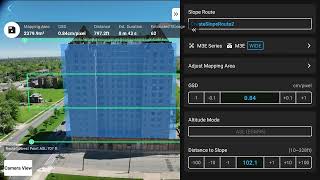
Automatic Facade Inspection: Mavic 3 Enterprise
45 minute mission capturing 2,100 photos for a full building facade.
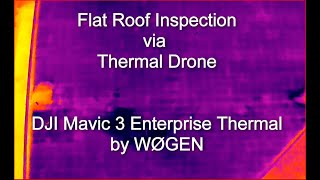
Thermal Inspection of Industrial Flat Roof
Mavic 3 Thermal in action on a real industrial flat roof job.
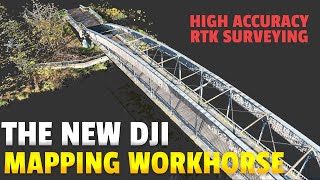
DJI Mavic 3 Enterprise: Surveyor-Grade Mapping
Quick review focused on construction surveying and documentation.
Frequently asked questions
You need an Operator ID (£12.34 a year) and a Flyer ID (free) the moment you charge for a service. You do not technically need an A2 CofC for sub-249g C0 drones because they sit in the A1 sub-category. You do need third-party insurance for any commercial work. So no licence in the strict sense, but several legal obligations.
Most providers run an online course of 10 to 15 hours plus a 30-question theory test. You can complete it in a weekend if you focus. Cost is £97 to £159 from established providers like Coptrz, UAVHUB, or Drone School UK. The certificate is valid for five years.
For residential damage claims, generally yes. The 4K imagery is clear enough to support most visual claims. For structural reports, listed buildings, or anything requiring measurement, you need an M3E with RTK and ideally a chartered surveyor signing off. Always ask the assessor upfront what they will accept.
Yes, with limitations. It can produce visually impressive 3D models in Pix4D or Hammer Missions, but the lack of mechanical shutter and the small sensor means positional accuracy is consumer-grade. Fine for site documentation, marketing visuals, and rough volumetric estimates. Not fine for measured surveys.
The Mini 4 Pro is rated for wind up to 10.7 m/s (24mph), but in practice a sub-250g drone gets pushed around in anything over 15mph. The M3E handles up to 12 m/s and feels stable in light rain. Both struggle in heavy rain (neither is IP-rated for water). For UK reality, plan around the forecast and never push it. A cancelled survey is cheaper than a lost drone.
For purely recreational flight over your own property with a sub-249g drone, no. The moment you charge for a survey, even on a customer's residential property, you are a commercial operator and need to comply with the full CAA framework: Operator ID, Flyer ID, third-party insurance, and category-appropriate qualifications.
Probably not. Spend your first month flying the drone in DJI Fly and producing reports manually. Once you are booking surveys regularly, Hammer Missions saves real time on mission planning and AI defect detection. The lowest tier is enough for a single-operator residential business. Upgrade as volume justifies it.
In the A1 sub-category (sub-249g C0 drones), you can fly over uninvolved people incidentally, never deliberately, and not over assemblies. No minimum horizontal distance from buildings on your customer's property. In Near People (A2) with a C2 drone like the Mavic 3 Enterprise, you need 30m horizontal distance from uninvolved people (5m if in low-speed mode), and 50m from assemblies. GVC plus Operational Authorisation drops this to as little as 30m on take-off.
My verdict
The Mini 4 Pro is the smarter purchase for almost every roofer, builder, gutter cleaner, or general trades business adding survey capability. Sub-£1,000 all in, C0 class regulations, fast learning curve, and capable enough to charge £200 to £450 per residential survey from week one. The Mavic 3 Enterprise is a different tool for a different job: industrial roofs, RTK photogrammetry, thermal imaging, chartered surveyor outputs. If you do not know whether you need it, you do not. Buy the Mini 4 Pro, run it hard for a year, and let the work tell you when (or whether) to step up. The trades gave me everything, and technology like this is how you take what you already know and turn it into a new revenue stream without adding head count or sacrificing margin.