
Quick Answer
Every UK electrician needs to understand three core certification regimes: EICRs (mandatory every 5 years for rental properties, now extending to social housing from May 2026), Part P compliance for domestic notifiable work, and PAT testing for portable appliances. BS 7671 Amendment 4 lands on 15 October 2026 as the sole standard for all new work, and from the same date, individual Level 3 qualifications become mandatory for anyone carrying out EICRs. Penalties for non-compliance have risen to £40,000. This guide covers every requirement, cost, and deadline you need to know.
Table of Contents
- The testing and certification landscape in 2026
- EICR requirements: what the law actually says
- Part P building regulations for electrical work
- PAT testing: legal position and practical requirements
- BS 7671 Amendment 4: what changed in April 2026
- Key dates and deadlines
- NICEIC vs NAPIT: registration costs and differences
- Penalties for non-compliance
- AI tools for certification and compliance
- What electricians are saying
- Recommended videos
- Frequently asked questions
- My verdict
The testing and certification landscape in 2026
Electrical testing and certification in the UK sits at a crossroads. The workforce has shrunk by over a quarter since 2018, demand is climbing because of new social housing mandates, and the regulatory bar is rising with BS 7671 Amendment 4 and the October 2026 Level 3 qualification requirement. For working electricians, understanding exactly what is required, when it applies, and what happens if you get it wrong has never been more important.
When it comes to electrical safety, there is no grey area. You need the right qualifications, the right scheme membership, and the right paperwork. Get any of those wrong and you are looking at fines, prosecution, or worse. I have seen the gas side of this equation first-hand, having come from a Gas Safe background. The electrical certification regime works on the same principle: protect people, protect yourself, and protect the industry's reputation.
This guide covers every certification type, every deadline, and every cost you need to budget for. No padding, no assumptions. Just the facts as they stand in 2026.
EICR requirements: what the law actually says
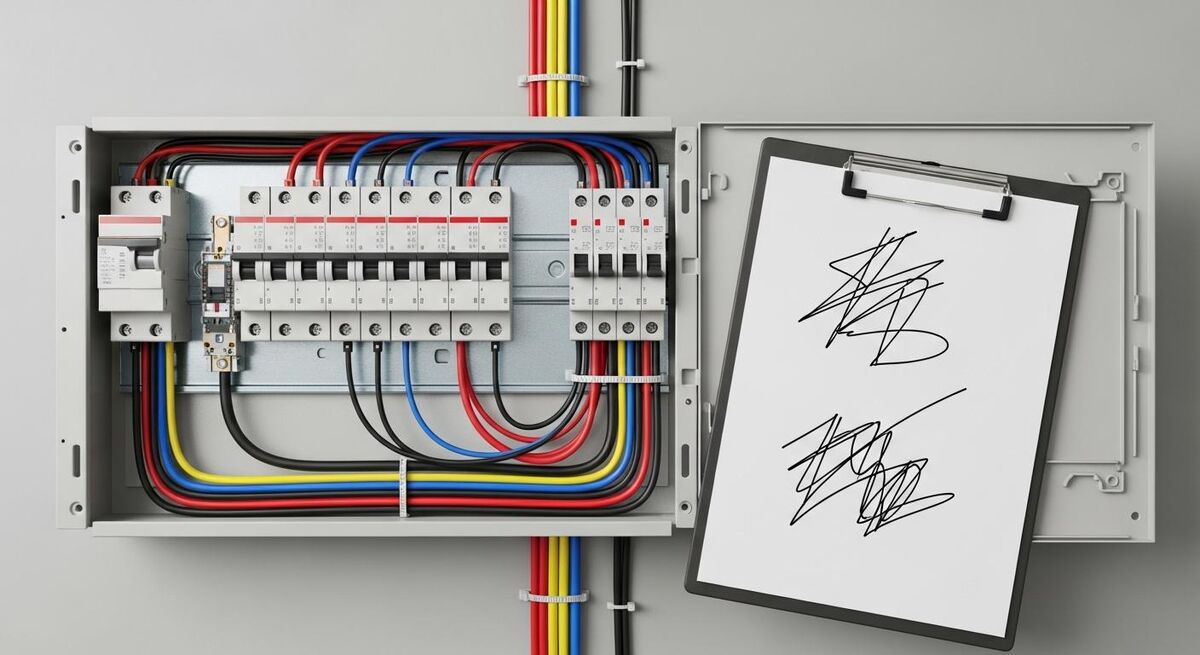
An Electrical Installation Condition Report is an in-depth inspection and test of a property's fixed wiring. Think of it as an MOT for your electrics. The inspector checks everything from the consumer unit to every socket, light, and circuit, then classifies any defects using a coding system.
The classification codes
| Code | Meaning | Action required |
|---|---|---|
| C1 | Danger present | Immediate remedial action, isolate if necessary |
| C2 | Potentially dangerous | Urgent remedial action within 28 days |
| C3 | Improvement recommended | Not mandatory, advisory only |
| FI | Further investigation required | Additional testing needed to determine severity |
Any C1, C2, or FI code means the EICR is recorded as unsatisfactory. C3 codes alone do not fail the report.
Who must have an EICR?
Private landlords in England: Legally required since April 2021 under the Electrical Safety Standards in the Private Rented Sector (England) Regulations 2020. An EICR must be obtained at least every 5 years, shared with existing tenants within 28 days, and provided to new tenants before they move in. Remedial action on any C1 or C2 code must be completed within 28 days.
Social landlords: From 1 May 2026, social housing landlords must comply with the same mandatory five-year EICR rules. That is approximately 4 million additional properties entering the regime. Combined with the millions of EICRs issued under the 2021 private rented sector mandate now reaching their first renewal, the demand for qualified inspectors is about to spike considerably.
Homeowners: Recommended every 10 years, but not legally mandatory. However, if you sell your property, buyers and mortgage lenders now routinely request a recent EICR. Solicitors have started using them as negotiating tools in conveyancing.
What does an EICR cost?
| Property type | Typical cost | Notes |
|---|---|---|
| Studio / 1-bed flat | £99 to £150 | British Gas from £99 |
| 2-bed house | £150 to £199 | London average around £162 inc. VAT |
| 3-4 bed house | £199 to £300 | Most common domestic range |
| 5-6 bed house | £250 to £300+ | Allow a full day |
London prices run approximately 20% higher than the national average. The average hourly electrician rate sits at around £37. If remedial work is needed, common costs include consumer unit replacement (£450 to £700), RCBO installation (£120 to £160), and bonding upgrades (£120 to £200).
Forum discussions on ElectriciansForums.net reveal a wide spread in pricing. Some contractors quote as low as £48 per EICR for bulk landlord work, but the consensus among experienced electricians is that anything under £200 plus VAT likely means corners are being cut on actual testing. One electrician put it plainly: "Never under £200 plus VAT even for a small flat."
The October 2026 qualification change
From 1 October 2026, anyone carrying out EICRs must hold a specific Level 3 qualification such as the City and Guilds 2391-52 Inspection and Testing Course, plus evidence of at least two years of documented inspection experience. The "experience-only" route that some electricians have relied on officially ends. If you have been doing EICRs based on experience alone, you need to get qualified before October.
Part P building regulations for electrical work
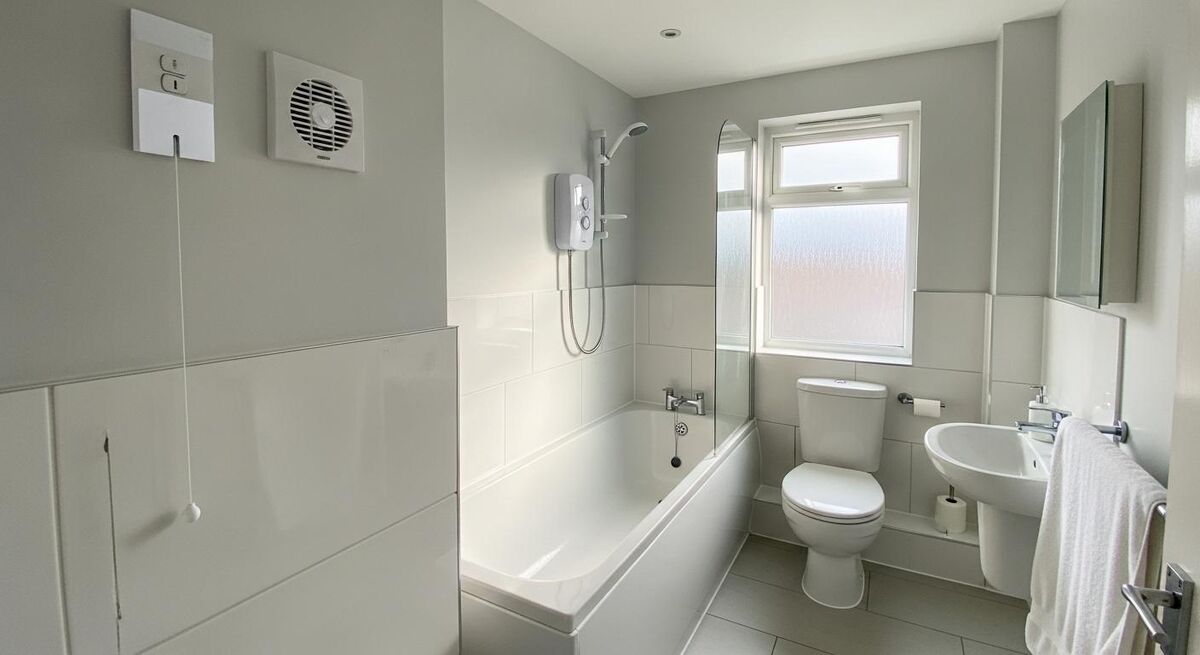
Part P of the Building Regulations covers the safety of electrical installations in dwellings across England and Wales. Since 1 January 2005, all electrical installation work in homes, gardens, conservatories, and outbuildings must meet Building Regulations.
Notifiable vs non-notifiable work
Not all electrical work requires Building Control notification. The distinction matters because it determines whether you need scheme membership or must pay for a building control inspection.
Notifiable work (requires Building Control notification):
- Installation of a new circuit, whether low voltage or extra-low voltage
- Any alteration or addition to an existing circuit in a special location such as a bathroom, swimming pool area, or sauna
Non-notifiable work (no notification required):
- Adding a socket or light point to an existing circuit
- Adding a spur to an existing circuit
- Replacing a light fitting
- Like-for-like replacements of accessories
Three compliance routes
For notifiable work, you have three options. Using a registered electrician through NICEIC or NAPIT who can self-certify and issue Building Regulations Compliance Certificates is the most common and cost-effective route. Alternatively, you can notify Local Authority Building Control directly, which costs approximately £300 per job. The third option is having work overseen by a member of a competent person scheme. For more detail on building control notifications, see our guide to building control notifications.
Certificates issued under Part P
Completed notifiable work requires an Electrical Installation Certificate (EIC) or Minor Works Certificate, plus a Building Regulations Compliance Certificate. These documents prove the work complies with BS 7671 and Part P. Keep them safe because they are needed when selling a property and now routinely requested by insurers.
PAT testing: legal position and practical requirements
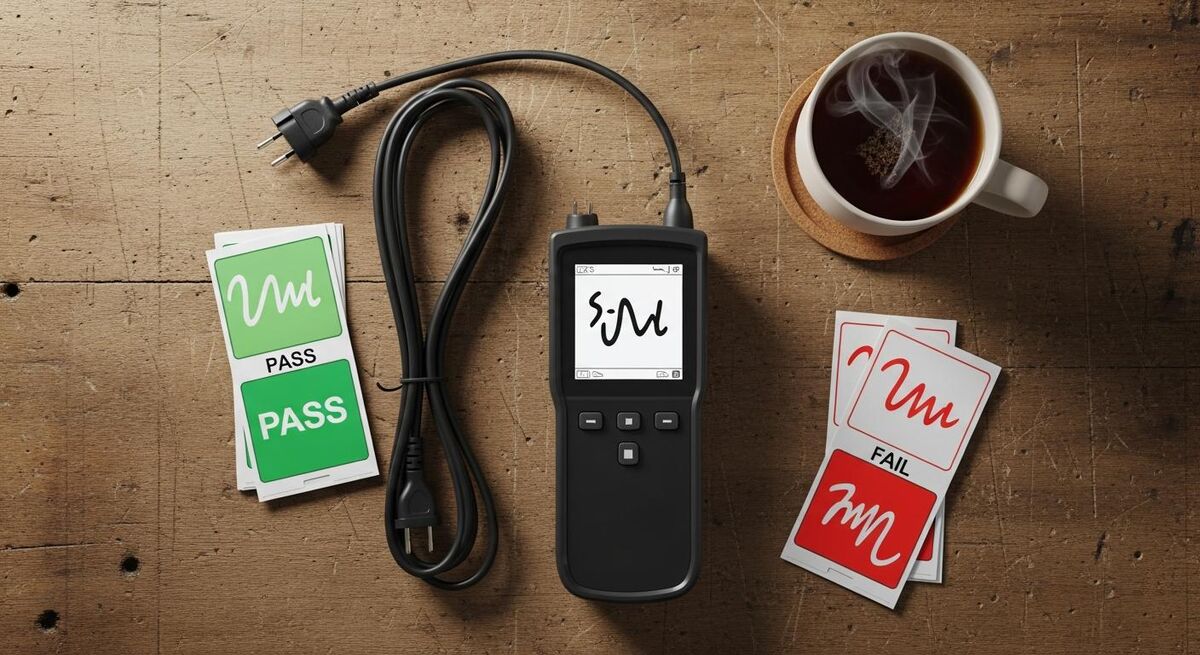
PAT testing is one of the most misunderstood areas of electrical compliance. Here is the reality: PAT testing is not a named legal requirement in any UK statute. No law says "you must PAT test." But that does not mean you can ignore it.
Employers and landlords have duties under the Electricity at Work Regulations 1989 and the Health and Safety at Work Act 1974 to ensure electrical equipment is safe to use. PAT testing is the recognised and accepted method of demonstrating that duty of care. If something goes wrong and you cannot show you tested your equipment, you will struggle to defend yourself.
What has changed for social housing
From November 2025 for new tenancies and May 2026 for existing tenancies, social landlords must PAT test any appliances they provide to tenants. These results must be included alongside the EICR at least every five years. This is a significant expansion of the testing obligation.
Who can PAT test?
Any competent person who has received appropriate training. You do not need to be a qualified electrician. This makes PAT testing accessible to facilities managers, office administrators, and property maintenance staff, provided they have completed a recognised training course.
Typical PAT testing costs
Most testing companies charge between £1 and £3 per appliance, or £40 to £60 per hour. There is usually a minimum site or call-out fee of £40 to £60. For electricians looking to add PAT testing as a service line, the equipment investment is modest and the margins are decent on volume work.
BS 7671 Amendment 4: what changed in April 2026
The 18th Edition of the IET Wiring Regulations, BS 7671:2018, received its fourth amendment on 15 April 2026. You can implement Amendment 4 immediately, but from 15 October 2026 it becomes the sole applicable standard for all new installations, alterations, additions, and periodic inspections.
What Amendment 4 actually covers
Battery energy storage systems (Chapter 57): The first dedicated BS 7671 chapter for stationary secondary batteries used in home energy storage. It covers thermal runaway mitigation, safe isolation, ventilation requirements, and location restrictions. With domestic battery storage installations climbing year on year, this was overdue.
Power over Ethernet (Section 716): A new section setting requirements for distributing extra-low voltage DC power via data cables. PoE is now mainstream enough to warrant its own regulatory framework within BS 7671.
ICT functional earthing: New requirements for functional earthing and equipotential bonding specifically for ICT equipment and systems.
Medical locations (Section 710): Major revision including a new schedule of test results for supplementary protective equipotential bonding conductors.
Key dates and deadlines
| Date | What happens | Who it affects |
|---|---|---|
| September 2021 | Short courses no longer accepted for scheme registration | All new scheme applicants |
| November 2025 | Social housing EICR rules begin for new tenancies; max fine rises to £40,000 | Social landlords, all landlords |
| 15 April 2026 | BS 7671 Amendment 4 published, can be implemented immediately | All electricians |
| 1 May 2026 | Social landlords must comply with EICR rules for all existing tenancies | Social landlords (~4 million properties) |
| 15 October 2026 | Amendment 4 becomes the sole applicable standard; Level 3 qualification mandatory for EICRs | All electricians carrying out EICRs or new installations |
NICEIC vs NAPIT: registration costs and differences
If you want to self-certify notifiable electrical work and issue Building Regulations Compliance Certificates, you need to be registered with a competent person scheme. The two main options are NICEIC and NAPIT. ELECSA no longer accepts new registrations; all members were transferred to NICEIC in 2021.
NICEIC
Founded in 1956, NICEIC is the largest and oldest scheme in the UK. Around 38,000 businesses are registered, and NICEIC-registered electricians completed 78% of all notifiable work in England and Wales in 2024. Domestic Installer registration costs £575 plus VAT for the application including assessment, with annual fees of £500 to £700. Approved Contractor status costs more: £320 plus VAT for the pre-assessment and £815 plus VAT for the site assessment, with annual fees of £700 to £1,000.
NAPIT
Generally cheaper than NICEIC and often praised for responsive customer service. Domestic Installer registration runs approximately £400 to £600 per year. Members report that NAPIT responds to queries within 24 hours and includes periodic inspections at no extra cost. NAPIT also covers plumbing, heating, ventilation, and renewables, which suits multi-trade businesses.
| Feature | NICEIC | NAPIT |
|---|---|---|
| Domestic Installer annual fee | £500 to £700 | £400 to £600 |
| Initial assessment cost | £575 + VAT | Included in first year |
| Registered businesses | ~38,000 | Not publicly disclosed |
| Notifiable work share | 78% (2024) | Smaller share |
| Multi-trade coverage | Electrical only | Electrical, plumbing, heating, renewables |
| Customer service reputation | Mixed reviews on response times | Consistently praised |
Both schemes require the same core qualifications: a Level 3 electrical qualification (such as City and Guilds 2365 or 2357 with AM2), the current 18th Edition certificate (City and Guilds 2382), and the Inspection and Testing qualification (City and Guilds 2391). Since September 2021, short courses and certificates of competence are no longer accepted for scheme registration.
Operating without a scheme
You can legally work as an electrician without scheme membership. Any qualified electrician can certify their own work in the domestic sector. But notifiable work requires either scheme membership (approximately £600 per year), paying building control (approximately £300 per job), or getting work overseen by a scheme member. For most working electricians doing regular domestic installations, scheme membership pays for itself after two to three notifiable jobs.
Penalties for non-compliance
The financial consequences of getting electrical compliance wrong have increased sharply. Here is what you are looking at.
EICR and electrical safety standards: The maximum civil penalty rose from £30,000 to £40,000 from 1 November 2025, applying to incidents from 1 May 2026. Local authorities can prohibit property rentals entirely. Prosecution under the Health and Safety at Work Act 1974 carries unlimited fines and up to two years imprisonment in extreme cases.
Part P building regulations: Fines of up to £5,000 per offence under the Building Act 1984, rising to unlimited fines under the Building Safety Act 2022. Local authorities can order removal or correction of faulty work.
Electricity at Work Regulations 1989: Unlimited fines for non-compliance and potential imprisonment for persistent violations.
AI tools for certification and compliance
Technology is starting to change how electricians handle the paperwork side of testing and certification. I spent years as a gas engineer filling out certificates by hand, and the thought of doing that in 2026 is painful. The tools available now are worth your time.
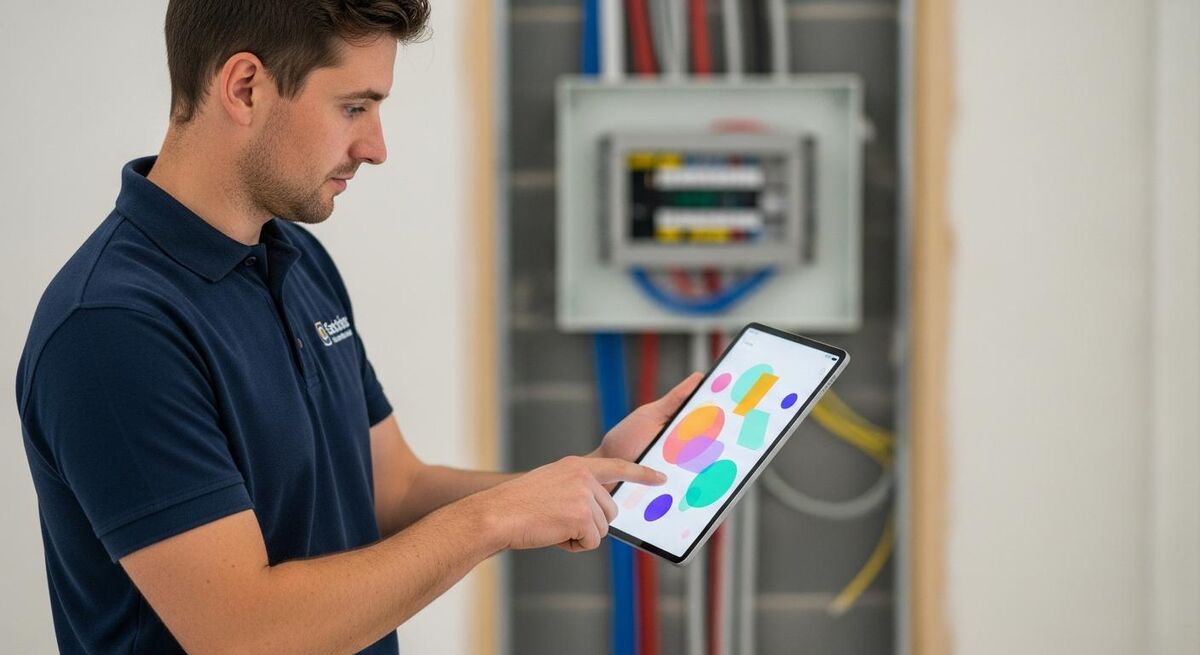
iCertifi has been around since 2012 and covers EICRs, EICs, Minor Works, PAT, and fire and gas certificates. Their AI-powered "Spark AI" assistant is trained specifically on BS 7671, BS 5839-1:2025, and IET Guidance Notes. It helps with EICR coding decisions, which is useful given how much inconsistency exists between inspectors on borderline classifications.
Tradecert is a cloud-based platform that handles EICs and EICRs with features like AI-powered observation suggestions and offline mode for working in basements and plant rooms with no signal. Multi-device sync means you can start on a tablet on site and finish on your laptop.
Certly was built by electricians for electricians. The interface is clean and fast, which matters when you are standing in front of a distribution board trying to get the paperwork done before the next job.
Beyond certification software, AI is being applied to anomaly detection in voltage levels and current distribution, predictive maintenance that forecasts potential issues before they become dangerous, and automated compliance checking against the latest regulations. These tools will not replace a qualified inspector's judgement, but they reduce the admin burden and catch errors that manual processes miss.
What electricians are saying
Recommended videos
How to do an EICR start to finish
Mark The Sparky Allison

EICR Explained: Electrical Installation Condition Report
Andy Willcox Electrical
What is an Electrical Installation Condition Report?
Electrical Safety First

Revealed: What's Inside BS 7671 Amendment 4?
eFIXX
How To PAT Test: Step By Step
eFIXX
PAT Testing Regulations UK: PAT Testing Explained
Electrical Installation Services
Are You Qualified to do PAT Testing?
eFIXX

Part P: Building Regulations Electrical Safety
John Ward
Frequently asked questions
Every 5 years for private and social rented properties. This is a fixed interval requirement, not triggered by change of tenancy. Set a calendar reminder 3 months before expiry to book the inspection.
No. From 1 October 2026, you must hold a specific Level 3 inspection and testing qualification plus two years of documented experience. The experience-only route ends on that date. Get qualified now.
Not specifically named in any UK law. But employers must ensure electrical equipment is safe under the Electricity at Work Regulations 1989. PAT testing is the accepted way to prove compliance. If an appliance causes harm and you cannot show testing records, expect trouble.
Both are competent person schemes that let you self-certify notifiable work. NICEIC is larger and more established. NAPIT is typically cheaper and praised for customer service. Both follow BS 7671 and carry equal legal weight. Choose based on cost and the service experience you want.
Not legally required, but recommended every 10 years. Mortgage lenders and buyers now expect one. Getting an EICR before selling can prevent last-minute price negotiations. Worth the £200 to £300 investment for peace of mind.
Any C1 or C2 code means the report is unsatisfactory. You have 28 days to complete remedial work (or sooner for C1 codes). After remedial work, the electrician re-tests the affected circuits and issues an updated report. Failure to act can result in fines up to £40,000.
Yes. You can certify your own work. But for notifiable domestic work, you must either pay building control approximately £300 per job or have a scheme member oversee it. Scheme membership at £400 to £700 per year pays for itself after a few notifiable jobs.
You can use it now since 15 April 2026. From 15 October 2026, it becomes the sole applicable standard for all new installations, alterations, additions, and periodic inspections. Book your update course before training providers fill up.
My verdict
The regulatory landscape is tightening, the workforce is shrinking, and the penalties are climbing. That is actually good news for qualified, compliant electricians. While cowboy operators get squeezed out by the Level 3 qualification requirement and rising fines, professionals who stay current with their training and scheme registration will find themselves in higher demand with better margins. Invest in your qualifications now. Get your Amendment 4 training booked. Make sure your scheme membership is current. The electricians who treat compliance as a competitive advantage rather than a cost will be the ones thriving five years from now.
Ready to transform your business?
Turn every engineer into your best engineer and solve recruitment bottlenecks
Join the TrainAR Waitlist