
Quick Answer
Part P of the Building Regulations covers electrical safety in homes across England and Wales. Notifiable work, including any electrics in a bathroom or kitchen, new circuits, and consumer unit replacements, must be done by a registered competent person or signed off by Building Control. The two main schemes are NICEIC and NAPIT. Annual scheme fees run £400 to £700, plus an initial assessment. BS 7671 Amendment 4 lands on 15 April 2026 and your 18th Edition certificate must reflect it by October 2026. AI tools like iCertifi, Tradecert and SpeedCert now cut certificate paperwork by two thirds for the average sparks.
Table of Contents
- What Part P actually is
- Notifiable work: the rooms that catch people out
- Becoming a registered competent person
- NICEIC vs NAPIT: real costs in 2026
- The four certificates you need to know
- BS 7671 Amendment 4: what changes in 2026
- AI tools that handle the paperwork
- Penalties for getting it wrong
- What electricians are saying
- Recommended videos
- Frequently asked questions
- My verdict
What Part P actually is
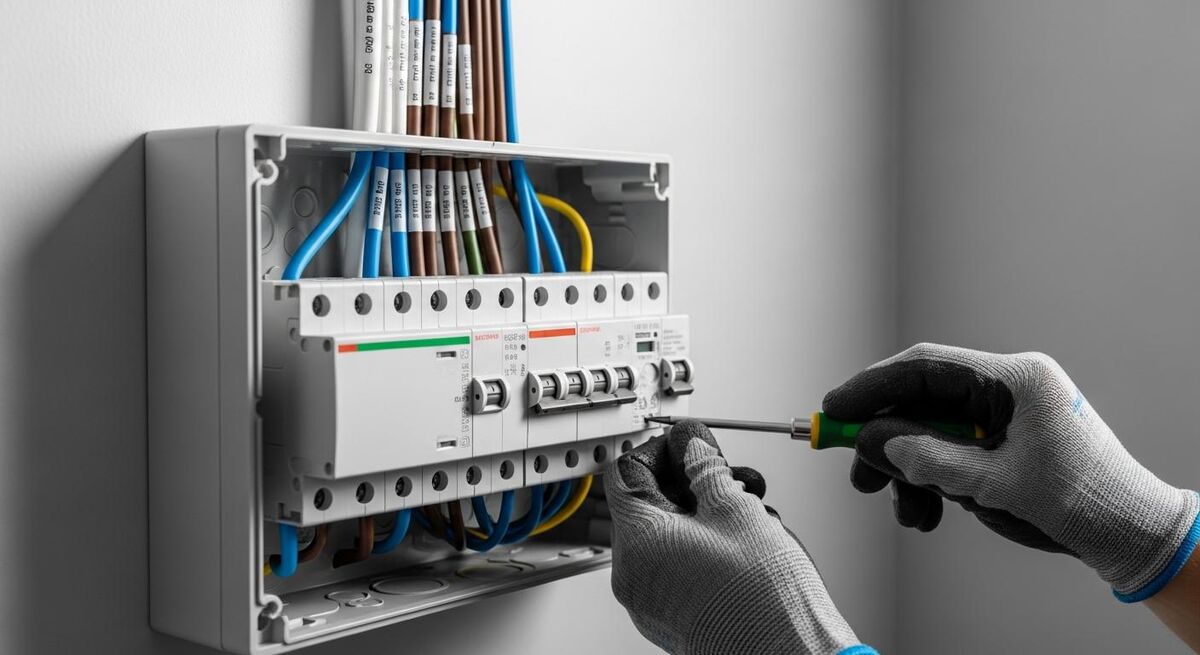
Part P is short. The Approved Document runs about 14 pages. The whole regulation says one thing: electrical work in a dwelling has to be safe. That is it. Everything else, the certificates, the schemes, the assessments, is the system Government built to prove the work was safe and to keep liability clear.
It applies in England and Wales. Scotland uses different rules under the Building Standards regime. Northern Ireland has its own approach. If you work across borders you have to keep that straight.
The confusion most people run into is this: there is no such thing as a "Part P qualification". Part P is a Building Regulation. The qualifications electricians hold, City and Guilds 2365 Level 2 and 3, the 18th Edition, the 2391 inspection and testing certificate, sit alongside Part P. They demonstrate competence. Part P just defines what work is in scope and how it has to be notified.
If you are a working electrician, your route through Part P is straightforward. Join a competent person scheme and you can self-certify. Skip the scheme and every notifiable job has to go through your Local Authority Building Control office, with the homeowner paying a notice fee and the council inspecting the work.
Notifiable work: the rooms that catch people out
This is where most homeowners and a lot of newer sparks get caught out. Not every job is notifiable. But the list of what is notifiable is broader than people expect, and the rooms involved are the ones that come up daily.
The bathroom rule is the one that trips people up. Replacing an existing shower with a like-for-like model is fine. Moving the shower three feet, changing the cable run, swapping in a higher rated unit, adding a downlight above the bath, fitting a new extractor in a zone, all of that is notifiable. The "special location" rule applies within 3 metres of a bath or shower edge.
Kitchens are softer. Adding sockets or fused spurs to an existing ring in a kitchen is not automatically notifiable, but anything involving a new circuit is. The same applies to garages and sheds wired from the main consumer unit.
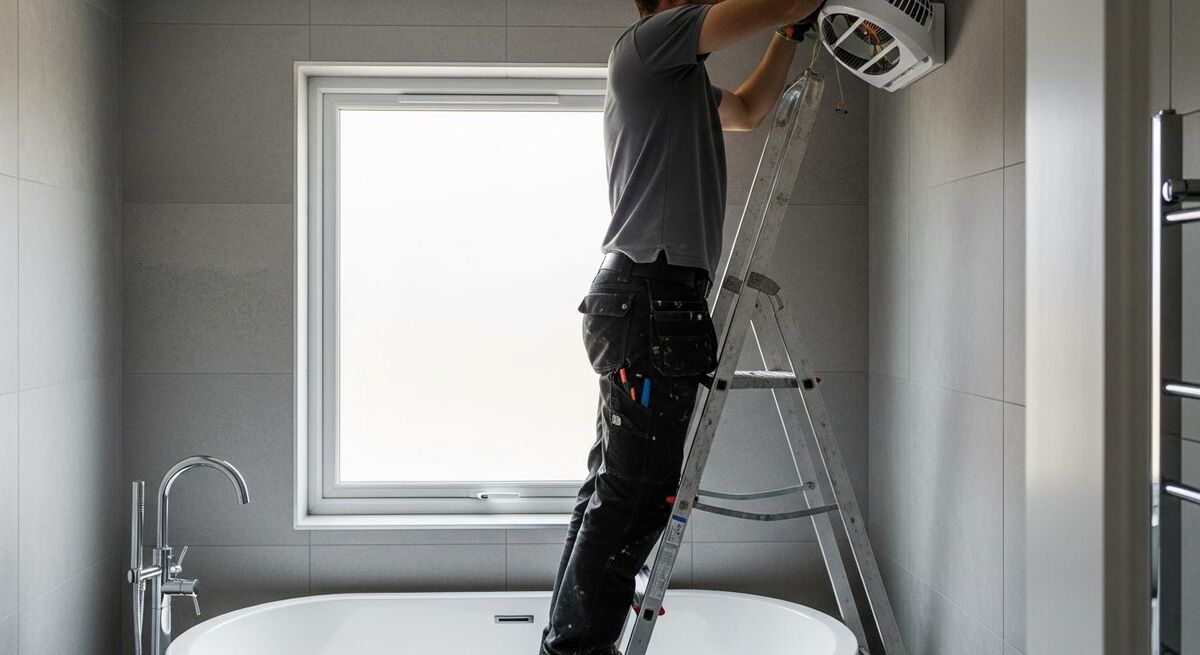
Like-for-like accessory replacement, replacing a faulty socket faceplate, swapping a light fitting, changing a faulty switch, is the main non-notifiable category. Repairs to existing circuits that do not extend them are also outside Part P. Once you cross into new circuits or special locations, the notification kicks in.
If you are not sure on a job, the test is simple. Ask: am I adding capacity to this installation, or am I working in a room that contains water? If the answer is yes to either, it is notifiable. Get it wrong and the certificate you sign loses its weight. Get it right and the rest follows. When in doubt, contact your local building control office for clarification.
Becoming a registered competent person
There are two routes onto a competent person scheme, and the route you take shapes how long it takes and what it costs.
The full qualification route is the apprenticeship path or the equivalent through a training centre. You need City and Guilds 2365 Level 2 and Level 3 in Electrical Installation, plus the 18th Edition (2382). Apprenticeships take three to four years. An intensive route through a training centre takes 18 to 24 months. Either way, after the qualifications you still need a portfolio of real work to present at scheme assessment.
The Experienced Worker Assessment route is the second path. If you have five or more years of practical electrical installation work behind you but no formal qualifications, you can complete an EWA. It typically takes three to six months. You demonstrate competence through a portfolio of work, an on-site practical assessment, and a knowledge test. Since September 2021, short courses and fast-track certificates have not been accepted, so the EWA is the only legitimate experienced-worker option.
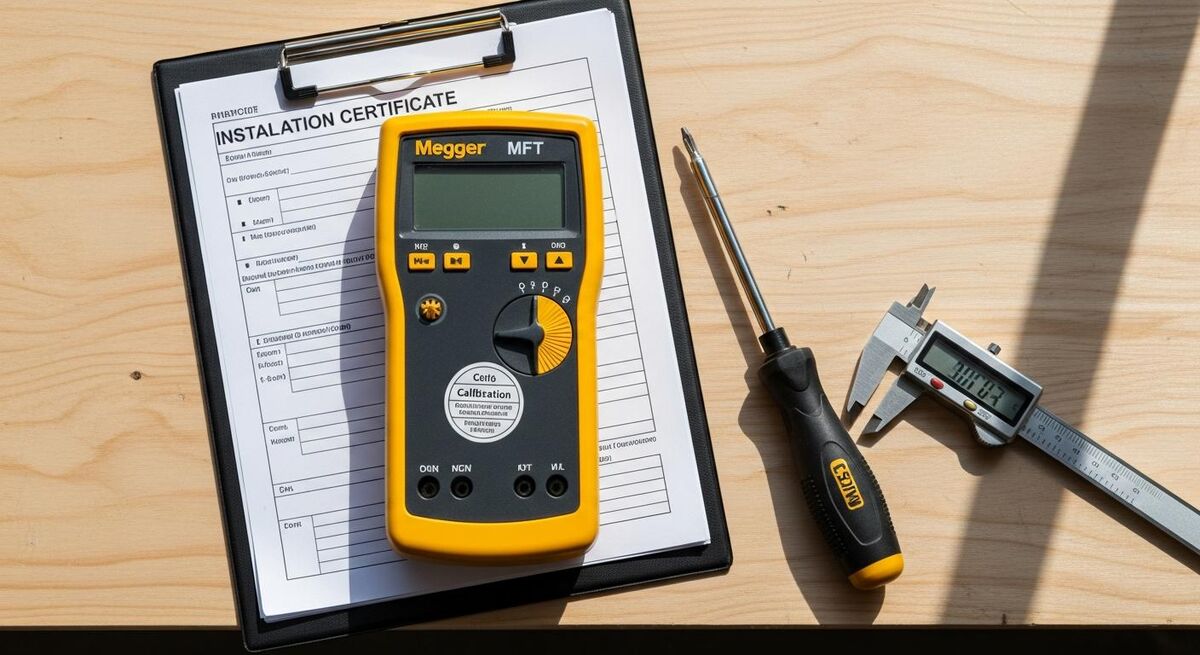
Whichever route you take, when you apply to a scheme you also need: a current 18th Edition certificate, public liability insurance to a minimum of £2 million, calibrated test equipment (multifunction tester with valid calibration certificate), and a sample of completed work for the assessor to inspect.
The assessment day itself is straightforward but not casual. The assessor checks your equipment calibration, reviews your paperwork, looks at a completed installation or two, and runs through a competency interview. Most assessors are sympathetic if you have prepared properly. The ones who fail are usually the ones who turned up with out-of-calibration testers or sloppy certificates.
NICEIC vs NAPIT: real costs in 2026
Four schemes are commonly named, but only two are accepting new domestic registrations. NICEIC absorbed ELECSA in 2021, so the ELECSA name is now historical. Stroma operates a multi-discipline scheme but is smaller in electrical specifically. The decision for most domestic installers comes down to NICEIC or NAPIT.
NICEIC is the older brand. Founded in 1956, around 38,000 registered businesses, the strongest name recognition with the public. The Domestic Installer scheme is the entry point for sole traders working in homes. Annual registration runs £500 to £700 depending on tier. The Approved Contractor scheme, which covers commercial and industrial work as well, costs £700 to £1,000 a year. Initial assessment fees are listed at around £690 with an application review fee on top.
NAPIT is the second largest scheme, with over 16,000 members across electrical, gas, ventilation and other building services. NAPIT Domestic Installer registration is generally £400 to £600 annually, modestly cheaper than NICEIC. Members consistently report better technical support and faster phone response, which matters when you have a tricky assessment coming up or a customer dispute on your hands.
| Scheme aspect | NICEIC | NAPIT |
|---|---|---|
| Founded | 1956 | 1992 |
| Members (electrical) | ~38,000 businesses | ~16,000 members |
| Domestic Installer annual fee | £500–£700 | £400–£600 |
| Initial assessment fee | ~£690 | ~£425 |
| Public recognition | High | Moderate |
| Trade recognition | High | High |
| Quoted assessment requirement | 5 years' experience + Level 2 minimum | 5 years' experience + 2391 preferred |
The honest answer on which to choose: if you do a lot of new-build or commercial work where main contractors specifically ask for NICEIC, go NICEIC. If your work is domestic and customer-direct, NAPIT is the better deal for the money. Both deliver Part P self-certification rights. Both publish your work to Building Control automatically. The customer-facing logos look different but the regulatory effect is the same.
The four certificates you need to know
There are four certificate types in regular use. Getting them right is half the job. For detailed guidance on testing requirements and certification standards, see our complete requirements guide to electrical installation testing and certification.
Electrical Installation Certificate (EIC). Issued when you carry out a new installation or an addition that creates a new circuit. Covers the full design, construction and verification of the work. This is what gets issued after a consumer unit change, a rewire, or any new circuit installation.
Electrical Installation Condition Report (EICR). The periodic inspection report on an existing installation. Required by law for rented homes since 2020 at least every five years, and for many commercial premises on regular schedules. It does not certify new work; it grades the condition of what is already there using C1 (danger present), C2 (potentially dangerous), C3 (improvement recommended) and FI (further investigation) codes.
Minor Electrical Installation Works Certificate. Used for additions or alterations that do not create a new circuit. Adding a socket to an existing ring main outside a kitchen or bathroom is the textbook example. It is shorter than an EIC but the testing requirements are the same.
Part P Building Regulations Compliance Certificate. Issued by your competent person scheme to confirm the notifiable work meets Building Regulations. The scheme sends this to your Local Authority and posts a copy to the homeowner, usually within 30 days of you submitting the job through their portal.

The certificate keeps you out of trouble. The customer copy proves you did the work. The scheme copy proves the work was notified. The local authority copy proves Building Regulations were met. Lose any of those threads and your audit trail breaks.
BS 7671 Amendment 4: what changes in 2026
This is the big one for 2026. BS 7671 is the Wiring Regulations, the technical standard underneath Part P. Amendment 4 of the 18th Edition publishes on 15 April 2026. Adoption is mandatory by October 2026, when your existing 18th Edition certificate needs to reflect Amendment 4 knowledge to maintain scheme registration.
The headline changes affect domestic installations directly. Without going into clause-by-clause detail (the IET publishes the full Amendment for that), the practical impact for a domestic sparks is in three areas. RCD protection requirements broaden. AFDD (arc fault detection device) requirements get clearer for specific circuit types. And the cybersecurity provisions for smart-enabled installations, first introduced in Amendment 3, get tightened.
What you need to do is straightforward. Book onto an Amendment 4 update course before October 2026. Most training providers will run two-day or three-day updates priced between £200 and £350. Your scheme will accept either a fresh 18th Edition certificate reflecting Amendment 4 or a recognised update qualification. Leave it to the deadline and you risk your scheme registration lapsing.
AI tools that handle the paperwork
This is where I get excited about the trade today. The paperwork burden on a working electrician was always one of the worst parts of the job. Three AI-driven platforms now do most of it for you.
iCertifi. The most comprehensive of the three for UK-specific BS 7671 work. AI distribution board scanning lets you photograph an existing board and the system extracts the circuit data into your certificate fields. AI test meter OCR reads results off your tester screen. A 24/7 UK electrical regulations assistant answers BS 7671 queries in plain English. And it runs an automated compliance check on every certificate before you submit it, flagging missing values, inconsistent test results or wrong code selections.
Tradecert. Similar OCR-based approach. Strong on circuit schedule generation and EICR observation wording. The AI extracts values from photographed boards or existing certificates and populates new ones. Useful if you do a lot of EICRs on older properties where the existing paperwork is fragmentary or missing entirely.
SpeedCert. Pitched on speed: three times faster on EIC, EICR and Minor Works certificates than manual entry, according to their published figures. The AI handles the boilerplate so you can focus on the engineering decisions.
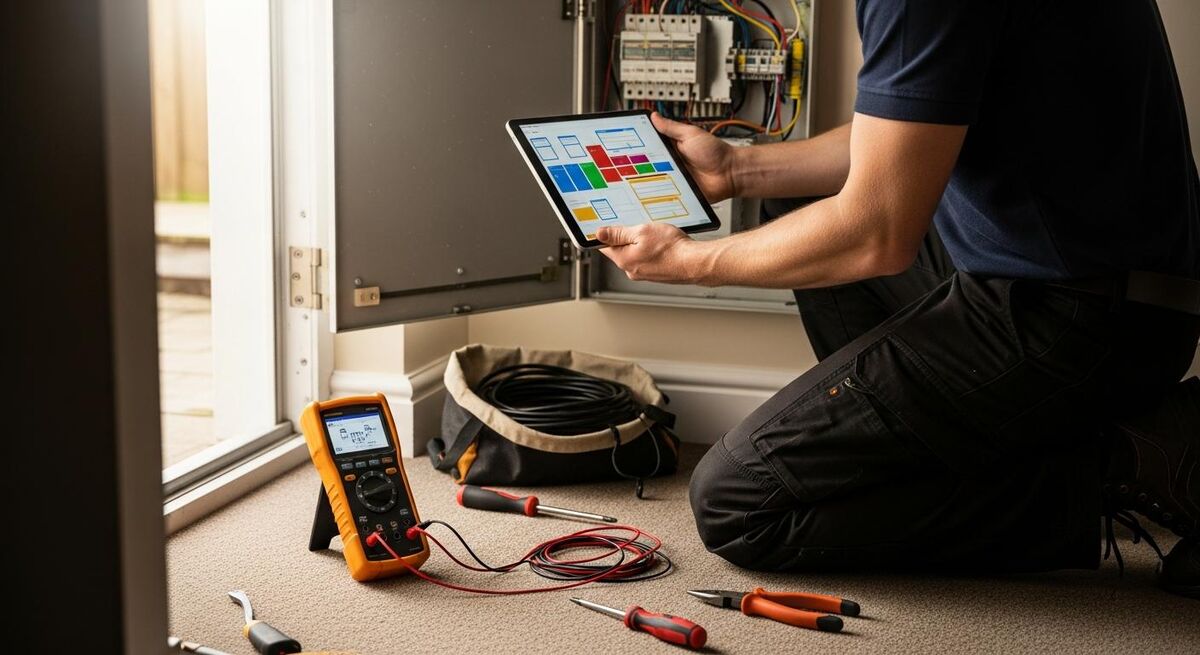
The pattern across all three is the same: photograph the board, photograph the tester, the AI does the data entry, you verify and sign. The human stays in the loop on the judgement calls. The robot handles the typing.
If you generate ten EICRs a month and each takes 45 minutes of manual paperwork after the on-site work, you are losing 7.5 hours a month to typing. At a notional £45 an hour, that is £337 you could be billing. The annual subscription on any of the three platforms recovers itself inside the first month.
One caveat. AI extraction is not infallible. A photograph in poor light, a tester with a smudged screen, a board with hand-written modifications, all reduce accuracy. You still have to read the certificate before you sign it. The compliance auditor will not accept "the AI did it" as a defence if a value is wrong.
Penalties for getting it wrong
The legal exposure on Part P is real and underrated. Two parties carry liability: the homeowner and the electrician.
For the electrician, doing notifiable work without scheme registration and without Building Control notification is a Building Regulations offence. The maximum fine is £5,000. Local authorities can also require you to remove or alter the installation at your own cost. Repeat offences put your scheme registration at risk if you eventually try to join one.
For the homeowner, the exposure is often worse than the electrician's. They carry liability under the Building Act 1984. If unauthorised electrical work is found during a property sale (the conveyancing solicitor will ask for certificates), the sale can stall. Home insurance may not pay out on a fire caused by non-compliant electrics. And the local authority can demand the work be undone, regardless of who carried it out.
This is the conversation worth having with every customer who asks for a "cash-in-hand" job in a kitchen or bathroom. They are not saving money. They are buying themselves a problem that will surface when they try to sell the house. The legitimate route, scheme registration plus a proper certificate, is the cheap option once you count what cutting corners actually costs.
What electricians are saying
Recommended videos

Part P: What Is It? The Building Regulations and Approved Document P
Practical breakdown of what Part P covers and how it applies to electricians and householders.

Where Does Part P Apply? Electrician Explains
Real-world walkthrough of notifiable versus non-notifiable work, including the special locations rules.

Electrical Certificates and Part P Work: What Paperwork Should I Complete
The four certificate types explained, with examples of when each applies on real domestic jobs.
Part P and Domestic Electrical Installer Training
What scheme registration training looks like and how to prepare for the practical assessment.

How to Pass Your NAPIT/NICEIC Assessment
Step-by-step preparation guide for the competent person scheme assessment day.

Part P Certificates: What Certificates Should I Have
Working electrician walks through the certificates expected on different domestic job types.
Frequently asked questions
Yes, technically. There is no law against a homeowner doing their own electrical work. But the work still has to comply with Building Regulations, and if it is notifiable you have to submit it to Building Control and pay the inspection fee. Most homeowners find the LABC fee on a single job is roughly what an electrician would charge to do it properly. Save yourself the headache.
Budget around £1,100 for NICEIC Domestic Installer, year one. That is the assessment fee plus the annual registration. NAPIT comes in about £900. Add £200 to £350 for the Amendment 4 update course and £300 for tester calibration if you are due. Most schemes let you pay registration monthly after the first year.
If you spot it within 30 days of finishing the work, you can usually still submit it through your scheme. After that, your scheme may decline to process it and you have to apply directly to Building Control as a "regularisation". That costs more and the council will inspect the work. Get into the habit of submitting jobs on the day you finish them.
NAPIT prefers 2391 or equivalent. NICEIC does not require it for the Domestic Installer scheme but does require demonstrable inspection and testing competence. Either way, 2391 (or 2391-52 for inspection and testing) makes your assessment easier and helps you sign off EICRs with confidence.
Three to six months for most candidates. You need five years of practical experience, a portfolio of completed work, and you complete the assessment over a series of practical and knowledge-based modules. Costs run £1,500 to £2,500 depending on provider and how much support you need.
Yes, provided the certificates carry the right data and your signature. The schemes do not care which software produced the certificate, only that the values are correct and the inspector and tester signed it off. iCertifi, Tradecert and SpeedCert all produce BS 7671-compliant output. You still read and verify before signing.
Top-up. Most training providers run a one or two-day Amendment 4 update for existing 18th Edition holders. A few will offer a full 18th Edition with Amendment 4 included for new candidates. If you already hold the 18th Edition, you do not need to re-sit the whole qualification.
My verdict
Part P is one of those regulations that looks bureaucratic on paper and turns out to be pragmatic in practice. The scheme system works. The certificates are reasonable. The £400-£700 a year is recovered within the first few notifiable jobs because your customers stop paying LABC fees and you get to self-certify. If you are a sole-trader sparks doing domestic work, NAPIT is usually the better value. If you do mixed commercial and domestic, NICEIC has the name recognition main contractors look for. Either way, the bigger lever for 2026 is two-fold: get your Amendment 4 update booked before October, and pick one of the AI certification platforms and stick with it. The hours you save on paperwork are hours you bill on real work. That is the trade today.