
Quick Answer
Every UK trades business needs a waste carrier registration, a system for waste transfer notes (or hazardous waste consignment notes for the dirty stuff), and records of every load that leaves a site. If you fit, service or decommission anything with refrigerant, add F-Gas qualifications and a leak-test logbook to the list. From October 2026, waste reception sites move to mandatory digital tracking, with carriers and producers following in 2027. The penalties for getting this wrong are real: unlimited fines, vehicle seizures, and prosecution. The fix is boring paperwork, done consistently.
Table of Contents
- What counts as environmental compliance for a trades business
- Waste carrier registration: who needs one and why
- Duty of care: the paper trail that keeps you out of court
- Hazardous waste and consignment notes
- F-Gas: refrigerant tracking for HVAC and heat pump engineers
- Digital waste tracking: what changes from October 2026
- Carbon reporting: when subcontractors get asked for Scope 3 data
- Where AI actually helps with compliance admin
- What tradespeople are saying
- Recommended videos
- Frequently asked questions
- My verdict
What counts as environmental compliance for a trades business

Environmental compliance for trades is a stack of legal duties that sit on top of the work itself. None of it is new. Most of it has been quietly tightening for years. The reason it now matters more is that enforcement is catching up and the digital tracking service is about to make every gap visible.
The core duties for a UK trades business break down into four areas. First, the registration paperwork that lets you legally transport waste. Second, the documentation that proves you handled that waste responsibly. Third, the technical compliance for specific materials, mainly refrigerants and hazardous waste. Fourth, the carbon and emissions data that larger contractors are starting to ask for in tenders.
If you remove anything from a customer's site, you are in scope. That means electricians stripping out cable, plumbers swapping a boiler, joiners clearing off-cuts, decorators carting away old paint tins. The line between "tradesperson with a van" and "regulated waste operation" is thinner than most trades realise.
Waste carrier registration: who needs one and why
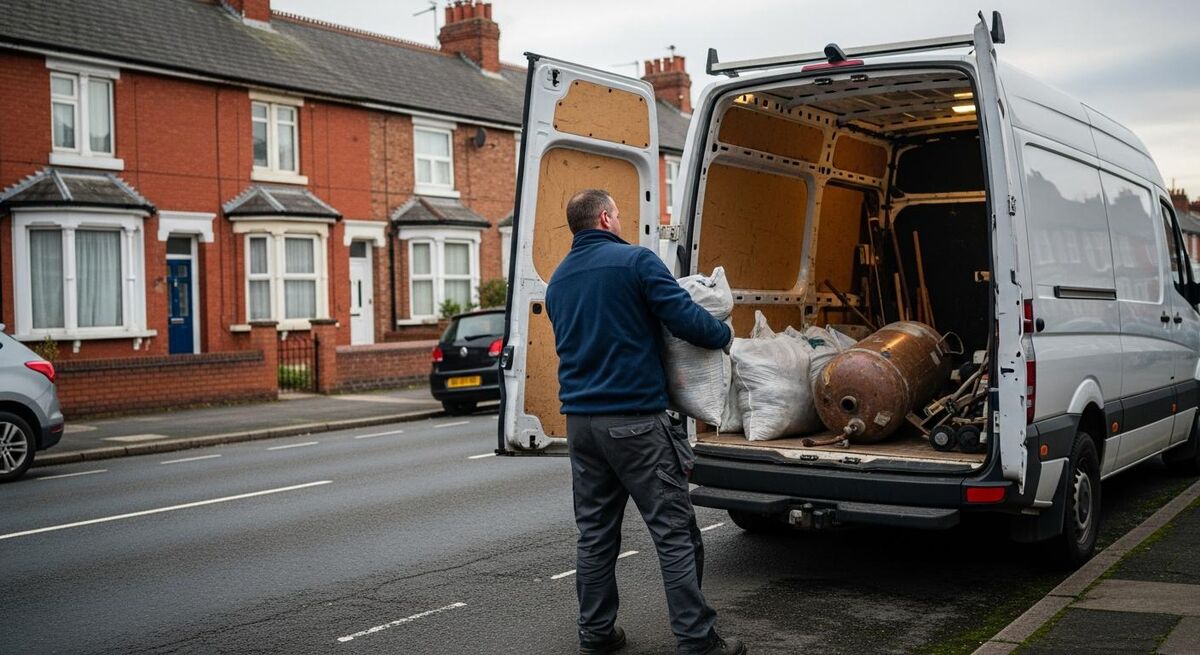
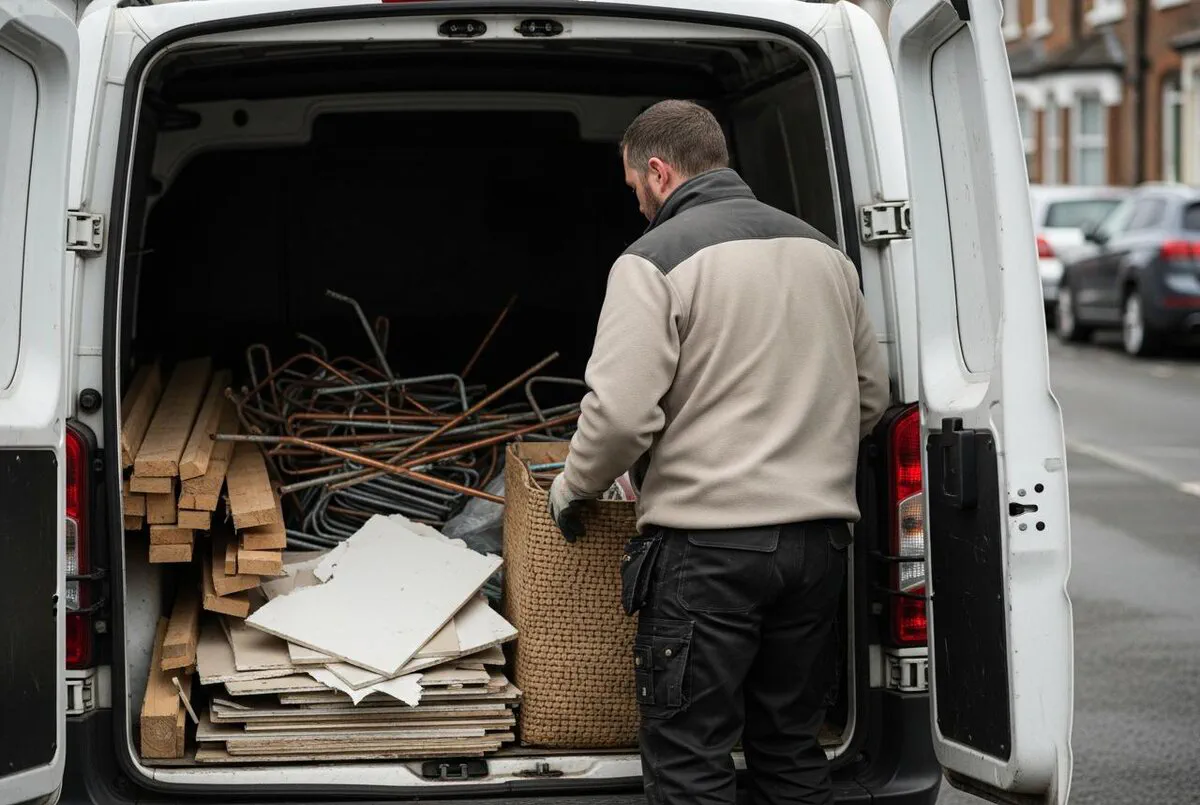
Waste carrier registration is the headline duty. It applies to almost every active trades business in the UK. The Environment Agency runs the register in England, SEPA in Scotland, Natural Resources Wales in Wales, and NIEA in Northern Ireland. You apply, you pay (or you don't, depending on tier), you get a registration number, and that number goes on every piece of paperwork.
The two tiers matter. Lower-tier registration is free and covers businesses that only transport waste they produced themselves, in their own activities. Plenty of trades fall into this bracket if they only ever carry their own off-cuts and packaging. But the moment you take a customer's old boiler, old radiators, or construction and demolition waste off site, you cross into upper-tier territory. Upper-tier registration costs £184 initially and £125 to renew every three years.
Construction and demolition waste is treated more strictly than other waste streams. If you remove rubble, broken tiles, plasterboard or any other construction waste from a job, even waste you generated yourself, you need upper-tier registration. The free lower tier does not cover it.
Registration is not a formality. The Environment Agency runs a public register at environment.data.gov.uk where anyone, including customers and council enforcement officers, can check your status in seconds. From October 2025, the Environment Agency moved the entire registration journey to GOV.UK to make this checking easier.
Duty of care: the paper trail that keeps you out of court
The waste duty of care is set out in Section 34 of the Environmental Protection Act 1990. The principle is simple. Anyone who produces, holds, transports or disposes of waste is responsible for making sure it ends up in the right place. The mechanism for proving you did this is the Waste Transfer Note.
A WTN is required every time waste changes hands. You produce the waste; you hand it to a registered carrier; you both complete and sign the note. The note describes what the waste is, where it came from, who is taking it, and where it is going. Both parties keep a copy for at least two years (three for hazardous waste).
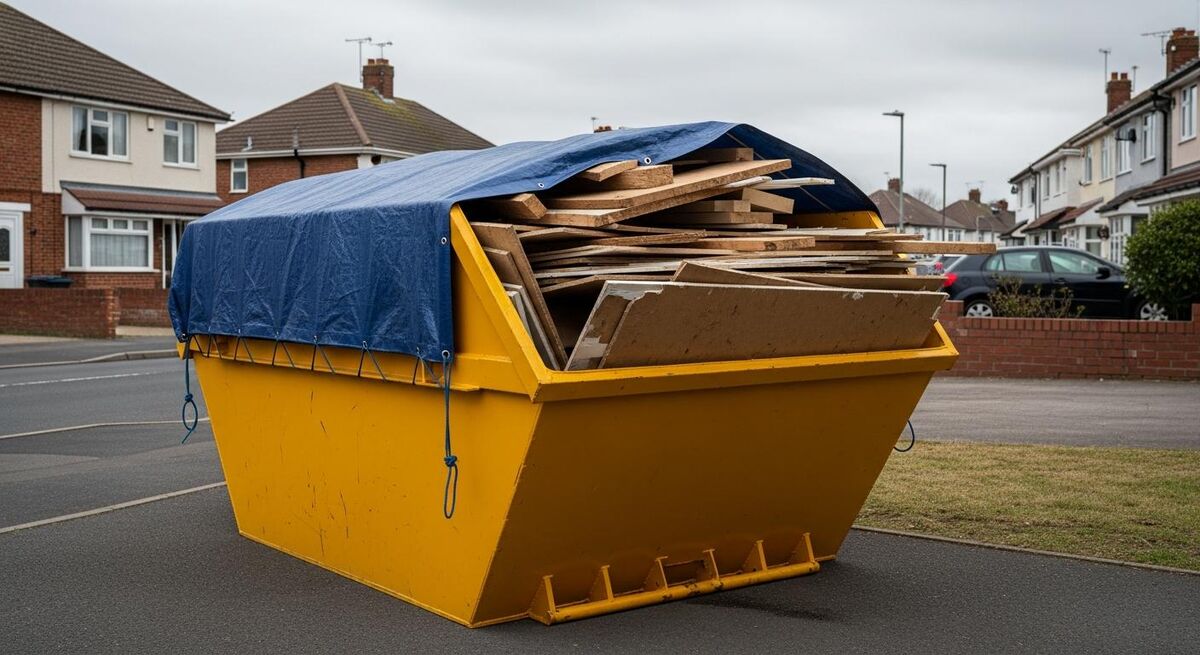
The most common mistake on a WTN is the description. "General junk" or "mixed rubbish" is not compliant. You need to describe the material. "Inert demolition waste consisting of broken bricks, concrete, and ceramic tiles" is the kind of detail an Environment Agency officer wants to see. The European Waste Catalogue code (EWC code) is the other field that goes missing more often than it should.
For a working trades business, the practical setup is: a folder per quarter, or a digital folder if you prefer, with every transfer note from every skip, every tip run, every waste carrier collection. If you are ever questioned, you produce that folder and the conversation ends quickly. If you cannot produce it, the conversation becomes a Notice of Intent and then a fine.
For the renovation side of things, our guide to asbestos surveys before renovation covers the specific paperwork that sits on top of the waste duty of care when asbestos is in scope.
Hazardous waste and consignment notes
Hazardous waste is its own regime. The Hazardous Waste (England and Wales) Regulations 2005 require a Consignment Note (HWCN) to accompany any movement of hazardous waste, regardless of quantity or distance. Scotland uses Special Waste Consignment Notes under separate regulations. Northern Ireland uses a similar HWCN system administered by NIEA.
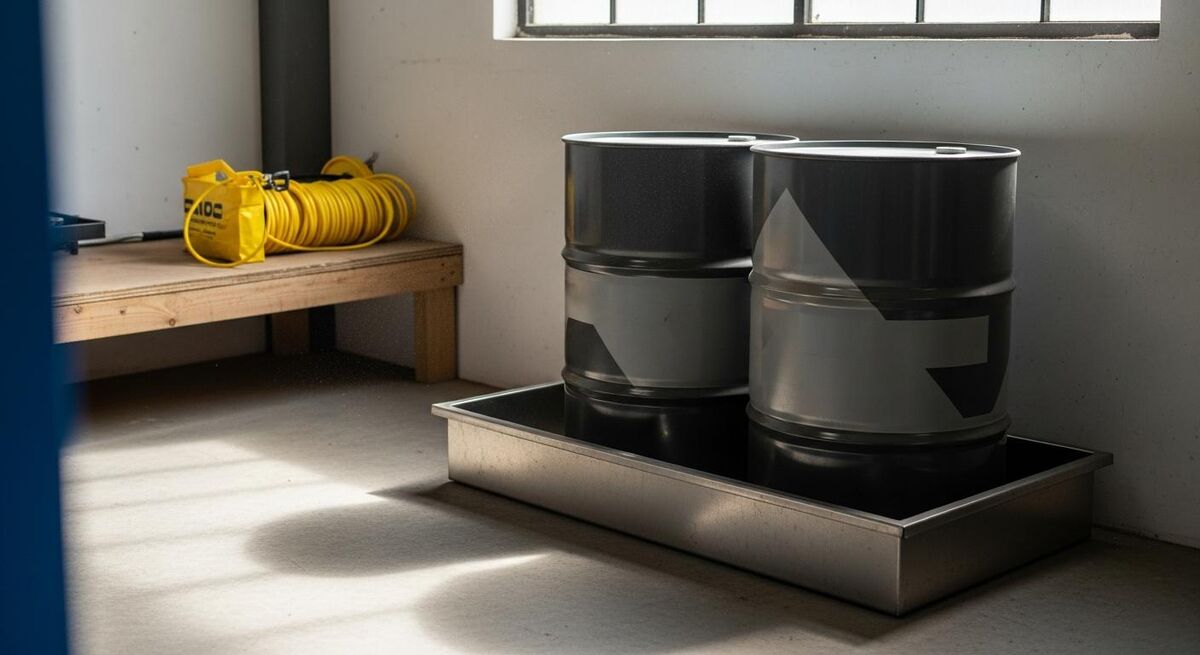
For trades, hazardous waste turns up more often than people expect. Common examples include:
- Asbestos-containing materials (from any building built or refurbished before 2000)
- Old fluorescent tubes and sodium lamps
- Lead-acid batteries from solar and storage systems
- Waste oils from plumbing and heating jobs
- Paints, solvents and adhesive containers that are not fully empty
- Refrigerant residue from disposed cooling equipment
- Sealed cooling units that still contain fluorinated gases
The consignment note retains for at least three years. Both the producer and the carrier hold copies. The receiving site sends a return copy back to the producer to close the loop. If the chain breaks, the producer is the one with the liability sitting on their books.
F-Gas: refrigerant tracking for HVAC and heat pump engineers
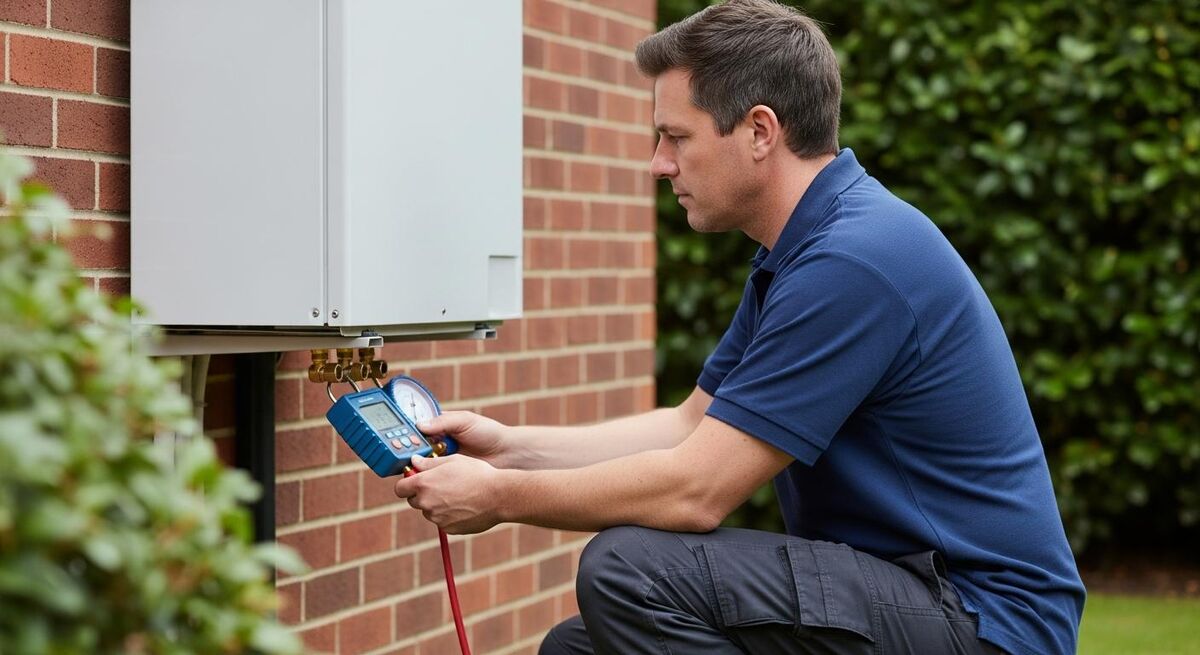
F-Gas regulations apply to anyone working with equipment that contains fluorinated greenhouse gases. That covers air conditioning, refrigeration, heat pumps, and some fire protection systems. As the UK pushes heat pumps as the residential heating replacement, this catches far more trades than it used to.
Two things have to be in place. The engineer needs an individual F-Gas qualification (City and Guilds 2079, BESA F-Gas, CITB J11, or LCL F-Gas are the common routes). The company needs separate company certification through REFCOM or an equivalent body. Both are checked. Both have to renew.
On top of the qualifications, you keep records. F-Gas regulations require detailed records for equipment containing F-gas equivalent to five tonnes or more of carbon dioxide. That sounds abstract but, in practice, a typical commercial air-conditioning unit hits that threshold easily. You log the gas type and quantity installed, what was added during maintenance, what was recovered, and the result of every mandatory leak test.
The leak-test frequency depends on the charge size, and the regulations stack obligations on larger systems. For domestic heat pumps with a small refrigerant charge, the documentation is lighter, but the engineer still needs to be qualified and the work still needs to be recorded.
The enforcement record is real. REFCOM publicly welcomed a £1m fine handed to IMO Gas Supplies in 2021 for F-Gas regulation breaches, including £200,000 fines for quota offences and a £1,500 penalty specifically for not keeping proper records. The records matter as much as the work.
Digital waste tracking: what changes from October 2026

The biggest change on the horizon is the Digital Waste Tracking Service, run by DEFRA. The rollout is phased. Waste reception sites (transfer stations, MRFs, recycling facilities, treatment sites) come into scope from October 2026. Producers, carriers, brokers and dealers follow later, with mandatory rollout for the second phase scheduled for October 2027.
The system replaces paper-based Waste Transfer Notes and Hazardous Waste Consignment Notes with a single digital service that validates waste codes, tracks movements in real time, and creates an audit trail. For trades businesses, the practical change is that the waste site will be checking your registration and your description electronically when you tip. If your paperwork is sloppy, the tip will not accept the load.
The system is being built openly. DEFRA's waste tracking service is on GitHub, which gives a clear view of how the data flows. Software vendors are already releasing integrations that hook trades businesses into the service. The choice for small operators is going to be: pick a digital tool that handles WTNs and HWCNs, or risk being shut out at the tip.
Carbon reporting: when subcontractors get asked for Scope 3 data
SECR (Streamlined Energy and Carbon Reporting) sounds like something that only matters to big companies. For the most part, that is true. SECR only applies to large unquoted companies and LLPs that meet two of three thresholds: 250 employees, £36m turnover, £18m balance sheet. Almost no trades businesses are in scope directly.
The catch is Scope 3 reporting. Large contractors and developers have to report their indirect emissions, and most of those emissions sit in the supply chain. That means the tier-one contractor doing a hospital extension is expected to ask their subcontractors for energy and emissions data. The pressure flows down.
For UK public sector contracts worth over £5m, full Scope 3 reporting disclosure is already a tender requirement. For smaller jobs, the demand is patchier, but it is growing. UK Sustainability Reporting Standards (UK SRS S1 and S2) move from voluntary to mandatory for the largest applicable companies from 1 January 2027, and the subcontractor data requests will arrive ahead of that deadline.
What does this mean practically for a small or mid-size trades business? You should be ready to provide three basic numbers when asked: energy use on the project (electricity and fuel), travel emissions (mileage and vehicle type), and waste tonnage by category. If your accounting software already records fuel and energy spend, you are most of the way there. The Construction Leadership Council's PAS 2080 guidance is the relevant standard for infrastructure work.
For the wider picture on how compliance overheads stack up alongside other regulatory cost, see our breakdown of Building Safety Act compliance costs, and for the related notification regime, our guide to building control notifications covers the parallel paperwork that often runs alongside environmental compliance on the same job.
Where AI actually helps with compliance admin

The admin side of environmental compliance is the kind of work AI is genuinely good at. Not the judgement calls, not the regulatory interpretation, but the repetitive logging and classification. The trades who get ahead on this will be the ones who let a tool do the data entry while they get on with the actual work.
The practical use cases are narrow but useful:
- Waste classification. A photo of a skip load fed through a model can produce a reasonable description and a likely EWC code. You still review and sign, but you stop staring at a code list every Friday afternoon.
- F-Gas leak-test summaries. A voice memo on site, transcribed and tagged, becomes a logbook entry. The engineer keeps moving. The records build themselves.
- Document retention. Photographing every WTN and HWCN to a structured folder is exactly the kind of workflow that automation handles cleanly. The three-year retention rule becomes "set and forget."
- Scope 3 data prep. Pulling fuel, energy and mileage data out of accounting software into the format a main contractor wants, with a sensible audit trail. This is where small trades suppliers lose hours every quarter; it does not need to be manual.
What AI does not do is replace the human judgement on whether something is hazardous, whether a load can legally go where it is heading, or whether a leak check is technically sound. Use the automation for the inputs and outputs. Keep the technical decisions with qualified people.
What tradespeople are saying
Recommended videos

Duty Of Care: Waste Management
In-depth coverage of duty of care for waste, fundamental legal requirements, and the code of practice.
Waste duty of care
Animated explainer covering the rules to follow to comply with waste duty of care obligations.
How to complete waste transfer notes
Step-by-step walkthrough on completing waste transfer notes for non-hazardous waste movements in the UK.

SCLF Webinar 36: Duty of Care and Waste Classification
Webinar explaining waste producers' duty of care responsibilities and classification practice.

Introduction to ODS and F-gas Compliance Obligations
Covers Ozone Depleting Substances and Fluorinated greenhouse gases, why they are controlled, and the operator's duties.

F-Gas Rules Explained: What They Are and Why They Matter
Plain-English breakdown of F-Gas regulations and what they mean for refrigeration and cooling engineers.
Frequently asked questions
Yes. Lower-tier registration is free and covers waste you produce yourself in the course of your work. It still has to be done. It still goes on your paperwork. If the waste is construction or demolition waste, even your own, you need the upper tier instead.
The headline number is £5,000. On top of that, the Environment Agency can issue fixed penalty notices, seize vehicles, and prosecute for repeat offences. Local authorities issued 69,000 fixed penalty notices in 2024 to 2025 alone, with 139 vehicles seized. The fines are not theoretical.
Two years for standard Waste Transfer Notes. Three years for Hazardous Waste Consignment Notes. Keep both producer and carrier copies. From October 2026, the records start moving digital, but the retention rule still applies.
Yes. Anyone installing, servicing, or decommissioning equipment with fluorinated refrigerants needs an individual F-Gas qualification, and the employing company needs separate F-Gas company certification. The record-keeping rules scale with the refrigerant charge, but the qualification rules are absolute.
No. The transition is phased. Waste reception sites come into scope from October 2026, in a private beta with selected operators. The full mandatory rollout for producers, carriers and brokers is October 2027. There is a window to pick a system and run it in parallel with paper before the cut-over.
Not directly. SECR only catches large companies. The reason it matters to you is that main contractors who are in scope have to ask their subcontractors for emissions data. If you tender for public sector work above £5m, you will get asked. The smart move is to be ready with energy, fuel and waste numbers when the question lands.
My verdict
None of this is glamorous work. Waste carrier registrations, transfer notes, F-Gas logs, consignment notes for hazardous loads, carbon numbers when the main contractor asks. The trades I see thriving treat it the same way they treat their tax return: a job that has to be done well, every quarter, with no drama. The ones that get into trouble are the ones who carry waste in the back of a van without registration, sign off transfer notes with "general rubbish," and assume nobody is checking. They are. From October 2026 the checking gets a lot harder to dodge. Sort the paperwork now. Pick one digital tool that handles your transfer notes and consignment notes, get into the habit of capturing the data as the job runs, and you will be ready when the digital tracking rollout reaches you. The cost of doing this is small. The cost of getting it wrong, once, is much bigger.