
Quick Answer
The UK needs 300,000 more charge points by 2030. For electricians, that is a decade of consistent, well-paid work. Your four main charger options are the Wallbox Pulsar Max (from £589), myenergi Zappi (from £599 for the GLO, £899 for the V2.1), Ohme Home Pro (from £999 installed), and Pod Point Solo 3S (from £999 installed). All comply with the 2021 Smart Charge Point Regulations. You need your 18th Edition (update to Amendment 4 by October 2026), Part P registration, and ideally the City & Guilds 2921 EV-specific qualification. The OZEV grant increased to £500 per socket in April 2026 for flats, renters, and landlords.
Table of Contents
- UK EV charger market in 2026
- What qualifications do you need?
- Wallbox vs Zappi vs Ohme vs Pod Point
- Smart load balancing explained
- Solar integration and ECO modes
- V2G: vehicle-to-grid technology
- UK regulations: BS 7671, Part P, and Part S
- OZEV grants and funding in 2026
- Installation best practices
- What tradespeople are saying
- Recommended videos
- Frequently asked questions
- My verdict
 Wallbox
 myenergi
 Ohme
Ohme Pod Point
UK EV charger market in 2026
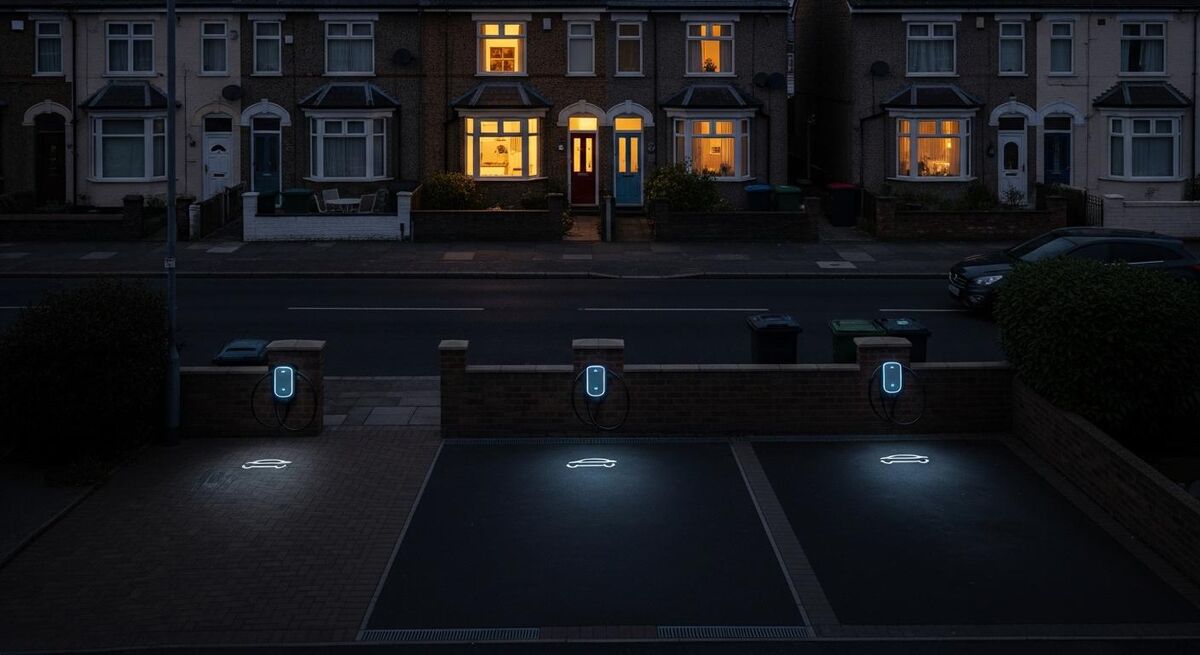
The UK now has over 120,000 public EV charge points across 46,000 locations. Battery-electric vehicles made up 22.4% of all new car registrations in 2025, and that share is climbing. The EV charging infrastructure market is valued at roughly £500 million and growing at 18% per year.
For electricians, the real volume sits behind front doors. Home charging remains the primary method for UK EV drivers. A typical domestic installation costs between £800 and £1,500, and every new EV owner needs one.
The government's target of 300,000 public charge points by 2030 gets the headlines. But residential installs are where the steady, repeatable work is. An electrician fitting three chargers a week at an average margin of £300 per job is looking at £46,800 a year in additional revenue. That is before upselling solar integration, battery storage, or consumer unit upgrades.
The trades industry is changing fast. The people coming through now are more tech-savvy, more business-minded, and more ambitious than ever before. EV charger installation sits right at the intersection of traditional electrical skills and new technology, which is exactly where the growth is. For a deeper look at how home energy systems fit into this picture, see our guide to the Future Homes Standard.
What qualifications do you need?

The qualification pathway for EV charger installation in the UK is straightforward, but non-negotiable. When it comes to safety, you should always instruct a trained professional for gas or electrical work, and the same principle applies here.
Core requirements:
- NVQ Level 3 Diploma in Electrical Installation (or equivalent, such as City & Guilds 2365 or 2357)
- Current BS 7671 qualification covering the 18th Edition Wiring Regulations. Amendment 4 was published in April 2026 and becomes mandatory by October 2026
- Part P Competent Person Scheme registration through NICEIC, NAPIT, ELECSA, or an equivalent provider
- City & Guilds 2921-31: Level 3 Award in Design and Installation of Domestic and Small Commercial EV Charging Installations
Part P registration is critical. EV charger installations are notifiable work because they involve new circuits and high-current devices. Without scheme registration, you need building control notification, which costs £200-400 and takes weeks. With Part P, you self-certify. Our complete guide to electrical testing and certification covers the full process.
For OZEV grant-funded installations, you also need OZEV authorisation through the government installer portal. This requires proof of Part P scheme membership or Electrical Contractors' Association (ECA) membership.
NICEIC is providing free CPD materials for the Amendment 4 transition, including the "Let's Get Technical Plus" digital workbook and their Wire webinar series. The deadline to update is 15 October 2026. Start now.
Wallbox vs Zappi vs Ohme vs Pod Point
Four chargers dominate UK residential installations. Each takes a different approach to smart charging, and the best choice depends on the customer's setup and priorities.
| Feature | Wallbox Pulsar Max | myenergi Zappi V2.1 | Ohme Home Pro | Pod Point Solo 3S |
|---|---|---|---|---|
| Unit price | £589 | £899 | From £999 (installed) | From £999 (installed) |
| Installed price | £950-1,100 | £1,100-1,500 | From £999 | From £999 |
| Power output | 7.4 kW / 22 kW | 7 kW / 22 kW | 7.4 kW | 7.4 kW |
| Load balancing | Power Boost (CT clamp) | CT clamp / Harvi sensor | Cloud-based scheduling | Automatic load priority |
| Solar diversion | Via Power Boost | Native ECO/ECO+ modes | Compatible | Two dedicated modes |
| Smart tariff API | Manual scheduling | Via Octopus Intelligent | Octopus, OVO, British Gas | Manual scheduling |
| Connectivity | Wi-Fi, Bluetooth | Wi-Fi, Ethernet | 3G/4G | Wi-Fi |
| Warranty | 5 years | 3 years | 3 years | 5 years |
| PEN fault protection | External required | External required | External required | External required |
The Wallbox Pulsar Max is the most compact charger on the market at 198 x 201 x 99 mm. At £589 for the unit, it is also the cheapest entry point. Power Boost provides genuine dynamic load balancing via a CT clamp on the main supply. The five-year warranty is a strong selling point. Where it falls short is smart tariff integration: there is no direct API connection to energy suppliers, so customers schedule charging windows manually through the myWallbox app.
The myenergi Zappi V2.1 remains the go-to for solar PV owners. Three charging modes (Fast, ECO, ECO+) give granular control over how much grid power versus solar surplus feeds the car. It works with any solar inverter brand. The newer Zappi GLO (£599) drops the screen for app-only control and adds built-in PEN fault protection, which removes the need for an earth rod on PME supplies.
The Ohme Home Pro is the tariff optimisation specialist. Direct API integration with Octopus (including Agile and Intelligent Go), OVO Charge Anytime, and British Gas EV Power+ means it automatically books the cheapest half-hourly slots overnight. The built-in colour LCD shows real-time cost data. 3G/4G connectivity means no dependence on the customer's Wi-Fi, which avoids one of the most common support headaches.
The Pod Point Solo 3S bundles standard installation into its £999 price, making the quoting process simpler for both installer and customer. Two solar modes (pure solar and solar + grid top-up), smart load management, and a five-year warranty round out a solid all-round package. Pod Point also offers a subscription option at £99 upfront plus £40 per month, which includes a lifetime warranty.
Smart load balancing explained
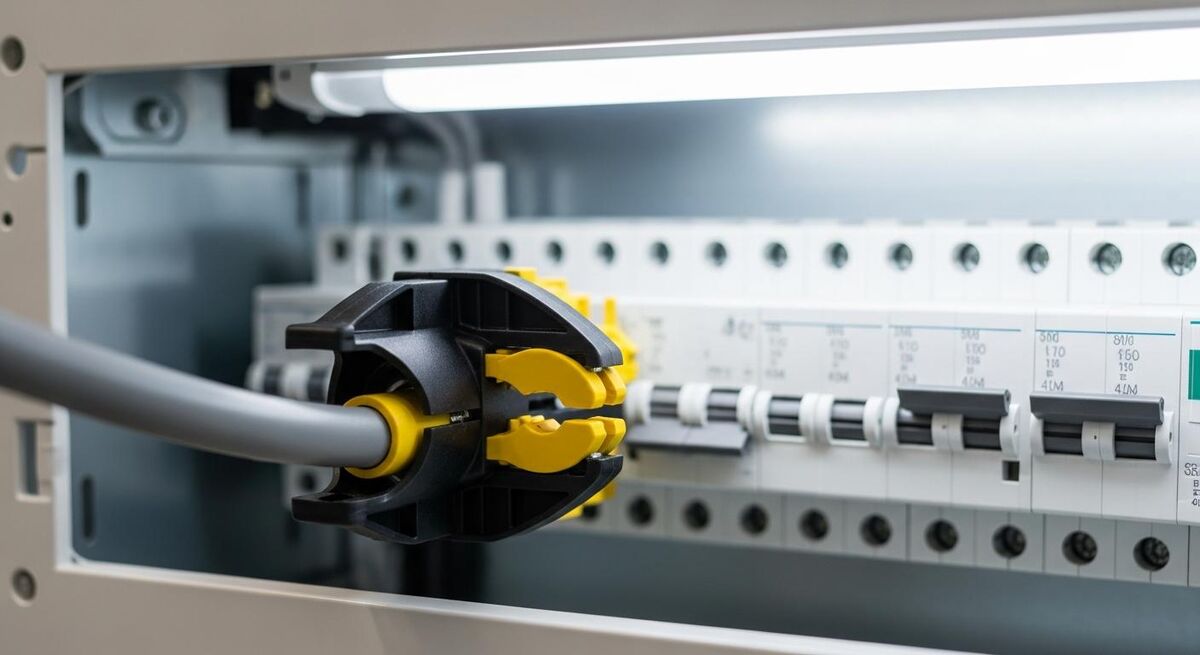
Most UK homes have a 60A or 100A main fuse. A 7 kW charger draws 32A on a single-phase supply. On a 60A fuse, that leaves just 28A for everything else in the house. Switch on the oven and the kettle at the same time, and you are over the limit.
Dynamic load balancing solves this without a costly supply upgrade. A CT clamp sits on the main incoming cable and monitors total household consumption in real time. When demand from other appliances spikes, the charger automatically reduces its output. When the house quiets down, charging ramps back up to full power.
Each charger handles this differently. Wallbox uses its Power Boost system with a CT clamp mounted at the consumer unit. The Zappi uses either its own CT clamp or the wireless Harvi sensor, which is useful when running cable to the CU is impractical. Ohme takes a cloud-based approach, scheduling charge sessions around predicted household demand and tariff prices. Pod Point automatically prioritises household appliances and diverts surplus capacity to the charger.
The practical benefit for installers is clear. You can confidently fit a 7 kW charger on a 60A supply without recommending a DNO upgrade. That saves the customer £1,000 or more and gets the job done in a single visit. A proactive approach to assessing the supply capacity during your site survey means fewer surprises on installation day.
For customers with battery storage systems, load balancing becomes even more important. The charger, battery, and household loads all compete for the same supply capacity, and intelligent management keeps everything within safe limits.
Solar integration and ECO modes
For customers with solar panels, an EV charger that diverts surplus generation is a genuine money-saver. Charging from solar costs next to nothing per mile. Even on a cloudy day with grid top-up from an off-peak tariff, the cost drops to 7-10p per kWh compared to 24p+ on a standard variable rate.
The Zappi leads this category. ECO mode blends solar surplus with grid top-up to maintain a minimum 1.4 kW charge rate. ECO+ mode charges exclusively from surplus generation, pausing entirely when the sun drops behind clouds. The system works with any inverter brand, measuring generation via a CT clamp or the wireless Harvi sensor in real time. No proprietary lock-in.
The Wallbox Pulsar Max supports solar charging through Power Boost. Its approach is less granular: the system dynamically adjusts the charge rate based on available surplus, but it lacks the Zappi's dedicated solar-only mode. For customers who want to ensure every kWh comes from their own panels, the Zappi's ECO+ is the better fit.
Pod Point's Solo 3S offers two solar modes. Solar mode charges purely from excess generation. Solar + Grid mode uses surplus where available and tops up from the grid to maintain charging speed. Both Ohme models integrate solar surplus with their cloud-based tariff scheduling, optimising total cost across solar generation and energy prices.
Solar self-consumption with an EV charger can reduce costs to 1-2p per mile. At 10,000 miles per year, that comes to under £200 annually, compared to £700-1,000 charging on a standard variable tariff. For customers who already have solar panels, an EV charger with surplus diversion pays for itself within 12-18 months.
V2G: vehicle-to-grid technology
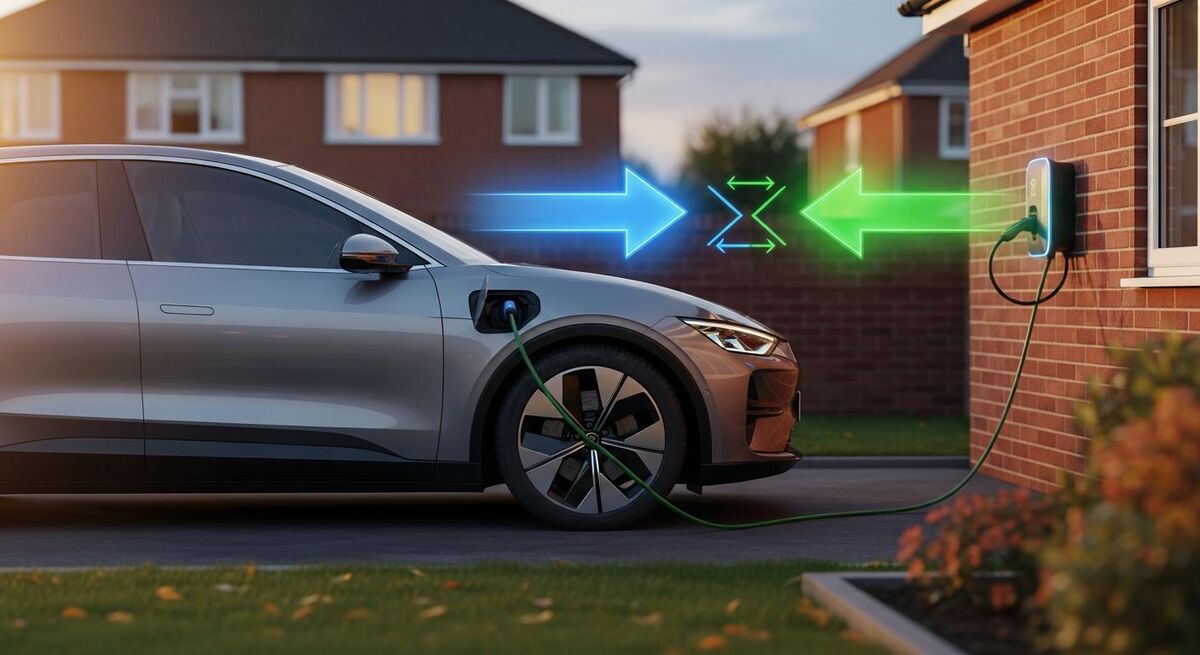
Vehicle-to-grid technology lets an electric vehicle send power back to the grid during peak demand periods. In 2026, V2G moved from pilot projects to early commercial availability in the UK.
Three developments matter for installers. Nissan became the first manufacturer to receive G99 Grid Code certification for an AC-based V2G solution in the UK. UK Power Networks now grants automatic connection approval for V2G chargers, cutting the approval process from weeks to seconds. And Octopus Energy launched Power Pack, the UK's first commercial V2G tariff.
Under the Octopus Power Pack tariff, all EV charging is free. The system earns money by exporting stored energy at 5-15p per kWh during peak periods. Typical annual savings: £620 compared to Flexible Octopus, and up to £850 for a 10,000-mile-per-year driver.
Compatible vehicles are still limited. The Nissan Leaf, BYD Dolphin, Hyundai IONIQ 5, Kia EV6, and Renault 5 E-Tech currently support bidirectional charging in some form. But the list is growing as CCS bidirectional standards mature through 2026 and 2027.
For electricians, V2G represents a premium service tier. The technology is new, the certified installer base is small, and customers who want it will pay for the expertise. Getting trained now puts you ahead of the curve. Technology extends what tradespeople can offer, and V2G is a perfect example of traditional electrical skills applied to something entirely new.
UK regulations: BS 7671, Part P, and Part S

The regulatory framework for EV charger installation is substantial, and it tightened further in 2026. Compliance matters. It protects both you and the customer.
BS 7671:2018+A4:2026 was published in April 2026. The previous amendment (A3) remains valid until 15 October 2026, at which point A4 becomes mandatory. Key changes to Section 722 (EV Charging):
- DC fault detection: Mode 3 charging now requires IEC 62955 RCDs with DC detection capability, moving beyond reliance on Type B RCDs
- 100% load factor: Single charger circuits allow no diversity. Multi-charger residential installations use 60% diversity at 7 kW
- Mandatory AFDDs: Arc Fault Detection Devices are now required for EV charging circuits, recognising fire risks from extended high-current loading
- Harmonic-aware neutral sizing: Three-phase installations with non-linear loads must account for triplen harmonic currents
- PEN fault protection: Options include a TT earth electrode, PEN fault detection device, or a charger with built-in protection
Part P Building Regulations classify EV charger installations as notifiable work. Part P Competent Person Scheme registration (NICEIC, NAPIT, ELECSA) lets you self-certify. Without it, the customer needs building control notification. Our guide to building control notifications explains when this applies and how to handle it.
Part S Building Regulations have required EV charge points in all new-build homes with associated parking since June 2022. Non-residential buildings with 10+ parking spaces need at least one charger plus cable routes for 20% of spaces. A cost cap exemption applies at £3,600 per charge point or 7% of total renovation cost.
The IET Code of Practice (5th Edition, published November 2023) covers domestic, commercial, and industrial installations. It includes updated guidance on V2G prosumer installations and aligns with BS 7671 and IEC 61851.
From this date, all EV charger installations must comply with Amendment 4 of BS 7671. NICEIC-registered businesses must demonstrate access to the updated standard. Do not leave this until the last minute.
OZEV grants and funding in 2026
The OZEV grant landscape changed significantly on 1 April 2026. All home-focused grants increased from £350 to £500 per socket, and applications moved to the government's Find a Grant platform.
Active grant schemes (extended until March 2027):
- Flats and Renters: £500 per socket. Covers up to 75% of total cost. Applicant must live in a flat (owned or rented) or a rented house
- Residential Landlord: £500 per socket, up to 200 sockets across a portfolio
- On-Street Parking: £500 per socket. Must include a permanent cross-pavement solution, not cable covers or mats
- Workplace Charging Scheme: £500 per socket, up to 40 per business
- State-Funded Education: £2,000 per socket (reduced from £2,500), up to 40 sockets
One thing catches many customers out: homeowners of detached or semi-detached houses with off-street parking are not eligible for the Flats and Renters grant. Check eligibility before quoting. Getting this wrong wastes everyone's time.
An Ohme Home Pro installed for a qualifying tenant costs from £999. With the £500 OZEV grant, the customer's out-of-pocket cost drops to around £499. That is a strong selling point when quoting for eligible properties.
For installers claiming grants, the transition to Find a Grant means re-registering on the new platform. The old OZEV portal is closed. Claims for installations completed under the previous schemes have a final deadline of 26 May 2026, with resubmissions accepted until 6 July 2026.
Installation best practices
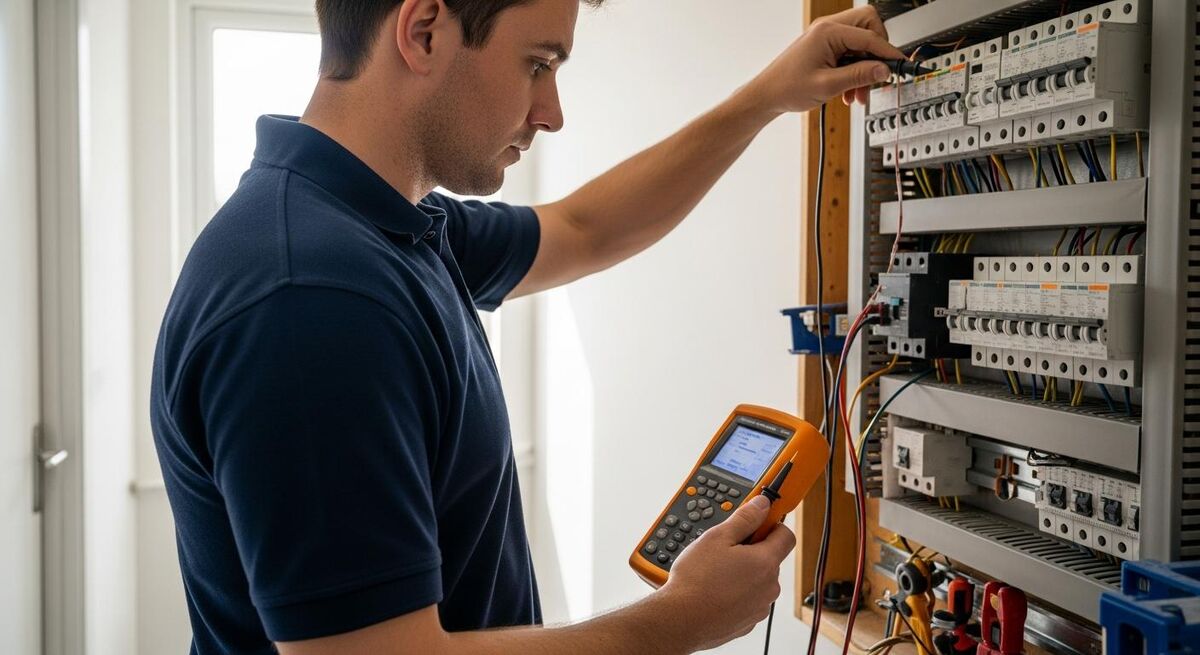
A solid site survey prevents most installation headaches. Here is what to check before committing to a quote:
Supply assessment: Check the main fuse rating (typically 60A, 80A, or 100A). A 7 kW charger draws 32A. On 60A supplies, dynamic load balancing is essential. On 100A supplies, there is more headroom but you still need to account for existing high-draw circuits.
Consumer unit condition: Check for spare ways and assess overall condition. If the CU is an older rewireable fuse board, recommend a full upgrade. Factor this into the quote from the start rather than discovering it on installation day.
Cable routing: Plan the shortest practical route from CU to charger. Long runs increase voltage drop and material cost. For outdoor sections, use SWA cable rated for UV exposure. Runs through cavity walls or loft spaces need proper fire stopping.
Earthing arrangement: Identify whether the supply is TN-C-S (PME), TN-S, or TT. For PME supplies, PEN fault protection is mandatory. Options: install a TT earth electrode (can be difficult on paved driveways), use a PEN fault detection device, or specify a charger with built-in protection. The Zappi GLO includes PEN fault protection as standard.
Documentation: Complete an Electrical Installation Certificate (EIC) for the new circuit. If Part P registered, self-certify and notify your scheme provider. Record the CT clamp position and load balancing configuration for future reference. Our testing and certification guide covers what paperwork you need.
The Zappi GLO's built-in PEN fault protection removes the need for an earth rod on PME supplies. On properties where driving a rod is impractical (paved driveways, limited soil access), this saves time and avoids a common installation headache.
What tradespeople are saying
Recommended videos

Wallbox Pulsar Max review (UK version)
Matt Goes Electric

An honest look at the myenergi Zappi
ChargedEV

Ohme Home Pro: one year later, my honest review
Nick O'Leary
Pod Point Home EV charger: installation and owner review
Tough Monkey
Ohme Home Pro vs Hypervolt Home 3 Pro
Smart Home Charge
Zappi EV charger installation and setup guide
Finney Electrical

EV dynamic load balancing explained
ScottishPower

V2G: turn your EV into a power station
eFIXX
Frequently asked questions
Not always. If the existing CU has a spare way and is in good condition, you can add a dedicated circuit without a full replacement. If it is an old rewireable fuse board, upgrade it. Dynamic load balancing lets you fit a charger on a 60A supply without a DNO upgrade.
Only if the property has a three-phase supply, and most UK homes do not. A 22 kW charger needs 32A across all three phases. For the vast majority of domestic installations, 7.4 kW single-phase is the standard. That still delivers a full charge overnight for most vehicles.
Tethered is more convenient for most customers. The cable is always attached and ready. Untethered makes sense if the customer has multiple EVs with different connector types, or if a tidy installation matters more than convenience. Most installers report that 80%+ of customers choose tethered.
A straightforward installation with a short cable run takes 2-3 hours. Longer cable routes, earthing work, or consumer unit upgrades can push it to a full day. Site survey, testing, and paperwork add another hour on top.
No. The Flats and Renters grant only covers people living in flats (owned or rented) or rented houses. Homeowners of detached or semi-detached houses with off-street parking are not eligible for any current OZEV home grant. The Workplace Charging Scheme is separate and still available for businesses.
For the right customer, yes. Octopus Power Pack makes all charging free and can save £620-850 per year. But the compatible vehicle list is still short, and the technology adds complexity. It is a premium upsell for early adopters rather than a mainstream recommendation. That will change as more vehicles support bidirectional charging.
My verdict
EV charger installation is not a fad. With 22% of new cars already electric and the charging infrastructure market growing at 18% per year, this is a core revenue stream for any qualified electrician. Get the City & Guilds 2921, update to Amendment 4, and register for OZEV grants. The Zappi is the best all-round charger for solar homes, the Ohme Home Pro wins on tariff optimisation, and the Wallbox Pulsar Max is the price leader. All four brands covered here are solid choices. The charger you recommend should match the customer's setup: solar panels, smart tariff, supply capacity, and budget. A proactive approach to learning these products now pays dividends as demand continues to climb. For guidance on complementary services, our heat pump technology guide covers the other major growth area in residential electrification.