
Quick Answer
UK excavation safety sits under CDM 2015 Regulation 22, the Health and Safety at Work Act 1974, and HSE guidance HSG185. There is no longer a hard 1.2m depth trigger for shoring; you must support any excavation where collapse could injure someone, regardless of depth. A cubic metre of soil weighs around 1.5 tonnes, which is enough to crush a person trapped from the chest down. A competent person must inspect at the start of every shift, after rain or vibration, and after any fall of material. Battering, shoring (hydraulic props or trench boxes), or sheet piling are the three accepted support methods. Records of every inspection must be kept. AI hazard detection from site photos is now a practical add-on, not a replacement for the competent person.
Table of Contents
- The legal framework for UK excavation work
- Depth, soil, and the death of the 1.2m rule
- Battering, shoring, and shielding: choosing the right support
- Supervision, competent persons, and inspection records
- RAMS, permits, and the temporary works coordinator
- Real UK cases: what enforcement actually looks like
- AI hazard detection from site photos
- What tradespeople are saying
- Recommended videos
- Frequently asked questions
- My verdict
The legal framework for UK excavation work
Excavation safety in the UK is governed by three layers of law and guidance that every groundworker should know by name. The top layer is the Health and Safety at Work etc Act 1974, which sets the general duty of care. Sitting under that, the Construction (Design and Management) Regulations 2015 contain Regulation 22, the specific clause for excavations. If your project is small or domestic and you are unsure whether CDM applies at all, our guide to CDM for small projects walks through the trigger points. The Management of Health and Safety at Work Regulations 1999 covers the wider risk assessment duty.
Regulation 22 is the one to memorise. It requires that all practicable steps are taken to prevent danger to any person, including the provision of supports or battering, so that no excavation collapses and no person is buried or trapped by falling material. It also requires that the excavation is inspected by a competent person at the start of the shift, after any event likely to have affected stability, and after any unintentional fall of material.
The practical detail sits in HSE guidance booklet HSG185 Health and Safety in Excavations, which is still the working reference even though it was first published in 1999. For temporary works, BS 5975 is the British Standard that defines roles like the Temporary Works Coordinator and the Temporary Works Supervisor. The full CDM 2015 guide for UK trades covers how these duty-holder roles interact across the whole project lifecycle, not just the excavation phase.
Depth, soil, and the death of the 1.2m rule
The 1.2 metre rule is the most stubborn myth in groundworks. It came from the Construction (General Provisions) Regulations 1961 and was repeated in the 1996 Construction (Health, Safety and Welfare) Regulations. The HSE has been clear for years that it no longer applies as a depth trigger. Modern regulation is goal-setting, not prescriptive: you support any excavation that could collapse onto a worker, full stop.
The reason is straightforward. Soil weight does not care about your tape measure. A cubic metre of typical UK soil weighs about 1.5 tonnes. Workers have been killed in trenches as shallow as 0.6 metres when running sand, made ground, or waterlogged clay let go without warning. The Charlton incident in April 2024 saw a London Fire Brigade rescue from a trench four metres deep and twelve metres long that trapped a worker waist-deep in sand and clay for over six hours.

A useful working model is to treat the depth question in three bands. Below 1.2m in firm, dry, undisturbed cohesive soil, you can sometimes work without support if the competent person signs it off and nobody enters the excavation. Between 1.2m and 3.0m, you need engineered support in almost every situation. Above 3.0m, you need a designed temporary works scheme signed off by an engineer and a permit to load and strike. Those are working bands, not legal limits.
The variables that override depth every time are soil type, weather, vibration from nearby plant, surcharge loads at the edge, and the presence of services. Heavy rain can change a stable trench into a death trap inside an hour. A 13-tonne tracked excavator working two metres from the edge applies a surcharge that doubles the lateral pressure on the trench wall. Spoil heaps stacked too close are themselves a load the support system was not designed for.
Battering, shoring, and shielding: choosing the right support
There are three families of protective system, and each has a job it does best. Get the choice wrong and you waste money or, worse, leave the gap a collapse needs.
Battering means cutting the trench walls back to a stable slope. The angle depends on soil type, typically 1:1 for stiff clay, 1.5:1 for sand or made ground. It uses no equipment but doubles or triples the excavation footprint. Use battering on open sites with no boundary or service constraints. Avoid it where adjacent buildings sit within the influence zone.
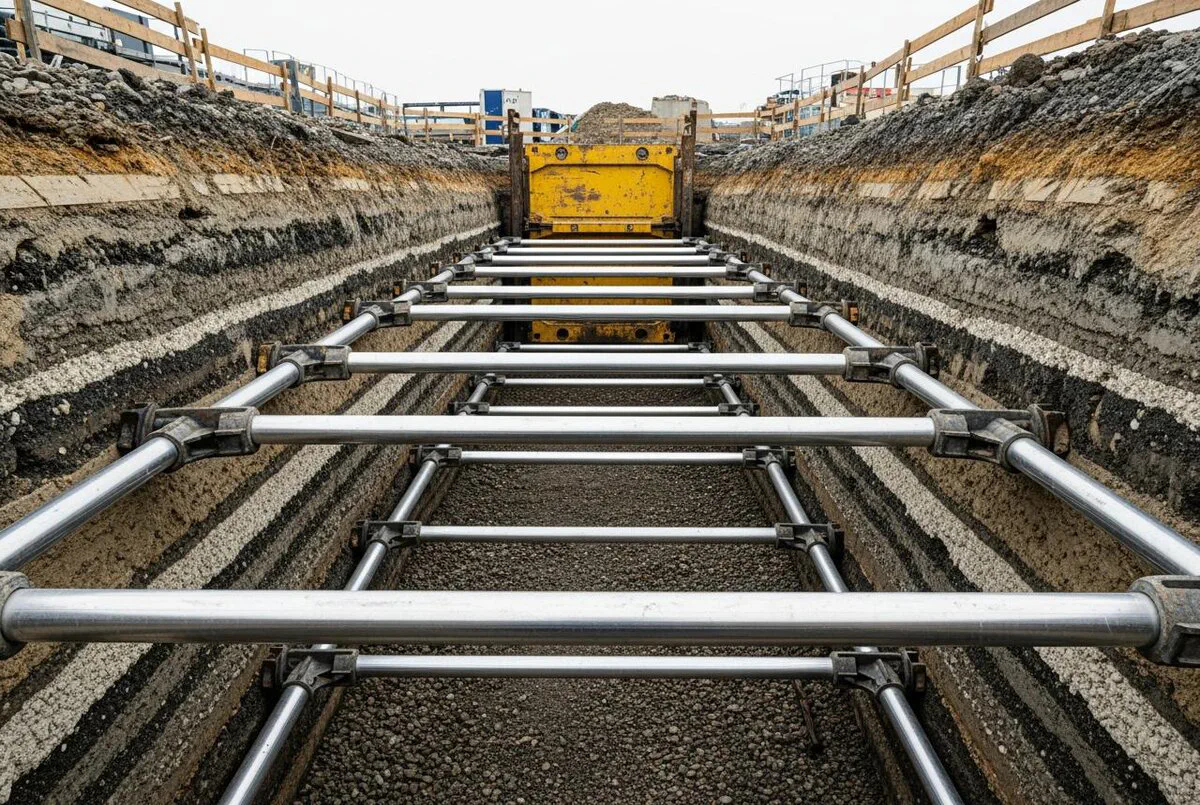
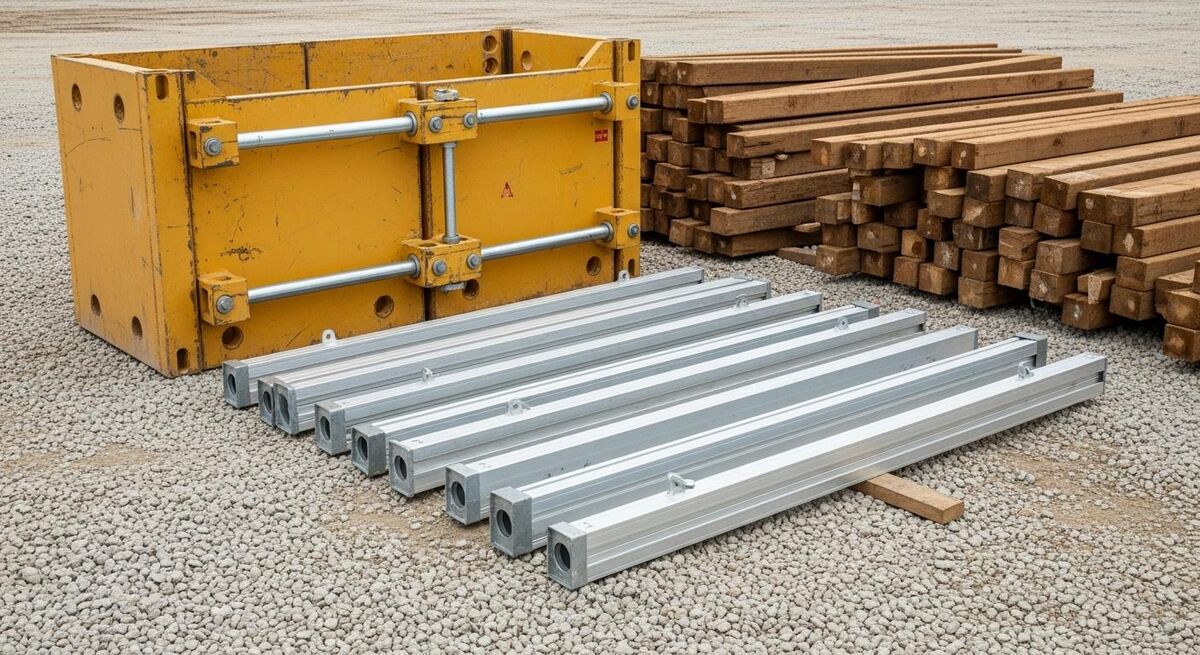
Shoring means installing engineered supports against the trench walls. The two common UK systems are hydraulic shoring (telescopic struts spanning trench walls) and trench sheeting with walings and props. Hydraulic shores are quick to install, adjust to width, and weigh a fraction of timber. A typical aluminium hydraulic shore set hires from around £35 per week from suppliers like Mabey Hire, Groundforce Shorco, or Sunbelt Rentals.
Shielding means a trench box, a portable steel or aluminium structure that protects workers inside without actively supporting the walls. Trench boxes are the workhorse of UK groundworks. They suit drainage runs and short utility excavations because you can drag them along as the work progresses. They do not stop the walls collapsing onto the box, so you still need to plan for what happens at the open ends.
The selection logic is simple. Open site, low water table, no services close by: batter it. Tight site, vertical sides essential, services in the wall: shore it. Long drainage run with workers needing to be in the excavation: trench box. Above 3m or near loaded foundations: designed temporary works scheme, full stop.
Supervision, competent persons, and inspection records
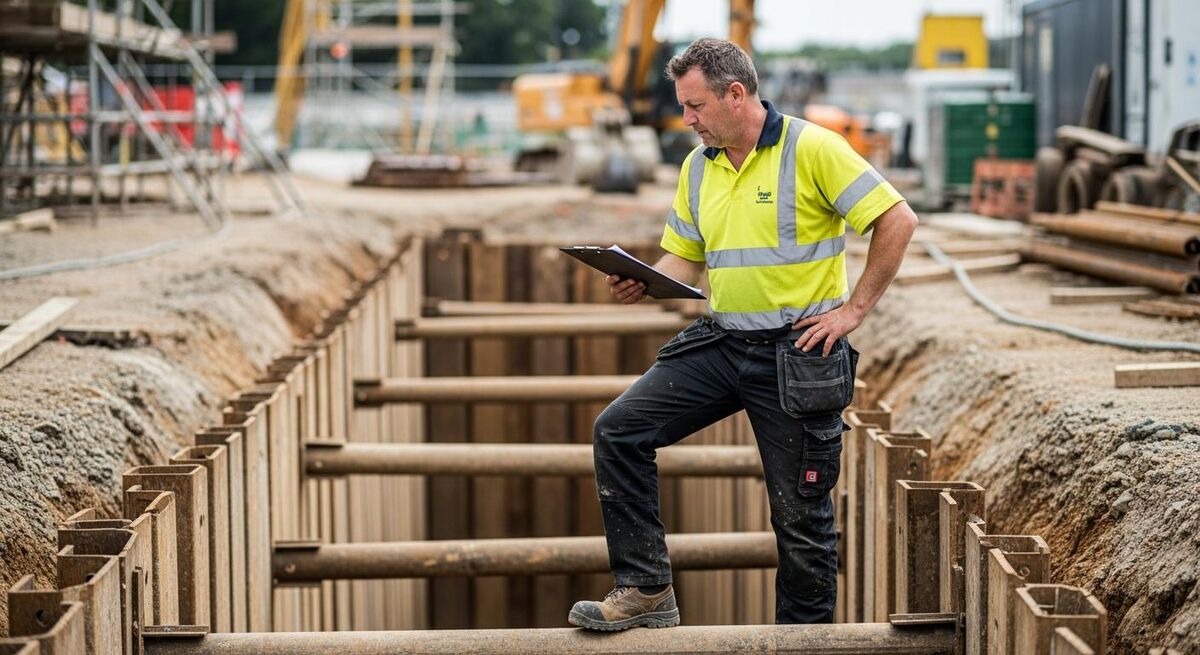
The competent person is the legal lynchpin of Regulation 22. The role does not require a specific qualification by name, but the person must have the training, knowledge, and experience to identify hazards in the surroundings and the authority to stop work if they are not satisfied. In practice, that usually means a site supervisor or foreman with SMSTS, the CITB Temporary Works Awareness course, or equivalent groundworks experience plus a CSCS card at the right grade.
The inspection rhythm is non-negotiable. A competent person must inspect:
- At the start of every shift before work begins in the excavation
- After any event likely to have affected stability (heavy rain, frost thaw, nearby vibration, surcharge from new plant or material)
- After any unintentional fall or movement of material, no matter how small
- Formally, at least once every seven days, with the result recorded in writing
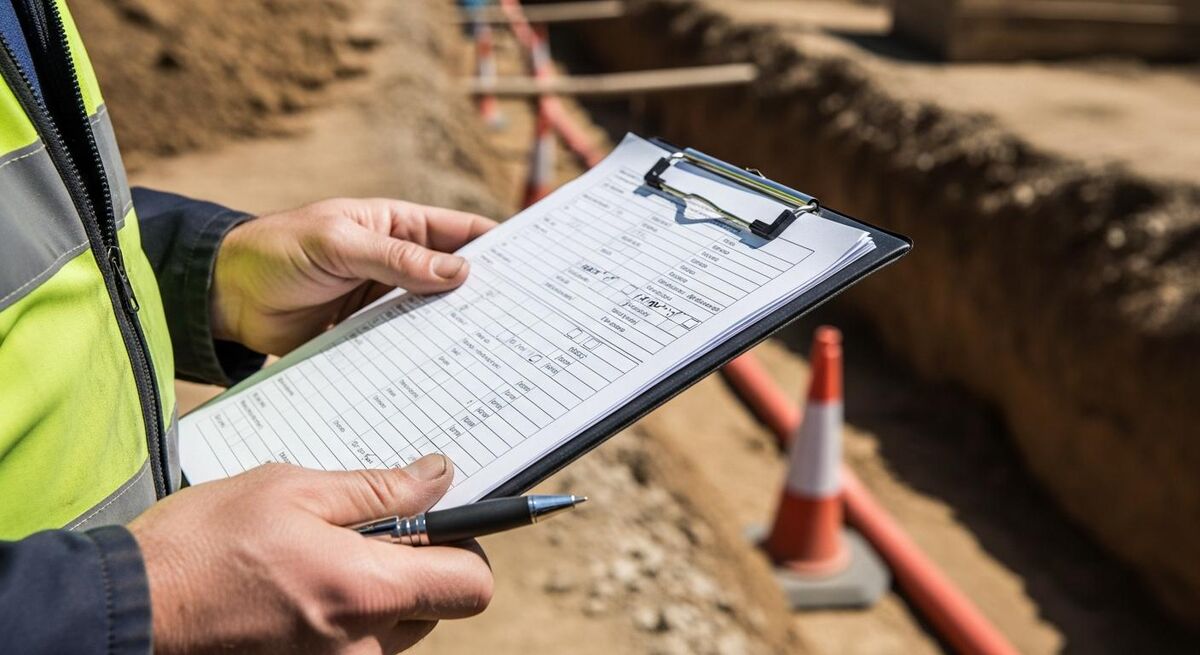
The written record matters enormously. After any incident, the HSE will ask to see the inspection log. A missing or backdated record turns a defendable accident into an aggravating factor at sentencing. Use a structured pro forma covering: time and date, weather, depth, support system in place, soil condition observed, services exposed, signs of cracking or seepage, action taken, and the inspector's signature. Job management software like Joblogic or the platforms we cover in our free and low-cost job management software comparison handle inspection records digitally, with photo evidence and timestamps that hold up under scrutiny.
RAMS, permits, and the temporary works coordinator
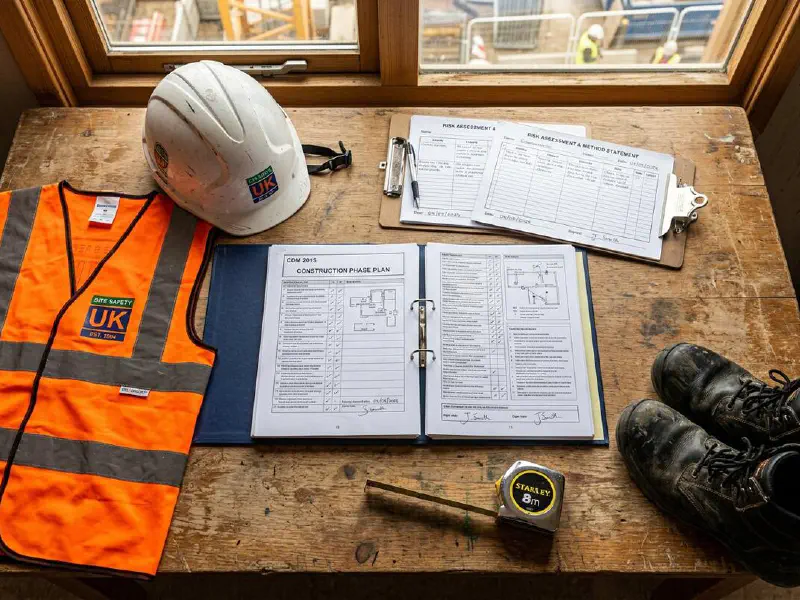
Before anyone digs, the principal contractor needs a Risk Assessment and Method Statement (RAMS) specific to the excavation. A generic groundworks RAMS that was written for a different site will not satisfy HSE and will not protect workers. The RAMS must cover ground conditions, services search results (CAT and genny scan plus utility plans), planned support method, access and egress, exclusion zones, fall prevention, and emergency rescue procedures.
On larger or more complex projects, BS 5975-1:2024 brings in the Temporary Works Coordinator (TWC). The TWC manages the register of temporary works items, coordinates the design and check, and issues the Permit to Load (when the support system can be used) and the Permit to Strike (when it can be removed). On big sites, Temporary Works Supervisors work under the TWC for individual elements like trench supports. If your project also crosses the Building Safety Act threshold, the budgeting picture changes again, see our Building Safety Act compliance cost guide for the financial impact.
For service trenches under 2 metres on simple ground, a TWC role is not legally required, but you still need a clear chain of responsibility. Smaller contractors often appoint a senior foreman or contracts manager to act as the de facto coordinator, supported by an external temporary works engineer for design sign-off on anything non-standard.
Real UK cases: what enforcement actually looks like
The four cases below all involved real workers, real injuries, and real prosecutions. They are worth reading because the same pattern of failures repeats across most excavation fatalities: no support, no inspection, no RAMS, and a "we have always done it this way" attitude.
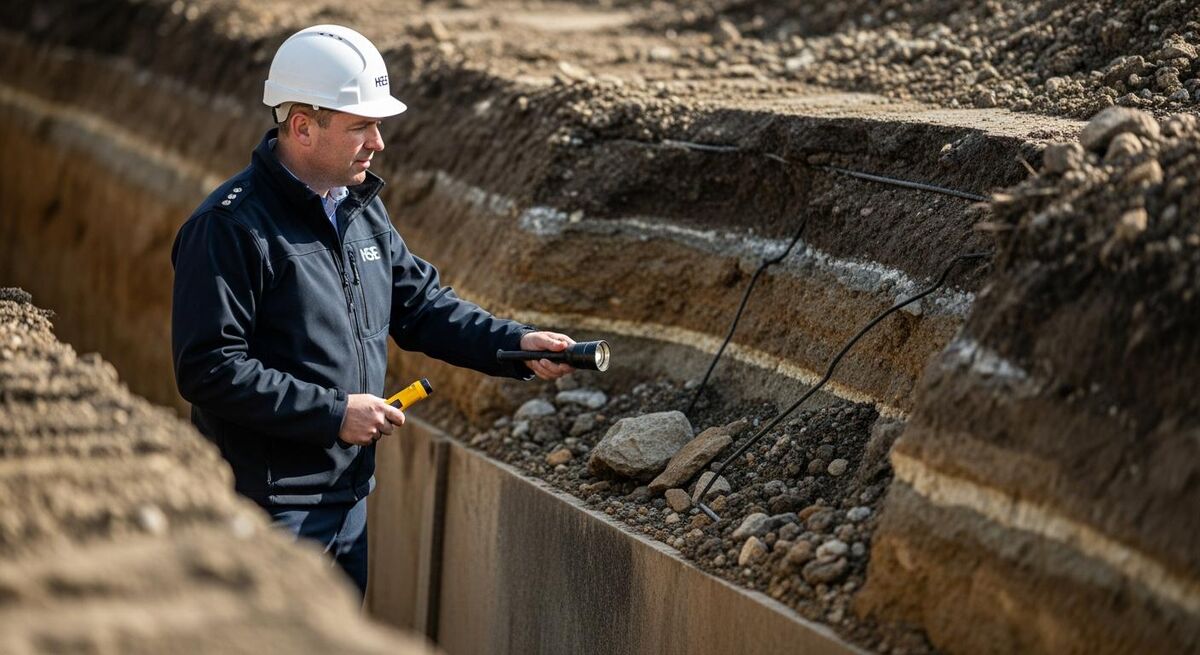
Carrig Construction Services (Glasgow, 2024). Derek Caddie, 44, entered an excavation in Belhaven Terrace West Lane to repair pipework. The unsupported wall collapsed, trapping him in soil from the neck down. He died from his injuries three days later. The company pleaded guilty under Sections 2(1) and 3(1) of the Health and Safety at Work Act and was fined £75,000 at Glasgow Sheriff Court in August 2024. HSE found "a lack of support to the vertical walls of the excavation."
Wallace Roofing and Building Ltd (Fife). Worker Julian Kilbane was buried alive when a trench collapsed. The company was fined £14,000 after pleading guilty to failing to provide sufficient training, failing to maintain a safe system of work, and failing to make a suitable risk assessment. Unite Union publicly criticised the fine as insufficient given the suffering.
March 2025 excavation injury (Brighton). A company was fined £16,000 and ordered to pay £2,612 in costs at Brighton Magistrates Court on 24 March 2025. A young man sustained very serious injuries because of failure to provide proper support to the excavation.
Khokhar (Oldham, HSE prosecution). The HSE issued two Improvement Notices on a site where a pit had been left unsupported and unfenced. Inspector Laura Moran said: "On one visit, I spotted a child's ball in the bottom of the pit. I dread to think what could have happened if they'd tried to fetch it, as the sides of the trench were starting to collapse." The developer ignored both notices and was prosecuted under Section 33(1)(g) of the Act.
AI hazard detection from site photos
AI hazard detection is the newest piece of the excavation safety puzzle. Computer vision models trained on construction imagery can now flag unsupported trench walls, missing edge protection, workers inside excavations without protective systems, and spoil heaps too close to the edge. The technology does not replace the competent person. It catches what the competent person misses between scheduled inspections.
Platforms like Buildots, OpenSpace, and Procore with its DataGrid AI capability use 360-degree cameras worn during routine site walks. The AI compares what it sees to the construction plan and to a hazard library, then flags exceptions. Sir Robert McAlpine has used Buildots across more than 260,000 square metres of UK projects. Vinci saved over 5,200 work-hours on 25 UK projects using OpenSpace for progress and safety monitoring.
The honest assessment for groundworks is that AI hazard detection is most useful on larger sites where the cost of a 360-degree camera pass is small per square metre. For a two-person team digging service trenches, it is overkill. A simple photo workflow on the site supervisor's phone, with the images dropped into a tool like Fergus or Joblogic against the inspection record, gives you 80 percent of the audit benefit at almost zero cost.
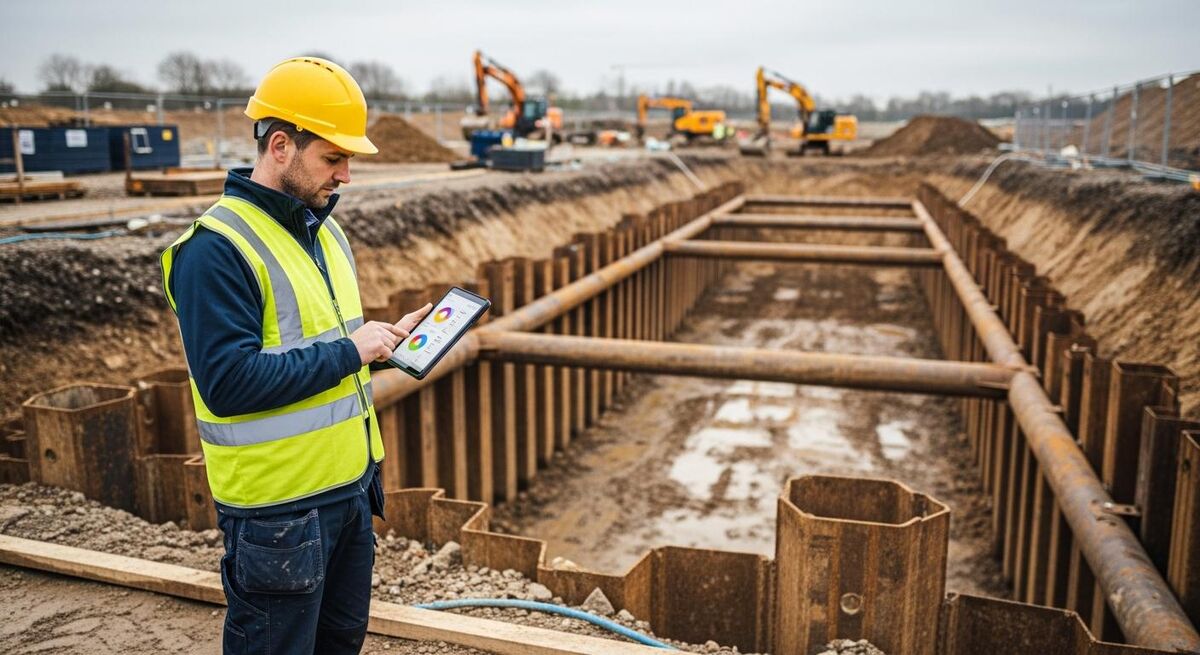
One emerging use that does suit smaller contractors is sending site photos to a general AI model like ChatGPT or Claude with a structured prompt asking it to flag visible safety issues. This is not certified hazard detection, but it can catch a missing handrail, an unsupported wall, or a poorly stacked spoil heap that you walked past without noticing. Our complete guide to AI tools for tradespeople covers the prompts and platforms that work well for site safety triage. Treat it as an extra set of eyes, not a compliance system.
What tradespeople are saying
Recommended videos
Construction Safety: Trenching and Excavation Safety
Overview of the hazards and protective systems in trenching
Methods of Shielding and Shoring
Practical demonstration of trench boxes, hydraulic shoring, and battering
Excavation and Trenching: Safe Work Practices
Step-by-step safe work procedures for ground workers
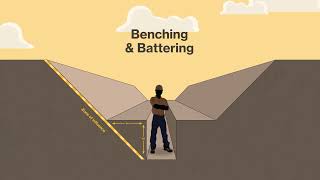
WorkSafe Trenching Controls
Short safety guide on the practical risk controls for trenching
Understanding Trench Protective Systems
Explainer covering sloping, shoring, and shielding decision criteria

Buried Alive: Surviving a Trench Collapse
First-hand survivor account that drives home why support matters
Frequently asked questions
No. The HSE removed it as a prescriptive trigger years ago. Modern regulation requires you to support any excavation where collapse could injure someone, regardless of depth. Plenty of workers have been killed in trenches well under a metre deep. Use the depth as a planning prompt, not a legal threshold.
Someone with the training, knowledge, and experience to spot the hazards and the authority to stop work. In practice that means a site supervisor or foreman with SMSTS, CITB Temporary Works Awareness, or extensive groundworks experience plus the appropriate CSCS card. Job title alone is not enough. They must be empowered to halt the work if they are not satisfied.
At the start of every shift before work begins, after any event that could affect stability (rain, vibration, surcharge), after any fall of material, and formally once every seven days with a written report. Miss the weekly written record and you are in breach even if the daily checks happen.
For most UK service trenches under 2m in firm ground with no adjacent loads, a hydraulic shore set or a small trench box is the standard choice. Hire costs around £35 to £80 per week. Battering is fine on open sites with no boundary or service constraints. Always document the soil assessment and the choice in your inspection record.
Not on every site, but on any project with non-standard or complex excavations, you should have one named. BS 5975 sets out the role. For small contractors, the practical answer is to appoint a senior foreman as the de facto coordinator and bring in an external temporary works engineer for design checks on anything above 3m or near loaded foundations.
No. AI is a useful backstop, especially for catching things between formal inspections, but the legal duty under CDM Regulation 22 sits with the competent person. Use AI as an extra set of eyes, not a compliance substitute. Photos and AI-flagged hazards make excellent supporting evidence inside your written inspection record.
Best case, an Improvement Notice giving you 21 days to fix the issue, with a fee for intervention starting at £174 per hour of inspector time. Worst case, a Prohibition Notice that stops work immediately, followed by prosecution. The Khokhar case shows what happens when notices are ignored: criminal prosecution under Section 33(1)(g) of the 1974 Act.
The RAMS, the daily inspection log, the formal seven-day inspection report under Regulation 24, the Permit to Load and Permit to Strike for any designed temporary works scheme, and the competence records of the inspecting person. Keep them for at least three years after the work completes, longer for major projects. Digital tools like Joblogic or RAMS-specific platforms make this much easier than paper.
My verdict
Excavation deaths in the UK are almost always preventable. The pattern in the prosecutions is identical: no support, no inspection, no RAMS. The cost of doing it properly is tiny compared with a £75,000 fine and the human cost of a worker killed at the bottom of a trench. A cubic metre of soil weighs 1.5 tonnes. That is the only number that matters when you are deciding whether to fit a trench box. Get the support in, do the inspection, write it down, and use AI tools as a backstop, not a replacement. The legal duty sits with you and your competent person, not with a piece of software.