

Quick Answer
If you are a sole trader and tight for cash, start with ServiceM8's free Lite plan or a Google Sheets and Calendar set-up. Once you are doing more than 15 jobs a month, Powered Now at £15 is the cheapest UK-built option that handles quotes, invoices and certificates properly. If you have a small team of two to five, Tradify at £34 per user is the safe market choice, with strong Xero, Sage and QuickBooks sync. The cost prediction angle from your historical job data only kicks in once you have six months of data inside one of these tools. Pick the cheapest one you will actually use every day.
Table of Contents
- Why budget software finally caught up with the big platforms
- The five tools that punch above their price
- Head-to-head: features, pricing and UK fit
- The AI cost prediction angle (and when it actually helps)
- What "free" actually costs you
- How to pick the right tool by business size
- What tradespeople are saying
- Recommended videos
- Frequently asked questions
- My verdict
 ServiceM8
 Powered Now
 Tradify
 YourTradebase
 Fergus
Why budget software finally caught up with the big platforms

For years the honest answer to "what should I use to run my jobs" was either a pile of paper, a spreadsheet, or something like Commusoft and SimPRO that cost more per month than a decent set of power tools. The middle bracket was thin and the cheap apps were too thin on features to bother with.
That has changed. The 748,000 self-employed workers in UK construction recorded by the Office for National Statistics in Q4 2025 are now a real market. Three things shifted at once. App stores got serious about field service. UK Making Tax Digital pushed everyone towards proper invoicing. And the underlying tooling, quoting, scheduling, payments, certificates, became commodity features that even £15-a-month products can deliver.
So you can run a tidy two-person heating business on a £15 plan in 2026 and it will not look amateur. The trick is picking the one you will actually open every day. A tool you abandon after two months is more expensive than a tool you use every job for two years.
The cheapest software is the one your engineers will use on the van. A £25 product they tap into every job beats a £79 product that sits unused because they cannot find the certificate button.
The five tools that punch above their price
I picked these five because each one solves a different problem cheaply. They are not the only options. Joblogic, Commusoft and SimPRO are excellent at scale, and our FSM comparison for 50-plus engineers covers them. This list is for the budget-conscious end of the market.
ServiceM8: free for sole traders, cheap as you grow

ServiceM8 starts at £0 a month for the Lite plan with 15 jobs included, then £25 a month for the Starter plan with 50 jobs. The pricing model is per-job rather than per-user, which is the opposite of how most of the field service market charges, and it suits one-person and two-person businesses really well.
The iOS app is the cleanest in the market for tradespeople. The Android app catches up most of the time, and ServiceM8 spent late 2025 closing the gap, but iOS is where the polish is. Quoting, photos, before-and-after shots, customer signatures, payment links and job notes are all one or two taps. The integrations into Xero and QuickBooks are mature.
What it is not great at: complex scheduling for a team of five plus, multi-day jobs with stages, and certificates beyond the basics. If you do gas, electrical or oil work and you need NICEIC, OFTEC or Gas Safe certificate templates built into the app, you will end up bolting on add-ons or moving to a more UK-focused tool. The other catch is the per-job pricing. If you do 80 small jobs a month at £15 a piece, Starter's 50-job cap forces you onto the £59 Growing plan, and the maths starts looking less budget.
The Lite plan is brilliant if you cap at 15 jobs a month. Above that, work out your job count honestly before you commit. A reactive plumber doing 90 small jobs a month is not on the budget plan, even though the entry price suggests it.
Powered Now: the £15 UK-built option
Powered Now sits at £15 a month on the Business plan and is the cheapest UK-built product that does the whole quote-job-invoice-certificate loop properly. It was built in Devon for British trades, so the templates already know what a Gas Safe certificate looks like and how UK VAT works.
The Business plan covers one user. Professional at £25 a month and Premium at £37 a month add team features. The fact that the cheapest tier is properly usable for a sole trader, rather than a glorified read-only mode, is the thing that makes it stand out. The mobile app works offline, which matters when you are in a boiler cupboard with no signal.
What it does not do: Powered Now is a competent product, not a beautiful one. The interface is dated next to ServiceM8 and Tradify. The reporting is basic. The integrations list is shorter. If you want a slick demo to show your accountant, this is not the one. If you want the cheapest tool that handles UK paperwork without making you cry, it absolutely is.
Tradify: the market standard, slightly more money
Tradify costs £34 a user a month for the Lite plan in the UK and is the most common name you will hear when you ask other trades businesses what they use. It sits in the sweet spot for two-to-five-person teams. The Xero, Sage and QuickBooks integrations are properly maintained, the mobile app is consistent across iOS and Android, and the quoting templates look professional out of the box.
At £34 it is not the cheapest, and Tradify often runs a 50% off promotion for new sign-ups. With three people on the team, you are looking at around £102 a month, which adds up. The reason people stick with it is reliability. The product just works, the support is responsive, and the 14-day trial is a real no-commitment trial.
The honest catch: some sole traders find Tradify too much. One UK electrician on the Electricians Forums thread said they tried it 18 months ago and were "overwhelmed" by the feature set. If you do one job a day and bill weekly, Tradify is more software than you need.
YourTradebase: the quote-and-invoice specialist
YourTradebase is built around the documents, quotes, invoices, certificates, schedules of work, rather than the whole job lifecycle. It starts at around £13 a month with a 30-day free trial and is unusually generous on the unlimited paperwork side. You can send as many quotes and invoices as you want.
If your problem is "my quotes look like they came off a fax machine in 1998", YourTradebase fixes that fast. The templates are clean, the customer portal is decent, and the payments work through Stripe so you can take a card on the kitchen table.
What it is not: a scheduler. There is light job tracking but you would not run a busy team off it. Think of it as a paperwork upgrade rather than a full job management platform. Plenty of sole traders sit on YourTradebase plus Google Calendar and never feel the need to move.
Fergus: serious tools at the bottom of the team-software bracket
Fergus Lite is £34 a user a month, same price as Tradify Lite. It is built by tradies for tradies, the founder ran a plumbing business, and the workflow shows it. The "job board" view lays jobs out as cards you drag through quote, scheduled, in progress, invoiced and paid. The visualisation is the thing.
For a team of two or three, Fergus and Tradify are close on quality. Fergus is slightly better at multi-stage jobs and project work. Tradify is slightly better at quick reactive jobs and accountancy sync. Pick on workflow taste rather than price. The 14-day trial gives you long enough to know.
Head-to-head: features, pricing and UK fit
| Feature | ServiceM8 | Powered Now | Tradify | YourTradebase | Fergus |
|---|---|---|---|---|---|
| Entry price (UK, per month) | £0 (Lite, 15 jobs) | £15 (Business) | £34 per user | ~£13 | £34 per user |
| Pricing model | Per job | Per user | Per user | Per user | Per user |
| Free tier | Yes (Lite) | No, 7-day trial | No, 14-day trial | No, 30-day trial | No, 14-day trial |
| UK certificates (Gas Safe etc.) | Via add-ons | Built in | Via templates | Custom forms | Via templates |
| Mobile app quality (iOS) | Excellent | Good | Very good | Good | Very good |
| Mobile app quality (Android) | Good (lite version) | Good | Very good, full parity | Good | Very good |
| Xero / QuickBooks sync | Yes | Yes | Yes, mature | Yes | Yes |
| Best team size | 1 to 3 | 1 to 3 | 2 to 8 | 1 to 2 | 2 to 6 |
| Where it stops being budget | Above 50 jobs/month | Above 3 users | Above 4 users | If you want scheduling | Above 4 users |
None of these tools is the wrong answer. They are different shapes. The mistake people make is paying for the biggest one because they want to "future-proof". You almost always end up paying for features you do not use for years, and the team never adopts what they cannot find.
The AI cost prediction angle (and when it actually helps)

The interesting story under the surface of the 2026 software market is what the platforms can do with your historical job data. ServiceM8, Tradify and the bigger products have started layering AI on top of finished jobs to suggest pricing for new ones. The pitch is simple: you tell it "kitchen rewire, three bedroom semi, Bristol" and it looks at the last 20 similar jobs you finished and gives you a labour-hours and materials estimate before you have done a site visit.
It works. It only works if you have data. A new ServiceM8 account with three jobs in it cannot predict anything useful. The same account with eight months of finished invoices, time logs and materials costs becomes a quietly useful estimating tool. Plenty of sole traders have a head full of "rewires take a day and a half and use three reels of cable", and the AI is basically writing that down for you so the next person you hire does not have to guess.
It pays for itself when you start delegating quoting. The first time someone other than the owner sends a quote, the prediction from historical data stops underpriced jobs going out the door. That is also when "free" software stops being enough.
This is the same shift we cover in our AI-first trades business piece. The tools that pay back fastest in 2026 are the ones that turn the owner's experience into a system the team can run from.
What "free" actually costs you
The Google Sheets and Google Calendar route is free in cash terms and not free in time. I ran a heating business on a glorified spreadsheet for the first 18 months and it was fine until it was not. The breaking point is when you have to remember three things on a Friday night that you wrote down in your van on Monday. That is when the spreadsheet starts costing you jobs.
The real costs of a free or near-free setup look like this:
- Unbilled hours. You forget which jobs are quoted but not invoiced. The same job takes 20 minutes of admin instead of two. Across a year that is real money.
- Missed appointments. One missed boiler service a month is the difference between a one-person operation that profits and one that breaks even.
- Looking unprofessional. A PDF quote from a free template versus a Tradify or Powered Now quote with your logo on it changes the conversion rate. The customer is not reading the spec, they are deciding if you look like a business.
- Cash flow blindness. You do not know how much is owed to you until you go and check. That blindness is what kills small trades businesses, and we cover the warning signs in 9,466 construction businesses in critical distress.
- No data to grow with. When you do hire, there is nothing to hand over. Every quote is a fresh guess. The AI cost prediction we talked about above only exists if your jobs are sitting somewhere.
Free works for the first six months of a brand new business. It stops working the moment your job count crosses ten a month or you take on a single helper. Spending £15 to £25 a month before that point is not extravagance, it is hygiene.
How to pick the right tool by business size
Forget feature lists. Pick by the shape of your business this year, not the one you hope to have in three years.
Sole trader, under 15 jobs a month
Use ServiceM8 Lite, free. Get used to quoting from your phone and taking card payments at the door. Spend the saved money on a decent van rack.
Sole trader, 15 to 60 jobs a month
Pick between Powered Now at £15 and ServiceM8 Starter at £25. Powered Now if certificates and UK paperwork matter most. ServiceM8 if mobile-first feel matters most. YourTradebase if your problem is professional-looking quotes and you do not need scheduling.
Small team, two to five engineers
Tradify or Fergus, both at £34 per user. Trial both. Pick whichever your engineers find faster on the van. Engineers vote with adoption. The software they actually open every job is the one that pays back.
Growing team, six engineers and up
You have outgrown this list. Move to Joblogic, Commusoft or SimPRO and accept the price. Our real cost of switching FSM platforms guide walks through what the move actually costs. If you also write a lot of subcontractor work, the subcontractor clauses guide is worth a read before you scale.
What tradespeople are saying
Recommended videos

Overview & Demo: ServiceM8 UK
ServiceM8 UK
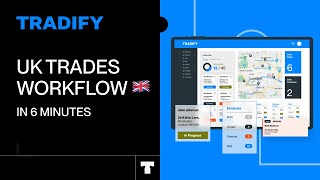
Tradify in Action: 6-Minute Guide (UK Edition)
Tradify

Tradify vs ServiceM8: What's best for my business?
Tradify

Tradify Web Walkthrough for Tradespeople in the UK
Tradify

SimPRO vs Tradify 2025: Which is best for your trade business?
Linktly

ServiceM8 13 walkthrough: checklists, templates, AI and Job Card
ServiceM8
Frequently asked questions
Yes. ServiceM8 Lite is free for up to 15 jobs a month, with no time limit. Beyond that, the "free" options are really long trials. The honest free route is Google Sheets and Google Calendar, which works for the first six months of a brand new business and then breaks.
Powered Now at £15 a month on the Business plan. It is built in the UK for British trades, handles Gas Safe and similar certificates out of the box, and the cheapest tier is properly usable rather than crippled. The interface is dated next to ServiceM8 but it does the job.
Pick ServiceM8 if you are a sole trader or a two-person team and the mobile experience is everything. Pick Tradify if you have a small team and need the same experience on iOS and Android with mature Xero, Sage and QuickBooks sync. Tradify charges per user, ServiceM8 charges per job. Work out which sums look better for your job count.
It works once you have at least six months of finished jobs in the same tool. Before that, there is nothing to predict from. The biggest payoff is when you start delegating quoting. The AI prediction stops the new hire underpricing jobs that the owner would have priced higher from gut feel.
Mostly yes. ServiceM8, Tradify, Powered Now and Fergus all export customer and job data to CSV. What does not move cleanly is your historical quoting templates, certificate forms and customer notes. Plan for two to four weeks of re-setup time when you switch. Our switching costs guide covers the real numbers.
The integration itself is usually free, but you pay for the accounting subscription separately. Xero starts at around £16 a month, Sage at £14, QuickBooks at £12. Budget for one of those on top of whatever job management software you pick. The integration is the bit that stops you typing every invoice twice, so it pays back fast.
My verdict
If you are starting out, ServiceM8 Lite for free. If you have 15 plus jobs a month and care about UK paperwork, Powered Now at £15. If you have a small team, Tradify at £34 a user. None of these are the wrong answer, and the AI cost prediction angle only kicks in once you have data sitting in one of them. Pick one this week. Run it for two months. Switch if it does not stick. The thing that quietly kills small trades businesses is admin drift, and £15 a month is a small price to fix it.