
Quick Answer
The Future Homes Standard comes into force for new-build dwellings in England on 24 March 2027, with a transition period running to 24 March 2028. New homes must produce at least 75 percent less carbon than 2013 baseline, hit an airtightness of around 4 m³/(h·m²) at 50 Pa, include low-carbon heating (in practice, heat pumps), solar PV equivalent to 40 percent of ground-floor area where feasible, mechanical ventilation that passes Part F commissioning, an overheating assessment under Part O, and at least one EV charge point per dwelling under Part S. This template walks you through pre-construction, during-build and handover sign-offs for all four parts.
Table of Contents
- Download the checklist
- Why this checklist exists
- What the FHS actually changes on site
- Pre-construction checklist
- During-build checklist
- Handover and home-user guide checklist
- Part L: energy and carbon
- Part F: ventilation
- Part O: overheating
- Part S: EV charging
- How to use the template on a live site
- Common compliance failures
- What the industry is saying
- Recommended videos
- Frequently asked questions
- My verdict
 ServiceM8
 Google Sheets
 Microsoft Excel
Download the checklist

The template is three checklists in one file: pre-construction, during-build, and handover. You can run it in Google Sheets, Excel, or as a printable PDF clipped to the site folder. It mirrors the four Approved Documents that matter for new-build dwellings under the Future Homes Standard: Part L (energy), Part F (ventilation), Part O (overheating), and Part S (EV charging).
Use it on plot one as a dry run before the rest of the development goes live. Most sites I have seen get caught not by the design, but by what gets missed during first fix or commissioning. The checklist is built around those failure points.
If you want a sense of what well-built service templates look like in practice, take a look at our free Gas Safety CP12 template. Same principle: structured, signed off, evidence captured.
Why this checklist exists
The Future Homes Standard is the biggest change to new-build dwellings since Part L 2013. It comes into force on 24 March 2027, with a transition window for projects already submitted under Part L 2021 to start on site by 24 March 2028. After that, every new home in England must produce around 75 percent less carbon than a 2013 baseline.
That sounds abstract until you look at what it actually means on a plot:
- Gas and oil boilers will not pass. Heat pumps or a low-carbon heat network become the default heat source.
- Solar PV is now a functional requirement, not an upgrade. Roof orientation matters from RIBA Stage 2 onwards.
- The notional airtightness target tightens from 5 to 4 m³/(h·m²) at 50 Pa. Today's typical new build often sits between 4 and 6.
- SAP 10.3 is the interim methodology until the Home Energy Model (HEM) is fully approved.
- Home-user guides become mandatory, not optional, and cover heating, ventilation, generation and overheating.
The risk is not failing a single check. It is finding out at handover that the heat pump was sized to the old fabric assumption, the airtightness test came in at 5.2, and the home-user guide does not exist. That is a delayed completion, a snagged certificate, and a difficult conversation with the customer who already has the moving van booked.
What the FHS actually changes on site
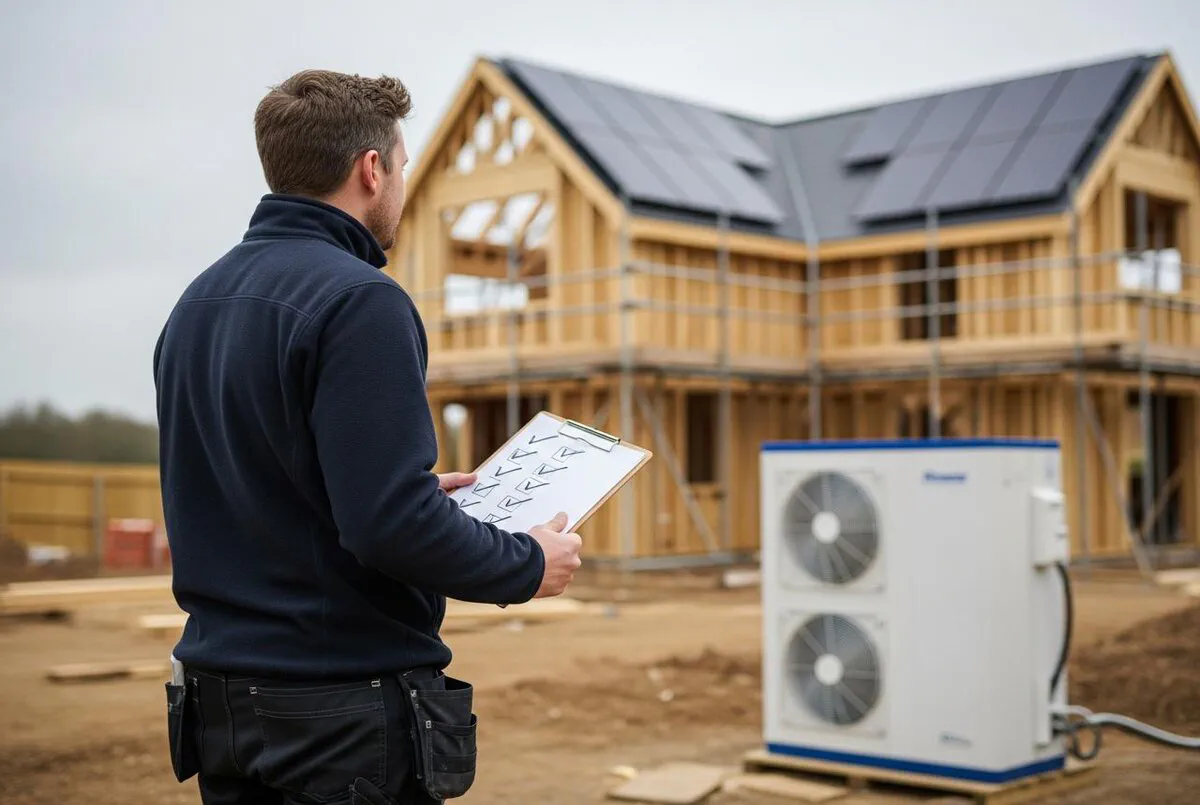
I have spent a lot of time looking at FHS-ready pilot homes from Taylor Wimpey's Sudbury trial and the Lovell Tomorrow Home at Cornish Park. The lesson is consistent. The standard is not technically difficult, but it punishes the old "build the shell, then bolt on the services" sequence.
Under FHS, the heating engineer and the M&E designer need to be in the room at design freeze. The plant space, the cable runs, the noise assessment, the cylinder location, the emitter sizing, the ventilation strategy and the solar inverter position all interact. You cannot value engineer one without breaking another.
For your average ten-plot site, the changes that hit the programme hardest are:
- Airtightness moves from a one-off test at the end to a quality control regime through the build. Service penetrations, junctions, and window reveals all need detailing.
- Heat pump commissioning needs an MCS-certified installer with full sign-off paperwork. Find your installer before groundworks, not after.
- Solar PV requires roof orientation, structural loading, and consumer unit space designed in from the start.
- Part O can force window changes, shading, or purge ventilation that the architect did not anticipate.
- Part S wiring and consumer unit capacity must be planned alongside the heat pump, not bolted on at second fix.
This is why the checklist runs in three stages. Catching a Part O fail at planning costs a redesign. Catching it at first fix costs a re-glaze. Catching it at handover costs the certificate.
Pre-construction checklist
The pre-construction list is the one that earns its keep. Most FHS failures originate here, but only show up at sign-off six months later.
The template breaks pre-construction into six blocks:
- Methodology: SAP 10.3 calculation completed and lodged. HEM run in parallel if available.
- Fabric: U-values, thermal bridging schedule, airtightness target agreed with site team.
- Heating: heat loss calculation, heat pump model and size confirmed, MCS installer engaged, plant space and noise check signed off.
- Ventilation: MEV or MVHR strategy selected, ductwork routes coordinated with M&E, commissioning route agreed.
- Overheating: simplified Part O check or TM59 dynamic assessment completed, mitigation specified.
- Solar PV and EV: array layout, inverter location, consumer unit and EV cable route coordinated with the electrician.
Each block has a column for the responsible person and a column for the document reference. That second column is the part most teams skip. When building control or the warranty inspector asks for evidence, you want a sheet that points straight at the calculation, the drawing, the certificate. Not a hunt through eight folders.
During-build checklist
The during-build list is your site supervisor's tool. It is sequenced by trade visit, not by Approved Document, because that is how a site actually runs.
Key checkpoints:
- Groundworks and structure: insulation continuity at slab, wall and roof junctions photographed.
- First fix electrics: heat pump power supply, EV charge point cable, solar inverter cable, MVHR controls cable all installed to the right spec.
- First fix plumbing: hot water cylinder location confirmed, heating circuit routes coordinated with ventilation ducting.
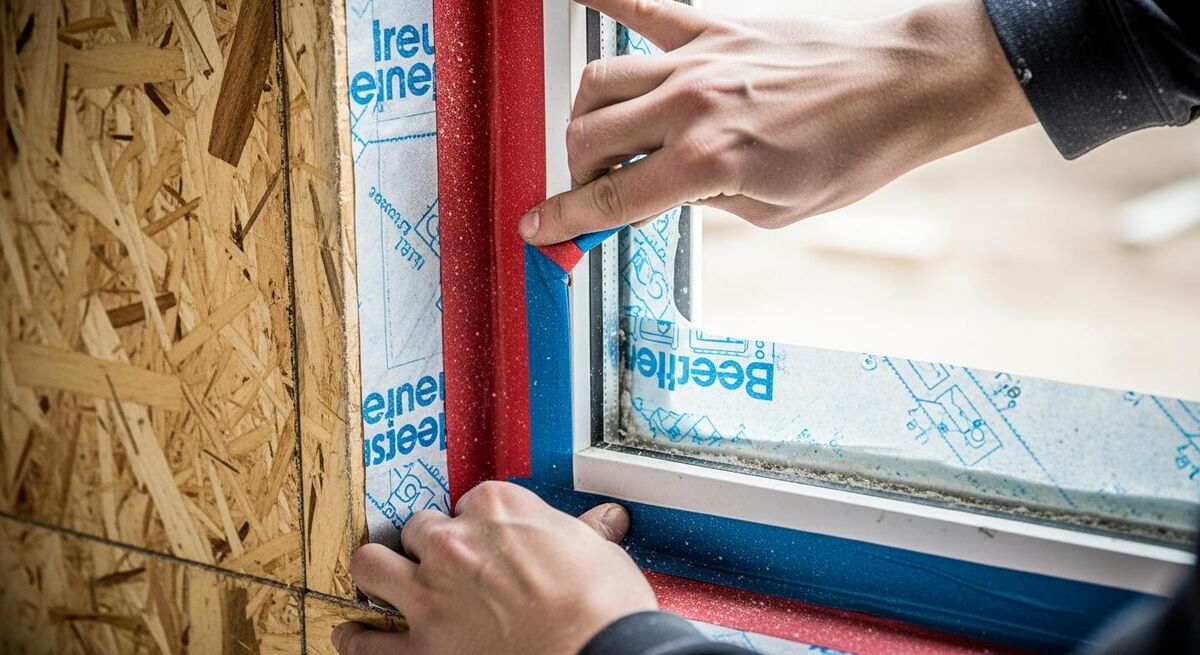
- Second fix: airtightness barrier integrity checked at every service penetration, tape sign-off photos taken.
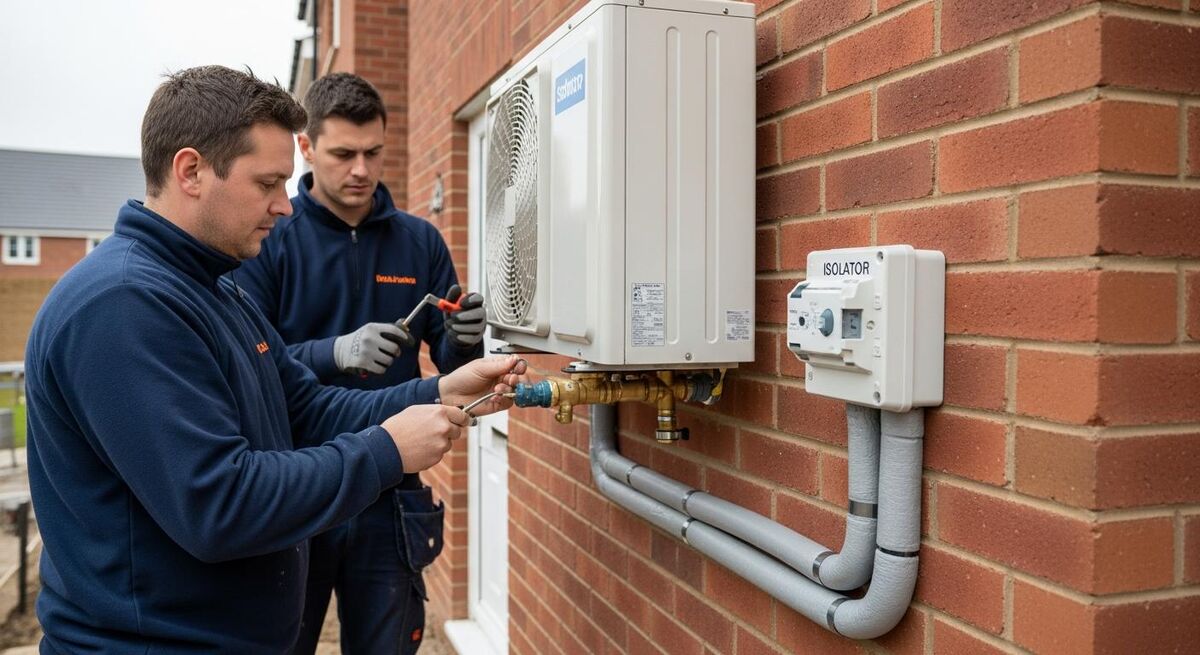
- Heat pump install: MCS installer commissions, performance test run, paperwork captured.
- MVHR commissioning: balanced air flows tested by competent person scheme member, certificate captured.
- Airtightness test: pressure test result captured against the FHS target.
- Solar PV install: MCS installer sign-off, generation meter location, isolator labelling.
- EV charge point: Part S compliant installation, RCD type confirmed, smart functionality tested.
Handover and home-user guide checklist
The handover list is the bit that catches a lot of small developers out. FHS makes the home-user guide a regulated deliverable, not a marketing leaflet. It has to be in a specified format and must cover:
- Heating and hot water: how the heat pump works, set points, antifreeze cycle, what the noise is and is not.
- Ventilation: how MEV or MVHR runs, filter change schedule, what the boost button does, what to do if it fails.
- On-site electricity generation: how solar PV operates, where the isolator is, what happens during a power cut.
- Overheating: how to use the purge ventilation, the role of external shading, why the windows have restrictors.
- EV charging: how the smart charger functions, who the customer's tariff provider is, what to do if the charger faults.

The template has a customer sign-off section. The new owner ticks every block, signs and dates. That signature is your evidence that the home-user guide was issued and explained. Without it, you have a regulatory gap and a customer who calls you in January asking why the heat pump is "broken" (it is in defrost cycle, but they have not been told).
A practical tip from the heating side: book a 30-minute handover walk-through with the customer, not a quick "here is your folder" at the doormat. The cost of one engineer hour at completion is far less than the cost of the four call-outs you will get in the first month if they do not understand how the system runs.
Part L: energy and carbon
Part L is the engine of the Future Homes Standard. It sets the carbon target, the fabric performance, and the renewable generation requirement. Under FHS, the notional dwelling assumes a heat pump and solar PV, so any design that uses different technology has to demonstrate it hits the same carbon outcome.
The compliance route is SAP 10.3 for now, with HEM phasing in once it has approved methodology status. Both produce a Target Emission Rate (TER), a Target Primary Energy Rate (TPER), and a Target Fabric Energy Efficiency (TFEE). Your designed dwelling has to beat all three.
Solar PV deserves a special mention. The notional dwelling under FHS assumes a PV array equivalent to 40 percent of the ground-floor area. If your roof cannot accommodate that (orientation, shading, geometry), the Approved Document allows a "reasonable amount" instead. But you still have to hit the carbon target, which usually means oversizing what PV you can fit, adding battery storage, or improving fabric beyond the notional spec.
The checklist captures the SAP reference number, the TER, TPER and TFEE values, the heat pump model and certified COP, and the PV array size and orientation. All in one place, all signed off by the named designer.
Part F: ventilation
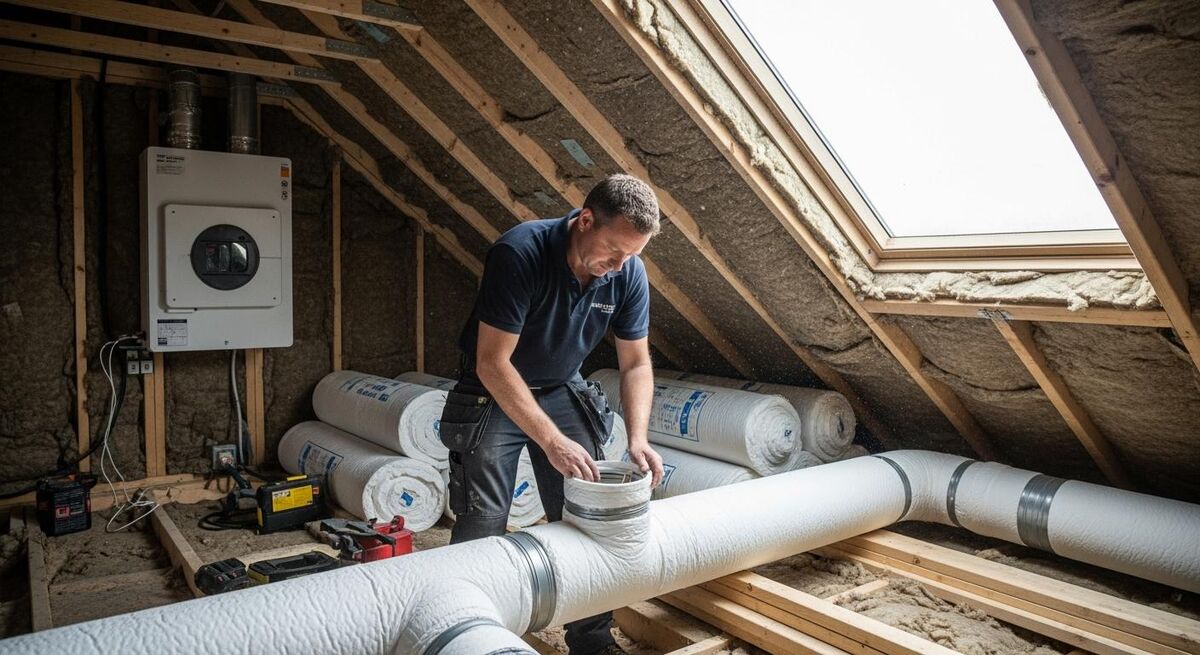
An airtight house with poor ventilation is a damp, stuffy, mouldy house. Part F is the document that stops the FHS from creating a generation of unhappy customers, and it is the document trades most often underestimate.
Under FHS, the realistic ventilation strategies for a new-build dwelling are:
- System 3 (continuous mechanical extract, MEV): continuous low-level extract from wet rooms, passive air inlets in habitable rooms. Cheaper, simpler, but loses heat.
- System 4 (mechanical ventilation with heat recovery, MVHR): balanced supply and extract through a heat exchanger. More expensive, but recovers up to 95 percent of the heat in the outgoing air.
For an airtightness of 4 m³/(h·m²) or tighter, MVHR is the sensible choice on most builds. The energy you save on heating, when paired with a heat pump, more than offsets the extra capital cost.
Three things to get right:
- Coordination: ductwork is bulky. It needs to be in the M&E coordination drawing alongside the plumbing, electrics, and structural openings. Improvising it on site usually means crushed ducts or daft routes that kill performance.
- Commissioning: all new ventilation systems must be commissioned by a member of a competent person scheme. Book the commissioning engineer alongside the install, not after.
- Filter access: someone has to change the filters every year. If you put the MVHR unit in a place no human can reach, that is a future complaint waiting to happen.
The checklist has a row for the system type, the design air flow rates, the commissioning certificate reference, and a confirmation that the filter change interval has been written into the home-user guide.
Part O: overheating
Part O has been in force since June 2022, but a lot of small and mid-sized builders are still treating it as an afterthought. Under FHS, with tighter fabric and more glazing on south-facing elevations to capture solar gain, the risk of overheating goes up, not down.
Part O gives you two routes to compliance:
- Simplified method: a rule-based approach with fixed geometric criteria. Works for dwellings with modest glazing relative to floor area. Use the checklist in Appendix B of the Approved Document.
- Dynamic thermal modelling (CIBSE TM59): a detailed simulation. Required if you fail the simplified method, common on flats, urban schemes, and any home with large south or west glazing.
The checklist captures the assessment method used, the assessor's name, the date, and the mitigation measures (shading, restricted opening, purge ventilation, glazing g-value). Building control will ask. So will the warranty inspector.
Part S: EV charging
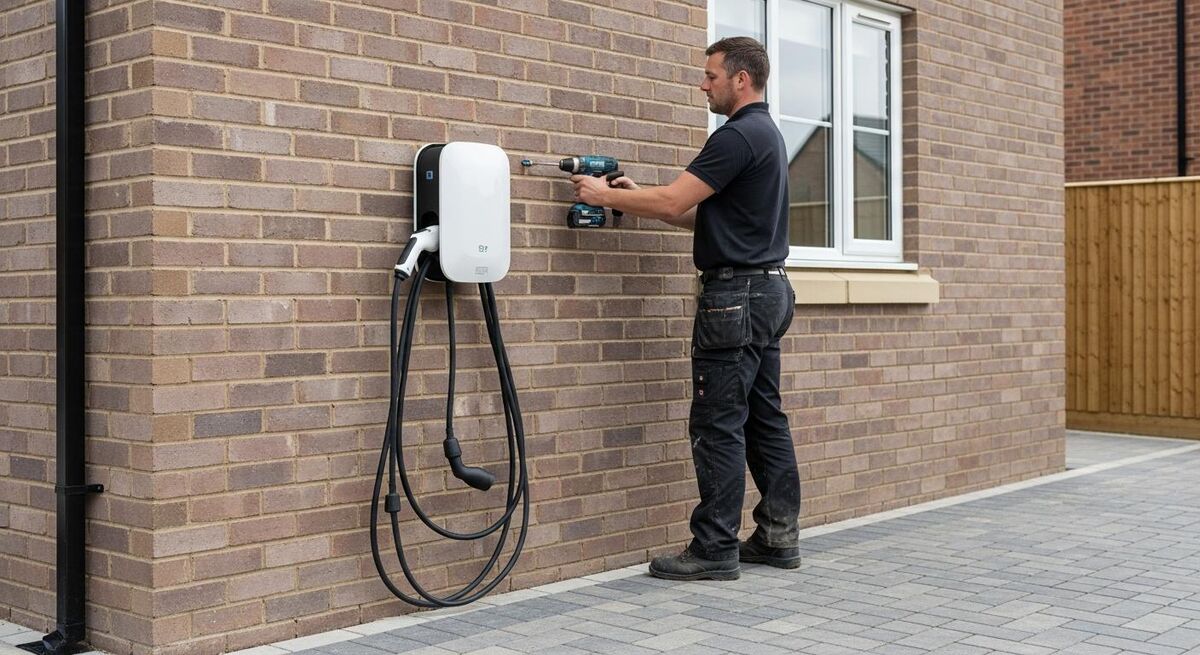
Part S has been in force since 15 June 2022, but it interacts with FHS in ways that catch out electricians used to retrofit work. Every new dwelling with associated parking needs at least one EV charge point. Cable routes have to be provided to any additional spaces.
Where it gets trickier:
- The consumer unit has to have spare capacity for the EV charger alongside the heat pump and solar PV. Plan the load schedule at the design stage.
- The charger must be smart, with the functionality defined by the 2021 Smart Charge Points Regulations.
- The exemption applies if the cost exceeds £3,600 per dwelling or 7 percent of major renovation cost. Document the exemption, do not just skip the install.
- The earthing arrangement (PME vs TT) needs confirming with the DNO before first fix, especially for plots with detached parking.
The checklist captures the charger model, the location, the consumer unit spare capacity, the DNO notification reference, and the test certificate. One row per plot. Done.
How to use the template on a live site
The most useful pattern I have seen is this:
- Make one master template for the development. Lock the headers.
- Copy the master into a folder per plot, named "Plot 01", "Plot 02" and so on.
- Allocate a single named person per stage: design lead for pre-construction, site supervisor for during-build, sales or aftercare for handover.
- Set a rule: no plot moves to the next RIBA stage until the previous checklist is complete or has a documented derogation signed off by the design lead.
- Run a weekly five-minute review on the site WhatsApp. Just the open items. That is your standing safety net.
For developers running ten or more plots a year, a Google Sheets version with conditional formatting saves real time. Red, amber, green per row, with the dashboard summing open items per plot. Five minutes of setup, hours of reporting saved. If you want a worked example of a VAT-aware spreadsheet that the same office team can run alongside the checklist, our VAT-ready invoice template uses the same conditional formatting approach.
For the wider renewable energy paperwork that sits alongside the FHS sign-off (MCS, DNO G98/G99, Part P), our renewable energy compliance checklist pack picks up where this one ends.
Common compliance failures
Three things keep coming up in the FHS-ready trials and the early adopter sites I have looked at:
- The 4 m³ airtightness target. Most existing UK new-build sites currently sit between 4 and 6, and the bottom of that range is the new ceiling. Tape detailing at window reveals, service penetrations, and the top plate of internal walls is where it lives or dies.
- Heat pump commissioning paperwork. The MCS sign-off pack is significant, and on a busy site it is easy to leave gaps. Pre-print the cover sheet for every plot and stick it in the front of the project file.
- Home-user guide quality. A photocopied boiler manual is not a home-user guide under FHS. The customer has to be able to follow it. If your sister could not understand it, building control probably will not pass it either.
None of these are technical impossibilities. They are quality control problems, which is why the template puts the responsibility column right next to every row.
What the industry is saying
Recommended videos

What is Future Homes Standard and how will it affect property developers in 2026
Property developer briefing
Beyond the Building Regulations: A Guide to the FHS
Industry guidance walk-through

Why Heat Pumps WIN in the Future Homes Standard
Heating technology context
New Regulations for Building Overheating: Key Points from Part O
Quadrant briefing on Part O

Approved Document Part O: Reflections on Use
Two-year retrospective on Part O

Questions I Get Asked: Part O Building Regulations
Common Part O queries answered
Frequently asked questions
The new building regulations come into force on 24 March 2027 for new residential buildings in England. Sites that submitted a full plans application or building notice before that date can still complete under Part L 2021, provided construction starts on the relevant plot by 24 March 2028. After that, every new home must meet the FHS.
Not banned outright. But the FHS carbon targets are set at a level that gas, oil and other fossil-fuel heating cannot realistically meet. In practice, almost every new-build dwelling will need a heat pump or a connection to a low-carbon heat network. If you want to specify a gas boiler, you will have to demonstrate equivalent carbon performance by some other route, which usually does not stack up commercially.
The FHS notional dwelling assumes 4 m³/(h·m²) at 50 Pa. The regulatory maximum is still 8, but to hit the carbon target you will typically need to design and test to around 4. That is tighter than most current new builds, which sit between 4 and 6. Detailing at junctions, window reveals and service penetrations is where this is won.
The notional dwelling assumes PV equivalent to 40 percent of the ground-floor area. Where roof orientation, shading or geometry makes that impractical, the rules allow a documented "reasonable amount" instead, but you still have to hit the carbon target. In practice that means oversizing the PV you can fit, adding battery storage, or improving fabric beyond the notional spec.
SAP 10.3 is the interim calculation methodology for the FHS, confirmed by MHCLG in February 2026. The Home Energy Model (HEM) will follow at least three months after the FHS launches, then both run in parallel for at least 24 months. Use SAP 10.3 today. Get your team familiar with HEM as soon as it becomes available, because modelling time per house type runs about five times longer.
Under FHS, the home-user guide is a regulated deliverable in a specified format covering heating, ventilation, on-site electricity generation, and overheating. The principal contractor is usually responsible for compiling it, though the heating engineer, M&E designer, and ventilation installer all contribute. Treat it like a CP12 or an EICR, not a marketing leaflet.
You can still pass FHS if other elements compensate, because the target is a carbon outcome, not a fixed airtightness number. But the notional dwelling is built around a tight envelope, so a loose result usually means the heating system is undersized for the actual heat loss. Sort the leaks first. Sealing a service penetration is cheaper than uprating the heat pump.
No. Part S only applies where a dwelling has "associated parking". A flat with no parking allocation is exempt from the EV charge point requirement, although cable provision may still be sensible if the development has communal parking. Document the exemption in the building control submission, do not just leave a blank.
My verdict
The Future Homes Standard rewards builders who design for compliance from RIBA Stage 2 and punishes anyone treating it as a tick-box at sign-off. The checklist will not write the SAP calculation for you or commission the MVHR. What it does is make sure no one on your team can say "I didn't know" at handover. For a small or mid-sized developer, that is the difference between a smooth completion and a snagged certificate with the customer's solicitor on the phone. Pre-construction, during-build, handover. Tick as you go. Keep the photos. Hand the customer a guide they can actually use. That is the whole job.