
Quick Answer
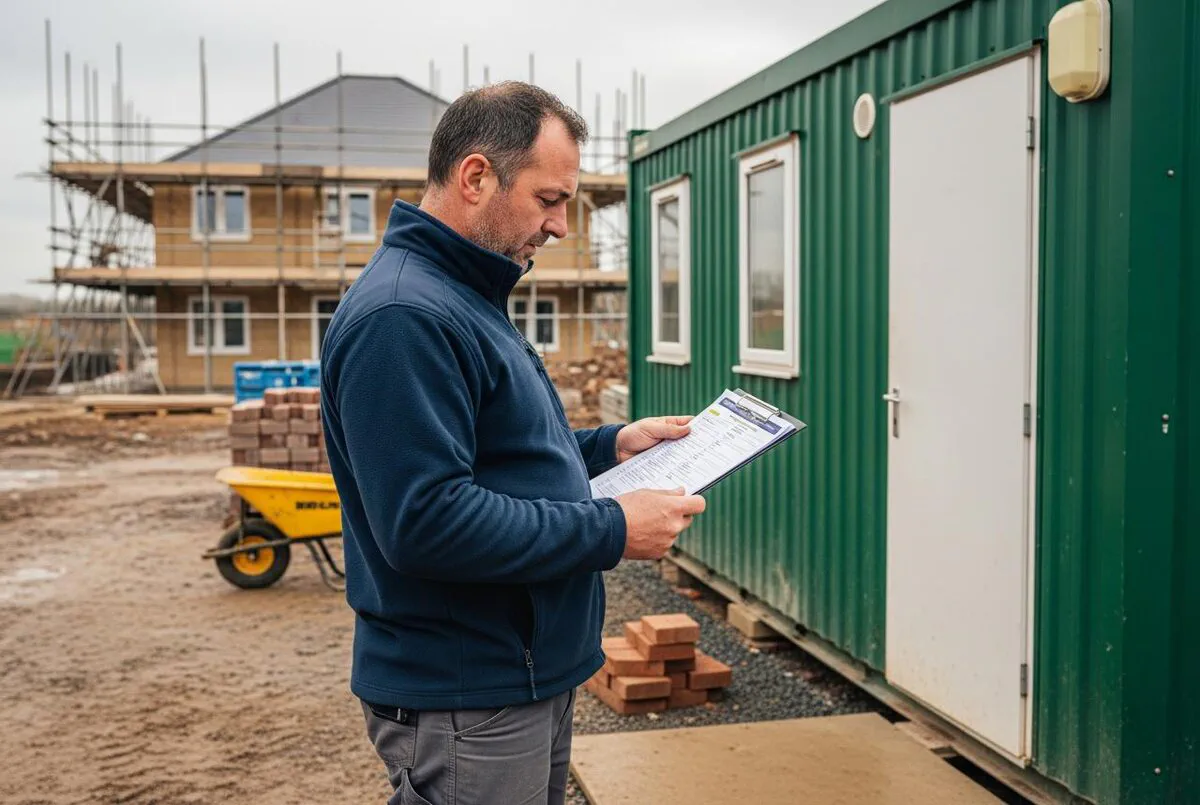
Every worker, subcontractor and visitor needs a site-specific induction before they pick up a tool. CDM 2015 puts that duty on the principal contractor. This free 14-point checklist covers the lot: site rules, hazards, PPE, welfare, first aid, accident reporting, emergency procedures and the sign-off. Print it, laminate it, walk through it with every new face on day one. Five minutes of paper saves a phone call from the HSE.
Table of Contents
- Why a proper site induction matters
- What the law actually requires (CDM 2015)
- The 14-point site induction checklist
- Emergency procedures: what to cover in five minutes
- Where AI hazard detection from site photos fits
- Common induction mistakes that get prosecuted
- How to customise this for your site
- Tools for delivering and recording site inductions
- What tradespeople are saying
- Recommended videos
- Frequently asked questions
- Key takeaways
Why a proper site induction matters
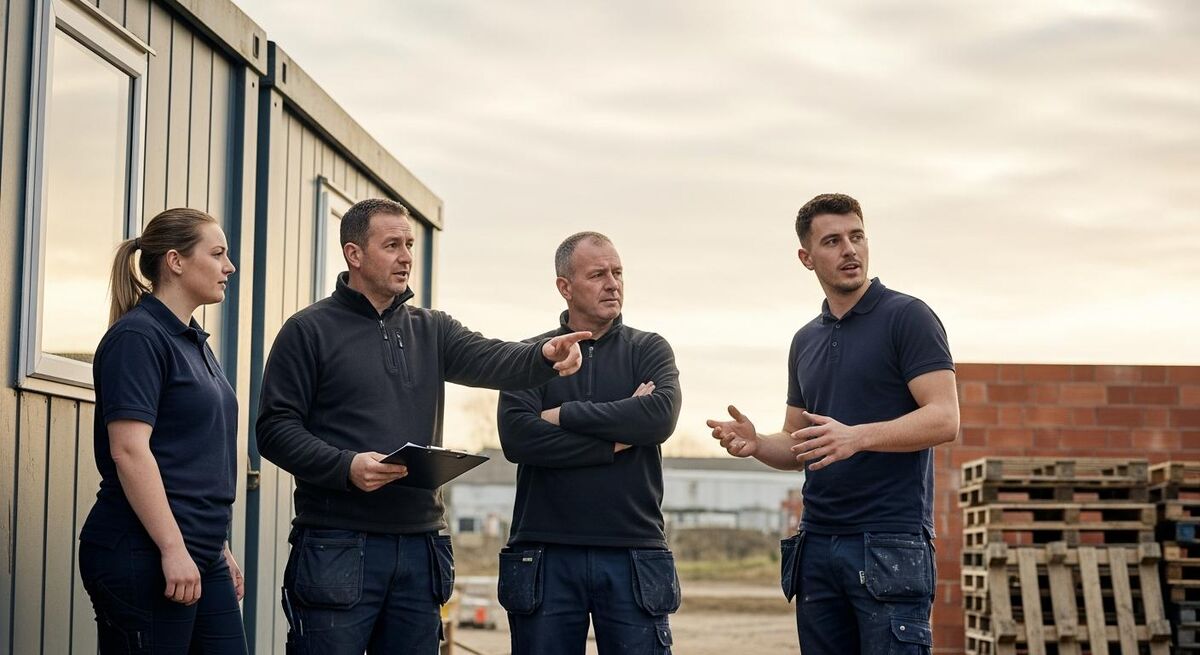
On my apprenticeship I once put my foot through a ceiling. Daft moment, learned fast. Trade work is built like that: you make mistakes, the trick is making sure none of them are severe. A site induction is the bit of paper that stops the first mistake on a new site from being severe.
The Health and Safety Executive published the data in their last construction sector review. New workers in their first month on a site carry roughly three times the lost-time injury risk of workers who have been on that site for over a year. The reason is simple. They do not know where the second exit is. They do not know which scaffold is being struck that afternoon. They do not know that the white van at the back gate is delivering acetylene and they should not park near it.
An induction is not a tick-box exercise. It is a five-to-twenty minute conversation that puts the new starter at the same level of site awareness as the lads who have been there for weeks. Get it right and your accident book stays empty. Get it wrong and you are explaining yourself to an HSE inspector on a Tuesday morning.
What "site-specific" actually means
A generic CSCS green card induction is not a site induction. The HSE makes this point repeatedly. Site-specific means your site, today, with this scaffold up, this excavation open, this welfare unit, this fire point. Anything more abstract than that is just paperwork.
What the law actually requires (CDM 2015)
The Construction (Design and Management) Regulations 2015 sit behind every site induction in the UK. Regulation 13 is the one that matters. It places a duty on the principal contractor to provide every worker with "suitable site-specific information, instructions and training" before they begin work.
That includes everyone who steps on site: your own team, subcontractors, agency labour, delivery drivers who walk past the welfare unit, the architect popping in for a snag review. Different visit, different depth of induction, but the duty applies to all of them.
For small projects, CDM still applies. There is no minimum project size that exempts you from the induction duty. If you have one person on site, that person gets an induction. We covered the small-project rules in more depth in our guide to CDM regulations for small projects.
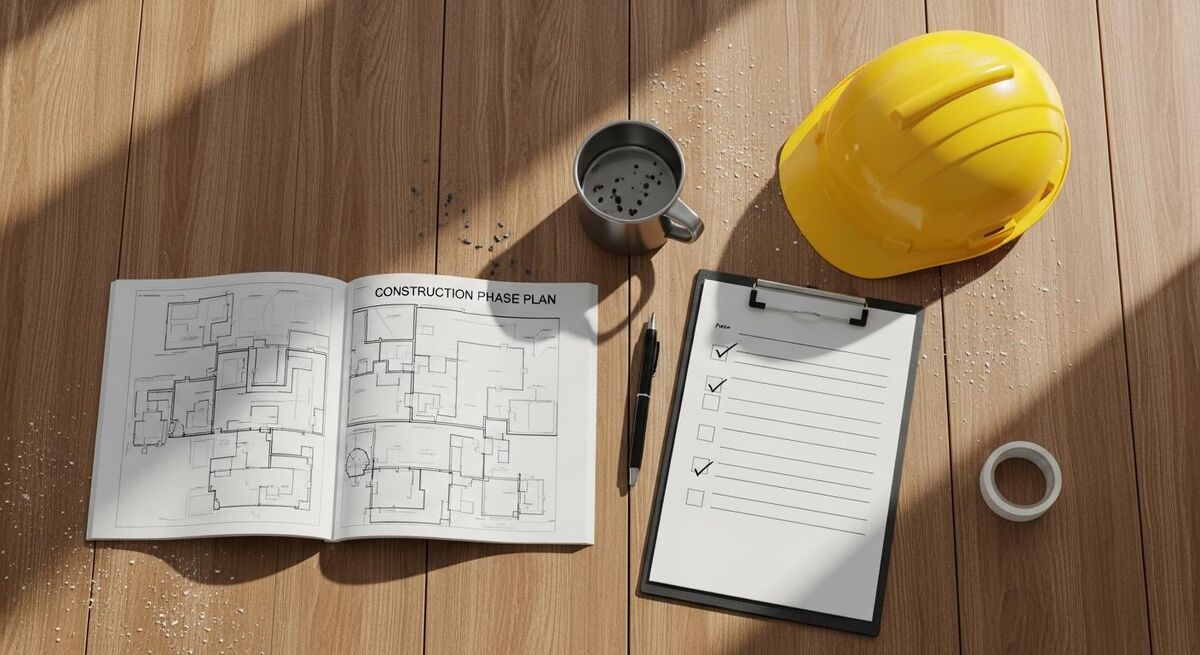
The induction sits inside a wider documentation chain. The construction phase plan sets out the site rules. The risk assessments identify the hazards. The method statements explain how the work gets done safely. The induction is the bit where you communicate all of that to the new worker. If you have done the rest properly, the induction almost writes itself.
Records are also a legal requirement. Every induction needs a dated signature from the inductee confirming they understood it. Keep those records for at least three years. The HSE asks for them first when something goes wrong.
The 14-point site induction checklist
This is the template. Walk through these 14 points with every new starter, in this order, on day one. Print it, laminate it, sign it off, file it. You can cover the lot in under twenty minutes if you keep moving.
1. Welcome and site overview
Project name, principal contractor, current programme, what is happening on site this week. Two minutes, no more.
2. Site rules and access
Sign-in/sign-out procedure, working hours, parking, exclusion zones, who is allowed where without an escort.
3. Site-specific hazards
What is dangerous about this site today. Live edges, working at height, deep excavations, overhead services, buried utilities, asbestos, hot works, traffic routes.
4. PPE requirements
Hard hat, safety footwear, hi-vis, gloves, eye protection, hearing protection, RPE. State what is mandatory at the gate and what is task-specific.
5. Welfare facilities
Toilets, drying room, drinking water, place to eat, hand-washing. Where they are. Whether they are heated.
6. First aid arrangements
Where the kit is, who the first aiders are, how to call them. Names and phone numbers on the wall.
7. Accident and near-miss reporting
How to report an accident, where the book is, what counts as a RIDDOR-reportable event. Make near-miss reporting a normal thing.
8. Fire and emergency procedures
Fire point locations, muster point, alarm sound, who calls 999. The next section covers this in detail.
9. Permit-to-work systems
Hot works, confined spaces, working at height, isolations. Who issues permits, who signs them off, where they live.
10. Manual handling and traffic
Pedestrian routes, segregation from plant, banksman use, telehandler exclusion zones, delivery booking.
11. Hazardous substances (COSHH)
What is on site, where the data sheets live, who needs face-fit RPE, silica dust controls, hand protection for solvents.
12. Environmental controls
Waste segregation, spill kit location, noise hours, dust controls, working near drains, neighbour considerations.
13. Toolbox talks and ongoing briefing
When toolbox talks happen, how the site brief works each morning, how to flag a concern, who the safety rep is.
14. Sign-off and questions
Any questions? Anything not understood? Sign and date. Keep the form. Re-induct on any major change to the site.
The five-minute rule for ongoing briefs
The induction is day one. After that, run a short brief every morning before tools come out. Two minutes on what changed overnight, who is on site, what is being lifted, what is being struck. It is the simplest accident-prevention habit in the trade.
Emergency procedures: what to cover in five minutes
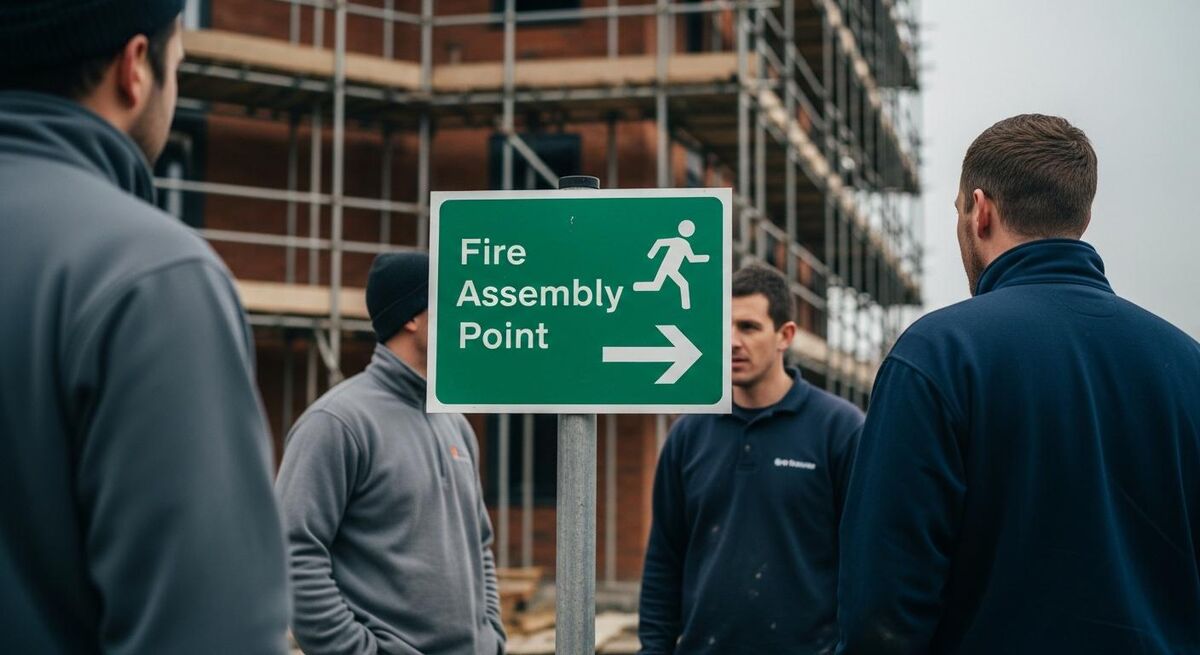
Emergency procedures are the part of the induction that costs the least to teach and saves the most when something goes wrong. Spend five minutes on them. Make them concrete.
Cover four things. The alarm sound, so people know when to leave. The route, so people know how to get out. The muster point, so people know where to be counted. The person in charge, so people know who is making the call.
For fire: where the extinguishers are, what type they are, what they do not work on, who calls 999, where the muster point is, who counts heads. For medical emergencies: where the first aid kit is, who the trained first aiders are, the site postcode and what3words address for the ambulance. For utility strikes: who isolates, who evacuates, who calls the network operator.
The site postcode and what3words address point is the one people miss. Ambulance dispatchers in 2026 work with what3words. If your gate is on a long rural site, every worker should know the what3words for the welfare unit. Put it on the back of the induction card.
The one thing that gets people killed
The single most common fatal-injury cause on UK sites is falls from height. The HSE prosecutions every year tell the same story: someone went up without a harness, without an inspection, without permission. Your induction has to be explicit. No permit, no work at height. No exceptions, no "just for two minutes". That is the line.
Where AI hazard detection from site photos fits
This is a 2026 article so it would be remiss not to mention where technology fits. At Trade Innovations we have always taken the view that technology should extend what people on the tools can already do, not replace their judgement.
Site photo AI has matured to the point where it is a useful tool, not a gimmick. Platforms like DroneDeploy Safety AI, Smartvid.io and Newmetrix can scan thousands of site photos a week and flag hazards: missing PPE, unprotected edges, exposed rebar, blocked fire exits, people in plant exclusion zones. Reported accuracy on common PPE detection sits at 95 to 99 per cent.

What this means for your induction is two things. First, tell the inductee that the site has automated photo review. People behave differently when they know cameras and tablets are scanning. That is a feature, not a bug. Second, make the AI work for you on the documentation side. Several platforms now auto-generate the photo evidence that sits behind your construction phase plan and induction records. That is admin time you get back.
The technology does not replace the human walk-round. It catches what the human walk-round missed. The mentor-led, eyes-on supervision is still the foundation. AI sits on top of that, not in place of it.
Common induction mistakes that get prosecuted
The HSE prosecutions database is full of cases where an induction failure sat upstream of the actual accident. A few patterns repeat.
Generic inductions for a specific site. Reading a CITB Site Safety Plus script and ticking the box does not satisfy CDM 2015. The induction must reflect the live hazards on the actual site.
No re-induction after a major change. The scaffold goes up, the excavation opens, the site layout changes, the principal contractor changes. Anyone already on site needs re-inducting on the new hazards. Many companies forget this.
Visitors not inducted. The architect, the QS, the building control inspector, the delivery driver. CDM applies to them all. A shorter version is fine. No version is not.
No record of understanding. A signature confirms attendance, not comprehension. The HSE looks for evidence the inductee actually understood the content: a short verbal check, a few questions, a confirmation question on the form.
Foreign-language workers given English-only inductions. If a worker does not have working English, the induction must be delivered in a language they understand. Translation costs are tiny compared to the prosecution costs when something goes wrong.
The financial side
HSE Fee for Intervention is currently £174 per hour. A serious investigation that finds an induction failure can run to tens of thousands of pounds before any prosecution. The cost of a proper induction process is the salary of one foreman for half an hour. The maths is not subtle.
How to customise this for your site
This template is the starting point. Every site is different. Adjust the checklist to match the actual hazards on your job, not the generic ones we have listed.
Walk the site before you write your version. What is the real route to the welfare unit? Where is the actual fire point? What are the live hazards this week? Build the induction around what is true today, not what was in last year's construction phase plan.
Keep it short and concrete. A worker can absorb 14 points in twenty minutes if each point is two sentences and grounded in the site they are standing on. The same 14 points written as legal prose lose them at point three.
Update it. After any incident, near-miss or new hazard, the induction gets rewritten the same day. The construction phase plan and the induction should always reflect the same reality. Our guide to site supervision covers how that feeds into the wider supervisory regime, and our excavation safety guide goes deeper on the specific hazards that need their own toolbox talks.
For the trades who run smaller jobs, this same template scales down. A two-person extension job still needs the conversation. You can cover it in ten minutes over a cup of tea on the first morning. The duty does not vanish because the job is small.
Tools for delivering and recording site inductions
You do not need expensive software to run a proper site induction. A printed checklist, a clipboard, and a working phone are enough for most small to medium jobs. Where digital tools earn their keep is in record-keeping and signature capture for sites that get audited.
The HSE site is the authoritative source for CDM 2015 induction guidance. Microsoft Word or Google Docs gets you a working template you can edit per project. For digital sign-off, free options include Google Forms or a simple PDF with signature fields. Anything more elaborate is usually overkill until you are running multiple concurrent sites.
What tradespeople are saying
The community has plenty to say about site safety paperwork. The themes that keep coming up: keep the documentation alive, do not let it become a tick-box, and remember that the workforce has to actually understand it.
Recommended videos

Site Induction Construction: Health and Safety Training
Safeti
Safety Induction for New Workers and Employees
The HSE Coach
Health and Safety Induction Training for Visitors and Contractors
Shotblast Media
Health & Safety Induction Training for Contractors
Longford County Council
General Site Induction: Safety First, Safety Basics
Safety First Training
Construction Safety Induction Training Video
Construction Safety Training
Frequently asked questions
For a small to medium site, twenty minutes is the sweet spot. Long enough to cover the 14 points properly, short enough that the new starter is still paying attention at the end. Big complex sites might run thirty to forty-five minutes. Any longer than that and you are losing them.
Yes. CDM 2015 applies to every construction project regardless of duration or size. The notification threshold is different (over 500 person-days or 30 working days with more than 20 workers simultaneously), but the duties including site induction apply from the first hour of the first project.
If they leave their cab, yes. A two-minute version is fine: where to park, where to stand, what PPE they need, where the welfare is if they wait. If they never leave the cab, no induction is needed but a banksman or marshal still must direct them on site.
You can do part of it online. The generic induction content can sit in a learning platform. The site-specific bit cannot. A worker still has to walk the site with someone who can point at the fire point, the welfare, the live hazards, and answer questions. Online-only does not satisfy CDM 2015 for site-specific content.
Three years minimum. The HSE recommends longer for projects involving notifiable hazards such as asbestos work, where records should be kept for forty years. Personal injury claim time limits are three years from the date of the incident, so three years is the practical floor for everything else.
A competent person familiar with the site. In practice that is usually the site manager, foreman, or appointed health and safety lead. The principal contractor remains accountable under CDM 2015 even when the induction is delivered by a subcontractor or external trainer.
Key takeaways
- Every worker, subcontractor and on-site visitor gets a site-specific induction before they pick up a tool. CDM 2015 Regulation 13 puts the duty on the principal contractor.
- A site induction is not the same as a CSCS card or a CITB Site Safety Plus course. Site-specific means your site, today, with the live hazards on it.
- The 14-point checklist covers the lot: welcome, site rules, hazards, PPE, welfare, first aid, accidents, fire, permits, traffic, COSHH, environment, ongoing brief, sign-off.
- Emergency procedures take five minutes and save lives. Alarm sound, route, muster point, person in charge. Plus the what3words for the welfare unit on rural sites.
- AI hazard detection on site photos is a real tool in 2026, not a gimmick. It catches what the daily walk-round missed. It does not replace the daily walk-round.
- Keep records for at least three years. The HSE asks for them first when something goes wrong.
My take
A trade is a craft and you learn it by making mistakes that are not severe. The induction is the bit of paper that draws the line between a mistake you laugh about ten years later and a mistake that ends a career. Twenty minutes on day one. Sign it, file it, mean it. That is the job.