

Quick Answer
Your van is one of the biggest tax deductions a plumbing and heating business ever gets, and most owners claim it wrong or leave money on the table. Here is the short version. If you run a limited company and buy a brand new van, full expensing writes off 100 percent of the cost against your corporation tax in the year you buy it, with no upper limit. If you are a sole trader, or the van is second hand, you use the Annual Investment Allowance instead, which also gives you 100 percent up to a one million pound cap. Cars do not qualify for either. Neither do most double cab pickups any more. And when you sell the van, the taxman wants his share back. Get the reliefs right and a new van can knock five figures off your tax bill. Get the vehicle classification wrong and you claim almost nothing.
Table of Contents
- The three reliefs that actually matter
- Company or sole trader? This decides everything
- Full expensing: the company owner's 100 percent write-off
- The Annual Investment Allowance: the one everyone can use
- Is it a van or a car? The trap that catches people
- Electric vans and the VAT angle
- What happens when you sell the van
- What is changing in April 2026
- Five mistakes that cost P&H owners money
- What tradespeople are saying
- Recommended videos
- Frequently asked questions
- My verdict
Let's cut to the chase. A van is not just a tool for getting to jobs. In the eyes of the tax system it is a lump of qualifying plant and machinery, and that means it comes with some of the most generous relief a P&H business will ever touch. I see engineers spend an hour arguing over a fifty pound part and then hand thousands to HMRC because nobody explained how the van goes through the books.
This is the playbook I give my plumbing and heating clients. It covers full expensing, the Annual Investment Allowance, the van-versus-car minefield, and the bit everyone forgets, which is the tax that comes back to bite when you sell. Worked examples throughout, real numbers, no jargon for the sake of it.
The three reliefs that actually matter
Capital allowances are how you turn the cost of a business asset into a tax deduction. You cannot just chuck a thirty grand van straight through your profit and loss as an expense the way you would a bag of fittings. Instead you claim it through one of a handful of allowances. For a P&H van, three of them matter.
Full expensing. A 100 percent first-year allowance for limited companies buying new, unused plant and machinery. No cap. Introduced in April 2023 and made permanent from April 2024. Your van qualifies. Your company car does not.
The Annual Investment Allowance, or AIA. A 100 percent allowance available to every business, company or not, on up to one million pounds of qualifying kit a year. It covers second-hand assets too, which full expensing does not.
Writing-down allowances, or WDA. The slow method. You claim a percentage of the remaining value each year rather than the lot up front. This is where you end up if the vehicle is a car, or if you have already used your AIA elsewhere. From April 2026 the main rate drops from 18 percent to 14 percent a year, which makes the 100 percent reliefs look even better by comparison.
Company or sole trader? This decides everything
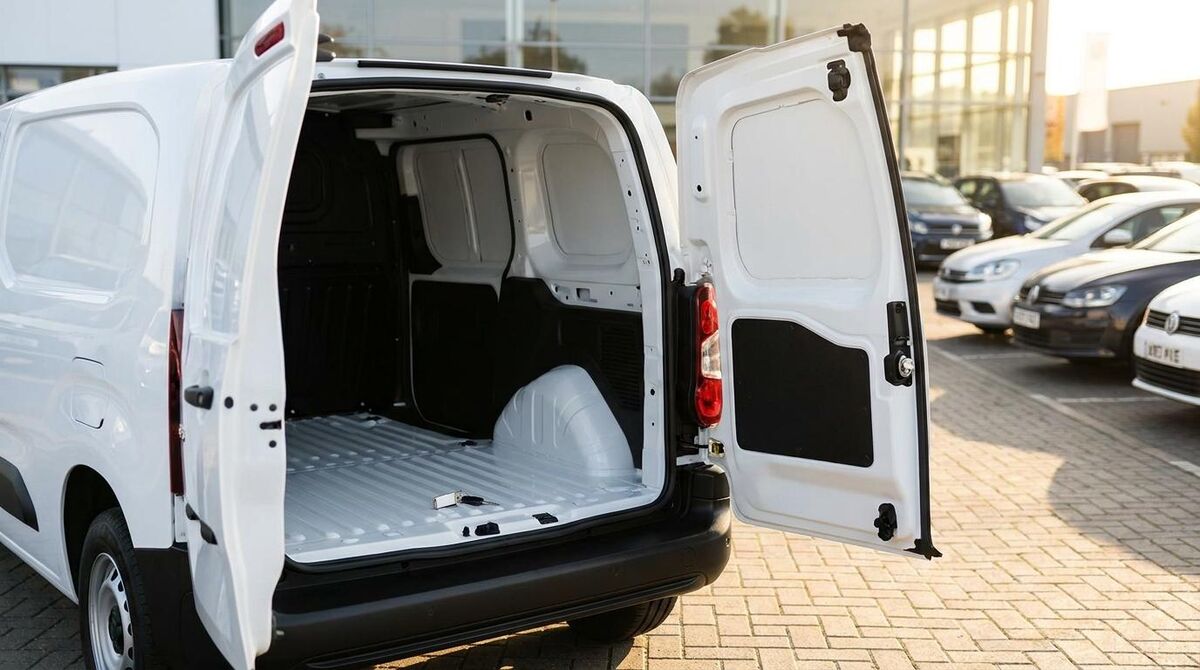
Here is the thing that trips people up. Full expensing and the AIA are not two names for the same relief. Which one you use depends on how your business is structured, and that changes the sums.
If you trade through a limited company, you pay corporation tax on profits and you can use full expensing on a new van. If you are a sole trader or a partnership, you pay income tax and Class 4 National Insurance on profits, and full expensing is not open to you at all. You use the AIA.
That sounds like a disadvantage for sole traders, but in practice it rarely is. The AIA also gives you 100 percent, and unlike full expensing it works on a used van as well as a new one. For most P&H owners buying a single vehicle well under the million pound cap, the AIA does everything full expensing does and a bit more. The company owner's real edge only shows up on brand new kit and on very large spends.
The bigger point is that the way your business is set up drives your whole tax picture, not just the van. If you have never sat down and worked out whether you are in the right structure, that is a conversation worth having before you spend thirty grand on a vehicle. It ties straight into the nine drivers of profit in your business, and the van is only one of them.
| Feature | Full expensing | Annual Investment Allowance |
|---|---|---|
| Who can claim | Limited companies only | Any business: company, sole trader, partnership |
| Rate | 100% in year one | 100% in year one |
| Annual cap | No limit | £1,000,000 per accounting period |
| New van | Yes | Yes |
| Second-hand van | No | Yes |
| Cars | No | No |
| On sale | Immediate balancing charge on the full sale price | Proceeds come off your pool, usually a softer hit |
Full expensing: the company owner's 100 percent write-off
Full expensing is the shiny one, so let's put a real number on it. It only works for limited companies, and only on a van that is new and unused. Buy that van and you deduct the whole cost from your taxable profit in the year of purchase. Full expensing replaced the temporary super deduction, which ran from 2021 to 2023 and did much the same job at 130 percent for companies.
How much that saves depends on your profit level, because corporation tax is not a flat number any more. Profits up to fifty thousand pounds are taxed at 19 percent. Profits over two hundred and fifty thousand are taxed at 25 percent. The slice in between is caught by marginal relief, which produces an effective rate of 26.5 percent. That marginal band is where most growing P&H limited companies sit, and it is where a deduction is worth the most.
Notice what that does to your decision. If you were going to replace the van anyway, timing the purchase so it lands before your company year end pulls that £7,420 forward by a full twelve months. That is real cash flow, and cash flow is the thing that kills more trade businesses than any lack of work. It is the same discipline as getting your stage payments right: the tax is fixed, the timing is yours to control.
The Annual Investment Allowance: the one everyone can use
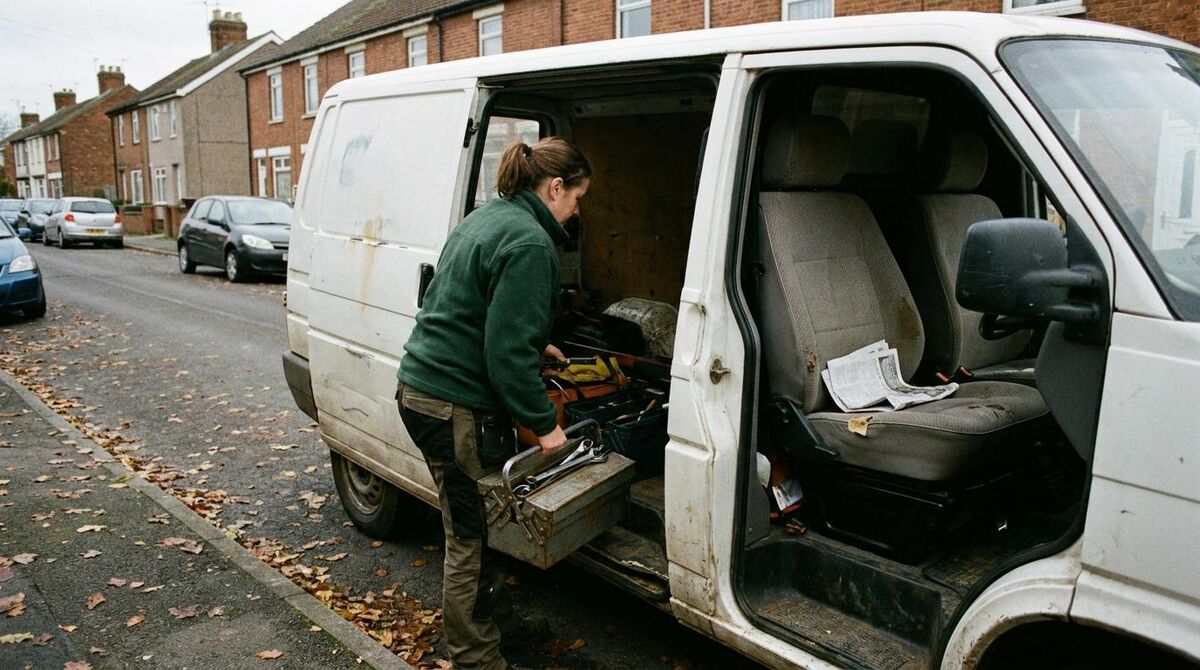
The AIA is the workhorse. Every business can use it, whether you are a limited company, a sole trader or a partnership. It gives you 100 percent relief on qualifying plant and machinery, up to one million pounds of spend per accounting period. For a P&H outfit buying one van and a few grand of tools, you will never get near that cap.
The big advantage over full expensing is that the AIA works on a used van. Most trade vans are bought second hand, so for the majority of sole traders this is the relief that actually applies. And because it is the same 100 percent, you are not missing out by being unincorporated.
The one million pound figure is a total cap across everything you buy in the year, not a limit per asset. So if you kit out a new apprentice with a used van and a full set of tools, and re-equip the workshop in the same year, it all counts towards the one number. For nearly every plumbing and heating business, that ceiling is academic. It only starts to matter if you are buying a fleet.
One quiet trap on the AIA, and it is the same one as on full expensing: private use. If you use the van at weekends for the tip run and the football, HMRC expects you to restrict the claim to the business proportion. A van that is 90 percent business and 10 percent personal gets 90 percent of the allowance. Be honest about it, because getting this wrong is exactly the kind of thing that turns a routine year into an HMRC headache you did not need.
Is it a van or a car? The trap that catches people
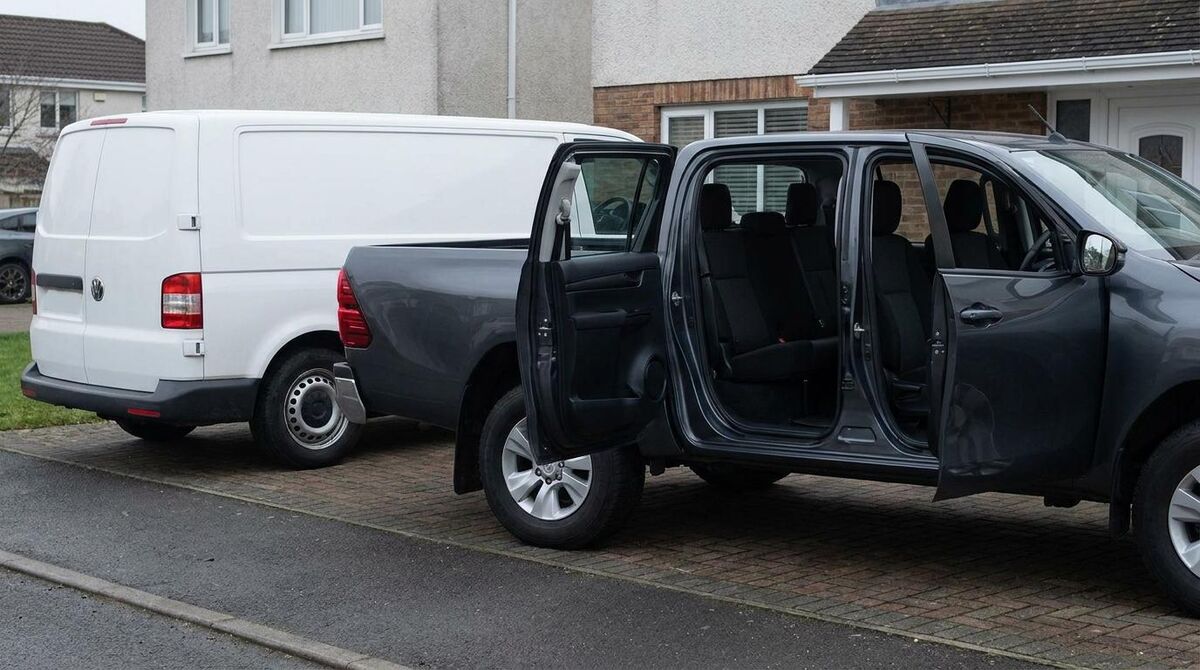
This is where I see the most expensive mistakes, so pay attention. Full expensing and the AIA both work on vans. Neither works on cars. And the line between the two is not where most people think it is.
A plain panel van is easy. It is a van, it carries goods, it qualifies. The problems start with the crossover vehicles: crew cabs, double cab pickups, and car-derived vans with a second row of seats. HMRC does not care what it says on the log book or how you use it. Since April 2025 the test is primary suitability. If the vehicle is equally suited to carrying people and carrying goods, it is treated as a car.
That change caught the double cab pickup market cold. Up to April 2025, a double cab with a payload of a tonne or more was treated as a van, so it qualified for the AIA and full 100 percent relief. From 1 April 2025 for companies and 6 April 2025 for income tax, HMRC reclassified most of them as cars. As a car, a high-emission double cab drops into the special rate pool and gets writing-down allowances of just 6 percent a year. There are transitional rules that let you keep the old treatment if you bought, leased or ordered before April 2025, running until the earlier of disposal, lease end or 5 April 2029.
This is not a new argument, either. Back in 2020 the Coca-Cola case went all the way to the Court of Appeal, where crew-cab Vivaros and VW Kombis were ruled to be cars, not vans, and the company was left with a seven-figure back-tax bill. The lesson has not changed in five years: if the vehicle has a row of seats behind the driver, check its tax status before you buy, not after.
Electric vans and the VAT angle
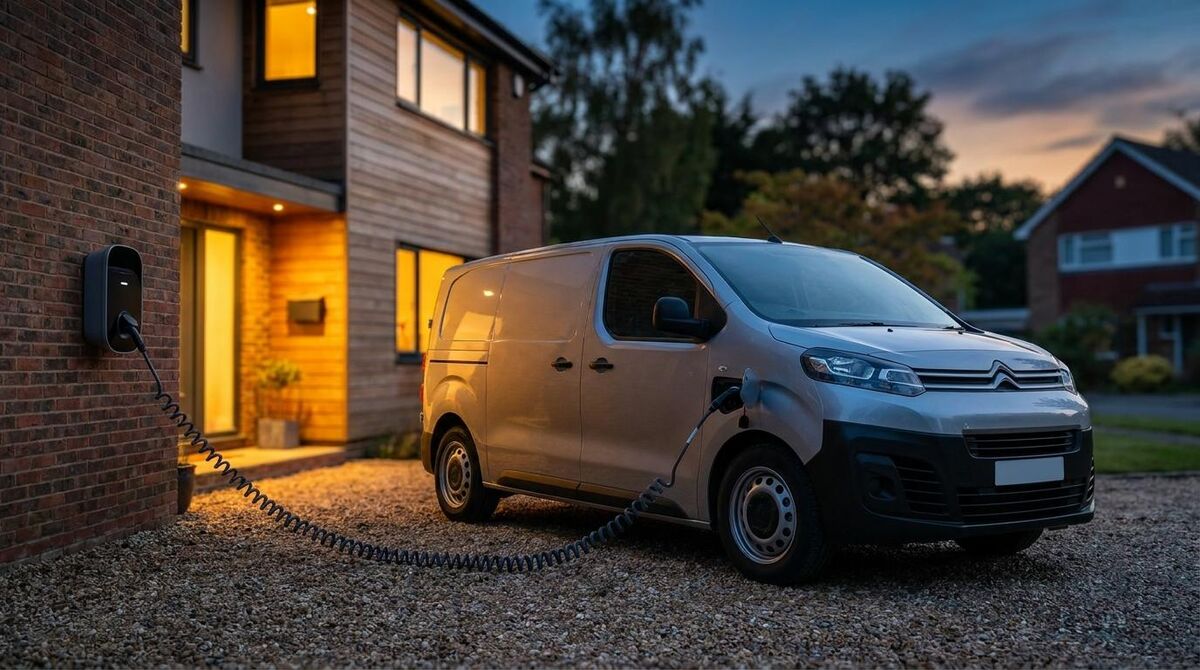
Plenty of P&H owners ask whether going electric changes the tax. On the capital allowances side, not really, and that is good news. A new electric van is still a van, so a company gets full expensing and anyone can use the AIA. You get your 100 percent either way. The electric bit does not unlock a bigger allowance than a diesel van already gets, because a van is already sitting at the top rate.
Where a van, electric or not, really beats a car is VAT. If you are VAT registered and you buy a genuine commercial van used for the business, you can usually reclaim the VAT on the purchase. On a car, that input VAT is almost always blocked. On a twenty-five grand van, reclaiming the VAT is a five grand swing in your favour, so it matters. The caveat is private use again: if there is meaningful private use, HMRC can restrict the reclaim, so keep it clean.
If VAT and Making Tax Digital are the parts of the year you dread, this is exactly the sort of thing that gets easier once your bookkeeping is set up properly. Sorting your accounting software for MTD means the van, the VAT and the capital allowance all land in the right place without you thinking about it.
What happens when you sell the van
This is the section nobody wants to hear, and the one that separates the owners who plan from the ones who get a nasty letter. The 100 percent relief is not a gift. It is a timing benefit. When you sell the van, the taxman comes back for his share.
With full expensing, the rule is blunt. When you sell a van you claimed full expensing on, 100 percent of the sale proceeds are added straight back onto your taxable profit as a balancing charge. Sell for eight grand, and eight grand goes back on the top of your profit, taxed at your corporation tax rate. There is no gentle write-down.
The AIA is a little softer. When you dispose of a van you claimed the AIA on, the proceeds normally come off your main pool rather than hitting you as an instant charge. If your pool has other assets in it, the sale just reduces future writing-down allowances instead of creating a tax bill on the spot. It only becomes a balancing charge if the pool would go negative.
The takeaway is simple. Do not treat the sale proceeds of a van as free money. Set aside the tax on them, exactly as you would on any other lump of income. The reliefs are still well worth having; you are getting the deduction years before you pay anything back, and in the meantime that money has been working in your business.
What has changed since April 2026
April 2026 brought two changes that are now in force, both making the 100% reliefs more valuable than before. First, the main rate writing-down allowance has dropped from 18% to 14% a year. If you end up writing an asset down slowly instead of claiming it in full, it now takes even longer to get your money back. That is why full expensing or the AIA on the van is usually the best move, rather than letting it trickle through the pool.
Second, there is now a 40% first-year allowance (introduced January 2026 for companies, April 2026 for income tax), aimed at main-rate plant that does not already qualify for full expensing or the AIA. It excludes cars and second-hand assets. For a standard van, this makes no practical difference because vans already qualify for 100%. This extra allowance really only comes into play if a very large business has gone over its million pound AIA cap. Worth knowing it is there, but for most van buyers, nothing has changed in practice.
Five mistakes that cost P&H owners money
I call a spade a spade, so here are the ones I see again and again. None of them are exotic. All of them are expensive.
One: buying a double cab pickup and assuming it is a van. Since April 2025 most of them are cars for tax. Check first. This is the single most costly slip on the list.
Two: forgetting the balancing charge on sale. Owners write off the van, sell it three years later, spend the proceeds, then get a tax bill they did not budget for. Set the tax aside.
Three: ignoring private use. If the van does the school run and the tip run at weekends, you cannot claim 100 percent business use with a straight face. Restrict the claim honestly.
Four: buying tin you do not need just to save tax. A deduction is only ever worth a fraction of the spend. Never spend a pound to save twenty-six pence unless you actually needed the van. The tax tail should not wag the business dog.
Five: not talking to your accountant before you buy. Every mistake above is a five minute phone call away from being avoided. This is what working ON your business rather than just IN it actually looks like: making the tax-smart decision before the money leaves the account, not after.
If your own numbers feel murky, the honest first step is knowing where your money already goes. That is a bookkeeping and margin question as much as a van question, and it is why I bang on about knowing your mark-up versus your margin before you make any big spend. My firm has a fuller breakdown of capital allowances for plumbers if you want to go deeper, and the official rules live on GOV.UK.
What tradespeople are saying
The forums are full of owners wrestling with exactly this. Here is a sample of the real conversations happening around van tax, straight from the threads.
Recommended videos
If you learn better by watching, these UK accountants cover capital allowances, vans and the car-versus-van question in plain English.

Company Vans - What are the tax implications?
Kimberley Shapcott Property Tax and Accountancy

UK Capital Allowances in 2026 Explained
Pro Tax Accountant

Capital Allowances (UK) In Plain English
MDH Chartered Certified Accountants

Introduction to capital allowances
RSM UK

Claiming capital allowances on cars
Ember

What are Capital Allowances? How do they work?
Kimberley Shapcott Property Tax and Accountancy
Frequently asked questions
No. Full expensing is new and unused only, and companies only. A used van does not qualify. The good news is you fall back to the Annual Investment Allowance instead, which gives you the same 100 percent and does cover second-hand vehicles. So you are not losing the relief, just claiming it under a different name.
No, full expensing is for limited companies only. But do not feel hard done by. The AIA gives you the same 100 percent write-off on a van, new or used, up to a million pounds a year. For a single van you are getting exactly the same result a company would.
Mostly not, not since April 2025. HMRC now treats most double cab pickups as cars using a primary suitability test, which knocks them out of full expensing and the AIA and down to 6 percent a year. Check the tax status of any crew cab or double cab in writing before you buy. Assume it is a car until an accountant confirms otherwise.
Usually yes. If you claimed full expensing, the whole sale price is added back to your profit as a balancing charge in the year you sell. The AIA is a bit gentler, with the proceeds normally coming off your pool. Either way, treat the sale money as taxable and set some aside. It is not free money.
On a genuine commercial van, usually yes, provided you are VAT registered and the van is for business. That is a big advantage over a car, where the VAT is almost always blocked. Watch the private use point, because meaningful personal use can restrict how much you can reclaim.
If you were going to buy it anyway and the cash is there, yes. Buying before your year end pulls the relief forward by a full twelve months, which helps cash flow. But never buy a van you do not need just to save tax. The saving is only ever a fraction of the cost.
My verdict
In my eyes the van is one of the cleanest, biggest deductions a P&H business ever gets, and it is a shame how many owners fumble it. Know whether you are a company, so you use full expensing, or a sole trader, so you use the AIA. Make sure the thing you are buying is actually a van and not a car in disguise. And remember the tax comes back when you sell, so budget for it. Do that and a new van can wipe five figures off your tax bill in a single year. Get it wrong and you claim next to nothing on a forty grand mistake. This is exactly the kind of decision that pays you for working ON your business, not just in it. Make the call to your accountant before the money leaves the account, not after.