
Quick Answer
For most UK retrofits, air source wins. Capital cost sits around £8,000 to £14,000 before grants, the £7,500 BUS knocks that to £500 to £6,500, and a properly designed system runs at SCOP 3.5 to 4.0. Ground source is more efficient (SCOP 4.0 to 4.6) and lasts longer underground, but £18,000 to £45,000 of groundwork rules it out for most semis. Hybrids are a tactical fit for awkward, poorly insulated period homes where a pump alone cannot keep up at minus five. Pick the design, not the brand. A badly installed Vaillant performs worse than a well installed Midea.
Table of Contents
The 2026 UK heat pump market
Heat pumps were a niche product in 2020. They are not now. The Boiler Upgrade Scheme was overhauled on 28 April 2026 and the path from quote to install is shorter, with grant deducted upfront, no EPC requirement and a clearer definition of who counts as an MCS-certified installer. Government has extended the scheme to 2030 and is pushing for 600,000 installations a year by 2028.
Current install rates run closer to 60,000 a year, so the gap is wide. That gap is opportunity for any heating engineer willing to retrain. The Heat Training Grant of £500 covers most of a foundation course, and there are properties on every street that will need either a heat pump or a hybrid before the Future Homes Standard fully bites.
What has not changed is the design quality problem. Energy Saving Trust trials of more than 5,000 systems found only 13% reached a level the trust called well-performing. The kit on the wall matters less than the kit in your head. Heat loss calculations, low flow temperatures, weather compensation and proper hydraulic separation are what move a real-world SCOP from 2.7 to 3.8.
Air source heat pumps
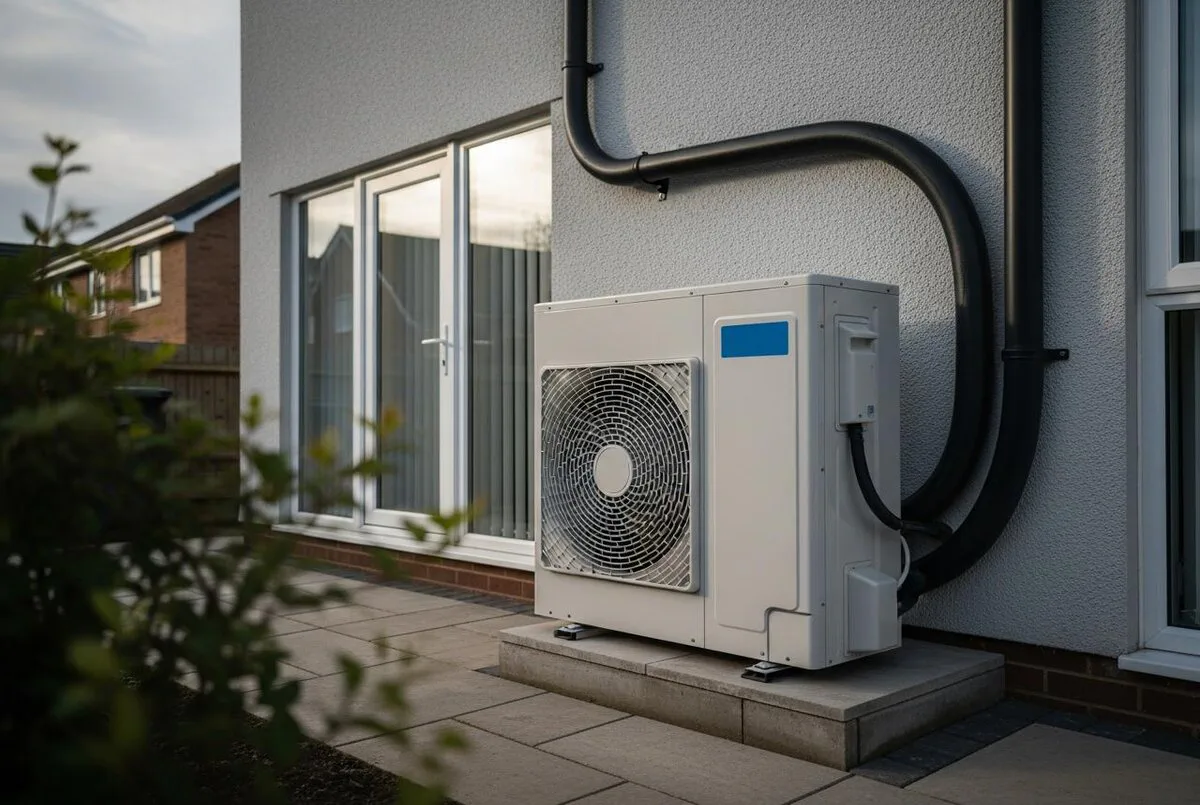
Air source is the default for almost every UK retrofit. A monobloc unit sits outside, draws warmth from ambient air using a refrigerant cycle, and delivers heat to wet radiators or underfloor at 35 to 55°C. There is no buried loop, no borehole, no garden destruction. For most semis and terraces this is the right answer.
Typical 2026 supply and install for a 3 to 4 bed home runs £8,000 to £14,000 before grants. The Ofgem BUS data puts the average install across actual claims at around £12,500 for an 8 kW unit. Subtract £7,500 and the homeowner pays £500 to £6,500. Zero percent VAT is locked in until at least March 2027 under the Energy Saving Materials relief, saving another £1,600 to £2,800 versus the standard rate.
 Daikin
 Vaillant
 Mitsubishi Electric
 Worcester Bosch
 Octopus Energy
Performance and SCOP
SCOP is the seasonal coefficient of performance. It tells you how many units of heat the pump produces for each unit of electricity it draws, averaged across a UK heating season. The MCS Register shows a typical air source SCOP of 3.0 to 4.0 in real installs. Manufacturer datasheets are higher. The Daikin Altherma 3 hits 4.6 to 4.7 at A7/W35. Vaillant arotherm+ reaches up to 5.2 at low flow. Mitsubishi Ecodan R32 sits at SCOP 4.49 at A7/W35, marginally ahead in colder ambient conditions.
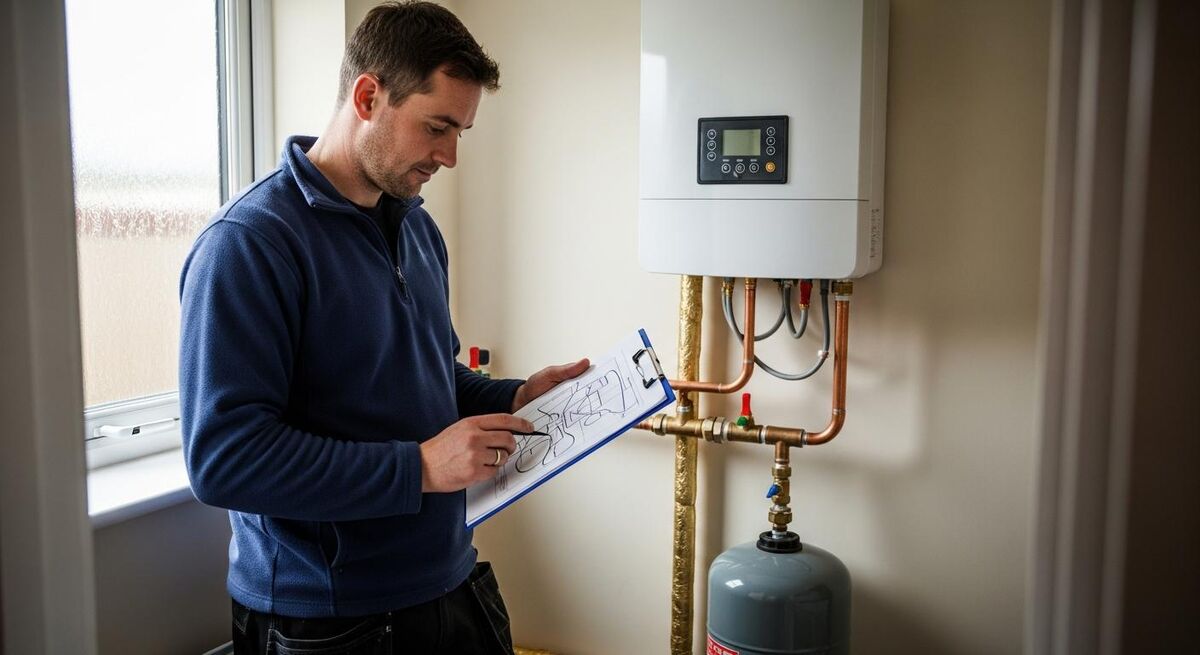
These numbers all rely on a flow temperature of 35°C. Push that to 55°C for a high-temperature retrofit on old radiators and your SCOP drops by roughly 25%. That is the design lever. Weather compensation, an actual heat loss room by room, and either bigger emitters or lower flow are the difference between SCOP 2.7 and SCOP 3.8.
Where air source wins
Small to medium properties with a reasonable thermal envelope. Terraces, semis, modern detacheds with cavity wall and loft insulation. Anywhere garden space is tight or the soil makes ground loops impractical. Properties switching from gas where the homeowner is open to lower flow temperatures and accepts that radiators may need uprating in one or two cold rooms.
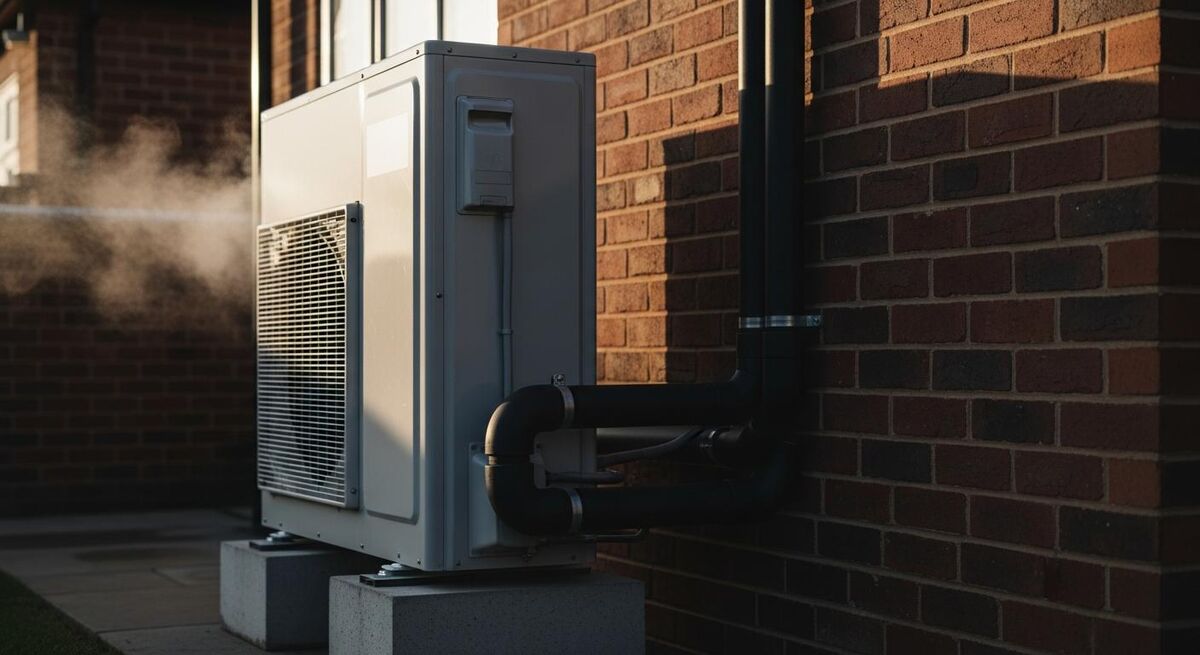
Cold weather performance has been the loudest objection for years. The truth is that modern monoblocs work at minus 20°C, just less efficiently. Defrost cycles last three to five minutes. The Cosy 6 from Octopus has a guaranteed SCOP of 2.8 in worst-case winter and 3.4 across the year. For most of the UK that is enough.
Where air source struggles
Solid-wall Victorian terraces with no insulation. Anything that needs 70 to 80°C flow to feel warm. Properties where the outdoor unit cannot be sited within 1 metre of a boundary without planning permission. Rural off-gas oil homes that are also draughty, although the new £9,000 BUS uplift narrows the gap.
Ground source heat pumps
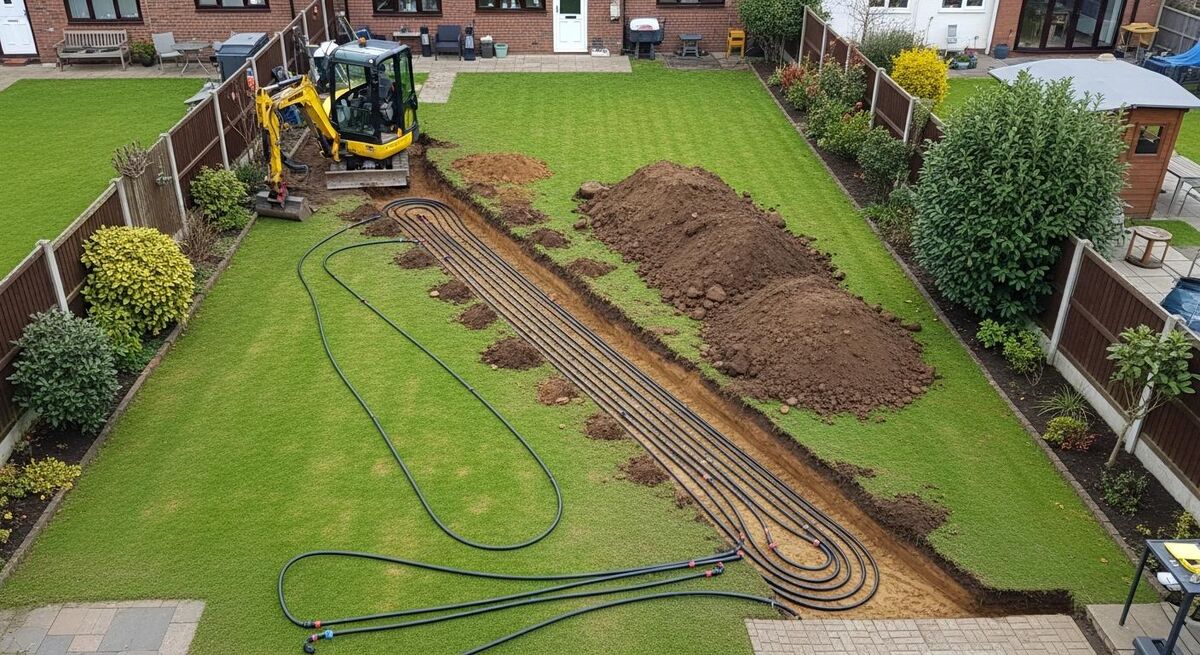
Ground source pulls heat from the soil at a stable 8 to 12°C year-round, so the COP holds steady regardless of the air temperature outside. The compressor sits indoors in a utility cupboard. There is no outdoor unit, no fan noise, nothing visible from the street. The ground loop array is buried and lasts 50 to 100 years.
You pay for that performance up front. A horizontal array needs 700 m² of garden minimum and trenches at 1.2 metres deep, dug with a small excavator. Vertical boreholes need 100 to 150 metres of drilling per borehole at £25 to £40 per metre. Total installed cost for a 12 kW domestic system runs £18,000 to £45,000. The £7,500 BUS grant brings that down, but the net cost is still two to four times an air source.
Performance numbers
Real-world SCOP sits at 4.0 to 4.6. The Kensa Evo, the largest UK-manufactured ground source range, regularly delivers SCOP 4.5 in monitored homes. Running costs are roughly 30% lower than air source over a year because the ground loop never has to defrost itself. The compressor lives in a cupboard, so noise is non-existent.
The other underappreciated benefit is system life. Air source outdoor units take a beating from weather and typically last 12 to 15 years before refrigerant losses kill efficiency. A ground source compressor unit is indoors and runs at much lower duty, so 20 to 25 years is realistic. The buried array outlasts the rest of the house.
Where ground source wins
Larger detached properties, rural homes with land, and small developments where a shared ground loop array can be split across multiple homes. Kensa have been doing this in social housing for years and the per-home cost drops sharply when six or more homes share the array. Listed buildings where an outdoor unit cannot be sited. Anywhere noise is a hard constraint.
Self-builders and major renovations are the other obvious fit. If you are digging foundations and laying drainage, adding a slinky array in the same dig is incremental. Trying to retrofit a ground array into a finished suburban garden is where the £45,000 numbers start appearing.
Where ground source struggles
Small urban plots. Anything where the cost cannot be recovered over a 20-year ownership. Speculative buy-to-lets. Properties where the only feasible array is vertical boreholes and the local geology demands deeper drilling than expected.
Hybrid systems
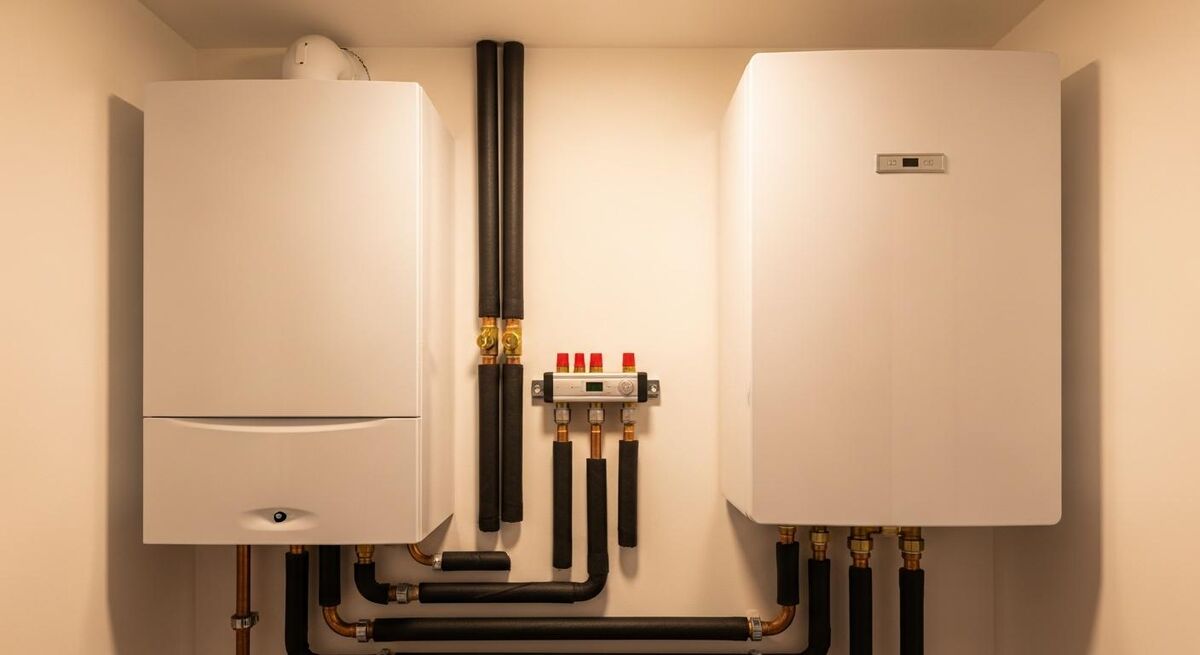
A hybrid pairs a small heat pump (typically 4 to 6 kW) with the existing gas or oil boiler. The pump runs whenever it is cheaper to run than the boiler, which on a modern smart control is around 80% of the heating hours. The boiler kicks in for the coldest weeks and for domestic hot water reheats.
Hybrids cost £8,000 to £12,000 installed if added to a usable existing boiler. The crucial detail: hybrids are not currently eligible for the BUS grant in most configurations. Worcester Bosch and others sell hybrid kits, but homeowners do not get the £7,500. That makes the maths different from a pure heat pump install.
Where hybrids genuinely fit
Three scenarios. First, period properties with solid walls where a full heat pump would need a fabric upgrade the owner cannot afford. The hybrid lets them decarbonise 70 to 80% of heating now and the boiler covers the rest. Second, large rural properties with high peak demand where a single heat pump would have to be oversized to handle minus five. Third, transitional installs for a homeowner who wants to test a heat pump on their property before committing to a full switch.
The honest case against hybrids is that they keep the gas connection alive. For homes that could otherwise go fully electric, a hybrid is a delaying tactic. For homes that genuinely cannot, it is the most pragmatic answer in 2026.
Side by side comparison
The headline numbers across all three technologies, sized for a typical 3 to 4 bed UK home. Treat ranges as ranges. A well insulated semi and a draughty solid-wall cottage will land at opposite ends of every column.
| Metric | Air source | Ground source | Hybrid |
|---|---|---|---|
| Capital cost (installed) | £8,000 to £14,000 | £18,000 to £45,000 | £8,000 to £12,000 |
| BUS grant | £7,500 | £7,500 | None (most configurations) |
| Net cost after grant | £500 to £6,500 | £10,500 to £37,500 | £8,000 to £12,000 |
| Real-world SCOP | 3.0 to 4.0 | 4.0 to 4.6 | 3.0 to 3.5 (pump only) |
| Install time | 2 to 4 days | 5 to 14 days (plus drilling) | 3 to 5 days |
| Outdoor unit | Yes | None | Yes |
| Garden footprint | 1 m² beside the house | 700 m² horizontal, or 2 boreholes | 1 m² beside the house |
| Compressor life | 12 to 15 years | 20 to 25 years | 12 to 15 years |
| Ground array life | N/A | 50 to 100 years | N/A |
| Best fit | Most retrofits | Large rural, shared loops | Period, solid-wall, off-gas |
The dominant pattern across MCS Register data is air source for almost every domestic install, ground source for new builds and rural homes with land, and hybrids for the awkward middle ground where a full conversion is impractical right now.
Matching pump to property
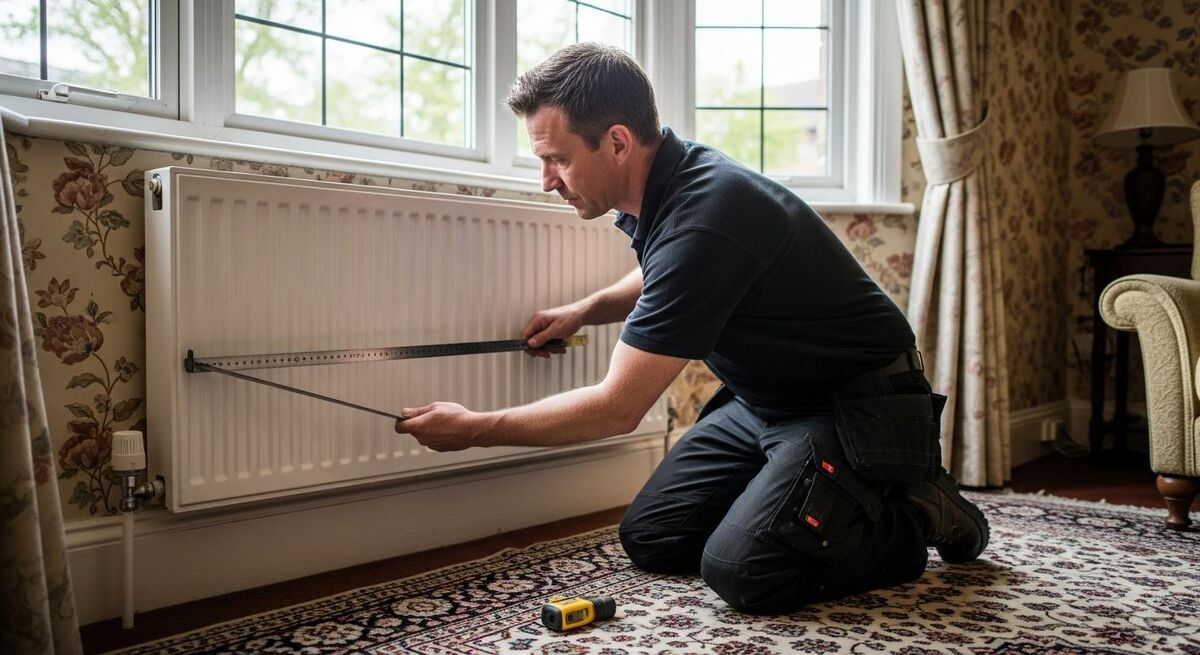
The most useful first question is not which brand. It is what flow temperature can this property accept. That single number drives everything else.
If the room-by-room heat loss can be met at 35 to 45°C flow on existing or modestly upgraded radiators, the property suits an air source. SCOP will be 3.5 to 4.0 with sensible design. If the same calculation demands 50 to 55°C and the homeowner accepts longer warm-up times in deep cold, an air source still works but the SCOP drops toward 3.0. Below SCOP 3.0 the running cost crosses over with gas. Above 3.5 it stays cheaper.
If the heat loss calculation only resolves at 60 to 70°C flow and the customer will not fund a fabric upgrade, you are in hybrid territory. The pump handles the gentle months, the boiler handles the bite. Tell the customer that honestly. A poorly fitting heat pump that has to run flat out on a -3°C morning is the loudest source of bad reviews in the industry.
For larger detached properties on big plots, especially rural ones, the ground source maths starts to look reasonable. A 15 to 25 kW ground source with a shared array can deliver SCOP 4.5 across the whole property and pays itself back inside 12 to 15 years on running cost savings versus oil or LPG.
Installation realities and the SCOP gap
The biggest issue in UK heat pumps is the gap between datasheet SCOP and real install SCOP. MCS-certified jobs routinely project SCOP 3.5 or higher in line with manufacturer data. Real monitored data on the same systems comes back closer to 2.7. Sometimes much lower.
Most of that gap is design. A few mistakes appear in almost every failed install. Oversized pump cycling too short. Buffer tanks plumbed in the wrong direction so the pump heats the buffer not the house. Flow temperatures set 10°C higher than they need to be. Smart thermostats fitted that take control away from the heat pump's own weather compensation. Pipework that is too small to carry the flow at low temperatures.
None of this is exotic. It is the basic stuff Heat Geek teaches and the kind of thing the MCS process should catch. It does not, consistently. So if you are a heating engineer looking at this market, the moat is design discipline rather than brand certification.
Electrical loading is the other one to plan for. Most UK homes sit on a 60 A or 80 A single-phase supply. A modern heat pump pulls 3 to 12 kW under load. Combined with EV charging and an induction hob, the existing supply often will not cope. Budget for a DNO supply upgrade conversation early in the quote, not a week before commissioning. Tying this into a wider home electrification plan, including battery storage and home energy systems, lets you size the upgrade once rather than three times.
Job management software earns its keep on heat pump retrofits because the timeline involves DNO applications, MCS compliance checks, BUS grant submission and a multi-day on-site sequence. Platforms like the ones we cover in the 2026 UK field service platform showdown handle the paperwork burden so you can focus on the design work. A few firms are also using 3D printing for replacement parts and custom fittings to bridge the gap when an obscure manifold bracket is two weeks out from the manufacturer.
What tradespeople are saying
Recommended videos

Ultimate Heat Pump Installation. Rip It Out & Start Again!
Skill Builder

Urban Plumber & Chief Heat Geek Put The World To Rights
Urban Plumbers

Heat Pump Installation Nightmare. Can It Be Saved?
Urban Plumbers

How British Gas, Octopus, EDF, Aira and Heat Geek Are Changing the Heat Pump Game
Renewable Heating Hub

Ground Source Heat Pump Bore Hole. Drilling for Free Heat
Skill Builder

Ground Source Heat Pump Borehole Installation
Worcester Bosch
Frequently asked questions
Yes. Modern monoblocs operate down to minus 20°C. The Cosy 6 has a guaranteed worst-case SCOP of 2.8 in proper cold and 3.4 across the season. Defrost cycles last 3 to 5 minutes. The objection is decades out of date.
Not in most configurations. The grant covers full air-to-water, ground source, and from April 2026 air-to-air at £2,500. Hybrid kits where the pump and boiler are commissioned to run alongside each other typically do not qualify. Check the latest Ofgem guidance before quoting.
Air source outdoor units last 12 to 15 years in practice. Ground source compressors live indoors and last 20 to 25 years. Ground loop arrays last 50 to 100 years. Compare that to a 12-year typical life on a modern combi.
3.0 to 4.0 in the MCS Register. Above 3.5 means the design is sound. Below 3.0 means the system is poorly configured or oversized. Anything advertised at SCOP 5 on a datasheet is at 35°C flow in lab conditions and not what you will measure on a real install.
Often, yes. A 3 to 12 kW heat pump combined with an EV charger and existing household load can exceed an 80 A supply. Talk to your DNO early. Most upgrades to 100 A are free for the homeowner if you submit the application properly; the cost lies in waiting time, not money.
Existing heating engineers need an MCS heat pump installer pathway, typically a two to five day course depending on prior qualifications. Refrigerant work needs F-Gas Category 1. The £500 Heat Training Grant covers most of the course fee until at least March 2026.
Legally no. F-Gas, electrical and gas safety regulations all apply. A DIY install also voids the BUS grant, the manufacturer warranty, and most home insurance policies covering the heating system. Self-install is not the route here.
My verdict
The market has matured. The grants are real. The kit works. The bottleneck is design discipline, not technology. If you are a heating engineer, this is the most valuable skill you can add in the next three years. Get a proper foundation course in, get MCS-certified, and learn heat loss properly. The work is there; the design quality is not.