
Quick Answer
Heat pumps are the future of UK heating, and gas engineers who retrain now will be first in line for a market heading toward 600,000 installations per year by 2028. Air source models suit most UK retrofit jobs. Ground source wins on efficiency but costs roughly double. The £7,500 BUS grant covers a decent chunk of the install cost. MCS certification is non-negotiable if you want your customers to claim it. R290 propane refrigerant is where the industry is heading, R410A is already banned in new single splits, and F-Gas qualifications are mandatory. Get trained, get certified, get busy.
Table of Contents
- The UK heat pump market in 2026
- Air source vs ground source vs hybrid
- Refrigerants and F-Gas regulations
- System sizing and heat loss calculations
- Key manufacturers and models
- Running costs: heat pump vs gas boiler
- MCS certification and training pathways
- Installation best practices
- Smart controls and IoT monitoring
- What installers are saying
- Recommended videos
- Frequently asked questions
- My verdict
 Mitsubishi
 Daikin
 Vaillant
 Grant UK
 Samsung
 NIBE
NIBEThe UK heat pump market in 2026
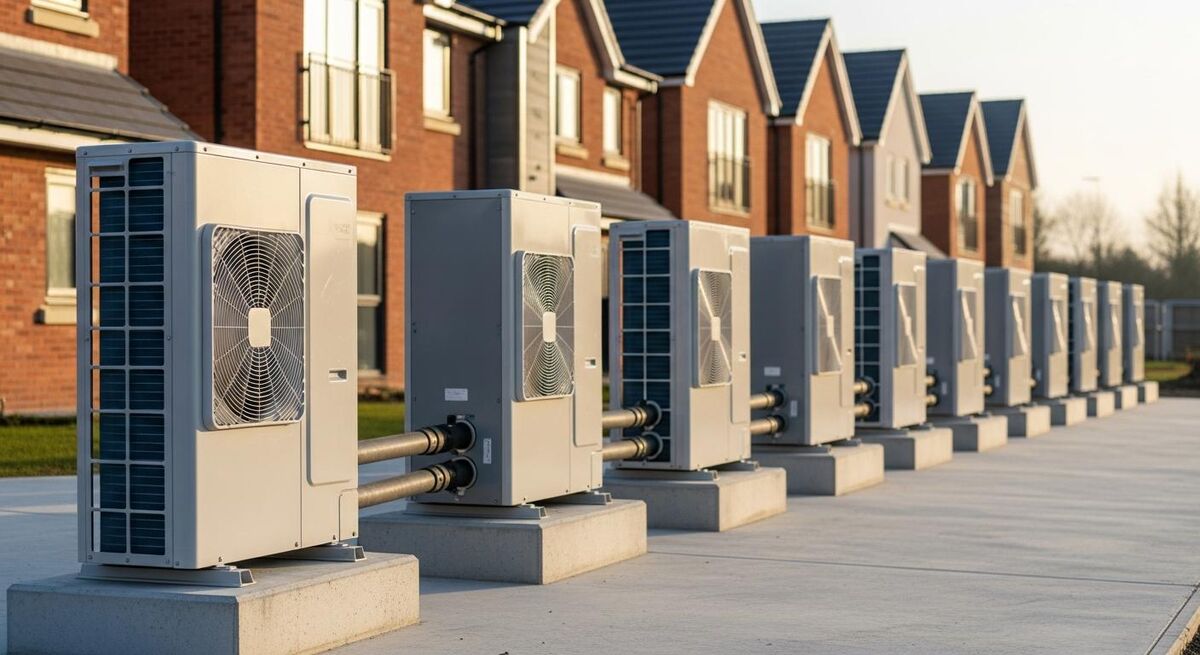
The numbers tell the story plainly. UK heat pump installations passed 250,000 cumulative units by August 2024, a 45% increase on the previous year. In the first three months of 2025, over 15,000 heat pumps went in. The government target is 600,000 per year by 2028. We are nowhere near that yet, but the trajectory is steep.
For gas engineers, this is the single biggest shift in domestic heating since the switch from town gas to natural gas in the 1960s and 70s. The Future Homes Standard, taking effect from March 2027, mandates low-carbon heating in all new-build homes. In practice, that means heat pumps. Permitted development rules were relaxed in May 2025, removing the one-metre boundary requirement and allowing up to two ASHPs on detached homes without planning permission.
The installer gap is real. Around 3,000 qualified heat pump installers operate in the UK right now. The industry needs tens of thousands more. Certified heat pump installers earn £7,000 to £10,000 more annually than gas engineers, with experienced self-employed installers reporting incomes up to £75,000. The work is there. The training takes two to four weeks for someone already qualified in wet heating systems.
Average heat pump installation jobs are worth around £10,000 each. With the BUS grant covering £7,500 of that for the customer, the financial barrier for homeowners is lower than ever. An installer doing three jobs a month is turning over £360,000 a year. The margins are better than boiler swaps because the technical knowledge barrier keeps competition lower.
Air source vs ground source vs hybrid
Three main types of heat pump are installed in UK homes. Each has a clear use case, and knowing which to recommend is where you earn your money as an installer.
Air source heat pumps (ASHPs)
ASHPs account for the vast majority of UK installations. They extract heat from outdoor air and transfer it into the wet heating system. Typical COP ranges from 2.5 to 3.5, meaning for every 1 kWh of electricity used, you get 2.5 to 3.5 kWh of heat output. Seasonal COP (SCOP) across a full UK winter typically sits around 2.8 to 3.2 for a well-designed system.
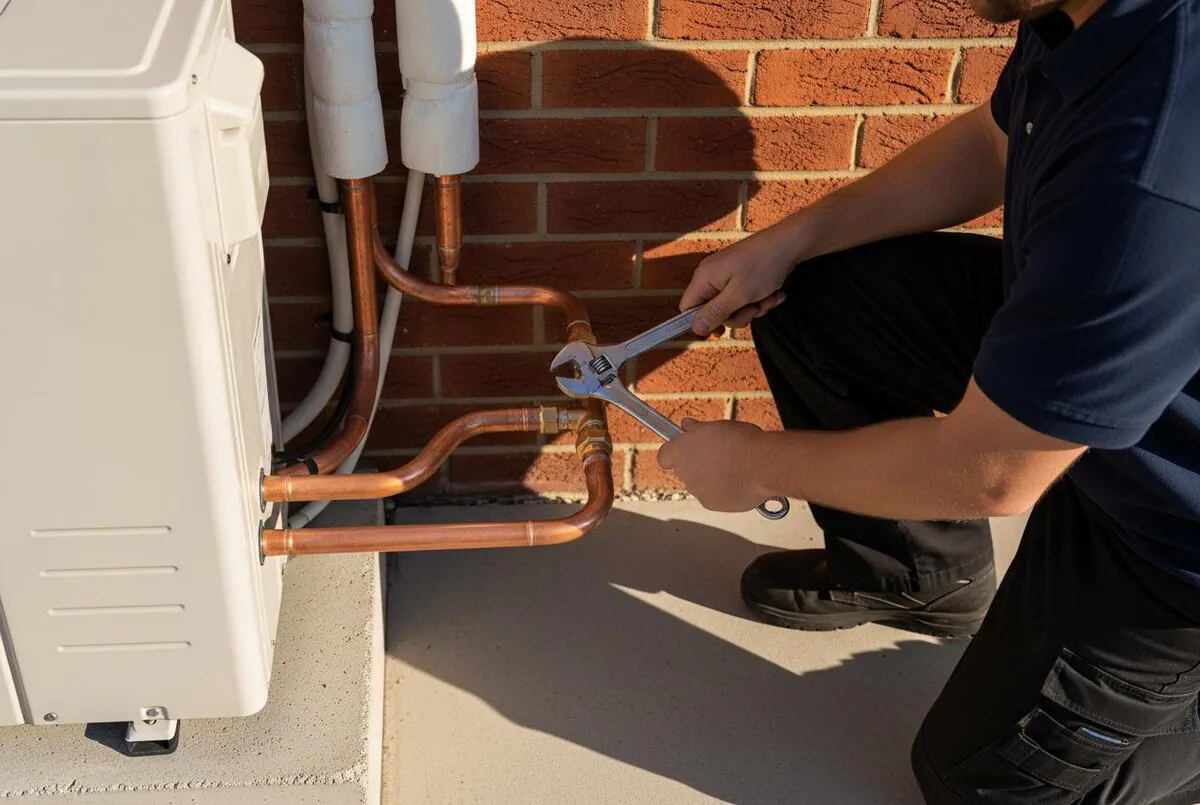
Installation is relatively straightforward for anyone comfortable with wet heating systems. The outdoor unit sits on a concrete plinth or anti-vibration mounts, connects via refrigerant pipework to an indoor unit or cylinder, and interfaces with the existing heating circuit. Most retrofit jobs take two to three days.
The main limitation is cold weather performance. When air temperatures drop below -5C, ASHPs work harder and COP drops. Modern units from Mitsubishi, Daikin and Vaillant are rated to operate down to -25C, but real-world efficiency at those extremes drops off. In practice, even during the cold snaps of late 2024 and early 2025, most properly sized UK systems continued performing reliably.
Ground source heat pumps (GSHPs)
GSHPs extract heat from the ground via buried pipe loops or boreholes. Ground temperature in the UK stays between 10C and 13C year-round, which means consistent efficiency regardless of weather. COP ranges from 3.0 to 5.0, with top-end systems like NIBE and Kensa achieving SCOP values above 4.0.
The catch is cost. Total installed price for a GSHP typically runs £20,000 to £30,000 after the £7,500 BUS grant, compared to £7,000 to £15,000 for an ASHP. The ground array itself, whether horizontal trenches or vertical boreholes, adds significant expense and requires space. A horizontal loop needs roughly 600 to 1,200 square metres of garden. Boreholes need less surface area but drilling costs are high.
Lifespan is the major advantage. The heat pump unit lasts around 20 years, but the ground array can last over 100 years. On a whole-life cost basis, GSHPs often win, especially for larger properties with the land to accommodate them.
Hybrid systems
Hybrid systems pair a heat pump with a gas or oil boiler. The heat pump handles the base heating load and the boiler kicks in during peak demand or extremely cold spells. Grant UK and Daikin both offer integrated hybrid packages.
For retrofit properties with undersized radiators or poor insulation, hybrids can be a sensible stepping stone. The heat pump does the majority of the work at lower flow temperatures, keeping efficiency high, while the boiler provides top-up heat when needed. As the property is gradually upgraded with better insulation and larger emitters, the boiler contribution decreases.
| Feature | Air source (ASHP) | Ground source (GSHP) | Hybrid |
|---|---|---|---|
| Typical COP | 2.5 to 3.5 | 3.0 to 5.0 | 2.5 to 3.5 (HP element) |
| Installed cost (after BUS) | £7,000 to £15,000 | £20,000 to £30,000 | £8,000 to £14,000 |
| Install time | 2 to 3 days | 1 to 2 weeks | 2 to 3 days |
| Garden/space needed | Minimal | Significant | Minimal |
| Cold weather performance | Drops below -5C | Consistent year-round | Boiler covers cold spells |
| Lifespan | 10 to 15 years | 20+ years (array 100+) | 10 to 15 years (HP unit) |
| Best for | Most UK retrofits | Large properties with land | Poorly insulated retrofits |
Refrigerants and F-Gas regulations
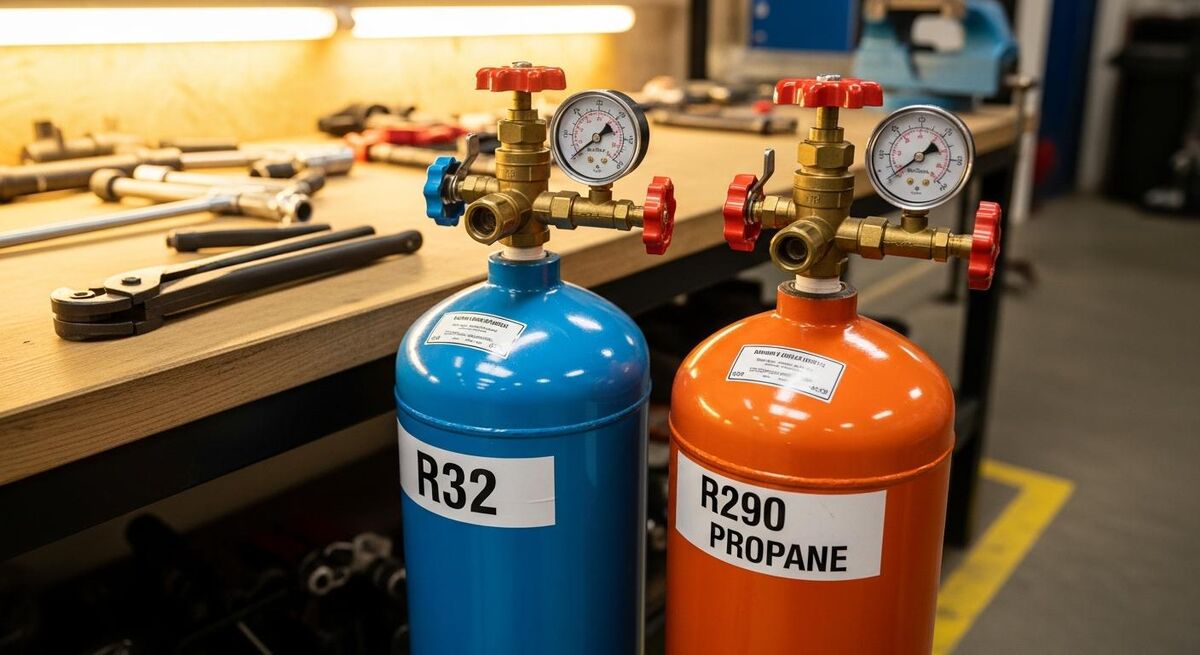
This is the bit that catches out installers who have not kept up. Since 1 January 2025, it has been illegal to sell new single-split air conditioning or heat pump systems containing refrigerant with a GWP above 750 where the charge is under 3 kg. R410A has a GWP of 2,088, so it falls squarely within that ban.
In plain terms: you cannot buy a new residential single-split R410A unit in Britain any more. Existing systems can still be serviced with virgin R410A because its GWP sits below the 2,500 threshold for the servicing ban, but for how long is uncertain. DEFRA has not yet confirmed whether the UK will adopt the EU's stricter 2027 equipment bans, though alignment is expected. Northern Ireland already follows EU regulation under the Windsor Framework.
The three refrigerants you need to know
R32 (GWP 675). The current mainstream replacement for R410A. Most new ASHPs from Daikin, Grant, and Samsung use R32. It is mildly flammable (A2L classification), requires F-Gas certification to handle, and is still subject to future phase-down pressure due to its GWP being above the long-term targets.
R290 propane (GWP 3). This is where the industry is heading. Mitsubishi's Ecodan R290, manufactured at their Livingston, Scotland factory, is the flagship UK product. R290 is a natural refrigerant with near-zero global warming potential. It is highly flammable (A3 classification), which means stricter installation requirements: minimum clearance distances, no installation in basements, and only trained professionals can handle it.
R454B (GWP 466). A lower-GWP alternative to R410A that some manufacturers are adopting as a transitional refrigerant. Similar operating characteristics to R410A, making it an easier swap for manufacturers, but still an HFC blend subject to long-term phase-down.
Any work involving refrigerant handling, whether charging, recovery, or leak checking, requires a valid F-Gas certificate. This is not optional. The penalties for non-compliance are serious, and manufacturers will not warranty systems installed by uncertified engineers. If you do not already hold your F-Gas qualification, this is the first thing to sort out before touching heat pump refrigerant circuits.
System sizing and heat loss calculations
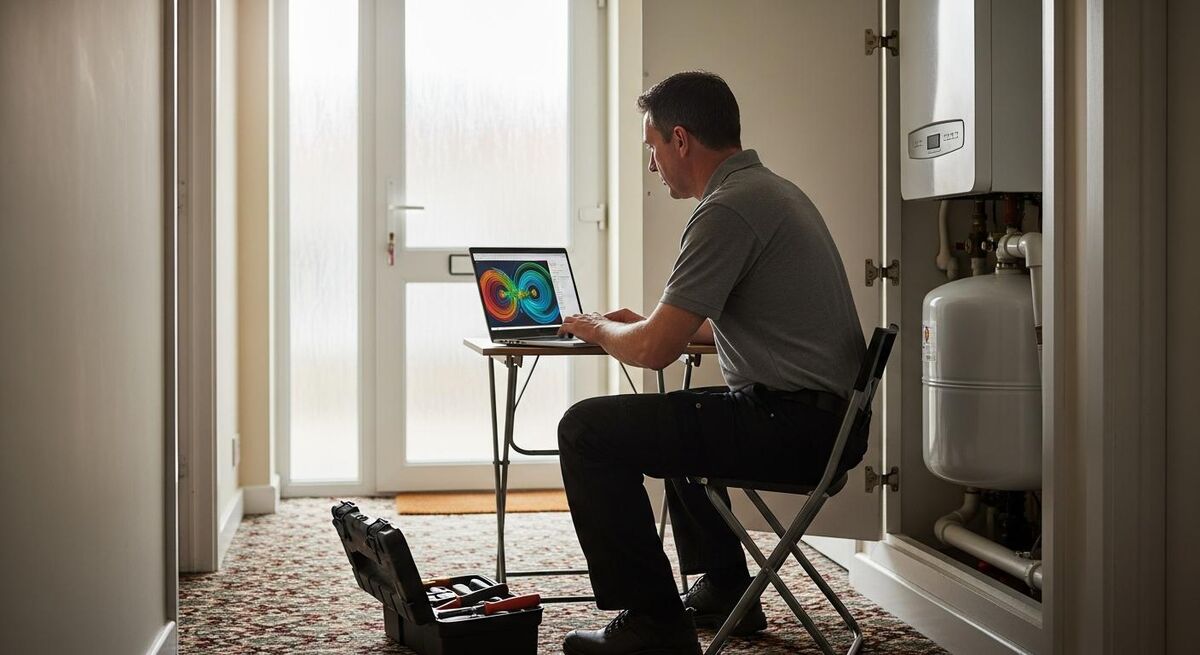
This is where good installers separate themselves from bad ones. A gas boiler is forgiving of oversizing. A heat pump is not. Fit a 12 kW unit on a property that needs 6 kW and it will short-cycle, run inefficiently, and the customer will wonder why their bills are higher than expected.
MCS requires a room-by-room heat loss calculation for every installation. The standard tool is MCS Heat Pump System Design (MIS 3005), which mandates calculations based on the external design temperature for the property's location, typically -3C to -4C for most of England, colder for Scotland and exposed sites.
The heat loss calculation process
You need to assess every room individually. Wall construction, insulation thickness, window type, floor type, ceiling height, ventilation rate. Software tools like HeatPunk, MCS Design Wizard, or Mitsubishi's MELcloud design tool make this manageable, but you need accurate property data to feed into them.
Common mistakes include relying on the EPC heat demand figure (often wildly inaccurate), assuming standard U-values without checking actual construction, and ignoring thermal bridging at junctions and around windows. One installer's blog documented getting a whole-house heat loss figure of 8.2 kW from HeatPunk versus 6.2 kW when adjusting air change rates. That difference could mean a completely different unit size recommendation.
Flow temperatures and emitter sizing
Heat pumps work most efficiently at low flow temperatures. At 35C flow, you are in the sweet spot for efficiency. Every degree above that costs roughly 2 to 2.5% more in electricity consumption. A jump from 35C to 45C can mean 12% higher running costs.
The practical implication: radiators need to be bigger. At a 45C flow temperature, a standard radiator outputs roughly 42% of its rated capacity compared to the 75/65C rating printed on the data sheet. A radiator rated at 1,500 W at standard conditions only delivers about 630 W at 45C. You either need to upsize radiators, add underfloor heating (which runs at 30 to 40C and pairs perfectly with heat pumps), or accept running at 55C with reduced efficiency.
Some experienced installers design for 55C flow initially to avoid replacing every radiator in the house, accepting the lower COP. As rooms are gradually upgraded with larger emitters or underfloor heating, the flow temperature can be reduced over time. This staged approach can make the project more financially palatable for the homeowner while still delivering meaningful carbon and cost savings from day one.
Key manufacturers and models
Six brands dominate the UK residential heat pump market. Each has strengths and trade-offs that matter when you are specifying a system for a customer.
Mitsubishi Electric Ecodan
The market leader in the UK, and for good reason. The Ecodan R290 range is manufactured in Livingston, Scotland, built to British standards for British homes. Available in sizes from 4 kW to 14 kW, with pre-plumbed cylinder packages that simplify installation. SCOP values up to 5.0 at 35C flow. The MELcloud app provides remote monitoring and control. Mitsubishi's installer support and training infrastructure is the best in the UK market. Price range: £4,000 to £7,000 for the outdoor unit before installation.
Daikin Altherma
Strong R32 range with the Altherma 3 series. Available from 4 kW to 16 kW. Known for quiet operation, with some models achieving 37 dB at 1 metre. Daikin's Installer Network provides leads and marketing support. The Madoka smart thermostat is well-regarded. Price range: £3,500 to £6,500 for the unit.
Vaillant aroTHERM plus
R290 natural refrigerant model. Available from 3 kW to 15 kW. Integrates neatly with Vaillant's existing boiler and cylinder range, which makes it a natural choice for Vaillant-loyal installers. The sensoAPP provides remote control. Customer satisfaction on Trustpilot is strong, with one user noting "overnight costs reduced by two-thirds." Price range: £4,000 to £7,500 for the unit.
Grant Aerona3
Popular with installers in rural areas and oil-to-heat-pump conversions. Available in R32 versions from 6 kW to 17 kW. The 13 kW model achieves an SCOP of 5.41 at 35C flow, one of the highest in the market. Grant also offers integrated hybrid systems pairing the Aerona with a Grant boiler. Price range: £3,500 to £5,500.
Samsung EHS
Competitive on price and well-suited to new builds. Monobloc design simplifies installation by eliminating refrigerant pipework between indoor and outdoor units. Available in sizes from 5 kW to 16 kW with R32 refrigerant. Samsung's smart app provides Wi-Fi control. Price range: £3,000 to £5,500.
NIBE
Swedish manufacturer with a strong reputation for ground source systems. The NIBE F-series GSHPs are highly efficient with SCOP values above 4.0. Their air source range (S-series) is growing in the UK market. NIBE's myUplink smart platform provides detailed performance monitoring. Price range: £4,500 to £8,000 for air source, £8,000 to £14,000 for ground source units.
Running costs: heat pump vs gas boiler
This is the question every homeowner asks, and the answer depends on efficiency and tariff. Ofgem's price cap sets gas at 6.5p per kWh and electricity at 24.5p per kWh. Gas is roughly 3.8 times cheaper per unit of energy.
But heat pumps multiply their input. A heat pump with a COP of 2.9 turns 1 kWh of electricity into 2.9 kWh of heat. That brings the effective cost of heat down to 8.4p per kWh. A gas boiler at 90% efficiency delivers heat at 7.2p per kWh. On a standard tariff, a heat pump costs around 12% more to run than gas.
The picture changes on a heat pump electricity tariff. Octopus Energy's Cosy Octopus and similar tariffs offer reduced rates for heat pump owners, typically 15 to 17p per kWh. At 15p per kWh with a COP of 3.0, the effective heat cost drops to 5p per kWh, which is 30% cheaper than gas.
| Scenario | Cost per kWh of heat | Annual cost (12,000 kWh demand) |
|---|---|---|
| Gas boiler (90% efficiency) | 7.2p | £864 |
| ASHP standard tariff (COP 2.9) | 8.4p | £1,014 |
| ASHP heat pump tariff (COP 3.0) | 5.0p | £600 |
| GSHP standard tariff (COP 4.0) | 6.1p | £735 |
The break-even point for the upfront investment, after the BUS grant, is typically 7 to 12 years depending on the tariff, system efficiency, and whether the existing boiler would have needed replacing anyway. For oil and LPG users, the economics are much better because fuel costs are higher.
MCS certification and training pathways
If you want your customers to access the £7,500 Boiler Upgrade Scheme grant, you need to be MCS certified. There is no shortcut. The grant requires the installation to be carried out by an MCS-certified installer using MCS-certified equipment.
What MCS certification involves
MCS (Microgeneration Certification Scheme) certification covers your business, not just you personally. You need to demonstrate competence in heat pump design, installation and commissioning. The process typically involves completing approved training, passing assessments, and having your business audited against MCS standards. Annual surveillance audits keep you compliant.
Costs vary but budget around £1,500 to £3,000 for initial certification including training, assessment fees, and the first year's membership. Annual renewal runs £500 to £1,000.
Training routes for gas engineers
If you already hold NVQ Level 2 or 3 in Plumbing, Heating and Ventilation plus Gas Safety certification, the transition is manageable. Most training providers offer heat pump conversion courses that run two to four weeks. Key providers include Logic4Training, the Renewables Centre, Baxi Training Academy, and manufacturer-specific courses from Mitsubishi, Daikin and Vaillant.
The training covers heat pump system design using MCS MIS 3005, refrigerant handling (if not already F-Gas certified), electrical connections, commissioning procedures, and ongoing maintenance. Some courses include direct support for the MCS application process.
HPIN operates as an MCS umbrella scheme, allowing installers to gain MCS accreditation through their membership rather than applying directly. This can simplify the process and reduce costs for smaller businesses getting started. It also provides ongoing compliance support and access to the BUS grant scheme for your customers.
Installation best practices
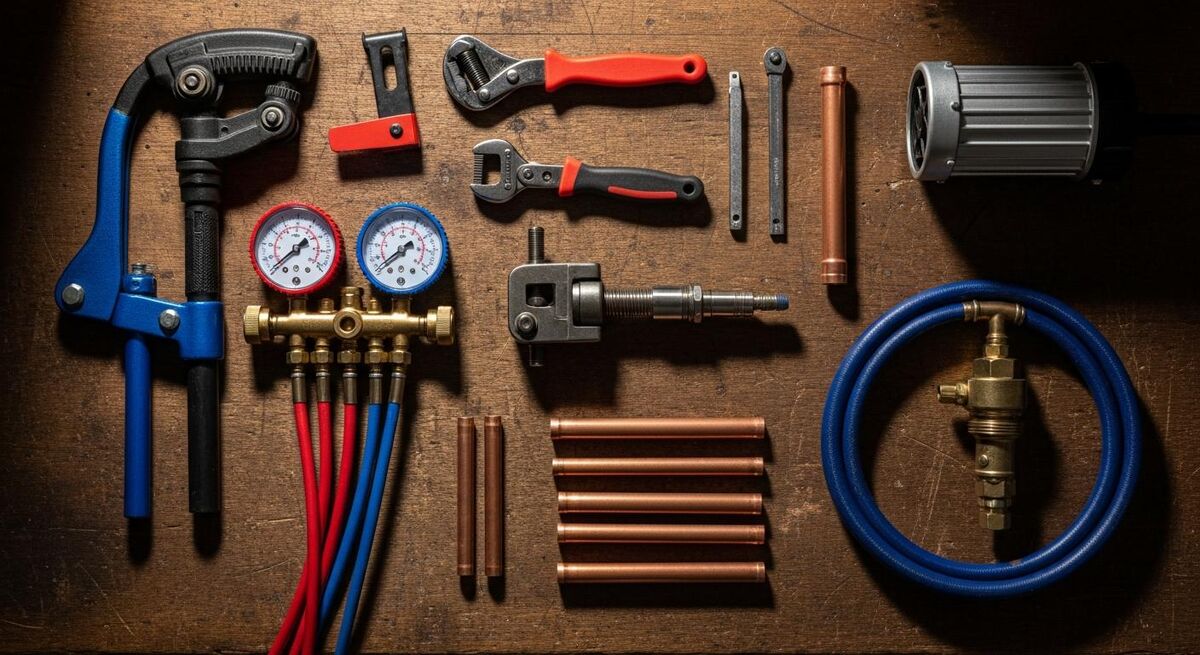
Getting the install right is everything. Heat pumps are less forgiving than boilers of poor system design, sloppy pipework, or inadequate commissioning. The reputation of the entire industry rests on every install working properly from day one.
Site assessment
Before you quote, check the electrical supply. Most ASHPs need a 32A supply on a dedicated circuit. Older properties may need a consumer unit upgrade or a DNO application for increased capacity. Check this early because a supply upgrade can add weeks and hundreds of pounds to the project timeline.
Noise is a real consideration. The outdoor unit generates 42 to 55 dB at one metre, depending on the model and operating conditions. Planning regulations require the unit to be at least one metre from a neighbouring bedroom window (though the boundary rule was removed in 2025). Position the unit thoughtfully; putting it outside the neighbour's living room window will cause problems even if it is technically compliant.
Pipework and system design
For retrofit jobs, assess the existing pipework carefully. Microbore pipe (8 mm or 10 mm) can be acceptable if the run lengths are short and the heat demand is low, but most systems benefit from 15 mm or 22 mm pipe to keep flow rates adequate at lower temperatures. Mitsubishi's Ecodan R290 has been specifically designed to work with microbore systems in UK homes, a genuine advantage for retrofit installations.
Flush the system thoroughly before commissioning. Old systems can have decades of sludge, flux residue, and corrosion products that will damage heat pump components. A power flush with inhibitor is standard practice.
Hot water strategy
Heat pumps produce hot water less quickly than gas boilers. A 200 to 300 litre cylinder is typical. For Legionella compliance, the cylinder needs to reach 60C at least once a week. Most systems use an immersion heater element for this pasteurisation cycle rather than running the heat pump at high flow temperatures, which would tank efficiency.
Every heat pump hot water system must include a weekly Legionella cycle to 60C minimum. This is a legal requirement under HSE guidance L8. Failing to set this up correctly puts the homeowner at risk and exposes you to liability. Most modern heat pump controllers have an automatic pasteurisation function; make sure it is enabled during commissioning.
Smart controls and IoT monitoring

Technology is changing how heat pumps are managed and optimised. Smart controls are no longer a nice-to-have; as of the May 2025 planning rule changes, all new heat pump installations must use "smart-ready" units capable of connecting with smart grids and time-of-use tariffs.
Weather compensation
Every modern heat pump controller includes weather compensation as standard. An outdoor temperature sensor adjusts the flow temperature automatically: colder outside means higher flow, milder days mean lower flow. This keeps efficiency optimal without the homeowner touching anything. It has been standard in Scandinavian systems for decades and is now required under MCS installation standards.
AI heat loss calculators and monitoring
Several platforms now use AI and machine learning to optimise heat pump performance. Mitsubishi's MELcloud, Daikin's Onecta, and third-party platforms like Heat Geek's monitoring tools can track COP in real time, identify system faults early, and recommend adjustments. Some energy suppliers like Octopus Energy are developing smart tariff integration that automatically shifts heat pump operation to low-cost electricity periods.
For installers, remote monitoring means you can check system performance without a site visit. If a customer calls about high bills, you can pull up their real-time COP data and diagnose whether it is a system issue or an expectation issue. That is a genuine service advantage over competitors who cannot offer it.
Smart tariff integration
Heat pump-specific electricity tariffs from Octopus Energy, OVO, and others offer reduced rates during off-peak hours. Smart systems can schedule heating to run primarily during cheap periods, pre-heating the property and storing energy in the thermal mass of the building. This can reduce running costs by 20 to 35% compared to standard tariffs.
What installers are saying
Recommended videos

Air Source Heat Pump Training at the Renewables Centre
Full training journey from 18 years in plumbing and gas

How Heating Engineers Can Train to Install Heat Pumps
Nesta

Mitsubishi's New R290 Ecodan and MELcloud App Overhaul
Mitsubishi Electric

The Ultimate Guide to MCS Certification
MCS explained for heat pump installers

Introduction to Baxi's ASHP Training Courses
Baxi
Ecodan R290 and Pre-Plumbed Cylinder Installation
Mitsubishi Electric Case Study

My Journey to Becoming a Heat Pump Engineer
Free training journey documented

George Clarke: Microbore Heat Pump Retrofit with Ecodan R290
Mitsubishi Electric x SNG
Frequently asked questions
Two to four weeks if you already hold NVQ Level 2 or 3 in Plumbing, Heating and Ventilation plus Gas Safety certification. The training covers system design, refrigerant handling, electrical connections, and commissioning. Budget £1,500 to £3,000 including MCS certification costs.
Technically yes, but your customers cannot claim the £7,500 BUS grant without it. That makes your quotes £7,500 more expensive than your MCS-certified competitors. For most installers, MCS certification pays for itself within the first two jobs.
On a standard electricity tariff, heat pumps cost roughly 12% more to run than gas. On a heat pump-specific tariff from Octopus or OVO, they can be 20 to 35% cheaper. The real savings come from combining a heat pump tariff with good insulation and proper system sizing.
Modern ASHPs from Mitsubishi, Daikin and Vaillant are rated to -25C. Efficiency drops as temperatures fall, especially below -5C, but they keep working. During the cold snaps of late 2024 and early 2025, properly sized UK systems continued performing reliably. Ground source systems are unaffected by air temperature.
If the system involves any refrigerant handling, yes. Monobloc units where the refrigerant circuit is factory-sealed (like Samsung's EHS range) do not require F-Gas certification for the plumbing connections, but any work on the refrigerant circuit does. Split systems always require it.
R290 propane is the long-term answer. Near-zero GWP, excellent efficiency, and future-proof against further F-Gas regulation. R32 is the current mainstream choice and perfectly acceptable for now. Avoid specifying any new R410A systems; they are banned in most residential applications.
My verdict
I spent years as a gas and heating engineer. The industry I trained in is shifting, and the installers who move early will build the strongest businesses. Heat pumps are not perfect. They need careful sizing, proper commissioning, and educated customers. But the direction of travel is clear. The Future Homes Standard arrives in 2027. The BUS grant is making installations affordable. The installer gap means demand outstrips supply by a factor of ten. Get your MCS certification, learn to design systems properly, and position yourself as the expert in your area. The work is there for those willing to do it right.
For more on the energy technology landscape, see our guides on battery storage and home energy systems, drone survey kit for roof inspections, and fixings and fasteners guide. If you are looking at building a complete tech stack for your business, our software stacks guide covers what you need at every stage of growth.