
Quick Answer
The Future Homes Standard comes into force on 24 March 2027 and applies to every new-build home in England. Gas and oil boilers are banned from new builds. Heat pumps, MVHR, solar PV, and fabric-first construction become the baseline. If you are a heating engineer, plumber, builder, or electrician working on new-build projects, your revenue mix is about to shift. The trades businesses that retrain now will pick up the work. The ones that wait will watch it go to someone else.
Table of Contents
- What the Future Homes Standard actually requires
- Key dates: the FHS timeline
- How your revenue mix will change
- Heat pumps: the new baseline for heating work
- MVHR and ventilation: a whole new revenue stream
- What this means for builders and general contractors
- The skills and training gap
- The cost question: who pays for the transition?
- What tradespeople are saying
- Recommended videos
- Frequently asked questions
- My verdict
What the Future Homes Standard actually requires
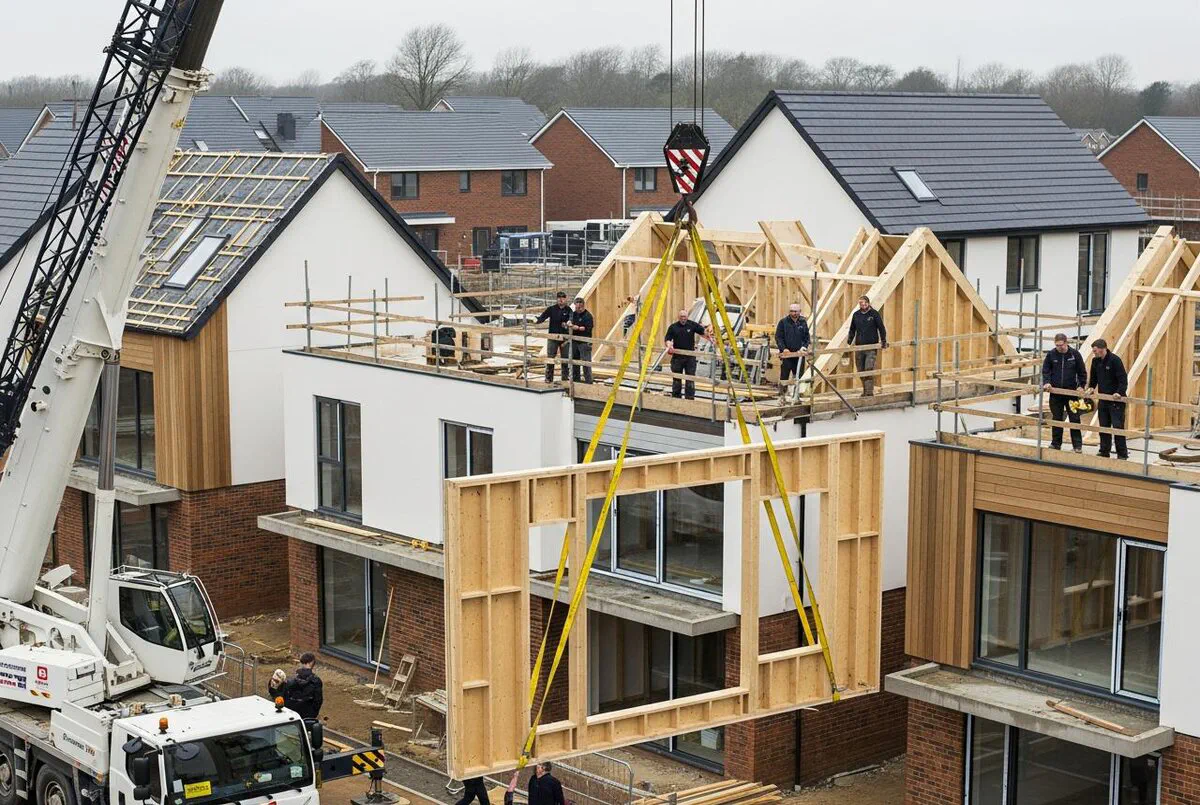
The Future Homes Standard (FHS) is the biggest change to Part L and Part F of the Building Regulations since they were introduced. The Approved Documents were published on 24 March 2026 and come into force exactly one year later. Every new-build home in England with a building control application submitted from 24 March 2027 must comply.
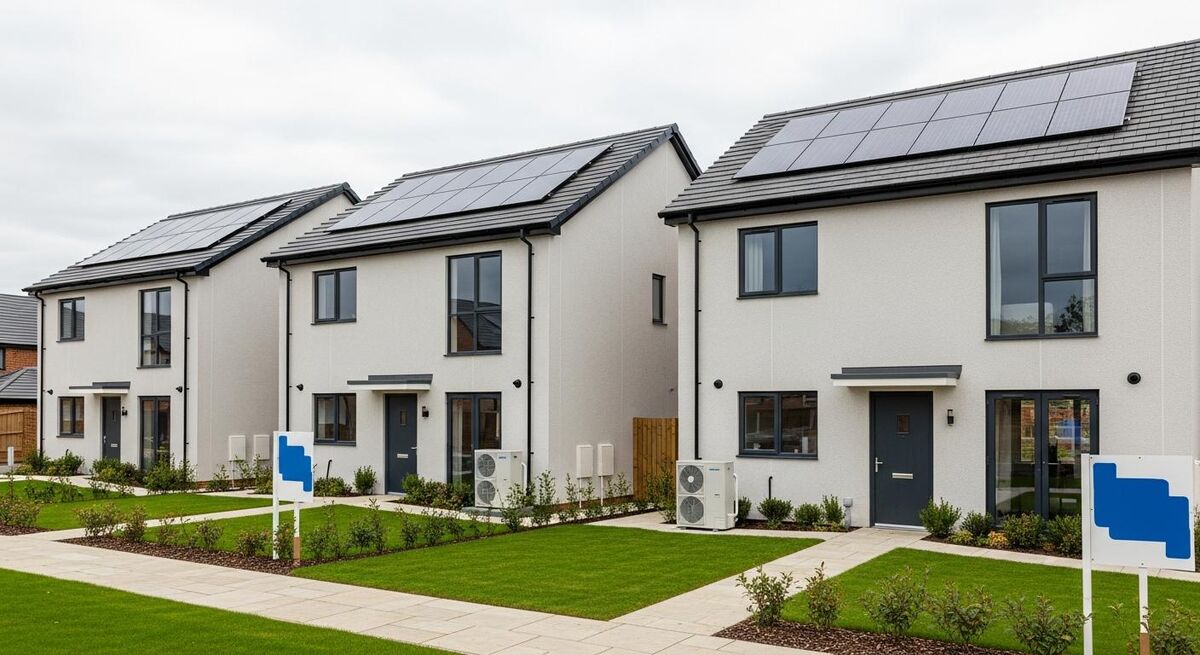
At its core, the standard demands a 75% reduction in carbon emissions compared to the 2013 baseline. That single number drives everything else. To hit it, homes must use low-carbon heating (read: heat pumps), mechanical ventilation with heat recovery (MVHR), improved fabric performance, and solar PV as standard.
The 2021 Part L uplift was the stepping stone. It required a 31% carbon reduction. The FHS more than doubles that target. If you thought the 2021 changes were disruptive, this is on a different scale.
The key technical requirements in plain terms:
- No gas or oil boilers in new-build homes. Low-carbon heating systems (primarily air source or ground source heat pumps) become the default.
- MVHR mandatory in most new-build homes to meet the tighter airtightness and ventilation requirements.
- Airtightness tightened to a maximum of 3 m³/(h.m²) at 50 Pa, down from 8 m³ under Part L 2021.
- Solar PV covering 40% of ground floor area becomes a standard requirement.
- Wastewater heat recovery (WWHR) added as a new requirement for the first time.
- Improved U-values for walls, floors, roofs, and windows, pushing fabric performance well beyond current standards.
Key dates: the FHS timeline

June 2022
Part L 2021 takes effect, requiring 31% carbon reduction in new builds. This was the "stepping stone" to the FHS.
24 March 2026
FHS Approved Documents published. One-year notice period begins. This is when the detailed technical specifications become available.
24 March 2027
FHS comes into force. All new building control applications from this date must comply with the new standard.
24 March 2028
Transitional period ends. Projects that were started under the old rules must be completed by this date or switch to FHS compliance.
That transitional period matters. If you have new-build projects with building control applications submitted before March 2027, you have until March 2028 to complete them under the current rules. After that, everything must comply.
For most trades businesses, the practical shift starts now. Training courses have lead times. MCS certification takes months. And the developers you work for are already specifying FHS-compliant systems on projects due to start in late 2026.
How your revenue mix will change
I started my career as a gas and heating engineer. I know what a stable new-build pipeline looks like, and I know what happens when regulations shift the work underneath you. The FHS is doing exactly that.
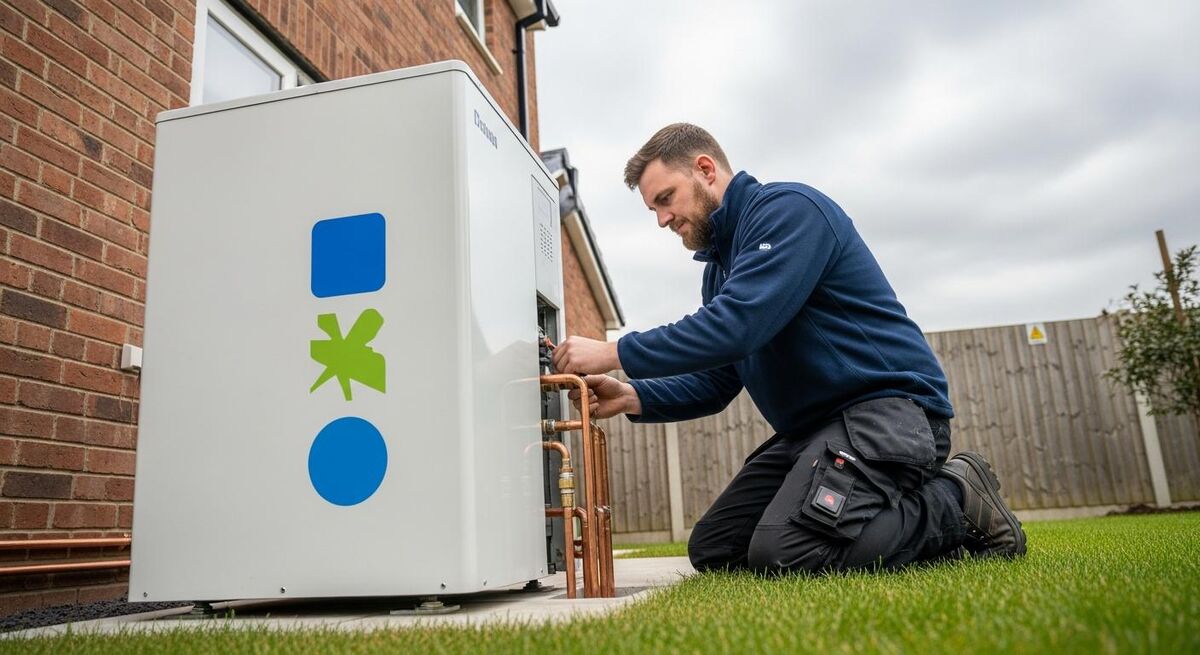
For heating engineers, the maths is straightforward. Around 190,600 new homes are built in England each year. Under the FHS, every single one needs a low-carbon heating system instead of a gas boiler. That is 190,600 heat pump installations per year that did not exist as a market five years ago.
The flip side is equally clear. New-build gas boiler installations will drop to zero. If new-build work makes up a significant portion of your revenue, you have a choice: retrain for heat pumps, or watch that revenue stream disappear.
But this is not just about heating. The FHS creates new revenue across multiple trades:
- Plumbers pick up wastewater heat recovery (WWHR) system installations, a product category that barely existed in UK domestic work until now.
- Electricians gain solar PV installation work on every new build, plus the wiring for heat pump systems and smart controls.
- Ventilation specialists (or heating engineers who retrain) get MVHR design, installation, and commissioning work on most new builds.
- Builders and general contractors need to upskill on fabric-first construction, airtightness testing, and thermal bridging details.
The businesses that add these capabilities to their offering now will be the ones developers call first. It is that simple.
Heat pumps: the new baseline for heating work
Heat pump sales in the UK hit 125,037 units in 2025, a 27% increase year on year. That number will accelerate sharply once the FHS takes effect. The government target is 450,000 heat pump installations per year by 2030, though most industry observers think 300,000 is more realistic.
For heating engineers, the transition is not as dramatic as it sounds. You already understand hydraulic systems, heat distribution, and system design. The core skill set transfers. What is different is the design methodology. Heat pumps operate at lower flow temperatures than gas boilers, so system sizing, radiator selection, and pipework design all need rethinking.
The Clean Heat Market Mechanism (CHMM) adds another driver. Boiler manufacturers must now achieve a percentage of their sales from heat pumps, starting at 4% in year one and rising to 8% in year two. They are actively subsidising heat pump installations and training programmes to hit these targets. That creates opportunities for installers willing to partner with manufacturers.
The Gas Safe qualification you already hold is not wasted. Gas boilers will remain in the retrofit and maintenance market for decades. But if new-build work is part of your business model, adding heat pump capability is no longer optional.
MVHR and ventilation: a whole new revenue stream
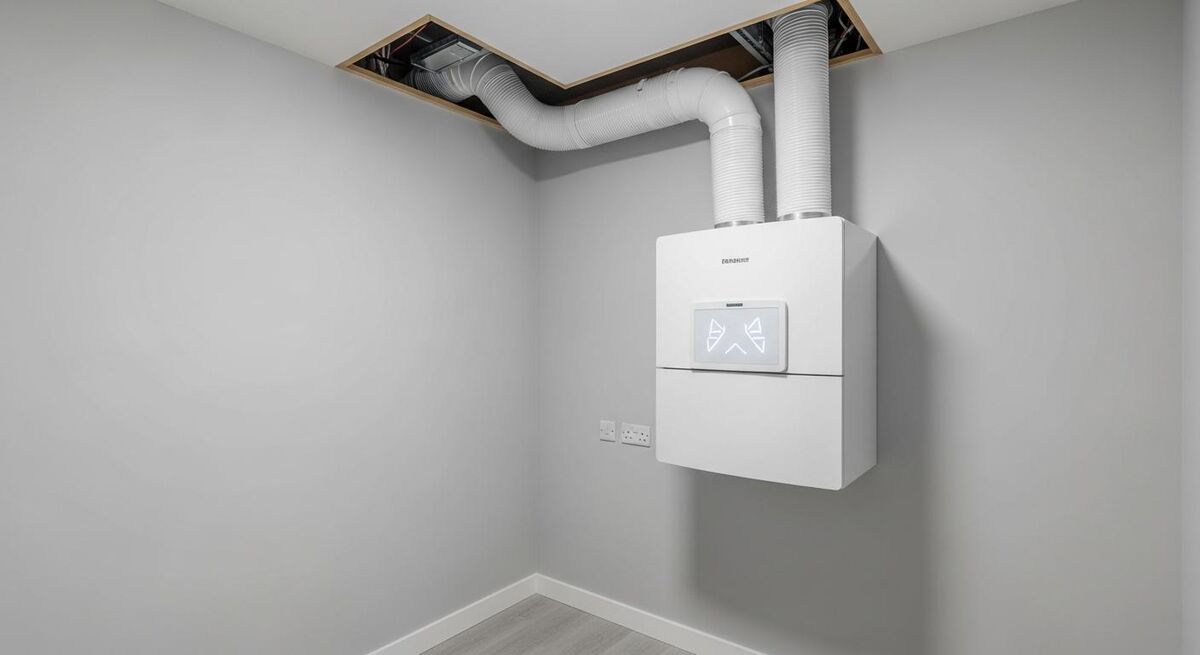
Here is where the real opportunity sits for trades businesses looking to diversify. MVHR is relatively new in mainstream UK housebuilding. Most tradespeople have never installed one. That means the competitive field is wide open.
Under the FHS, homes must achieve airtightness of 3 m³/(h.m²) or better. At that level, you cannot rely on natural ventilation through gaps in the building fabric. Mechanical ventilation becomes a necessity. MVHR recovers up to 90% of the heat from extracted air, which is why it is the default choice for FHS-compliant homes.
A typical domestic MVHR installation is worth £3,000 to £5,000 for supply and fit. Across 190,600 new homes per year, that is a market worth somewhere between £570 million and £950 million annually. And because the systems need regular commissioning, filter changes, and maintenance, there is an ongoing service revenue stream too.
The skills crossover is strongest for heating engineers and plumbers. Ductwork design principles are similar to pipework design. Airflow balancing is comparable to hydraulic balancing. Several manufacturers now offer two-to-three day MVHR installation courses specifically aimed at heating professionals looking to diversify.
The building control process for MVHR is straightforward since it falls under the same Part F compliance that building control already inspects.
What this means for builders and general contractors
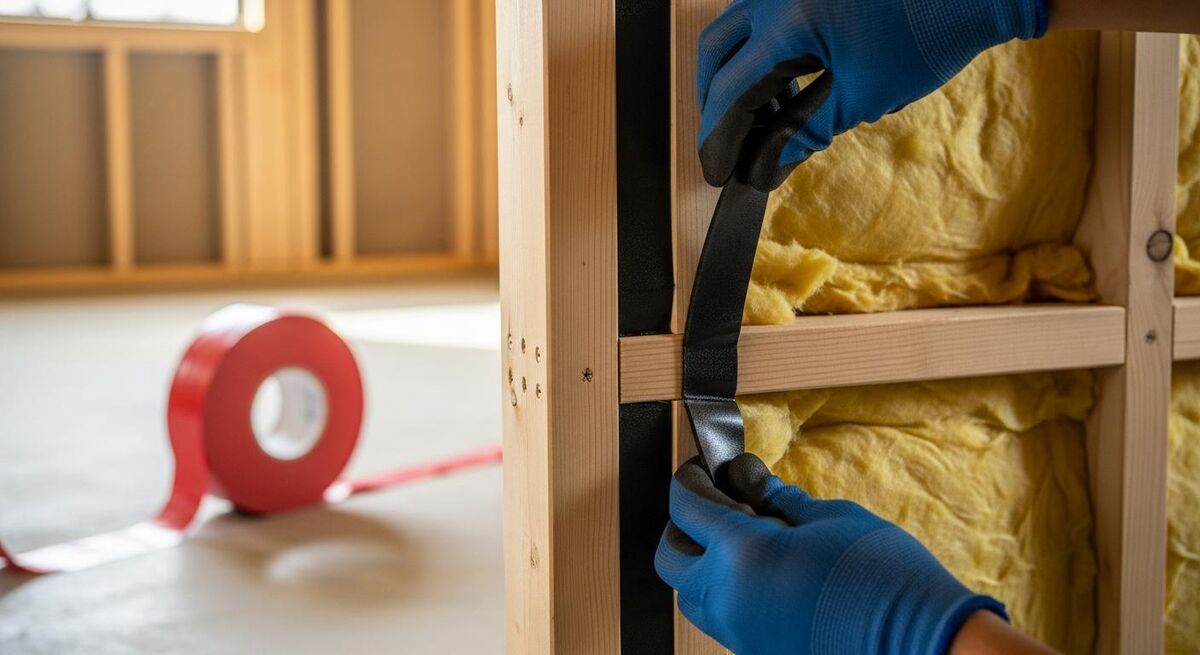
Builders face the broadest set of changes. The FHS is not just about bolting on new technology. It fundamentally changes how you build the envelope.
Fabric-first construction means getting the walls, floor, roof, and windows right before you think about services. The improved U-values demand thicker insulation, careful detailing around junctions, and relentless attention to thermal bridging. Every gap, every cold bridge, every poorly sealed junction shows up on a blower door test.
The airtightness target of 3 m³/(h.m²) is achievable, but it requires a different mindset on site. Every penetration through the air barrier needs sealing. Service entries, pipe runs, electrical boxes, window frames: all potential weak points. Site managers will need to train crews on airtightness principles, not just rely on the specialist doing the test at the end.
The Home Builders Federation (HBF) estimates an average additional cost of £4,350 per dwelling for FHS compliance. Independent analyses put it higher, between £5,000 and £10,000, representing a 3-8% uplift on build costs. Over a 10-year period, the total additional cost to the industry is estimated at £7.7 billion.
The Building Safety Act requirements layer on top of the FHS for higher-risk buildings, creating a compliance burden that smaller firms may struggle with unless they plan ahead.
The skills and training gap
The trades gave me everything. The discipline, the work ethic, the problem-solving mindset. But the trades are changing fast. The people coming through now need different skills alongside the traditional ones.
The numbers tell the story plainly. The UK currently has around 10,000 MCS-certified heat pump installers. The government needs 33,700 full-time equivalents to meet its 2030 targets. That is a gap of roughly 24,000 trained installers.
CITB forecasts that the construction industry needs 239,300 additional workers over the next five years across all trades. Heat pump installation, MVHR commissioning, solar PV, and airtightness testing are all areas where demand will outstrip supply for years to come.
A City Plumbing survey found that 58% of UK heating professionals have already trained or upskilled in heat pumps. But 73% say there are not enough qualified installers to meet demand. The top barriers to training? Cost (28%), lack of local training centres (24%), and time constraints (24%).
When I think about apprenticeships and workforce development, this is exactly the kind of transition where proper training infrastructure matters. A trade is a craft. And learning to work with these new systems takes time, repetition, and the ability to make mistakes without those mistakes being severe. The training pipeline needs to scale up now, not in 2028.
The digital transformation roadmap for trades businesses maps out how technology adoption and upskilling fit together as part of a broader business strategy.
The cost question: who pays for the transition?

The government's position is that the additional cost per dwelling is manageable. Their estimate of £4,350 per home assumes economies of scale as the supply chain matures. The industry is less optimistic.
The HBF has warned of a "crippling impact on viability" for SME builders. The Federation of Master Builders (FMB) raises similar concerns. When 57% of small builders say the cost makes projects unviable, that is not a fringe opinion. It is the majority view from the people who actually build the houses.
In practice, the cost lands in three places:
- House prices. Developers will pass through as much as the market allows. In areas with strong demand, buyers absorb most of the uplift.
- Developer margins. Where the market will not accept higher prices, developers take the hit. This squeezes smaller builders hardest.
- Subcontractor rates. Trades businesses with scarce skills (heat pump installation, MVHR commissioning) will command premium rates. Trades businesses without those skills will face rate pressure as conventional work shrinks.
The Boiler Upgrade Scheme (BUS) grant of £7,500 per heat pump installation helps on the retrofit side, but it does not apply to new builds. The logic is that the FHS makes heat pumps mandatory, so no incentive is needed. For homeowners replacing oil or LPG systems, the grant rises to £9,000 from July 2026.
For trades businesses, the financial case for retraining is strongest when you look at it from the other direction. What does it cost to not retrain? If new-build work is 30% of your revenue and it dries up because you cannot offer FHS-compliant services, the training investment looks cheap by comparison.
What tradespeople are saying
Recommended videos

How Britain Plans to Catch Up. Future Homes Standard
Skill Builder
The Future Homes and Buildings Standard: Industry implications
Building Magazine

Beyond SAP - The Home Energy Model and the Future Homes Standard
Darren Evans

How heating engineers can train to install heat pumps
Nesta

What is MVHR (mechanical ventilation with heat recovery)?
21 Degrees

Ultimate Heat Pump Installation. Rip It Out and Start Again!
Skill Builder

MVHR: Mechanical Ventilation with Heat Recovery Install, Start to Finish
Paul Walker CSRT CSSW CSDV
Frequently asked questions
No. The FHS applies to new-build homes only. Extensions, renovations, and conversions fall under Part L 2021 (the current standard). There will be a separate Future Buildings Standard consultation for non-domestic buildings, but that is a different timeline entirely.
Yes. The gas boiler ban only applies to new builds from 2027. Replacement boilers in existing homes are unaffected. The retrofit market for gas servicing, repairs, and replacements will continue for many years. Your Gas Safe registration remains valuable.
Most heat pump installation courses run over three to five days. MCS company certification takes an additional two to four months to process. Budget three to six months from starting your first course to being fully certified and ready to take on MCS-registered work.
Scotland has its own building standards and its own equivalent regulations. The New Build Heat Standard in Scotland already requires new-build homes to use zero direct emission heating systems from April 2024. Wales follows the England FHS timeline broadly, but the Approved Documents may differ in detail.
Right now, yes. Heat pump installations are more complex, take longer, and fewer people can do them. Basic supply-and-demand economics. As more installers qualify, rates will normalise, but the structural shortage means premium rates should hold for at least three to five years.
My verdict
The trades industry is changing. And it is changing fast. The Future Homes Standard is the clearest signal yet about where new-build work is heading. Heat pumps, MVHR, fabric-first construction, solar PV: these are not optional extras. They are the new baseline. The businesses that invest in training and certification now will have a two-to-three year head start on everyone else. The ones that wait will find themselves competing for a shrinking pool of conventional work. I have watched enough industry transitions to know that the early movers always come out ahead. This one is no different. Book your training while you still have options.