Quick Answer
Here's a hard truth: nobody chooses to be the cheapest heating engineer in town. You get pushed there, one discounted quote at a time, until you are working flat out and banking nothing. Premium customers are not a different species. They are the same homeowners choosing on trust, guarantees and presentation instead of the bottom line. This framework shows you the three-customer model, a 60-second test to work out who you attract now, five steps to reposition, and two word-for-word scripts for the price objection and the dreaded "I'll think about it". Change the signals you send and you change the customer who says yes.
Table of Contents
- The race to the bottom is a choice, not a market
- The three-customer model
- Which customer are you attracting? A 60-second test
- Step 1: Change your language
- Step 2: Lead with guarantees
- Step 3: Fix your presentation
- Step 4: Choose the right channels
- Step 5: Build proof and hold your price
- Two scripts that stop the discount spiral
- What homeowners and engineers actually say
- Recommended videos
- Frequently asked questions
- My verdict
The race to the bottom is a choice, not a market

Let me cut to the chase. There are more than 150,000 Gas Safe registered engineers in the UK, and most of them believe the customer only cares about one thing: price. So they quote low. They knock a bit off to close. They "sharpen the pencil" when a homeowner sniffs. And every one of those small decisions trains the market to see heating work as a commodity.
It is not a commodity. A boiler swap done properly protects a family from carbon monoxide, keeps a home warm through a cold snap, and lasts a decade. That is not the same as a bloke doing it in a few hours for cash. But if your quote looks the same as his, and you sound the same as him, the homeowner has nothing to judge you on except the number at the bottom.
I call a spade a spade, so here it is. The race to the bottom is not something the market does to you. It is something you volunteer for, every time you compete on the one thing you can least afford to give away. The average hourly rate for the trade is £58.57 in 2026 and the average day rate is £400. Undercut those and you are not winning work, you are buying it, and paying for the privilege out of your own wage.
The maths nobody wants to do
Drop a £3,000 boiler install by 10 percent to win it and you have not lost £300 of turnover. You have lost £300 of pure profit, because your costs did not move. On a 20 percent net margin, that discount wipes out half the job's profit. You did the same work, carried the same risk, and kept a fraction of the reward. Sound familiar?
The good news is simple. If you can talk yourself into the race, you can talk yourself out of it. Premium customers already exist in your postcode. They are booking someone right now. The question is whether the signals you send tell them it should be you.
The three-customer model
Here's the thing about customers. They are not one blob who all want the cheapest price. Split them into three and the whole game changes, because you stop trying to please all of them and start choosing which one you want.
Every homeowner who calls you sits in one of three buckets. Learn to spot them in the first two minutes and you will never waste an evening writing a quote for the wrong person again.
| The Bargain Hunter | The Middle-Ground Buyer | The Premium Buyer | |
|---|---|---|---|
| First question | "What's your cheapest price?" | "How much roughly?" | "When can you come and look?" |
| How they decide | Lowest number wins | Price against a gut feel of trust | Confidence, guarantees, reputation |
| What they cost you | Haggling, callbacks, chasing money | Some price pressure, mostly reasonable | Little friction, they value your time |
| Repeat and referral | Gone the moment someone is cheaper | Loyal if you look after them | Refers friends, comes back for the next job |
| Who wins them | Whoever is desperate this week | Whoever presents best on the day | Whoever looks the safest pair of hands |
Notice what the Premium Buyer never leads with. Price. They lead with time and trust, because they have been burned before by cheap and they are not doing it again. They are not tight and they are not flush necessarily. They are simply buying peace of mind, and peace of mind has never been sold on a discount.
Premium does not mean posh
A Premium Buyer is not defined by a big house or a postcode. It is a mindset. A pensioner spending her savings on a new boiler wants the safest choice, not the cheapest one. A landlord with fifteen properties wants the one who turns up and never rings back with problems. Both will pay properly. Both are premium. Stop screening by the size of the driveway.
When you chase all three buckets with one message, you sound like everyone else, and the Bargain Hunter is the only one who reliably says yes, because your low quote is exactly what he was fishing for. Choose the Premium Buyer and you build a business, working ON it rather than just IN it. The rest of this framework is how you send the right people the right signal.
Which customer are you attracting? A 60-second test
Before you fix anything, be honest about where you are. Read the three profiles below and tick the one that sounds most like your last ten jobs. No fibbing to yourself, this only works if you are straight.
Score your last ten enquiries
Mostly A: "What's your best price?" calls, lots of quotes that go quiet, regular haggling, callbacks over money, one-off customers you never hear from again. You are attracting Bargain Hunters. The signals you send scream "cheapest option here".
Mostly B: Reasonable enquiries, some price pushback, a few loyal regulars, the odd referral, quotes that convert about half the time. You are in the middle. Solid, but leaving money and better customers on the table.
Mostly C: People ask when you can visit before they ask the price, they mention you were recommended, they rarely quibble the number, they come back and send friends. You already attract Premium Buyers. This framework tightens the screws.
Most heating engineers land on A or B and feel a bit sick reading it. Good. That feeling is the start of change. You are not a cheap tradesman who got stuck. You are a skilled one sending amateur signals, and signals are fixable. Every step from here is designed to move you one bucket to the right.
If you want a numbers-led version of this audit, the way your pricing leaks profit shows up clearly once you separate mark-up from margin, because Bargain Hunter pricing almost always hides a margin that is quietly too thin to survive.
Step 1: Change your language

Words do the heavy lifting before you ever pick up a spanner. The Bargain Hunter and the Premium Buyer hear completely different things, and most engineers accidentally speak Bargain Hunter without realising.
Start with how you answer the phone. "Yeah, I can probably do it for about four hundred" tells the caller you sell hours and you are guessing. "I'd want to come and see it first so I quote you properly and there are no surprises" tells them you take the work, and their home, seriously. Same job. Completely different customer response.
Kill the discount language. Every "I can do you a deal", "cash price", and "I'll knock a bit off" is a flare telling Bargain Hunters you are open for haggling. Replace it with value language: "That price includes the Building Regulations certificate, the manufacturer warranty registered in your name, and a two-year workmanship guarantee." You are not more expensive, you are more complete, and complete is what a nervous homeowner is desperate to hear.
Swap these phrases today
"How cheap do you need it?" becomes "What matters most to you about getting this right?" "I'll give you a price" becomes "I'll put together a proper quote so you can see exactly what you're getting." "It's just a boiler swap" becomes "It's a safe, warranted install that'll run for years." Small changes. Different buyer walks through the door.
Talk in outcomes, not parts. Homeowners do not lie awake wanting a heat exchanger. They want a warm house, a safe home, and a bill they understand. Sell the warm house. The kit is how you deliver it, not what they are buying.
Step 2: Lead with guarantees
A Premium Buyer is buying certainty. The single fastest way to move up a bucket is to remove their risk before they even ask. Let's face it, the reason people cling to the cheapest quote is fear. They assume every engineer is a gamble, so they may as well lose the least money on the bet. Take the gamble away and price stops being the deciding factor.
Put your guarantees in writing and lead with them, do not bury them. A workmanship guarantee. The manufacturer warranty registered for them. A clear promise on what happens if something goes wrong and who picks up the phone. On a Trustpilot forest of five-star reviews, the word that appears again and again is not "cheap". It is "professional", "kept me informed", "clean and tidy". That is certainty being rewarded, in public, with the price already paid.
A guarantee you cannot honour is worse than none
Do not promise a 10-year guarantee to win a job you know your cash flow cannot back. If the work fails in year six and you have folded the cost into nothing, you eat it or you break your word. Price your guarantees in from the start. A guarantee is a product with a real cost, not a marketing sticker.
Guarantees also protect your cash. When you stand behind your work confidently, you can ask to be paid properly and on time, which is why the way you structure stage payments matters as much as the guarantee itself. Premium customers expect to pay for certainty. They do not expect to be funded by you.
Step 3: Fix your presentation

Presentation is the tie-breaker. When two engineers quote a similar price, the homeowner picks the one who looks the safer pair of hands. And nine times out of ten, "looks safer" comes down to how you present, not how you plumb.
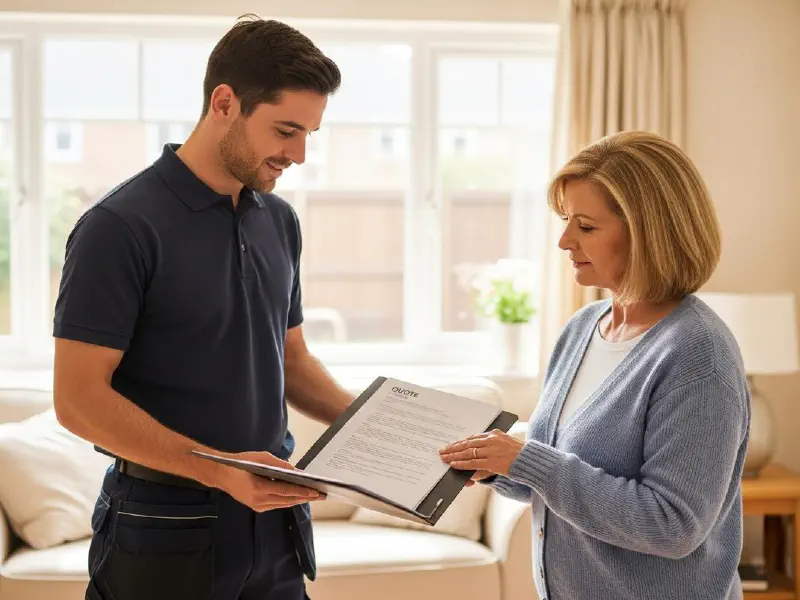
Start with the quote itself. A text message saying "£2,900 all in" against a proper written quote is not a fair fight. The written quote wins even when it is dearer, because it shows the customer exactly what they get and quietly signals that you run a real business. This is the whole reason I built the 12-section boiler quote. Presentation beats price, and a structured quote is presentation you can repeat on every job.
Then look at everything else the customer sees. A clean van. A branded polo instead of a paint-stained hoodie. An email address that is not hotmail. Photos of your own work, not stock images. Reviews you actually ask for. None of it is dishonest dressing-up. It is the outside of your business finally matching the standard of the inside.
The two-minute presentation audit
Look at your business the way a nervous homeowner does. Google your company name. What comes up? Open your last quote. Would you sign it? Look at your van and your shirt. Do they say "safe pair of hands" or "cash job"? Fix whatever made you wince. That wince is the exact thing costing you premium work.
You do not need a rebrand or a designer. You need to stop undercutting your own skill with a scruffy shop window. The work is already good. Let the wrapping say so.
Step 4: Choose the right channels
Where you fish decides what you catch. Certain channels are stuffed with Bargain Hunters by design, and no amount of clever language will save you if you keep casting into them.
The "cheapest three quotes" lead sites and race-you-to-the-bottom directories select for one thing: price. The homeowner is literally there to compare numbers, so you arrive already framed as a commodity. You can win on those platforms, but only by being the cheapest, which is the exact trap you are trying to escape.
Premium Buyers travel a different route. They come from referrals, from a Google Business Profile stacked with real reviews, from a tidy website that shows your work, and from repeat customers who already trust you. A homeowner comparing two Gas Safe engineers at similar prices almost always picks the one with more verified reviews. Reviews are not vanity. They are the channel that pre-sells certainty before you knock on the door.
The cheapest premium channel you already own
Your existing customers are the highest-value channel in the trade, and most engineers ignore them. A boiler service plan turns a one-off install into a customer who pays you every month and calls you first for everything else. Building a recurring service plan is how you keep Premium Buyers instead of re-winning them every few years.
Pick two or three channels that attract the buyer you want and go deep on them. Ask every happy customer for a review, the same day, while they are still glowing. Referrals and reviews compound. Cheap lead sites just churn.
Step 5: Build proof and hold your price

Proof and price discipline are two halves of the same step. Proof earns you the right to charge properly. Holding your price is what turns that right into money in the bank.
Build proof relentlessly. Photograph your best installs. Collect reviews on every job. Ask a delighted customer for a short written line you can use. Register your qualifications and accreditations where homeowners can see them. Proof is the quiet argument that you are worth more, made by other people so you do not have to boast.
Then hold the line. When you have done steps one to four, the price objection stops being a wall and becomes a conversation. You have earned the number. Do not give it back the moment someone flinches, because the flinch is often just a reflex, not a real no. This is where most engineers fold, and it is the most expensive habit in the trade. If you are worried the number itself is wrong for the market, that is a repricing question, and there is a right way to reprice without haemorrhaging customers.
Holding your price is a skill, not a personality trait
You are not "bad at sales" because you cave. You cave because you have no plan for the moment of pushback. Give yourself a script and the panic disappears. That is exactly what the next section hands you: word for word, for the two objections that cost you the most.
Two scripts that stop the discount spiral
These are the two moments where premium work is won or lost. Learn them until they are second nature. Say them calmly. The calm is half the message, because a confident engineer does not sound like one about to drop his price.
Script one: "You're more expensive than the other quote"
Them: "I've had a cheaper quote, can you match it?"
You: "I might be able to, but before I do, let me make sure you're comparing like for like, because I'd hate for you to save a few quid and get caught out. My price includes the Building Regs certificate, the warranty registered in your name, and a two-year guarantee on my workmanship. Does theirs? Because if it doesn't, the cheaper quote isn't actually cheaper, it just looks it today."
Then stop talking. Silence does the work. You have not rubbished the other engineer and you have not dropped your price. You have moved the conversation from number versus number to value versus gap. Nine times out of ten the "cheaper" quote is missing something, and now the homeowner knows it too.
Never rubbish the competition
Slagging off the cheaper engineer makes you look bitter and unsafe. Let the gap in their quote speak for itself. You raise the standard, you do not lower the other bloke. Premium Buyers are watching how you handle it, and grace reads as confidence.
Script two: "I'll think about it"
Them: "Thanks, I'll have a think and let you know."
You: "Course, it's a big decision and you should. Can I ask, is it the price you want to think about, the timing, or something about the job itself you're not sure on? Only reason I ask is I can usually clear up whatever's on your mind now, and then you can think about it with the full picture rather than half of it."
"I'll think about it" is almost never about thinking. It is a polite door held ajar because something is unresolved and they do not want to say it to your face. Your job is to find the real hesitation, gently, before they walk off and pick the cheap quote out of sheer inertia. Name the three likely reasons and you make it easy for them to tell you the truth.
Why naming the objection works
When someone is vague, even they often cannot say what is bothering them. By offering price, timing or the job itself, you help them categorise the worry so it can be answered. Leave "I'll think about it" unchallenged and you hand the decision to whoever is cheapest. Answer it, and you keep the decision about value.
Neither script is a hard close or a gimmick. They are calm, honest questions that keep you in the conversation and keep the conversation about value. That is all premium selling ever is: staying in the room long enough for certainty to beat price.
What homeowners and engineers actually say

Do not take my word for any of this. Look at what real homeowners write when they choose an engineer, and what they say after a cheap job goes wrong. The pattern is the same every time. They reward professionalism, communication and a job done properly, and they warn each other off the bargain that bit back.
Recommended videos
A handful of these are worth half an hour of your evening. They are not heating-specific, and that is the point. Value pricing is the same discipline whether you fit boilers or fell trees.

Stop Competing on Price (and what to do instead)
Melitta Campbell: Smarter Marketing

How to Sell on Value and Win Big
Grow My Cleaning Company

How to Price Services: Charge More
Premium Positioning meets Referral Marketing
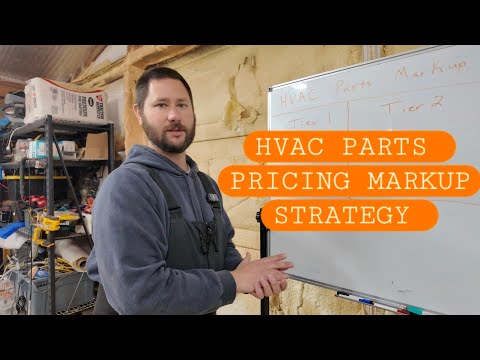
Parts Pricing and Markup Strategy (2026)
Taddy Digest

Win Work with Value and Efficiency
Tree Surgeon's Podcast
Start Winning on Value
NVISION
Frequently asked questions
You will lose the Bargain Hunters, and good riddance. They were never loyal and they barely made you money. What you gain is Premium and Middle-Ground Buyers who pay properly and come back. You do not need more customers, you need better ones. Fewer jobs at a real margin beats a full diary at a loss every day of the week.
You do it gradually and you tell them why. Give notice, point at the value they already get, and never apologise for it. Most loyal customers expect prices to rise and stay put. The ones who leave over a fair increase were price shoppers wearing a regular's coat. Reprice with a plan, not a panicked jump.
Premium is a mindset, not a postcode, and safety plus certainty sell everywhere. A pensioner spending her savings wants the safest choice, not the cheapest. Landlords want reliability. Your job is to find the buyers who value it, not to assume nobody does. In my eyes, "nobody round here pays" is usually the story we tell ourselves to justify staying cheap.
No. Presentation is how a stranger judges graft they cannot see yet. Your work might be flawless, but a scruffy quote and a mucky van tell the customer to fear the worst. Presentation is not dishonest, it is the outside of your business finally matching the standard of the inside. Skip it and your best work stays invisible.
The language and script changes work on your very next enquiry. Presentation and guarantees land within weeks. The channel shift, reviews and referrals, compounds over months. Start with the free, fast wins today and let the slower engines build behind them. Six months in, your diary looks like a different business.
My verdict
Stop competing on the one thing you can't afford to give away
Here's the thing. You did not train for years, carry the insurance, sit the assessments and take on the risk to be chosen because you were £80 cheaper than the next bloke. The race to the bottom is a habit, and habits can be broken. Change your language, lead with guarantees, fix your presentation, choose the right channels, build proof and hold your price. Do that and premium customers stop being other people's luck and start being your normal. Charge for the value you already deliver. The homeowners worth having are waiting for exactly that.