
Quick Answer
You need a Level 3 electrotechnical qualification, the 18th Edition (BS 7671), and the City & Guilds 2921-34 EV charging course (2 days, around £395). Join a Competent Person Scheme like NICEIC or NAPIT, get OZEV authorisation, and you can start installing. Total training investment sits around £1,500 to £2,000. With residential installs averaging £800 to £1,500 each and most taking half a day, the payback period on your training is roughly 3 to 5 jobs.
Table of Contents
- Why EV charger installation is a growth market
- What qualifications do you need?
- Step-by-step certification pathway
- Training costs breakdown
- Understanding the OZEV grant scheme
- Smart charger regulations and technical requirements
- The business case and ROI
- Commercial vs residential installations
- What electricians are saying
- Recommended videos
- Frequently asked questions
- My verdict
 City & Guilds
 NICEIC
 NAPIT
NAPIT OZEV
OZEVWhy EV charger installation is a growth market
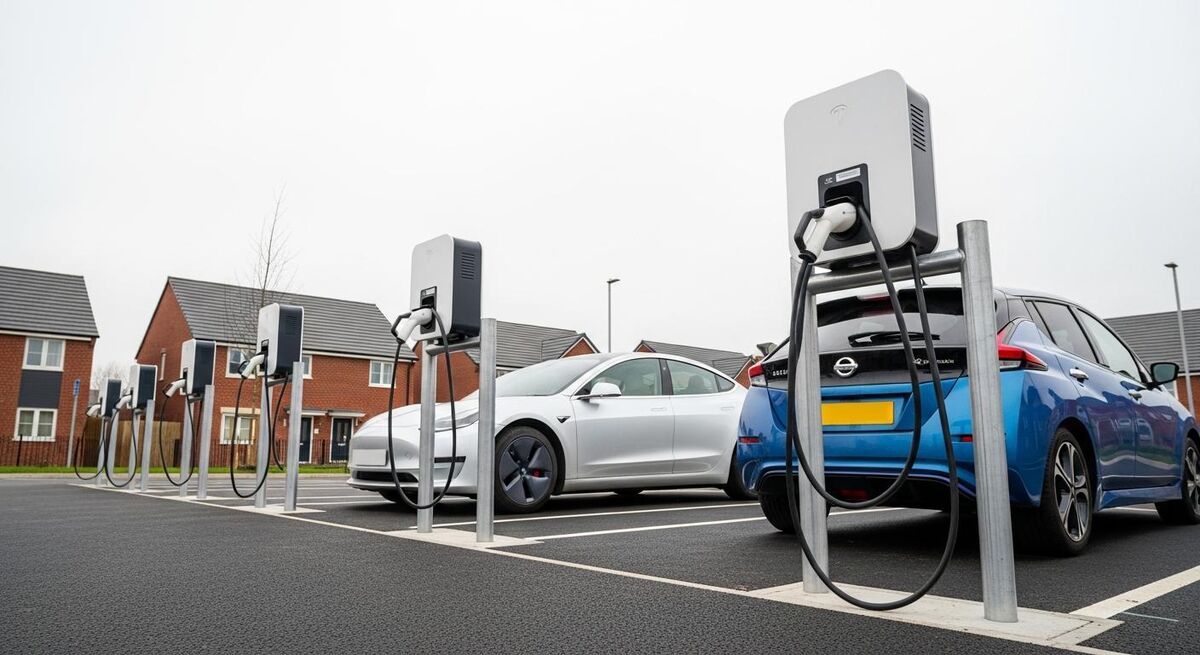
The UK passed one million home EV chargers at the end of 2024. The government's ZEV mandate requires 33% of all new car sales to be fully electric in 2026, rising to 80% by 2030 and 100% by 2035. Every one of those vehicles needs somewhere to charge.
On the infrastructure side, the UK had around 68,000 public charging points as of August 2024. The government target is 300,000 by 2030. That means roughly 46,000 new public points installed every year for the next six years, on top of hundreds of thousands of residential units.
The UK EV charging market was valued at £2.8 billion in 2024, with projections reaching £8.2 billion by 2030. And since June 2022, Part S of the Building Regulations has required every new-build home in England with associated parking to include at least one EV charge point (minimum 7kW). That alone creates guaranteed demand for qualified installers on new housing developments.
With around 1.2 million EVs already on UK roads and the ZEV mandate pushing that number sharply upward, the demand for qualified EV charger installers is growing faster than the supply of people trained to do the work. When it comes to future-proofing your skillset, this is one of the clearest opportunities in the electrical trade right now.
What qualifications do you need?
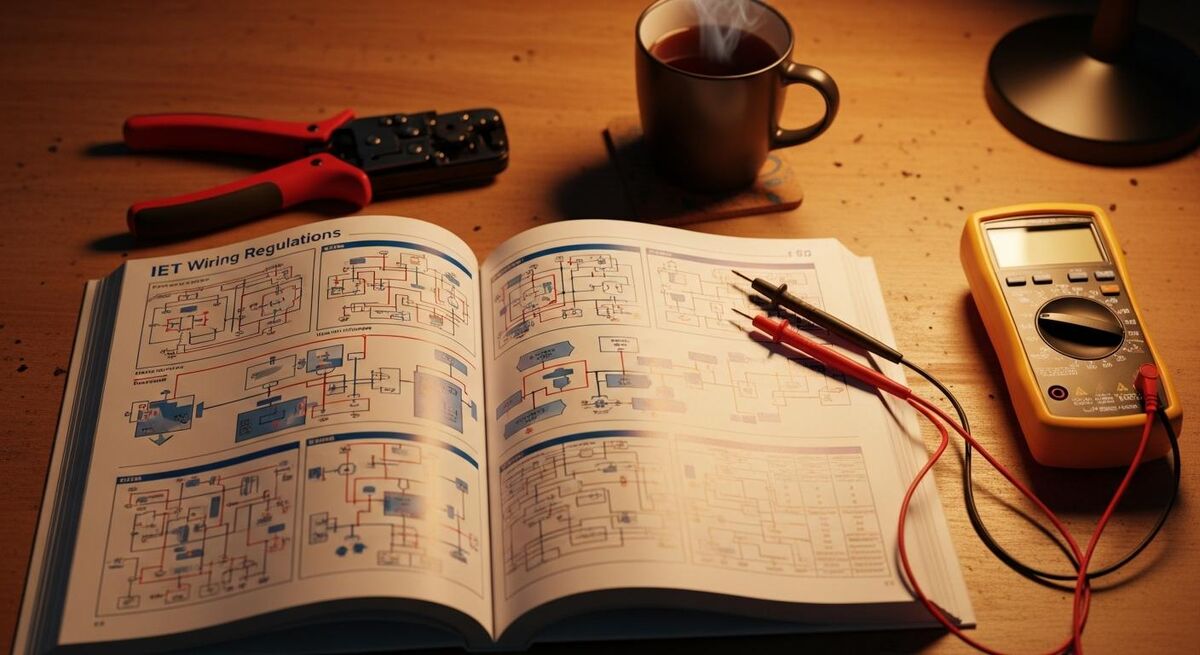
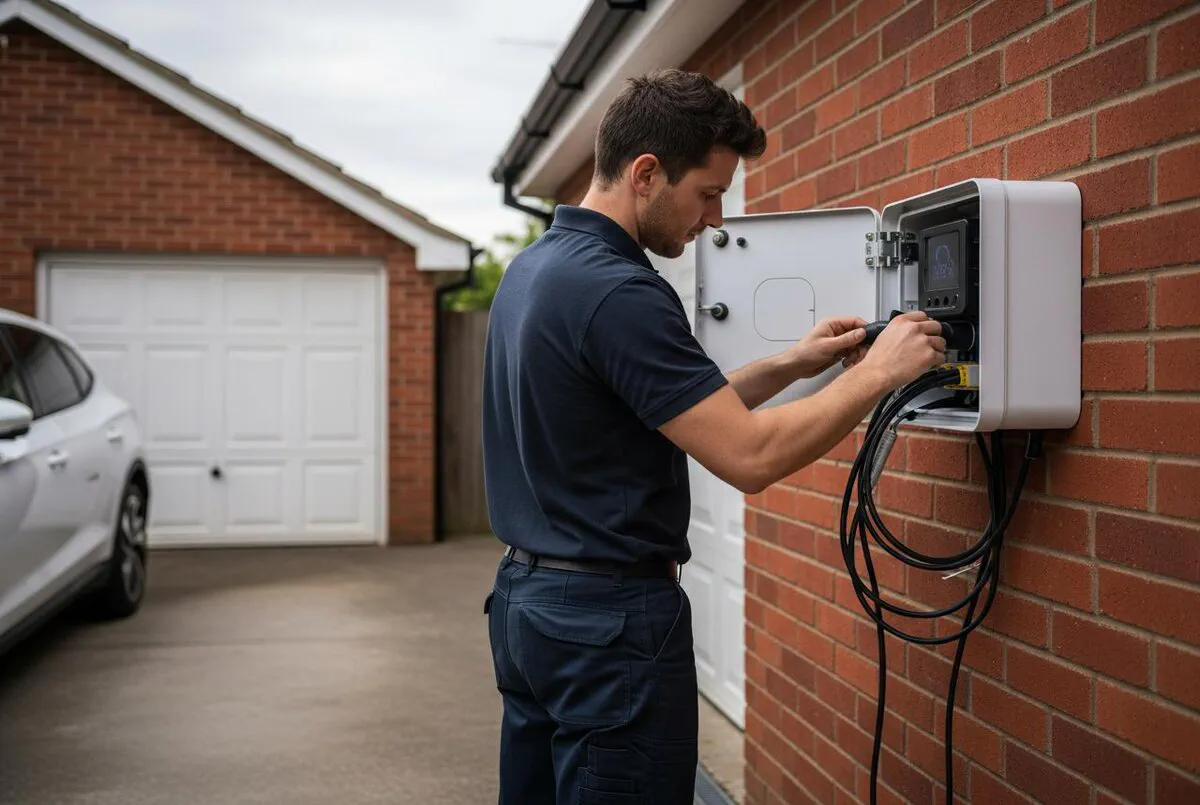
EV charger installation is not an entry-level role. You need to be a qualified, practising electrician first. Here is what you need in your toolkit before you can start.
Foundation qualifications (prerequisites)
You must hold a Level 3 Electrotechnical Qualification (NVQ/SVQ Level 3 Diploma in Installing Electrotechnical Systems, e.g. City & Guilds 2365 or equivalent). You also need the AM2 Assessment proving practical competence, and the 18th Edition IET Wiring Regulations (BS 7671:2018). Note that Amendment 4 was published on 15 April 2026, with all new work required to comply from 2 October 2026.
An ECS Gold Card, JIB Electrician Card, or JIB Approved Electrician Card are all accepted as evidence of your foundation competence.
The specialist EV qualification
The primary qualification is the City & Guilds 2921-34, the Level 3 Award in the Requirements for the Design and Installation of Domestic and Small Commercial Electric Vehicle Charging Installations. This replaced the older 2919 series from September 2022 and was updated to the 2921-34 version in September 2024.
Other recognised awarding bodies include LCL Awards (Level 3 Award in Installation and Commissioning of EV Charging Equipment), EAL (Level 3 EV charging qualifications), and NICEIC (their own Level 3 Award, delivered as a 1-day course).
All courses align with the IET Code of Practice for Electric Vehicle Charging Equipment Installation, 5th Edition (2023), which is the government-recommended industry reference.
The Electrotechnical Assessment Specification (EAS) October 2024 introduces a hard requirement. From 1 October 2026, every individual undertaking EV charging equipment installation must hold their own relevant Level 3 qualification. Previously, work could be carried out under a qualified supervisor's certificate. This applies to all businesses registered with Competent Person Schemes. If you are planning to do EV work, get qualified before this date.
What about CompEx?
CompEx certification is not required for standard EV charger installation. It is a 5-day course for electricians working in Zone 1/Zone 2 hazardous environments like petrol station forecourts and oil refineries. You would only need it if installing chargers in locations classified as potentially explosive atmospheres. For typical residential and commercial work, it is not relevant.
A note on IMI qualifications
IMI (Institute of the Motor Industry) Level 3 and Level 4 EV qualifications are for vehicle technicians working on high-voltage EV powertrains, not for charging infrastructure installers. Different career track entirely.
Step-by-step certification pathway

Here is the path from qualified electrician to OZEV-approved EV charger installer, broken down into clear steps.
Step 1: Confirm your foundation qualifications. Check your Level 3 electrotechnical qualification is current. If it is more than 5 years old, you need to demonstrate CPD, typically by completing the latest 18th Edition course (now including Amendment 4).
Step 2: Complete the specialist EV course. Book the C&G 2921-34 or equivalent Level 3 EV qualification. This is a 2-day course covering charging systems and modes, site surveys, load assessment, earthing arrangements, cable selection, RCD types, fault protection, smart charging, load management, inspection, testing, and commissioning.
Step 3: Join a Competent Person Scheme. Register with NICEIC, NAPIT, ELECSA, or another approved scheme. This lets you self-certify your installations under Part P of the Building Regulations, which is essential for EV work since it is classified as notifiable work.
Step 4: Get manufacturer approvals. Contact charger manufacturers (myenergi, Andersen, Easee, Ohme, Pod Point, Hypervolt) and complete their product-specific training. Most offer free or low-cost 1-day courses. Manufacturer approval is often required for warranty coverage and is sometimes needed for OZEV grant eligibility.
Step 5: Apply for OZEV authorisation. Register with the Office for Zero Emission Vehicles through their portal. You will need evidence of Competent Person Scheme membership, your Level 3 EV qualification certificate, manufacturer approval from at least one recognised charger brand, and public liability insurance (minimum £5 million).
Step 6: Start installing. Begin with residential work to build experience and reviews. Most installers start with straightforward single-phase domestic installations before moving to three-phase commercial work.
When choosing manufacturer training, start with the brands most popular in your area. Myenergi (makers of the Zappi), Ohme, and Pod Point together account for a large share of UK residential installations. Getting approved with two or three manufacturers gives customers more choice and gives you more flexibility on pricing.
Training costs breakdown

Here is what you can expect to spend, depending on where you are starting from.
| Course | Duration | Typical cost | Notes |
|---|---|---|---|
| 18th Edition full course (C&G 2382) | 3 days | £290–£600 + VAT | Only needed if not already qualified |
| 18th Edition Amendment 4 update | Half day | £70 + VAT | For those already holding 18th Edition |
| C&G 2921-34 EV charging course | 2 days | £395 inc VAT | Core EV specialist qualification |
| Competent Person Scheme registration | N/A | £300–£500/year | NICEIC, NAPIT, or ELECSA annual fee |
| Manufacturer training (per brand) | 1 day | £0–£150 | Many offer free training days |
| Public liability insurance uplift | N/A | £100–£300/year | To cover EV work specifically |
For an electrician who already holds the 18th Edition and is registered with a Competent Person Scheme, the additional investment for EV work is approximately £500 to £700. If you need the 18th Edition and scheme registration too, budget £1,500 to £2,000 all in.
Training providers include Total Skills (Nottingham and Derby, £395), GRE Energy Training, PPL Training (Livingston), Activate Trade Training (London and Hemel Hempstead), British Gas Academy, and Glasgow Clyde College. Most providers offer class sizes of 8 to 12, and courses run regularly throughout the year.
At £500 to £700 additional investment, and an average profit of £300 to £500 per residential install, you recover your costs within 2 jobs. Even at the higher £2,000 total if you are starting fresh, you are looking at 4 to 6 jobs to break even. Most active EV installers complete 2 installs per day.
Understanding the OZEV grant scheme
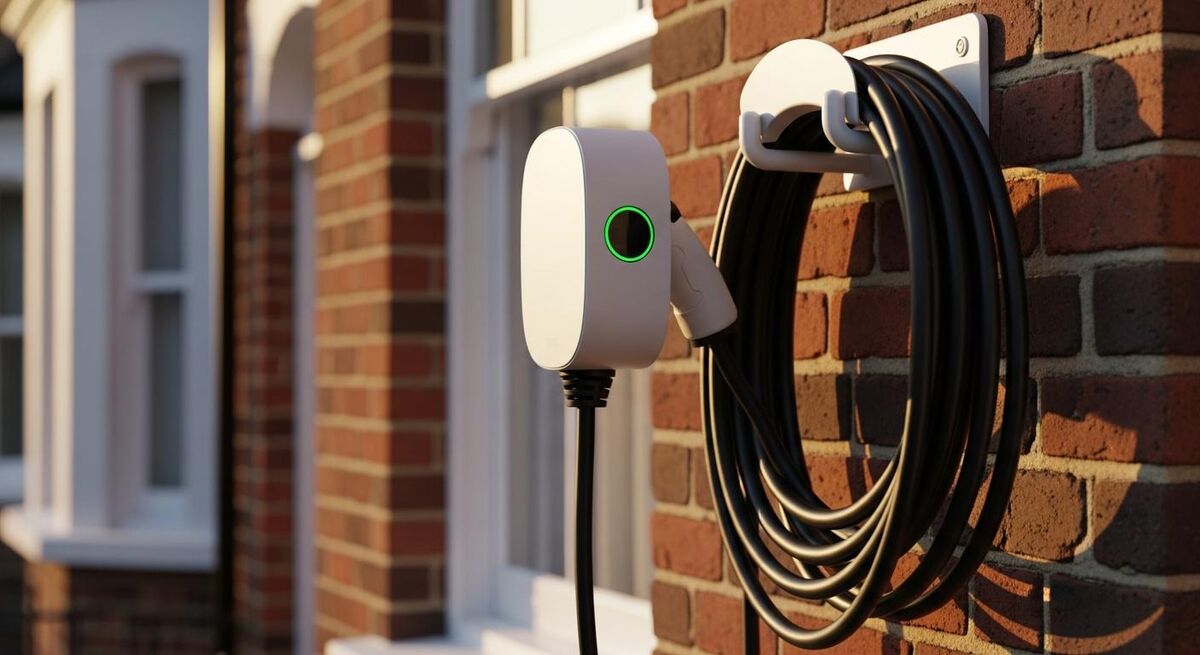
The Office for Zero Emission Vehicles runs several grant schemes that subsidise the cost of charger installation. Being OZEV-authorised means you can offer customers a lower upfront price, which is a genuine competitive advantage.
What changed on 1 April 2026
The maximum grant rate for residential customers increased from £350 to £500 per socket. The Workplace Charging Scheme also increased to £500 per socket. State-funded education institutions can claim up to £2,000 per socket. Funding has been confirmed until 31 March 2027.
Who is eligible?
Renters living in any UK residential property with private off-street parking. Flat owners (leaseholders) with off-street parking. Landlords can claim up to £500 per socket, plus up to £30,000 for supporting infrastructure like electrical upgrades and groundwork. Homeowners who own their property outright are not eligible for the residential grant.
For the Workplace Charging Scheme, businesses, charities, and public-sector organisations can claim up to £500 per socket with a maximum of 40 sockets per applicant.
What this means for installers
Claims now require four specific photographs: close-up chargepoint images, model and serial number proof, parking space association, and a wide building context view. Processing takes up to 10 working days. Three schemes closed on 31 March 2026: the staff and fleets grant, commercial landlord chargepoint grant, and residential landlord infrastructure grant.
Cash flow is a real consideration. You may need to front the grant amount and wait for reimbursement, which some installers report can take up to 90 days. Factor this into your business planning.
Smart charger regulations and technical requirements
The Electric Vehicles (Smart Charge Points) Regulations 2021 require all new private EV chargepoints to be "smart" by default. This means every charger you install must be able to connect to the internet, respond to grid signals for demand-side response, support scheduled and delayed charging, measure and record electricity consumption, and maintain functionality if it loses its network connection.
From a technical standpoint, BS 7671 Section 722 (updated in Amendment 4) covers the specific requirements for EV charging installations. Key points include dedicated circuit required, Type A RCBO or Type B RCBO (not just a standard RCD), earthing compliant with Section 722 for TT, TN-S, or PME systems with open PEN conductor fault protection, and a Surge Protection Device (SPD).
Load management is increasingly important. Many homes have 60A or 80A main fuses. A 7kW single-phase charger draws 32A. If the house is also running an electric shower, oven, and kettle, something has to give. Smart chargers with built-in load management, like the myenergi Zappi, monitor the incoming supply and throttle charging when other loads are high. Understanding and configuring this correctly is a core part of the installer's job.
A large proportion of UK homes have PME (Protective Multiple Earthing) supplies. For EV charging, this means you need either a charger with built-in PEN fault detection or an external O-PEN device. Get the earthing wrong and the vehicle chassis could become live under a PEN conductor fault. This is the single most safety-critical element of any EV charger installation.
The business case and ROI
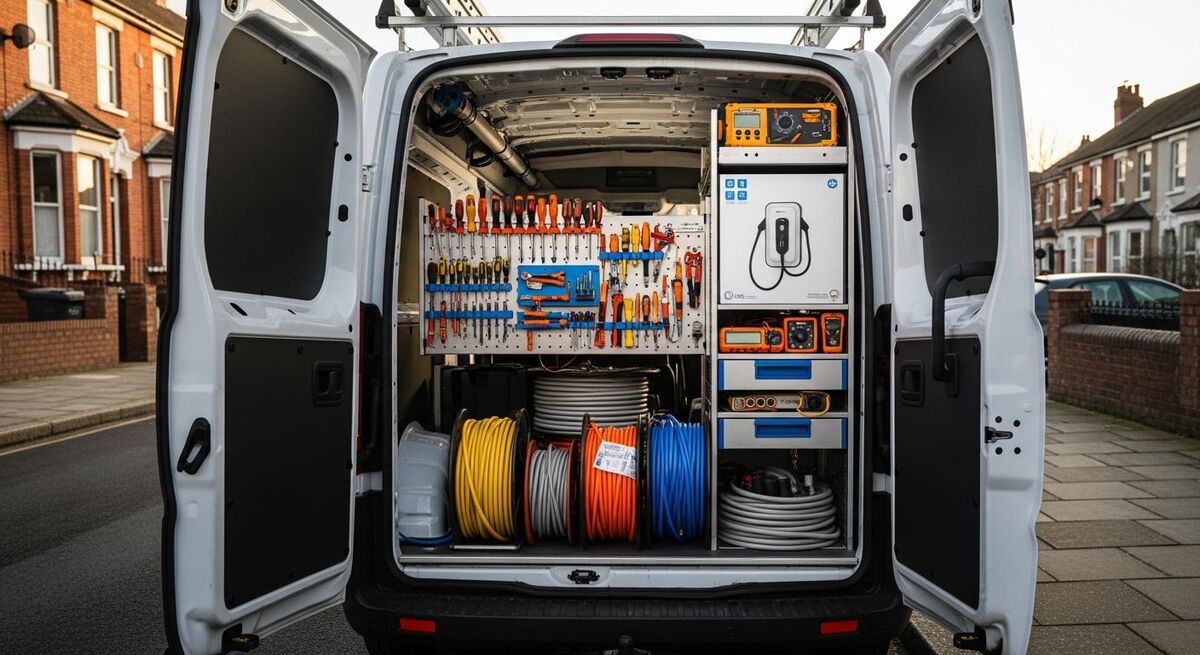
Here is how the numbers work for a sole trader or small electrical firm adding EV charger installation to their services.
Revenue per install
A typical residential installation (7kW smart charger, straightforward cable run from consumer unit to charger) charges out at £800 to £1,500 including the charger unit. The labour component is around £250 to £600. Equipment cost to you is typically £300 to £500 for the charger at trade price. That leaves a gross profit of roughly £300 to £600 per job.
Complex installations involving longer cable runs, consumer unit upgrades, three-phase supplies, or DNO notifications can push the total price to £2,000+ with proportionally higher margins.
Daily earning potential
A standard domestic install takes 3 to 4 hours. If you schedule efficiently, you can complete 2 installs per day. At £300 to £500 profit per install, that is £600 to £1,000 per day in gross profit. Even allowing for survey visits, paperwork, and the odd tricky job, £3,000 to £4,000 per week is realistic for a busy installer. Using automation tools for scheduling, invoicing, and customer follow-up can help you squeeze more efficiency out of your day without adding staff.
Annual projection
At 8 installs per week (conservative), 46 working weeks per year: that is 368 installs generating £110,000 to £185,000 in gross profit. After vehicle costs, insurance, scheme fees, and overheads, a net income of £60,000 to £100,000 is achievable for a sole trader. These are strong numbers compared to general domestic electrical work.
Some installers in this market have told me the real unlock is volume. Getting OZEV approval and building relationships with property developers and fleet operators creates a steady pipeline that general electrical work rarely offers.
Commercial vs residential installations
Residential work is where most installers start, and it is the bread and butter of the market. But commercial installations are where the bigger contracts sit.
Residential
Single-phase 7kW installations. Typically a Zappi, Ohme, Pod Point, or similar smart charger. Half-day job. £800 to £1,500 per install. High volume, low complexity. OZEV grant can reduce customer cost by up to £500. Most work comes through manufacturer referral networks, Checkatrade, and word of mouth.
Commercial
Workplace, fleet, and public charging. Can range from a few 7kW units in a car park to multi-bay 22kW or 50kW+ rapid charger installations. Contract values from £5,000 to £50,000+. Often requires three-phase supplies, load management systems, back-office software integration, and DNO applications. Longer lead times but much higher margins.
For the C&G 2921-34, you are covered for domestic and small commercial work. Larger commercial and industrial installations may require the C&G 2921-32 and 2921-33 combined course, which covers large-scale EV charging installations.
Fleet charging is a particularly strong growth area. Companies transitioning their van fleets to electric under the ZEV mandate need depot-based charging infrastructure. A single fleet contract can be worth more than a month of residential installs. If you can get ahead of this, the recurring maintenance agreements add predictable income on top.
If you are exploring related green energy certifications, read our guide on how to get heat pump certified in 2026. Many electricians are combining EV and heat pump work to offer a complete low-carbon services package. For automating your business admin as you scale, see our guide to AI tools for tradespeople. And for managing your growing customer base effectively, check our guide on building an AI customer service bot for your trades business.
What electricians are saying
Recommended videos
Electric Vehicle Charging Course: Become an EV Charging Point Installer
Learn Trade Skills
EV charging course info and advice: 2919 becomes 2921
A121 Training
How to become an OLEV approved installer and claim the grant
Artisan Electrics
Zappi EV charger installation and setup guide
Finney Electrical Top Electrician
EV charger installation UK: consumer unit connection deep-dive
eFIXX
10 things to know before getting an EV charging point installed in 2026
Artisan Electrics
Setting up: how to start an EV charging business
Strong Energy EV Charging
5 reasons to become an EV charge point installer
Universal Skills
Frequently asked questions
Technically, any Part P registered electrician can install an EV charger. But without the C&G 2921-34 or equivalent qualification, you cannot become OZEV-approved, which means your customers miss out on up to £500 in grant funding. In practice, the specialist qualification is essential if you want to compete.
If you already have the 18th Edition and are registered with a Competent Person Scheme, you can complete the EV course in 2 days and apply for OZEV authorisation the same week. The OZEV application itself takes a few weeks to process. From start to first install, allow 4 to 6 weeks.
Both work. Most electricians add it as an additional service line, which is lower risk and keeps your income diversified. A few have gone all-in on EV and renewable energy installations. The standalone route works better in urban areas with higher demand. In rural areas, it is best as part of a broader electrical services offering.
Not necessarily. Some installers buy units at trade price and mark them up. Others let the customer purchase the charger directly and charge labour only. Stocking units ties up cash but gives you better margins. Charger units cost £300 to £500 at trade, so carrying 2 or 3 popular models is manageable without a huge outlay.
Demand does not stop. Every new EV owner needs a charger. Existing chargers will need upgrading, maintaining, and replacing. Commercial and fleet charging infrastructure will continue expanding. The market gets bigger, not smaller. Getting in now means you build the experience and reputation while demand is still growing.
My verdict
The qualification pathway is straightforward, the training costs are modest, and the demand curve is steep. A £500 to £700 investment in the EV course pays for itself within your first few jobs. The 1 October 2026 EAS deadline is creating urgency, and the OZEV grant increase to £500 makes it easier to win customer work. If you are a qualified electrician looking to future-proof your income, get booked on the C&G 2921-34 and start building your EV installation pipeline now. The electricians who move first will own the relationships with manufacturers, property developers, and fleet operators. And so, the longer you wait, the more of that ground you give up.