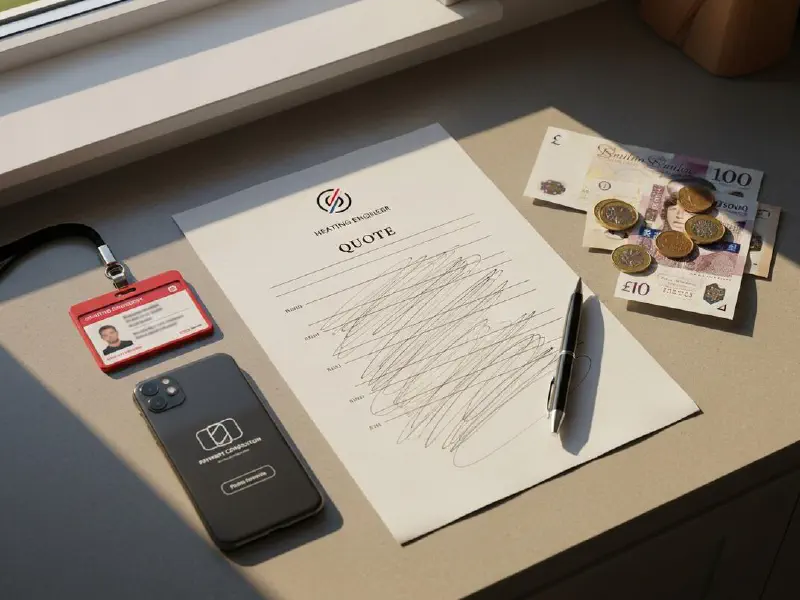

Quick Answer
A boiler service plan turns one annual visit into steady monthly income. Price it off what the service actually costs you to deliver, not off what the customer wants to pay. Model three numbers first: your call-out cost, a sensible parts allowance, and your admin overhead. Add a real margin on top. Sell it at the point of the install while the customer is already saying yes, keep the terms as a prepaid service plan rather than insurance, and chase renewals like they matter. Get 100 households on a £15 a month plan and you have added roughly nine grand of near-guaranteed profit to your year before you have picked up a single spanner in anger.
Table of Contents
- Why a service plan is the smartest money in your business
- Step 1: Model what one service actually costs you
- Step 2: Price the plan for profit, not to look cheap
- Step 3: Write terms that protect you (and keep you clear of the FCA)
- Step 4: Sell it at the point of the install
- Step 5: Manage renewals so the money keeps coming
- Step 6: The P&L, breakeven at 20, 50 and 100 plans
- What tradespeople are saying
- Recommended videos
- Frequently asked questions
- My verdict
Why a service plan is the smartest money in your business
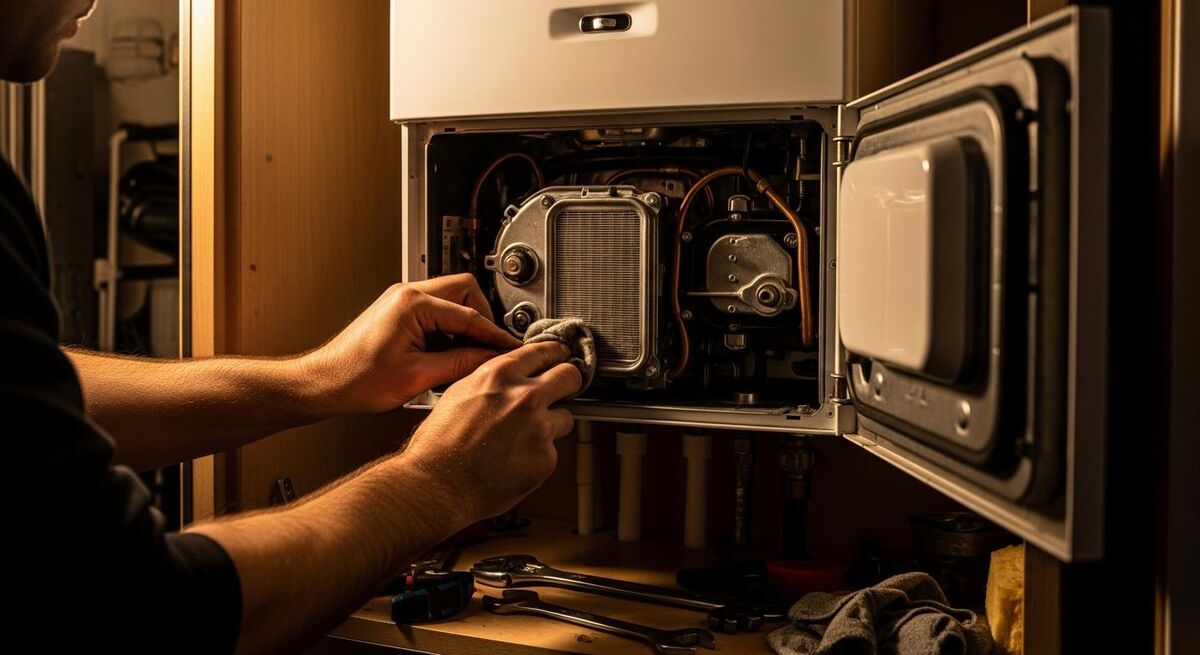
Here's a hard truth: most heating engineers are sat on a goldmine and treating it like a chore. You install a boiler, you shake hands, and you never hear from that customer again until something breaks. Sound familiar?
That is a broken model. You spend money finding a customer once, then you throw the relationship away. A service plan fixes that. It takes the one job every boiler needs every year and turns it into a monthly payment that lands in your account whether it is raining, whether you are on holiday, whether you are flat out or quiet.
In my eyes this is the single most underused lever in a plumbing and heating business. As a P&H accountant I have looked at hundreds of these businesses, and the ones that sleep well at night all have the same thing in common. They have a base of recurring income that covers the bills before the diary even opens. That is what working ON your business rather than just IN it actually looks like.
Recurring revenue is not exciting. It will not get you likes on a Friday afternoon. But it is the difference between a business you own and a job that owns you. Let's build one properly.
Step 1: Model what one service actually costs you
Before you pick a price, you need to know your cost. This is where most engineers go wrong. They see the big cover companies charging a tenner a month and they undercut it, without ever working out what a service costs them to deliver. That is how you end up busy and broke.
There are three numbers to nail. Get these right and the price sorts itself out.

Your call-out cost. This is the big one and it is not your day rate. It is what one annual service really costs your business in time. A domestic combi service is usually 45 minutes to an hour on site, plus travel. Cost that at your true internal rate, the number that covers the van, the fuel, the insurance and your Gas Safe registration, not the retail price you would charge a stranger off the street. For most one-van outfits that lands somewhere around £45 per visit once you are honest about travel and the gaps in the diary.
Your parts allowance. A service uses consumables. Seals, a spray of cleaner, the odd sensor. Then, across a book of customers, a few boilers each year will need a small part thrown at them that you have quietly agreed to cover. Do not guess this. Set a sinking fund per plan, put a figure aside every month, and treat it as a cost. I use around £15 a plan a year as a starting point for a service-only plan. If your terms include parts or labour on repairs, that number climbs fast and your price has to climb with it.
Your admin overhead. Every plan costs money to run even when nothing goes wrong. The Direct Debit fee, the reminder texts, the five minutes of scheduling, the accounting. Call it £10 a plan a year and you will not be far off for a service-only plan collected by Direct Debit.
Add those three together and a service-only plan costs you roughly £70 a year to deliver: £45 call-out, £15 parts allowance, £10 admin. That is your floor. Price below it and every customer you sign is a customer you pay to keep. Know this number cold before you talk to anyone about price.
If you have never costed a job to this level of detail, this is the same discipline that fixes your quoting. I have written a full breakdown of the profit levers that leak in a typical P&H business in the nine drivers of profit, and the service plan touches almost every one of them.
Step 2: Price the plan for profit, not to look cheap
Now you know a plan costs you around £70 a year. So what do you charge? I see engineers pricing at £8 or £9 a month because that is what the telly adverts say. Let's face it, that is a race you cannot win and should not want to.
You are not the big cover firms. You are the local engineer who actually turns up, knows the boiler, and answers the phone. That is worth more, not less. Price like it.
My rule is simple. Set the price so your gross profit per plan is comfortably more than the cost to deliver it. At £15 a month you are collecting £180 a year against a £70 cost. That leaves £110 of gross contribution per plan. That is a plan worth selling. At £12 a month you still make good money. Below a tenner, once real repairs creep in, you are working for the Direct Debit company.
Where each £180 goes on a £15 a month service-only plan. Most of it is profit, because you have priced off cost, not off fear.
Better still, do not offer one price. Offer three. I call it Three-Tier Pricing and it works on plans exactly like it works on quotes. A basic service-only plan, a middle plan that adds priority booking and a discount on call-outs, and a top plan that folds in parts and labour on repairs up to a cap. Most customers pick the middle. You have anchored the value, given them a choice, and quietly lifted your average plan price without pushing anyone.
The middle tier is where the money is. Price the basic plan to look sensible, price the top plan to make the middle look like the obvious pick, and watch most people choose the one you wanted them on all along. This is the same value-first logic behind repricing a P&H business when costs rise.
Step 3: Write terms that protect you (and keep you clear of the FCA)
This is the bit engineers skip, and it is the bit that bites. Right, listen carefully, because this can land you in real trouble.
There is a legal line between a service plan and insurance. If you promise to fix a customer's boiler if it breaks, you are edging towards selling an insurance product, and insurance is regulated by the Financial Conduct Authority. Sell it without authorisation and you are on the wrong side of the law.
Frame your plan as prepaid servicing, not as cover against breakdown. Define the "boiler service" as a Gas Safety Check and service carried out to statutory requirements and the manufacturer's recommendations by a Gas Safe registered engineer, annually. Discounts on call-outs and repairs are fine. A promise to cover the cost of any breakdown is where you risk straying into FCA-regulated territory. If in doubt, take proper advice before you sign a single customer up.
Set that aside and the rest of the terms are common sense. Put them in writing before anyone pays you a penny. Your plan document should spell out:
- What is included: one annual service to manufacturer and statutory standard, the safety checks, and exactly what a "service" covers.
- What is not included: parts, repairs, sludge and scale problems, pre-existing faults. Be blunt. Ambiguity always costs you, never the customer.
- The discounts: if you offer money off call-outs or repairs, state the percentage and the conditions.
- Payment terms: monthly by Direct Debit, when it is collected, and what happens if a payment fails.
- The minimum term and cancellation: a twelve month minimum is standard, because you carry the cost of the service across the year. Say how they cancel and what they owe if they leave before their service is done.
- Eligibility: the boiler must be a make and age you are happy to take on, and it should pass its first service before it goes on the plan.
Do a first service or a health check before you accept a boiler onto a plan. Take on a neglected fifteen year old unit blind and you have just signed up to fix someone else's neglect on your dime. The first service is your survey. Use it.
Step 4: Sell it at the point of the install

Here's the thing nobody tells you. The easiest plan you will ever sell is the one you sell on the day of the install. The customer has just spent two or three grand with you. They trust you. The boiler is gleaming. And the manufacturer's warranty almost certainly needs an annual service to stay valid. You are not selling. You are solving a problem they already have.
So build it into the job from the start. When you write the quote for the boiler, put the service plan on the quote. Not as an afterthought, not a mumbled "oh, and we do plans". Make it a line the customer reads while they are deciding to say yes. If you want the structure for that, I have laid out the whole thing in the 12-section boiler quote.
The pitch is short. The warranty needs a yearly service to stay valid. We do that service, it keeps your guarantee alive, it keeps the boiler efficient, and it means you never have to remember to book it. It is fifteen pounds a month and I set the Direct Debit up before I leave today. That is the whole thing. No pressure, no jargon.
Get the Direct Debit mandate signed on the day, on the spot. A plan the customer "will sort out later" is a plan you have lost. Have the paperwork ready, do it while the kettle is on, and it is done. The same discipline that gets you paid at every stage of an install applies here, which is why I bang on about stage payments on heating installs.
You do not have to stop at new installs. Every existing customer on your books is a plan waiting to happen. Next time you are out on a service or a repair, mention it. But the install is where conversion is highest, so start there and make it a habit on every single job.
Step 5: Manage renewals so the money keeps coming

A plan that quietly cancels itself is worse than no plan at all, because you counted on the money. Retention is where the real profit lives. Signing a customer is the expensive bit. Keeping them costs you almost nothing.
Two things kill plans: a service that never gets booked, and a failed payment that nobody chases. Fix both with a system.
- Track every service date. The day a plan starts, the clock starts on next year's service. Know when every customer is due, months ahead, not the week it lapses.
- Reach out first. Send the reminder before the anniversary. A text saying "you're due your service, here are two dates that work" turns a due date into a booked job without the customer lifting a finger.
- Watch for failed Direct Debits. Cards expire, accounts change. A failed payment that sits for two months is money gone. Get an alert and deal with it the same day.
- Book the next one on the doorstep. While you are there doing this year's service, agree next year's rough slot. The best time to renew a customer is when they are watching you do a good job.
Once you are past twenty or thirty plans you cannot hold the dates in your head. This is exactly what job management and Direct Debit software is built for: automatic service reminders, online rebooking, and a flag the second a payment bounces. It recovers money that was already earned and quietly leaking away. You do not need anything fancy to start, but you do need a system that tells you who is due and who has stopped paying.
Get this right and your plan base compounds. Every year you add new plans on top of the ones you kept. That is how engineers get to two hundred contracted customers and a diary that is half full before January even starts.
Step 6: The P&L, breakeven at 20, 50 and 100 plans

Let's put numbers on it, because a plan you cannot model is a plan you are guessing at. Here is a simple, honest P&L built on the figures from Step 1. A £15 a month plan, £180 a year, costing £70 a year to deliver, leaving £110 of gross contribution each. Fixed costs are your software, your Direct Debit platform, a bit of marketing and your terms sorted properly, which I have put at £1,320 a year to start.
Breakeven is the fixed cost divided by the contribution per plan: £1,320 divided by £110. That is twelve plans. Sign your thirteenth customer and the scheme is in profit. Everything after that is close to money for nothing.
| Line | 20 plans | 50 plans | 100 plans |
|---|---|---|---|
| Recurring revenue (£180 each) | £3,600 | £9,000 | £18,000 |
| Cost to deliver (£70 each) | £1,400 | £3,500 | £7,000 |
| Gross contribution | £2,200 | £5,500 | £11,000 |
| Annual fixed costs | £1,320 | £1,320 | £1,800 |
| Net profit | £880 | £4,180 | £9,200 |
| Net profit per plan | £44 | £84 | £92 |
Look at what happens as you scale. At twenty plans you are making a modest £880, because the fixed costs eat a big chunk of a small base. At fifty, the fixed cost is spread thinner and you are keeping £84 a plan. At a hundred, even after I have bumped the fixed costs up to £1,800 for the extra admin, you are clearing over nine grand a year and £92 of every plan is profit.
Nine thousand two hundred pounds is not the headline. The headline is that it is predictable. It arrives every month, it is not weather dependent, and it does not care whether you had a good quoting week. That is the number that lets you take on an apprentice, or take a fortnight off, or just stop lying awake in January. Build the base and the base pays you.
Change the assumptions to fit your own business. Higher parts allowance if you include repairs. Higher price if you are in London or the South East, where costs and expectations both run steeper. The model does not change. Know your cost, price for profit, and count the plans.
What tradespeople are saying
Plans divide opinion, and it is worth hearing both sides, because your customers have read the same forum threads. The doubters give you the exact objections you will need to answer at the kitchen table. The believers show you the value you are actually selling.
Notice the pattern. The people who hate plans have been let down by a big faceless firm that would not turn up. That is your opening. You are the local engineer who answers the phone, and that is exactly the gap a well-run plan fills.
Recommended videos

Boiler Servicing Explained by an Engineer
iHeat

What Should a Gas Boiler Service Include?
Gas Angel Heating

Is Servicing Your Boiler REALLY Worth the Cost?
Heatable
The Advantages of Boiler Service Contracts
Ryan Anthony's Media
6 Reasons to Sign a Maintenance Contract
HVAC Guide for Homeowners

How to Start a Plumbing & Heating Business (UK)
Todd Glister
Frequently asked questions
Work out your cost first, then price above it. A service-only plan costs most one-van businesses around £70 a year to deliver. Charge £12 to £15 a month and you keep a healthy margin. Do not chase the big cover firms down to £8 a month. You are the local engineer who actually turns up, so charge like it.
Not if you keep it as a prepaid service plan. The moment you promise to cover the cost of breakdowns, you are drifting towards selling insurance, which is FCA-regulated. Define the plan as annual servicing to statutory and manufacturer standards, offer discounts rather than cover, and take proper advice if you want to include repairs. Get this line right before you sign anyone up.
Direct Debit, every time. It is cheap, it is automatic, and it fails far less than cards. Set the mandate up on the day the customer signs, ideally at the install. Whatever you do, get an alert when a payment bounces so you can chase it the same day rather than losing two months of money.
The day you install the boiler. The customer trusts you, the warranty needs an annual service to stay valid, and they are already in a buying frame of mind. Put the plan on the quote so they read it while they decide. Existing customers are fair game too, but new installs convert best.
On the model in this guide you break even at around twelve plans. Twenty gets you a modest profit. The real money starts at fifty and above, where the fixed costs are spread thin and most of every payment is profit. A hundred plans is a five-figure line of predictable income before you count a single repair.
You can, but price for it properly and watch the FCA line. Every bit of cover you add raises your cost and your risk. My advice is to start with a service-only plan, get your numbers proven, then add a higher tier that includes repairs up to a cap once you know your book well enough to price the risk.
My verdict
A boiler service plan is the closest thing our trade has to money for old rope, and I mean that as the highest compliment. You already do the service. All you are doing is wrapping a business model around it. Cost it honestly, price it for profit, keep it the right side of the FCA, and sell it on the day the boiler goes in. Do that on every install for a year and you will have built something most engineers never do: income that turns up whether you do or not. That is working ON your business, not just in it. Start with your next install. Put the plan on the quote. Sign them up before you pack the van.