
Quick Answer
A good performance conversation is not a telling-off, and it is not the sack. It is a calm, private chat where you lay out the facts, listen to their side, and agree a clear fix with a date to check back. Do it early, do it in person, and keep it about the work, not the person. Prepare three specific examples before you open your mouth, keep the whole thing under twenty minutes, and follow up in writing the same day. The free script below walks you through it word for word.
Table of Contents
- Why this conversation matters more than you think
- Before you say a word: how to prepare
- The free script: five parts, word for word
- What to actually say (and what to never say)
- Handling the reaction you were dreading
- Close with a plan and a date
- The bit that keeps you out of trouble
- Six mistakes that turn a chat into a war
- Informal chat or formal process?
- What owners are saying
- Recommended videos
- Frequently asked questions
- My verdict
Why this conversation matters more than you think

You have known for weeks that something is off with one of your team. The paperwork keeps coming back half done. There is an attitude creeping in on site. Two customers have mentioned it now, not one. And every morning you tell yourself you will have a word, and every evening you drive home having said nothing.
I get it. Most trades owners came up on the tools, not through a management course. Nobody handed you a script for this. So you do what feels natural, which is to avoid it and hope it sorts itself out. It rarely does. The CIPD's Good Work Index found that around a quarter of UK employees experienced conflict at work in the past year, and nearly half of them simply let it go rather than say anything. That silence is expensive. Only about one in three people ever feel a workplace issue got resolved, according to the same CIPD research.
Here is the thing most owners miss. The conversation you are avoiding is not the problem. The avoidance is the problem. Every day you say nothing, you are teaching that team member that the standard is fine, teaching the rest of your crew that you will not deal with it, and quietly building resentment that leaks into every job. Managing underperformance is the one skill managers consistently say they feel least confident using, and it is also the one that protects everything else you have built. When a good person walks because the culture went soft, you feel it in the real cost of losing an engineer, and that number is brutal.
This is a conversation, not a verdict
The goal is not to punish anyone. It is to change what happens on the next job. Go in wanting to fix it, not to win it, and you have already done the hardest part right.
Before you say a word: how to prepare

The owners who dread these chats are almost always the ones who wing them. They walk in with a feeling (he is not pulling his weight) and no facts, and the whole thing collapses into he-said-she-said. Preparation is what turns a scary confrontation into a straightforward chat. Know your numbers before you sit down.
Spend fifteen minutes and get three things clear. First, the specific examples. Not "your paperwork is always late" but "the Henderson job on Tuesday and the boiler swap on Friday both came back without photos." Dates, jobs, facts. Second, the standard you actually expect, stated plainly, because it is amazing how often a team member simply did not know. Third, what a good outcome looks like for you, so you can name the fix rather than just list the faults.
Then sort the setting. Never do this on the hoof in the yard with the others in earshot, and never over a terse text. Pick somewhere private: the van, the site cabin, a quiet corner of the unit. Give it a proper ten or fifteen minutes rather than catching them as they rush off. Time it for when the heat has gone out of the situation, not two minutes after they have walked a callback back through the door. The public body ACAS is clear that an informal word should come before anything formal, and that a calm early chat is where most of these things get fixed. Their guidance on performance problems is worth a read.
Write your three examples on your phone first
Even experienced managers slip into vague, emotional language under pressure. Typing out the situation, the behaviour and the impact before you go in keeps you anchored to facts when your heart rate climbs.
The free script: five parts, word for word
This is the part you came for. It is built on a simple, well-tested feedback structure that behaviour experts call Situation, Behaviour, Impact, and I have adapted it for a trades setting where you are talking to someone you probably see every day. Copy it, change the names, and make it sound like you. The words matter less than the order.
Your free performance conversation script
Part 1: Open it plainly, and give them warning.
"Dave, have you got ten minutes? I want to have a chat about how a couple of jobs have gone lately. Nothing to panic about, but I would rather talk to you than let it sit."
Part 2: State the facts, not the character.
"On the Henderson job on Tuesday and the boiler swap on Friday, the sheets came back without photos and without a sign-off, so we had to send someone back out. That is two in one week."
Part 3: Name the impact.
"When that happens, the customer chases us, I end up covering the callback, and the rest of the lads pick up the slack. It lands on the whole team, not just you."
Part 4: Hand them the floor and actually listen.
"That is not like you, if I am honest, so I want to understand what is going on. What is your take on it?"
Part 5: Agree the fix and lock a date.
"Here is what I would like. Photos and a sign-off on every job before you leave site, no exceptions. Let us grab ten minutes in three weeks to see how it is going. Does that feel fair to you?"
Read it back and notice what it does. It opens with permission and takes the fear out. It sticks to two dated examples rather than a character assassination. It explains why it matters without a lecture. Then, crucially, it stops talking and asks. Half the time you will learn something you did not know: a sick kid, a broken app, a step nobody ever trained them on. And it finishes with a clear ask and a date, so the chat has teeth without ever raising your voice.
What to actually say (and what to never say)
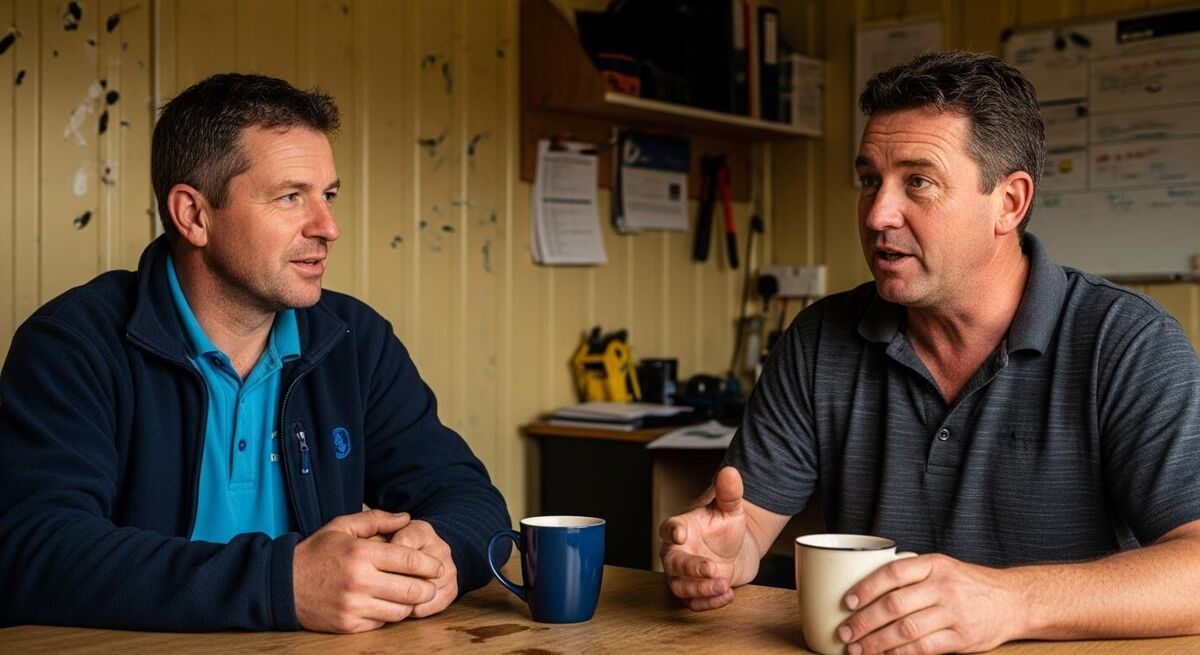
The single biggest fix I give owners is this: describe the behaviour, never label the person. "The sheet came back without photos" is a fact they cannot argue with. "You are lazy" is an opinion they will fight to the death, and rightly so. The moment you go personal, they stop hearing anything and start defending themselves, and the conversation is lost.
Watch your softeners too. A lot of us are so uncomfortable that we bury the message in so much padding the person leaves believing everything is fine. Managers do this constantly, and the employee walks out thinking they got praised. Be warm and be clear at the same time; the two are not enemies. Say the hard bit plainly, then shut up and let it land.
Keep your examples to two or three. Do not save up six months of grievances and empty the whole sack on them, because that is an ambush, not a conversation, and it tells them you have been quietly stewing for months. If something happens, deal with it while it is small and fresh. A short, specific word today is a hundred times kinder than a big blow-up in the summer. This is exactly the sort of steady, early attention that keeps your best people from drifting towards the door, and I have written before about why your best tradesperson is about to leave.
Ban these opening lines
"We need to talk about your attitude." "Everyone thinks you are slacking." "I do not want to do this, but..." Each one either labels the person, hides behind other people, or tells them you would rather be anywhere else. Lead with a specific fact and a specific job instead.
Handling the reaction you were dreading
You cannot control how someone reacts, only how you respond. Most reactions fall into four buckets, and each one has a simple move.
They get defensive. "It is not my fault, the job was a nightmare." Do not argue the facts back and forth. Acknowledge and redirect: "That might well be true, and I still need the photos on the sheet before you leave. How do we make sure that happens next time?" You are not debating blame; you are agreeing a standard.
They go quiet. Silence is uncomfortable, so most owners rush to fill it and end up talking themselves out of the whole point. Do not. Ask a gentle open question and then wait: "Talk me through how it looked from your end." Give them room. The quiet ones often need a beat to trust that this is safe.

They get upset. If someone wells up, you have not failed, and you do not need to fix their feelings. Pause, offer them a minute, lower your voice. "Take your time, there is no rush." A person in tears is not weak; they care. Let the emotion pass and then gently return to the plan. Sometimes an emotional reaction is the first sign of something bigger going on at home or in their head, which is why keeping an eye on mental health and burnout in your team matters so much.
They fight back. "Well, so-and-so does it too and you say nothing." Do not get dragged into a comparison. "I am talking to you about your jobs today, and I will deal with anything else separately." Stay in your lane, keep it about the specific work in front of you, and do not let the conversation become a tour of everyone else's failings.
Silence is a tool, not a gap to fill
After you ask a question, count to five in your head before you say another word. It feels like forever. It is where the honest answers live.
Close with a plan and a date
A performance conversation with no follow-up is just a moan with a witness. The bit that actually changes behaviour is the ending: a clear, small, agreed action and a date in the diary to check on it. Vague hopes ("just sort it out, yeah?") change nothing. Specifics do.
Agree one or two concrete things, not ten. Photos and sign-off on every job. Van loaded and away by half seven. Whatever the real issue is, name the standard in plain language and make sure they agree it out loud, because an agreement they said back to you sticks far better than one you announced at them. Then set the follow-up: two or three weeks, not next year's appraisal. Lock it in the calendar while you are both sitting there.
Within a few hours, send a short, friendly note confirming what you agreed. Two lines is plenty. It is not a threat and it is not a formal warning; it is a shared memory so nobody is arguing in a month about what was said. That habit of documenting the plan is what separates owners who keep improving their teams from owners who have the same chat over and over. It is the same discipline that underpins good staff retention generally: people stay where they know exactly where they stand.
The 24-hour note
"Good chat today, Dave. Just to confirm: photos and sign-off on every job before you leave site, and we will catch up on the 24th to see how it is going. Thanks for being straight with me." Send it. Keep a copy.
The bit that keeps you out of trouble

Most of these chats never go any further, and that is the point of having them early. But you still want a light paper trail, because if a pattern does not improve, that record is what lets you move fairly to a formal process later. Keep it simple: the date, the examples you raised, what you both agreed, and the follow-up date. A note on your phone or a line in your job system is fine.
Know where the line sits. An informal conversation should never, by itself, turn into a formal disciplinary warning; those are two different things with different rules. Informal is a supportive word to help someone improve. Formal capability kicks in only if the informal route does not work, and it comes with its own fair process. ACAS sets this out clearly, and their performance management guidance is the free reference every trades employer should bookmark.
One more practical point. At the informal stage there is no automatic right for the person to bring someone with them, though it is often sensible to allow it if they ask, and it can help avoid any suggestion of unfairness. If you are worried a situation is heading towards a dismissal, that is the moment to get proper advice before you act, not after. Getting the process wrong is how good intentions end up at a tribunal.
Do not threaten the job at the informal stage
"Sort it or you are out" turns a supportive chat into an implied warning, and it can undermine a fair process later. Keep informal informal. If things are serious enough to mention someone's job, you should be running a proper formal procedure with advice behind you.
Six mistakes that turn a chat into a war
- Winging it. No examples, no plan, just a feeling. You will lose the argument and your credibility with it.
- Doing it in front of the crew. Public criticism humiliates people, and humiliated people do not improve, they plot their exit.
- The feedback sandwich gone soggy. So much praise wrapped around the message that they leave thinking everything is fine.
- Saving it for the annual review. Twelve months of stored-up niggles dumped at once is an ambush. Deal with things while they are small.
- Going in hot. Have the chat once you are calm. Anger makes them defensive and makes you say things you cannot take back.
- No follow-up. If you never check back, you have told them the standard did not really matter after all.
Notice the theme
Every one of these mistakes is really about avoidance or ego. Slow down, prepare, keep it private, and check back. Do those four things and you will handle this better than most managers twice your size.
Informal chat or formal process?
People get these two muddled and either go in too heavy on a small issue or too soft on a serious one. Here is the plain difference.
| Informal conversation | Formal capability process | |
|---|---|---|
| What it is | A supportive, private chat to fix a specific issue early | A structured procedure with set stages, notes and review points |
| When to use it | First sign of a problem, a one-off, or a fixable habit | When informal chats have not worked, or the issue is serious |
| Records | A short private note for your own memory | Formal written records shared with the employee |
| Right to be accompanied | No automatic right, but often sensible to allow | Yes, the employee can be accompanied |
| Outcome | Agreed actions and a follow-up date | Can lead to warnings and, ultimately, dismissal if unresolved |
Start informal almost every time. The vast majority of performance issues in a trades business are habits, misunderstandings or something going on at home, and a calm early word fixes them without any of the formal machinery. Save the formal route for when the informal one has had a fair run and nothing has changed. And if you are hiring your way out of a performance problem, read why the panic hire costs more than the vacancy before you post the advert.
What owners are saying
You are not the only one who finds this hard. Here is what real business owners and people-people are saying about managing performance, pulled from public forums and posts.
Recommended videos

How to have a performance management conversation
The HR Hub with Andrea Adams

How to start a difficult conversation with your direct report
Leadership Training for Engineering Managers

The 4 most difficult conversations for managers
Makeda Andrews

How to talk with employees about performance
Culture Engineered

How to have difficult conversations at work
Future Ready Leadership With Jacob Morgan

Tips for having difficult conversations with employees
HR360Inc

How to have difficult conversations with employees
Makeda Andrews

Mastering difficult conversations: a guide for leaders
HRM Services
Frequently asked questions
No. Lead with a face-to-face conversation. A letter out of the blue feels formal and cold, and it puts people straight into defence mode. Have the chat, then send a short friendly note the same day confirming what you both agreed. That is the right order.
Stay calm and give them a moment. You do not need to fix their feelings or rush to make it better. Lower your voice, offer a minute, and when they are ready, gently return to the plan. Tears usually mean the person cares, not that you have done something wrong.
For an informal chat, usually not. There is no automatic right for them to bring someone, though it is fine to allow it if they ask. If the issue is serious enough that a witness feels necessary, that is a sign you may be heading into a formal process, and you should take advice first.
Two or three weeks, not the annual review. Long enough to see a genuine change, short enough that it still feels connected to the conversation. Book the date while you are both sitting there so it actually happens.
Have one more clear conversation and confirm the standard again in writing. If it still does not improve, that is your cue to move from an informal word to a formal capability process, following a fair procedure. At that point, get proper employment advice before you take any action.
You can raise quality and standards on a job, but the framing is different because a genuine subcontractor is running their own business, not employed by you. Keep it about the contract and the work delivered rather than performance management, and be careful not to treat them like an employee, or you blur their status.
My verdict
Have the chat while it is still small
Nobody enjoys these conversations, and you do not have to. You just have to have them, early, in private, with your facts ready and a plan at the end. Come off the tools for twenty minutes, be warm and be clear at the same time, and remember the aim is to fix the next job, not to win the last one. Do that consistently and you will keep good people who would otherwise have quietly slipped away, and you will build the kind of team that actually wants to work for you. Try the script on the next issue that lands on your desk, and please do let me know how you get on.