
Quick Answer
If you are already a qualified electrician, adding solar is one of the cleanest service lines you can bolt on. You need the City & Guilds 2922 solar qualification, then your company registers with MCS so customers can claim their export payments. Budget roughly £3,000 to £5,000 to get qualified and certified, and expect £2,000 to £5,000 profit on a typical domestic install. The UK fitted a record 267,032 solar systems in 2025. The demand is there. This guide walks you through the training, the certification, the grid and VAT rules, and the tools that let you quote a job in minutes.
Table of Contents
- Why solar is the add-on worth building
- The money: what a solar install actually pays
- What you'll need before you start
- Step 1: Get qualified (C&G 2922)
- Step 2: Get your company MCS certified
- Step 3: Learn the grid and VAT rules
- Step 4: Use AI design tools to quote fast
- Step 5: Price the job and add the battery
- Step 6: Systemise the admin so it scales
- Common mistakes to avoid
- What installers and homeowners are saying
- Recommended videos
- Frequently asked questions
- My verdict
Why solar is the add-on worth building
I spent years as a heating engineer before any of the tech stuff. So I know the appeal of a new service line, and I know the graveyard of ones that never paid off. Solar is not in that graveyard. For a qualified electrician, it is one of the few add-ons where the skills you already have do most of the heavy lifting.
The numbers back it up. The UK installed 267,032 certified solar PV systems in 2025, according to MCS. That is a 31 percent jump above the previous annual record, which had stood since 2011. Total certified solar installs now sit above 1.85 million. New build homes made up 35 percent of installs last year, and that share is climbing as the Future Homes Standard pushes solar onto more roofs by default.
Here is the part most training adverts skip. Solar is not a standalone business you have to build from nothing. It slots into the round you already run. You are on a customer's roof for an EV charger or a consumer unit upgrade, and you leave with a solar enquiry. Roofers are in an even stronger spot, because you are already up top and already trusted with the fabric of the house.
Who this guide is for
This is written for qualified electricians and roofers in the UK who want to add solar PV as a service line, not for someone starting cold. If you hold a Level 3 electrical qualification and your 18th Edition, you are most of the way to the entry requirements already. Roofers usually partner with an electrician for the electrical sign-off, and I cover that below.
The money: what a solar install actually pays
Let's talk about the bit that matters. A typical domestic system in 2026 sells for somewhere between £5,500 and £8,500 fully installed, with the average four kilowatt system on a three bed house landing around £7,500. Gross margins in the trade run 25 to 35 percent. The installers who run tight, quote well and buy sensibly clear 20 percent net or better.
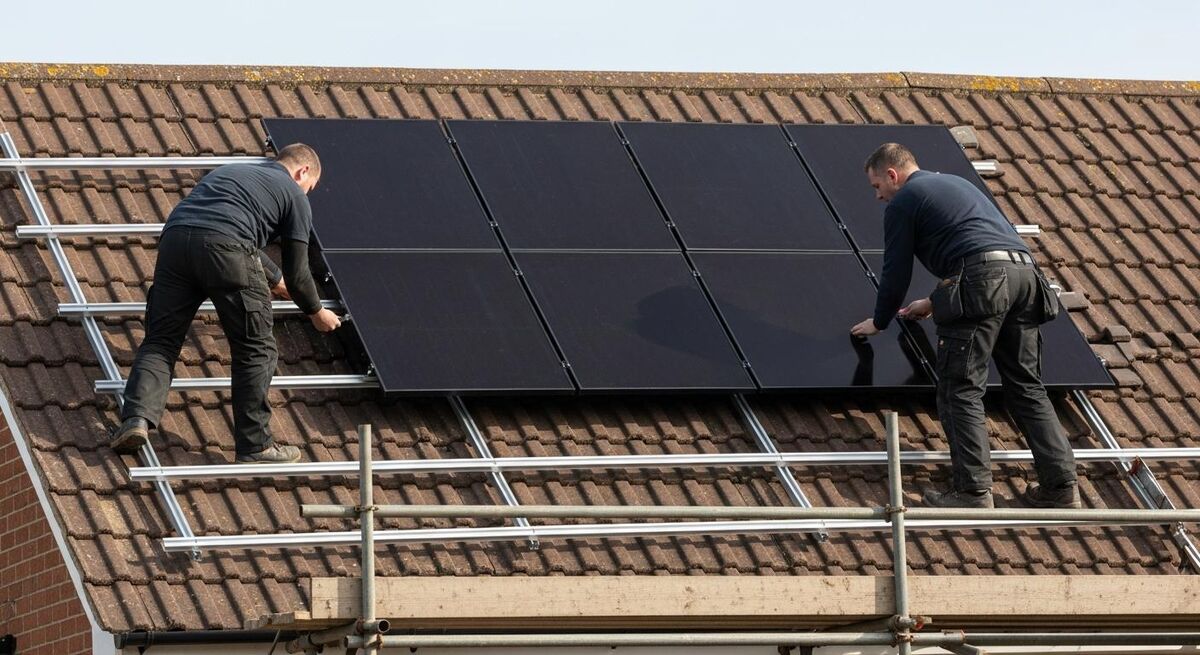
On a single domestic job, that translates to roughly £2,000 to £5,000 of profit once you strip out panels, inverter, mounting, scaffold and labour. The spread is wide because it depends entirely on how sharp your buying and your quoting are. Buy your panels and inverters through a proper distributor rather than a shed, and the equipment line stops eating your margin.
Two things push that profit higher without much extra work. The first is batteries, which I come back to in Step 5. The second is speed. A two person team can complete a straightforward install in a day, sometimes a day and a half with scaffold. Fit two a week around your existing work and you are looking at real money on top of your normal turnover. The same pricing discipline I wrote about for heat pump installs applies here: protect the margin, do not race anyone to the bottom.
The 0% VAT window is a live selling point
Domestic solar carries 0 percent VAT in Great Britain until 31 March 2027, when it reverts to 5 percent. That covers panels, inverter, mounting, cabling and the labour. Standalone batteries retrofitted to an existing system have also been 0 percent since February 2024. Tell customers this. A job done and invoiced before the deadline saves them the VAT, and it is a genuine reason to book now rather than next year. Full detail is in VAT Notice 708/6.
One honest caveat. The setup cost is front loaded. You pay for training, certification, insurance and a consumer code membership before you invoice your first job. Most installers recover that inside the first handful of installs, but go in with your eyes open about the order of the cash flow.
What you'll need before you start
Before you spend a penny on a course, check you have the foundations. Solar certification is built on top of a standard electrical qualification, not instead of it.
Prerequisites checklist
✓ A Level 3 electrical qualification (NVQ or equivalent)
✓ Current 18th Edition Wiring Regulations (City & Guilds 2382)
✓ Inspection and Testing (City & Guilds 2391) strongly recommended
✓ Registration with a Competent Person Scheme such as NAPIT or NICEIC for Part P
✓ Around £3,000 to £5,000 of setup budget for training, MCS, insurance and consumer code
✓ Public liability insurance of at least £2 million
Roofers, this is where you make a decision. You can do the physical mounting and the roof work, but the electrical connection and sign-off must be done by a qualified electrician. Plenty of roofers run solar by partnering with a sparky, or by putting a directly employed electrician on the books. Both work. What does not work is winging the electrical side, and I will be blunt about why in the mistakes section.
Step 1: Get qualified (C&G 2922)
The qualification you want is the City & Guilds 2922, the Award in the Design and Installation of Small Scale Solar Photovoltaic Systems. It replaced the old 2919 that a lot of older guides still mention. If a training provider is still selling you a 2919, walk away, because they are behind.
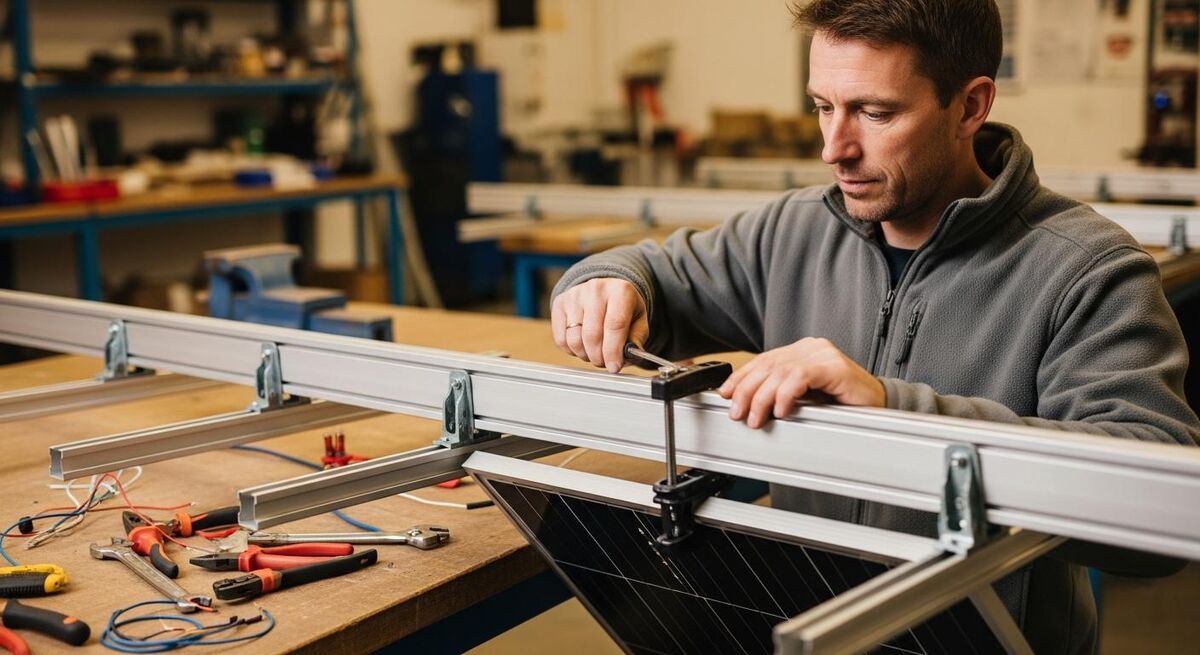
It is a three day course for people who already hold the electrical prerequisites. Providers like NAPIT, GTEC, Total Skills and Learn Trade Skills all run it. Pricing sits around £689 to £750 for the standalone solar course, and roughly £975 to £1,199 if you take it combined with battery storage, which most people should.
My strong steer: do the combined solar and battery storage course from the start. The battery qualification, the EESS side, costs a few hundred pounds more when bundled and it is far cheaper than coming back for it later. Nearly every domestic customer who wants solar will ask about a battery within two years, and 2025 set a record for battery installs too. Get both tickets in one hit.
The qualification is yours. The MCS certification is your company's.
This trips people up constantly. Passing the 2922 makes you a qualified individual. It does not make you MCS certified. MCS is awarded to a business, not a person. Your company uses your qualification as evidence, but the certification, the audits and the consumer code all sit with the company. If you are a sole trader, that is still you, just wearing your business hat.
Step 2: Get your company MCS certified
MCS, the Microgeneration Certification Scheme, is the government backed quality mark for small scale renewables. Here is why it is not optional in practice. Without an MCS certificate, your customers cannot claim Smart Export Guarantee payments for the electricity they sell back to the grid. Most homeowners will not shortlist a non-MCS installer, and a growing number of home insurers will only cover an install done by an MCS member. No MCS, no serious domestic work.
Getting certified is a process, not a course. Your business applies to a Certification Body, which assesses your competence, your paperwork and one of your early installs.
- Nominate your Technical Person: at least one person with the MCS approved solar qualification, evidencing the competence.
- Put a Quality Management System in place: documented procedures for how you quote, install, commission and hand over. It must be proportionate to your size, so a sole trader's QMS is lean.
- Join a Consumer Code: RECC or HIES, both approved by the Chartered Trading Standards Institute. This protects the customer and is mandatory.
- Sort your insurance: public liability of at least £2 million, plus employer's liability if you have staff.
- Apply and pass the assessment: the Certification Body checks your documents and inspects a real install before signing you off.

Cost wise, the certification itself starts around £500 to £1,500. Be realistic though. By the time you add your consumer code membership, insurance, calibrated test kit and the admin time, the true first year cost of getting properly set up runs into a few thousand, not a few hundred. Installers on the forums are candid about this, and they are right to be. Timelines vary too. Some businesses are through in six to twelve weeks, others take longer to get the QMS and evidence in order.
Do not let that put you off. It is a one time barrier that keeps the cowboys out and protects your prices. Once you are in, you are on the MCS installer database that homeowners search, and that quality mark is worth quite some margin when you are quoting against someone who does not have it.
| What the customer gets | MCS-certified installer | Non-certified |
|---|---|---|
| Smart Export Guarantee payments | Yes | Not available |
| Shortlisted by most homeowners | Yes | Rarely |
| Home insurer accepts the install | Usually | Often refused |
| Listed on the MCS database | Yes | No |
| Upfront setup cost and admin | Higher | Lower |
Step 3: Learn the grid and VAT rules
Every domestic solar install has to be notified to the local Distribution Network Operator, the DNO. This is not paperwork you can skip, and getting it wrong is how you end up on the wrong side of the network operator. There are two routes, and which one you use depends on system size.
For most domestic systems under 3.68 kilowatts per phase, you use G98. It is a fit and inform process. You install, commission, and notify the DNO within 28 days. There is no charge and no waiting for permission. For anything larger, or where the DNO's local network is constrained, you use G99, which means you apply and get approval before you switch on. The G99 route can take weeks, so factor it into your customer's timeline.
Never energise before the notification is right
Installing a system that should have been a G99 application and treating it as a fit and inform G98 is a serious error. So is skipping the DNO notification entirely. If the network operator finds an unnotified generator, it lands on you, not the customer. Get the connection classification right before you quote, and let your Competent Person Scheme registration cover the Part P notification for the electrical work.
On VAT, I covered the 0 percent rate above, but it is worth repeating that you, the installer, apply it. You invoice the customer at 0 percent VAT for the qualifying work, and you reclaim the VAT you paid on the materials in the normal way. Get your accountant to confirm you have this set up correctly before your first job, because a mistake here is a mistake on every invoice.
Step 4: Use AI design tools to quote fast
This is where the job has changed the most, and for the better. Ten years ago, sizing an array and modelling the yield meant a site visit, a tape measure and a spreadsheet. Now the software does the heavy lifting from a satellite image, and most of the good tools are free.
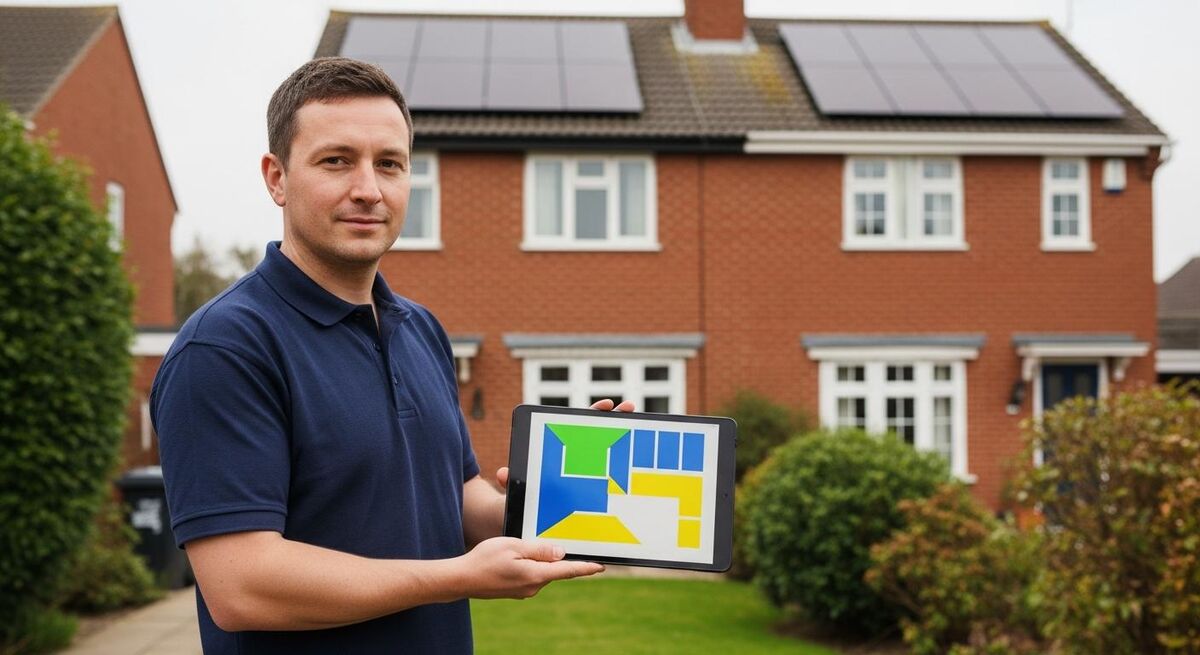
OpenSolar is the one most UK installers land on. It is free, used by tens of thousands of installers worldwide, and its MCS calculator follows the official UK performance standard so your yield figures hold up. You drop a pin on the address, it pulls the roof, you lay panels on it in 3D, and it models shading and generation and spits out a customer facing proposal. Version 3 turned it into a full CRM as well, so your pipeline lives in the same place.
Easy PV and SolarEdge's own Designer tool do similar jobs, and there is a growing set of AI features that suggest panel layouts and optimise the array for a given roof automatically. The point is not which one you pick. The point is that design and quoting is no longer the slow, expensive part of the job. If you want the wider picture on where AI actually earns its keep for trades, I pulled it together in the complete guide to AI tools for tradespeople.
Let the tool do the maths, not the promising
AI yield calculators are brilliant for speed, but the number they produce is an estimate. Under your consumer code, you are responsible for the performance estimate you hand the customer. Use the MCS compliant setting, be conservative with shading, and never let a slick proposal talk you into a figure you cannot stand behind on the doorstep.
Step 5: Price the job and add the battery
Once the design is done, pricing is a discipline, not a guess. Build a proper materials list from the design, add your labour and scaffold, apply your margin, and present it cleanly. A tidy, itemised proposal wins more work than the cheapest number scribbled on the back of a card. This is the same logic behind automating your quoting, where the goal is a professional quote out the door before the customer has spoken to anyone else.
The battery is where the job gets interesting for your margin. Most solar customers who do not take a battery on day one come back for it within a couple of years, so offer it as an option on every quote. It lifts the average job value, it uses the EESS qualification you picked up in Step 1, and the standalone battery retrofit is 0 percent VAT too. A solar plus battery proposal is a bigger, better job than solar alone, and the customer keeps more of their own generation.
Always quote a battery option
Present two or three options on every proposal: solar only, solar plus a battery, and a premium tier with a larger battery or extra panels. Customers self select up more often than they select down. You are not being pushy, you are giving them the choice they will otherwise go elsewhere to get.
Step 6: Systemise the admin so it scales
Here is the thing that separates a solar side line that stays a side line from one that becomes a proper part of your business. It is the admin. MCS brings a documentation load: handover packs, commissioning certificates, DNO confirmations, consumer code paperwork, warranty registrations. Do that on paper and it will bury you by the tenth install.
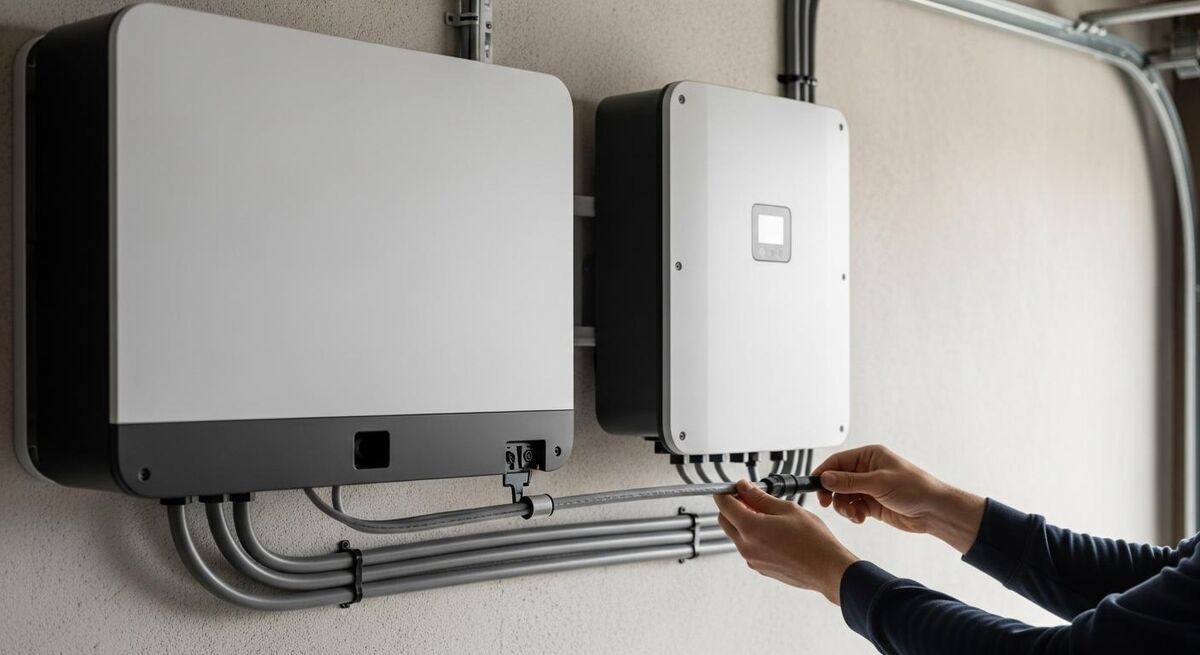
Field service software built for renewables handles this. I wrote a full walkthrough on setting up Payaca for solar installers, because it is one of the few platforms designed around the MCS workflow rather than bolted onto it. Whatever you use, the goal is the same: the moment a job is done, the certificate is generated, the customer gets their pack, and your compliance evidence files itself.
The other half of scaling is the front end. The enquiries, the follow ups, the chasing. This is exactly the sort of repetitive work that technology should take off your plate so you can stay on the tools. A simple setup like a customer service bot can field the first round of solar enquiries, answer the obvious questions about panels and payback, and book the ones worth your time.
None of this is about replacing the engineer. It is about extending what one engineer can carry. Get the admin and the enquiry handling running quietly in the background, and you can add solar without adding a full time office job to go with it. That is how you scale the right way.
Common mistakes to avoid
Every one of these has cost an installer real money or a real headache. Learn them here rather than the hard way.
Trading on solar work before MCS is in place
You cannot offer customers the Smart Export Guarantee, and in many cases their insurance, until your company is certified. Taking deposits for MCS work you cannot yet certify is the fastest way to a complaint and a refund. Get certified, then sell.
Treating the qualification as the finish line
The 2922 is the start. The certification, the consumer code, the insurance and the QMS are what actually let you trade. Budget the time and money for the whole path, not just the course fee.
Underquoting to win the first few jobs
The temptation to buy your first installs by undercutting everyone is real, and it sets a price you cannot climb back from. Price properly from job one. Your MCS certificate is the reason you do not have to be the cheapest.
Ignoring the G99 threshold
Assuming every domestic job is a simple G98 fit and inform will catch you out on larger arrays or constrained networks. Check the connection route before you commit to a timeline, because a G99 approval can add weeks.
What installers and homeowners are saying
Recommended videos

How to get MCS approved as a solar installer
Mark The Sparky Allison
So you want to be a solar installer?
Mark The Sparky Allison
Real Electrical Setup of a UK Solar PV Install
Blue Ape Renewables
Solar & Battery Installation: What to Expect
Apex Doma Solar
Solar PV Overview with Electrician/Installer
Paul The Solar Guy
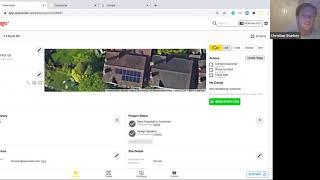
OpenSolar UK Deepdive Training
OpenSolar
Frequently asked questions
To do the electrical connection and sign it off, yes. The install involves working on the consumer unit and the grid connection, which is notifiable electrical work. Roofers can do the mounting and the roof side, but you need a qualified electrician for the electrical part, either as a partner or on your payroll.
The training course is three days. The MCS certification on top of that varies. Some businesses get through in six to twelve weeks, others take a few months to get the quality management system and evidence in order. The bottleneck is usually your paperwork, not the assessor.
The solar and battery course is roughly £975 to £1,199. MCS certification starts around £500 to £1,500. Add your consumer code membership, insurance and test kit, and a realistic first year figure is £3,000 to £5,000. You recover it over your first few installs.
Not legally, but commercially it may as well be. Without it your customers cannot claim Smart Export Guarantee payments, most will not shortlist you, and many insurers will not cover the install. For domestic work, treat it as essential.
Get it. Take the combined solar and battery course from the start. It costs a few hundred pounds more than solar alone, and nearly every customer asks about a battery eventually. Coming back for it later costs you more time and money.
G98 is for smaller systems under 3.68 kilowatts per phase. You install and then notify the DNO within 28 days, no permission needed. G99 is for larger systems or constrained networks, and you must get approval before you switch on, which can take weeks.
A competent two person team can do a straightforward domestic install in a day, or a day and a half with scaffold. Fit two a week around your existing work and you have added meaningful turnover without needing a second crew.
My verdict
The skills carry over, the demand is at a record high, and the setup cost is modest against £2,000 to £5,000 of profit per install. Do it properly. Get the combined solar and battery ticket, get your company MCS certified before you sell a single job, and set up your admin so it does not swallow the extra margin. The installers who will still be here in five years are not the cheapest. They are the ones who got qualified, priced with a bit of backbone, and let technology carry the paperwork while they stayed on the tools. Mate, do not cut the MCS corner. That certificate is the whole reason you get to charge what the job is worth.