

Quick Answer
A structured 5-day onboarding plan cuts time-to-productive by 50% and makes new engineers 82% more likely to stay past year one. This guide gives you a day-by-day playbook covering equipment, software access, shadow jobs, and first solo work, with digital checklists you can automate using ServiceM8, Commusoft, BigChange, or n8n.
Table of Contents
- Why the first five days matter
- Before Day 1: pre-boarding checklist
- Day 1: welcome, paperwork, and kit
- Day 2: software access and systems training
- Day 3: shadow jobs with a senior engineer
- Day 4: supervised solo work
- Day 5: first independent job and review
- Automating onboarding with n8n
- FSM platform onboarding features compared
- What tradespeople are saying
- Recommended videos
- Frequently asked questions
- My verdict
 ServiceM8
 Commusoft
 BigChange
 n8n
n8nWhy the first five days matter
I have seen too many trades businesses lose good engineers in the first month. Not because the job was wrong, not because the money was off, but because nobody bothered to show them how things work here. The new starter gets handed a van key and a list of jobs. Sink or swim. That is not a plan.
The data backs this up. Organisations with structured onboarding see 82% higher retention and cut time-to-productive by half. Employees who receive the tools they need on day one are 80% more likely to make it through their first year. Those numbers are not abstract. They translate directly into fewer recruitment cycles, less wasted training budget, and engineers who actually stick around long enough to become profitable.
Five days is the sweet spot. Long enough to cover everything properly. Short enough to get your new engineer earning revenue by the end of the week. This is not corporate HR theatre with personality quizzes and trust falls. It is a practical sequence: paperwork, kit, systems, shadowing, then supervised solo work.
Replacing a single field service engineer costs between £10,000 and £15,000 when you factor in recruitment fees, lost productivity during the vacancy, training time for the replacement, and customer disruption. A proper 5-day onboarding plan costs you nothing beyond time and planning.
Before Day 1: pre-boarding checklist
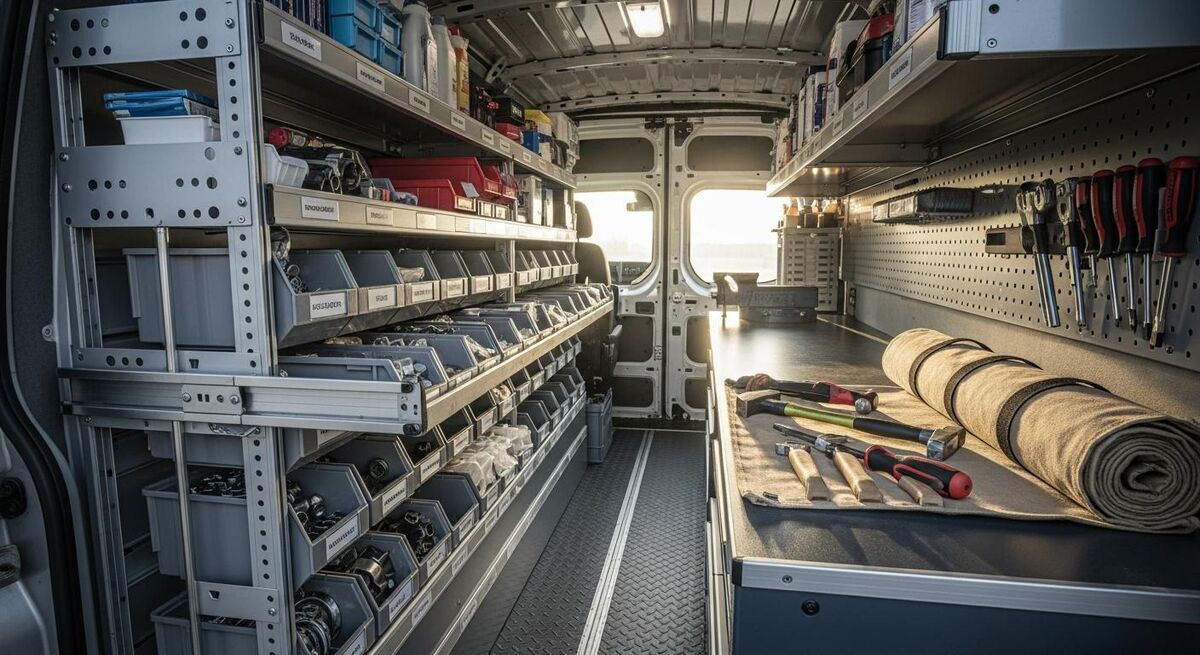
The onboarding starts before your new engineer walks through the door. Getting this right means Day 1 runs smoothly instead of being consumed by paperwork and admin.
Your pre-boarding checklist should cover these items, ideally completed 3-5 working days before the start date:
Employment paperwork: Contract signed and returned. P45 or starter declaration received. Bank details for payroll. Emergency contact information. Right-to-work documentation checked and copied.
Equipment ordered and ready: Van allocated, taxed, insured, and stocked with basic consumables. Uniform or branded workwear. Company phone or tablet (charged, with SIM activated). Tool kit appropriate to their role. PPE to current standards.
Digital access prepared: FSM platform account created (ServiceM8, Commusoft, or BigChange). Email address set up. Calendar and scheduling access provisioned. Any specialist apps installed on their device. Login credentials printed or saved in a welcome pack.
People notified: Existing team told who is starting and when. Mentor or buddy assigned. First week of shadow jobs booked with senior engineers. Customers on Day 3-5 jobs informed a trainee will be present.
Set up an n8n workflow that triggers 5 days before any new starter date. It can send reminders to your office manager about equipment prep, email the mentor with shadow job dates, and create checklist tasks in your FSM platform automatically.
Day 1: welcome, paperwork, and kit
Day 1 is about making your new engineer feel like they belong. Not dumping them in the deep end. Not leaving them sitting in a van for two hours while you finish your own jobs.
Morning (08:00-12:00):
Meet them personally. Show them around: office, stores, parking, break area. Introduce them to every team member by name and role. Complete any remaining paperwork together. Walk through company policies: working hours, break times, sick leave process, expenses, van usage rules.
Afternoon (13:00-17:00):
Hand over their van and walk through the stock list together. Give them time to organise tools how they like them. Run through the vehicle check process they will do each morning. Hand over their phone or tablet with apps pre-installed. End the day with a 15-minute chat: how did it feel, any questions, what to expect tomorrow.
The key principle here: no jobs on Day 1. None. Not even a simple one. The temptation to get them earning immediately is strong, even more so when you are short-staffed. Resist it. One proper day of orientation saves you weeks of confusion later.
Day 2: software access and systems training

Day 2 is dedicated to your digital systems. Most FSM platforms are straightforward once someone shows you where things are, but letting an engineer figure it out alone on a live job is asking for missing data and frustrated customers.
Core systems to cover:
Job acceptance and scheduling: how to see their diary, accept or flag issues with allocated jobs. Navigation and route planning: which app you use, how to log travel time. On-site workflow: how to clock on to a job, record work done, add photos, capture customer signature. Parts and materials: how to log stock used, request parts, record purchases. Invoicing and completion: how to mark a job complete, trigger invoicing, leave notes for the office.
Run through each process using a test job, not a real one. Most platforms (ServiceM8, Commusoft, BigChange) have sandbox or training modes. Let them make mistakes where it does not matter. Have them complete the full cycle three times: accept job, travel, arrive, complete work, close out.
By the end of Day 2, your new engineer should be able to handle the digital side of a standard job without calling the office. That is the benchmark. If they are not there yet, extend this to the morning of Day 3 before shadow jobs begin.
Certificates, Gas Safe notifications, Part P submissions, or whatever compliance documentation applies to your trade. Show them exactly how your company handles these. Compliance errors on a new engineer's first solo job can result in callbacks, customer complaints, and regulatory issues.
Day 3: shadow jobs with a senior engineer
Day 3 is where the real learning happens. Your new engineer rides with a senior team member and watches how your company actually does things in the field. Not textbook theory. Real-world practice.
What the senior engineer should demonstrate:
Customer greeting and first impression. How you assess the job on arrival. How you communicate scope and pricing to the customer. The actual technical work (your company's standards and methods). How you use the app to record everything in real time. How you handle unexpected findings. How you close out with the customer and leave the property.
The new engineer should not be a passive observer. Get them involved: carrying tools, holding torches, recording notes in the app, taking photos. By afternoon, the senior should step back and let the new engineer lead on simpler tasks while supervising.
Book 3-4 jobs for this day. Mix of straightforward work and one slightly complex job. The new engineer needs to see how you handle complications, not just textbook scenarios.
At the end of Day 3, the senior engineer should provide honest feedback: ready for supervised solo work, needs another shadow day, or specific areas to revisit. This feedback goes directly into your onboarding checklist. If you are using n8n automation, trigger the Day 4 plan based on this assessment.
Day 4: supervised solo work

Day 4 flips the dynamic. The new engineer leads. The senior engineer observes and only intervenes if something is going wrong or the customer experience is at risk.
Morning jobs (2-3 straightforward tasks):
The new engineer handles everything: customer interaction, diagnosis, work execution, app completion, sign-off. The senior watches, takes notes, and holds back unless asked. After each job, a 5-minute debrief: what went well, what to adjust.
Afternoon jobs (1-2 slightly more complex tasks):
Same format but with jobs that require more judgement. The senior should be present but less visible. Ideally in the van rather than looking over the new engineer's shoulder. Available by phone if needed.
By the end of Day 4, both parties should have a clear view: is this engineer ready for solo work tomorrow? The digital checklist should capture:
Customer interaction score (1-5). Technical competence for allocated job types (1-5). App usage proficiency (1-5). Time management relative to allocated job durations (1-5). Safety and compliance adherence (pass/fail).
A competent engineer on solo work bills £150-300 per day in labour alone. Every day you delay solo readiness through poor onboarding costs you that revenue. But rushing it costs more: callbacks average £180-250 each and damage customer relationships that took years to build.
Day 5: first independent job and review
If Day 4 assessments pass, Day 5 is the first truly independent day. Your new engineer is alone, making decisions, representing your company. But with guardrails.
Guardrails for Day 5:
Book only job types they demonstrated competence on during Days 3-4. Allocate slightly longer time slots than your experienced engineers need. Ensure a senior team member is available by phone throughout the day. Schedule no more than 4 jobs (experienced engineers might do 5-6). Brief the customers that a new team member is attending, if appropriate.
End-of-day review (30 minutes, face to face):
Walk through every job completed. Review their app entries for completeness. Check photos and notes quality. Discuss any issues that arose and how they handled them. Set expectations for Week 2 and beyond. Ask what additional training or support they need.
This review marks the formal end of the intensive onboarding period. It does not mean training stops. Week 2 should include daily check-ins. Week 3-4 should include weekly reviews. But the Day 5 review is where you establish the baseline: this person is safe to work independently on standard jobs.
Automating onboarding with n8n

Running through a 5-day onboarding manually works fine when you hire one person a year. If you are growing and bringing on multiple engineers per quarter, the admin overhead multiplies. This is where automation earns its keep.
n8n is a workflow automation platform that connects your existing tools together. It is open-source, self-hostable, and the free tier handles most small business needs. Cloud plans start at around £20 per month for 2,500 workflow executions.
What an onboarding automation workflow does:
Triggers when you add a new starter to your HR spreadsheet or system. Sends pre-boarding reminders to relevant people at T-minus 5, 3, and 1 days. Creates tasks in your FSM platform for equipment prep, van allocation, and account setup. Generates a personalised Day 1-5 schedule based on the engineer's role and skill level. Sends daily checklists to the mentor and new engineer each morning. Collects assessment scores and flags if someone is not progressing as expected. Sends a Week 1 summary report to the operations manager.
You can connect n8n to ServiceM8, Commusoft, or BigChange via their APIs. It also integrates with Google Workspace, Microsoft 365, Slack, and most email platforms. Building the basic workflow takes 2-3 hours. Once built, every subsequent hire runs through the same consistent process.
If you want a deeper look at n8n integration patterns for trades businesses, our guide to Commusoft + Sage + n8n automated dashboards covers the setup fundamentals.
Claude or GPT-5 can generate role-specific onboarding checklists from a simple prompt. Feed it the job description, your company services list, and the FSM platform you use. It will produce a day-by-day checklist customised to the role in minutes rather than hours.
FSM platform onboarding features compared
| Feature | ServiceM8 | Commusoft | BigChange |
|---|---|---|---|
| Per-user pricing | No (per-business from $29/mo) | Yes (custom quote required) | Yes (from £79.95/user/mo) |
| Staff permission roles | Yes | Yes | Yes |
| Training academy/resources | Learning roadmap (4 levels) | Dedicated onboarding trainer | Webinars and documentation |
| Checklist/forms feature | Yes (Growing plan+) | Yes (all plans) | Yes (all plans) |
| Mobile app quality | Native iOS and Android | Native iOS and Android | Native iOS and Android |
| Time to set up new user | Under 2 hours | Half a day with trainer | Full day with IT support |
| n8n/Zapier integration | Yes (API + Zapier) | Yes (API) | Yes (API) |
| Free trial | 14 days | Demo only | Demo only |
ServiceM8 stands out for businesses adding engineers regularly because of its unlimited-user pricing model. You pay one monthly fee regardless of team size, which removes the cost anxiety of each new hire. Commusoft offers the most hands-on onboarding support with dedicated trainers assigned to each new client. BigChange provides the most comprehensive all-in-one platform but requires more setup time.
For smaller teams (under 5 engineers), ServiceM8's Growing plan at $79/month covers everything needed for onboarding and day-to-day operations. Growing teams (5-15 engineers) often find Commusoft's dedicated training support justifies the higher per-user cost. Larger operations (15+) may benefit from BigChange's fleet management and business intelligence features.
Our complete guide to trades business software stacks by company size breaks down which platforms suit each growth stage in detail.
What tradespeople are saying
Recommended videos

Onboarding New Engineers with Commusoft is Easy
Commusoft
Automate Employee Onboarding Like a Pro (n8n Tutorial)
n8n Community

The ServiceM8 Setup 90% of Tradies Never Do (Full Tutorial)
ServiceM8 Community

Automating New Hire Onboarding with n8n - Workflow Overview
n8n Community

How to Onboard a New Employee
HR Training Channel

BigChange Tutorial for Beginners - All-in-One Job Management
BigChange
Frequently asked questions
Shorten Days 1-2 but never skip them entirely. Even experienced engineers need to learn your specific processes, app workflows, and customer communication standards. Compress the shadow day to a half-day and move to supervised solo work faster.
Productive on standard jobs, yes. Complex diagnostics and specialist work still take months to master. The 5-day framework gets them safely handling routine work independently. Their skill range expands over the following weeks through graduated job allocation.
The onboarding itself is free. Your FSM platform already handles digital checklists. n8n automation is free to self-host or around £20/month for cloud. The only real cost is the senior engineer's lost billing time during shadow days, which typically amounts to one day of revenue.
Recognise it somehow. Whether that is a small bonus per successful onboarding, first pick of overtime, or simply acknowledgement in team meetings. People who feel appreciated for mentoring do it better. People who feel dumped on stop trying.
Extend the shadow period. It is not a failure. Some people need 7-10 days rather than 5. The structured approach still works, it just runs longer. The key is having clear criteria for readiness rather than guessing or hoping.
My verdict
I have hired engineers who were technically brilliant but left within three months because we did not onboard them properly. And I have hired engineers who were average on paper but became outstanding team members because we invested in those first five days. The difference is always the process, never the person. Build the checklist. Automate the reminders. Assign the mentor. Get it right once, then every hire after that follows the same path. Your skills matrix tells you what to train. Your retention strategy tells you why it matters. This 5-day plan tells you exactly how to start.
Ready to Transform Your Business?
Turn every engineer into your best engineer and solve recruitment bottlenecks
Join the TrainAR Waitlist