

Quick Answer
Your profit and loss reads top to bottom in three moves. Sales at the top. Take off your direct costs (materials, subbie labour, plant hire) and you get gross profit. Take off your overheads (van, insurance, rent, software, your own wage) and you get net profit, the number that actually tells you whether the business is working. Read those three lines every month, not once a year when the accounts land, and you will make better decisions about pricing, hiring and when it is safe to come off the tools. Grab the free monthly scorecard further down and fill it in for ten minutes each month. That is the whole game.
Table of Contents
- Why your bank balance is lying to you
- What a profit and loss actually is
- Where to find your P&L in two minutes
- Line one: sales, the number everyone brags about
- Line two: cost of sales and your gross profit
- Line three: overheads, the silent margin killers
- Gross margin vs net margin: the two percentages to know
- Your free monthly scorecard
- The 20-minute monthly money date
- Five mistakes trades owners make with their P&L
- What the numbers and the experts say
- Recommended videos
- Frequently asked questions
- My verdict
Why your bank balance is lying to you

You check your bank balance. There is money in there. So the business must be doing fine. That is how most trades owners judge whether things are going well, and it is completely understandable. It is also the reason so many good businesses walk into trouble with a full order book and no idea it is coming.
Your bank balance tells you what is in the account today. It does not tell you whether the work you are doing is actually profitable. You might have money in there because a customer paid a deposit, because your VAT is sitting waiting for HMRC, or because you have not paid your suppliers yet. None of that is profit. It just looks like it.
I learned to respect numbers the hard way. Years ago I was made redundant, and the thing that got me back on my feet was understanding exactly where money comes from and where it leaks out of a business. I have spent the years since helping trades owners do the same. And the single biggest shift I see, every time, is when someone stops guessing from their bank app and starts reading their profit and loss. Know your numbers and everything else gets easier.
Sole traders, limited company directors, anyone running a plumbing, electrical, heating, building or maintenance business who has an accountant but has never really understood the report they get sent. You do not need to be good at maths. If you can read a quote, you can read a P&L.
What a profit and loss actually is
A profit and loss statement, or P&L, is a simple summary of your money over a period of time. A month, a quarter, a year. It shows what came in, what went out, and what was left. That is it. Xero describes it as reading top to bottom, starting with revenue and working your way down to net profit, and that is exactly the right way to think about it.
There are only three numbers you truly need to hold in your head. Everything else is detail underneath them.
- Sales (turnover): everything you invoiced customers for over the period, before any costs.
- Gross profit: sales minus your direct costs. The money left to run the business.
- Net profit: gross profit minus your overheads. The money the business actually made.
If you understand those three and how one leads to the next, you understand your P&L. A business can post a healthy gross profit and still be quietly making a net loss, and the owner only finds out when the year-end accounts land on the desk. Reading it monthly is how you catch that in week three instead of month eleven.
Where to find your P&L in two minutes
You almost certainly already have this report. If you use cloud accounting software, your P&L is built for you automatically from your invoices and bills. You do not have to create anything. You just have to open it.
 Xero
Xero QuickBooks
 Sage
SageIn most packages it lives under Reports, usually called Profit and Loss or Income Statement. Set the date range to last month, click run, and there it is. If you do your books on a spreadsheet or in a shoebox, this is your nudge to move to proper software. It pays for itself the first time it stops you underpricing a job.
If a bookkeeper or accountant does your books, ask them to send you the monthly P&L and to set it up so you can log in and see it yourself. You are the owner. You are allowed to look whenever you like, and you should.
Ask your accountant to show this month next to last month, and this year against last year. Comparison is where the story is. A single column of numbers means nothing on its own; the same numbers next to last month tell you if something is drifting.
Line one: sales, the number everyone brags about
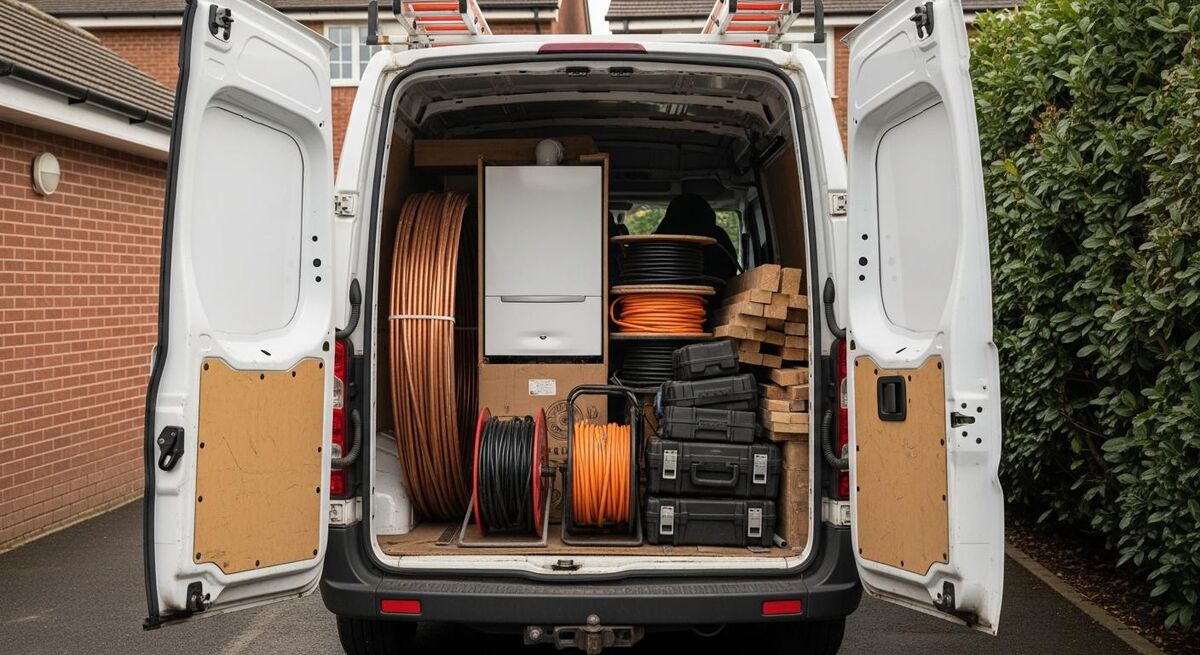
Sales, also called turnover or revenue, sits at the top. It is everything you invoiced over the period. If you fitted three boilers and rewired a house, it is the total of those invoices before you take a penny of cost off.
Sales is the number people love to quote at the merchants. "We turned over half a million last year." Lovely. But turnover is vanity. It tells you how busy you were, not how much you kept. I have coached plenty of owners doing big numbers at the top who were taking home less than their own engineers. Busy is not the same as profitable. Hold that thought all the way down the page.
One thing to check on this line. Make sure it is your sales excluding VAT. VAT is not your money, it is HMRC's money passing through your account, and it should never sit in your sales figure. Good software strips it out automatically. If your sales look suspiciously high, VAT hiding in there is a common reason.
Line two: cost of sales and your gross profit
Underneath sales comes cost of sales, sometimes called direct costs or cost of goods sold. These are the costs you only incur because you did the job. No job, no cost. For a trades business that is mainly:
- Materials: the boiler, the cable, the timber, the fixings.
- Subcontractor labour: the subbies you paid to help deliver the work.
- Plant and equipment hire: the digger, the scaffold, the specialist tool for that one job.
- Direct labour: in many trades businesses, the wages of the engineers actually on the tools.
Sales minus cost of sales gives you gross profit. This is the first number that means something. It is the money left after the job is done, before you have paid a single overhead. Gross profit is what has to cover everything else and still leave you a wage and a margin.
The gross profit margin is one of the most important figures for any owner because it shows your real mark-up and instantly flags pricing and buying problems. If your gross margin is sliding, either your prices are too low or your costs have crept up and you have not passed them on. It is the earliest warning light on the dashboard.
Here is where subbie costs matter, and where getting the labour question wrong quietly distorts this whole line. If you are treating people as subcontractors when they are really employees, your cost of sales and your risk are both in the wrong place. I have written about getting the subcontractor decision right before the Fair Work Agency comes knocking, and it is worth a read alongside this if you use a lot of labour-only help.
Line three: overheads, the silent margin killers
Below gross profit sit your overheads, also called operating expenses or admin costs. These are the costs of simply being open, whether or not you have any work on. Van finance, insurance, fuel, rent on a unit, accounting software, your phone, your own salary if you have come off the tools, the wage of the person answering the phone. Rent, utilities, marketing and admin salaries all live here.
Overheads are where the quiet damage happens. Each one looks small on its own. A subscription here, a bit of fuel there, a van payment you set up two years ago and forgot about. Added together they are often the difference between a business that pays you properly and one that has you working sixty hours a week for wages. Go down this list line by line and ask a blunt question of each one: is this earning its place?
If you have stepped back from the tools even part of the time, your salary is an overhead and it must show up on the P&L. Owners who leave their own pay off the report flatter the net profit and then wonder why there is never enough left for them. Pay yourself a proper wage and let the numbers tell you the truth. This ties straight into the whole coming off the tools decision.
Gross profit minus overheads gives you net profit. This is the bottom line, and it is the honest one. It is what the business made after everything. If net profit is healthy and growing, you have a business. If it is thin or negative while you are run off your feet, something in the pricing or the overheads needs to change, and now you can see exactly where.
Gross margin vs net margin: the two percentages to know
Pounds are useful. Percentages are where you compare yourself to a healthy business. There are two you need.
Gross margin is gross profit divided by sales, times 100. It tells you how much of every pound of work you keep before overheads. Net margin is net profit divided by sales, times 100. It tells you how much of every pound you keep in the end.
| Measure | How to work it out | Rough healthy range for UK trades |
|---|---|---|
| Gross margin | Gross profit ÷ sales × 100 | Often 20% to 40% for specialist trades, depending on materials mix |
| Net margin | Net profit ÷ sales × 100 | Many contractors sit at just 2% to 4%; a target of 8% to 12% is a good aim |
Do not panic if your net margin looks low against those targets. The average UK construction business runs on a net margin of around 2% to 4%, which is precisely why so many are fragile. The point of reading your P&L is to move yourself up that range on purpose, not to feel bad about where you start. A specialist trade run tightly can do a good deal better than the average, and the owners who get there are almost always the ones who look at these two numbers every month.
Your free monthly scorecard

Here is the free monthly scorecard I promised in the title. It is deliberately tiny, because a scorecard you will actually fill in beats a beautiful spreadsheet you open once and abandon. Eight lines. Copy it into a spreadsheet, or write it on a sheet of paper stuck to the office wall, and complete it on the same day every month straight from your accounting software.
| # | Line on your scorecard | Where it comes from |
|---|---|---|
| 1 | Sales (ex VAT) | Top line of your P&L |
| 2 | Cost of sales | Materials, subbies, plant hire, direct labour |
| 3 | Gross profit | Line 1 minus line 2 |
| 4 | Gross margin % | Line 3 ÷ line 1 × 100 |
| 5 | Overheads | All operating expenses added up |
| 6 | Net profit | Line 3 minus line 5 |
| 7 | Net margin % | Line 6 ÷ line 1 × 100 |
| 8 | Cash in the bank | Your actual bank balance on the day |
Why line 8, the cash, when this is a P&L article? Because profit and cash are not the same thing, and seeing them side by side is where the penny drops. You can be profitable on paper and still short of cash because customers have not paid you. With 95% of construction businesses reporting late payments, that gap is the norm, not the exception. Track both and you will never again confuse a healthy bank balance with a healthy business.
The scorecard earns its keep on the second month, when you can see the direction of travel. Gross margin up two points? Good, whatever you changed is working. Overheads crept up while sales stayed flat? There is your conversation for the week. The trend matters far more than any single month.
The 20-minute monthly money date
Numbers only help if you look at them regularly, so put a recurring appointment in your diary. I call it a money date. Same day each month, twenty minutes, no phone, no van keys, a cup of tea and your P&L. Here is the simple routine.
- Open last month's P&L in your accounting software, set to show this month against last month.
- Fill in the eight scorecard lines. It takes five minutes once you know where the figures live.
- Read gross margin first. Up, down or flat versus last month? If it dropped, ask why before anything else.
- Scan your overheads line by line. Anything new, anything crept up, anything you forgot you were paying for.
- Check net profit and net margin. Is the business paying you and leaving something behind?
- Write one action. Just one. Reprice a job type, cancel a subscription, chase an overdue invoice. One change per month compounds fast.
Twenty minutes. Once a month. That is the entire commitment, and it is the difference between owners who feel in control and owners who feel at the mercy of the bank app. If money in the business ever feels tight, do not sit on it; the earlier warning signs of financial distress are far easier to fix when you spot them in a monthly scorecard than when they arrive as a final demand.
Five mistakes trades owners make with their P&L

Over the years I have seen the same handful of errors again and again. None of them are about being bad at business. They are just habits nobody was ever taught differently.
If the first time you see your numbers is when the accounts are filed, you are driving by looking in the rear-view mirror. By then the year is over and nothing can be changed. Monthly is the minimum.
Mistake two: leaving your own wage off. Covered above, and worth repeating because it is so common. A business that cannot pay its owner a proper wage is not really profitable, however good the bottom line looks.
Mistake three: reading pounds and ignoring percentages. Your sales can rise while your margin falls, and in pounds everything looks like growth. The percentages tell the real story. Always work out gross and net margin.
Mistake four: confusing profit with cash. They move differently. Profit is earned when you invoice; cash arrives when you get paid, and in this trade that can be more than a month later. That is exactly why cash sits on the scorecard next to profit.
Mistake five: not comparing anything. A number on its own is just a number. Against last month or last year it becomes information you can act on. Comparison turns a report into a decision.
What the numbers and the experts say
You do not have to take my word for any of this. Here is what the accounting world, the software firms and the wider industry data all say about knowing your numbers.
Recommended videos

Profit and Loss Basics (Know Your Numbers)
Heelan Associates

How To Understand Small Business Accounts: Profit and Loss
Heelan Associates
How to Read a Profit & Loss Statement
Xero Accounting Software

How to Read the Profit and Loss Account
AJ Bell

Why Successful Builders Focus On Margin
The Professional Builder
Understanding Overhead, Profit and Margin
The Contractor Commute
Frequently asked questions
Monthly. Once a year at accounts time is far too late to change anything. Twenty minutes a month with the scorecard is plenty, and it is the single habit that separates owners who feel in control from those who do not.
Gross profit is sales minus your direct job costs like materials and subbie labour. Net profit is gross profit minus your overheads like van, insurance and your own wage. Gross profit asks whether the work is profitable; net profit asks whether the whole business is.
Your accountant records the past brilliantly. You make the decisions that shape the future, on pricing, hiring and spending. Those decisions are only as good as your understanding of the numbers behind them. A good accountant will be delighted you are taking an interest.
Because cash and profit are not the same. Money in the bank might be customer deposits, VAT you owe HMRC, or bills you have not paid yet. Profit is what is left after every cost is accounted for. Watch both, which is exactly why cash sits on the scorecard.
The average UK construction business limps along on 2% to 4%. A healthier aim is 8% to 12%, and a tightly run specialist trade can beat that. Do not fixate on the target. Focus on nudging your own number up a little each quarter.
No. Any of the mainstream cloud accounting packages produce a P&L automatically, and the entry-level plans are modest. If you are still on spreadsheets, moving over usually pays for itself the first time it stops you underpricing.
My verdict
You do not need to be an accountant. You need three numbers, two percentages and twenty minutes a month. Sales, gross profit, net profit; gross margin and net margin; a scorecard on the wall. Do that consistently and you will price better, spend smarter and finally know whether the business is paying you what you deserve. Know your numbers and everything else in the business gets easier to decide. Start with next month's figures, fill in the scorecard, and please do let me know how you get on.