
Quick Answer
Insurers price your premium off your claims history, your turnover, your trade risk profile, and how well you document risk. Build a RAMS file, train your team, fit van security and a tracker, register with the right industry body, bundle public liability, employers liability, tools and van cover with one broker, and renew 30 days early. UK trades that do this consistently see premium drops in the order of 10 to 25 percent without dropping cover.
Table of Contents
- What insurers actually price (and what they ignore)
- The 2026 UK trades premium baseline
- Document risk like an insurer wants to see it
- Tools, vans and the theft problem
- Training, accreditation and the discounts they unlock
- Protect your claims history
- Get the policy structure right
- Using AI to write RAMS, audits and renewal briefs
- What tradespeople are saying
- Recommended videos
- Frequently asked questions
- My verdict
What insurers actually price (and what they ignore)
Most trades owners think insurance premiums are a black box. They are not. An underwriter is pricing five things, in this order: trade risk (what you actually do), turnover, claims history over the last five years, the cover level you ask for, and the evidence you give them that you manage risk. Everything else is noise.
Trade risk is the biggest single lever, and the one you can least change. Roofers and scaffolders pay more than electrical maintenance engineers, because the loss data says so. But once trade is set, every other input is yours. A general builder doing the same work as the builder up the road, on the same turnover, with the same cover, can pay 20 to 30 percent less because their file looks better at renewal. That is not magic. That is paperwork and behaviour.
The mistake most owners make is treating insurance as a yearly grudge purchase. They take last year's policy, click renew, swear at the price, and move on. The insurer is left with no new information, no proof of improvement, and no reason to drop the price. So they do not. Benchmarking the trades businesses we work with shows the firms paying the lowest premiums share one habit: they actively manage their renewal cycle every year, with evidence ready in advance.
The 2026 UK trades premium baseline
Before you can cut a premium, you need to know what normal looks like. The 2026 UK market is in an unusual place. Commercial insurance rates are easing for the first time in three years, with broker reports showing UK commercial premiums down around 6 percent overall. But trades has not seen the same relief. Tool theft, escape of water claims and a hardening reinsurance market for high-risk trades are keeping pressure on.
For a sole trader doing low-risk work, £5 million public liability cover starts around £60 per year. A small electrical firm with two engineers and a turnover under £150,000 typically pays £150 to £400 for public liability alone. Plumbers and heating engineers cluster around the same range, with gas work pushing it higher. General builders pay more, often £300 to £800 once you add contract works. Roofers and scaffolders pay multiples of that.
Bundled policies, the kind most trades actually buy, run differently. A typical small trades package with £5 million public liability, £10 million employers liability for one or two employees, £5,000 of tools and contract works cover usually lands between £500 and £1,500 per year. Bigger firms with vans, multiple engineers and contract works cover sit between £2,000 and £8,000. If your renewal lands well outside those bands and your trade is normal, you are either over-covered, under-disclosing, or with the wrong insurer.
Document risk like an insurer wants to see it
Insurers do not give discounts for safe practice. They give discounts for documented safe practice. There is a difference. A roofer telling the underwriter "we always work safely" is worth nothing. A roofer attaching a RAMS template, three sample completed risk assessments from recent jobs, a fall arrest equipment inspection record and a toolbox talk log is worth real money on the premium.
The minimum file your insurer wants to see at renewal is straightforward. A standing risk assessment for each type of work you do (domestic electrical, commercial maintenance, boiler swaps, loft conversions, whatever). A method statement template you actually use. A toolbox talk record showing what you covered each month. PAT testing records for portable tools. PPE issue logs. Vehicle checks. And the certificates: Gas Safe, NICEIC, MCS, F-Gas, asbestos awareness if you work pre-2000 stock.
Most trades businesses we work with already do 70 percent of this work, but never record it. They run the toolbox talk Monday morning and never write it down. They check the harness before going up but no signed log exists. The fix is not more work, it is capturing the work you already do. A practical RAMS template takes a sole trader about two hours to set up and 15 minutes per job to use after that.
Tools, vans and the theft problem
Tool theft is the single fastest-rising claim category in UK trades insurance. Three quarters of UK tradespeople have been targeted by tool thieves, the average claim now sits around £2,685, and a tool from a van is being stolen roughly every 21 minutes nationally. Insurers know this. Premiums have hardened, excesses have gone up, and a tool theft claim now eats your no-claims discount in one hit.
The good news is that this is one of the few categories where physical investment maps directly to premium savings. Insurers will discount, sometimes meaningfully, for tracker-fitted vans, slam locks and deadlocks fitted to factory-standard rear and side doors, alarms with motion sensors in the load space, and tools removed from the van overnight. Some insurers also reward steel security cages or lockable vaults inside the van.
The single highest-impact change is removing tools from the van overnight. Insurers price this as a different risk class. Many policies actually require it (read the policy wording, you may already be uninsured at night if you leave kit in the van). A locked garage or workshop with intruder alarm is worth 5 to 15 percent off the tools cover line. The van stock systems UK trades are running overlap here: the businesses with the tightest stock control also tend to have the lowest theft premiums.
Training, accreditation and the discounts they unlock
Accreditation is the cleanest way to drop a premium without changing the business. NICEIC, NAPIT, ELECSA for electrical. Gas Safe Register for gas. MCS for renewables. F-Gas for refrigerant work. WaterSafe for plumbing. These are not nice-to-haves for insurers, they are pricing signals. A registered NICEIC contractor will typically see a 10 percent discount on liability and indemnity cover compared to an unregistered electrician doing the same work.
The same applies to your team. CSCS cards across the crew, IPAF for anyone on a MEWP, PASMA for tower scaffold, Asbestos Awareness for any pre-2000 building work, Level 1 Site Safety Plus for site managers. None of these are free, but a year's worth of training across a small crew typically costs less than the premium reduction it unlocks, and it sticks. The training does not lapse at the end of the policy year.
Mental health and wellbeing training is the newer category. Insurers are starting to weight this on employers liability cover, especially after the rise in stress claims. A Mental Health First Aider qualification in the business, plus a documented wellbeing policy, is now a tick-box for some employers liability underwriters. The market is still moving on this one, but it is moving in the right direction.
Protect your claims history
Three years claim-free is worth more to your premium than almost any other single thing. Five years claim-free puts you in the lowest pricing bracket your insurer offers. The maths is brutal: a single claim adds 30 to 50 percent for three years, and that is before any deductible or excess change.
The implication is that small claims are almost never worth making. If a customer's carpet gets a paint splash and the carpet costs £800 to replace, paying it out of pocket is almost always cheaper than the three-year premium hit from a public liability claim. Same with a chipped tile, a damaged radiator, a minor van-on-van bump. The number to do the maths on is your annual premium times three, times around 0.3. If the claim is less than that, pay it yourself.
That is also why a higher voluntary excess works. Raising your excess from £250 to £500 on public liability typically saves 5 to 10 percent on the premium, and you would not have claimed for anything under £500 anyway. Raising it to £1,000 saves more, with the same logic. Just make sure the excess is sitting somewhere accessible if you need it.
Get the policy structure right
Most trades businesses pay too much because their cover is structured wrong, not because the rates are wrong. Three structural mistakes appear over and over: paying monthly instead of annually (a 5 to 10 percent uplift that insurers do not advertise as a charge), buying policies separately when they could be bundled, and over-covering on cover limits that are not needed.
Paying annually is the easiest win. If cash flow is the reason you pay monthly, fix the cash flow first, then take the annual saving. A £1,200 annual policy on monthly pay typically costs around £1,300 once you net the finance charge. Tightening the cash flow systems usually frees up the headroom for annual payment within a quarter.
Bundling is the next one. Public liability, employers liability, tools, contract works and van cover are usually cheaper as a package with one insurer than as separate policies. The discount comes from the insurer wanting your whole risk, not just a sliver of it. The downside is that switching cover gets harder, because you are moving everything at once. That is a real trade-off, not a free lunch.
Cover limits are the trap. £5 million public liability is standard. £2 million is rarely enough for any commercial work. £10 million is required by some larger contracts but most trades do not need it day to day. Employers liability is fixed by law at £5 million minimum, but most insurers default to £10 million for the same money. Check yours. If you are paying a premium for £10 million public liability cover and your biggest job is a domestic boiler swap, you are paying for protection you cannot use.
Using AI to write RAMS, audits and renewal briefs
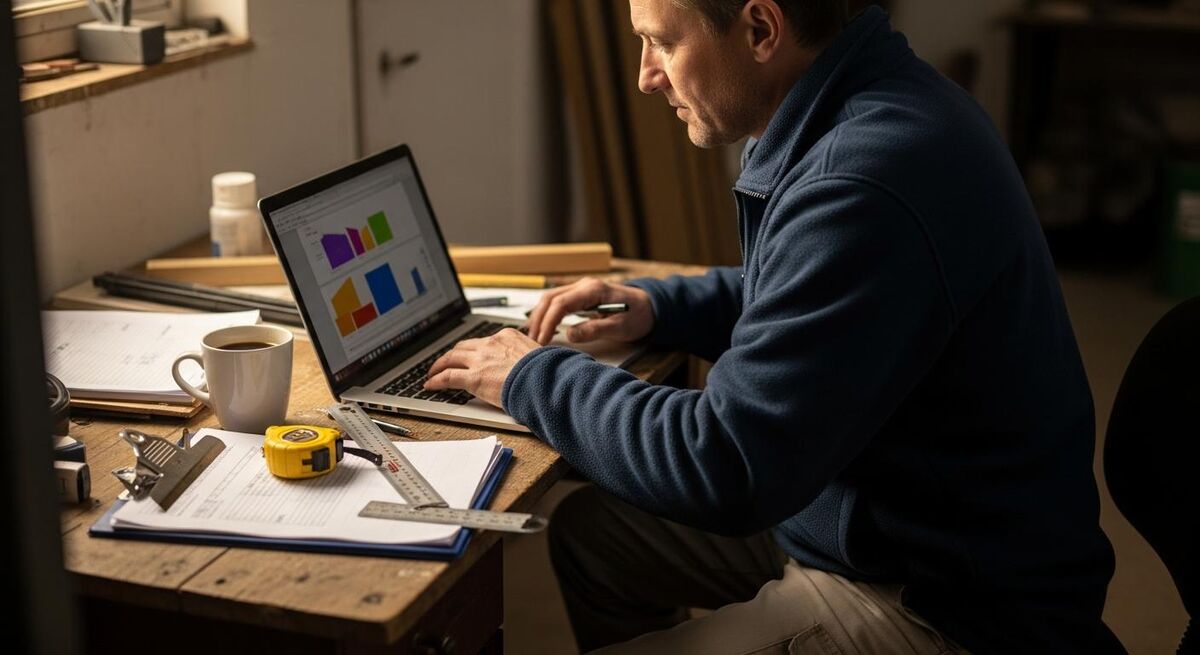
The honest reason most trades businesses do not document risk properly is time. A good RAMS for a complicated job can take an hour to write properly. Do that for every job and the day is gone. AI changes the maths. A modern AI tool like ChatGPT or Claude can draft a job-specific risk assessment and method statement in under five minutes if you give it the right inputs.
The prompt pattern that works for trades is the briefing approach. Tell the AI what trade you are, what the job is, the site conditions, the people on site, and any unusual risks. Ask it to write the RAMS to UK HSE expectations, in a format suitable for a principal contractor. You will get a strong first draft. You then edit it for site reality, sign it, and file it. The whole cycle takes 10 to 15 minutes instead of an hour.
The same pattern works for the renewal brief to your broker. Feed the AI your job mix for the year, your claims history (or lack of it), training completed and accreditation, and ask for a one-page summary written for an insurance underwriter. The output reads professional, lists everything an underwriter wants to see, and takes about ten minutes to produce. Brokers are far more likely to re-market your business to better insurers when the file looks like that.
What tradespeople are saying
Recommended videos

Construction Risk Assessment, Example Overview
HSEDocs

Introduction to Risk Assessment in Construction
Human Focus
How to Write a Construction Risk Assessment
HSEDocs
Construction Risk Management: Complete Step-by-Step Guide
Project Management Coach

A Video Guide to Tradesman Insurance
Towergate Insurance

Your 60-Second Guide to Sole Trader Insurance
Simply Business
Frequently asked questions
No. Shopping the market every year is sensible, but switching for the sake of it can cost you. Some insurers reward loyalty with no-claims protection or longer payment windows. The right pattern is to re-market every year, then stay if your existing insurer matches or beats the best quote. The market work itself is what creates the pricing pressure.
Year one of documented risk management, accreditation in place and a tracked van, expect 10 to 15 percent off a no-evidence baseline. By year three, with a clean claims record on top, 20 to 25 percent is realistic. Sole traders in low-risk trades can see less because their starting premium is already low. Bigger firms with more moving parts see more.
Usually yes, up to a level you can actually pay. £500 voluntary excess from a £250 base typically saves 5 to 10 percent. £1,000 saves more. Just keep the cash sitting in the business, do not push the excess so high that a real claim becomes painful, and remember that the excess only kicks in when you claim.
Yes, more than people expect. A tool theft claim eats your no-claims discount and typically adds 25 to 40 percent on tools cover the following year. It also affects the underwriter's view of your van security overall. Most small theft claims are not worth making. Pay it out of pocket if you can.
It depends on what you do. If you are giving design advice, doing surveys, writing reports, or specifying systems for clients, yes. If you are pure installation work with no design responsibility, public liability and contract works are usually enough. Plenty of trades pay for indemnity cover they will never need to use. Get a broker to map your work to the right cover.
Last twelve months turnover, job mix breakdown, claims history (or a written statement of none), copies of accreditation certificates, sample RAMS, training records, kit upgrade notes, and the van security and storage arrangement. Send the lot to your broker as a single email. That changes how seriously you get re-marketed.
Only if you do not review the output. The HSE expects the RAMS to be specific to the job and reviewed by someone with competence. An AI draft is a starting point. You read it, edit it for site reality, sign it as the responsible person, and file it. The legal responsibility sits with you, not the tool. Treat it like a template, not a replacement for thinking.
No. Insurers can decline to renew based on claims experience or risk profile, but they cannot punish you for shopping the market. Brokers actually expect you to. The only related risk is a non-disclosure issue: if a claim history search at a new insurer turns up something you did not declare to your current insurer, that is a problem. Always tell your broker everything.
My verdict
Trades businesses pay too much for insurance because their renewal file looks empty. Document what you already do, train the team, lock the van, register with the trade body, and pay annually. The savings are bigger than most owners think, they compound year on year, and the work pays for itself in the first cycle. Treat renewal like a tender you are pitching for, not a bill you are receiving.