

Quick Answer
If your van runs on bread-and-butter consumables and you order from a regional parts dealer who keeps the catalogue, lean on their trade counter and skip software altogether. If you carry your own stock and want it tied to jobs, Tradify is the cheapest sensible option at around £42 per user per month, even though its inventory module is admittedly thin. A spreadsheet is fine while you are one or two people, but it breaks the moment a second pair of hands starts taking parts off the van without telling anyone.
Table of Contents
 Tradify
 Microsoft Excel
 Google Sheets
Why this comparison is messy
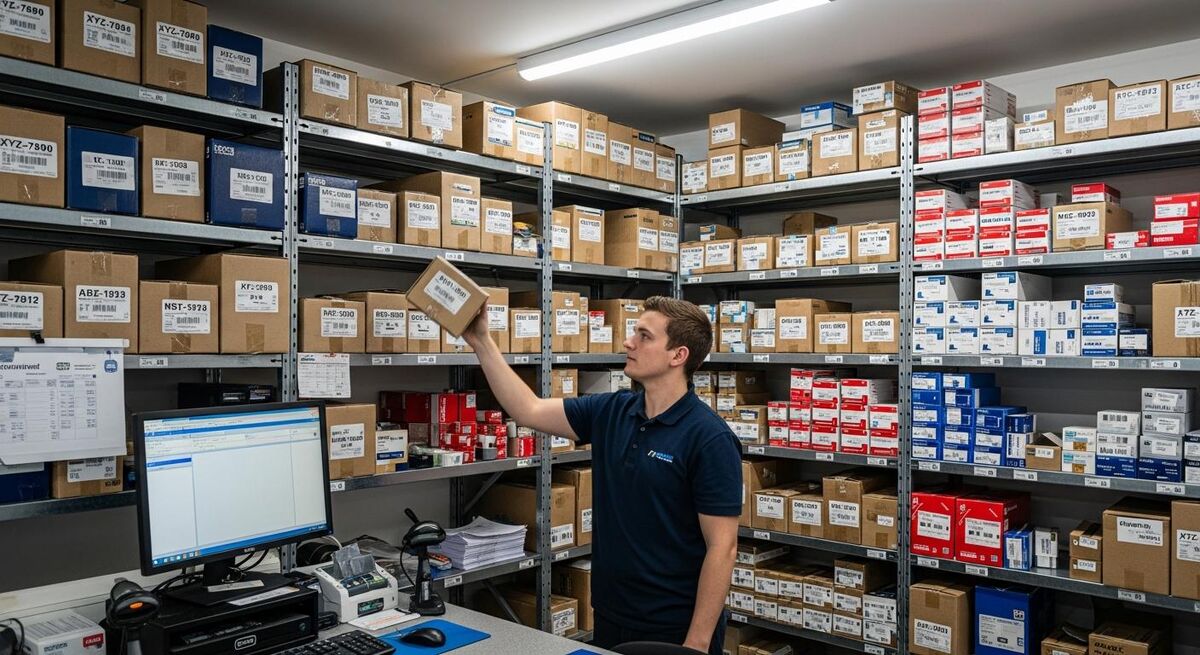
Most articles like this line up three apps and let you pick a winner. This one is honest about what is actually being compared, because "Vosper" is not a piece of software. Vospers is the family-owned motor dealer group running 18 sites across Devon and Cornwall since 1946, with a trade parts operation that turns over around £25m a year supplying independent workshops. Their parts catalogue and ordering system sits behind a trade login at vospersparts.com, and it is a fair proxy for the kind of regional parts dealer most UK trades lean on day-to-day.
So the real comparison here is between three philosophies, not three logos. You can let your dealer hold the stock and order what you need that morning. You can run light inventory inside a job management app like Tradify so parts attach to jobs automatically. Or you can keep your own list in a spreadsheet and update it when you remember. Each has a place. None of them is universally correct.
The choice usually comes down to two questions. How predictable is the work, and how many sets of hands are taking parts off the shelf or out of the van. Get those two answers right and the tool picks itself.
Vospers-style means relying on a regional dealer to hold and ship the parts, using their account portal to track what you bought. Tradify means using its built-in stock and materials features to log parts against jobs. Spreadsheets means a shared Excel or Google Sheets file with rows for items and columns for quantity, location, and reorder level.
At a glance
Before the deep dives, here is the shape of each option. Treat this as a sniff test rather than a decision.
| Metric | Vospers-style dealer | Tradify | Spreadsheet |
|---|---|---|---|
| Starting cost | £0 to open trade account | From £42 per user per month | £8.50 per user per month for Microsoft 365 |
| Best for | Motor trade, body shops, fleet servicing | Plumbing, electrical, HVAC, multi-trade | Single-vehicle owner operator |
| Stock visibility | Live dealer stock, not yours | Per-job and per-user usage | Whatever was typed last |
| Mobile use | Phone app or van driver | iOS and Android, offline sketchy | Sheets app works, Excel app cramped |
| Capterra rating | N/A | 4.7 from 198 reviews | N/A |
| Best feature | Same-day local delivery | Parts attach to invoiced jobs | You already know how to use it |
Industry research on inventory inaccuracy suggests up to 60% of retail stock records are wrong at any given time. The same dynamic hits small trades the moment more than one person can touch the stock without writing it down. The right answer is whichever option you and your team will actually update.
Pricing breakdown

Tradify publishes UK pricing in plain pounds. The Lite plan is £25 per user per month for one to three users and skips quoting. The Pro plan is £42 per user per month for up to ten users, and it is the one most small trades end up on because it includes quoting, invoicing, and the stock features such as they are. Plus is custom-priced for teams above ten. Prices are monthly, no contract, and there is a 14-day free trial.
Microsoft 365 Business Basic, which is the cheapest legitimate way to run shared spreadsheets with a small team, is £8.50 per user per month on an annual commitment. Google Workspace Business Starter is £6 per user per month. Both include cloud storage and either Excel for the web or Sheets, so you can stop emailing files about.
A Vospers trade account costs nothing to open but obviously you pay for what you order, with trade-only pricing usually 15 to 25% below retail. There is no per-month software fee because you are not paying for software, you are paying for parts. Same logic for any regional dealer running similar systems.
Tradify's reported all-in cost from ITQlick's 2026 pricing analysis includes onboarding time of around four to six hours per user. Spreadsheets cost zero pounds in tooling but burn an hour a week per van once you are over two people. Vospers-style supply costs almost nothing in admin but punishes you if you do not keep an account and a relationship.
The Vospers-style approach
This is the option most ignored in software comparisons, because the dealer is not selling you software. The pitch is simpler. The dealer holds the stock, sometimes runs delivery vans calling on you two to five times a day, and your "inventory" is effectively your order history with them. Vospers itself supports field sales reps and delivery vans calling on independent garages around the South West, with contact centres at Truro, Plymouth, and Exeter doing the legwork.
For a motor trade business in their region this is genuinely the right answer for many parts. You ring at 8am, the part is on the van by 11am, and your "stock" is whatever is left in the van overnight. The benefit is that you stop paying to store parts and you stop carrying the obsolescence risk. The risk transfers to the dealer.
It is less clean for other trades. A plumber buying from a single merchant gets some of the same upside, but plumbers usually run between four or five suppliers and the picture fragments fast. Electricians often run TLC, CEF, Edmundson, Rexel, and Screwfix in the same week. No single account portal covers it. That is where lightweight software starts to earn its keep.
| Pros | Cons |
|---|---|
| No software cost. No subscription clock. | Only works if a regional dealer covers your trade. |
| Same-day local delivery from a real warehouse. | You get the dealer's catalogue, not your van. |
| The dealer absorbs obsolescence and storage cost. | Multi-supplier trades end up with five logins. |
| Account history doubles as a usage report. | No automatic link to a customer invoice. |
| Easy to onboard a new apprentice. "Ring Plymouth." | No alerts when something runs low on your van. |
Tradify with stock control

Tradify is field service software with quoting, scheduling, timesheets, invoicing, and a Xero or QuickBooks link. The reason it shows up here is that it lets you add materials to a quote, mark them as used on a job, and have the cost roll through to the invoice without anyone retyping it. That is the inventory job most small trades actually need. Not warehouse accuracy, just "the right parts ended up on the right invoice."
It is not, however, a stock control system in any serious sense. Capterra reviewer Daniel M., an owner in environmental services, put it plainly in his July 2025 review: "Inventory management also isn't very strong, which could be an issue for businesses that track a lot of parts or materials." Tradify itself acknowledges this and recommends an integration for businesses with deep stock needs. Treat the materials list as a quoting helper that happens to remember prices, not as a live count of what is on the van.
The numbers it does well are sales and labour. Tradify holds a 4.7 average on Capterra from 198 verified reviews, which is unusually high for trades software, and that score reflects the quoting and invoicing experience more than the stock module. If your bookkeeping and your quote-to-invoice flow are the bottleneck, this is the option that pays for itself. If your bottleneck is actually knowing how many 22mm copper bends you have left in the van, it will disappoint you.
For deeper context on the trade-offs of moving from spreadsheets to job management software, our piece on the real cost of switching FSM platforms walks through the time-to-value maths for a typical UK trade.
| Pros | Cons |
|---|---|
| Materials attach to a job automatically. | No low-stock alerts or reorder points. |
| Quotes pull from a saved materials price book. | You cannot run a meaningful stock take inside it. |
| Xero and QuickBooks integrations for cost of goods. | Multi-location stock is not really supported. |
| UK pricing, UK support phone line, GBP invoicing. | Offline use is unreliable in poor signal areas. |
| Mobile app and web app stay in sync. | You will need a real warehouse tool if you grow. |
The spreadsheet route
The honest case for spreadsheets is that everyone already has them, everyone half-knows how to use them, and they cost almost nothing. A shared Google Sheet with rows for items and columns for van location, quantity, and minimum stock will get a one or two-person operation through the first year of trading without breaking. Conditional formatting can flag low stock. A simple QR code in the van linking to the sheet is enough for an apprentice to find the right tab.
The dishonest part of the spreadsheet pitch is that it scales. It does not. As soon as a third person is taking parts off the shelf without updating the file, the numbers drift. By the time you notice, the whole exercise feels pointless and the sheet quietly dies. This is the pattern industry analysts at Inbound Logistics describe in their guide to plumbing inventory software: "your plumber updates their copy in the truck while you update yours at the office, and nobody knows what's actually in stock."
For a sole trader who buys from three suppliers and refills the van once a week, the spreadsheet is genuinely fine. For anyone managing two or more engineers across multiple vans, it is a false economy. The hours lost to manual checks and stock-out callouts overtake the cost of proper software inside a couple of months.
Excel files emailed back and forth are where small trades inventory goes to die. If you are running spreadsheets, run them in Microsoft 365 or Google Workspace from day one, with a single source of truth in the cloud and version history turned on. Local files on someone's laptop will betray you the first time it crashes mid-quote.
Head-to-head

Below is the side-by-side comparison most people skim to. Read it knowing that none of these options is wrong, they are just suited to different shapes of business. A two-engineer plumbing firm running boiler swaps will not pick the same answer as a sole-trader sparky doing reactive callouts.
| Feature | Vospers-style dealer | Tradify | Spreadsheet |
|---|---|---|---|
| Parts catalogue | Excellent, dealer-maintained | You build it once, then reuse | You build it and maintain it |
| Stock visibility | Their warehouse, not yours | Only what is logged to a job | Whatever was typed last |
| Low-stock alerts | No, dealer handles it | No, manual review only | Yes, with conditional formatting |
| Invoice integration | No automatic flow | Yes, end-to-end | Copy and paste |
| Multi-van support | Yes, each van orders direct | Per-user, no per-van split | Tabs per van, manual sync |
| Multi-supplier | One supplier by design | Yes, supplier field per item | Yes, column per supplier |
| Mobile use | Phone calls or dealer app | Solid iOS and Android | Workable, not pleasant |
| Audit trail | Order history at dealer | Yes, by user and job | None unless you build it |
| Learning curve | One phone call | Half a day per user | Zero for you, hours for staff |
| Total monthly cost | £0 in fees | £42 per user | £8.50 per user |
| Best fit | Motor trade, body shops | Multi-trade with 2 to 10 staff | Sole trader, single van |
If you are noticing that the three options barely compete on the same axis, you are right. That is the point. The wrong question is "which is best." The right question is "which bottleneck am I solving." If it is invoice accuracy, Tradify wins. If it is parts availability without holding stock, the dealer wins. If it is "I just need to know what is on the shelf in the lockup," a sheet wins.
What tradespeople are saying
The reviews and forum posts below are taken from public sources. Quotes are condensed for length but not for meaning.
Recommended videos
Tradify in Action: 6-Minute Guide (UK Edition)
Tradify Help and Training

Navigating Tradify: A Complete Job Management Walkthrough
The Handy Manual

Using Tradify Quote Sections for Tasks and Cost Tracking
Tradify Help and Training

Easily Make an Inventory Management System in Excel
Kenji Explains
Google Sheets Inventory Tracker Tutorial
Jet Sy Traveling Designer
Simple and Free Inventory Tracking Spreadsheet
Not Your Dad's CPA
Where AI fits in

Inventory was the last corner of small trades to feel any meaningful AI lift, but it is happening. ChatGPT and Claude are surprisingly good at turning a messy parts list into a clean Google Sheet with consistent SKUs, reorder thresholds, and supplier columns. Drop a screenshot of your old spreadsheet, ask for a tidied version with min and max levels worked out from your monthly usage, and you will save an evening.
The other quiet win is procurement Q&A. Asking a model "what's the going price for a Worcester Bosch Greenstar 30Si HE fan assembly in the UK in 2026 and which suppliers stock it" beats trawling five trade counters by phone. It will not always be right on the spec, so verify before ordering, but it gets you to a shortlist in seconds rather than the half-day a parts hunt used to take.
Tradify itself does not have a generative AI module worth shouting about yet, and neither does any mainstream spreadsheet inventory template. The most realistic AI play is the one above: use a general-purpose model as your researcher and let it do the boring catalogue work, then keep operational data in whatever you already trust.
First: "Here is my parts usage for the last three months as a CSV. Suggest reorder points and minimum stock levels assuming a one-week lead time from my main supplier." Second: "Give me a short shopping list of replacement parts I should keep on a domestic plumbing van for boiler servicing callouts in winter."
Frequently asked questions
It is fine for attaching materials to jobs and pulling the cost through to an invoice. It cannot do meaningful stock takes, low-stock alerts, or multi-location tracking. Treat it as quoting glue, not a warehouse system.
The moment a third person needs to read or write to it on a regular basis. Two people can stay disciplined with a shared sheet. Three almost never do.
For motor trade work in a region with a strong dealer, yes. For most other trades, no. You will still need something to attach parts costs to your invoices, and Xero or QuickBooks with a basic price list usually does it.
Both have similar light inventory features to Tradify. None of the trades-first apps treat inventory as a first-class problem. If you genuinely need warehouse-grade tracking, look at Sortly or Ply rather than asking your FSM to do it.
Same-day local delivery, a dedicated parts adviser, and an order history you can re-print as a usage report. The relationship matters more than the discount. A good parts adviser will catch obsolete part numbers before they go on your invoice.
If you are stretched on cashflow, a dealer trade account with 30-day terms is effectively free inventory financing. Holding your own stock means paying for it now. Useful primers are Xero's guide to invoice payment terms and iwoca's payment terms guide.
For VAT, yes, with bridging software. For wider record-keeping, HMRC's preference is for digital links between systems. If your inventory data feeds your invoices in any meaningful way, plan for a clean export route from day one.
My verdict
If you are a one-van sole trader, a spreadsheet with a few formulas costs you almost nothing and works. The moment you hire your second engineer, move materials into Tradify so parts costs land on invoices automatically and you stop chasing scribbled job sheets. If your trade is well-served by a regional parts dealer like Vospers, let them carry the stock. You are buying time, not software. Whatever you pick, audit it once a quarter against the bank balance. The right answer is the one that quietly stops you losing money.
One last point worth saying out loud. The trades businesses I have watched scale well are not the ones with the slickest inventory app. They are the ones whose engineers ring back into the office the moment they pull the last fan assembly off the van. That is a habit, not a product. Whatever tool you choose, the discipline is what makes it work. For the broader pattern of business habits that separate growing firms from struggling ones, our piece on construction businesses in critical distress is worth twenty minutes of your time. And if you are setting up subcontractor relationships around any of this, our guide to subcontractor contract clauses covers the bits most people forget.