
Quick Answer
Your online reputation is worth more than your best van livery. The data is clear: 93% of consumers read reviews before hiring a tradesperson, and 94% have avoided a business because of poor ratings. For UK trades, three things matter most. Get your Google Business Profile fully set up. Collect reviews consistently, one or two a week minimum. Respond to every single review, good and bad, within 48 hours. That last point is the one most trades miss. 45% of consumers are more likely to hire a business that responds professionally to negative feedback. Your response tells the next customer everything they need to know.
Table of Contents
- Why online reviews determine which trades get hired
- The UK review platform landscape
- Google Business Profile: your reputation foundation
- Building a review collection system
- How to respond to every type of review
- Dealing with fake and malicious reviews
- UK review regulation timeline: 2024 to 2026
- AI tools for reputation monitoring
- What tradespeople are saying
- Recommended videos
- Frequently asked questions
- My verdict
 Google Business Profile
 Checkatrade
 Facebook
Why online reviews determine which trades get hired
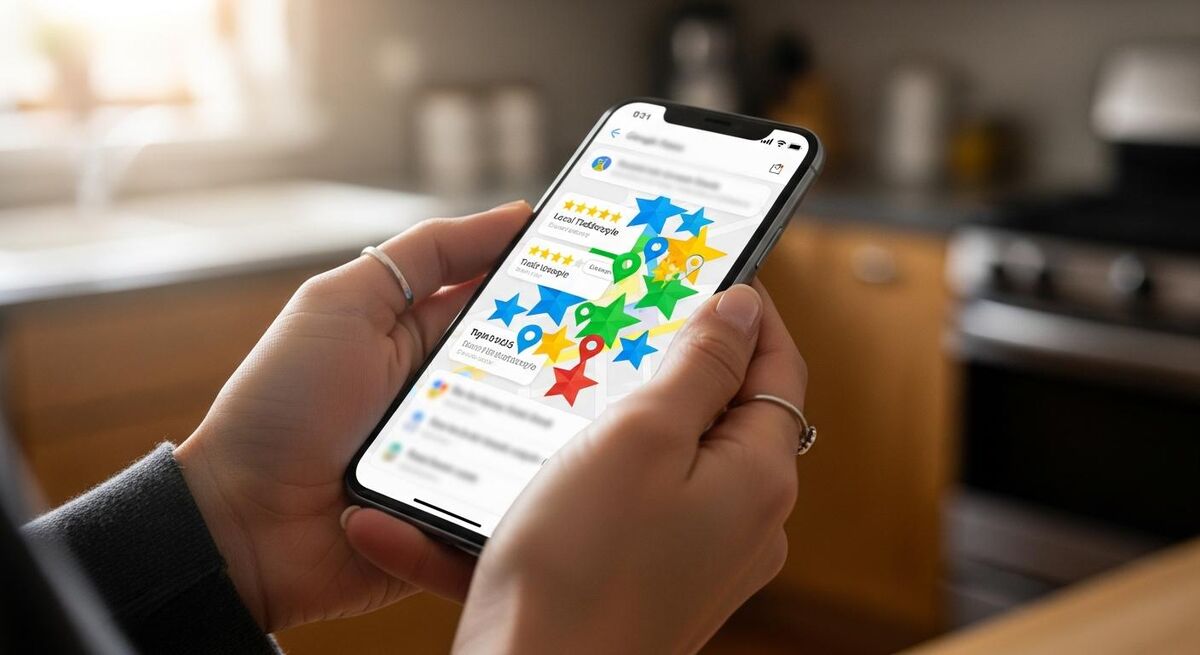
The numbers are plain. A BrightLocal survey found that 91% of consumers trust online reviews as much as personal recommendations from friends and family. The Competition and Markets Authority puts a figure on it: £23 billion of UK consumer spending every year is shaped by what people read in reviews.
For trades businesses, this matters more than most sectors. You are selling trust. A homeowner letting a stranger into their house to work on their boiler, rewire their electrics, or build an extension needs to believe you will do the job properly. Reviews are where that trust gets built or broken before you even pick up the phone.
There is a sweet spot in the data. Businesses rated between 4.2 and 4.5 stars actually outperform those with a perfect 5.0. A mix of mostly positive reviews with the occasional three-star rating looks more credible than a wall of fives. People are suspicious of perfection, and rightly so. The 4.2 to 4.5 range signals real customers leaving real feedback.
Volume matters too. A trade with 50 genuine reviews will consistently attract more work than one with five, even if both produce identical quality work. Businesses with over 200 reviews earn roughly twice the revenue of their competitors. For local SEO, review quantity and recency are two of the strongest ranking signals in Google's local algorithm.
88% of consumers who search locally on their phone visit or call a business within 24 hours. If your reviews look strong when they search, you get the call. If they look thin or stale, the next listing down gets it instead. Speed of decision-making has only increased with AI assistants like Gemini and ChatGPT now surfacing local business recommendations directly.
The UK review platform landscape

Not every review platform matters equally. The 80/20 rule applies: put 80% of your review-building effort into Google Business Profile and spread the remaining 20% across other platforms. Google is where customers search first, and it directly feeds your local search ranking.
That said, a presence on multiple platforms protects you. If a competitor reports your Google listing or you get hit with a spam attack, having strong ratings elsewhere keeps enquiries coming. Our comparison of Checkatrade, Rated People, and MyBuilder covers the commercial side of these platforms in detail.
Here is how the main platforms compare for UK trades businesses:
| Platform | Cost | Review verification | SEO impact | Best for |
|---|---|---|---|---|
| Google Business Profile | Free | Open (anyone can review) | Direct ranking factor | All trades |
| Checkatrade | £70-£120/month + VAT | 90% verified via SMS/phone | Strong organic rankings | Established trades |
| Trustpilot | Free basic / £339+/month paid | Email verification | Moderate (star snippets) | Brand credibility |
| Free | Profile-based | Low direct SEO impact | Local community referrals | |
| Which? Trusted Traders | £120-£200/month | Assessed by Which? | High trust signal | Premium positioning |
Review velocity matters as much as volume. A business that gets two reviews a week looks active and in demand. One that collected thirty reviews in January and nothing since March looks like it stopped trading or stopped caring. Aim for one to two new reviews per week across your main platforms. That steady cadence signals an active, busy business to both algorithms and customers.
63% of consumers read reviews on Google specifically, followed by 45% on Yelp and roughly 25% on Facebook. For UK trades, Checkatrade's strong organic rankings mean it often appears in Google search results alongside your own Google Business Profile listing. Having both looking solid doubles your presence on page one.
Google Business Profile: your reputation foundation

Your Google Business Profile is the single most important asset in your online reputation. Businesses with complete profiles are 2.7 times more likely to be considered reputable, and they receive seven times more clicks than incomplete listings. For UK plumbing searches alone, Google processes over 110,000 searches a month nationally.
Getting it right is not complicated, but most trades businesses leave gaps. A complete profile means accurate business name, phone number, and address. It means selecting the right primary category from Google's 4,030 available options. It means uploading genuine photos of your work, your team, and your van, not stock images. And it means posting updates at least once a week.
The search volumes are substantial. "Local electrician" generates 170,000 monthly searches in the UK. When someone runs these searches, Google shows the Local Pack, those three prominent listings with map pins, in 93% of cases. The Local Pack gets between 44% and 61% of all clicks on the page. If you are not in it, you are largely invisible to people who are ready to hire.
Your business Name, Address, and Phone number must match exactly across every platform. Google cross-references this data. If your GBP says "J Smith Plumbing Ltd" but Checkatrade says "J Smith Plumbing" and Facebook says "John Smith Plumber", you are confusing the algorithm and diluting your ranking power. Pick one format and stick with it everywhere.
Results from GBP optimisation typically take four to eight weeks to show. That is faster than website SEO, which usually takes four to twelve months. If you are only going to do one thing for your online presence this month, make it completing your Google Business Profile. The complete guide to trades websites covers how your website and GBP work together for lead generation.
A few things that trip people up. Verification is required before most features work, and it can take up to two weeks by postcard. Service area businesses should not list a home address if they travel to customers. Google lets you define your coverage by postcodes and boroughs. And photos need to be genuine project images, not downloaded from stock libraries. Google's image recognition is getting better at flagging stock photography.
Building a review collection system

The best time to ask for a review is the moment your customer is happiest. That is usually right after you finish the job, the house is warm again, the lights work, the leak is fixed. Waiting even a day drops your response rate.
Here is what works for trades businesses that consistently collect reviews.
At job completion: Hand the customer a card with a QR code linking directly to your Google review page. Not your general listing, the actual review form. Tell them it takes thirty seconds, because it does. Some businesses print QR codes on their invoices. Others have them on van stickers. The method matters less than the consistency.
Same-day follow-up: Send a text message within two hours of finishing. SMS has a 97-98% open rate, compared to roughly 20% for email. Keep the message simple: "Thanks for choosing [business name]. If you were happy with the work, a quick Google review helps us enormously" followed by the direct link.
The gentle nudge: If nothing comes back within 48 hours, one follow-up text is fine. Two follow-ups is pushy. Three is a reliable way to generate a negative review instead.
The target is one to two new reviews a week. At that rate, you build a bank of 50 to 100 reviews within a year, putting you well above the UK average of 19 for home improvement businesses. That volume, combined with recency, keeps you competitive in local search results.
A word on incentives. The DMCC Act 2024 has tightened the rules. You can still ask customers for reviews, but you cannot offer discounts or rewards in exchange without full disclosure. Vague labels like "#spon" are not sufficient under the new law. The legislation requires explicit tags like "Ad" or "Advertising" on any incentivised review. The safer and simpler approach is to ask satisfied customers directly. Most will say yes if you make it easy for them.
How to respond to every type of review
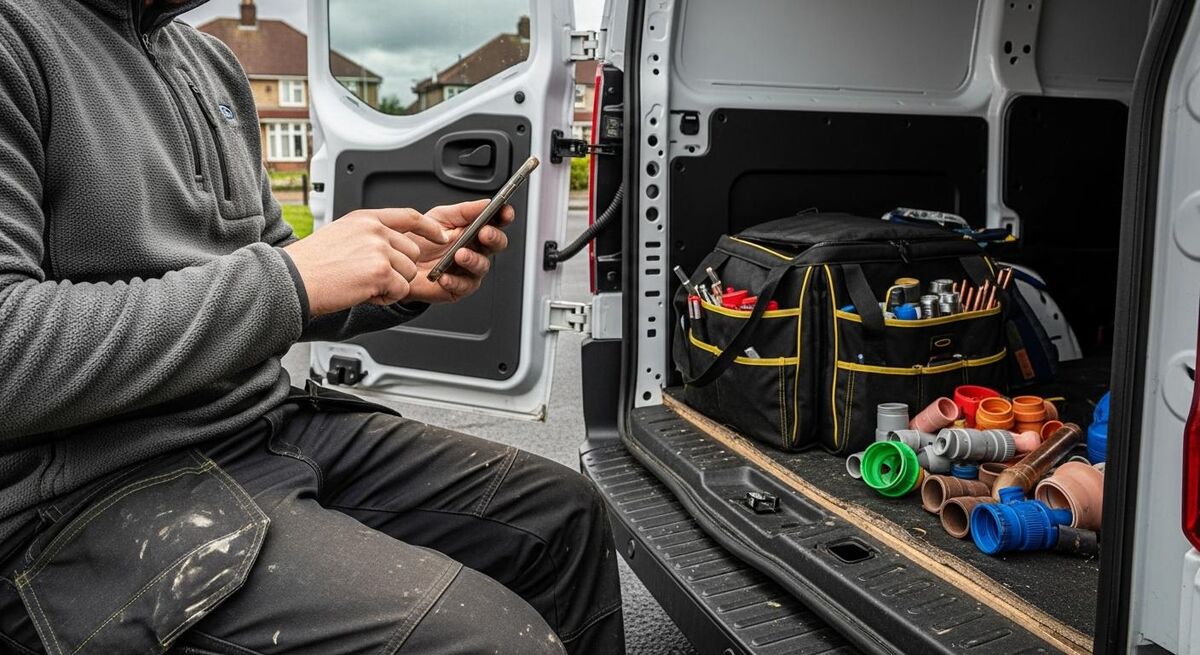
89% of consumers now expect businesses to respond to reviews. That expectation has shifted the game. A review is no longer a one-way verdict. It is the start of a conversation that every future customer will read.
The data backs this up. 56% of consumers change their view of a business based on how it responds to reviews. 45% are more likely to visit a business that responds to negative ones. And businesses that ignore feedback see a 15% higher customer churn rate. Your response matters as much as the original review.
Positive reviews: Thank them by name. Mention the specific job if you can. Keep it to two sentences. "Thanks, Sarah. Glad the new boiler is keeping you warm." That personal touch tells future customers you remember your jobs and care about the outcome.
Negative reviews: This is where most trades businesses get it wrong. The instinct is to defend yourself, to explain what really happened. Resist it. Follow this sequence: acknowledge the frustration, apologise for the experience, offer to resolve it privately. Something like "I'm sorry to hear you weren't satisfied with the finish. I'd like to put this right. Could you call me on [number] so we can sort it out?" Future customers reading this see a business that takes responsibility.
53% of consumers expect a response to negative reviews within seven days. Aim for 24 to 48 hours. The faster you respond, the less damage the review does. A negative review with no response sits there unchallenged. A negative review with a professional, prompt response actually builds trust with people reading it afterwards.
Responding to a negative review with a detailed rebuttal of what "actually happened" almost always backfires. Even if you are completely right, future customers see a business owner who argues with clients. Move the conversation to a private channel. If the original reviewer sees you handled it well, they often update or remove their review voluntarily.
Dealing with fake and malicious reviews
Fake reviews are a real problem for UK trades businesses. Competitors post them. Disgruntled former employees post them. People who were never customers post them. As one business owner put it on a trade forum: "I managed to get it removed, but it made me realise how vulnerable business owners are to this sort of thing."
Google's removal process is straightforward but slow. Flag the review, select the violation type, and submit. Google typically takes three to seven days to respond, though complex cases can stretch to several weeks. If Google declines to remove it, you can appeal once through the Google Business Profile dashboard. Success rates vary. Google tends to remove reviews that are clearly from non-customers or contain abusive language. Reviews that are simply unfair or exaggerated are harder to get taken down.
For Checkatrade, the process works differently. 90% of their reviews are verified via SMS or phone call, which reduces fake review risk. But the verification system creates its own issues. Some trades report that legitimate negative reviews have been removed by the platform, while negative experiences from genuine customers get blocked because no work was formally completed.
The practical approach is this. Bury bad reviews with good ones rather than fighting each individual fake review. If you are getting two genuine positive reviews a week, one malicious review barely dents your rating. A 4.7-star average with 80 reviews can absorb a one-star hit and still sit at 4.65. Volume is your best defence.
If a review is defamatory, containing false statements of fact that damage your business, UK defamation law applies. You can contact the platform with a formal legal notice. Most platforms have processes for this, though they are slow and sometimes frustrating. For serious cases involving financial loss, consult a solicitor who specialises in online defamation. The costs start around £500 for a cease-and-desist letter but can escalate rapidly if court proceedings are needed.
UK review regulation timeline: 2024 to 2026
The regulatory landscape around online reviews has changed fast. The Digital Markets, Competition and Consumers Act 2024 introduced the toughest fake review rules in UK history. Here is the timeline:
DMCC Act receives Royal Assent
New prohibitions on fake reviews and misleading review practices established in law. The Act covers submitting fake reviews, commissioning them, publishing them, and failing to take reasonable steps to prevent them.
Fake review prohibitions come into force
Submitting, commissioning, or publishing fake reviews becomes a specific offence. The CMA grants a three-month grace period for businesses to bring their practices into compliance.
CMA launches first investigations
The Competition and Markets Authority sends advisory letters to over 100 businesses after reviewing more than 400 companies suspected of fake review activity. First formal enforcement actions begin.
Active enforcement priority
Fake reviews confirmed as an ongoing CMA enforcement priority. Maximum penalties: the greater of £300,000 or 10% of annual global turnover. Businesses must have documented policies for preventing and removing fake reviews.
If you are buying reviews, offering undisclosed incentives, or asking friends and family to post fake five-star ratings, you are breaking the law. The maximum fine is the greater of £300,000 or 10% of your annual turnover. For a sole trader turning over £150,000, that is a £15,000 fine. For a firm doing £1 million, it is £100,000. The CMA does not need to prove intent. Simply failing to take "reasonable and proportionate steps" to prevent fake reviews on your profiles is enough.
AI tools for reputation monitoring
AI has changed what a sole trader or small team can realistically manage when it comes to reputation monitoring. Five years ago, keeping track of what people said about your business online meant manually checking Google, Facebook, Checkatrade, and forums every day. Now there are tools that do it automatically and flag problems before they escalate.
Free tier: Google Alerts is still the starting point. Set up alerts for your business name, your personal name, and your main service area. It is basic and it misses social media entirely, but it catches blog mentions, news articles, and some forum posts. Costs nothing and takes five minutes to set up.
Mid-range: Mention starts at £49 per month and tracks social media, forums, news, and blogs in real time. For a trades business doing £200,000 or more in revenue, that is a reasonable investment. Brand24 at £199 per month adds sentiment analysis, flagging negative mentions before they become full-blown problems.
AI response drafting: Google Business Profile now includes built-in AI reply suggestions for reviews. These save time on routine positive reviews but need careful editing for negative ones. The AI drafts tend to be too generic and too apologetic. Use them as a starting point, then add specifics about the job and your willingness to resolve the issue.
REVIEWS.io offers an AI reply feature that analyses review content and drafts context-appropriate responses. For trades businesses handling ten or more reviews a month, this kind of tool cuts response time without sacrificing the personal touch. The rule is simple: let the AI draft, but always edit before publishing. A customer can spot a template response instantly.
AI assistants like ChatGPT, Gemini, and Copilot are now used by consumers to find local trades. These tools pull from multiple sources, which is another reason to maintain reviews across several platforms. A consumer asking "who is the best plumber in Sheffield?" gets an answer that draws on Google reviews, Checkatrade ratings, and whatever else the AI can find. Having strong reviews on just one platform is no longer enough. The Google LSA programme now factors review response quality into ad positioning, making this doubly important for trades running paid campaigns.
What tradespeople are saying
Recommended videos

Marketing For Your Plumbing Company - Google Reviews
Roger Wakefield

Getting Your First Review - Become the Boss
Checkatrade

How to Absolutely Crush Google Business Reviews in 2025
Zanet

How to get more Google reviews for small businesses
Simply Business

Responding to Negative Reviews: a step by step guide
Simple Marketing Academy

How I Ranked An Electrician #2 On Google In 4 Months
Joe Burnich
Frequently asked questions
The competitive baseline for UK trades is 15 to 50 quality reviews. The average home improvement business has just 19. Get past 50 with a steady flow of recent ones and you are ahead of most competitors in your area. Volume alone is not enough though. Google weights recency heavily, so two reviews a week beats a hundred reviews from two years ago.
Respond to all of them. 89% of consumers expect it. A quick "Thanks, Sarah, glad the boiler is running well" takes ten seconds and shows future customers you actually care about the work you do. Skip the copy-paste responses though. People notice when every reply is identical.
Yes. Asking for reviews is perfectly legal and the most effective way to build your rating. What you cannot do under the DMCC Act 2024 is offer undisclosed incentives. No "leave a review and get 10% off your next service" without making the incentive clearly visible in the review itself. The simplest approach: just ask. Most satisfied customers will leave a review if you make it easy with a direct link or QR code.
Flag it with the platform immediately. Google takes three to seven days to investigate. If they decline to remove it, appeal once. Beyond that, bury it with genuine positive reviews. One fake one-star among 80 genuine reviews barely moves your average. If the review is defamatory, a solicitor's letter typically costs £500 to £1,000 and resolves most cases.
Not on its own. At £70 to £120 per month plus VAT, you need the lead generation to justify the cost. The review verification is a genuine advantage, with 90% verified via SMS or phone. But Google reviews are free and have a bigger impact on local search ranking. Use Checkatrade if you want the leads. Use Google for the reviews.
Most sole traders and small teams can manage with Google Alerts (free) and a weekly manual check of their main review platforms. If you are handling more than ten reviews a month across multiple platforms, a tool like Mention (£49/month) or an AI response drafter saves real time. Do not spend £300 a month on monitoring tools when you only get three reviews a month. Match the tool to the scale of the problem.
My verdict
Complete your Google Business Profile properly. Build a simple review collection habit, one or two a week. Respond to every review within 48 hours. The trades businesses winning work in 2026 are the ones treating their online reputation with the same care they give to their actual work. The new DMCC Act means the shortcuts, buying reviews, incentivising ratings, getting mates to post fives, are not just ineffective. They are illegal. Build it properly. The data shows it pays for itself many times over.