PAS 2035 ventilation checklist for small contractors: how to assess, choose MEV or MVHR, and lodge with TrustMark
Jump To...
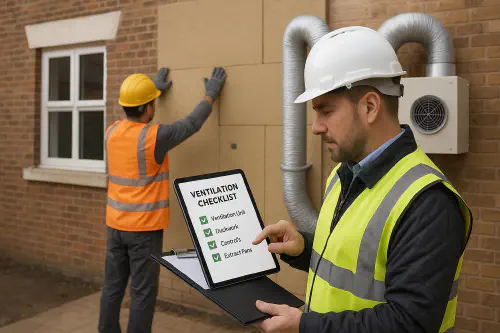
Site manager checking a PAS 2035 ventilation checklist on a tablet during a retrofit
Who this is for
Small UK contractors and Retrofit Coordinators working on domestic retrofits under PAS 2035/2030:2023. If you install insulation, windows, or heating upgrades, you must evidence an adequate ventilation strategy or you risk damp, mould and failed audits.
Quick answer
- PAS 2035:2023 requires a documented ventilation assessment and a suitable design before you install energy measures. Risk pathways are gone, but ventilation has more weight.
- Use the Building Regulations Approved Document F checklists to judge adequacy. If existing ventilation is inadequate, specify either background plus intermittent extract, continuous MEV, or MVHR depending on airtightness and occupancy.
- Record your chosen ventilation type, design calculations, commissioning results and the completed ventilation checklist, then lodge via TrustMark.
Useful references: PAS 2035:2023 PDF, TrustMark PAS 2035/2030 hub, Approved Document F.
What changed in PAS 2035:2023
- Risk Pathways removed. Projects still need proportionate assessment and design, but the old A/B/C pathway labels are gone. See TrustMark summary PDF.
- A defined Ventilation Assessment Checklist is expected. TrustMark’s transition note adds a specific checklist and data field for ventilation type at lodgement.
- Roles and evidence clarified. Retrofit Coordinator remains responsible for ensuring assessment, design and commissioning evidence is present before lodgement.
Good reads: TrustMark differences summary PDF and design best practice guidance with Appendix D ventilation checklist reference.
Ventilation assessment step by step
- Collect evidence on site
- Photos of trickle vents, kitchen/bathroom fans, window type, seals, and any condensation/mould.
- Airtightness proxy: note recent window/door replacements, planned insulation, draught sealing.
- Occupancy: rooms used as bedrooms, number of occupants, internal dryers, cooking habits.
- Determine adequacy using AD F criteria
- Inadequate if there’s visible condensation/mould, missing or non-functional fans, or incomplete ventilation. See AD F and industry guides.
- Where background ventilators are required, check sizes and counts by room; confirm fans meet required extract rates.
- Measure or estimate airflow
- Spot test existing fans if practical; compare to AD F rates.
- If doing airtightness testing, note n50/Q50 and use it to inform whether MEV or MVHR is appropriate.
References: Approved Document F, British Assessment Bureau retrofit ventilation guide.
Choosing a solution: background+extract vs MEV vs MVHR
Background plus intermittent extract
Works for typical, leaky homes with modest fabric upgrades.
Fit trickle vents to habitable rooms, intermittent fans to wet rooms meeting AD F rates.
Continuous MEV (centralised or dMEV)
Good for tighter homes after window upgrades/insulation where continuous extract avoids under‑ventilation.
Specify continuous rates and boost controls; ensure make‑up air via trickle vents or undercuts.
MVHR
Suited to very airtight homes or deep retrofits. Requires duct design, commissioning and maintenance plan.
Offers heat recovery and better IAQ but higher capex and install skill.
Tip: Use simple decision rules based on airtightness, space for ducting, and client willingness to maintain filters. See TrustMark design guidance Appendix D mention and RISE packs.
Design, commission and record
Design
Room‑by‑room airflow targets from AD F; size fans or MVHR so.
Draw simple schematics, specify duct routes, silencers, terminals.
Commission
Measure extract and supply rates, set continuous/boost speeds, record sound levels where needed.
Record and keep
Completed ventilation checklist (AD F derived), fan datasheets, commissioning sheet, photos, and homeowner instructions.
Helpful: TrustMark design best practice PDF and Retrofit Coordinator scheme requirements.
What to lodge on TrustMark
At minimum keep and lodge (or make available via the portal):
- Ventilation type selected (background+extract, MEV, MVHR).
- Ventilation Assessment Checklist and any calculations.
- Commissioning results and photos.
- Handover info for the client.
TrustMark’s transition note lists a required ventilation type field at lodgement and highlights the new checklist.
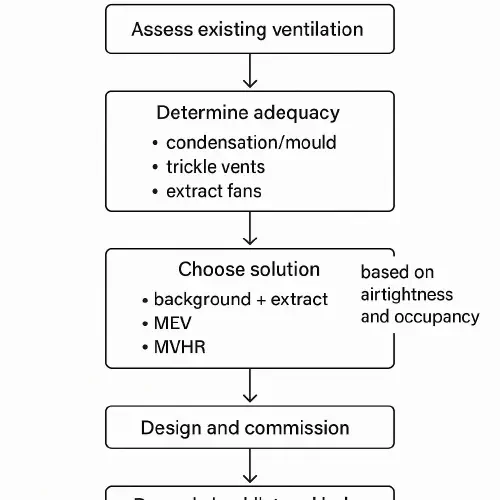
PAS 2035 ventilation assessment workflow diagram for UK retrofits
Flow diagram
The diagram above shows the flow many small contractors follow:
- Assess existing ventilation and note issues.
- Decide adequacy; if inadequate, choose background+extract, MEV or MVHR.
- Design and commission to AD F rates.
- Complete the checklist and lodge via TrustMark.
Video: quick briefing on new PAS 2035
Further learning: PAS 2035:2023 PDF, TrustMark design guidance PDF, RISE supply chain packs.
Related articles
- Reactive maintenance priorities for contractors: simple P1, P2, P3 rules, UK SLAs and evidence you can trust
- Construction site safety audit checklist: digitise it, assign actions and prove compliance
- Set up a shared WhatsApp Business inbox for a small trade team (free and paid options)
FAQ
Do I still need to worry about Risk Pathways?
No. PAS 2035:2023 removes them. You still need proportionate assessment and design; ventilation is now an explicit checklist item at lodgement per TrustMark.
What counts as “inadequate ventilation”?
Evidence of condensation/mould, no or broken fans, or incomplete systems. AD F provides the benchmark airflow rates and room requirements.
When should I choose MVHR over MEV?
MVHR fits very airtight or deep retrofits with space for ducting and clients who will maintain filters. MEV suits tighter homes where continuous extract is enough. If the dwelling will be near Passivhaus airtightness, MVHR is usually the right call.
What documents should I keep for audit?
Ventilation checklist, design notes, commissioning results, photos, user instructions, and proof you briefed the client.
Where do I get the checklist?
Use the ventilation checklist from Approved Document F. TrustMark also references a Ventilation Assessment Checklist in its transition guidance.
Ready to Transform Your Business?
Turn every engineer into your best engineer and solve recruitment bottlenecks
Join the TrainAR Waitlist