
Quick Answer
Here is a hard truth: if you are running a renewables business and still chasing staged payments manually, you are bleeding hours you could spend on the tools. Having gone from running a trades business to building technology for the industry, I have seen this problem from both sides. Payaca handles quoting and staged payment schedules for solar and heat pump jobs. Xero keeps your books MTD-compliant. Stripe processes card payments with low fees. Wire them together with n8n and every payment automatically reconciles in Xero, with a WhatsApp ping to confirm. Setup takes about two hours.
Table of Contents
- Why This Stack Matters for Renewables
- The Renewables Payment Problem
- How Staged Payments Work
- Setting Up Payaca for Solar and Heat Pump Jobs
- Connecting Payaca to Xero
- Stripe Payment Processing
- The Automated Reconciliation Workflow
- Manual vs Automated: The Numbers
- My Verdict
- What UK Renewables Installers Say About Payment Automation
- Payaca, Xero and Stripe Video Resources
- Payaca + Xero + Stripe FAQ
Why This Stack Matters for Renewables
I have worked with renewables installers who were turning over serious money but had no idea whether they were actually profitable on individual jobs. Solar and heat pump jobs are not like fixing a boiler or rewiring a kitchen. They run from five to fifteen thousand pounds, involve multiple site visits, and usually require staged payments across weeks or months. That complexity breaks most invoicing setups built for same-day jobs.
This three-tool stack solves the problem cleanly. Payaca manages proposals and staged payment schedules with built-in MCS compliance. Xero handles the accounting and MTD submissions. Stripe processes card payments at low fees. Wire them together and the payment pipeline runs itself. If your business runs on Tradify rather than Payaca, we cover a similar setup in our guide to Tradify + Xero + Stripe + WhatsApp automation.
 Payaca
 Xero
Xero Stripe
The Renewables Payment Problem
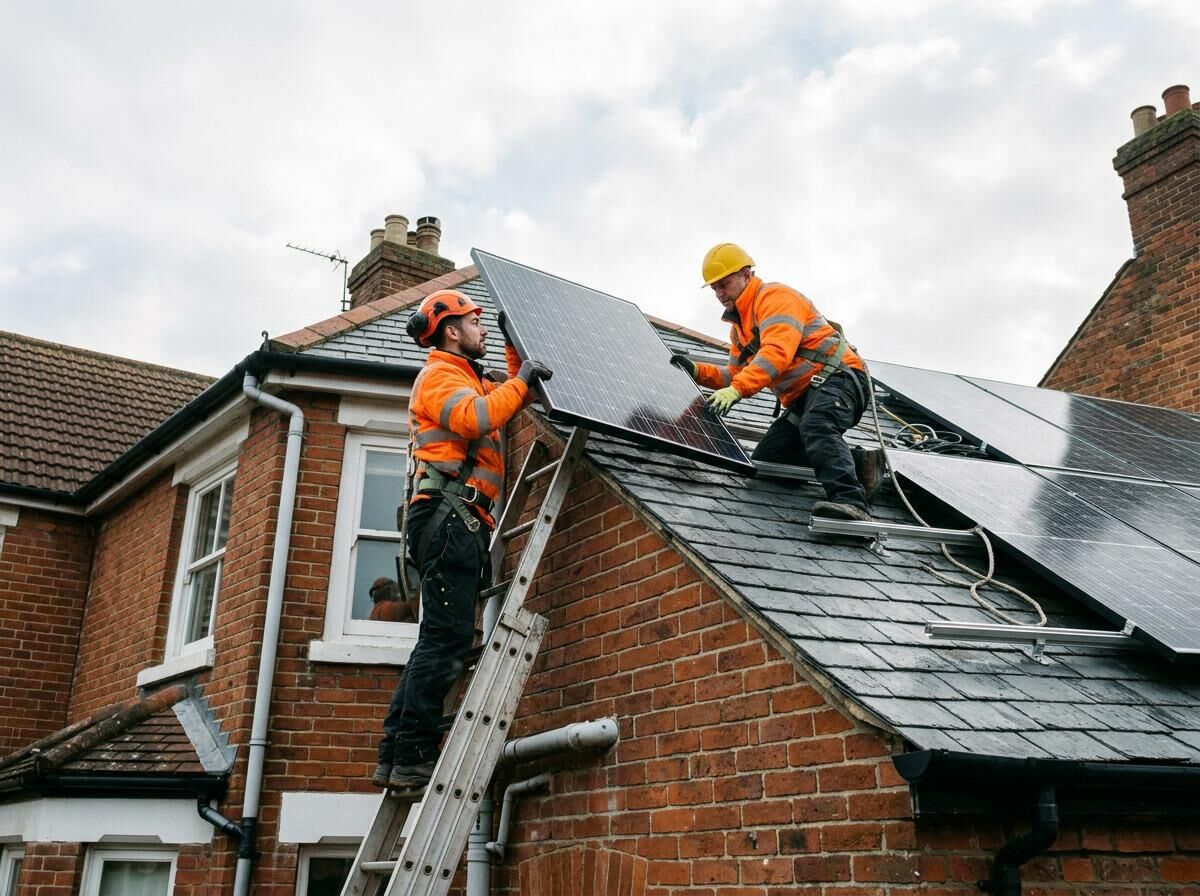
A typical heat pump job runs like this: survey, quote, deposit, equipment order, first fix, second fix, commissioning, final payment. That is six to eight weeks with money flowing in and out at different stages. Miss a payment milestone and your cash flow collapses.
Most trades businesses still manage this with spreadsheets and manual bank reconciliation. The installer sends a Xero invoice, the customer pays by bank transfer, and someone has to log in to match the payment manually. With ten jobs running at once, that is hours of admin every week. Our automation audit playbook walks through how to identify exactly where this hidden admin waste is costing you the most.
In my eyes, the bigger issue is visibility. When payments sit unreconciled, you do not know your actual cash position. I have spoken to renewables installers who cannot confidently order materials for the next job because they are not sure the last deposit cleared. Renewables businesses with average job values north of eight thousand pounds cannot afford that uncertainty.
Late payments hit renewables installers hardest
According to the Federation of Small Businesses, 62.6% of UK SME invoices are paid late. For renewables jobs with multiple stage payments, each late milestone creates a domino effect on materials procurement and crew scheduling.
How Staged Payments Work

Staged payments split a large job into milestones. Each milestone triggers a partial payment, keeping your cash flow healthy throughout the project. For renewables, the standard split looks like this:
- Deposit (25%): Taken when the customer accepts the proposal. Covers initial materials ordering and secures the installation date.
- Pre-installation (25%): Due before equipment delivery. Pays for panels, inverters, or heat pump units before they arrive on site.
- Installation complete (25%): Triggered when the physical installation is finished. Covers labour and remaining materials.
- Commissioning and handover (25%): Final payment after testing, MCS certification, and customer sign-off.
Payaca lets you set these stages directly in the proposal. The customer sees the full schedule before accepting, and each stage generates its own invoice automatically. No manual invoice creation for each milestone.
| Feature | Manual Process | Payaca + Xero + Stripe |
|---|---|---|
| Creating stage invoices | Manual creation in Xero for each stage | Auto-generated from proposal milestones |
| Payment collection | Bank transfer, manual follow-up | Stripe card payment links in each invoice |
| Reconciliation | Manual matching in Xero bank feed | Automatic via n8n webhook |
| Payment notification | Check bank app manually | Instant WhatsApp ping |
| Time per job | 45-60 minutes of admin | Under 5 minutes |
Setting Up Payaca for Solar and Heat Pump Jobs
Payaca is built specifically for field service businesses, with strong features for renewables installers. Unlike generic invoicing tools, it understands that a solar job is not a one-visit fix. If you are comparing it against broader field service platforms, our ServiceTitan vs Commusoft vs SimPRO comparison covers the scaling question in detail.
Key features for renewables
- MCS compliance support: Built-in fields for MCS certificate numbers, EPC ratings, and DNO application tracking.
- Staged payment schedules: Set milestone percentages directly in proposals. Customers see the full payment plan before accepting.
- Digital proposals: Send professional proposals with itemised breakdowns, payment schedules, and online acceptance.
- Stripe integration: Customers pay each stage by card through embedded payment links. No bank transfer chasing.
- Xero sync: Invoices and payments sync automatically with your Xero account.
Set up your payment stages as templates
Create proposal templates in Payaca with pre-configured 25/25/25/25 payment splits for standard solar installs and 30/30/40 splits for heat pump jobs. Saves time on every new quote.
Creating a staged payment proposal
- Create a new project: Add the customer details, site address, and job type (solar PV, battery storage, heat pump, or combined).
- Build the proposal: Add line items for equipment, labour, scaffolding, and any subcontractor costs. Payaca calculates VAT automatically.
- Set payment stages: Define milestones with percentage splits. Payaca generates a payment schedule the customer can review.
- Send for acceptance: The customer receives a digital proposal with the full breakdown and payment schedule. They accept online.
- Invoices auto-generate: As each milestone is reached, Payaca creates the invoice and sends the Stripe payment link.
Connecting Payaca to Xero
This integration saves hours of manual bookkeeping every single week. If you have ever spent a Friday afternoon matching invoices to bank transactions, you will understand why this matters. The Payaca-Xero integration syncs invoices, contacts, and payments between the two platforms. Once connected, every invoice Payaca generates appears in Xero automatically. Here is how to set it up:
- Open Payaca Settings: Navigate to Settings, then Integrations. Find the Xero tile and click Connect.
- Authorise via OAuth: You will be redirected to Xero to grant Payaca access. Log in with your Xero credentials and authorise the connection.
- Map your accounts: Payaca will ask you to map its revenue categories to Xero chart of accounts codes. Map solar income to your Sales account (typically code 200).
- Enable auto-sync: Turn on automatic syncing for invoices and contacts. New Payaca invoices will push to Xero within minutes.
- Test with a draft invoice: Create a test proposal in Payaca, approve it, and check that the invoice appears in Xero Accounts Receivable.
Xero account mapping matters
Make sure you map Payaca income categories to the correct Xero account codes. Solar PV income, battery storage, and heat pump installations should each have their own tracking category in Xero for clean reporting.
Once connected, the sync handles the tedious bits. Customer details push to Xero contacts. Invoices appear in Accounts Receivable with the correct amounts and due dates. When Stripe processes a payment, the reconciliation workflow (covered in the n8n section below) matches it automatically.
Stripe Payment Processing

Stripe handles the actual money movement. When a customer clicks a payment link in their Payaca invoice, Stripe processes the card payment and deposits the funds into your bank account. Fees for UK cards are typically 1.5% + 20p per transaction. If you want to add automated payment follow-ups, our 10 essential Zapier automations for trades includes a payment reminder Zap that pairs well with this stack.
Why Stripe works well for renewables payments
- Handles large amounts: Solar deposits of two to three thousand pounds process without issue. No awkward payment limits.
- Instant payouts available: Need the deposit money fast to order panels? Stripe Instant Payouts puts funds in your account within minutes (for an extra fee).
- Payment links in invoices: Customers click a link, enter card details, done. No app downloads, no account creation.
- Strong Customer Authentication (SCA): Built-in 3D Secure compliance for UK regulations. Reduces chargebacks.
- Webhooks for automation: Stripe fires webhook events when payments succeed, which is what our n8n workflow listens for.
Stripe fees on a typical solar job
On an £8,000 solar install with four staged payments of £2,000 each, Stripe fees total approximately £121 (1.5% + 20p per transaction). Compare that to the hours saved on payment chasing and manual reconciliation.
The Automated Reconciliation Workflow

This is where everything connects. An n8n workflow listens for Payaca payment webhooks, looks up the matching invoice in Xero, records the payment, and sends you a WhatsApp confirmation. The entire process takes seconds with zero manual input. If you are new to n8n, our guide to the ultimate n8n automation stack for trades businesses covers seven ready-made workflows including invoice sync and payment notifications.
How the workflow runs
- Payaca fires a webhook: When a customer pays a stage invoice through Stripe, Payaca sends a webhook with the invoice number, amount, customer email, payment date, and Stripe reference.
- Extract payment data: The Set node pulls out the key fields: invoice number, amount paid, payment date, and Stripe payment ID.
- Find the Xero invoice: An HTTP Request node queries the Xero API (
GET /api.xro/2.0/Invoices) filtering by invoice number to find the matching record. - Check if invoice exists: An If node verifies the invoice was found. If not, it routes to an error handler for manual review.
- Record the payment: A POST to
/api.xro/2.0/Paymentsrecords the payment against the invoice in Xero, including the Stripe reference for audit trails. - Send WhatsApp confirmation: A final HTTP Request sends you a WhatsApp message via the WhatsApp Business API confirming the payment amount, invoice number, and Stripe reference.
Get This Workflow
Download the complete Payaca-to-Xero payment reconciliation workflow. Import it into your n8n instance, add your Xero OAuth credentials and WhatsApp token, and activate.
How to Import This Workflow into n8n
Click "Download n8n Workflow JSON" above to save the workflow file. Then open your n8n instance, click the three-dot menu in the top right corner, and select "Import from File". Upload the JSON file you downloaded, then configure your credentials (Xero OAuth2, WhatsApp HTTP Header Auth). Test the workflow by clicking "Execute Workflow" and activate it when you are happy with the results.
Environment variables you need to set
The workflow uses $env.XERO_TENANT_ID for your Xero organisation and $env.WHATSAPP_TOKEN plus $env.WHATSAPP_PHONE_ID for WhatsApp notifications. Set these in your n8n environment variables before activating. You will also need to update the WhatsApp recipient phone number in the Send Confirmation node.
Manual vs Automated: The Numbers
Running ten renewables jobs per month with manual payment management means roughly 30 hours of admin time. Here is where that time goes, and what the automated pipeline saves.
With the Payaca + Xero + Stripe pipeline, invoicing is automatic (generated from proposals), payment chasing is eliminated (Stripe links in invoices), reconciliation runs via n8n webhook, and reporting pulls directly from Xero. Total admin time drops from 30 hours to under 5. Not sure if Xero is the right accounting platform for your business? Our Xero vs QuickBooks vs Sage comparison for UK trades breaks down MTD compliance, CIS support, and pricing across all three.
My Verdict
For solar installers and heat pump engineers running jobs above five thousand pounds, the Payaca + Xero + Stripe combination is the strongest payment pipeline available in the UK right now. Payaca understands renewables workflows. Xero keeps HMRC happy. Stripe moves money fast. The n8n workflow ties them together without any manual reconciliation. If this stack is part of a wider move to go digital, our digital transformation roadmap for UK trades businesses maps out the full journey from paper-based to AI-powered operations.
Best for: Solar installers and heat pump businesses running 5+ jobs per month with staged payments.
Setup time: About two hours for all three integrations plus the n8n workflow.
Monthly cost: Payaca subscription + Xero subscription + Stripe transaction fees (1.5% + 20p).
ROI payback: The admin time saved pays for the software within the first month for most businesses.
What UK Renewables Installers Say About Payment Automation
We searched UK trade forums, business communities, and renewables discussion boards to find what real installers and business owners are saying about payment processing, Xero, Stripe, and managing cash flow on large jobs.
Payaca, Xero and Stripe Video Resources
Payaca Workflow Demo: A Core Process for Renewable Installers
Payaca
263 views · 18:26

How to Use Payaca Field Service App | Full Tutorial and Demo
Payaca
783 views · 3:17

Meet Agent Dave: AI That Actually Does the Work Inside Your Renewable Energy CRM
Payaca
167 views · 20:48

Xero Tutorial 2026 | Learn Bookkeeping with Xero in 15 Minutes
Stewart Gauld
211,445 views · 16:08

How to Create and Send Invoices in Xero
Xero Accounting Software
3,446 views · 6:16

Automated Stripe Payment Link Using n8n
Emmanuel Flux
4,344 views · n8n + Stripe automation

What Is Stripe and How Does It Work? Quick Guide for Small Businesses
Merchant Maverick
109,302 views · 6:41

How to Maximise Your Business Cashflow with Solar
PSC Energy
289 views · Renewables business finance
Build Your Own Payment Pipeline
TrainAR Academy has dozens of integration guides, automation workflows and tool comparisons built specifically for UK trades businesses. Whether you are connecting MTD Phase 2 compliance with Xero, start here.
Explore the AcademyPayaca + Xero + Stripe FAQ
Yes. The pipeline works for any job size. But staged payments really prove their worth on larger jobs where cash flow timing matters. For small one-visit repairs, you might not need the staged payment feature, though the Xero sync and Stripe processing still save time.
Payaca includes fields for MCS certificate numbers, EPC ratings, and DNO application tracking. It does not generate MCS certificates directly, but it keeps all the reference data organised within the project record, making compliance audits straightforward.
The pipeline still works. Bank transfer payments show up in your Xero bank feed and can be reconciled manually or through Xero bank rules. You lose the instant automation of the Stripe webhook, but the Payaca-to-Xero invoice sync still handles the invoicing side automatically.
You can run Payaca, Xero, and Stripe without n8n. The Payaca-Xero native integration handles invoice syncing. What you lose is the automatic payment reconciliation and WhatsApp notification. Without n8n, you would need to manually match Stripe payments in Xero, which is the most time-consuming part of the process. If n8n feels like overkill, Make.com is a simpler alternative for basic webhook-to-WhatsApp flows.
Standard UK card fees are 1.5% + 20p per transaction for European cards and 2.9% + 20p for non-European cards. On a £10,000 solar install paid in four stages of £2,500, total Stripe fees come to roughly £151. Some businesses pass card processing fees to the customer or offer a small discount for bank transfer. Our pricing models guide covers how to factor transaction fees into your quotes.