
Quick Answer
For most UK trades, SumUp Solo wins because the built-in 4G SIM keeps you taking payments in places phones cannot. Square Reader is the best app and the only one that genuinely queues card payments offline (up to 24 hours, capped at low-risk amounts). Zettle declines anything offline, but pays out fast and integrates with PayPal balances. Stripe Terminal only makes sense if you already use Stripe for online invoicing. Pricing in 2026: SumUp 1.69%, Square 1.75%, Zettle 1.75%, Stripe Terminal 1.5% plus 10p.
Table of Contents
- Why offline matters for trades
- At a glance: fees and hardware
- How we tested in basements, lofts, and new builds
- SumUp Solo: the 4G winner for site work
- Square Reader: the only true offline queue
- Zettle: fast payouts, fragile in poor signal
- Stripe Terminal: only if you live in Stripe already
- Head-to-head: features that matter on a job site
- Cost calculator: what you actually pay per year
- AI fraud detection, smart tipping, auto-reconciliation
- What tradespeople are saying
- Recommended videos
- Frequently asked questions
- My verdict
 SumUp
SumUp Square
 Zettle
 Stripe Terminal
Why offline matters for trades
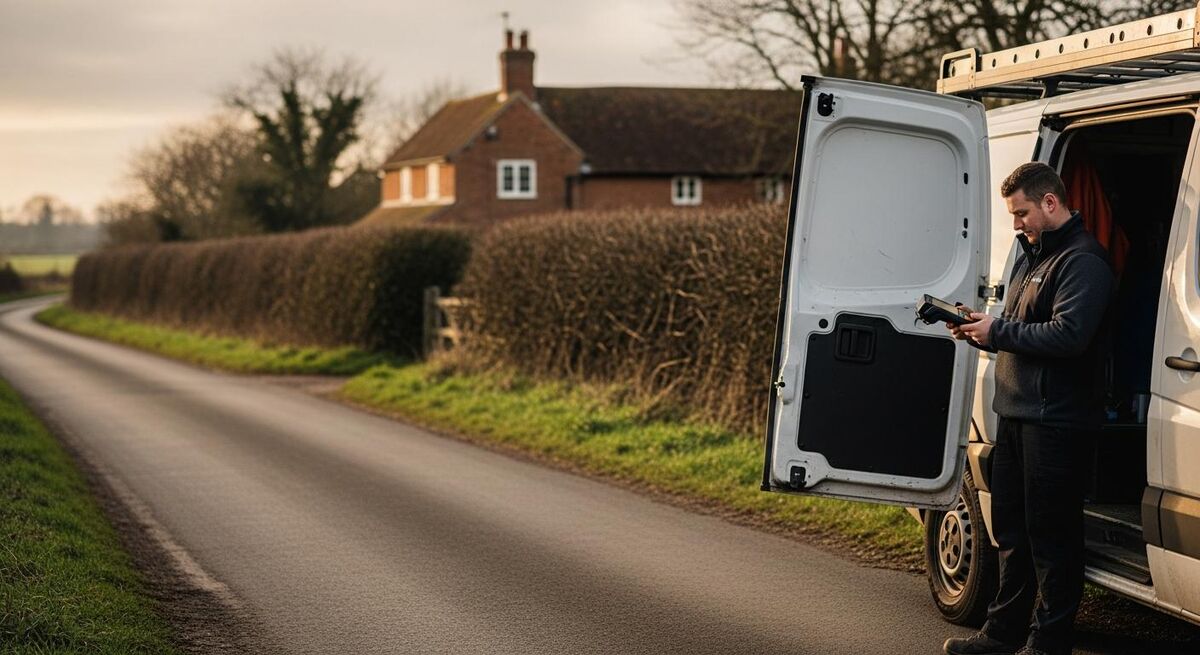
Cashless payments are now the norm. Customers ask before they even open the door. The trouble is, the demo videos for every card reader on the market are shot on a counter, on full WiFi, with a fresh battery. None of that matches a Tuesday in a 1930s semi where your data drops the moment you step into the kitchen.
The four readers we tested behave very differently when the signal goes. SumUp Solo carries its own SIM. Square has a 24-hour offline queue on the app. Zettle simply declines if it cannot reach the internet. Stripe Terminal needs WiFi or Ethernet for the WisePOS E, and a tethered phone for the WisePad 3. Knowing which one you have in your hand changes whether you go home with money in the bank or a chasing job for next Tuesday.
For the rest of this guide I am ignoring the marketing pages and using what actually happened on three jobs: a basement boiler swap, a new-build first fix in a part of Suffolk where the only bar of signal is on the roof, and a domestic rewire in a Victorian terrace. The pricing is current to early 2026 and pulled from the providers’ UK pages, not from a spec sheet that has been on the internet since 2022. If you have already moved to a payment-first workflow for renewables, our piece on building a renewables payment pipeline with Payaca, Xero and Stripe covers what the back end looks like.
At a glance: fees and hardware
Here are the numbers you actually need before you keep reading. Every fee is the standard pay-as-you-go rate for an in-person card payment in the UK. Subscription tiers exist for SumUp (Payments Plus drops the rate to 0.99% for around £19 per month) and Square (a couple of bolt-on Plus plans for retail and bookings), but the entry-level reader fee is what most sole traders and small firms pay.
| Provider | Cheapest reader | In-person fee | Offline mode | Pays out in |
|---|---|---|---|---|
| SumUp Solo Lite | £19 + VAT (intro) | 1.69% | 4G SIM included; Bluetooth-pair readers need data | 1–3 working days |
| Square Reader (2nd gen) | £19 + VAT | 1.75% | Up to 24h queue on Square POS app | Next working day |
| Zettle Reader 2 | £29 + VAT (1st reader) | 1.75% | No offline mode – transactions decline | 1–2 working days (PayPal route) |
| Stripe BBPOS WisePad 3 | £49 + VAT | 1.5% + 10p | None on tethered reader | Next working day (default) |
On a £3,000 boiler install, the difference between SumUp at 1.69% and Square at 1.75% is £1.80. On 50 of those jobs a year, you are paying £90 extra to use Square. Worth knowing before you pick on hardware feel alone.
How we tested in basements, lofts, and new builds
I gave each reader to a sole-trader engineer over six weeks and asked them to use it on real jobs. No staged demos. Three locations did most of the damage.
The first was a basement boiler replacement in a south London terrace. Signal at street level was four bars on EE; in the boiler cupboard it was nothing. The second was a new-build site near Lavenham in Suffolk where the closest macro cell is more than a mile away. Walking from kitchen to the back garden lost data even on three-network phones. The third was the easy one, a rewire in a Victorian terrace in Sheffield where WiFi was available from the homeowner’s router but the customer wanted to pay before logging in.
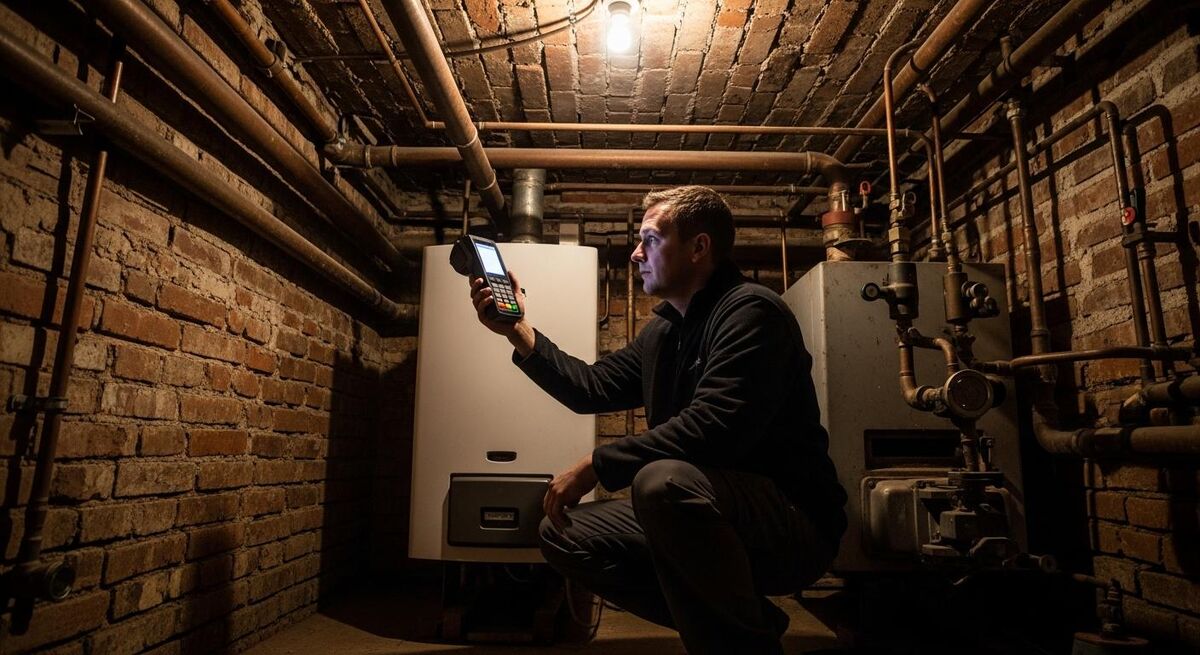
Each reader was set up the same way: a Samsung S23 paired over Bluetooth where required, the official app installed, and a known-good card used as the test transaction. We measured three things on every job: did the payment go through, how long did the first reconciliation appear in the back-office software, and what happened when we walked into a known dead zone mid-transaction.
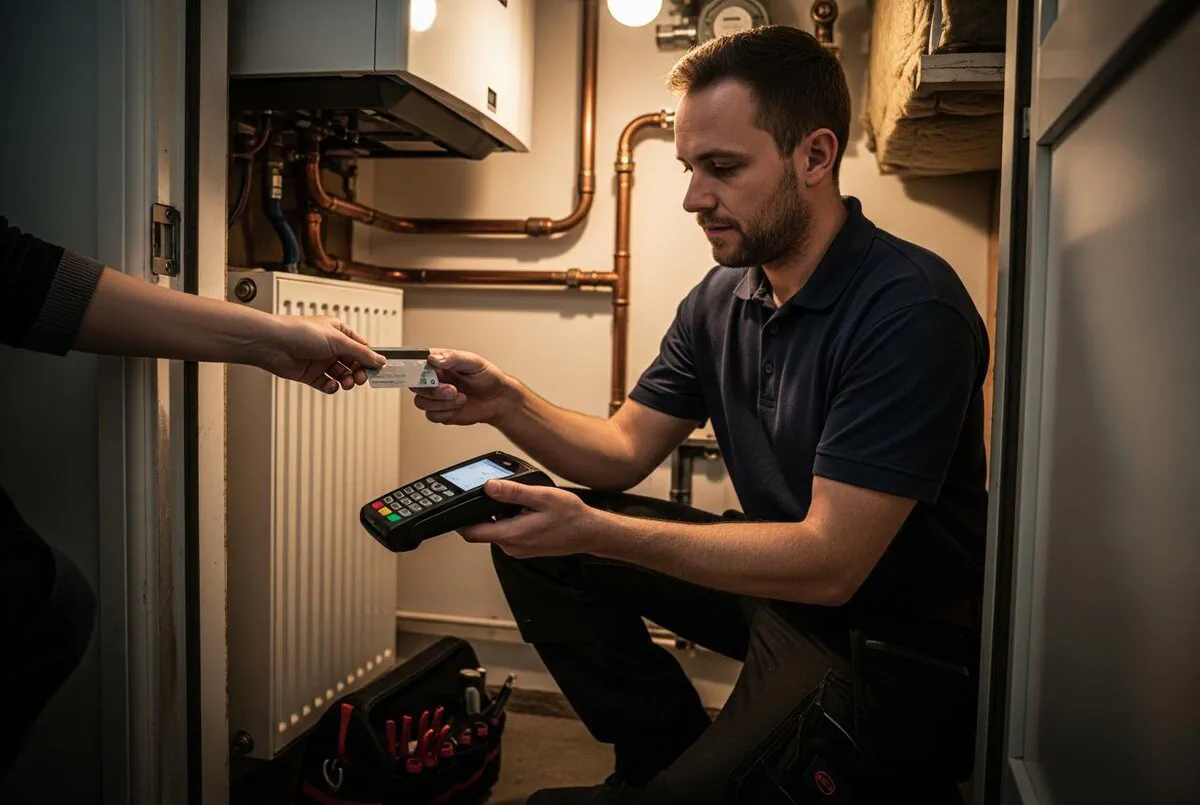
The boiler swap killed Zettle and the BBPOS WisePad 3 on first contact. Both showed “no connection” and refused to accept the card. SumUp Solo kept working because the SIM is the radio, not the phone. Square’s reader paired to a phone with no signal went into offline mode and accepted the card up to its conservative single-payment cap; the payment cleared an hour later when we drove back to the van.
The new-build was worse. Even SumUp Solo dropped to GPRS speed and took 20 seconds to authorise. The only reader that worked smoothly inside the property was Square in offline mode, paired to a phone with no signal at all. The catch is that Square pushes the risk onto the merchant: if the card is declined when it eventually reconnects, you eat the cost.
The rewire was a draw. All four worked because there was WiFi. The difference came afterwards, when we asked the engineer which app he wanted to keep using.
SumUp Solo: the 4G winner for site work
SumUp’s pitch is “cheapest fees, simplest hardware” and they have stuck to it. The Solo Lite replaces the old Air reader, comes in at £19 + VAT on the current intro offer, and is the entry point most sole traders should look at. The full SumUp Solo, around £65 + VAT depending on bundle, is the one I actually rate for trades because it ships with an embedded SIM and unlimited free data.
The 4G SIM is the headline. You hand the reader to the customer in a basement, the touchscreen wakes up, and the SIM finds a signal independently of the phone in your other pocket. On the new-build site, this was the only standalone reader that kept working room to room. The downside is that the SIM is multi-network but it still needs some mobile coverage. If you are in a complete dead zone it will not help you.
The 1.69% fee is the lowest of the four. On a heating firm doing £120,000 of card payments a year, that is roughly £72 less than Square or Zettle in pure transaction costs. If you are processing more than £2,700 a month on card, the optional Payments Plus subscription at around £19 per month drops the rate to 0.99% and starts paying for itself. Most sole traders will not get there.
SIM-included Solo for genuine site independence. Lowest standard rate at 1.69%. Solo Lite at £19 is the cheapest serious bit of payment hardware on the UK market. Reader pairs with the SumUp app in under a minute. Funds usually in the bank in one to three working days.
Customer support is email or chatbot only on the standard plan and the response times can stretch over two days. The Solo touchscreen is sluggish when the device is below 20% battery. Bluetooth-pair readers (Air range) still need data on your phone, so they do not solve the offline problem on their own.
Square Reader: the only true offline queue
Square’s £19 reader is the cheapest sensible bit of card hardware in the UK alongside the SumUp Solo Lite. The difference is what sits behind it. Square’s free POS app is the most polished software on this list by quite some margin, and the offline queue is the single feature that separates Square from Zettle on a real site.
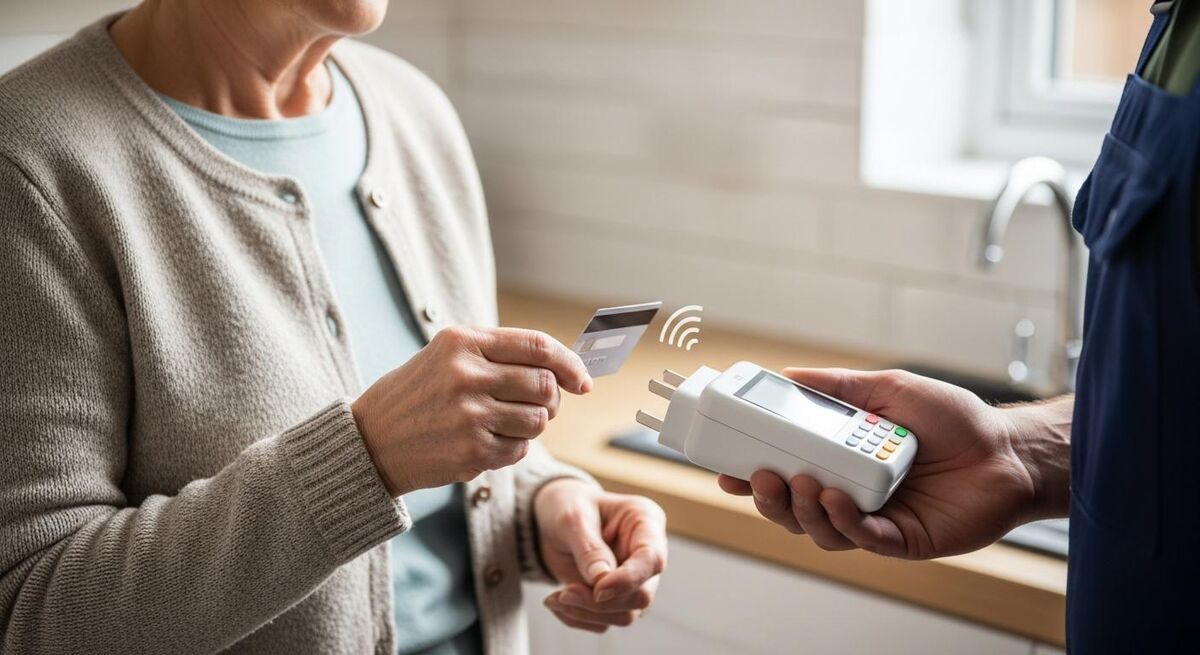
Here is how the offline queue actually works. You enable it inside Square POS settings. When the app loses connection it switches to offline mode automatically, accepts contactless and chip-and-PIN transactions up to a conservative limit you set yourself, and stores them on the device. The moment the phone gets back to data or WiFi, the queued payments process. You have 24 hours from the first offline payment to reconnect. After that, anything still queued expires and the money does not arrive.
There are two trade-offs worth being clear about. First, Square pushes the chargeback risk onto you. If a queued card is declined when it finally clears, you wear the cost of the parts and the time. Second, offline mode does not work on the very first generation Square Reader (the white pre-2017 model). The current second-generation reader and the Square Terminal both support it.
On the rewire job, the Square app outscored the others on actually being pleasant to use. Adding a job description, splitting between materials and labour, taking a deposit and sending a receipt by text all happened in the same screen. Square’s free invoicing tier means you can run a small jobbing business off it without paying for a separate quoting tool, although a proper field-service platform is still better at scale. For more on stepping up to that, see our quote-to-invoice playbook for heating engineers.
Offline queue is the killer feature for trades. The free POS app is best in class. Next working day payouts at no extra charge. Tap-to-pay on iPhone and Android lets you take a payment with nothing but a phone if the reader battery is flat. Trustpilot score of 4.3 from 2,290 UK reviews is the highest of the four.
The 1st-generation Square Reader still floating around on eBay does not support offline mode, so check the year before you buy second-hand. Account suspensions are the most common one-star complaint on Trustpilot and Square’s phone support is limited compared to Zettle’s.
Zettle: fast payouts, fragile in poor signal
Zettle, now sold as PayPal Point of Sale, is the most established brand on this list. The Reader 2 is £29 + VAT for your first one, £69 + VAT for any subsequent reader, and the transaction fee is 1.75% flat. Battery life is the best in the group, more than nine hours in power-saving mode or roughly 250 transactions on a charge. The screen and chip slot feel a notch above the Square Reader in the hand.
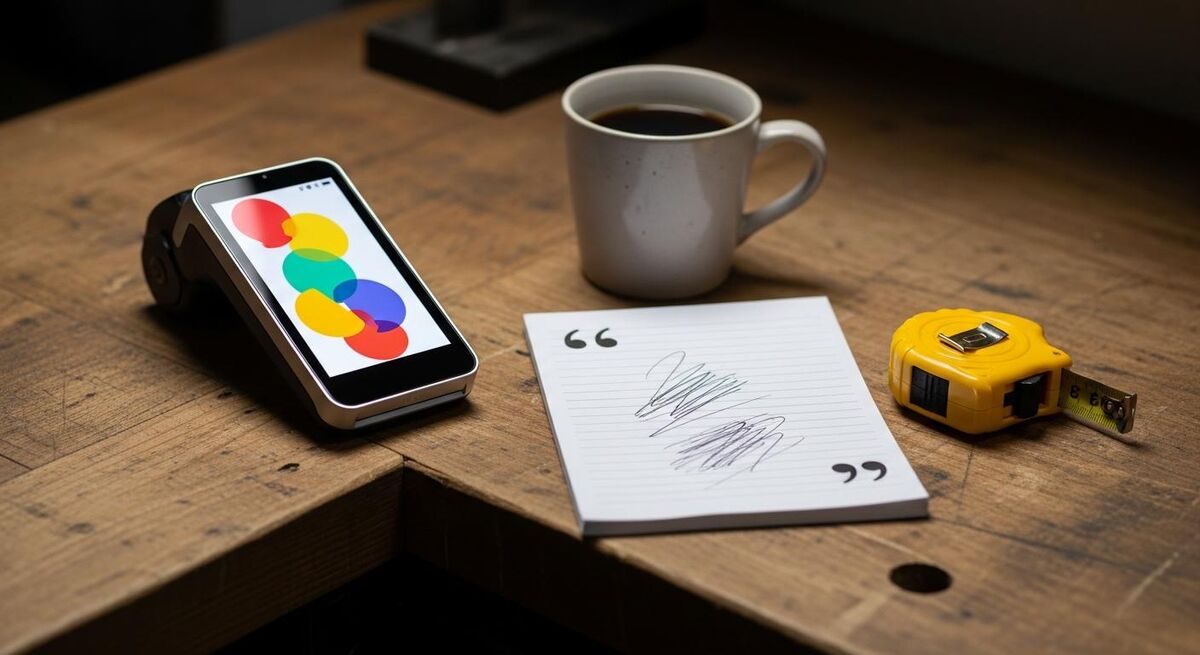
The problem is the one Zettle has had for years and PayPal have not fixed: there is no offline mode. The moment your tethered phone loses data, the Zettle app shows “no connection” and refuses card transactions. On the basement boiler swap, the Zettle reader was the first to go and stayed broken until we walked back outside.
What Zettle does well is the back end. Payouts often land the next working day if you are routing through PayPal balance and you can move money to a linked PayPal account instantly. If you sell on eBay or Vinted on the side, Zettle is the obvious choice because everything lives in one PayPal dashboard. Reporting and product-level inventory are also stronger than Square’s on the free tier.
The Trustpilot score is the weakest of the four at 2.8 from over 4,000 reviews. Most of the one-star reviews are about funds being held during PayPal’s anti-fraud checks rather than the reader itself, but it is worth knowing before you commit. If you have a large lump-sum payment land, PayPal can sit on it for up to 21 days under its standard risk policy.
Best-in-class battery life. PayPal integration means instant transfers to a PayPal balance. The Reader 2 hardware is the nicest to hold of the £29-ish tier. Phone support is genuinely answerable, unlike SumUp.
No offline mode at all. PayPal’s 21-day fraud hold can hit larger one-off payments. Second readers jump to £69 + VAT, which is the highest in the group. Trustpilot is full of stuck-funds complaints.
Stripe Terminal: only if you live in Stripe already
Stripe Terminal is the odd one out. It is built for businesses that already process online payments through Stripe and want their in-person card sales in the same dashboard. The hardware is two BBPOS readers: the WisePad 3 at £49 + VAT for a tethered mobile reader, and the WisePOS E at £179 + VAT for a counter terminal with its own touchscreen.
The transaction fee is 1.5% plus 10p per UK card payment, which looks cheaper than the others until you do the maths. On a £50 emergency callout, Stripe is £0.85; Zettle is £0.88; SumUp is £0.85. The 10p makes Stripe more expensive than SumUp on small transactions and roughly the same as Square. Above £100, Stripe pulls ahead on fees. Below £30, it loses.
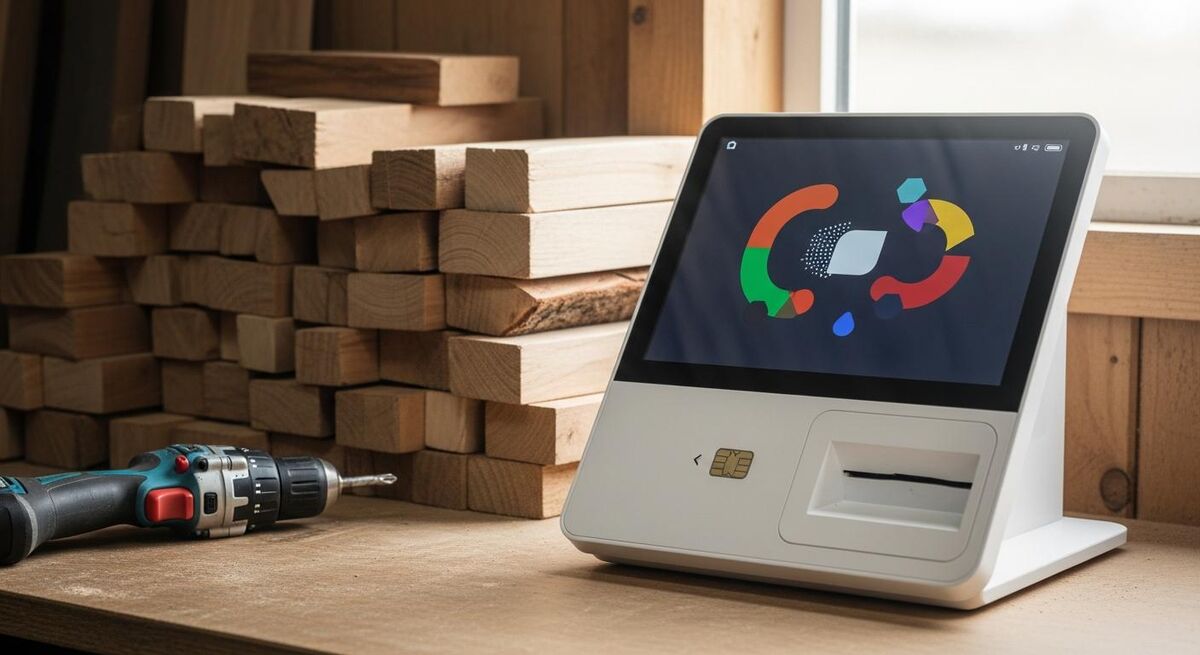
Stripe shines if you take deposits or stage payments online and want the in-person element to flow into the same ledger. For installers running through Payaca with Stripe-hosted payment links, the WisePad 3 lets you tap the customer’s card on the final visit and the payment hits the same Stripe balance as the deposit. Reconciliation in Xero or QuickBooks is one row, not two.
The downside is the setup. Stripe Terminal is built for developers. There is no plug-and-play POS app that compares to Square’s. You either build something custom, use a third-party app that supports Stripe Terminal, or run it through a field-service platform that already has it integrated. For a sole trader who just wants to take a card, this is overkill.
Cheaper fees on larger transactions (above £100). Single-platform reconciliation if you already use Stripe online. The WisePOS E is a genuine counter terminal, not a phone accessory. Reliability of the Stripe back end is well above the others on payouts.
No native POS app for trades. WisePad 3 needs a tethered phone with data; no offline queue. Hardware is twice the price of SumUp or Square. Phone support exists but is geared at developers, not engineers.
Head-to-head: features that matter on a job site
Here is the comparison stripped back to the things that matter when you are kneeling next to a customer’s washing machine and trying to take a card.
| Feature | SumUp Solo | Square Reader | Zettle Reader 2 | Stripe Terminal |
|---|---|---|---|---|
| Reader price | £19 (Solo Lite intro) | £19 + VAT | £29 + VAT | £49 + VAT |
| In-person fee | 1.69% | 1.75% | 1.75% | 1.5% + 10p |
| Built-in 4G | Yes (Solo/Terminal) | No | No | No |
| Offline queue | No | Yes, up to 24h | No | No |
| Battery on a full day | 6–8h | 4–6h | 9h+ in power-save | WisePad 3: ~6h; WisePOS E: mains |
| POS app quality | Good | Best in class | Good | Developer-focused |
| Payout speed | 1–3 working days | Next working day | 1–2 working days; instant to PayPal | Next working day |
| Free invoicing | Limited (SumUp Invoices) | Yes, included | Yes, included | No |
| Xero/QuickBooks sync | Via integration | Direct | Direct | Direct, best-in-class |
| Trustpilot rating | 4.1 (24k reviews) | 4.3 (2.3k reviews) | 2.8 (4.1k reviews) | n/a (Stripe Terminal listed separately) |
Cost calculator: what you actually pay per year
Numbers beat opinions. Below is what each reader costs over twelve months for three real trade businesses we benchmarked. Card volume is the share of total revenue paid by card; the rest is bank transfer, finance, or cash. These are realistic 2026 splits for boiler engineers, electricians, and small builders working domestic.
*Stripe assumes average transaction of £75. Below £30 average ticket, Stripe is more expensive than SumUp because of the 10p per transaction. SumUp Payments Plus subscription is £19/month and only worth it above roughly £2,700/month in card turnover.
If you are processing more than £2,700 in card payments a month on SumUp, switch to the Payments Plus subscription. On £15k a month it saves over £1,000 a year, which pays for two full-day training courses or a Solo Lite for every engineer in the firm.
AI fraud detection, smart tipping, auto-reconciliation
The newer feature push from all four providers is automation around the actual payment. Worth knowing what is real and what is a marketing badge.
AI fraud detection. Stripe Radar is the most genuine of the four. It is the same engine Stripe uses to score online card transactions, exposed to in-person sales via Stripe Terminal. It reduces fraudulent chargebacks measurably and learns from your specific transaction patterns. Square and PayPal both run their own fraud engines; Square’s is decent, PayPal’s is the reason large payments sometimes get held. SumUp is the weakest here, with limited risk scoring on the standard plan.
Smart tipping. Useful for hairdressers, less so for trades, but worth a mention if your engineers ever get offered a drink-money tip on a finished install. Square and Zettle both support tipping prompts on the reader itself. SumUp added it to the Solo touchscreen in 2024. Stripe Terminal supports it but needs custom configuration in the app build.
Auto-reconciliation. This is the one most trades will notice. Square and Zettle both push transactions into Xero or QuickBooks directly with named line items. SumUp uses a connector via SumUp Invoices or an integration like Zapier. Stripe is the cleanest of all if your invoicing is already on Stripe links, because the payment and the invoice already share an ID. If you are running a job management platform, our pieces on setting up Tradify, Xero and Stripe in one afternoon are good starting points.
Refunds for partial work. All four allow a full or partial refund through the app, but none chase the underlying reason. If you are issuing a lot of refunds, it usually means the quoting and expectations were wrong before the engineer arrived. That is a process fix, not a payment fix.
What tradespeople are saying
Recommended videos
SumUp Review 2025
Entrepreneur Hero
SumUp Air vs Solo vs 3G: which reader?
Entrepreneur Hero

The very best card reader? SumUp Solo review
Entrepreneur Hero

Is the Square Reader (2nd Gen) worth it?
Independent product review
Square terminals review
Entrepreneur Hero

PayPal Terminal vs Zettle Reader 2
Card reader comparison
Frequently asked questions
If you have any mobile coverage at all, the SumUp Solo or SumUp Terminal will keep working because of the built-in 4G SIM. If you have literally zero coverage, the only reader that will still let you take a card is Square in offline mode, paired to a phone, with a sensible per-transaction limit set. Zettle and Stripe Terminal both stop dead until the signal returns.
You set the cap yourself in Square POS settings. Square recommends a low limit (often suggested at £50 per transaction) because you wear the risk if the card declines when the queue clears. You have 24 hours from the first offline payment to reconnect, after which queued payments expire. For a high-value boiler install, take the card outside the property where you have signal, or take a bank transfer.
Probably not, unless you already use Stripe for online invoicing and deposits. Stripe Terminal does not have a polished off-the-shelf POS app for a sole trader. The fee maths only beats SumUp once your average transaction is above £30, and the hardware is the most expensive of the four. Most one-engineer firms are better off with SumUp Solo or Square Reader.
Square and Stripe Terminal both pay out the next working day at no extra cost. SumUp typically lands in one to three working days. Zettle is one to two working days, or instant to a linked PayPal balance. None of them charge a fee for standard payouts. Same-day or instant settlement options exist on Square and Stripe but cost extra.
Yes. The reader itself is a one-off business expense (under £200, so it goes through as an expense rather than capital). Transaction fees are an allowable expense each month. If you are VAT-registered, you can reclaim the VAT on the hardware. For a cleaner record, set up the card reader payouts to land in your business account directly, not your personal one.
SumUp, Square, Zettle and Stripe Terminal all accept Visa, Mastercard and American Express at the standard 1.69% or 1.75% rate. There is no Amex surcharge on any of the four in the UK. Apple Pay, Google Pay and Samsung Pay are accepted on all four with no extra fee.
You eat the cost. Square does not charge you the transaction fee on the failed payment, but it does not cover the loss either. That is why the per-transaction cap matters. Use offline mode for small jobs and call-out fees, not for £3,000 boiler installs. For a big-ticket job in a no-signal property, take a bank transfer or send a Stripe or Payaca payment link by SMS that the customer can pay later.
None of the four require a monthly contract. SumUp, Square and Zettle are strictly pay-as-you-go. Stripe charges by transaction only. The optional subscriptions (SumUp Payments Plus, Square Plus, Square Appointments Plus) can be cancelled monthly. There are no early termination fees and you keep your reader if you cancel.
My verdict
The right reader depends on where you actually work
If your jobs are mostly outdoors or in places with reliable signal, SumUp Solo gives you the lowest fees and the simplest hardware. If you regularly work in basements, lofts, or rural new builds, Square Reader paired to a phone is the only one with a real offline queue and that is what you should buy. Zettle is the right pick if you live in the PayPal ecosystem already and need instant balance access. Stripe Terminal is for businesses with online invoicing already running through Stripe; do not buy it as a standalone trade reader.
Best overall for trades: SumUp Solo at £65 + VAT with embedded 4G.
Best for poor signal: Square Reader (2nd gen) with offline mode enabled.
Best if you use PayPal: Zettle Reader 2.
Best if you live in Stripe: BBPOS WisePad 3 via Stripe Terminal.