

Quick Answer
Let me cut to the chase: there is no single "best" pricing model. I see tradespeople tying themselves in knots over this, but the answer is usually a hybrid. Project-based pricing gives your customers cost certainty and rewards fast, efficient work. Day rates protect you when scope is unclear or jobs are unpredictable. Per-square-metre pricing works brilliantly for trades with measurable outputs like plastering, tiling, and painting. Most experienced tradespeople calculate their day rate internally, estimate how long a job will take, then quote the customer a fixed project price. The key is knowing your numbers, and I will show you how to work them out properly.
Table of Contents
- UK day rates by trade in 2026
- Project-based pricing: when fixed quotes win
- Day-rate pricing: when flexibility matters
- Per-square-metre pricing: the measurable model
- Side-by-side comparison of all three pricing models
- Day rate calculator for UK tradespeople
- Hidden costs most tradespeople forget to price
- Which pricing model for which trade?
- My verdict on pricing models for trades
- What tradespeople actually say about pricing
- Pricing advice videos from UK tradespeople
- Pricing FAQ for UK tradespeople
UK day rates by trade in 2026
One of the biggest mistakes I see at Together We Count is tradespeople pricing jobs without knowing what the market is actually paying. Before you pick a pricing model, you need to know the numbers. These figures come from Checkatrade, Superscript Insurance, and ConcreteMath, cross-referenced against real forum discussions.
| Trade | Day Rate (Midlands) | Hourly Rate | London Rate (+35%) |
|---|---|---|---|
| Electrician | £250 – £400 | £35 – £60 | £338 – £540 |
| Plumber / Heating | £250 – £375 | £35 – £55 | £338 – £506 |
| Roofer | £220 – £350 | £30 – £50 | £297 – £473 |
| Bricklayer | £220 – £320 | £28 – £45 | £297 – £432 |
| Carpenter / Joiner | £200 – £320 | £28 – £45 | £270 – £432 |
| Plasterer | £200 – £320 | £28 – £42 | £270 – £432 |
| Tiler | £170 – £280 | £22 – £40 | £230 – £378 |
| Painter / Decorator | £160 – £280 | £20 – £38 | £216 – £378 |
| Kitchen Fitter | £180 – £300 | £25 – £40 | £243 – £405 |
| General Labourer (CSCS) | £100 – £160 | £12.71 – £18 | £135 – £216 |
Sources: ConcreteMath 2026, Superscript Insurance 2026, Checkatrade 2026
Regional multipliers matter
These Midlands baseline figures shift sharply by region. South East adds 22%, South West adds 10%, while the North East and Wales are 12% below baseline. A plasterer earning £280/day in Birmingham might get £340 in London but only £246 in Newcastle.
Project-based pricing: when fixed quotes win
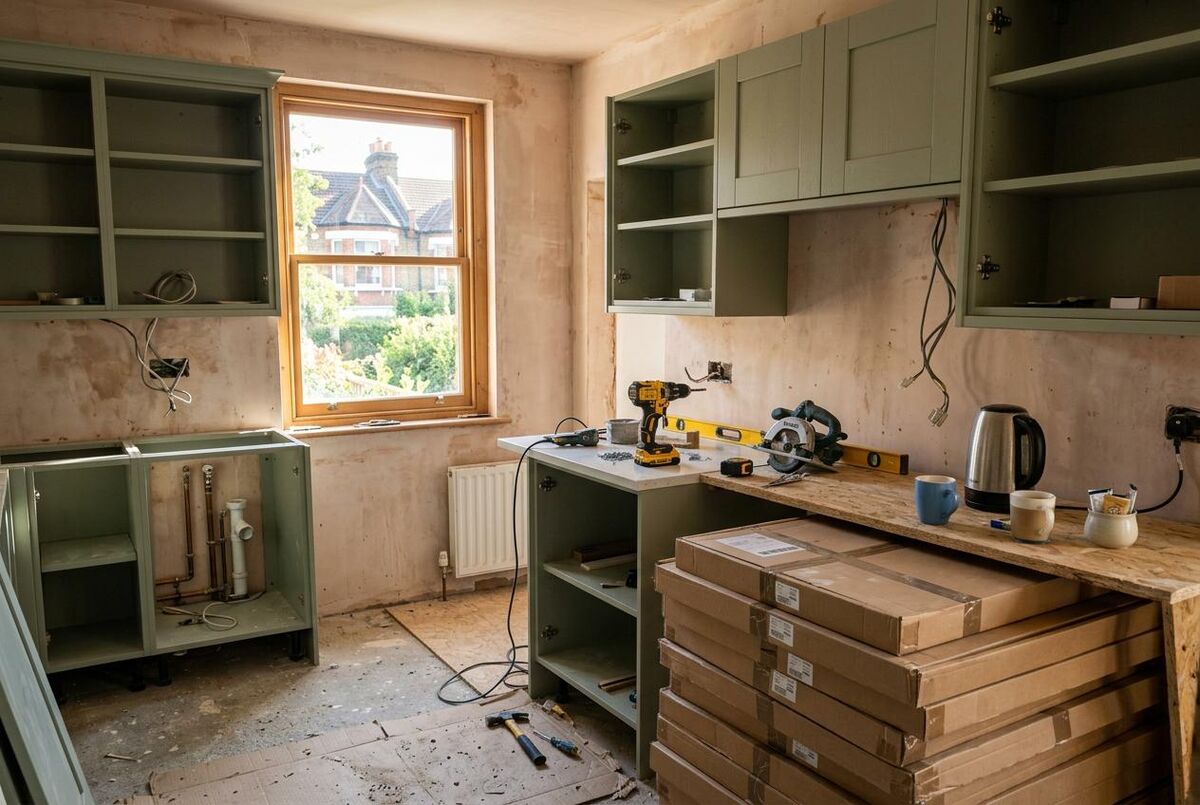
Project-based pricing means quoting one fixed price for the entire job. The customer knows exactly what they will pay, and you know exactly what you will earn. It is the most common model for domestic work in the UK. Tools like ChatGPT can help you write winning project quotes by generating detailed line-item descriptions from a brief job summary.
How it works
You visit the site, assess the scope, estimate how long it will take, calculate your materials, add your margin, and present a single number. And here is the bit most people get wrong: make sure you are applying a proper margin, not just a mark-up. A 20% mark-up only gives you a 16.67% margin, which is a costly misunderstanding I flag regularly with Together We Count clients. A free job estimate spreadsheet with auto-calculated margins takes the guesswork out of this process. If the job takes less time than expected, you pocket the difference. If it takes longer, you absorb the loss.
The pricing formula
Total Price = (Day Rate x Estimated Days) + Materials + Overheads + Profit Margin (10-30%)
A kitchen fitter quoting a 5-day install at £300/day with £200 in materials and a 20% margin would quote: (5 x £300) + £200 + £360 margin = £2,060.
When project pricing works best
- Repeatable jobs you have done dozens of times (bathroom fits, rewires, full decorations)
- Well-defined scope that can be fully specified before work starts
- Domestic customers who need cost certainty before committing
- Competitive tenders where clients compare multiple quotes
When it backfires
- Hidden problems behind walls, under floors, or in old wiring that blow your estimate
- Scope creep from customers who add "just one more thing" without a change order
- Underestimating complex jobs when you are new to a particular type of work
Day-rate pricing: when flexibility matters
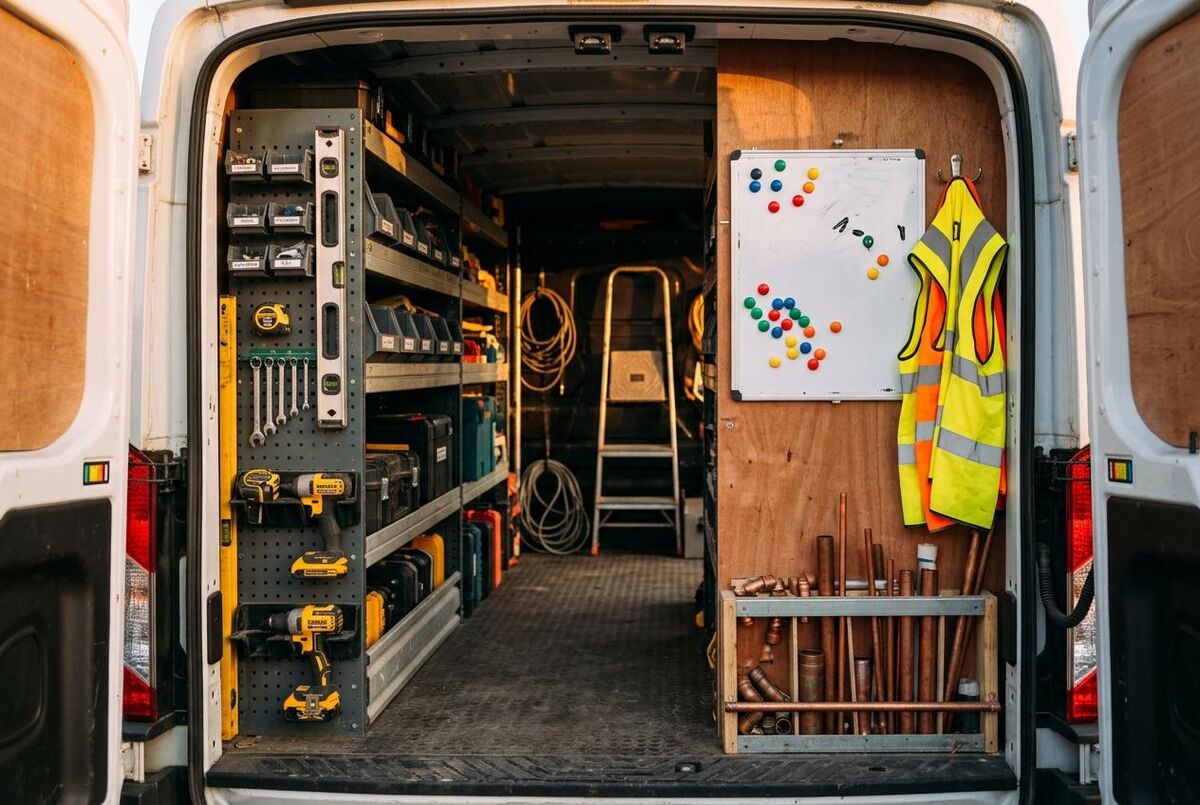
Day-rate pricing is straightforward. You charge a flat fee per day of work. The customer pays for your time regardless of how much gets done. It is the simplest model to understand and the hardest to get right. If you sub-contract on day rates, bear in mind that CIS deductions apply to the labour element of your invoice, so your net take-home is lower than the headline rate.
How it works
You agree a daily rate with the client, show up, work a full day, and invoice for each day on site. Some tradespeople also offer half-day rates for smaller jobs. Travel time and setup are usually included in the day rate.
When day rates work best
- Unclear scope where neither you nor the client knows exactly what is involved until you start
- Maintenance and repair work where every job is different
- Sub-contracting for other trades on larger builds (make sure you have a proper subcontractor agreement in place)
- Trusted repeat clients who book you regularly
When day rates backfire
- Customers watching the clock, questioning tea breaks, and feeling like they are being milked
- Fast workers get punished. If you are brilliant and finish early, you earn less than someone slower
- No incentive to be efficient from the client's perspective
Per-square-metre pricing: the measurable model
Per-square-metre (or per-unit) pricing charges based on the quantity of work done. It is the standard in trades where output is measurable: plastering, tiling, painting, bricklaying, and roofing.
Current UK per-square-metre rates
| Trade / Work Type | Rate per m² (Labour Only) | Typical Daily Output |
|---|---|---|
| Skim plastering | £10 – £20 | 20 – 35 m² |
| Floor tiling | £20 – £45 | 8 – 14 m² |
| Wall tiling | £30 – £60 | 6 – 10 m² |
| Painting (emulsion) | £8 – £18 | 50 – 80 m² |
| Bricklaying | £150 – £300 | 3 – 5 m² (250-400 bricks) |
| Flat roofing | £45 – £100 | Varies by material |
| Laminate flooring | £7 – £15 | 20 – 40 m² |
| Extensions (full build) | £1,300 – £2,500 | N/A (project basis) |
Sources: Checkatrade, ConcreteMath, Buon Construction
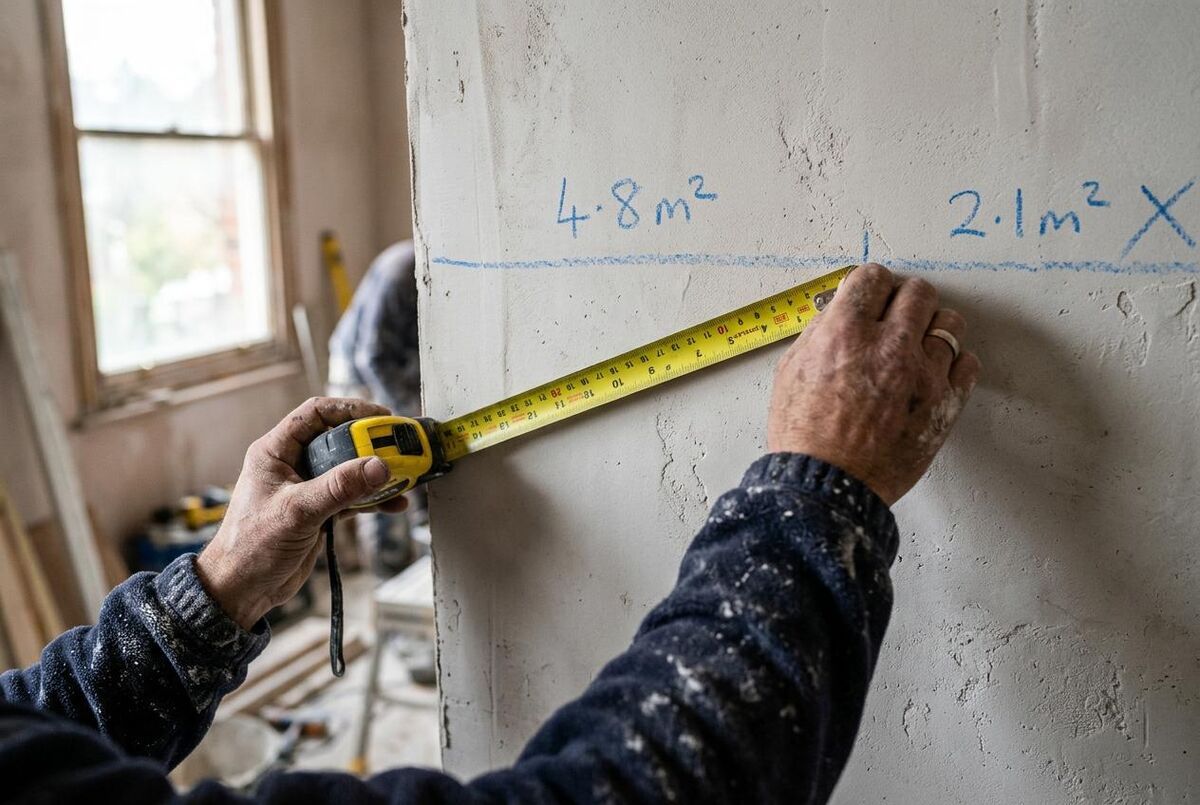
When per-sqm pricing works best
- Trades with measurable output: plastering, tiling, painting, bricklaying, flooring, roofing
- Large, regular spaces where productivity is high and consistent
- Repeat work where you know your output rate precisely
- Quick quoting: measure the area, multiply by your rate, done
When per-sqm pricing backfires
- Complex spaces with lots of cuts, corners, obstacles, and prep work
- Small jobs where setup and travel time dwarf the actual measured work
- Poor site conditions: old walls that need extra prep, uneven floors, limited access
The 1.5-day trap
Multiple tradespeople on Screwfix Community Forum independently flagged the same problem: a job that takes 1.5 days gets priced as 2 days of work on a fixed quote, but you might only charge for 1.5 days on a day rate. If you are fast, project pricing or per-sqm pricing will almost always pay better than day rate.
Side-by-side comparison of all three pricing models
| Factor | Project-Based | Day Rate | Per-Square-Metre |
|---|---|---|---|
| Cost certainty for customer | ✓ High | ✗ Low | ✓ High |
| Risk if job overruns | You absorb it | Customer absorbs it | You absorb it |
| Rewards fast work | ✓ Yes | ✗ No | ✓ Yes |
| Easy to quote | Moderate (site visit needed) | ✓ Very easy | ✓ Easy (measure + multiply) |
| Scope creep protection | ✗ Needs change orders | ✓ Built in (extra days) | Moderate (extra area = extra cost) |
| Best for | Kitchens, bathrooms, rewires, defined jobs | Maintenance, unclear scope, sub-contracting | Plastering, tiling, painting, flooring, roofing |
| Profit potential | ✓ Highest (if estimated well) | Capped at day rate | ✓ High (scales with speed) |
Day rate calculator for UK tradespeople
Use this calculator to work out what you need to charge per day to hit your target annual income. It accounts for non-billable days, holidays, and overheads.
What Should Your Day Rate Be?
Hidden costs most tradespeople forget to price
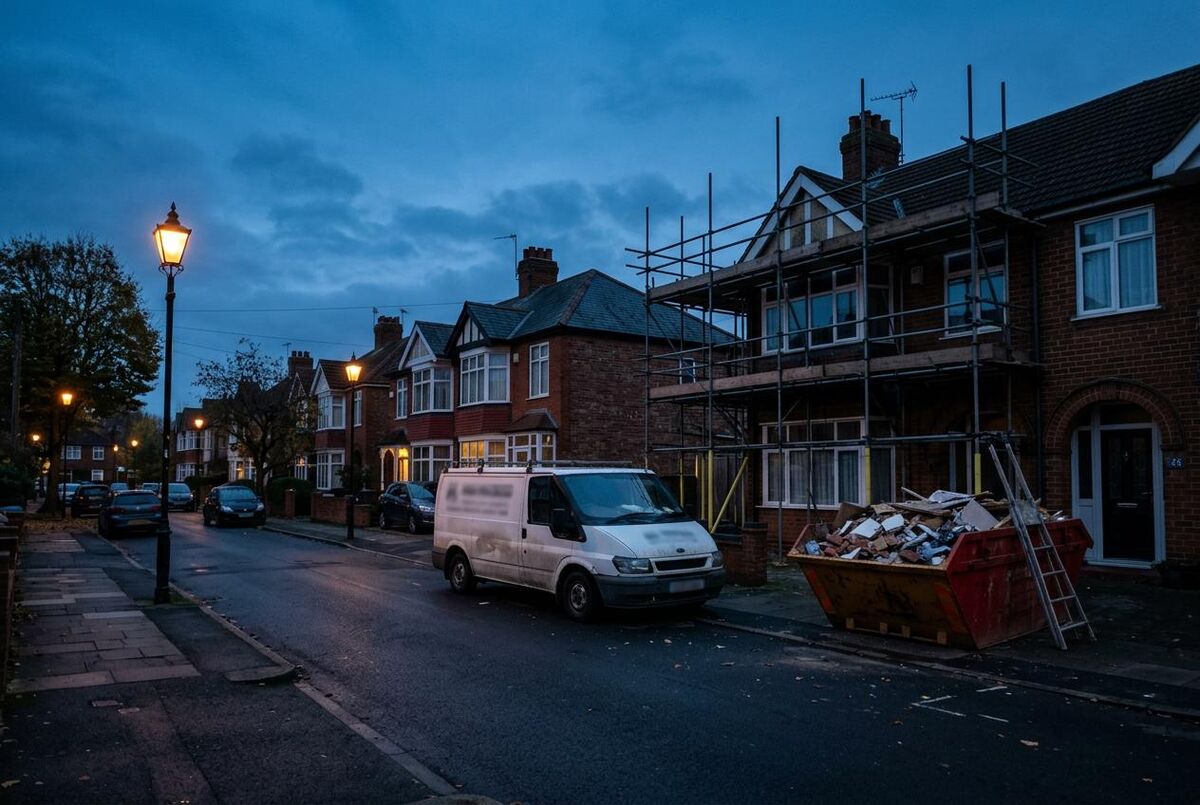
In my eyes, this is where most tradespeople leave money on the table. Your day rate or project price needs to cover far more than just your time on site. I see it constantly with our clients at Together We Count: they are turning over decent money but wondering why the profit never quite materialises. If you are still tracking these costs in WhatsApp threads and spreadsheets, our comparison of WhatsApp and spreadsheets versus job management software breaks down the real cost of doing it manually. Here are the costs that eat into your margins if you do not account for them.
| Cost | Typical Amount | How Often |
|---|---|---|
| Materials markup | 10 – 20% (specialist 30-40%) | Every job |
| ULEZ charge (London) | £12.50/day | Every London job |
| Parking | £5 – £20/day | Urban jobs |
| VAT | 20% | If VAT-registered |
| Weekend premium | +25 – 50% | Weekend work |
| Emergency call-out | 2 – 3x standard rate | Emergency work |
| Travel surcharge | £0.45 – £0.65/mile | Jobs beyond free radius |
| Skip hire | £180 – £400 | Larger jobs |
| Scaffolding | £150 – £300/week | External work |
The 1% rule
Research from Small Business Insider found that a modest 1% price increase can boost profit by approximately 11% if your costs are already covered. Most tradespeople leave money on the table by not reviewing their rates annually. A good accounting software platform with project tracking makes it easier to see which jobs are actually profitable and where your rates need adjusting.
Which pricing model for which trade?
There is no universal answer, but clear patterns emerge when you look at how each trade actually operates.
| Trade | Primary Model | Secondary Model | Notes |
|---|---|---|---|
| Electrician | Project / per-point | Day rate (larger jobs) | Rewires quoted per-project; small jobs per-point (£65-70/point) |
| Plumber | Project-based | Hourly (small repairs) | Bathroom installs always fixed price |
| Plasterer | Per m² | Day rate | Skim work almost always quoted per m² |
| Tiler | Per m² | Day rate | Floor tiling per m²; complex mosaic by day rate |
| Painter / Decorator | Per room or project | Per m² or day rate | Residential per room; commercial per m² |
| Roofer | Per m² (flat) / project (pitched) | Day rate | Flat roofs suit m² pricing naturally |
| Bricklayer | Day rate or per 1,000 bricks | Per m² | Piecework (£0.50-1.00/brick) common on larger sites |
| Carpenter | Day rate or project | Per linear metre (skirting) | Kitchen fitting typically project-priced |
| General Builder | Day rate | Project (extensions) | Extensions always project-priced at £1,300-2,500/m² |
My verdict on pricing models for trades
I call a spade a spade, and here is the truth: most tradespeople I work with at Together We Count are not picking the wrong pricing model. They are picking the right model but plugging in the wrong numbers. A project quote built on a gut feeling is still a guess, and guesses do not pay VAT bills.
The data in this article points clearly in one direction. Most successful tradespeople use a hybrid. They calculate their day rate internally, estimate how many days a job will take, add materials, overheads, and a proper margin (not a mark-up, and yes, there is a difference), then present the customer with a single project price. That is where both certainty and profit live.
One thing I flag constantly: a 20% mark-up only gives you a 16.67% margin. Print that out and pin it above your desk. If you are quoting kitchen installs at 20% "profit" and wondering why the bank balance never grows, that is your answer. Sound familiar?
Project pricing: for defined domestic jobs, kitchen installs, bathroom fits, full decorations. Your margin grows with your speed and accuracy.
Day rates: for sub-contracting, maintenance work, and jobs where scope is unclear. Protect yourself from the unknown.
Per-sqm rates: for plasterers, tilers, painters, bricklayers, and flooring installers. Transparent, fast to quote, and it scales with your output.
Review annually: with 9.5% price increases expected in 2026, your rates from last year are already out of date. What gets measured gets managed.
What tradespeople actually say about pricing
We searched Screwfix Community Forum, PistonHeads, BuildHub, and MoneySavingExpert to find real opinions from tradespeople on pricing models. Here is what they said.
Pricing advice videos from UK tradespeople

Quoting Jobs & Price Conditioning
Skill Builder · 179K views

How to Price Jobs as an Electrician or Tradesman
Artisan Electrics · 68K views
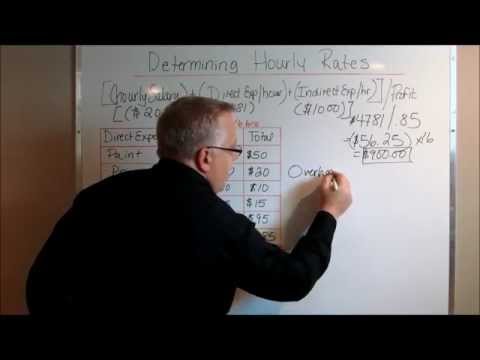
Calculating Hourly Rates for a Contractor
Ian Johnson · 962K views

Fix Contract Price or Hourly?
The 360 Electrician · 16K views

How Much Does a Plumber Cost?
M J Tiff Plumbing · 57K views

Fixed Price vs Day Rate
Expert Trades · 350 views

Why I Charge £320 Per Day as a Handyman
Moocharoo · 7.7K views

How to Price Electrical Jobs UK
HDS Electrical · 2.1K views
Get your pricing right from day one
This guide covers the models, but getting your numbers right takes the right tools. Our free job estimate spreadsheet auto-calculates labour, materials, and margin. If you are quoting kitchens or bathrooms, the ChatGPT quoting guide turns rough notes into professional quotes in 30 seconds. And if you are VAT-registered, our accounting software comparison helps you track which jobs are actually profitable.
Explore TrainAR AcademyPricing FAQ for UK tradespeople
Day rates vary widely by trade and region. In the Midlands (baseline), electricians charge £250-400/day, plumbers £250-375/day, carpenters £200-320/day, and painters £160-280/day. London adds approximately 35% to those figures. The national average sits around £200-300/day for qualified tradespeople. If you are VAT-registered, do not forget MTD Phase 2 penalties now apply to sole traders earning over £50,000.
For most domestic work, fixed project pricing is better. It gives customers cost certainty (which they prefer) and rewards you for working efficiently. Use day rates only when the scope is unclear, for sub-contracting, or for maintenance work where every job is different. Many tradespeople calculate their internal day rate but present customers with a fixed project quote.
Add your target annual income to your annual overheads (van, insurance, tools, phone, accountant). Divide by the number of billable days per year (typically 260 working days minus holidays, sick days, and non-billable admin days, leaving around 175 billable days). For example: (£45,000 income + £8,000 overheads) / 175 billable days = £303/day minimum.
Skim plastering typically runs £10-20 per square metre for labour only, depending on region and complexity. A good plasterer can cover 20-35m² per day. On easy newbuild walls, some plasterers earn well above their day rate on per-sqm pricing. On older properties with lots of prep work, the per-sqm rate may need to be higher or a day rate might be more appropriate.
Standard practice is 10-20% markup on materials for most trades. Specialist materials (underfloor heating, bespoke joinery, high-end tiles) may warrant 30-40%. This covers your time sourcing, transporting, and managing materials, plus the risk of wastage. Always itemise materials separately in your quote so customers can see the breakdown.
Yes, but adoption in UK trades is still early. Tools like CountBricks (from £25/month) use AI to generate quantity takeoffs from voice notes, while Kreo (£35/month) offers AI-assisted takeoffs with BIM support. For quoting and invoicing, Fergus (from £35/month) and Tradify (£34/month) include pricing templates with supplier price lists. Our complete guide to AI tools for tradespeople compares what is free and what is worth paying for. These tools reduce quoting time, but your trade experience remains the most reliable pricing tool you have.