

Quick Answer
Three platforms, three completely different jobs. Propeller is compliance-led workforce management for contractors serving social housing, where gas, electrical and fire door certifications drive the workflow. ServiceM8 is mobile-first job management for small trades teams who do reactive property maintenance, brilliant on iPhone but limited on Android. Fixflo is repairs and maintenance software that lives between the lettings agent and the contractor, with Aidenn AI doing first-line diagnostics. If you fit any of those three slots cleanly, the choice is already made. The mess starts when you sit across two of them.
Table of Contents
- Why this comparison is different
- Three platforms, three workflows
- Propeller: compliance-first for social housing contractors
- ServiceM8: mobile-first job management for trades
- Fixflo: the lettings agent's repairs hub
- Side-by-side comparison table
- AI: where each platform sits in 2026
- Pricing reality check
- Which one should you choose?
- What landlords and contractors are saying
- Recommended videos
- Frequently asked questions
- My verdict
 Propeller
 ServiceM8
 Fixflo
Why this comparison is different

Most field service software comparisons treat property maintenance like any other trade vertical. Quote, schedule, dispatch, invoice. Job done. That misses the point. Property maintenance has its own loop, and the loop has three parties in it: the tenant who reports the problem, the landlord or agent who pays for the fix, and the contractor who turns up. Bolt a generic job management tool onto that triangle and you end up with the contractor logging jobs in one system, the agent chasing updates in another, and the tenant getting nothing.
I have spent the last decade building software that sits in the middle of that triangle. The company I founded, Help me Fix, was acquired by Fixflo and its parent Aareon in 2025, so I have skin in the game with one of the three platforms on this page. I am going to call that out where it matters. I am also going to be honest about what Fixflo is bad at, because there is no point pretending otherwise.
The other two are different beasts. Propeller is built for the contractor side of social housing. ServiceM8 is built for the small trades business that happens to do property maintenance among other things. Neither of them tries to be a tenant-facing repairs portal, and they should not be judged on that. What I want to do here is line them up against the workflow that actually matters: maintenance request to job dispatch to completion to invoice, with compliance evidence captured along the way.
Three platforms, three workflows
Before any feature comparison makes sense, you need to understand which problem each platform was built to solve. The names get used interchangeably online, which is part of why people pick wrong.
Propeller Powered
Built for contractors who serve social housing landlords. The whole platform is wrapped around compliance: gas safety, electrical EICRs, fire doors, legionella, asbestos, LOLER. If your work involves uploading a certificate at the end of every job and your client is a housing association or local authority, this is the platform that was built for you. It also runs the social landlord side, which means a Direct Labour Organisation (DLO) and external contractors can both work in the same system.
ServiceM8
Built for small trades businesses, full stop. Plumbers, electricians, HVAC engineers, locksmiths, garden care, pest control. Job cards, scheduling, on-site quoting, invoicing. The platform happens to work well for property maintenance because reactive maintenance work fits the shape of its job cards. But ServiceM8 does not care whether your customer is a landlord, a homeowner or a commercial site. It is platform-agnostic about who is paying.
Fixflo
Built for the lettings agent's repairs problem. Tenant reports a leak through a picture-based portal, Fixflo triages it, sends a works order to a contractor, captures the photos and signatures, then closes the loop with the landlord. Aidenn, its AI repairs assistant, now handles the first conversation in around half of new Fixflo deployments. The contractor experience inside Fixflo is, frankly, the weakest part of the platform, and that has been true for years.
Propeller: compliance-first for social housing contractors
Propeller's pitch is simple. The certificate is the work. Everything else is logistics around the certificate. That is how social housing landlords think about it, because that is how the regulators think about it. Section 21 of the Housing Act, Awaab's Law, the Building Safety Act, the Decent Homes Standard. The audit trail is the asset.
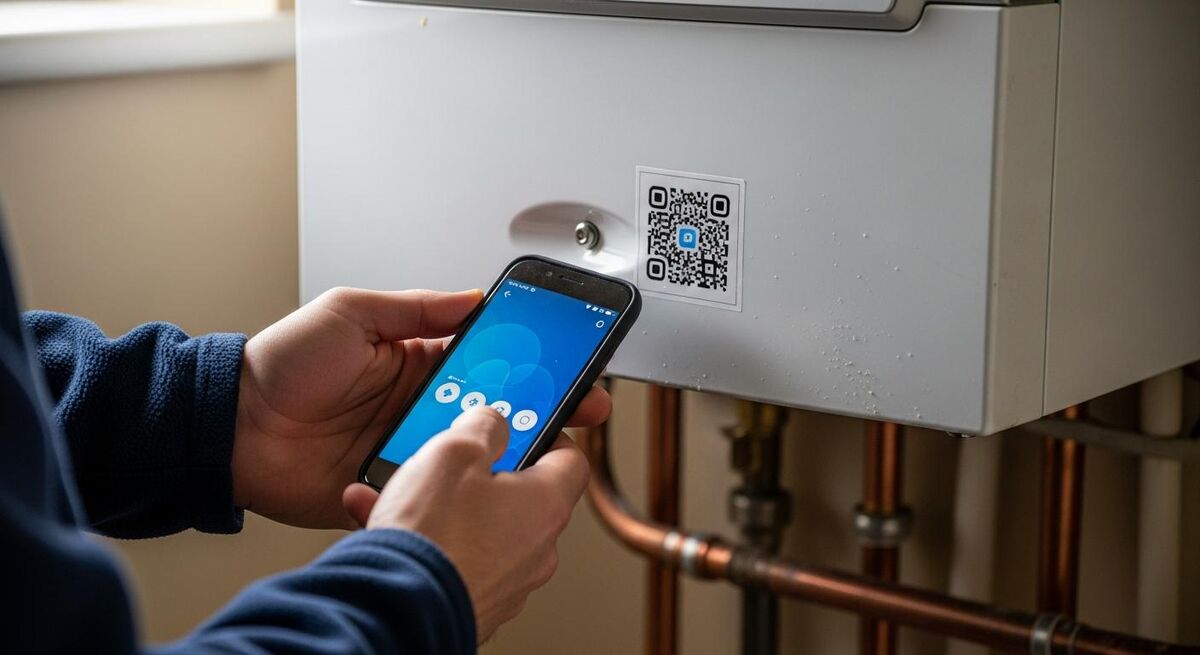
So Propeller is built to capture the audit trail by default. QR codes on boilers, fuse boards and fire doors. Mobile certification through the engineer's app. Digital signatures that bind a real engineer to a real piece of evidence. Real-time compliance dashboards that the landlord can see without phoning anyone.
The customer list tells you who this is built for. Torus, Regenda, South Kesteven District Council, Runnymede Borough Council on the landlord side. Sure Maintenance, EMCOR, Holdcroft Heating, Seddons on the contractor side. These are seven-figure compliance contracts that will not move to a generic FSM platform because the data model does not fit.
Where Propeller wins
- Digital certification across gas, electrical, fire, legionella, asbestos and LOLER, all in one platform
- QR tagging that survives engineer turnover, so a new starter can scan a job and pick up the asset history
- Integrations with housing management systems and Sage and Xero, which means the data does not get re-keyed three times
- Carbon-neutral certification through ClimatePartner, which is starting to matter on social housing tenders
Where Propeller is not the answer
- If you do not work on social housing at all, you are paying for compliance machinery you will never use
- Pricing is enterprise and not published. Expect a sales call and a contract conversation, not a credit card sign-up
- The user experience is functional, not delightful. This is software built for the engineer in a high-vis fleece, not the founder in a shared workspace
ServiceM8: mobile-first job management for trades
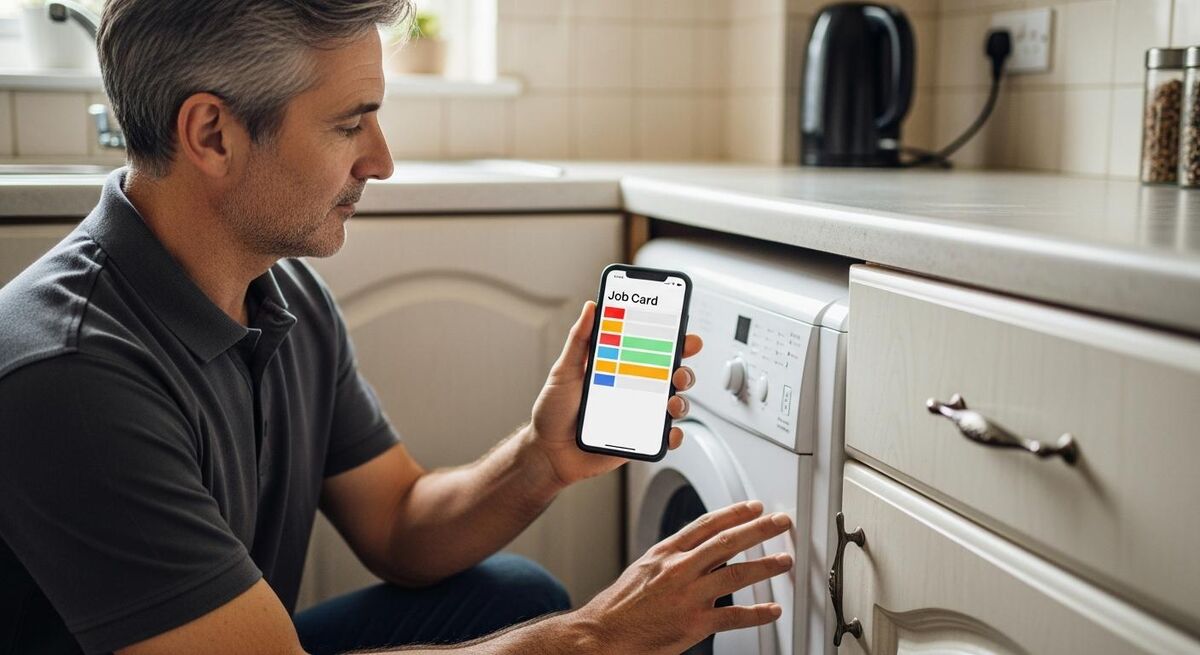
ServiceM8 came out of Australia and it is the most opinionated of the three platforms on this page. The opinion is that the engineer's phone is the office, the office is mostly noise, and the cleanest workflow is one where the job is dispatched, completed, photographed, signed, invoiced and synced to Xero before the engineer has driven back to the yard. That works brilliantly when it works, and it falls apart in two specific places.
First, the platform is fundamentally iOS-first. There is a ServiceM8 Lite app on Android for field workers who just need the basics, but if your team is on Android phones and you want the full app, you will be buying iPhones. The company has been upfront about this for a decade and they are not changing direction. One UK contractor put it bluntly on Trustpilot: "We've had to change from Android to iPhone at the same time, as ServiceM8 is only available on iPhone. ServiceM8 have helped with the cost of the change."
Second, it is not designed for the multi-party property maintenance workflow. There is no tenant-facing portal. There is no native concept of a landlord client who sees works orders before they get authorised. You can build approximations of these things using ServiceM8's email automation and PDF forms, but you are working around the grain of the platform rather than with it.
Where ServiceM8 wins
- Best in class on the engineer's phone, full stop. The iOS app is faster and more polished than anything in the FSM category
- Pricing scales by jobs per month, not seats. A two-engineer team that does 100 jobs a month pays the same as a 20-engineer team that does 100 jobs a month
- Xero and QuickBooks integration that actually works without an integration partner
- Free tier and a £29 Starter plan that let you try it properly without a sales call
Where ServiceM8 is not the answer
- Android-heavy teams will hit limits, especially on photo and signature capture
- No tenant or landlord portal, so multi-party property maintenance still needs phone calls and emails around the platform
- Compliance certificate capture is generic PDF forms, not regulated templates. Fine for an EICR, weak for a multi-asset gas safety record
- Customer support is chat-only, which can be slow when an integration breaks
Property maintenance angle
The contractors who run ServiceM8 successfully on property maintenance work tend to have one thing in common: their client is a single point of contact, usually a small letting agent or a small block management company, and the relationship is high-trust. The contractor dispatches the job, sends the agent a one-line update after each visit, and the agent handles the tenant. ServiceM8 carries the contractor's half of the workflow brilliantly and stays out of the rest.
Fixflo: the lettings agent's repairs hub

This is the platform I have to be most careful about because Help me Fix, the company I founded, was acquired by Aareon and merged into Fixflo's AI roadmap in September 2025. Aidenn, the AI repairs assistant you see across Fixflo's marketing, is a direct evolution of the Help me Fix triage engine. I will tell you what I think Fixflo does well and where it gets criticised, because I have read every line of the criticism.
Fixflo is what happens when you build software for the lettings agent first. The tenant-side portal is picture-based, works in 40+ languages and runs without a login. Tenants tap a picture of a broken thing, the portal walks them through a diagnostic tree, the works order lands in the agent's dashboard already categorised by trade. The agent confirms, sends the works order to a contractor, and the loop closes when the contractor uploads the completion photo.
At scale, that is the model that has won. Fixflo runs 1.6 million UK units, 150,000 maintenance tasks a month, and 120,000 active users across 2,000+ agencies. The Trustpilot rating is a middling 3.2 out of 5 across 222 reviews, which I think is fair. Lettings agents tend to leave four and five-star reviews because the platform saves them real hours. Tenants and contractors leave one and two-star reviews because the contractor app is dated and the tenant portal is awkward.
Where Fixflo wins
- The agent dashboard is the cleanest repairs workflow tool I have seen, and the integrations with letting platforms (Alto, agentOS, MRI) are mature
- Aidenn AI now handles first-line diagnostics in 51% of new Fixflo deployments since October 2024, with agencies reporting savings up to 248 hours and around £4,000 a year
- Picture-based tenant reporting in 40+ languages removes the worst friction in reactive maintenance
- Compliance side (gas, electrical, fire risk assessments) has tightened up, especially after the Aidenn AI Compliance launch
Where Fixflo gets criticised
- The contractor app is dated and crashes under heavy use, which is a known issue
- Customer support has slipped over the last 18 months, and smaller agencies report they no longer feel valued
- Cancellation and auto-renewal handling has come up repeatedly on Trustpilot. If you sign up, set a calendar reminder before renewal
- Tenants outside the lettings portfolio (private landlord direct lets) find the portal awkward, because it is not a consumer app
Side-by-side comparison table
| Capability | Propeller Powered | ServiceM8 | Fixflo |
|---|---|---|---|
| Built for | Social housing contractors and DLOs | Small trades businesses | Lettings agents and block managers |
| Primary user | Compliance engineer and back-office | Mobile engineer | Lettings agent |
| Tenant portal | Not native (designed for landlord workflows) | None | Yes, picture-based, 40+ languages |
| Mobile app | iOS and Android | iOS full, Android Lite only | iOS and Android (contractor app weak) |
| AI assistant | Compliance dashboards, no consumer AI | "AI Assists" on quoting and forms (unlimited from Growing plan) | Aidenn AI (diagnostics + compliance) |
| Gas Safety / EICR certification | Native, regulated templates | Generic PDF forms | Compliance modules and integrations |
| Accounting integration | Sage, Xero, housing management systems | Xero, QuickBooks (mature) | Mainly through letting agent platforms |
| Public pricing | No, sales-led | Yes, £0 to £349/mo equivalent | From £50/mo software fee, 50 unit minimum |
| Free trial | Demo only | Yes, free tier | Demo only |
| Best fit | Gas, electrical, fire, social housing contracts | Reactive trades work with single client per job | 50+ unit lettings or block management portfolios |
| Avoid if | You only work for private landlords or homeowners | Your team is Android-only | You manage fewer than 50 units |
AI: where each platform sits in 2026

The AI angle in this category gets oversold. I will give it to you straight. The useful AI in property maintenance right now is not predictive scheduling or some clever asset failure model. It is first-line diagnostic triage. The unsexy question of "what is actually broken and which trade do we send" eats a startling amount of time in an agency back office.
Fixflo is the platform doing the most here, and it is the one I know most about. Aidenn is trained on more than 75,000 real repairs cases. It looks at a tenant's photo of a leaking boiler and can identify the make, model and likely fault. It pulls up the troubleshooting video for that specific boiler. It can sense-check a quote against historical work in that postcode. The Aareon press release claims 51% of new Fixflo deployments use Aidenn or Aidenn Video since October 2024, and the early operating data shows about 248 hours and £4,000 a year saved per agency. Take the marketing numbers with the usual pinch of salt, but the direction is real.
ServiceM8's AI work is narrower. "AI Assists" inside the platform help engineers tidy up quote descriptions, draft job notes, and pull text out of PDF forms. Useful, but not category-defining. It is LLM-powered text editing inside the existing app.
Propeller does not pitch a consumer-style AI feature. The platform leans on real-time compliance dashboards and outcome management, which is a different problem. If you want a control room view of every gas job overdue across 5,000 social housing units, Propeller's data layer is more useful than any AI sticker on a brochure.
Pricing reality check

Pricing across the three platforms is structured completely differently, which makes a like-for-like comparison hard. Let me lay out what I have verified at the time of writing.
ServiceM8 publishes its prices. The Free tier covers 1 user and 30 jobs a month. Starter is around $29 a month for unlimited users and 50 jobs. Growing is $79 a month for 150 jobs. Premium is $149 a month for 500 jobs. Premium Plus is $349 a month for 1,500+ jobs. UK pricing in pounds is broadly equivalent, billed in GBP through the UK regional site. For most small property maintenance teams, the Growing plan is the realistic entry point.
Fixflo publishes a minimum of £50 a month plus a per-property fee, with a floor of 50 properties. Four tiers (Basic, Essentials, Pro and an enterprise tier). In practice, a 100-unit lettings agency will pay between £150 and £350 a month depending on which modules are switched on. Build to Rent and block management pricing is different again and not public.
Propeller does not publish pricing. Every deployment is a sales-led contract, and the price depends on the number of properties under management, the number of compliance disciplines, and which integrations are in play. The smallest Propeller contracts I have seen sit around £15,000 a year. The largest are seven-figure framework agreements with housing associations.
Which one should you choose?
The honest answer is that for most property maintenance setups, the choice is forced by the shape of your business rather than any feature ranking. Here is how I would map it.
If you are a contractor
If your client list is mostly social housing landlords, pick Propeller. If your client list is mostly small lettings agents or direct landlords, pick ServiceM8 if your team is on iPhones and pick a different FSM platform (Commusoft, Joblogic) if your team is on Android. Fixflo as a contractor-only tool is not the right call. You are running the contractor app, which is the weakest part of the platform.
If you are a lettings agent or block manager
Fixflo is the default and has been for a decade. The only reason to look elsewhere is if your portfolio is below 50 units (the platform's minimum), in which case Arthur Online or a similar small-portfolio platform is more economical. Once you are above 200 units, Fixflo's integrations with Alto, agentOS and MRI start paying back hard.
If you are a portfolio landlord
Under 10 properties, no platform. Use a shared mailbox. Between 10 and 50 properties, a landlord-first tool like Arthur Online or Landlord Studio. Above 50 properties and self-managed, Fixflo is worth looking at, although you may be better off appointing an agent who already runs Fixflo and letting them carry the cost.
If you are a social housing landlord
Propeller is built for you. The decision is then whether to push your contractors to use it (Propeller's contractor module) or to integrate Propeller's compliance side with a separate contractor toolset. Most of the larger associations now insist on it for high-risk disciplines.
What landlords and contractors are saying
Recommended videos

Overview & Demo, ServiceM8 UK
ServiceM8

ServiceM8 Review: 7 Things to Know Before Buying
Trades software channel

Unlock Efficiency and Profits: ServiceM8 for Trade Businesses
UpScale

Introduction to Fixflo's Workflows
Fixflo

Fixflo Tutorial, Agent Side of Fixflo Basic
Fixflo

How to Use Fixflo, For Landlords
Fixflo
Frequently asked questions
You can, but only the Lite app. The full ServiceM8 experience is iOS-only and that is unlikely to change. If you have a mixed fleet, either standardise on iPhone or look at a different FSM platform like Commusoft or Joblogic. I would not pick ServiceM8 if more than a couple of engineers are on Android long term.
Technically yes, in practice no. Fixflo's whole pricing model is built around the lettings or block management portfolio, with a 50-unit minimum. A private landlord with five rentals is not the customer. Look at Landlord Studio or Arthur Online instead.
No. Propeller is priced and built for social housing compliance work. If you do not have a housing association or local authority on your client list, you are buying machinery that does not fit. A two-engineer firm doing reactive maintenance for letting agents should be on ServiceM8 or Commusoft, not Propeller.
Aidenn is trained on 75,000+ real repairs cases and runs inside the Fixflo workflow. It identifies the make and model of an appliance from a tenant photo, retrieves the right troubleshooting video, and sense-checks the contractor's quote against historical pricing in that postcode. A general-purpose AI like ChatGPT cannot do those last two without integrations.
I have seen it done at one large maintenance contractor. Fixflo runs the lettings agent side, ServiceM8 runs the engineer side, Propeller handles the social housing compliance side. They are bridged by email automation and a small n8n workflow. It works, but it adds a half-day a week of system maintenance. Not recommended unless you are above 30 engineers.
Roadmap consolidation. Aidenn becomes the AI layer across the Fixflo, Help me Fix and Aareon products through 2026. The Fixflo contractor app rebuild is on that roadmap, which is overdue. Pricing has stayed stable so far. Expect deeper integrations with Aareon's housing management products into 2027.
Propeller, no contest. Native CP12 templates, regulated certification flow, QR-tagged appliances and a compliance dashboard that landlords actually use. ServiceM8 uses generic PDF forms, which work fine for a single property but get tedious at scale. Fixflo handles the certificate as part of a wider repairs workflow rather than as the primary data object.
Rough numbers for 2026. ServiceM8 Growing at 100 jobs a month is around £950 a year. Fixflo at 100 lettings units with Aidenn switched on is between £2,500 and £4,000 a year. Propeller at 100 social housing properties is a sales-led deal, but realistically starts at £15,000 a year. They serve different businesses.
My verdict
If you are a property maintenance contractor working with letting agents, ServiceM8 is the cleanest place to land if your team is on iPhones. If you are bidding for social housing compliance work, Propeller is the only one of the three that will hold up to procurement. If you are a lettings agent of any meaningful size, Fixflo is the default, and Aidenn is the reason the gap to the rest of the market is widening. The one mistake I see contractors make is buying Fixflo as their primary tool because their biggest client uses it. The contractor app is not strong enough for that. Use Fixflo where the agent uses it and run your own work somewhere else. That is the honest answer from somebody who has watched this category for fifteen years and now sits inside one of the three platforms on this list. Get the workflow right first. Pick the tool that fits the workflow second. The other way round is how you end up paying for three platforms and only getting the value of one.
Two follow-ons if you want to keep reading. The wider FSM market we cover in the Commusoft vs BigChange vs Joblogic showdown. The compliance side for trades working in rentals is in our Renters' Rights Bill guide. And if you want to wire Fixflo into the rest of your tooling without paying for an integration partner, the Fixflo + n8n + WhatsApp workflow is the cleanest way I have found.