
Quick Answer
If you destroy a normal phone every eight months, you are paying for a rugged phone whether you buy one or not. The Samsung Galaxy XCover7 Pro at £424 is the most sensible buy in 2026, mainstream Android, three years of guaranteed updates, IP68 and MIL-STD-810H, and it survives the bumps that wreck a consumer phone. The CAT S75 still works if you can find one (Bullitt went bust in early 2024, so stock is finite). The AGM Glory Pro is the cheap third option with a thermal camera, but the software support is a problem. Whichever you buy, the real win is not the phone, it is the AI photo and voice tools you run on it.
Table of Contents
- Why most trades buy the wrong phone
- IP68, IP69K and MIL-STD-810H: what the ratings actually mean
- The three contenders in 2026
- Drop and dust: what eight months on a job site does
- Battery and charging: ten-hour days, no van power
- Cameras for job documentation
- AI photo notes and voice transcription
- Tablets on site: Pixel Tablet and Galaxy Tab Active
- The real cost of replacing flagships every eight months
- What tradespeople are saying
- Recommended videos
- Frequently asked questions
- My verdict
 CAT S75
 Samsung XCover7 Pro
 AGM Glory Pro
Why most trades buy the wrong phone
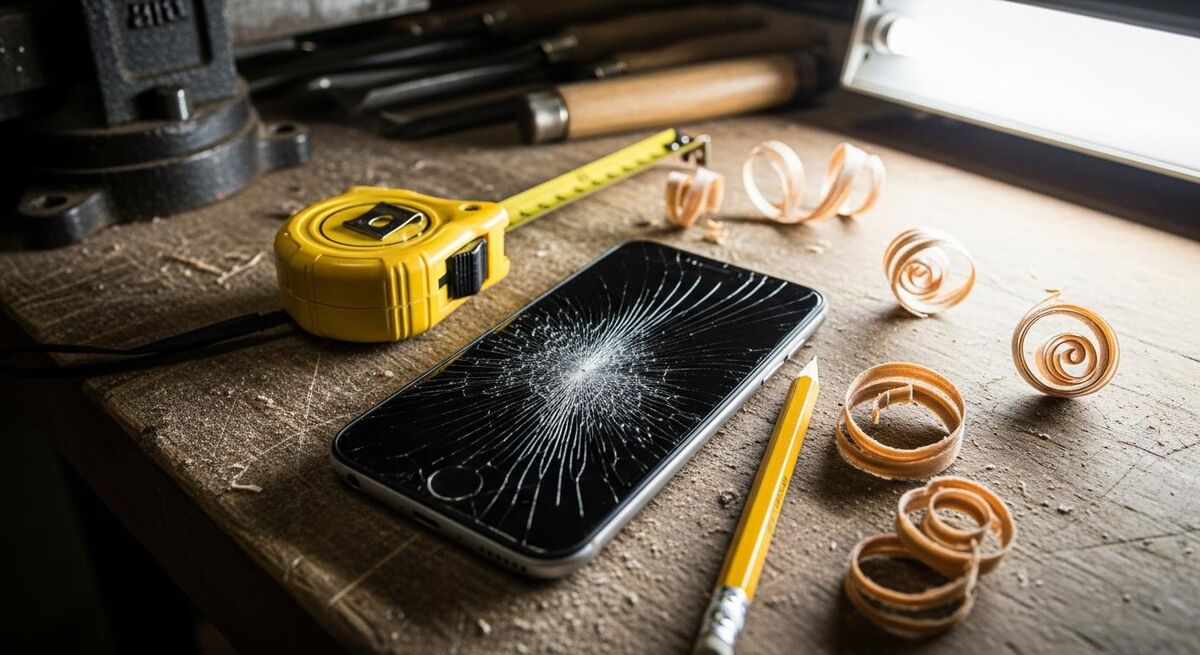
Most tradespeople I speak to are on their second or third phone of the year. Not because they want to be. Because the screen went on a kitchen rip-out, or it went swimming in a flooded boiler cupboard, or it took a hammer to the back when a tool belt swung the wrong way. The pattern is the same. Buy a flagship, drop it inside three months, run it cracked until the camera fails, replace it. By month eight, you have spent a thousand pounds on a phone that lasted you long enough to do a roof line and not much else.
The case for a rugged phone is not exotic. It is arithmetic. A Samsung Galaxy XCover7 Pro costs £424. A Google Pixel 9 Pro costs £999. If the cheap rugged phone gets you eighteen months and the flagship gets you eight, the rugged saves you the better part of £400 a year and the calls you missed while you were waiting for a screen repair. The rugged phone is the obvious answer, and yet most trades are still walking around with a cracked iPhone in a third-party bumper case. Habit, mostly.
The honest reason it has not changed is that rugged phones used to be properly bad. Underpowered, cheap-feeling, terrible cameras, and a software experience that felt like 2017. That has changed. Samsung has been investing in the XCover line for a decade, the latest Pro is a credible mid-range Android, and the brands you have not heard of (AGM, Ulefone, DOOGEE, Oukitel) are putting out phones with thermal cameras and 10,000 mAh batteries for less than the price of a phone case.
If you replace a £900 flagship every eight months you spend £1,350 a year on phones. If you replace a £424 rugged phone every eighteen months you spend £283. Annual saving: £1,067. Cost of a tank of diesel: roughly £100. So that is ten tanks of diesel a year you are giving away to Vodafone, EE, Apple or whoever fixed your last screen.
IP68, IP69K and MIL-STD-810H: what the ratings actually mean
Marketing throws these ratings around like they all mean the same thing. They do not. Read the small print before you spend.
IP68 is the everyday standard you want. The first digit (6) means dust-tight: no ingress at all. The second (8) means continuous immersion in water beyond one metre, for a duration the manufacturer specifies, which is normally thirty minutes at 1.5 metres. Every phone in this comparison has IP68. So does a Galaxy S25, for what it is worth, but the testing protocols are stricter on rugged phones because the chassis is sealed differently.
IP69K is the rating you actually need on a job site that gets jet-washed at the end of the day. It is defined under ISO 20653, and it tests resistance to close-range, high-pressure, high-temperature water jets. The CAT S75 has it. The AGM Glory Pro has it. The Samsung XCover7 Pro does not, although it is rated for the same IP68 immersion. If your phone lives in a yard that gets hosed off, IP69K is worth the extra money.
MIL-STD-810H is a US military standard covering shock, vibration, drop, humidity, salt spray and temperature extremes. The catch is that manufacturers self-certify which sub-tests they pass. Every rugged phone says "MIL-STD-810H certified" but the spec sheet should tell you which method numbers it has passed. Drop testing onto steel plate (Method 516.8) is the one that matters for trades. The CAT S75 passes a 1.8 metre drop. The XCover7 Pro passes 1.5 metres. The AGM Glory Pro passes 1.5 metres onto concrete.
For most UK trades the spec to look for is IP68 plus MIL-STD-810H with a drop rating of at least 1.5 metres. IP69K is a bonus for outdoor and dirty work. Anything claiming "rugged" without a stated drop height on a stated surface is marketing, not engineering.
The three contenders in 2026
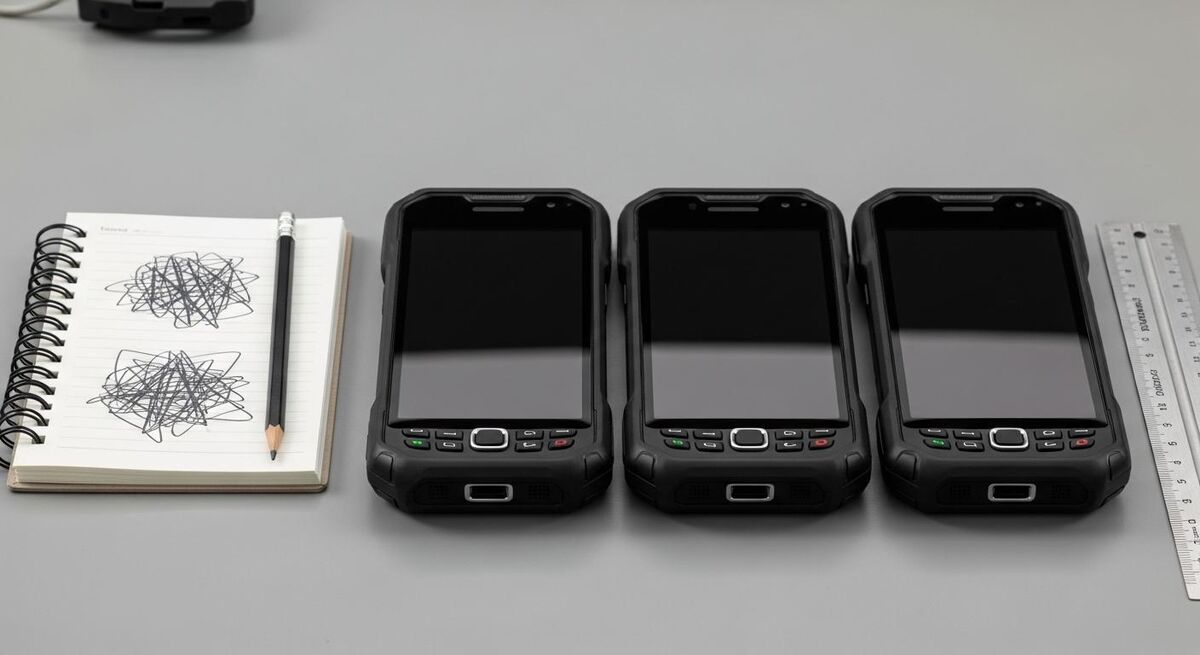
Three brands, three different bets. One is the safe mainstream buy, one is a discontinued cult favourite with a software cliff coming, one is the cheap thermal-camera option that needs caveats.
Samsung Galaxy XCover7 Pro: the sensible choice
Launched May 2025, the XCover7 Pro is Samsung's current flagship rugged phone for enterprise and field work. UK price is £424.95 from Samsung Business UK for the 128 GB model. It runs the Snapdragon 7s Gen 3, ships with Android 15 and One UI 8, and Samsung commits to four major OS updates and five years of security patches. That last point is the big one. No other rugged phone gets close to Samsung's software support.
Build is IP68 and MIL-STD-810H with a 1.5 metre drop onto steel rating, Corning Gorilla Glass Victus+, a removable 4,350 mAh battery, expandable storage up to 2 TB, and 5G. The screen is 6.6 inches, 1080p, programmable side keys for PTT or scanning, and a sensitivity mode that works with gloves and wet fingers. The 50 MP camera is competent in daylight and merely fine in low light.
This is the phone for trades who want one thing to do everything: invoice on Tradify, document with CompanyCam, take a call in the rain, drop it off a ladder, and not panic. It is the boring answer, which is also why it is the right one for most people.
CAT S75: the discontinued cult favourite
The CAT S75 is the phone people actually loved. Launched at MWC 2023, it has 5G, a 1.8 metre drop onto steel rating, can survive 35 minutes at five metres underwater without a USB-C plug, and was the first mainstream phone with two-way satellite messaging through the Bullitt network. UK price was £549 direct.
The company that licensed and manufactured CAT phones since 2012 went bust. No new CAT phones have shipped since Q4 2023. Firmware servers went offline. The CAT S75 is now end-of-life: no security patches after March 2024, no OS upgrade beyond the Android 12 it shipped with, and the satellite messaging service is dead. You can still buy stock from UK retailers like Rugged.co.uk and Clove Technology for now, but you are buying a phone with a software cliff. Caterpillar signed a new licensing deal with Orbic in May 2025 for a CAT R1 successor due late 2025 or 2026, but it is a different phone made by a different company.
I still rate the S75 if you find one cheap and you understand what you are buying. The hardware is excellent. The screen is properly rugged, the satellite radio is still in there (just no service), and the construction is unmistakably CAT. But for a primary work phone you put critical client data on, the lack of patches is a real problem.
AGM Glory Pro: the thermal camera option
AGM are a Chinese rugged-phone specialist. The Glory Pro launched in November 2021 with a Snapdragon 480 5G, 8 GB RAM, 256 GB storage, a 6.53 inch 120 Hz screen, IP68, IP69K and MIL-STD-810H ratings, and the headline feature: a 256 by 192 FLIR-equivalent thermal imaging sensor on the back. The thermal camera is the real reason you would buy this phone. It is not a toy. It is useful for finding hidden pipework, tracing electrical hotspots, spotting heat loss in insulation, or checking radiators for cold spots.
UK pricing is around £450 to £500 depending on retailer and configuration. Battery is 6,200 mAh which gets you through any normal day. The catch is software: AGM ships infrequent updates and Android version support has historically been weak. For trades who want a thermal camera in a phone and do not need to be running the latest mobile banking app, it is hard to beat for the money. For trades who want a primary phone with long-term support, look at Samsung.
Drop and dust: what eight months on a job site does
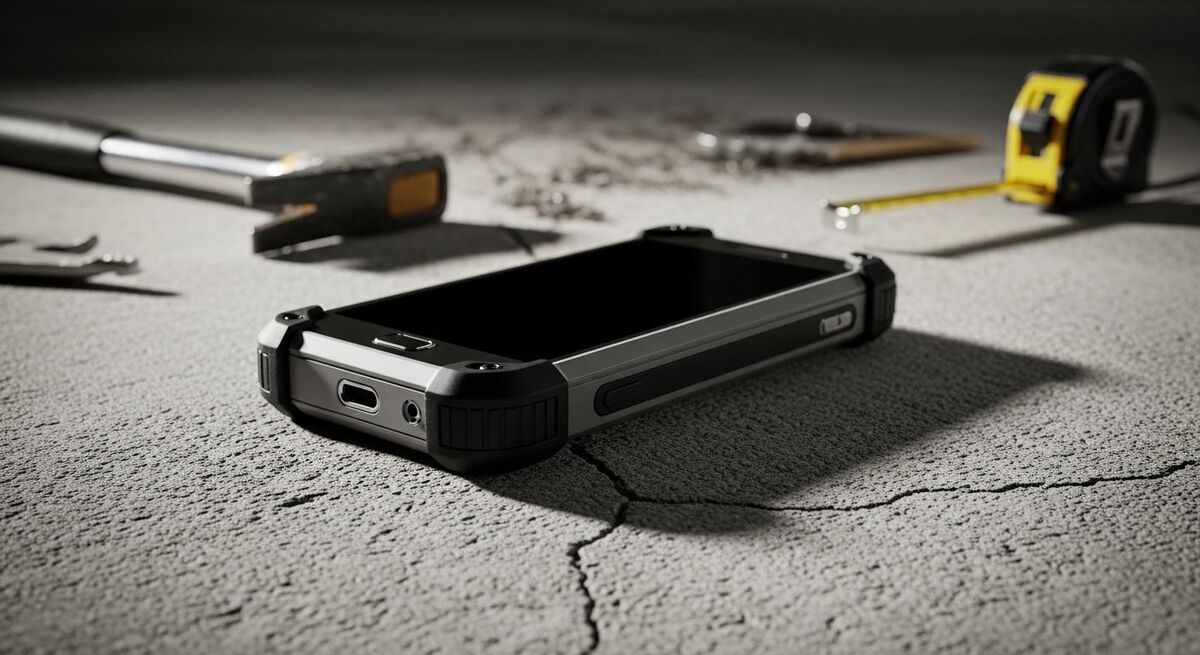
Reviewers do staged drop tests onto polished concrete. That is not what a trades phone gets. A trades phone falls out of a chest pocket onto a tile floor, gets dropped down a stairwell, slides off the dashboard into the footwell with a tape measure on top of it, and gets sat on every time someone gets back in the van. The cumulative damage matters more than any single drop.
The CAT S75 wins this one comfortably. The corners are over-engineered, the screen sits below a raised bezel so it does not contact the floor on a face-down drop, and the chassis is bonded together rather than glued. I have watched a CAT phone get dropped four times in a single morning on a kitchen rip-out and carry on working. The downside is weight: 268 grams, which is noticeable in a shirt pocket.
The Samsung XCover7 Pro is lighter at 240 grams and slimmer, which is why it survives commute drops less impressively. The Corning Gorilla Glass Victus+ is good, but it is still glass at the edges. The replaceable back panel is a genuine win. If the back cracks (it will at some point), you order a new panel from Samsung and snap it on. Try doing that with an iPhone.
The AGM Glory Pro is the heaviest of the three at 393 grams. Yes, you read that right. The thermal sensor and the 6,200 mAh battery add real bulk. It survives drops fine but it is a brick. If you wear a tool belt, you feel it.
Look for "drop tested onto steel plate" or "drop tested onto concrete" with a stated height. Drops onto a hardwood floor at 1.5 m are not the same thing. Steel is the harder test surface and the one that will actually crack a screen.
Battery and charging: ten-hour days, no van power
A flagship phone gets through a ten-hour shift if you are careful. A rugged phone laughs at it. The XCover7 Pro has a 4,350 mAh removable battery, which is generous, but the real advantage is the removable bit. Keep a spare in the van, swap it at lunch, you have doubled your runtime for £30.
The CAT S75 has a 5,000 mAh battery, non-removable, which is enough for a full day with screen-on time, plus map use, plus a video call. The AGM Glory Pro's 6,200 mAh is overkill for normal use and brilliant if you forget to charge for two nights.
Charging speeds are mid-range across the board. The XCover7 Pro is 15 W. The CAT S75 is 15 W. The AGM Glory Pro is 18 W. None are flagship-fast, but they all hit 50 per cent in about thirty minutes from a 30 W brick. The smart move is a van-mount wireless charger if your phone supports it (the AGM does, the others do not) so you charge between jobs without thinking.
Cameras for job documentation
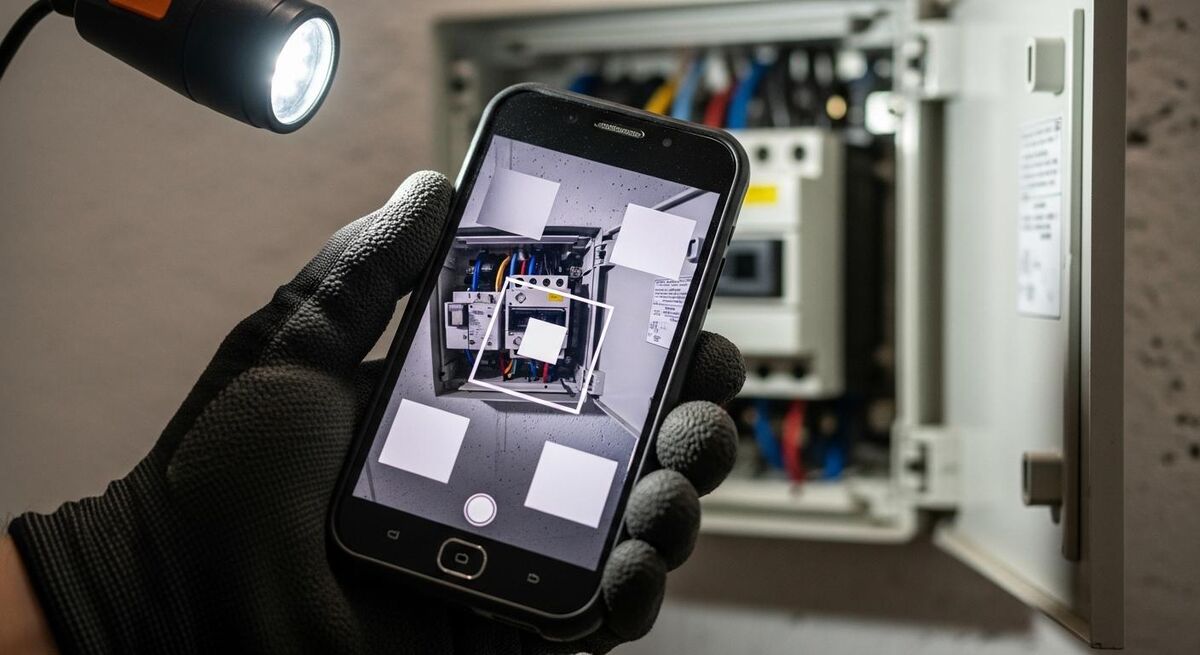
For job documentation you do not need 200 megapixels. You need fast autofocus, accurate colours, and enough resolution that you can crop into a detail without it going soft. All three phones have a 50 MP main sensor. None of them are as good as a current iPhone or Pixel, but they do not need to be.
The XCover7 Pro is the strongest performer here. Daylight shots are clean, the white balance does not lurch when you walk from outside to a dark loft, and the autofocus is fast enough to grab a photo of a leaking pipe before the customer wonders what is taking so long. The 8 MP ultrawide is useful for capturing a full kitchen in one shot.
The CAT S75 is competent. The 50 MP main sensor is fine in good light. Low light is where it falls down: noise is heavy, autofocus hunts, and you end up with a usable photo about three quarters of the time. Acceptable for site documentation. Not a phone you would use as your weekend camera.
The AGM Glory Pro's main camera is the worst of the three by a clear margin. Where it pulls back the lead is the thermal sensor: the 256 by 192 resolution is high enough to actually identify a stud in a wall, find a leaking radiator pipe behind plaster, or trace where a cable run goes. For survey work, EICRs, and gas safety inspections, this is the difference between a guess and a documented finding.
AI photo notes and voice transcription
This is where 2026 actually gets interesting. The hardware is not really the story any more. The story is what you run on it.
The shift in the last year is voice-first job documentation. CompanyCam's AI Notes feature, which you can read about on the CompanyCam site, lets you walk through a job, narrate what you are seeing into the phone, and have it auto-write captions, generate a daily log, and build a project summary you can send to the customer that evening. For a UK plumber doing five jobs a day, this is the difference between writing up paperwork in the van after dinner and being done by the time you lock the van door.
Speakwise is the offline voice-notes tool to know about. It transcribes at 92 per cent accuracy in noisy environments and works without connectivity, which is the bit that matters when you are in a basement plant room or three feet inside a roof void. £59.99 a year. Pair it with an AirPod or any Bluetooth earpiece, double-tap to start recording, narrate what you see, and the app produces a structured summary with action items by the time you are back in the van.
Simpro's Lightning platform (Simpro Group's AI-native rebuild of their field service tool, announced May 2026) bundles JobScribe, which captures jobs in the technician's voice and eliminates 30 to 60 minutes of daily paperwork per technician. If you are already running Simpro, this is included.
Samsung XCover7 Pro (£424) plus CompanyCam (£19 per user per month) plus a Bluetooth earpiece (£40). Total first-year cost: £692. You get a rugged phone, AI-written photo captions, voice-to-text job notes, automated daily logs, and customer-ready job summaries. The paperwork tax on your evenings goes away.
The point I am labouring is that the phone is the cheap bit. The work that the phone enables, in terms of documentation, customer communication and audit trail, is what saves you the real money. If you spend £424 on a phone and £20 a month on a documentation app, you should be billing an extra 30 minutes a day that you would have spent typing job notes. That is £400 a month at £80 an hour. The phone pays for itself in five weeks.
Tablets on site: Pixel Tablet and Galaxy Tab Active
Phones are for documentation, tablets are for customer conversations. Showing a customer the boiler options on a six-inch screen is awkward. Showing them on an eleven-inch tablet with the cost laid out and the financing options visible is a different conversation.
The Google Pixel Tablet (11 inch, Tensor G2, 8 GB RAM, 128 GB) is the practical pick. It launched at £599 but is widely available for around £400, and in January 2026 Google extended software support to mid-2028. It is not a rugged tablet, but a £30 OtterBox Defender case turns it into one. Wi-Fi only is an issue if you work without a phone hotspot, but for showroom and home-visit use it is plenty.
The Samsung Galaxy Tab Active 5 is the properly rugged option, around £499 from Samsung Business, with IP68, MIL-STD-810H, and a replaceable battery. If you literally take a tablet onto a building site, this is the right answer. For showroom or in-home use, the cheaper Pixel Tablet does the job.
| Spec | CAT S75 | Samsung XCover7 Pro | AGM Glory Pro |
|---|---|---|---|
| UK price | £549 (stock-limited) | £424 | ~£475 |
| Release status | Discontinued Feb 2024 | Current, May 2025 | Current, 2021 design |
| Software support | None since Mar 2024 | 5 years patches, 4 OS | Limited |
| IP rating | IP68 + IP69K | IP68 | IP68 + IP69K |
| Drop spec | 1.8 m to steel | 1.5 m to steel | 1.5 m to concrete |
| Battery | 5,000 mAh | 4,350 mAh (removable) | 6,200 mAh |
| Weight | 268 g | 240 g | 393 g |
| Main camera | 50 MP | 50 MP (best processing) | 48 MP |
| Thermal camera | No | No | Yes, 256 x 192 |
| 5G | Yes | Yes | Yes |
| Best for | Hardware enthusiasts | Most trades, full stop | Survey and inspection work |
The real cost of replacing flagships every eight months
I keep coming back to this maths because it is the entire argument. The shop floor wisdom that "an iPhone is fine, just put a case on it" does not survive a year of trades use. The case helps. The phone still gets cracked, water-damaged, or sat on. Average phone screen repair on a Samsung Galaxy S series flagship is £250 in the UK, on a Pixel 8 Pro it is £290, on a current iPhone Pro it is £360. Most trades just buy a new phone instead.
The honest comparison over three years:
- Flagship route: £900 phone, replaced every eight months = 4.5 phones = £4,050. Add lost time to insurance claims, screen repairs, and missed calls. Realistic three-year cost: £4,500.
- Rugged route: £424 XCover7 Pro, replaced every 24 to 30 months = 1.3 phones = £550. Plus a spare battery: £30. Realistic three-year cost: £580.
That is roughly £3,900 saved over three years, which is two months of mortgage, a holiday, a downpayment on a van, or a small employee bonus. The reason trades do not switch is not that the maths is wrong. It is that the cracked iPhone in their pocket already exists and the rugged phone is a future decision. So the cycle continues.
Treat the rugged phone like a tool, not a phone. You would not run a job without a decent impact driver. The phone is just as load-bearing in your business, and the upgrade is cheaper. Stop putting it off, buy the boring rugged option, get on with the work.
What tradespeople are saying
Recommended videos

Cat S75 Honest Review
An after-the-Bullitt-collapse take on whether the S75 is still worth buying.

CAT S75 First Impressions, Specs and Price
Hands-on coverage of the satellite messaging feature and rugged build.

Samsung Galaxy XCover7 Pro Review
Detailed walk-through of the thinnest premium rugged phone in the lineup.

Samsung's Toughest Phone Yet: XCover7 Ruggedness Test
Drop, dust and water tests on the standard XCover7 model.

Galaxy XCover7 Pro: The Ultimate Rugged Smartphone
Samsung's own walkthrough of the XCover7 Pro features for field work.

The Best Rugged Phone of 2025
Comparative review covering Oukitel WP30 Pro, Ulefone Armor 34 Pro and Doogee S200.

Best Rugged Phones 2025: Watch Before You Buy
Practical roundup of the current rugged phone market with field-use commentary.

5 Best Rugged Phones to Buy in 2025
Field-focused features including night vision, thermal imaging and long-life batteries.
Related reading on TrainAR Academy
If you are upgrading the tools you carry to site, a rugged phone is one piece of a bigger kit conversation. Worth reading alongside this:
- 3D printing for trades: replacement parts and custom fittings covers another piece of workshop tech that pays for itself surprisingly fast.
- Battery storage and home energy systems is essential if you are quoting renewables jobs from a phone in the customer's kitchen.
- Construction adhesives and sealants comparison is the kind of in-van reference you want to be able to pull up offline.
- Van fitout and shelving solutions covers where a rugged phone lives between jobs, which is more relevant than people realise.
- The complete guide to trades business software stacks goes deep on what to actually run on the rugged phone you just bought.
Frequently asked questions
Yes, and the answer is not subtle. A phone case stops the screen smashing on a single drop. A rugged phone is sealed against dust, jet-washed water, and the cumulative damage that wrecks a flagship over six months. If you replace your phone less than once a year, stick with what you have. If you replace it more often, you are already paying for a rugged phone.
Only if you can find one cheap and you understand the software is end-of-life. Bullitt went bust in February 2024, no security patches since March 2024, and the satellite messaging is dead. Hardware is excellent but you are running an unsupported OS. For a primary work phone with customer data on it, that is a problem. Buy the Samsung instead.
Yes, properly so. The 256 by 192 resolution is high enough for trade work: finding hidden pipework, tracing electrical hotspots in distribution boards, spotting heat loss in insulation, checking radiators for cold spots, and finding studs through plasterboard. It is not a FLIR One but it is good enough that you will use it most weeks if you do EICRs, gas safety or building survey work.
With an OtterBox Defender case, yes. Without one, no. The Pixel Tablet is not rugged out of the box, but a £30 case turns it into something you can drop. For showroom use, customer conversations and home visits, it is plenty. For genuine site work with mud and rain, get a Samsung Galaxy Tab Active instead.
Around £20 per user per month for CompanyCam, less if you are running everything through your field service tool's bundled features. If you pay yourself £80 an hour and the app saves you 30 minutes a day of paperwork, it is paying back £40 a day. That is a 60-to-1 return. The cheap mistake is not paying for one.
It works, sort of. OtterBox Defender plus an iPhone is rugged-ish, has a beautiful camera, and you get to run all the apps you already pay for. The catch is cost: £999 for a Pro plus £80 for a case is £1,079, against £424 for an XCover7 Pro that already has the same protection. If iOS matters to you, do that. If it does not, the maths says buy Samsung.
My verdict
The XCover7 Pro is the right call for ninety per cent of UK trades. It is current, supported, light enough to carry, properly rugged, and £424 is fair. Buy it, put CompanyCam or Speakwise on it, get a spare battery for the van, and stop replacing phones every eight months. If you do EICRs, gas safety or thermal survey work and you can carry the extra weight, the AGM Glory Pro earns its place for the thermal camera alone, with the caveat that it is your secondary phone. The CAT S75 was a great phone and the people who own one are still using it, but Bullitt is dead, Orbic has not shipped the replacement yet, and a phone with no patches is not a primary work phone in 2026. The point I keep coming back to is that the phone is not the win. The win is the paperwork tax that disappears once you put proper AI documentation tools on it. Buy the cheap rugged option, spend the difference on the apps, and get your evenings back.