
Quick answer
On any UK construction project with more than one contractor, someone has to plan, manage and monitor the work. That is what site supervision means in law. The Principal Contractor under CDM 2015 carries the legal duty, but it gets delegated down to site managers and supervisors with the right competence (usually SMSTS for managers, SSSTS for supervisors). Get this wrong and you get prohibition notices, fines, or worse: a worker injured on your watch.
Table of contents
- What site supervision actually means in law
- The numbers behind site supervision in 2026
- CDM 2015 duties: who supervises what
- Building Safety Act: a second set of duties for higher-risk buildings
- Supervisor competence: SMSTS, SSSTS, and what employers actually want
- Pre-start to handover: a supervision timeline
- What good supervision looks like on a complex job
- What supervision actually costs you
- What HSE inspectors find when supervision slips
- Where AI is starting to help (and where it does not)
- What the community is saying
- Recommended videos
- Frequently asked questions
- My verdict
What site supervision actually means in law

Most tradespeople I talk to think "site supervision" is a job title. It is not. It is a legal duty under the Construction (Design and Management) Regulations 2015, and it sits with whoever is in charge of the construction phase. On a single-contractor job that is the contractor. On any job with two or more contractors, that is the Principal Contractor.
The Principal Contractor has to plan, manage and monitor the construction phase so that work happens without risks to health and safety. That is the headline duty. The detail is where it gets interesting: organising cooperation between trades, briefing expectations, managing change, setting access and egress, controlling traffic and lifting interfaces, running permits, making sure welfare is in place, inducting every worker, and keeping records that match what is actually happening on site.
You can delegate the doing. You cannot delegate the responsibility. If your site manager fails to spot an unguarded edge and someone falls, HSE will come for the company, not the individual who happened to be on shift.
For complex projects, supervision is the layer that makes everything else work. The risk assessment is meaningless if nobody enforces the controls. The method statement is paper if nobody checks the work matches it. Site rules are a poster on the welfare wall if nobody pulls people up when they break them. Supervision is the human bit that ties documents to behaviour.
The "competent person" trap
CDM 2015 Regulation 8 says every person appointed must have the skills, knowledge, experience and (where they are an organisation) the organisational capability to fulfil their role. "Competence" is not a tick-box. After Grenfell the bar moved sharply upward, and you now need evidence: training records, CSCS/CISRS cards, refresher dates, and proof you have actually assessed the person for the specific work in front of them.
The numbers behind site supervision in 2026
Two things stand out in that data. First, the enforcement notice count has roughly halved over four years. Some of that is HSE resourcing being squeezed, some is genuinely better safety culture in big-tier contractors. But it absolutely does not mean inspectors have gone soft. The Manchester blitz in October 2025 served notice that targeted campaigns are back, and the prosecution conviction rate of 96% is the bit that should keep duty holders honest.
Second, formal supervision qualifications remain cheap relative to the risk. A 2-day SSSTS at £175 to £350 is a rounding error compared to a £45,000 fine like the one handed to a Cheshire developer in December 2025 for multiple site safety failures. The HSE press releases are a sobering read if you ever need talking yourself into upskilling a foreman.
CDM 2015 duties: who supervises what
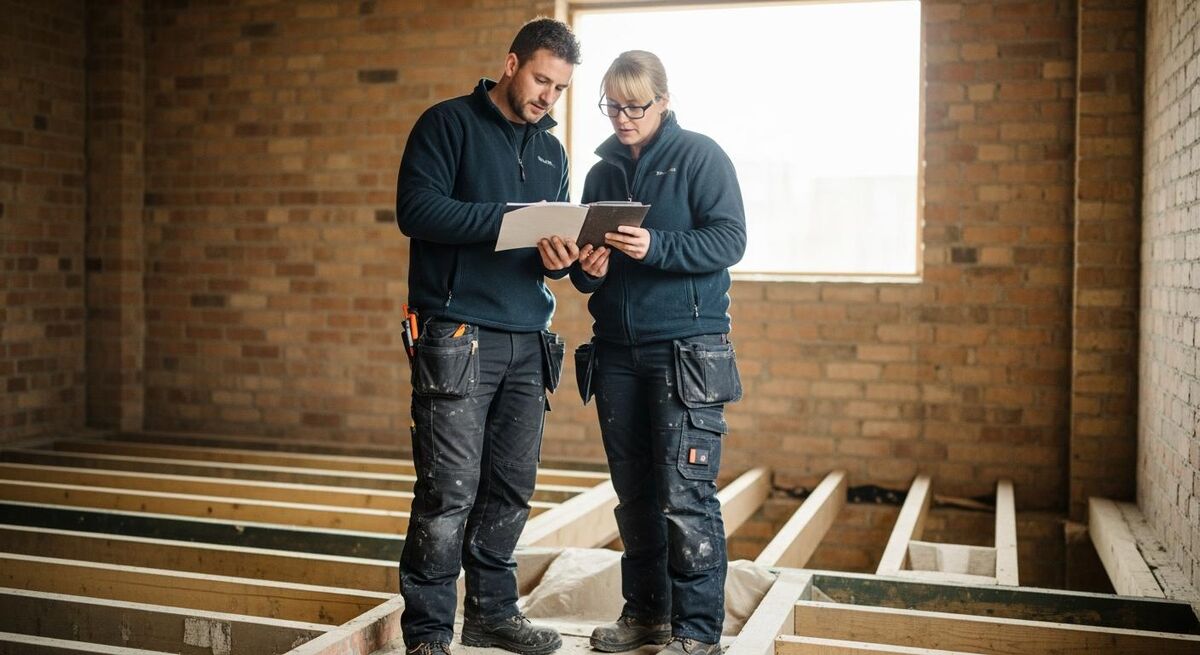
CDM does not invent the role of "supervisor" out of thin air. It puts duties on five roles and lets you appoint the people who carry them out. For supervision specifically, the responsibility cascades like this:
Client. Has to make sure everything below them is set up properly before work starts. Domestic clients get a lighter touch (their duties pass to the contractor or designer), but commercial clients have to satisfy themselves that the Principal Contractor has the resources, time, and competence to actually run the supervision they are signed up for. If you skip this and a contractor cuts corners, the client carries the can too.
Principal Designer. Plans, manages and monitors the design phase. Less directly about site supervision, but they pass the baton: the Pre-Construction Information they hand over has to include all the risks the PC will need to supervise around.
Principal Contractor. This is where site supervision lives in law. The PC has to write the Construction Phase Plan (CPP) before work starts, keep it updated, brief everyone on it, and make sure the supervision arrangements it describes actually happen on the ground. They appoint the site managers and supervisors, check their competence, and back them when they need to stop work that is going wrong.
Contractors. Every contractor (including subcontractors and the self-employed) has to plan, manage and monitor their own work. That includes supervising their own people. A roofing sub cannot rely on the main contractor's site manager to supervise the roof crew, the roofing contractor's own supervisor has to be doing that.
Workers. Yes, workers have CDM duties too. They have to take reasonable care of themselves and others, cooperate with their employer on health and safety, report defects, and not interfere with anything provided for their safety. Supervisors enforce this layer.
"More than one contractor" is the trigger
If at any point in the project life there will be two or more contractors, even if they are working consecutively rather than simultaneously, you need a Principal Contractor and a Construction Phase Plan. A typical extension with a groundworker, a bricklayer, a roofer, a plasterer, and an electrician hits this threshold easily. Pretending the homeowner is "managing" it does not make CDM go away.
For a deeper dive on what CDM looks like across the whole project, read our complete CDM 2015 guide for UK trades contractors. If you mostly run small jobs and are not sure when the regs bite, the companion guide on CDM for small projects is more focused on the everyday £20k extension and refurb work.
Building Safety Act: a second set of duties for higher-risk buildings
If your project is a higher-risk building (HRB) under the Building Safety Act 2022, you are now running two parallel regimes. CDM 2015 still applies in full, but the BSA adds a separate Principal Designer and Principal Contractor role for compliance with the Building Regulations themselves, on top of the CDM ones for health and safety.
HRBs are buildings 18m or higher, or at least 7 storeys, with two or more residential units (with a handful of carve-outs). On those projects, the Building Safety Regulator (BSR) wants gateway approvals before work starts and before occupation, and it wants a Golden Thread of digital records that an inspector can pull on demand. Supervision is part of how you keep that thread alive: every change, every variation, every site decision that affects fire or structural safety has to be logged.
In January 2026 the BSR became a standalone arm's-length regulator, no longer part of HSE. RIBA reported the regulator is increasing site inspections during the building phase, specifically to make sure standards are met before residents move in. That is a real shift. If you are working on HRBs, expect more unannounced visits and more scrutiny of supervisor competence.
Two Principal Designers, two Principal Contractors
The CDM Principal Designer and Principal Contractor are different roles from the Building Safety Act Principal Designer and Principal Contractor, despite sharing names. The same organisation can hold both, but the duties and competence requirements are not identical. On an HRB, get both written into your appointment letters and make sure your supervisor briefings cover both regimes. Wedlake Bell and the CIOB have published useful breakdowns of where the duties differ.
For the cost and compliance picture across the BSA, the deeper read is our guide on Building Safety Act compliance requirements for trades.
Supervisor competence: SMSTS, SSSTS, and what employers actually want

Neither SMSTS nor SSSTS is a statutory requirement under UK health and safety law. Both are CITB-accredited Site Safety Plus courses, and in practice every Principal Contractor I have worked with treats them as mandatory before letting someone supervise on a multi-trade site. They are the cheapest, fastest way to evidence competence under CDM Regulation 8.
The split is straightforward. SSSTS (Site Supervisor Safety Training Scheme) is a 2-day course aimed at gangers, working foremen, and first-line supervisors who oversee a small team. SMSTS (Site Management Safety Training Scheme) is a 5-day course aimed at site managers, project managers, and anyone with overall responsibility for the construction phase. Both certificates last 5 years before a refresher is required (1 day for SSSTS, 2 days for SMSTS).
Course content covers the same legal foundations, CDM 2015, the Construction Phase Plan, risk assessments, method statements, permits, toolbox talks, and accident prevention, just at different depths. SMSTS goes harder on leadership, planning, and managing the regulatory paperwork. SSSTS focuses on the day-to-day enforcement of controls at trade level.
| Feature | SSSTS | SMSTS |
|---|---|---|
| Target role | Site supervisor, working foreman, ganger | Site manager, project manager, contracts manager |
| Course length | 2 days | 5 days |
| Typical 2026 price | £175 to £350 | £350 to £550 |
| Refresher length | 1 day | 2 days |
| Refresher price | £100 to £200 | £200 to £350 |
| Certificate validity | 5 years | 5 years |
| CDM Regulation 8 evidence | Strong for supervisor-level work | Strong for manager-level work |
One thing worth saying plainly: an SMSTS certificate alone does not make someone a site manager. It is a starting point. The Construction Industry Council and the major principal contractors typically also want a CSCS Black or Gold card, 3 to 5 years of relevant site experience, and ideally a Level 4 or higher qualification in construction management before they will hand you a site of any real complexity. On HRBs that bar is higher again.
Where the boundary is, in practice: many big main contractors run an internal 1:10 working ratio (one qualified supervisor for every 10 operatives) as a guide for adequate cover, though this is custom not law. The actual ratio depends on the work. Two roofers on a low-rise might need one full-time supervisor. Two excavator operators in deep trenches need someone watching them constantly under Regulation 22.
Pre-start to handover: a supervision timeline
Here is what supervision should look like across the life of a typical complex project. Use this as a sanity check against what your team is actually doing.
| Stage | What supervision involves | Who is responsible |
|---|---|---|
| Pre-construction (weeks -4 to 0) | Review Pre-Construction Information, write or update the Construction Phase Plan, appoint site manager and supervisors, check trade competence, plan welfare and access, brief subcontractors | Principal Contractor, with input from Principal Designer |
| Site set-up (week 0 to 1) | Install welfare, signage, traffic management, edge protection; first round of inductions; verify CSCS/CISRS cards and training; baseline housekeeping standard set | Site manager, supported by supervisors per trade area |
| Active construction (ongoing) | Daily toolbox talks, permit issue, work-at-height inspections at the required intervals, plant pre-use checks, RAMS briefings before high-risk tasks, accident book maintenance, contractor coordination meetings | Site supervisors at trade face, site manager coordinating |
| Change events | Re-issue method statements when work changes, update the CPP, re-brief affected workers, log the variation in the Golden Thread (HRBs only) | Site manager, with sign-off from Principal Contractor |
| Inspection visits | Walk the site with HSE or BSR inspector, produce CPP and supporting records on request, address any verbal or written notices straight away | Site manager, supported by H&S adviser if retained |
| Handover (weeks -2 to 0 of completion) | Compile Health and Safety File, hand over Golden Thread on HRBs, snag inspections, close out outstanding RAMS, demobilise welfare | Principal Contractor, supported by site manager |
What good supervision looks like on a complex job
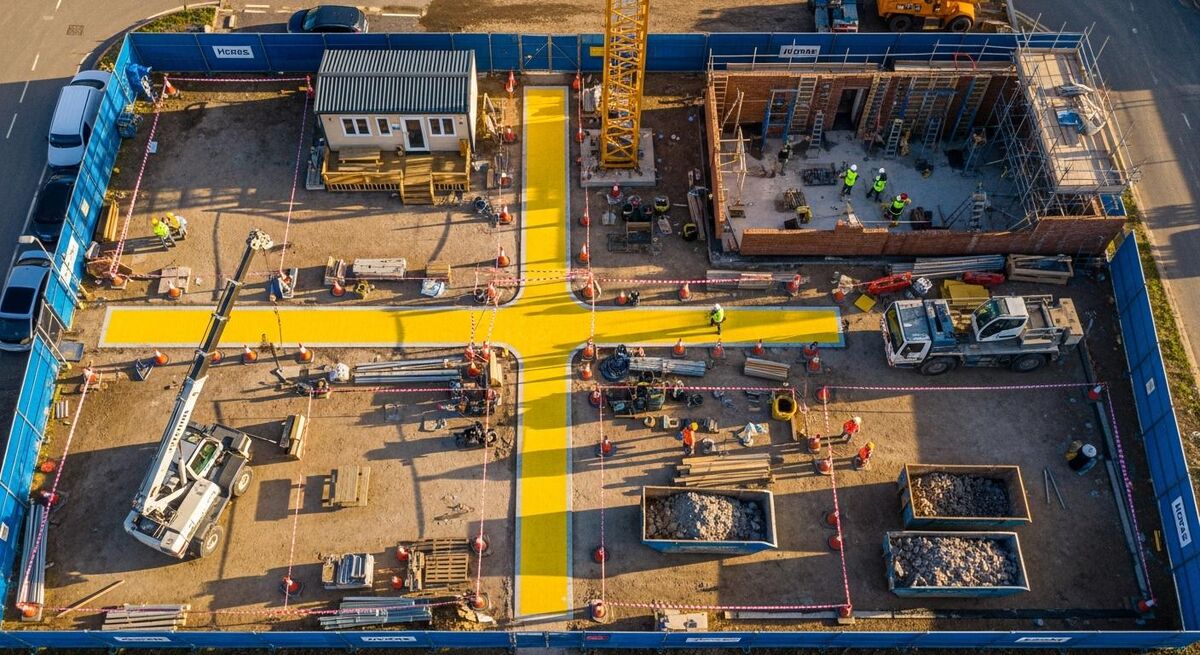
The HSE's own guidance and the case law from prosecutions tell a consistent story about what separates good supervision from box-ticking. Five things repeat:
1. Named supervisors per area or shift. Not "the site team". A specific person, by name, on a published organogram. When something goes wrong at 3pm on a Wednesday in the basement, there is no debate about who was supposed to be watching it.
2. Visible controls that match the paperwork. Inspectors do not just read your CPP. They walk the site and see whether the segregation you wrote about exists, whether the edge protection is the spec you said it would be, whether the welfare is the welfare you signed for. If reality and paper diverge, your paperwork is fiction.
3. Daily briefings, properly logged. Toolbox talks at start of shift, attendance signed, topic recorded, anyone joining mid-shift inducted separately. The Manchester campaign of October 2025 focused on health risks like dust, noise, and musculoskeletal issues, all of which live or die at the toolbox talk level.
4. Trade interface ownership. The most dangerous moments on a multi-trade site are when one trade hands work over to the next. Penetrations through floors, shared use of MEWPs, lifting operations near other work crews. A supervisor needs to own each interface and run a briefing before the handover happens.
5. Permit discipline. Hot work permits, confined space permits, work-at-height permits, isolation permits. Each one is a structured conversation that forces the supervisor to think through the risks before authorising the work. If your team is signing permits in batches at the end of the week, you do not have permit discipline.
The single best supervision habit
Walk the site at the start of the shift with no clipboard. Just look. See what is actually happening, who is wearing what, whether the housekeeping has slipped overnight, whether the welfare is open and stocked. Then go back to the office and do your paperwork. Most supervisor errors come from doing the paperwork first and the walk second; you end up writing what should be true rather than what is true.
What supervision actually costs you
Trades businesses underestimate supervision cost because they price the badge (the SMSTS course) and forget the time. Here is the realistic 2026 picture for a small to mid-sized contractor:
| Item | Cost | Notes |
|---|---|---|
| SMSTS course (5 days) | £350-£550 | Per person, one-off, valid 5 years |
| SSSTS course (2 days) | £175-£350 | Per person, one-off, valid 5 years |
| SMSTS refresher | £200-£350 | Every 5 years per person |
| SSSTS refresher | £100-£200 | Every 5 years per person |
| Lost productive days for training | £800-£1,800 | 5 days at £160-£360 day rate for an SMSTS candidate |
| CDM consultant (optional) | £500-£2,500 per project | If you do not have an in-house competent PC role |
| Construction Phase Plan software | £0-£600 per year | From free templates to fully featured CDM SaaS |
| Supervisor time on site | 15-25% of project value | The hidden cost most quotes miss |
| HSE fee for intervention if served a notice | £174 per hour | HSE recovers inspection time when material breaches are found |
That last line is the one that catches people out. If an inspector visits and finds enough wrong to serve an improvement or prohibition notice, HSE bills you for their time at £174 an hour (the Fee for Intervention rate at time of writing). A serious case can run to thousands before you even get to a prosecution.
What HSE inspectors find when supervision slips
The public register of enforcement notices is a useful read if you want to see what gets you in trouble. The top categories that keep recurring across construction notices are:
- Work at height failures. No edge protection, unsuitable access equipment, scaffold without proper handover, mobile towers used wrong.
- Asbestos exposure. No survey before refurbishment, work continuing after suspected ACMs found, no air monitoring during disturbance. See our asbestos survey guide for what an R&D survey actually covers.
- Dust and silica exposure. Dry cutting masonry, no on-tool extraction, no RPE, no health surveillance. The Manchester campaign in October 2025 was largely about this.
- Excavation collapse risk. No shoring, no inspection record, sides not battered, plant working too close to the edge.
- Inadequate welfare. No running water, no toilet, no rest area. This sounds basic but it is one of the more common improvement notices on smaller sites.
- Unsafe lifting operations. No lift plan, no appointed person, slings overloaded, exclusion zones not set up.
Most of these have one supervisory root cause: the controls were written down but nobody on site was responsible for enforcing them at the moment they were needed. That is the single biggest reason to invest in supervisor competence over more elaborate paperwork.
Verbal warnings are still warnings
HSE inspectors give a lot of verbal advice that never makes it to the public register. If an inspector tells your site manager to fix something during a visit, that is on record at their end. A repeat visit that finds the same issue uncorrected escalates quickly to a written notice. Treat every verbal as if it was already in writing.
Where AI is starting to help (and where it does not)
I will not pretend AI is solving site supervision. It is not. A camera does not stop a worker stepping over a barrier and an algorithm does not have the authority to call work to a halt. But there are sensible, narrow places where AI is starting to earn its place on a complex job:
Document drafting. CPPs, RAMS, induction packs, and toolbox talk content are now reliably drafted by general-purpose tools like ChatGPT or Claude, working from your own templates and the specific job details. You still need a competent person to review and sign off, but the first draft time has dropped from a day to half an hour. That frees the supervisor to spend more time on site.
Image-based hazard spotting. Specialist platforms now offer site camera feeds with AI-flagged exceptions: workers without RPE, plant in exclusion zones, missing edge protection. Useful as a second pair of eyes, especially overnight or at remote sites. Not a replacement for a competent supervisor present during work.
Compliance log scraping. AI is good at reading through hundreds of inspection reports, training records, and permit logs and surfacing gaps. The CITB CDM Wizard app is one of the earliest and simplest examples; newer tools cross-check your records against the current regs and flag where you are missing evidence.
Voice-to-text for toolbox talks and incident reports. A 30-second voice memo on a phone turns into a typed record in your CDE. No supervisor is now genuinely too busy to log a near miss.
Where AI does not help: the actual decision to stop work, the human judgement on whether a worker looks tired or distracted, the authority to send a subbie home because the welfare unit is unfit. Those need a person, and they need that person to be competent and backed by their employer.
What the community is saying
Recommended videos

Introduction to CDM in 10 minutes
Rebranding Safety with James MacPherson
The basics of Construction (Design and Management) Regulations 2015
CITB

Callsafe's Guide to CDM 2015
UK Construction Media

CDM 2015 Documents Explained
HSE with Barbara Derecka

CDM Regulations - An Introduction
Trainer Bubble

CDM Regulations Training | Module 01
Training Express
Frequently asked questions
No. Neither is mandated by statute. Both are CITB-accredited courses that most Principal Contractors treat as the minimum to evidence competence under CDM 2015 Regulation 8. If you turn up to a Tier 1 site without one, you will be sent home.
There is no statutory requirement for continuous presence. The duty is that supervision is "adequate" for the work being done. On low-risk work with experienced operatives you can have a manager covering multiple sites, dropping in periodically. On high-risk work, like a deep excavation or a complex lift, you need someone competent watching it the whole time.
CDM PC is responsible for managing health and safety during construction across any multi-contractor project. BSA PC is a separate role for higher-risk buildings only, responsible for managing compliance with the Building Regulations themselves. Same organisation can hold both, but the duties are different and the competence bar for BSA work is higher.
Daily at the start of shift is the working standard on most decent sites. The talk should cover the specific risks of the day's work, not a generic safety lecture. Attendance signed, topic logged, anyone who arrives late inducted separately before they start.
Yes. Every construction project requires a CPP under CDM 2015, regardless of size or duration. For small jobs it can be brief; HSE publishes a short template (CIS80) aimed at busy small builders. There is no notification threshold for the CPP itself, only for HSE notification (F10) on longer or larger projects.
Two main types. An improvement notice gives you a fixed period (usually 21 days minimum) to fix the breach. A prohibition notice stops the activity immediately until you can prove you have controlled the risk. Both appear on the public register. HSE will also charge Fee for Intervention at £174 per hour for the inspector time. Ignore a notice and you are looking at unlimited fines and potentially imprisonment.
The PC has to be a contractor, not a designer or consultant, and they have to be in actual control of the construction phase. A subcontractor can be appointed PC if they are running the construction phase, but in practice most clients appoint their main contractor. Make sure the appointment is in writing.
Health and Safety File for the project should be handed over at completion and kept by the client for the life of the building. Day-to-day records (toolbox talks, permits, inspections) should be kept at least 3 years after the project ends; many contractors hold them for 6 years to align with civil claim limitation periods. On HRBs the Golden Thread requirements are stricter and run for the life of the building.
My verdict
Supervision is where compliance becomes real
The CPP, the RAMS, the permits, the inductions: none of it matters if there is not a competent person on site enforcing it. For most trades businesses the right move is to get one person SMSTS-qualified for every site they actually run, and one supervisor SSSTS-qualified for every trade gang of more than four or five operatives. Pay for the refresher before the certificate expires. Walk the site at the start of every shift with no clipboard, then do your paperwork. That is what supervision looks like when it is being done properly, and it is also what stops you from being on the wrong end of the next HSE press release.