
Quick Answer
Smart home is a £5.3 billion UK market and four in ten homes already own at least one smart device. For sparks, the realistic upsell on every standard install is £200 to £500 in extra labour and margin. Stock Matter-certified kit only. Spec around one of four ecosystems: Apple Home, Google Home, Amazon Alexa, or Philips Hue with a bridge. Charge per device on top of your day rate. Keep your scope tight, your wiring clean, and your aftercare paid for.
Table of Contents
- The £5.3 billion opportunity
- Why Matter changed the maths for installers
- What to stock: the four-ecosystem decision
- How to spec a job that does not come back
- What to charge: the £200 to £500 model
- Wiring traps and the no-neutral problem
- Matter 1.5 and what is coming next
- What installers and customers are saying
- Recommended videos
- Frequently asked questions
- My verdict
The £5.3 billion opportunity
Smart home stopped being a luxury job two years ago. Four out of ten UK households already own at least one smart device, and the market hit £5.3 billion in 2024. By 2028 the same forecast puts it at £13.2 billion. That growth is not going to wealthy postcodes only. It is sitting inside every rewire, every new build, every consumer unit upgrade you book this year.
And so the question for a working spark is not whether to offer it. It is how to add it without slowing your day down. Most installers I know are still treating smart kit like a bonus add-on the customer brings in a box. That is the wrong way round. The job is to walk in with a tested kit list, a price per device, and a plan that finishes the same day.
The route in is simple. Pick one ecosystem to be fluent in. Carry one starter kit on the van. Build a one-page spec sheet your customer can sign. Then add a per-device fee to the quote. That is the £200 to £500 of extra revenue per home. It does not come from being a smart home specialist. It comes from stopping the customer phoning a different trade after you leave.
Why Matter changed the maths for installers
For years the smart home market was a mess of competing radios. Zigbee, Z-Wave, proprietary cloud platforms, Wi-Fi only. You had to learn which devices played with which app, and you spent half the install on the phone to support. That is why most sparks left it alone.
Matter changed that. It is a unified application layer agreed by Apple, Google, Amazon, Samsung and the Connectivity Standards Alliance. A Matter-certified plug, switch or bulb works with every major hub out of the box. As of early 2026 there are over 750 certified products on sale, with Matter 1.5 now adding cameras, blinds, garage doors, soil sensors and EV bidirectional charging into the same standard.
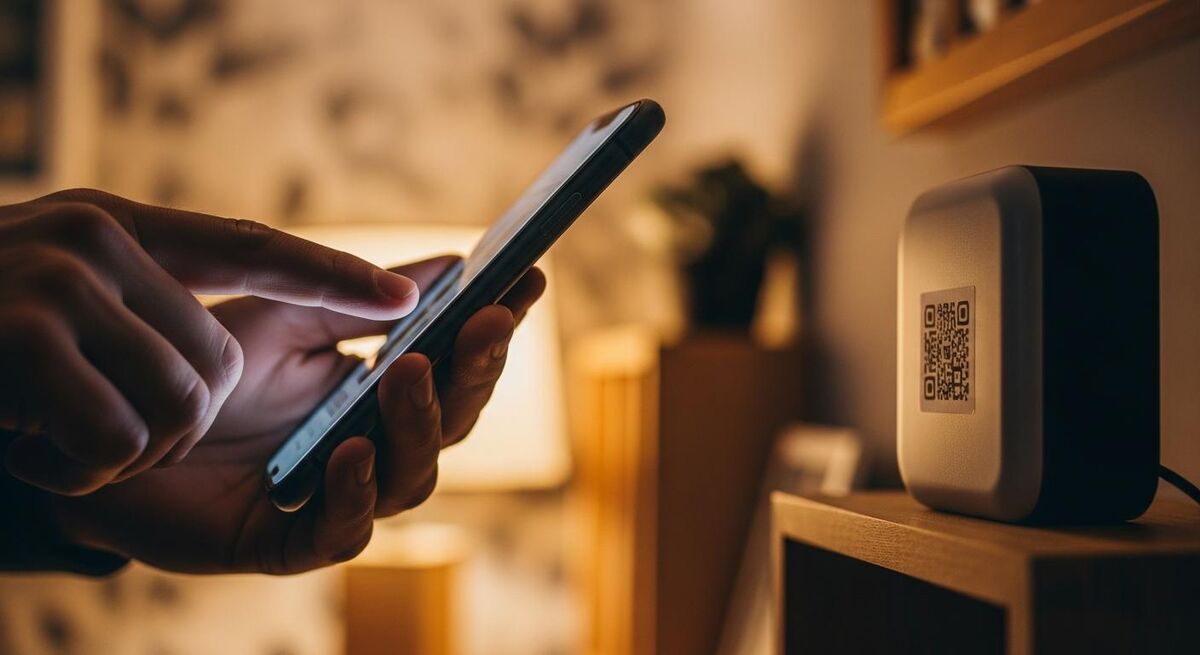
For an installer this matters in three practical ways. Onboarding shrinks. You point a phone at a QR code, the hub finds it, the customer names it, you move on. Returns drop because the customer cannot buy the wrong device for their ecosystem. And aftercare calls fall. Less time on the phone explaining why their kit will not pair with their cousin's hub.
Matter rides on top of a transport layer. Most light bulbs and small sensors use Thread, a low-power mesh radio that builds redundancy as you add devices. Larger or mains-powered kit uses Wi-Fi. You do not need to memorise either. You just need a Thread border router in the home, which is built into every recent Apple HomePod mini, Google Nest Hub and Amazon Echo. That is your only mandatory bit of kit.
What to stock: the four-ecosystem decision
You cannot stock every brand and every app. Pick one of four ecosystems to default to, and stock the kit that pairs with it cleanly. The customer's existing phone usually picks the answer for you. iPhone customer, lean Apple Home. Android customer with a Google account, lean Google Home. Anyone with an Echo already, lean Amazon. Anyone with serious lighting ambitions and no preference, lean Philips Hue with a Hue Bridge.
What follows is the realistic UK price you will see on Amazon, Currys or Screwfix as of early 2026, plus what the kit is actually good for on a job. Charge a 15 to 25 percent supply markup on top.
Apple Home (HomeKit)
Best for: iPhone households, premium installs, customers who want privacy and a clean UI. The home hub is a HomePod mini at £89 or an Apple TV. Every recent HomePod and Apple TV is a Thread border router, so you do not need separate hardware. Setup is the simplest of the four if the customer already lives in the Apple ecosystem.
Pros
- Tightest privacy story in the market
- One QR code, two minute pairing per device
- Family sharing works without faff
- Matter and Thread built into every recent HomePod and Apple TV
Cons
- HomePod mini at £89 is the cheapest entry, twice the cost of an Echo Dot
- Pairing edge cases need iCloud sign-in handy
- Smaller third-party app library than Google or Amazon
Google Home (Nest)
Best for: Android households, customers who want voice search to actually understand them, and anyone who already pays for Google Photos or YouTube Premium. The Nest Hub at around £70 is your default hub. It includes a Thread border router and a screen, which is useful when you are commissioning on site and need a quick visual confirmation.
Pros
- Strongest voice recognition on the market
- Nest Hub doubles as a digital photo frame, often closes the sale
- Wide brand support, especially cameras and doorbells
- Cheapest mid-range hub if you are kitting out a whole house
Cons
- Google's smart home reorganisations have rattled installer confidence
- Privacy story is the weakest of the four
- Some Nest devices needed factory resets in 2025 after firmware changes
Amazon Alexa (Echo)
Best for: Budget-led installs, retrofits where the customer is replacing one device at a time, and households who already shop on Amazon. The Echo 4th Gen and Echo Show range run £79 to £99 and include Matter and Thread. The Echo Pop at £25 makes a cheap satellite for a back bedroom or garage office. For most retrofit upgrades, Alexa is the path of least resistance.
Pros
- Cheapest entry point of the four ecosystems
- Echo Dot at sub-£30 makes whole-house multi-room easy
- Largest skill and integration library
- Amazon stock means you can replace a faulty unit in 24 hours
Cons
- Alexa's Matter setup option is buried in the app
- Voice quality has slipped behind Google in 2025 reviews
- Ad creep in the interface annoys some customers
Philips Hue with Bridge
Best for: Lighting-led jobs, customers who want fewer voice commands and more scene control, and any install where you need reliable behaviour across 30+ bulbs. The Hue Bridge talks Zigbee to the bulbs and Matter to the hub, so it works alongside any of the three voice ecosystems above. Starter kits run £50 to £80, individual bulbs £15 to £45 each.
Pros
- Best-in-class colour and dimming consistency
- Bridge offloads load from the customer's Wi-Fi
- Matter-compatible so it slots into any of the three hubs above
- Bulbs and fittings hold value for years, low warranty churn
Cons
- Cost per bulb is double the supermarket alternatives
- App updates in 2024 forced re-pairing for some Hue Outdoor lines
- Needs the Bridge for full functionality, customers sometimes refuse
How to spec a job that does not come back
The spec sheet is what separates a £150 quick install from a £500 paid job. Customers do not want a long catalogue. They want a one-page document that says what they are getting, what room each device lives in, and what it does on day one. Use the same template every time, with the customer's address at the top.
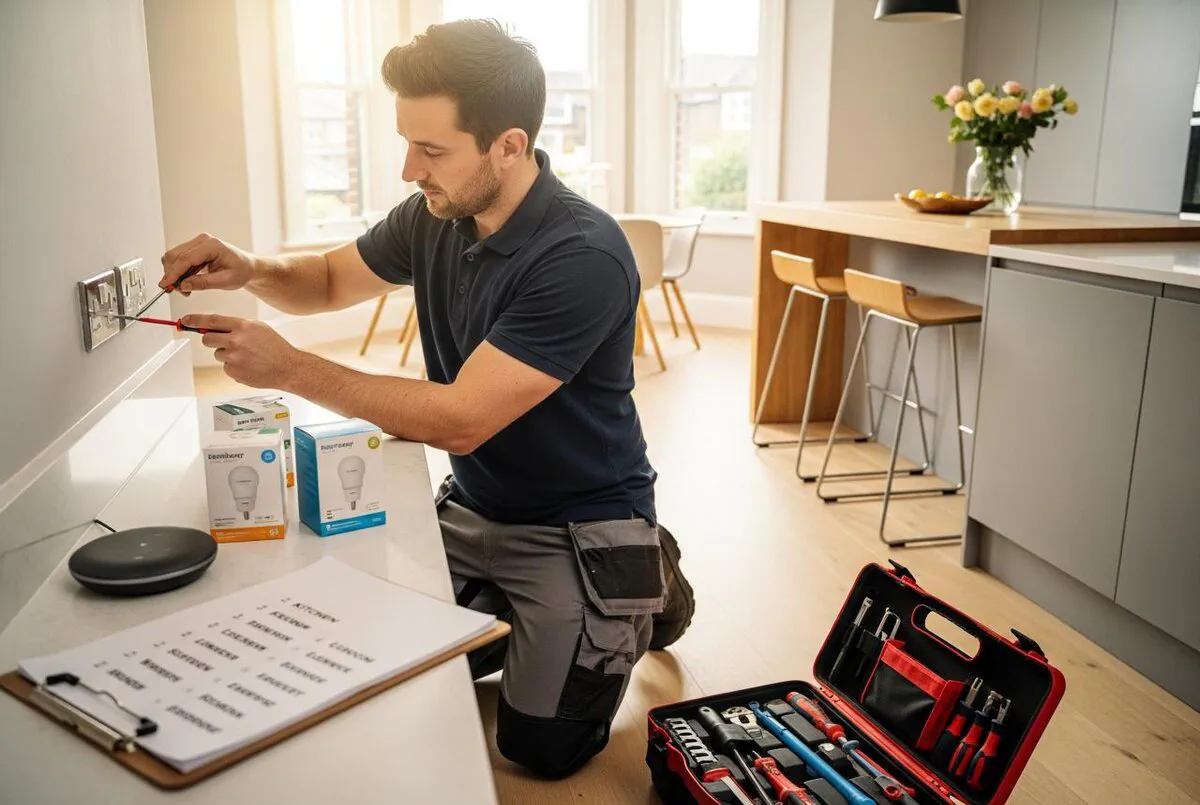
I keep mine to seven sections. Hub and ecosystem. Lighting. Heating control. Security and cameras. Sockets and energy. Voice and routines. Aftercare. Customer signs at the bottom, you keep a copy, the install moves at twice the speed of one with no document.

Be specific about what is not in scope. If the customer's Wi-Fi router is in the airing cupboard at the far end of the house, you write down that they need mesh Wi-Fi before you arrive. If they want cameras outside, you write down the cable run cost and the DPA implications. Smart home installs fail because the customer expects features the kit cannot deliver. The spec sheet is your defence and the start of the upsell.
| Spec sheet section | What goes in it | What to flag as out of scope |
|---|---|---|
| Hub and ecosystem | Hub model, location, Wi-Fi SSID, owner email for the ecosystem account | Wi-Fi mesh upgrades, customer email setup |
| Lighting | Bulb or switch count per room, switch type (neutral/no-neutral), dimmer scope | Decorative fittings the customer supplies, plaster damage if access is needed |
| Heating | Thermostat brand, valve count, OpenTherm compatibility check | Boiler service, plumbing alterations |
| Security and cameras | Camera positions, cable runs, recording method (local SD or cloud) | Cloud subscription fees, exterior weatherproofing carpentry |
| Sockets and energy | Smart plug locations, single appliances or full circuits, EV monitoring | Consumer unit upgrades, MCB swaps |
| Voice and routines | Three named routines configured on the day (e.g. Good Night, Leaving) | Custom skill development, third-party integrations |
| Aftercare | 30-day support window included, then £40 per call-out | Customer-caused resets, device replacements out of warranty |
The aftercare line is the one most installers leave off. Do not. The customer needs to know that a phone call on day 45 is chargeable, otherwise you become free tech support for the lifetime of the kit. Write the rate. Sign the rate. Stick to the rate.
What to charge: the £200 to £500 model
This is the part most sparks get wrong. They charge their normal day rate, then leave the smart home kit at retail. The customer pays £180 for a hub plus bulbs at Amazon prices, plus a £300 day rate, and you make exactly zero on the device side. The model below gets you between £200 and £500 of extra margin per home.
Structure your quote in three lines. Materials at trade plus your supply markup. Labour at your normal hourly or day rate. Then a per-device commissioning fee. The commissioning fee is the bit that lifts the margin without raising the headline labour cost.
| Job type | Materials | Labour | Commissioning fee | Total to customer |
|---|---|---|---|---|
| Starter pack (hub, 4 bulbs, 1 plug) | £140 (trade + 20%) | 1.5 hours @ £55 = £83 | 6 devices x £15 = £90 | £313 |
| Mid install (hub, 8 bulbs, thermostat, 2 cameras, lock) | £560 (trade + 20%) | 4 hours @ £55 = £220 | 13 devices x £15 = £195 | £975 |
| Whole-house (hub, 20+ devices, mesh Wi-Fi) | £1,400 (trade + 20%) | 1 day @ £450 | 22 devices x £15 = £330 | £2,180 |
For a typical UK install with 8 to 13 devices, that commissioning fee alone clears £150 to £200 of margin you would not have charged before. Stack the supply markup on top of that. You are at the £200 to £500 range, every time, without raising your hourly rate or doing more work.
If you want to read the wider market context, the UK battery storage market is following exactly the same pattern. Per-device commissioning, professional install, customer pays the margin. The smart home market is two years behind, which is where the easy wins are.
Wiring traps and the no-neutral problem
Most smart switches need a constant supply at the switch position. That means a neutral conductor. UK loop-in lighting circuits, which dominate any property built before 1970, rarely have one at the switch. Statista's 2025 data put wiring as the top smart home barrier in over 40 percent of older UK homes. If you do not check before you quote, you will lose money on the install.
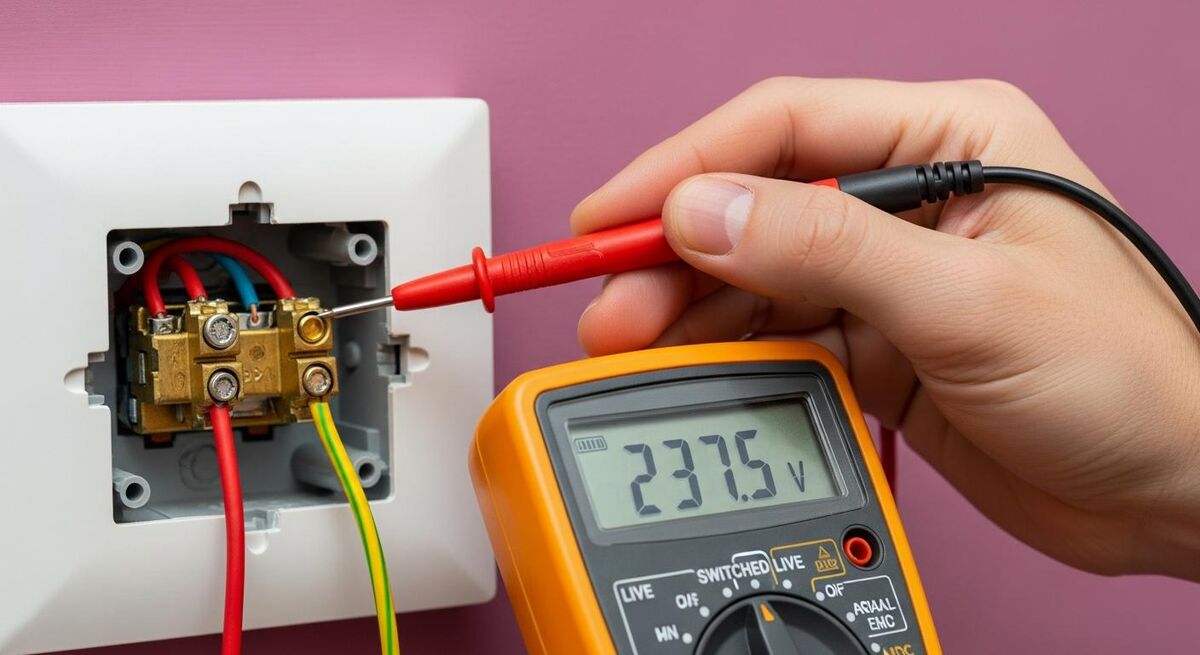
There are three legitimate paths through the no-neutral problem. First, install a no-neutral smart switch that uses leak current through the bulb. These work with most LEDs but can cause flicker or low-level glow with cheap fittings. Aqara, Sonoff and Shelly all do certified no-neutral Matter variants. Second, pull a neutral back from the ceiling rose if the rewire scope and customer budget allow it. This is the cleanest answer if you are already in the wall. Third, fit smart relays behind the existing switch in the ceiling void. The original switch stays as a wall plate, the relay handles the smart logic. Quick, neat, no wall damage.
The other wiring trap is the consumer unit. Smart energy monitors like Sense, Shelly EM and the latest Sonoff PowMeter sit inside the consumer unit and need a free way for CT clamps. If the customer's CU is already full, you are quoting a CU upgrade before you can fit the device. Tell them on the doorstep, not after you have started.
For specific compliance work, check the relevant section of the Part P certification and competence guide if your install adds new circuits, or the British Standards on smart device installation if you are working in a multi-occupancy building.
Matter 1.5 and what is coming next
Matter 1.5 dropped in late 2025. For installers, three changes matter immediately.
First, cameras. The standard now supports camera devices natively, using WebRTC to stream. Pan, tilt, zoom, motion zones, local and cloud recording are all in scope. Aqara expects its first Matter camera in the first half of 2026. Eve has announced a Matter camera line. This kills the "I need a separate Ring or Nest app for cameras" problem. One hub, one app, one Matter pairing flow.
Second, closures. The earlier spec covered door locks and basic window coverings. 1.5 extends that to blinds, awnings, garage doors and water valves. If you are quoting a smart home install that includes a Velux roof window or a Hormann garage door, the latest motors now expose themselves to the same hub. The integrator role you used to need is gone.
Third, energy. Matter 1.5 introduces a Device Energy Management cluster. Smart plugs and appliances can now report real-time power use and react to grid signals. If the customer is on Octopus Agile or any half-hourly tariff, the appliances can shift load themselves. Bidirectional EV charging is also certifiable under the new spec. That is a serious upsell on any new build or major renovation.
What installers and customers are saying
Recommended videos
The 2026 Matter Starter Kit
Make Smart Matter
What is Matter? The New Smart Home Standard
Chris Oram
Matter, Thread, Zigbee & Z-Wave Explained (Why Your Smart Home Breaks)
BeardedTinker

Smart Home Guide 2026 - What to Buy, Platform Updates, and More
6 Months Later
Matter in Home Assistant: It is Dead Simple
Vaclav Chaloupka
This Home Assistant Add-On Unlocks Matter For EVERYTHING
This Smart House
Frequently asked questions
No. Your existing 2365 and 18th Edition cover the electrical work. Manufacturer-specific training from KNX, Lutron or CEDIA is useful if you want to specialise in high-end installs, but not required. For most retrofit smart home work in 2026, your standard sparks ticket is the qualification that matters.
Google Home if they own an Android phone. Apple Home if they own an iPhone and a Mac. Alexa if cost is the priority. Hue Bridge plus any of the three above if the job is lighting-led. The customer's phone usually picks for you. Do not fight it.
£200 to £500 per home is the realistic range for 2026. A starter hub plus six smart bulbs and a thermostat lands at the lower end. A whole-house install with cameras and a smart lock pushes the upper end. Above £500 you are into specialist territory and should be quoting a separate spec.
Yes for switches and bulbs that are paired locally. The lights still respond to the wall switch and to local routines on the hub. Voice commands and remote app access need internet. Set this expectation on the spec sheet so the customer does not call you the first time their router goes down.
It is working, with caveats. Pairing is simpler. Cross-platform support is real. But individual product setup flows still vary by manufacturer, and Apple's onboarding in particular still has rough edges. Stock Matter-certified kit, but warn the customer that the first time a new device pairs it can take 5 to 10 minutes longer than the manual says.
Write a 30-day support window into the original quote. After that, £40 per call-out for remote support, or your normal minimum site visit fee for anything on site. Put it on the spec sheet. Sign it. The customer who knows the rate calls less. The customer who does not call assumes everything is free forever.
For domestic cameras inside the customer's own home, no. For exterior cameras that capture neighbouring properties or the public footpath, yes. The customer is the data controller. Add a line to the spec sheet pointing them at the ICO's domestic CCTV guidance and document that you advised them. That covers you on the install side.
My verdict
The £200 to £500 per home margin is sitting on every install you book this year. The kit is cheap, Matter has finally made the platforms talk, and the customer is already half-sold. What is missing is the spec sheet, the per-device commissioning fee, and the rate card for aftercare. Build those three documents this week. Carry one starter kit on the van. Pick one ecosystem to be fluent in. The £5.3 billion market is not going to wait for the rest of the trade to catch up. It is going to the sparks who turn up with a plan.
For the next bit of upsell sitting alongside smart home work, look at battery storage and home energy systems, where the same per-device commissioning logic applies on a much bigger price tag. If you want to round out the offer with custom mechanical fittings, the 3D printing for trades guide is a quick read. And for the sealants and adhesives that hold any smart device mount in place, the silicone vs polyurethane vs hybrid polymer comparison answers the question most installers fudge on site.