

Quick Answer
Most UK tradespeople leave hundreds of pounds on the table at Self Assessment every year because they do not claim what they are legally entitled to. The biggest misses for 2026/27 are simplified-expenses use of home, the new 55p mileage rate from April 2026, the 100 percent Annual Investment Allowance on tools and vans, the £60 flat-rate laundry deduction, professional subscriptions like Gas Safe and NICEIC, training that maintains existing qualifications, business proportion of phone and software, the business slice of accountant fees, bank and finance charges, and pension contributions. Get these on the return and the tax saving is usually £800 to £3,000 for a sole trader on £40k to £80k profit.
Table of Contents
- The numbers nobody mentions
- 1. Simplified expenses for use of home
- 2. Mileage at the new 55p rate
- 3. Tools and the Annual Investment Allowance
- 4. PPE, branded clothing and the £60 laundry flat rate
- 5. Professional subscriptions and trade body fees
- 6. Training that maintains a qualification
- 7. The business proportion of phone, internet and software
- 8. Accountant and bookkeeper fees (the business slice)
- 9. Bank charges, card fees and finance interest
- 10. Pension contributions
- Getting it captured for MTD with AI
- What tradespeople are saying
- Recommended videos
- Frequently asked questions
- My verdict
The numbers nobody mentions

Every year HMRC publishes a list of the most optimistic Self Assessment expense claims it has rejected. A racehorse, a wedding, a luxury watch "to keep time on site". They make headlines because they are absurd. What does not make headlines is the opposite problem: legitimate, boringly mundane expenses that tradespeople pay for out of taxed income and then forget to claim.
The HMRC rule is straightforward. An expense is allowable if it was incurred wholly and exclusively for the trade. Mixed-use items get apportioned. Personal spending is out. That is the whole test.
The problem is not the rule. It is that the average sole trader plumber, electrician, joiner or roofer is busy on the tools, not reading gov.uk pages on simplified expenses. So things get missed. Below are the ten that come up the most when I look through a trades client's books for the first time. Numbers are for the 2026/27 tax year unless otherwise stated.
1. Simplified expenses for use of home
You quote jobs from the kitchen table. You answer customer emails after tea. You raise invoices on a Sunday night. That is work. Done at home. HMRC has a flat-rate use-of-home deduction for exactly this and a huge number of sole traders never claim it.
The simplified rate scales with the hours you work from home each month:
- 25 to 50 hours a month: £10 per month (£120 a year)
- 51 to 100 hours a month: £18 per month (£216 a year)
- 101 hours or more a month: £26 per month (£312 a year)
For most one-person trades operations doing quotes, ordering, scheduling and bookkeeping, 51-100 hours a month is realistic. That is £216 a year off your taxable profit. At 20 percent Income Tax plus 6 percent Class 4 NI, that is £56 in your pocket. Tiny? Yes. Tiny across ten years compounding? Several boilers' worth.
If your home-office use is heavier (a dedicated room used as a back-office) the actual-cost method usually beats the flat rate. Apportion light, heat, broadband and council tax by the room count and the percentage of the week it is in business use. Keep the workings. HMRC will accept a reasonable apportionment, not a guess.
2. Mileage at the new 55p rate
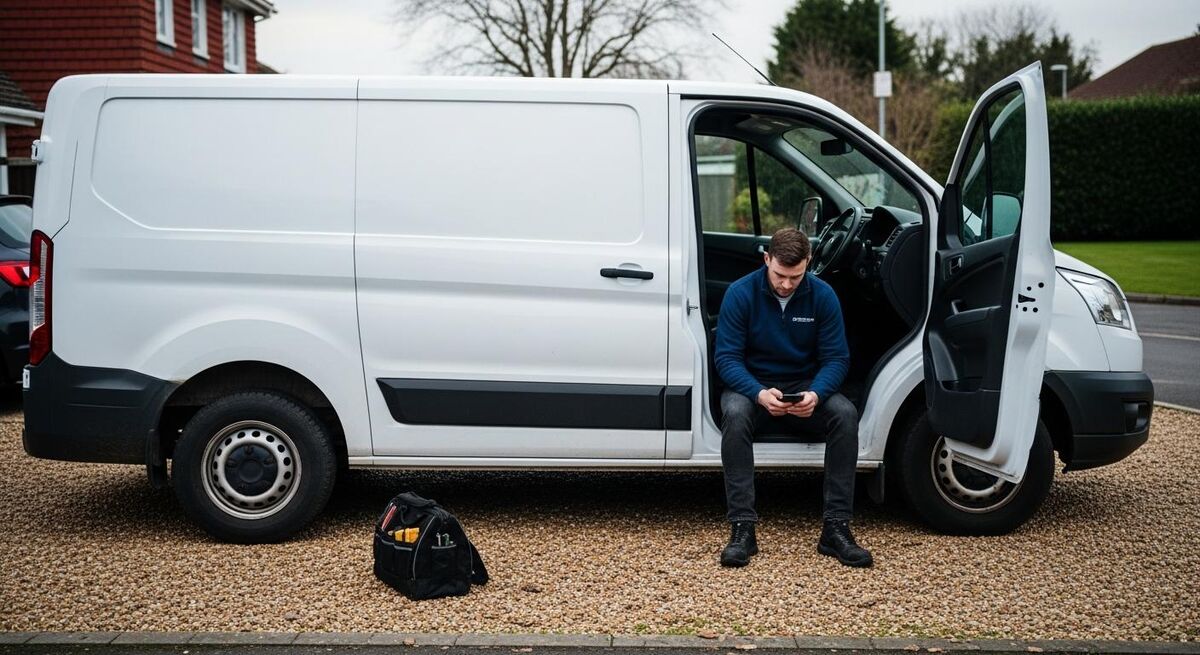
HMRC announced the first uplift to approved mileage rates in over a decade. From 6 April 2026 the rate is 55p per mile for the first 10,000 business miles in the tax year, and 25p per mile thereafter for cars and vans. That is up from 45p and 25p, where it had been frozen since 2011. The motorcycle and bicycle rates are unchanged at 24p and 20p respectively. The official confirmation sits on the gov.uk mileage rates page.
A trades sole trader doing 12,000 business miles a year used to claim £5,500. Now claims £6,000. That extra £500 is worth about £130 in tax and NI relief at basic rate. Nobody is going to retire on it. But nobody is going to leave it either, once they realise.
The rules that catch people out:
- Commuting does not count. Home to your usual depot or yard is private mileage. A site visit straight from home does count, because the site is a temporary workplace.
- You cannot mix methods on the same vehicle. Once you have chosen the simplified mileage rate for a vehicle, you cannot switch to claiming actual fuel, repairs and capital allowances on it later.
- You need a contemporaneous log. "From memory" claims fall apart in an enquiry. Phone-tracker apps (Driversnote, MileIQ, the mileage feature in Xero or QuickBooks) cost a fiver a month and run automatically.
3. Tools and the Annual Investment Allowance
Tools are an obvious expense. Where it goes sideways is on bigger items: a press tool, a thermal imaging camera, a transit, a power-flush kit, a scaffold tower. These are capital, not consumables. They get treated under the capital allowances regime, not as a straight expense in the year of purchase.
The good news: the Annual Investment Allowance (AIA) lets you write off 100 percent of qualifying capital spend in the year you buy it, up to £1 million a year. For practically every sole trader trades business in the UK, that means the full cost comes off your profit immediately. The £1 million figure was made permanent in the 2024 Autumn Budget; there is no cliff edge to plan around.
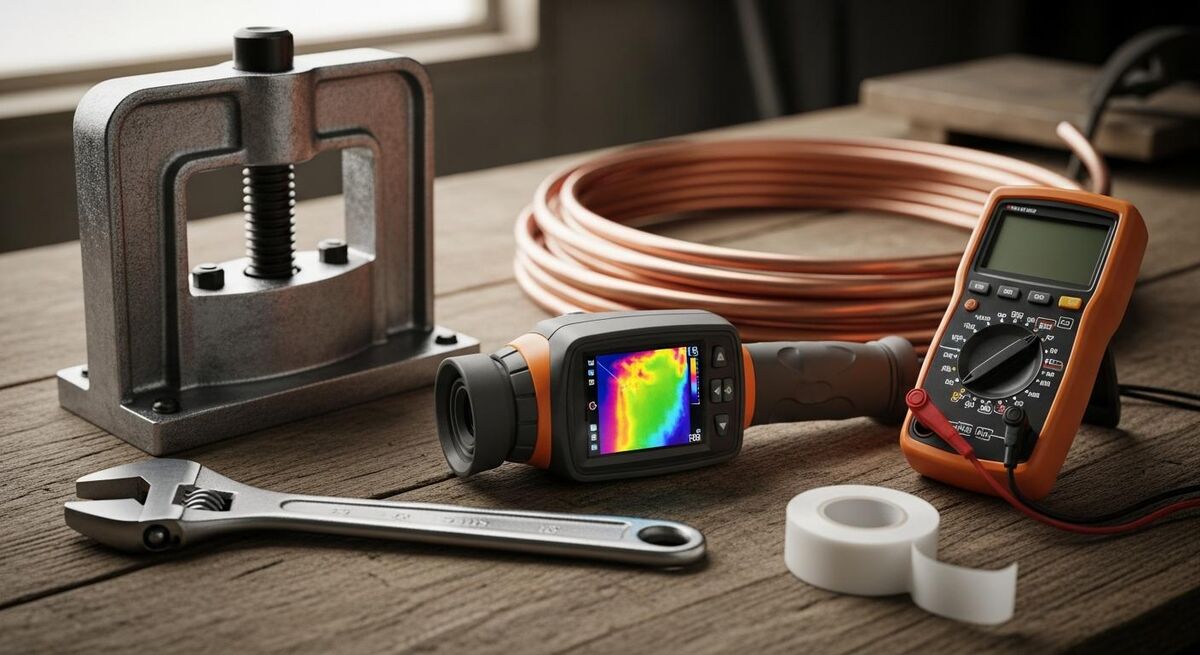
What qualifies as plant and machinery for a trades business:
- Vans, lorries and trailers (cars are excluded from AIA and sit on a separate writing-down regime)
- Hand tools and power tools above the petty-cash level
- Test equipment, calibrators, gas analysers, thermal imaging cameras
- Workshop fixtures and benches, racking, mezzanine flooring
- Computers, tablets, ruggedised job-management hardware
- Software bought outright (subscriptions are revenue expenses, not capital)
For 2026/27 there is one more layer worth knowing. From April 2026 the writing-down allowance on the main pool drops from 18 percent to 14 percent. To soften that, a new 40 percent first-year allowance applies to qualifying new plant and machinery. In practice this only matters once you have used all £1 million of AIA in a single year. For 99 percent of trades businesses, AIA covers everything; the new rules are background noise. See the KPMG summary if you want the policy detail.
4. PPE, branded clothing and the £60 laundry flat rate
The HMRC rule on clothing for the self-employed is narrower than people think. Everyday clothing is not allowable, even if you only ever wear it for work. The categories that do qualify:
- Personal protective equipment. Steel-toe boots, gloves, safety glasses, hard hats, hi-vis, fall-arrest harnesses, respirators, fire-retardant overalls. The cost of the item and any maintenance counts.
- Uniform with a permanently affixed logo. Polos, fleeces, jackets with your business name embroidered or screen-printed on the chest or back. The branding has to be permanent, not a sticky badge.
- Costume or specialist workwear. Rare in trades but it counts for anyone whose work clothing is distinctly not normal street wear.
The piece many people miss is laundry. If you wash branded uniform or PPE at home, HMRC accepts a flat-rate deduction. For most trades job categories the rate is £60 per year through the uniform tax relief scheme. It is not big money, but it is a tick-box question on the return that takes ten seconds. Worth £15-£25 a year in tax. Over a working life, that buys a decent set of impact drivers.
5. Professional subscriptions and trade body fees

Subscriptions to bodies that are required or strongly relevant to your trade are allowable. The list HMRC accepts is broader than people assume:
- Statutory registration: Gas Safe Register (around £390 a year for a sole trader), NICEIC, NAPIT, ECA, Stroma, NICEIC Domestic Installer scheme renewals
- Trade bodies and federations: Federation of Master Builders, Confederation of Roofing Contractors, NFRC, CIPHE, APHC, the Guild of Master Craftsmen
- Competence schemes: CSCS card renewals, MCS contractor certification, PAS 2030/2035 retrofit certification
- Quality marks linked to work: TrustMark fees, Which? Trusted Trader, Checkatrade subscription (yes, the directory fee qualifies as advertising for a trade)
The HMRC list of approved professional bodies (List 3) covers the tax-relief side for employees. For sole traders the wholly-and-exclusively test applies; if the subscription is required to do the work, it qualifies.
This is one of the deductions that catches people out. A heating engineer paying Gas Safe £390, FMB £400, MCS scheme fees £500, and one or two niche certifications on top is comfortably over £1,500 a year. At a 26 percent combined Income Tax and Class 4 NI rate, that is nearly £400 of relief that goes missing if these end up filed under "general business overheads" but never actually entered on the return.
6. Training that maintains a qualification
There is a long-standing HMRC distinction here that catches people out. Training to maintain or update an existing skill is allowable. Training to acquire a new skill is treated as capital and is not deductible.
In practice for trades:
- Allowable: ACS reassessment for gas, Part P recertification, 18th Edition update courses, IPAF refresher, manual handling refresher, asbestos awareness refresher, CSCS test resits, MCS scheme continuing competency, first aid at work renewals
- Not allowable (treat as capital): A heating engineer paying for their first electrical course; a plumber paying for their first gas qualification; an apprentice's initial NVQ; any course that opens up a new revenue stream you cannot already do
Travel and accommodation to attend an allowable training course is also allowable. So is the cost of the materials. The grey area is courses that "broaden" an existing skill, where the line between updating and expanding is fuzzy. HMRC's BIM35660 manual sets out the principle if you want the chapter and verse.
7. The business proportion of phone, internet and software
Almost every tradesperson uses their personal mobile for work. Almost none of them claim the business proportion of the bill. The HMRC rule is to apportion mixed-use costs by the percentage of business use. Pick a sensible split, document the reasoning, apply it consistently.
A reasonable starting position for a working sole trader:
- Mobile phone: 70-90 percent business if you take customer calls, send job photos and run estimating apps off it
- Home broadband: 25-50 percent business if you run quotes, scheduling and invoicing from home
- Software subscriptions: 100 percent business if the tool is a job-running tool (Xero, QuickBooks, Tradify, ServiceM8, Jobber, Powered Now, AlertCascade)
The bit nearly everyone misses now: AI subscriptions used for the business. A ChatGPT Plus or Claude Pro subscription used to draft customer emails, write up quotes, summarise compliance documents or build job descriptions is a legitimate business expense at the percentage you use it for work. Same for Microsoft 365, Google Workspace, an Adobe subscription for marketing graphics, a Canva Pro plan. Tag them as such in your accounting software and the math does itself.
The same logic covers laptops and tablets bought for the business. If a laptop is used 80 percent for the business, 80 percent of the cost (or 80 percent of the writing-down allowance, depending on size) is deductible. Apportion it and document the reasoning. If you only realise at year end, you have probably under-claimed.
8. Accountant and bookkeeper fees (the business slice)
Accountancy fees relating to your trade are allowable. The catch is that part of an accountant's fee usually relates to filing your personal Self Assessment return, which is a personal expense, not a business one. The two have to be split.
Most good trades accountants will give you an invoice that breaks the fee down: bookkeeping, VAT returns, year-end accounts preparation, and Self Assessment. Everything except the Self Assessment portion goes on the return as an allowable expense. Anything you pay for software (Xero, QuickBooks, FreeAgent), receipt-capture tools (Dext, AutoEntry, Hubdoc), or a separate bookkeeper for monthly reconciliation is allowable in full.
The same principle applies to other professionals. Solicitor fees for chasing a bad debt: allowable. Solicitor fees for buying your house: not. Architect or surveyor fees on a project for a client: allowable. A planning application on your own extension: not. The wholly-and-exclusively test does most of the work; the apportionment fixes the rest.
9. Bank charges, card fees and finance interest
A business bank account is not optional once you start trading at any serious volume. The monthly charge, transaction fees, faster payment fees and any overdraft interest are all allowable. So is the cost of card-machine fees, Stripe and GoCardless transaction percentages, and the monthly hire of a contactless reader.
Finance interest is the bigger miss. Interest on:
- A business loan used to fund working capital, tools or van purchase
- The credit element of a hire-purchase agreement on a van or equipment (the capital sits inside AIA; the interest is a finance cost)
- A business credit card
- An invoice-finance facility used to advance customer payments
All allowable, and all sitting somewhere on a finance statement that is easy to file and forget. Set up a feed from the lender into your accounting software so the interest is categorised automatically. There is one cap: if you operate the cash basis and your total finance costs in a year exceed £500, you have to switch to accrual treatment for the excess. Most one-person trades operations never hit that ceiling.
10. Pension contributions
Pension contributions are not a business expense on the Self Assessment return for a sole trader. They reduce your tax bill via a separate route, and that route is the most generous tax break in the UK system. Yet the proportion of self-employed trades people contributing nothing to a pension is well over half, according to ONS figures.
The mechanics for 2026/27:
- You contribute net of basic-rate tax. £80 in, the pension provider claims £20 from HMRC, £100 lands in your pot.
- If you pay higher-rate tax, you claim the extra 20 percent through your Self Assessment return.
- The annual allowance is £60,000 (or 100 percent of your earnings if lower).
- You can carry forward unused allowance from the previous three tax years if you have been a member of a pension scheme during that period.

A sole trader on £60,000 profit who pays £8,000 into a SIPP nets a 40 percent saving on the higher-rate slice. That is £1,600 of tax back, plus the basic-rate top-up at source. Numbers like that are why the full breakdown sits in the pension contributions guide for self-employed trades.
This is the one to get an accountant or independent financial adviser involved on, especially if you have not contributed in recent years and want to use carry-forward. Get it wrong and you can trigger the annual allowance charge, which is exactly the kind of letter from HMRC nobody enjoys opening.
Getting it captured for MTD with AI
From 6 April 2026, sole traders with gross trading income over £50,000 join Making Tax Digital for Income Tax. From April 2027 the threshold drops to £30,000. From April 2028, to £20,000. Within three years almost every trades sole trader is inside the regime. Quarterly digital updates, MTD-compatible software, a Final Declaration at year end.
What that means for missed deductions: there is no longer a viable "shoebox of receipts, sort it out at year end" model. The expenses need to be captured as they happen, categorised correctly, and visible in the accounting software every quarter. The good news is the tooling for this is now actually useful, partly because of AI.
A workable 2026 setup for a one-person trades business:
- Accounting software: Xero, QuickBooks, FreeAgent, or Sage. All MTD-compatible. £15-£35 a month. Pick on bank-feed quality and how well it talks to your job-management app.
- Receipt capture: Dext, AutoEntry, or the built-in scanners in Xero and QuickBooks. The OCR and AI categorisation have improved dramatically; receipts captured by phone camera are usually in the right account inside a minute.
- Mileage tracking: Driversnote, MileIQ, or the mileage feature inside your accounting software. Auto-categorise via GPS, accept or reject each trip from the phone.
- AI assistant for borderline calls: ChatGPT Plus or Claude Pro to ask "is this allowable?" and get a sensible first answer with the relevant HMRC rule cited. Not a replacement for an accountant; a faster first filter.
The combined cost of this stack is around £50 a month. It pays for itself in the first quarter from deductions that would otherwise have been missed. The full automation playbook with worked examples sits in the MTD Phase 2 guide.
What tradespeople are saying
Recommended videos
Self-Assessment Expenses 2026 Warning
My Tax Accountant
40 Allowable Expenses on Self Assessment
GoSimpleTax
30 Allowable Expenses to Reduce Your Tax Bill
Michelle Eames - Helpbox UK
Self-Employed Expense Basics: What Can You Claim?
Heelan Associates

Allowable Expenses on Self Assessment
GoSimpleTax

Complete the 24/25 Self Assessment Self Employed Guide
Tax2u Limited
Frequently asked questions
You have four years from the end of the relevant tax year to amend a Self Assessment return for an "overpayment relief" claim. For the 2021/22 tax year, the deadline is 5 April 2026. For 2022/23, it is 5 April 2027. Write to HMRC with the corrected figures and the supporting evidence. A trades accountant will usually do this on a no-find-no-fee basis if the saving is material.
No, and this is the most common mistake. The simplified mileage rate (45p, rising to 55p from April 2026) is meant to cover the running cost, depreciation and capital cost of the vehicle in one all-in figure. If you have used it for a vehicle you cannot also claim Annual Investment Allowance or fuel and repairs for that same vehicle. Choose actual costs at the point of purchase if you want to claim the capital allowance on a high-cost van.
For a sole trader using actual-costs treatment, a brand-new fully electric van bought new still qualifies for a 100 percent first-year allowance under the current zero-emission FYA. The electricity used for business mileage is claimable as a running cost. The simplified mileage rate of 55p/25p applies to electric vans on the same terms as petrol or diesel, if you choose simplified treatment instead.
Almost certainly not. The trading allowance is a flat £1,000 deduction you can take instead of claiming actual expenses, if your total business expenses are under £1,000. Any working trades sole trader has tools, mileage, insurance, software and subscriptions well above that figure within a few weeks of trading. Claim actual expenses.
No. Client entertainment is specifically not allowable for income tax, even when it has a genuine business purpose. Staff entertainment for employees up to £150 per head per year is allowable for companies with employees, but a sole trader with no staff cannot claim a "Christmas party for one". Tea and biscuits at a meeting are fine; lunch at a restaurant for a customer is not deductible.
HMRC requires at least five years from 31 January following the end of the tax year. So records for 2025/26 must be kept until at least 31 January 2032. Under Making Tax Digital from April 2026, those records have to be digital. A receipt-capture app and the bank feed in your accounting software meet the standard. Paper-only records will not.
Genuine pay-and-display parking on a customer call is allowable. Penalty fines (parking, speeding, congestion charge fines) are not allowable, even when incurred on a business trip. HMRC treats fines as a sanction for breaking the law, which fails the wholly-and-exclusively test.
No, they are claimed in a different part of the return. You get basic-rate relief automatically at source. Higher-rate or additional-rate relief is claimed in the "Tax reliefs" section of the main SA100. That said, the cash impact on your tax bill can be larger than every expense on this list combined, so do not skip it.
My verdict
The reason these deductions get missed is not greed or stupidity. It is that a working tradesperson has more profitable things to do on a Sunday night than re-read HMRC's BIM manual. Once Xero or QuickBooks has the right expense categories, a bank feed, a receipt-capture app and a mileage tracker, every legitimate deduction lands in the right bucket as it happens. Year-end is then a review, not a treasure hunt. The total saving for the average sole trader trades business is several hundred to a few thousand pounds a year. That is real money. Set the system up once, and you stop paying for nothing.
This is general information for the 2026/27 tax year and is not advice on your personal tax position. Check anything material with a trades accountant or qualified adviser before you file.