
Quick Answer
The five-year clock started ticking on 1 April 2021 when every existing private rented tenancy in England needed an EICR. That clock runs out in spring 2026, and millions of certificates are expiring at the same time. Add the social housing extension kicking in on 1 May 2026, a Level 3 qualification mandate arriving in October, and an electrician shortage that was already critical before any of this, and you have a supply crisis the industry has been sleepwalking into. For electricians, this is either the biggest commercial opportunity of the decade or a bottleneck that buries you. It depends entirely on what you do in the next few months.
Table of Contents
- What is an EICR and why does it matter
- The legislation behind the cliff
- The social housing double whammy
- Key dates and timeline for 2026
- Qualification changes coming October 2026
- The workforce crisis nobody wants to talk about
- What this means for EICR pricing
- What electricians need to do now
- What the community is saying
- Recommended videos
- Frequently asked questions
- My verdict
What is an EICR and why does it matter
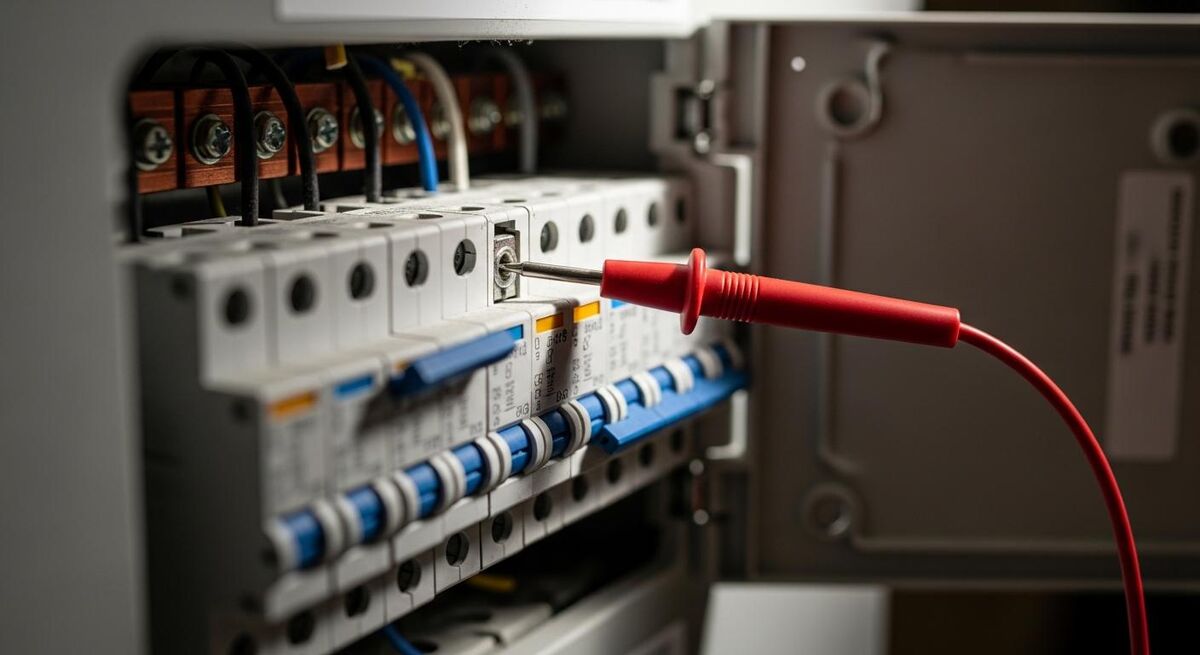
An Electrical Installation Condition Report is a detailed inspection and test of the fixed electrical wiring in a property. It checks the condition of every circuit against BS 7671, the IET Wiring Regulations, and produces a formal report documenting any defects found.
Let me be clear about something. An EICR is not a quick visual check. It involves dead testing, live testing, and insulation resistance measurements on every circuit in the property. A thorough EICR on a standard three-bedroom house should take a competent electrician between two and four hours. Anyone doing it in 30 minutes is cutting corners, and that puts people at risk.
The report classifies findings using a standardised coding system. C1 means danger is present and immediate action is required. C2 means the issue is potentially dangerous and must be rectified within 28 days. C3 is an improvement recommendation, not mandatory. FI means further investigation is needed before the severity can be determined. A report with only C3 observations is considered satisfactory. Anything with a C1 or C2 is unsatisfactory, and for landlords, that triggers a legal obligation to get the work done within 28 days.
The most common reasons for unsatisfactory reports include missing or inadequate RCD protection, outdated consumer units with rewireable fuses, earthing and bonding issues, bathroom fittings with inadequate IP ratings, and degraded wiring insulation. Older properties, especially pre-1970s stock, tend to have more issues.
The legislation behind the cliff

The Electrical Safety Standards in the Private Rented Sector (England) Regulations 2020 came into force on 1 June 2020. For new tenancies, landlords had to have an EICR from 1 July 2020. For all existing tenancies, the deadline was 1 April 2021.
That second date is the one that matters here. April 2021 is when millions of landlords scrambled to get their properties inspected for the first time. Many had never had an EICR done. The industry was overwhelmed. Electricians' diaries filled up weeks in advance, and in some areas the waiting time stretched to months.
Now here is the problem. An EICR is valid for five years on a standard domestic installation. Five years from April 2021 is April 2026. All those certificates issued in that initial rush are expiring simultaneously. It is the same surge, the same bottleneck, but this time the industry should have seen it coming.
The regulations also require landlords to complete any C1 or C2 remedial work within 28 days, or within the period specified by the electrician on the report. This is not optional. If a landlord ignores it, the local authority can arrange the work themselves and bill the landlord for the cost. If you are thinking about the financial impact of compliance requirements on your business, the EICR renewal cliff is about to make capacity planning a lot more urgent.
The social housing double whammy
As if the private rented sector renewal cliff was not enough, the government has extended the same requirements to social housing. The Electrical Safety Standards in the Private Rented Sector (England) (Amendment) (Extension to the Social Rented Sector) Regulations 2025 came into force on 1 November 2025 for new tenancies, with all existing social housing tenancies requiring a valid EICR by 1 November 2026.
There are approximately 4.2 million social housing dwellings in England. That is 2.6 million from housing associations and 1.6 million from local authorities. Almost none of these had a statutory EICR requirement before. Some housing providers had their own inspection programmes, but coverage was inconsistent at best.
So within the space of a single month, April to May 2026, the electrical inspection industry faces a double wave. Millions of private sector certificates expiring, and millions of social housing properties needing EICRs for the first time. The workforce was already stretched before either of these dates. Now both are landing at once.
Social landlords must also conduct in-service inspection and testing of electrical equipment provided as part of the tenancy, including PAT testing of landlord-supplied appliances. This is additional work on top of the fixed wiring inspection.
Key dates and timeline for 2026
Here are the critical dates every electrician and landlord needs to have marked in their diary. Miss any of these and the penalties are real.
| Date | Event | Who it affects |
|---|---|---|
| 1 April 2026 | Five-year anniversary of the existing tenancy EICR mandate. Mass expiry of certificates issued in 2021 | Private landlords, letting agents, electricians |
| 15 April 2026 | BS 7671 Amendment 4 officially published by the IET and BSI | All electricians |
| 1 November 2026 | All existing social housing tenancies must have a valid EICR. Maximum penalty increases to £40,000 | Housing associations, local authorities, social landlords |
| 1 October 2026 | Level 3 qualification becomes mandatory for all individuals performing EICRs. Experience-only route ends | All electricians doing inspection and testing |
| October 2026+ | BS 7671:2018 previous version to be withdrawn six months after Amendment 4 publication | All electricians |
Look at that timeline. Within six months, electricians face a certificate renewal avalanche, a new regulatory standard, a social housing expansion, and a qualification tightening. Any one of those would be significant on its own. All four at once is unprecedented.
Qualification changes coming October 2026

From 1 October 2026, the experience-only route for carrying out EICRs officially ends. Every individual performing an EICR must hold a Level 3 qualification in periodic inspection and testing, plus a minimum of two years documented experience in periodic inspection work. No exceptions. This applies whether you are an employee, subcontractor, or sole trader.
The accepted qualifications are the City and Guilds 2391-52 (Combined Initial Verification and Periodic Inspection and Testing), the City and Guilds 2391-51 (Periodic Inspection, Testing and Reporting), or the EAL equivalent Level 3 awards. You will also need a current 18th Edition certificate for BS 7671.
This is a significant change. Before October 2026, a qualified electrician with the right experience could carry out EICRs without a specific Level 3 periodic inspection qualification. That route is closing. Competent person schemes like NICEIC and NAPIT will enforce this, and non-compliance will likely mean losing your registration and your ability to self-certify work.
Professional indemnity insurance providers are already starting to require proof of individual Level 3 certification. If you do not hold the qualification and you are still doing EICRs after October, you are putting your insurance, your registration, and your livelihood at risk.
The workforce crisis nobody wants to talk about

The UK has approximately 300,000 registered electricians. That number has been falling, not rising. There are an estimated 25% fewer qualified electricians today than five years ago. The average age of a UK electrician is over 45, and roughly a quarter of the current workforce is expected to retire within the next decade.
On the training side, only 7,540 apprentices are starting each year, well below the 10,500 needed annually just to maintain current workforce levels. BEIS estimates the UK needs 230,000 additional electricians by 2030 to meet net zero targets. That figure does not include the EICR demand spike. It is a separate, additional pressure.
The electricians who are available are being pulled in multiple directions. EV charger installations, solar panel work, heat pump systems, retrofit projects, general maintenance contracts, and new build installations are all competing for the same pool of qualified people. The EICR renewal cliff is landing on top of an already overstretched workforce.
Top-rated electrical firms in many areas already have four to six week lead times for non-emergency work. When millions of EICR renewals hit simultaneously, those lead times will stretch further. For landlords who leave it to the last minute, finding a qualified electrician could become very difficult. For electricians who plan ahead, this is an opportunity to build long-term relationships with landlords and letting agents who will need them year after year. If you are managing a team, understanding your building control notification obligations across different types of electrical work becomes critical when your diary is this full.
What this means for EICR pricing
Current EICR pricing for domestic properties varies by size, location, and circuit count. Here is what the market looks like in 2026.
| Property type | Typical cost (excl. VAT) | Notes |
|---|---|---|
| 1-bed flat (up to 6 circuits) | £120 to £180 | Usually 1.5 to 2 hours |
| 2-bed house (up to 10 circuits) | £150 to £250 | Allow 2 to 3 hours |
| 3-bed house (up to 12 circuits) | £200 to £250 | 3 to 4 hours typical |
| 4-bed house (up to 14 circuits) | £200 to £350 | Half-day job in older properties |
| HMO (6+ rooms) | £300 to £500+ | Depends on shared circuits and fire alarm systems |
London and South East prices are typically 20% higher than national averages. Remedial work is charged separately from the inspection fee.
Here is where it gets interesting. Supply and demand economics apply to EICRs just like anything else. When the 2021 rush hit, electricians who had been charging £150 for a three-bed EICR found their diaries full for months. Some adjusted their pricing. Others did not and simply could not take on all the work being thrown at them.
The 2026 wave will be bigger. Private sector renewals plus social housing first-timers plus the qualification tightening reducing the available workforce. Prices will rise. They have to. If you are still charging 2021 rates, you are leaving money on the table and probably not spending enough time on each job.
What electricians need to do now
Stop waiting. The cliff is here. Here are the six things every electrician doing inspection and testing work should be doing right now.
1. Audit your CRM and job history. Go through every EICR you completed in 2020 and 2021. Identify the properties, the landlords, the letting agents. Work out which certificates are expiring and when. Contact those clients now, before they go looking for someone else. A pre-renewal campaign six months before expiry is the difference between a full diary and scrambling for work.
2. Check your qualifications. Do you hold a Level 3 qualification in periodic inspection and testing? If not, book a course now. The 2391-52 takes five to ten days and is available from most major training providers. After 1 October 2026, you cannot legally carry out EICRs without it. Do not wait until September.
3. Build capacity for remedial work. An EICR is the foot in the door. When you find C1 and C2 defects, the landlord has 28 days to get them fixed. If you can do both the inspection and the remedial work, you double the revenue from each property visit. Make sure your stock levels and scheduling can handle the follow-up work.
4. Get familiar with BS 7671 Amendment 4. Published 15 April 2026, Amendment 4 covers new requirements for battery energy storage systems, functional earthing for ICT equipment, and major revisions to medical location standards. It incorporates Amendment 3 from 2024. The previous standard will be withdrawn six months after publication. You need to understand what has changed.
5. Position yourself as a compliance partner. Stop thinking about EICRs as one-off transactional work. Landlords with multiple properties need someone they can rely on year after year. Letting agents need a go-to electrician who can handle their entire portfolio. Offer ongoing compliance management, not just a single inspection. This is how you turn the renewal cliff into a recurring revenue stream.
6. Go digital. If you are still filling out paper certificates, switch to digital certification software. It speeds up reporting, makes it easier to track expiry dates across your client base, and gives landlords confidence that their paperwork is in order. Being aware of the overlapping fire safety compliance requirements for the same properties will make you more valuable to landlord clients managing multiple regulatory obligations.
What the community is saying
The EICR conversation is already heating up across forums and social media. Here is what electricians, landlords, and property managers are saying.
Recommended videos
These videos cover EICR testing procedures, common faults, landlord regulations, and best practice for electricians.
What is an Electrical Installation Condition Report?
Electrical Safety First
How to do an EICR start to finish
Mark The Sparky Allison
7 Reasons Why Your Home Might Fail an EICR
Artisan Electrics

EICR explained: Landlord electrical safety test
EIS Electrical
Landlord Electrical Safety Checks: Plain English Guide
ElectricBlu Contractors

EICR Explained: Electrical Installation Condition Report
Andy Willcox Electrical
Frequently asked questions
A proper EICR on a standard three-bedroom house takes two to four hours. Anyone telling you they can do it in 30 minutes is not testing properly. The time depends on the number of circuits, the age of the installation, and whether the property is occupied.
An expired EICR means immediate non-compliance. The local authority can request the report and the landlord has seven days to produce it. Failure to comply can lead to fines of up to £40,000 per breach and rent repayment orders of up to 12 months' rent. Landlord insurance is also likely to be invalidated if an electrical incident occurs without a valid certificate.
Scotland has had its own EICR requirements since December 2015 under the Repairing Standard, with five-yearly inspections mandatory for all private rentals. Wales has had its own EICR requirements since December 2022 under the Renting Homes (Fitness for Human Habitation) (Wales) Regulations 2022. The 2020 English regulations and the 2025 social housing extension specifically apply to England.
Yes, until 1 October 2026 the current requirements still apply. But assessors from competent person schemes have already started documenting non-conformances. If you do not hold a Level 3 by October, you will not be able to carry out EICRs. Training courses are filling up, so book now.
Published 15 April 2026, Amendment 4 adds new requirements for stationary secondary batteries, functional earthing for ICT equipment, and major revisions to medical location standards. It incorporates the 2024 Amendment 3 changes. The previous standard will be withdrawn six months after publication.
Yes. Supply and demand. The available workforce is shrinking, the volume of work is spiking, and the qualification requirements are tightening. If you are still charging 2021 rates, you are undervaluing your time and probably not spending enough time on each inspection. Price for the quality of work you deliver.
Missing or inadequate RCD protection is the single most common C2 fault. Outdated consumer units with rewireable fuses, earthing and bonding issues, bathroom fittings with inadequate IP ratings, and degraded wiring insulation are all frequent findings. Pre-1970s properties tend to have more problems.
My verdict
For the avoidance of doubt, this is not a future problem. April 2026 has arrived. Millions of EICRs are expiring. Social housing is entering scope. The Level 3 mandate is months away. And the workforce to handle all of this does not exist in sufficient numbers.
If you are an electrician who does inspection and testing, the next twelve months will define your business. Get your qualifications sorted, audit your client base, build relationships with landlords and letting agents, and price your work properly. This is the biggest opportunity the electrical inspection sector has seen since the regulations came in, and it will reward the electricians who plan ahead and punish the ones who do not.
Compliance is not assurance. Doing the paperwork is not the same as doing the work properly. Be the electrician who takes the time to get it right.
Ready to Transform Your Business?
Turn every engineer into your best engineer and solve recruitment bottlenecks
Join the TrainAR Waitlist