
Quick Answer
Emergency callouts should be your highest-margin work, not your most exhausting. Price them in tiers (evenings at 1.5x, weekends at 2x, overnights at 3x with a one-hour minimum), build a rota of three or four engineers so nobody covers more than one week in four, and qualify every call before you dispatch. The aim is fewer callouts at higher prices, not more callouts at the same prices. Done properly, an emergency line funds your weekdays. Done wrong, it eats your evenings and your marriage.
Table of Contents
- Why most trades undercharge emergency work
- Set a tiered out-of-hours pricing structure
- Build a rota that does not destroy your team
- The booking script that filters time-wasters
- Turn emergency callers into maintenance customers
- The technology stack that runs the rota
- Six mistakes that wreck emergency margin
- Recommended videos
- What the industry data says
- Frequently asked questions
- My verdict
Why most trades undercharge emergency work
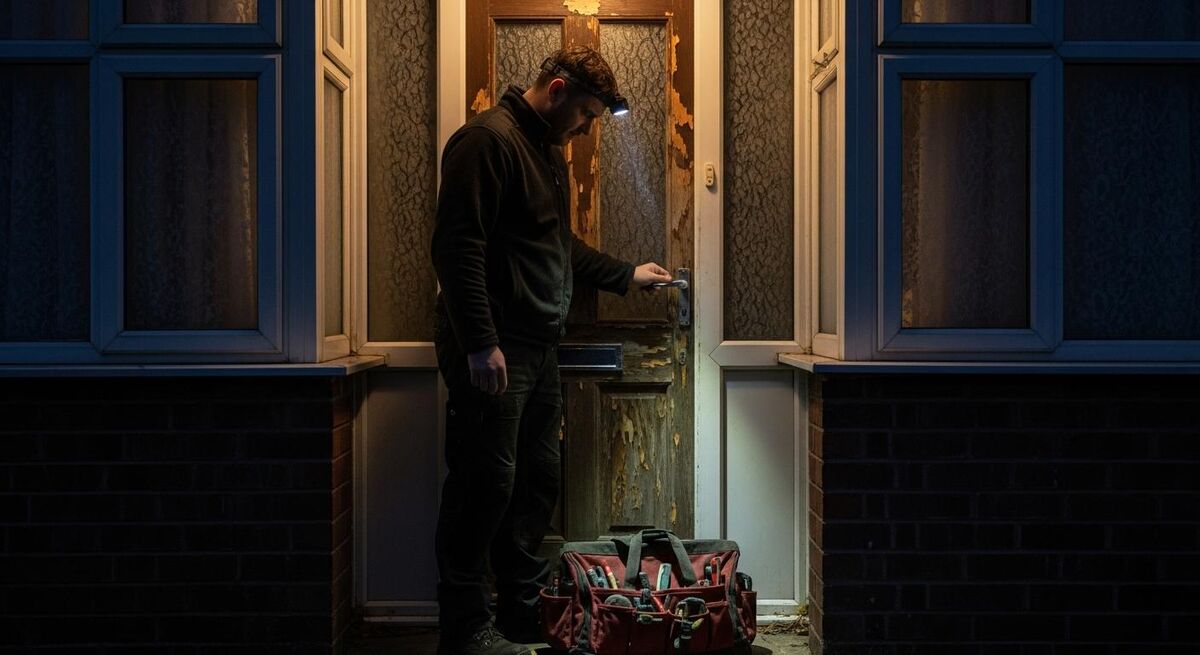
Pick almost any UK plumber, electrician or heating engineer and ask what they charged for their last 2am callout. Most will tell you they billed it as a normal job with a £75 callout fee on top. That is the wrong answer. The cost of working at 2am is not £75. The cost is your sleep, your reaction time the next day, your spouse's patience, and the standard daytime job you cannot bid for on Tuesday because you are knackered.
The independent pricing data for 2026 is fairly settled. Checkatrade puts the average emergency callout fee at £100–£120 and the hourly rate for unsocial hours at £80–£200 during the day and £150–£350 overnight. MyJobQuote breaks the same numbers down by tier: standard hours £80–£150, evenings £120–£200, weekends £150–£250, overnights £200–£350. Those are not aspirational figures. They are the going rate that established firms quote without apology.
The trades that struggle with emergency margin almost always have one of three problems. They are afraid to quote the price on the phone. They forgot to charge a one-hour minimum. Or they took the job at standard rates because the customer "is a regular" and ended up subsidising the inconvenience themselves.
If you take six overnight callouts a month at £125 (£75 callout plus one hour at £50) you bring in £750. If you take three overnight callouts a month at £350 (£100 callout plus one hour at £250) you bring in £1,050 and protect three nights. Same money, half the disruption. Charge more, do less.
Set a tiered out-of-hours pricing structure
Emergency work needs a published rate card. Not because you will show it to every customer, but because the engineer on the phone at midnight needs a number to read out. Pricing in the moment is how firms end up doing weekend work at weekday rates.
The structure that holds up across plumbing, heating and electrical work has four bands.
| Tier | Hours covered | Callout fee | Hourly rate | Multiplier vs standard |
|---|---|---|---|---|
| Standard | Mon–Fri, 8am–6pm | £0 within service area | £60–£75 | 1x |
| Evening | Mon–Fri, 6pm–10pm | £90–£120 | £100–£140 | 1.5x |
| Weekend | Sat–Sun, 8am–10pm | £100–£140 | £120–£180 | 2x |
| Overnight / Bank holiday | 10pm–8am, public holidays | £150–£200 | £200–£350 | 3x |
Three rules make this stick. First, every tier carries a one-hour minimum. If you turn up at 1am, isolate a leak in fifteen minutes and leave, the customer still pays the hour. Otherwise you are subsidising the call. Second, parts are always extra and never bundled into the callout. Third, the customer hears the price before you leave the house, not when you arrive. A simple line works: "Our overnight callout is £175 plus parts, minimum one hour. Are you happy for us to come out on that basis?"
The price-up-front protocol matters more than anyone admits. Under the Consumer Contracts Regulations 2013, you are legally required to make a callout charge clear before the visit. Quoting after the fact is a complaint waiting to happen, and it is the single biggest reason emergency work shows up on review sites.
Christmas Day, Boxing Day and New Year's Day should sit a full tier above your normal overnight rate. £250–£400 callout plus £250–£400 per hour is normal. If the engineer giving up his Christmas is not earning twice his normal day, you will not get a second one to volunteer next year.
Build a rota that does not destroy your team

Twenty-four percent of UK tradespeople report that poor work-life balance is hurting their mental health, according to research summarised by Tradesman Saver. The single biggest contributor in small firms is not workload, it is the 24/7 phone. Once a customer has your mobile and learns you will answer at 11pm, you have rebuilt a job into a job with no off switch.
The fix is a proper on-call rota. Not a "we cover everything, all the time" rota, which is not a rota, but a published cycle where one named person is on-call for a defined window and everyone else is properly off.
- Recruit a minimum of three engineers into the cycle. Two does not work, because nobody ever gets a week off and the holiday cover collapses. Three is the smallest sustainable number; four is comfortable.
- Run the cycle in weeks, not days. A week-on, two-weeks-off pattern is easier on sleep than rotating night by night. The engineer adjusts to being available, the others switch off completely.
- Pay a flat retainer for being on-call, separate from job revenue. £100–£200 a week is standard. The retainer is the answer to "why should I cover Christmas?" It also makes the rota a contractual expectation, not a favour.
- Cap individual on-call weeks at one in four, ever. If you cannot cover a holiday week without breaching the cap, hire, sub-contract, or close the line for that week.
- Use a dedicated mobile, not a personal one. The on-call phone gets handed over physically every Sunday. When it is not your week, it is not your phone.
- Set a "no answer in 20 minutes" escalation rule. If the on-call engineer cannot answer, the call goes to the owner. That keeps the customer covered without forcing every engineer to sleep with the phone under their pillow.
Run a 15-minute Sunday call at 5pm where the outgoing on-call engineer briefs the incoming one. Outstanding jobs, any vulnerable customers, parts in the van, anywhere not to dispatch alone. It costs you a quarter of an hour and prevents the "I had no idea about that" callout disaster on the Monday morning.
The booking script that filters time-wasters
Half the calls to an emergency line are not emergencies. They are people who would rather not pay weekday rates and have spotted that "emergency" sounds urgent. The script you use in the first 90 seconds decides whether you spend three hours on a non-emergency or three minutes booking it for Monday at standard rates.
A useful triage script has four steps and lives by the phone. The engineer reads it almost word for word.
- Acknowledge and slow down. "Right, I'm sorry to hear that. Just so I can help you properly, can I take your postcode and the address?" This pulls them out of panic and tells you whether the job is in your service area.
- Triage the urgency. "Is water actively flowing? Is there gas? Is anyone unsafe?" Anything where the answer is yes is a real emergency. Anything else is a job for the next working day or a chargeable visit at emergency rates.
- Quote the price before dispatch. "Our overnight callout is £175 plus parts with a one-hour minimum. We can be there within 90 minutes. Are you happy to proceed on that basis?" This is non-negotiable. Around a third of callers drop off here. That is the system working.
- Take card details before the van moves. "We take payment on the night. Can I take your card to authorise the callout fee?" Authorising the £175 callout fee on a card before dispatch is the single biggest predictor of getting paid in full and on time.
The script also gives the engineer a way to say no without sounding rude. "I'm sorry, we can't take that on tonight at those rates, but I'll get you booked in first thing Monday at our standard hourly." Some customers will go elsewhere. Most will book the Monday slot. Neither outcome wastes your van.
Turn emergency callers into maintenance customers
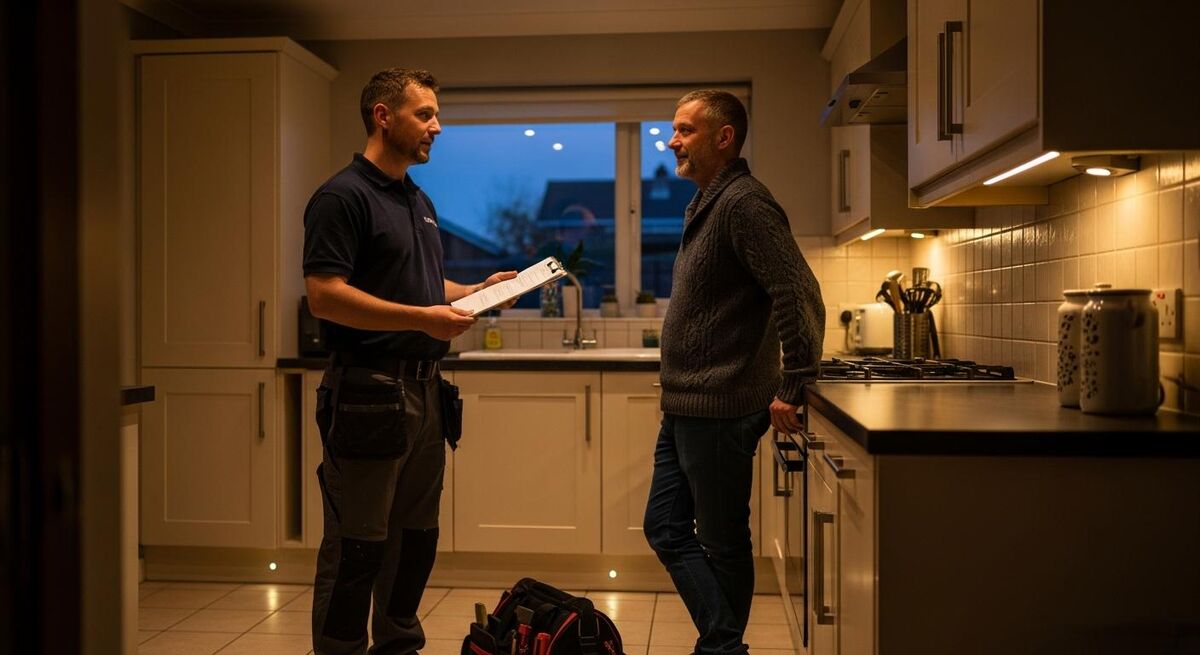
An emergency callout is an extraordinary moment of customer trust. Their world has gone wrong, they have rung four people, and the one who answered is now standing in their kitchen at midnight fixing it. That is the highest-intent customer interaction in trades. Treating it as a one-off transaction is the single biggest missed revenue play in the industry.
Three plays convert emergency callers into long-term, predictable revenue. None of them are pushy. All of them happen in the conversation while you are writing up the paperwork.
The first is the annual service. "While I'm here, when was the last time this boiler was serviced? If you let me book you in for a service in the next eight weeks I can keep an eye on this for you, and you'll get a 10% loyalty discount on the next callout if it ever happens again." Customers in the emotional state of "the heating is back on" book these. Cold calling the same customer two weeks later, they will not.
The second is the maintenance contract. Hometree-style annual cover starts around £12.95 a month in the consumer market. Your own version, sold direct, should sit in the £15–£25 a month range and bundle an annual service, a discounted callout rate, and priority response. For a customer who has just paid you £400 for an unplanned night job, paying £20 a month to avoid the next one is an easy conversation.
The third is the referral. The most expensive lead is the next emergency caller; the cheapest is the same customer's neighbour. A simple "I'd really appreciate it if you'd mention us to anyone on the road" works. A Google review request 24 hours later, while the relief is still fresh, works even harder.
A one-off £400 emergency callout is £400. The same customer converted to a £20/month maintenance contract with an annual service is roughly £600 a year in predictable revenue, with the next emergency callout almost always going to you instead of the competition. That is a four-figure swing on every conversation you bother to have.
The technology stack that runs the rota
 Tradify
 Commusoft
 Payaca
 Stripe
None of the technology stops you working at 2am. What it does is stop you reinventing the rota every week, losing the job notes, and chasing payment for three months afterwards. Three layers cover ninety percent of what a small firm needs.
Job management with mobile-first dispatch. Tradify, Commusoft and Payaca all do this competently in 2026. The minimum useful feature set is a live calendar your engineer can move from the van, automatic SMS to the customer with arrival time, and the ability to flag a job as "emergency" so it surfaces with the right pricing template.
Card payment on the night. Stripe Terminal or SumUp Solo readers cost under £80, settle to your account within two working days and let you take payment standing in the customer's hallway. Cash-on-completion is a recipe for an awkward chase the following week, and bank transfers at 1am do not happen.
A dedicated emergency phone line that diverts on a schedule. A virtual number from a UK provider with time-of-day routing is around £10 a month. It diverts to whichever engineer is on-call this week, records the call, and rings the owner's phone if the on-call number does not pick up within 20 seconds.
The point of the stack is to make the on-call engineer's job tolerable: one phone to answer, one app to update, one terminal to swipe. Anything that adds a fourth tool is a tool you take off the rota.
The job sheet, the invoice, the SMS confirmation and the review request can all auto-generate when the engineer marks the job complete in the app. The decision to dispatch, the price quoted on the phone, and the conversation about a maintenance contract are not automatable. Buy software that takes admin off the engineer at 2am. Do not buy software that promises to "qualify the customer" for you. It does not work.
For firms already running a quote-to-invoice flow, the emergency pipeline is a sensible thing to fold into the same system rather than running parallel. The quote-to-invoice automation playbook covers the underlying pipeline; emergency work just runs through it on a different price tier.
Six mistakes that wreck emergency margin
Most emergency margin is lost not at the price list, but in operational habits that nobody bothers to fix. Six show up almost every time we audit a small firm's out-of-hours billing.
- Quoting after the job, not before. The customer who hears the price for the first time on the invoice will dispute it. The customer who heard the price at 11pm on the phone almost never does.
- Skipping the one-hour minimum. If you can fix a leak in fifteen minutes, the customer pays the hour. The hour pays for the night, the van, and the next call that turned out to be nothing.
- Discounting because the customer is a "regular." Regulars want to be your daytime customers. The price they pay for 2am loyalty is the same price as everyone else's. If they object, they were never regulars.
- Owner-only on-call. The fastest route to a sold business is the owner who has been on-call every weekend for three years. Build the rota the day you hire your second engineer, not the day you collapse.
- Letting the engineer set the price on arrival. The dispatched engineer should never quote. The price is set by the office, on the phone, before the van moves. The engineer's job on arrival is the work, not the negotiation.
- No follow-up the next day. An emergency customer who never hears from you again is a referral you have given to your competitor. A 24-hour SMS asking how things are settling closes the loop and asks for the review at the right emotional moment.
Two pieces of context help. For firms working on the broader scaling problem, the team-of-five scaling playbook covers when to hire the third engineer that makes a real rota possible. For firms wanting to fold emergency customers into recurring revenue, the planned maintenance contract playbook is the natural next step.
Recommended videos

The Plumbing Pricing Strategy That DOUBLED My Profit Margin
Roger Wakefield Plumbing Education

Pricing Emergency Plumbing Services
Million Dollar Plumber

Should You Charge Flat Rate or Hourly?
Million Dollar Plumber

The Truth About Work-Life Balance for Plumbing Business Owners
Million Dollar Plumber

Motivation and self-employed burnout
Skill Builder

Plumbing Costs: Regular vs Emergency Hours Explained
99 Calls
What the industry data says
Frequently asked questions
£100 to £200 for the callout itself, plus the hourly rate at the relevant tier. Overnight and bank holiday work sits at the top of that range. Anything under £75 in 2026 is a hobby price, not a business price.
Yes. The Consumer Contracts (Information, Cancellation and Additional Charges) Regulations 2013 require the callout charge to be clearly communicated before the visit. Pricing on the doorstep or after the job invites a complaint and a chargeback. Quote on the phone, record the quote, take the card details.
Yes, every time. The customer is paying for availability, not just stopwatch time. A one-hour minimum is industry standard and the customer understood it when they accepted the price on the phone. The firms that skip it are the firms that lose money on emergency work.
Three minimum, four comfortably. With three engineers on a one-week-in-three cycle, every engineer gets two weeks fully off-call. With two engineers, somebody is always on, holiday cover fails, and the rota collapses within six months.
Yes. A flat £100–£200 a week, paid whether the phone rings or not. It is the cost of buying their availability and the contractual basis for expecting them to answer. Without it, on-call is a favour, and favours are not sustainable.
It is the single biggest revenue play in emergency work. A £20-a-month contract bundling an annual service and discounted callouts converts a £400 one-off into roughly £600 a year of predictable revenue and locks the customer in for the next emergency. Sell it while you're still standing in their hallway.
A virtual UK number with time-of-day routing, around £10 a month from any business telecoms provider. It diverts to the on-call engineer's mobile, records the call, and escalates to the owner if no answer within 20 seconds. The engineer's personal mobile never goes to the customer.
Quote the price within 60 seconds. About a third of non-emergency callers drop off when they hear the overnight rate. That is the system filtering them. The remaining two-thirds are either real emergencies or customers who accept the cost without negotiating, which is the only conversation worth having at 1am.
My verdict
The trades that thrive at emergency work charge fewer callers more money, run a real rota with a third engineer in the cycle, quote on the phone, and convert the moment into recurring revenue. The trades that burn out do the opposite: more callers, smaller margin, owner-only on-call, and no follow-up.
The playbook is short. Publish a four-tier rate card. Hire to the rota, not the workload. Quote before dispatch, take the card before the van moves, charge the minimum hour every time. Have the maintenance-contract conversation in the customer's hallway, not in an email two weeks later. The aim is a higher-quality emergency line that funds the business, protects the team, and lets you sleep three weeks out of four.
If the rota is owner-only and the rate card lives in your head, fix that this week. Everything else is detail.