
Quick Answer
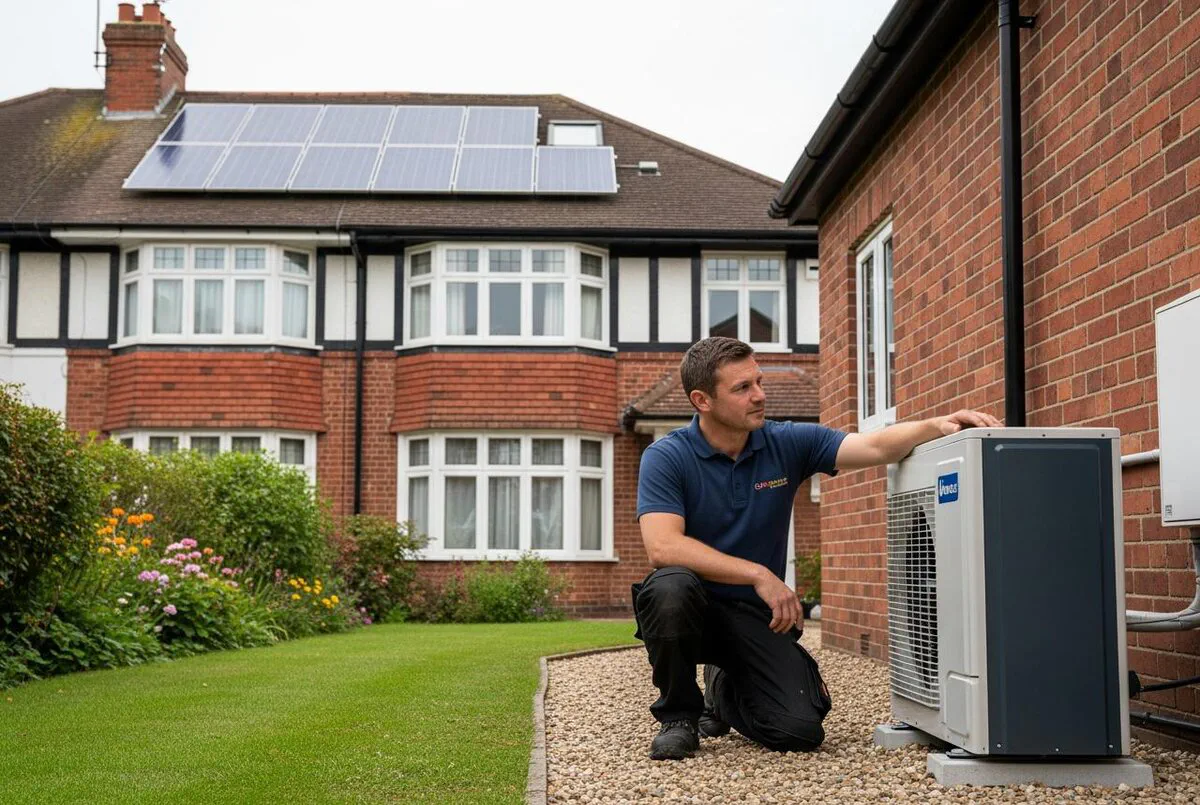
The Future Homes Standard, the £7,500 Boiler Upgrade Scheme and the move away from new gas boilers from 2025 have created a workload that the existing renewables workforce cannot service. There are around 4,000 active heat pump installers in the UK against a 2028 government target of nearly 27,000. If you are already a gas engineer, electrician or builder, you do not need to start again. You need a 3 to 5 day Level 3 add-on qualification, company-level MCS certification, and a sensible plan for pricing and lead flow. This playbook walks through it in order, with the realistic costs and the bits the training brochures leave out.
Table of Contents
- Why the green transition is the biggest commercial opportunity in trades right now
- Phase 1: Audit your current trade and pick your lane
- Phase 2: Get the right Level 3 qualifications
- Phase 3: Get MCS certified as a company
- Phase 4: Price the work without leaving money on the table
- Phase 5: Use the funding that already exists
- Phase 6: Generate leads without paying lead-gen middlemen
- Common mistakes I see installers making
- What tradespeople are saying
- Recommended videos
- Frequently asked questions
- My verdict
Why the green transition is the biggest commercial opportunity in trades right now

Three things have shifted at the same time. The Future Homes Standard means new homes built in England from 2025 will need to use low-carbon heating, with 75 to 80 percent lower carbon emissions than current regulations. The Boiler Upgrade Scheme has been extended to 2030 and the grant rises to £9,000 for oil and LPG properties from July 2026. And the Clean Heat Market Mechanism is now pushing boiler manufacturers towards heat pump sales whether they like it or not.
The honest read of the market is that supply cannot meet the demand. MCS recorded over 60,000 certified heat pump installations in 2025. The number of MCS certified installers grew 7 percent across the year, but that growth is nowhere near enough. The Nesta projection is that the UK needs roughly 27,000 installers by 2028. We have about 4,000.
If you are reading this and you already hold a gas ticket, a Level 3 electrical NVQ, or you build extensions and run a small team of two or three, you are sitting on top of a pipeline that other trades will spend three years trying to break into. The barrier to entry is not the technical learning. It is the certification path and the funding admin. Both are solvable in roughly six months.
If you want the pricing side covered first, our quote-to-invoice playbook for heating engineers shows the back-office stack you will want in place before the first install.
Phase 1: Audit your current trade and pick your lane

Most trades businesses jump into a course because someone on Instagram told them heat pumps were the future. That is the wrong order. The first job is to audit what you already have, because three different starting points lead to three different lanes.
If you are a heating engineer with a Gas Safe ticket and a couple of years of wet-system experience, your fastest route is air source heat pumps. The Level 3 BPEC or LCL add-on is 3 to 5 days. You already understand pipework, controls, hydraulic separation and unvented hot water. Your bottleneck is design, not graft.
If you are an electrician with a Level 3 NVQ and a current 18th Edition certificate, your fastest route is solar PV and battery storage. Course duration is 3 to 5 days. You will not be touching refrigerant circuits and you will not be retrofitting heating systems, so design is simpler. The catch is that domestic solar is MCS-gated for the Smart Export Guarantee, and MCS is a company-level certification.
If you are a builder or general contractor running a small team, you have a different play. You are not the installer. You are the lead generator and project manager. Partner with one MCS-registered installer and bolt heat pumps or solar onto every renovation and extension quote. You take a finder fee or you mark up the install. Either model works and neither requires you to retrain.
Phase 2: Get the right Level 3 qualifications
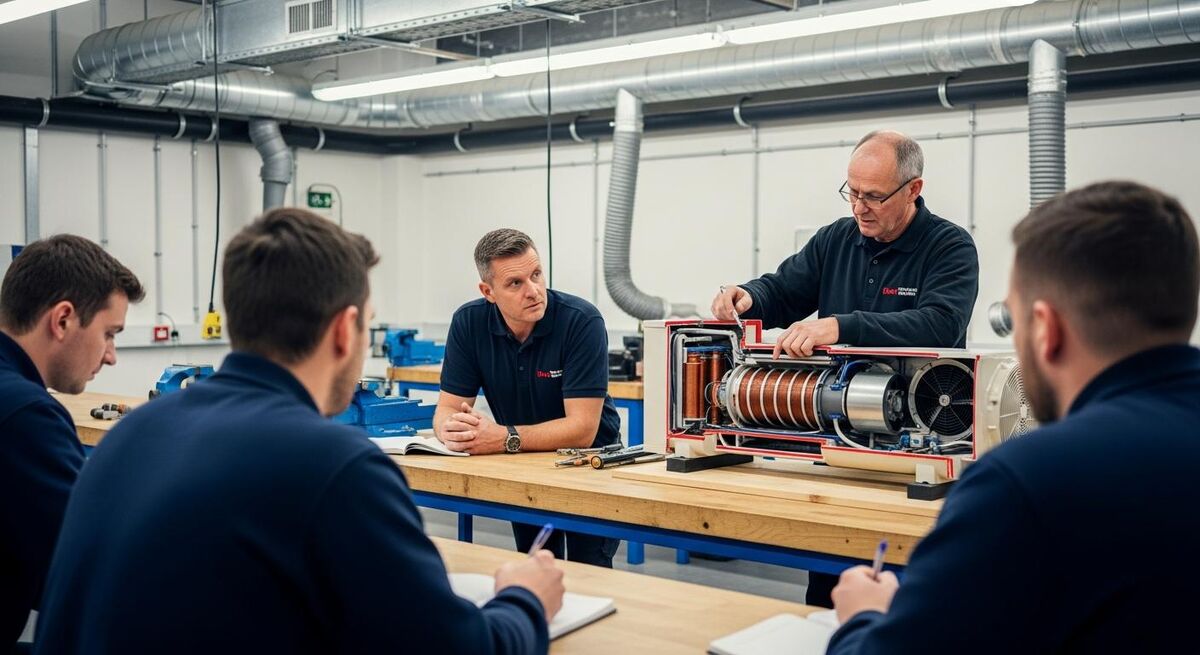
Two awarding bodies dominate the heat pump training market: BPEC and LCL Awards. Both are recognised as evidence of competence for MCS. The actual content overlaps by 90 percent. Pick by location and price, not by brand.
The BPEC Level 3 Award in Air Source Heat Pump Systems (the non-refrigerant circuits version) is typically £600 to £750 plus VAT before any grant funding. With the £500 Heat Training Grant in England (when funding is open), the out-of-pocket cost drops to around £165 plus VAT. Scotland runs a separate Heat Pump Skills Fund that covers up to £700 or 50 percent of fees, whichever is lower.
For solar PV, the City & Guilds 2922 or BPEC Solar PV course runs 3 to 5 days, typically £600 to £700. Combined Solar PV and Battery Storage courses are around £950 to £1,150. You need an existing Level 3 electrical NVQ and current 18th Edition before you enrol. There is no shortcut around the electrical prerequisites. If you want to understand how battery storage integrates with your installs, our complete guide to battery storage systems covers the technical and commercial side.
One thing the brochures do not say out loud: a five-day course will not make you a competent designer. Mars at Renewable Heating Hub put it well after sitting one of the most theoretical courses available. As he wrote, "even after completing one of the most theoretical and structured courses available, I still have absolutely no idea how to actually install a heat pump. What the course gave me is knowledge. What it could never give me is competence."
That is the honest position. The certificate gets you to the start line. The first half-dozen installs, ideally shadowing someone who has done a hundred, is where the real learning happens. Build that into your plan and your pricing.
Phase 3: Get MCS certified as a company

This is the part that catches most people out. MCS is not a personal qualification you carry around like Gas Safe. It is a company-level certification that has to be renewed annually. The application sits behind a Certification Body such as NICEIC, NAPIT, MCS Direct or Stroma. They audit your installations before they let you certify.
First-year cost is around £1,000 for MCS itself plus the Certification Body fee, with roughly £850 a year ongoing. You will also need TrustMark registration, which is a separate but parallel process and another £100 to £200 a year. Your insurance has to cover renewable installations, which is typically £400 to £700 a year on top of standard public liability.
To get certified you need a witnessed installation. That means doing your first job under the supervision of the Certification Body assessor. The system you install becomes part of your evidence pack. Plan this carefully. Pick a customer who understands they are getting an audited install and use a property that is properly suitable for the technology. A botched first install becomes an expensive learning experience.
From 12 December 2025, the redeveloped MCS:2025 scheme is also the certification route under the Clean Heat Market Mechanism. The standards have tightened around design documentation, commissioning records and customer handover. If you certified under the old scheme, you have a transition window. If you are joining now, you go in under the new rules.
Phase 4: Price the work without leaving money on the table

The typical retail price for a domestic air source heat pump install in 2026 sits between £10,000 and £16,000 before the £7,500 BUS grant. Ground source runs £20,000 to £35,000 because the ground array dominates the cost. Solar PV with a 5 to 6 kWp system and a 5 to 10 kWh battery sits between £8,000 and £14,000 depending on the kit.
The mistake new installers make is pricing on materials plus a fixed day rate. A heat pump install is not a boiler swap. The design phase alone, including heat loss calculations, emitter sizing and the system schematic, is six to ten hours of skilled work. Then there is the MCS paperwork, the EPC if needed, the customer commissioning pack and the post-install monitoring. Build all of it into your price.
A sensible breakdown for a typical air source install:
- Equipment (heat pump, cylinder, emitters, controls): £4,500 to £6,500
- Labour and materials for install (3 to 5 days for two engineers): £3,500 to £5,000
- Design, paperwork and commissioning: £1,000 to £1,500
- Overheads, insurance and MCS contribution: £500 to £700
- Margin: at least 15 percent on top, not on the inside
That gets you to a £11,000 to £14,000 retail price before grant. The customer sees £4,000 to £7,000 out of pocket after the BUS grant is applied. That is the number to put on your quote, but make sure the breakdown is visible to the customer. They are agreeing to a number that includes design value, not just kit.
For a step-by-step breakdown of how to structure the whole quote-to-payment process, the quote-to-invoice playbook covers the systems side. The same logic applies whether the install is a combi boiler or an air source heat pump.
Phase 5: Use the funding that already exists

The Boiler Upgrade Scheme is installer-led. The customer does not deal with Ofgem. You, as the MCS-certified installer, apply for the £7,500 voucher (£9,000 from July 2026 for oil and LPG properties) and deduct it from the customer's bill. Ofgem then pays you directly. This is a cash flow advantage if you set it up properly and a cash flow nightmare if you do not.
Two things have changed for 2026. As of April 2026, the EPC requirement and the "no outstanding insulation recommendations" rule have been removed in full. That means you can install a heat pump in a property where the insulation is not perfect, and the customer still gets the grant. This dramatically widens the addressable market. Many properties that were previously excluded now qualify.
For training itself, there are several funded routes that are not heavily marketed:
- Heat Training Grant (England): £500 off the BPEC or LCL Level 3 course, when funding is open
- Heat Pump Skills Fund (Scotland): up to £700 or 50 percent of course fees
- Solar Installer Accelerator (Green Economy): funded training for electricians moving into solar
- Skills Bootcamps: 12 to 16 week heavily-subsidised retraining programmes for career changers
For solar, the equivalent grant is the Smart Export Guarantee rather than a capital subsidy, so the funding logic is different. Your customer is paid by their electricity supplier for the energy they export back to the grid. The selling point is the long-term return, not the upfront discount, and you need to be MCS certified for the customer to qualify.
Phase 6: Generate leads without paying lead-gen middlemen

The lead generation companies in this market are aggressive. They will sell you the same leads they have sold to five other installers and charge £80 to £150 a lead. Some of it works at the start when you have nothing else, but it is not a sustainable customer acquisition strategy and the margins do not stack up.
The order I would suggest:
- Email your existing customer base first. Anyone you have done a boiler service or extension for in the last five years is a warm lead. Tell them you are now offering heat pumps or solar, mention the grant, and offer a free home survey. Expect a 5 to 10 percent conversion to survey, and 30 to 40 percent of those to install.
- Get your Google Business Profile listing MCS verified. Add heat pump installation as a service. Add photos of finished installs (with customer permission). Ask every happy customer for a Google review specifically mentioning the technology.
- Get listed on the MCS installer directory. This is free and customers actively use it. Many use it as their first filter after a Google search.
- Partner with two or three local builders. They get the renovation work. You get the renewables retrofit. A reasonable finder fee is £200 to £500 per converted job.
- Run very local content. One blog post or short video per neighbourhood you want to dominate. "Heat pump installation in [town name]" will rank for years if it is the only specific local content out there.
Recurring revenue matters here too. A heat pump install is a one-off transaction, but the annual service and the warranty repair work is recurring. Our planned maintenance contract playbook shows how to package that. A £180 a year service contract on every install you do becomes a serious income stream by year three.
| Lead source | Typical cost per lead | Conversion rate | My take |
|---|---|---|---|
| Email to existing customers | £0 | 30-40% to install | Always start here |
| Google Business Profile + reviews | £0 (time only) | 15-25% to install | Compounds over time |
| MCS directory listing | £0 (included in cert) | 10-20% to install | Free, do it day one |
| Local builder referrals | £200-£500 finder fee | 50-70% to install | Excellent quality |
| Paid Google Ads | £40-£80 per lead | 5-10% to install | Works if you can write the ad copy |
| Lead-gen aggregator | £80-£150 per lead | 3-8% to install | Avoid as primary source |
Common mistakes I see installers making
I have watched a fair few installers go through this transition over the last three years. The same handful of mistakes come up again and again.
One more, and this is the one I see most often. New installers refuse to turn jobs down. Every property is not suitable for a heat pump. Every house is not suitable for solar. If the building fabric is wrong, the orientation is wrong, the existing electrics cannot take a battery system, you say so politely and walk away. Your reputation as the installer who told them honestly is worth more than the £14,000 of revenue you would have taken on a job destined to fail.
What tradespeople are saying
Recommended videos

How heating engineers can train to install heat pumps
Nesta

Level up with this guide to heat pump qualifications
Heating Installer

What truly makes a great heat pump installer in the UK
Heat Geek

How to get MCS approved as a solar installer
Evo Renewables
Get started in Solar PV and Battery storage
NAPIT

Do you need to be MCS registered to install solar, batteries and heat pumps
Evo Renewables
Frequently asked questions
No. Gas Safe and MCS heat pump certification are independent. Most working heat pump installers keep Gas Safe active because gas servicing, boiler replacements during transition and emergency repairs are useful fill-in work in years one and two. You only drop Gas Safe when your renewables pipeline is full enough that gas work is a distraction.
Realistically twelve to eighteen months from training to comfortable full pipeline. Month one to three is training and MCS application. Month three to six is the first three or four installs, where you are still learning. Month six to twelve is when referrals start compounding. By month twelve a one-person operation should be doing two or three installs a month at the right price.
Yes, and it is cheaper than starting from scratch. The Certification Body adds the new scope to your existing MCS account, you provide the relevant Level 3 evidence and a witnessed install, and you pay an incremental fee rather than a full new application. Most installers I know who started in solar end up adding heat pumps within two years.
Standard public liability does not cover renewable installations. You need a policy that specifically lists heat pump or solar PV installation, depending on scope. Premiums are typically £400 to £700 a year on top of standard cover. TrustMark insurance-backed warranties are a separate product on top of that, usually a small percentage of the install value.
Not in the same form. There is no equivalent of the £7,500 BUS grant for solar. What domestic solar customers get is the Smart Export Guarantee, where their electricity supplier pays them for energy exported to the grid. They need an MCS certified install to qualify. The selling proposition for solar is long-term return on investment rather than an upfront discount.
Match it to your existing trade. If you are a heating engineer, heat pumps are the shorter route to your first paid job. If you are an electrician, solar PV is the shorter route. If you are a builder, partner with one of each and act as the lead generator. Adding both at the same time is a common mistake. Pick the one that fits your existing skills and customer base.
You correct the issues identified, the assessor revisits, and you pay another assessment fee. The customer install still gets completed, just with the corrections. This is why your first MCS install should be a property you have fully surveyed in advance and where the customer understands the process. Don't pick a difficult job to prove you can handle hard ones.
My verdict
Get the right Level 3 ticket, get MCS certified properly, price the work for the design value not just the kit, and use your existing customer base before you spend a penny on lead generation. Add maintenance contracts on every install you do. The installers building the strongest businesses right now are not the cheapest. They are the ones treating renewables as a serious technical discipline and charging accordingly. The Boiler Upgrade Scheme is funded through 2030. The training is doable in six months. The market is supply-constrained and the rates are climbing. The question is not whether to make the move. It is which lane fits the trade you already have, and how quickly you can get the first three installs in the book.