

Quick Answer
Every plumbing business runs on nine profit drivers: lead generation, conversion rate, average job value, transaction frequency, customer retention, pricing, variable costs, fixed costs, and systemisation. Most owners only think about two or three of them. Improve each driver by just 1% and the compound effect on your bottom line is staggering. This guide walks through all nine, shows you where the leaks typically hide, and gives you a practical checklist to plug them.
Table of Contents
- The profit equation most plumbers never learn
- Drivers 1 and 2: More leads, better conversion
- Drivers 3 and 4: Higher spend, more often
- Driver 5: Customer retention and lifetime value
- Driver 6: Pricing for maximum profit
- Drivers 7 and 8: Variable and fixed costs
- Driver 9: Systemise everything
- The 1% rule: small changes, big results
- Your profit driver audit timeline
- What tradespeople are saying
- Recommended videos
- Frequently asked questions
- My verdict
The profit equation most plumbers never learn

Here's a hard truth: most plumbing and heating business owners have no idea how their profit actually gets made. They look at turnover, they look at the bank balance, and they hope the gap between the two is enough to live on. Sound familiar?
I see it every single week. Businesses turning over £100,000, £200,000, sometimes more, and the owner is still scratching around wondering where the money went. The problem is not that they are bad at plumbing. The problem is that nobody ever taught them the profit equation.
Here it is, stripped back to basics:
Profit = (Customers × Average Spend × Transactions) − Variable Costs − Fixed Costs
That formula breaks down into nine distinct drivers. Each one is a lever you can pull. Most business owners only ever think about the first one (getting more leads) and ignore the other eight. That is like trying to fill a bath with the plug out.
1. Lead generation • 2. Conversion rate • 3. Average transaction value • 4. Transaction frequency • 5. Customer retention • 6. Pricing • 7. Variable costs • 8. Fixed costs • 9. Systemisation. Each one affects your bottom line. Miss any single driver and you have got a leak.
Let's face it, if you are only focused on getting more leads, you are working harder, not smarter. The real money is in optimising what you already have. That is what this framework does.
Drivers 1 and 2: More leads, better conversion

Driver one is lead generation: how many enquiries come through your door each week? Driver two is conversion: how many of those enquiries turn into booked, paid work?
Most plumbers I speak to obsess over leads. They spend money on Google Ads, Checkatrade profiles, leaflet drops. But when I ask them what their conversion rate is, I get a blank look. They have no idea. And that is where the leak starts.
If you are getting 20 enquiries a week and converting 5, that is a 25% conversion rate. Not terrible, but not great either. Now imagine you improved that to 35% without spending a single extra penny on advertising. That is 7 booked jobs instead of 5, from the same number of leads. That is a 40% increase in revenue with zero extra marketing spend.
How do you improve conversion? It starts with your quote. I wrote an entire book on this, The Quote Handbook, because the quote is where most plumbers lose work. Not because they are too expensive, but because they do not present the value of what they are offering.
Quick wins for conversion
- Follow up every quote within 48 hours. Most plumbers never follow up at all.
- Use a structured, professional quote document, not a scribbled number on a scrap of paper.
- Restate the customer's problem in the quote. Show them you listened.
- Offer three pricing tiers (value, standard, premium). Let the customer choose their level.
In my eyes, the conversion rate is the most underrated driver of the nine. It costs you nothing to get better at it. You just need a system.
Drivers 3 and 4: Higher spend, more often
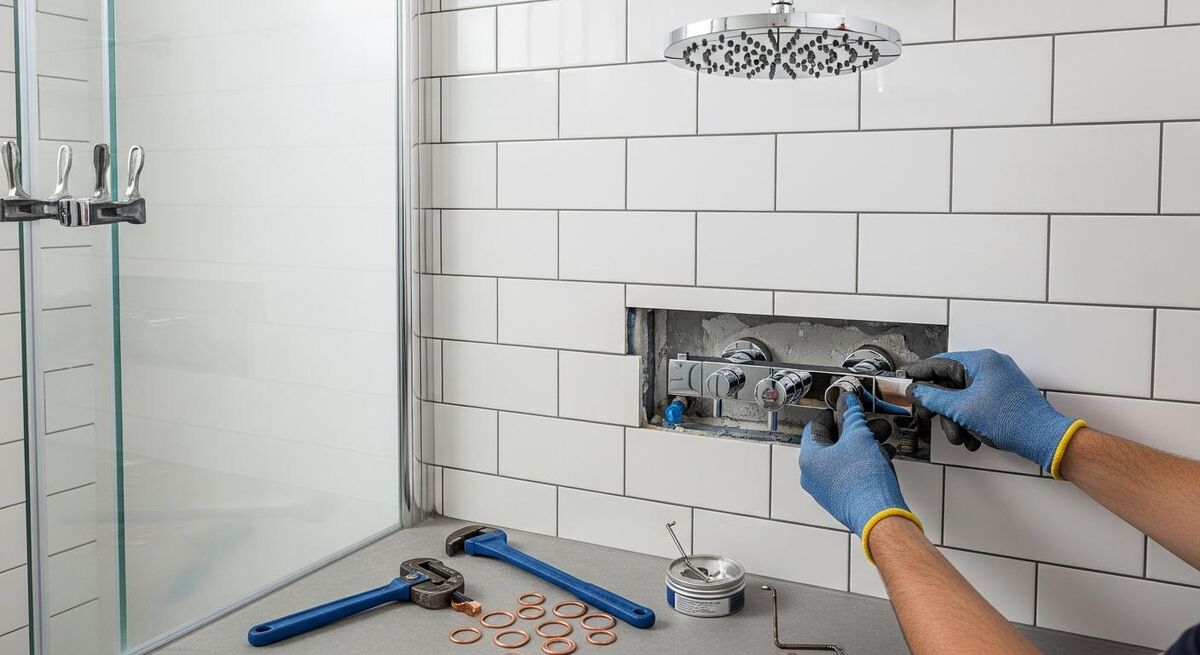
Driver three is average transaction value: how much does each customer spend per job? Driver four is transaction frequency: how often does each customer use your services?
Let me put this in real numbers. If your average boiler installation comes in at £2,500 and you do 100 installations a year, that is £250,000 in revenue. Increase your average job value to £2,750, just 10%, and you have added £25,000 to your top line without doing a single extra job.
How? Offer upgrades. A magnetic filter here. A smart thermostat there. An extended warranty. A maintenance plan sold at point of installation. These are not hard sells. They are genuine value adds that protect the customer's investment and boost your revenue. If you need help structuring your job estimates with auto-calculated labour, materials, and profit margins, our free job estimate spreadsheet template is a good starting point.
Transaction frequency is about getting that same customer to come back. Annual boiler services are the obvious one. But what about power flushing, radiator upgrades, bathroom refreshes, tap replacements? If a customer only ever calls you once for a boiler install and never hears from you again, you are leaving thousands of pounds on the table over the lifetime of that relationship.
50 service plan customers at £180 per year is £9,000 of guaranteed annual income. Build that base over five years and you have a financial foundation that transforms your cash flow, especially during the quieter summer months when reactive work dries up.
Driver 5: Customer retention and lifetime value
Here's the thing: it costs five to seven times more to win a new customer than it does to keep an existing one. Every customer who walks away and calls someone else next time is money straight out of your pocket.
Retention is about the experience. Not just the quality of the pipework, but the communication, the aftercare, the follow-up. Did you call the customer a week after the job to check everything was running smoothly? Did you send them a reminder when their annual service was due? Did you drop them a quick message at Christmas?
These things sound small. They are not. They are the difference between a one-off transaction and a customer who uses you for the next 15 years and refers three of their neighbours.
I call a spade a spade on this one: most plumbers are brilliant on the tools and terrible at customer retention. They finish the job, send the invoice, and move on. No follow-up. No aftercare system. No reminder process. And then they wonder why the phone goes quiet in July.
Retention checklist
- Post-job follow-up call or message within 7 days
- Annual service reminder sent automatically
- Quarterly email or text with seasonal maintenance tips
- Referral programme that rewards existing customers
- Heat care or maintenance plans offered at point of installation
Driver 6: Pricing for maximum profit

I call a spade a spade: pricing is the single most powerful lever in the entire profit equation. A 1% improvement in your price drops straight to the bottom line. No extra materials, no extra labour, no extra overhead. Pure profit. For a detailed walkthrough on how to reprice your business when costs rise, see our guide on how to reprice your P&H business when costs rise.
And yet most plumbing businesses are chronic underchargers. They price based on what the bloke down the road charges, or what "feels about right", or what the customer might accept. None of those are pricing strategies. They are guesswork.
experienced plumbers typically charge £50-60 per hour. But here is the question: do you know your actual cost per hour? Have you calculated your overheads, your vehicle costs, your insurance, your tools, your training, your admin time, your unbillable hours? Most have not. And when they do the maths, they realise they have been working for less than minimum wage on some jobs.
That boiler installation you quoted at £2,500? At a 15% net margin, you walk away with £375. If you are doing two installs a week, that is £750 a week in actual profit. Take out holidays, sick days, and quiet periods, and your annual take-home is a lot less impressive than your turnover suggests.
A 20% mark-up on a £100 item gives you a selling price of £120 and a profit of £20. But that £20 is only 16.67% of the selling price, not 20%. To achieve a 20% margin, you need a 25% mark-up. Confusing the two is one of the most common pricing errors in the trade, and it costs businesses thousands every year.
Pricing fundamentals
- Calculate your true hourly cost including all overheads, not just materials and labour
- Price based on value delivered, not time spent
- Use three-tier pricing on every quote (value, standard, premium)
- Review your prices at least twice a year against material and cost inflation
- Stop competing on price. Compete on experience, reliability, and professionalism
Pricing models vary depending on your job type. For a comprehensive comparison of project-based vs day-rate vs per-square-metre pricing models, we've covered the pros and cons of each approach in detail.
Drivers 7 and 8: Variable and fixed costs
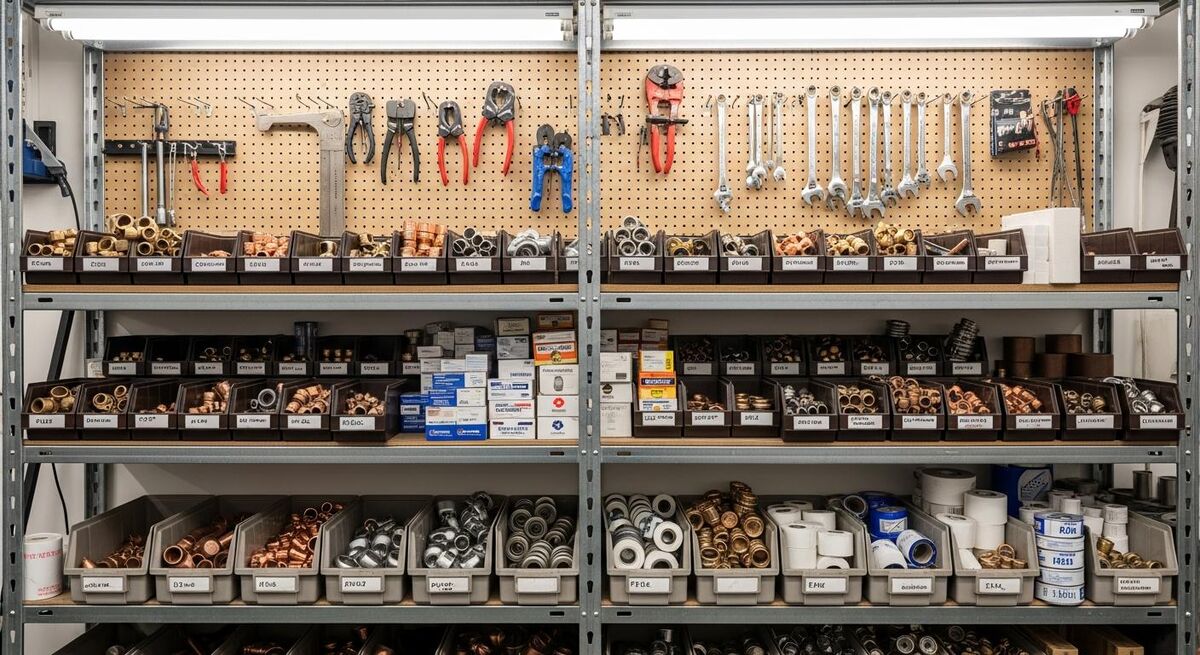
Revenue is vanity, profit is sanity. You can turn over a million pounds and still go bust if your costs are out of control.
Variable costs are the ones that move with your workload: materials, subcontractor fees, fuel, waste disposal, equipment hire. These go up when you are busy and down when you are quiet. The key here is knowing your cost of sale for every type of job you do. If you do not track this, you are flying blind.
Fixed costs are the ones that stay the same whether you do five jobs or fifty: rent, insurance, vehicle leases, admin staff, accountancy fees, software subscriptions. These are your overhead, and the average sole trader in plumbing and heating carries between £15,000 and £25,000 of them before earning a penny of profit.
The three types of cost
Variable costs rise and fall with your output. Materials, labour, fuel, subcontractor fees, waste disposal. Manage these by tracking your cost of sale on every job type.
Fixed costs stay constant regardless of workload. Rent, insurance, vehicle leases, admin wages, software. Review these quarterly and ask: is every fixed cost earning its keep?
Stepped costs are fixed until they are not. Five technicians can handle 50 jobs a month. Job 51 means hiring number six, and your labour cost steps up to a new level. Understanding when these steps happen lets you plan for growth rather than getting blindsided by it.
Pull your bank statement from last month. Highlight every subscription, every recurring payment, every direct debit. Now ask yourself: when was the last time I reviewed whether each of these is still worth paying for? If the answer is "never", you have found your first profit leak.
Driver 9: Systemise everything

Here's the thing about the first eight drivers: none of them work properly without systems. You can know your numbers inside out, price perfectly, and convert every lead, but if your processes are held together with sticky notes and memory, it all falls apart the moment you get busy, go on holiday, or hire someone new.
A system, as I define it, is a documented way of doing something to get repeated, consistent results. A boiler service checklist that ensures every service is done thoroughly. A quote template that covers every section. An onboarding process for new customers. A follow-up sequence that runs without you having to remember it.
I wrote The Systems Handbook because I kept seeing the same pattern: business owners who were brilliant on the tools but trapped in their own business because nothing could happen without them. The business did not have systems. The owner WAS the system. And that is a recipe for burnout.
Where to start systemising
- Document your quoting process from enquiry to signed acceptance
- Create a standard job completion checklist for each job type
- Build an automated follow-up sequence for post-job customer contact
- Set up automated reminders for annual services and maintenance plans
- Write an SOP for every task you want to delegate to someone else
Effective delegation is the key to scaling. If you think you are the only one who can do things right, you are the bottleneck. The problem often lies in the process, not the people. Teach, document, review, sign off. Now the SOP does the teaching, not you.
The 1% rule: small changes, big results
This is where the nine drivers framework becomes genuinely powerful. You do not need to double your leads or slash your costs in half. You just need small, consistent improvements across all nine drivers.
Imagine you improve each of the five revenue drivers (leads, conversion, average spend, frequency, retention) by just 10%. Not a massive leap for any single driver. But the compound effect?
1.10 × 1.10 × 1.10 × 1.10 × 1.10 = 1.61
That is a 61% increase in revenue from five modest 10% improvements. No single change felt dramatic. Together, they transformed the business.
Now layer on a 5% reduction in variable costs and a 5% reduction in fixed costs, and your profit does not just grow, it compounds. The businesses I work with that understand this principle are the ones pulling 20% net margins while their competitors scrape by on 2-3%.
A plumbing business doing £200,000 turnover at 5% net profit takes home £10,000. The same business with 10% improvements across all nine drivers could realistically hit £322,000 turnover at 12% net margin, taking home £38,640. Same number of engineers. Same van. Same tools. Different system.
Your profit driver audit timeline
Do not try to fix all nine at once. That is a fast track to overwhelm. Here is a practical timeline for auditing each driver, starting with the ones that deliver the quickest wins.
Week 1-2: Pricing audit
Calculate your true cost per hour including all overheads. Compare it to what you actually charge. Adjust your rates if the gap is too small. This is the fastest lever because it costs you nothing to implement and drops straight to profit.
Week 3-4: Conversion rate review
Track every enquiry for two weeks. How many turn into quotes? How many quotes convert to jobs? Identify where leads drop off and fix the weakest point. Usually it is the follow-up, or the quote presentation, or both.
Month 2: Cost review
Pull three months of bank statements. Categorise every expense as variable, fixed, or stepped. Cancel or renegotiate anything that is not earning its keep. Check your material mark-ups against your target margin.
Month 3: Average job value
Introduce three-tier quoting on every job. Add upsell options (filters, thermostats, extended warranties). Train yourself or your team to present these as value adds, not extras. Track average job value weekly.
Month 4: Retention and frequency
Launch a maintenance plan or heat care plan. Set up automated service reminders. Build a post-job follow-up process. Start tracking customer lifetime value, not just job value.
Month 5-6: Systemise and scale
Document your top five processes as SOPs. Set up a KPI dashboard tracking all nine drivers monthly. Build the habit of reviewing numbers weekly. You are now working ON the business, not just IN it.
What tradespeople are saying
Recommended videos

The Plumbing Pricing Strategy That DOUBLED My Profit Margin
Solo plumber pricing strategies

Are You Actually Making Money? The 3 Numbers Every Plumber MUST Know
Essential financial metrics for trades

The REAL Cost of Running a Trades Business in 2025
True business costs revealed

Four Ways To Increase Profits In Your Construction Business
The four profit levers explained

How to Start a Plumbing and Heating Business (UK)
Todd Glister, Glister Services

7 Lessons I Learned Running a Plumbing Business for 10 Years
Real lessons from a decade on the tools
Tools to help you track the nine drivers
The numbers only matter if you are tracking them. Accounting software like Xero or FreshBooks gives you visibility into what is actually happening with your money. Job management platforms like Jobber help you track repeat customers, follow-ups, and service reminders. This directly feeds your retention driver. The more visibility you have into all nine drivers, the faster you can optimise them.
Frequently asked questions
Pricing. Every time. A price increase costs you nothing to implement and drops straight to profit. It is the fastest, most powerful lever you have. Do a proper cost audit, work out your true hourly rate, and adjust your prices accordingly.
Most plumbing businesses run at 2-3% net margin. That is surviving, not thriving. A well-managed plumbing business should be targeting 15-20% net. The best in the business hit 20% or more. If you are below 10%, there are leaks in at least three of your nine drivers.
Track them. Set up a simple dashboard with your key numbers: enquiries per week, quote conversion rate, average job value, repeat customer percentage, gross margin, net margin. What gets measured gets managed. If you cannot see the numbers, you cannot fix the leaks.
No, and confusing the two is one of the biggest financial mistakes I see. Turnover is what comes in. Profit is what stays after you have paid for everything: materials, labour, overheads, tax, the lot. You can turn over £100,000 and still be broke if your costs are £98,000.
If you want to grow, take a holiday, or ever stop working 60-hour weeks, yes. Systems are what let you delegate without losing quality. Without them, you ARE the system. That means the business cannot function without you, which is not a business. It is a job.
My verdict
The nine drivers framework is not complicated. It is not even new. But almost nobody in the plumbing and heating trade actually uses it. They chase leads, quote low, and hope something lands. That is not a strategy. It is survival mode. Get your numbers visible. Audit each driver. Make small, consistent improvements across all nine. The compound effect will transform your business within six months. I have seen it happen hundreds of times with clients at Together We Count. The ones who track their numbers, price properly, and build systems are the ones pulling 20% margins while everyone else wonders where the money went.