

Quick Answer
Most heating engineers I work with are losing 40 to 50 percent of the boiler jobs they quote, and not because the price is wrong. They send a PDF, wait by the phone, and call it cold three days later. Customers do not buy that way any more. Build a five-touch WhatsApp routine, hook it onto your sales platform, and you will close 6 in 10 instead of 3 in 10 on the same lead flow. Right? It is not a price problem. It is a follow-up problem.
Table of Contents
- Why heating engineers haemorrhage quoted jobs
- The five-minute rule and why most installers break it
- Building your WhatsApp follow-up stack
- The five-touch routine that closes 6 in 10
- Scripts you can copy today
- Plugging the routine into a sales platform
- What to measure so you know it is working
- What heating engineers and homeowners are saying
- Recommended videos
- Frequently asked questions
- My verdict
 WhatsApp Business
 Stripe
 Google Business Profile
Why heating engineers haemorrhage quoted jobs
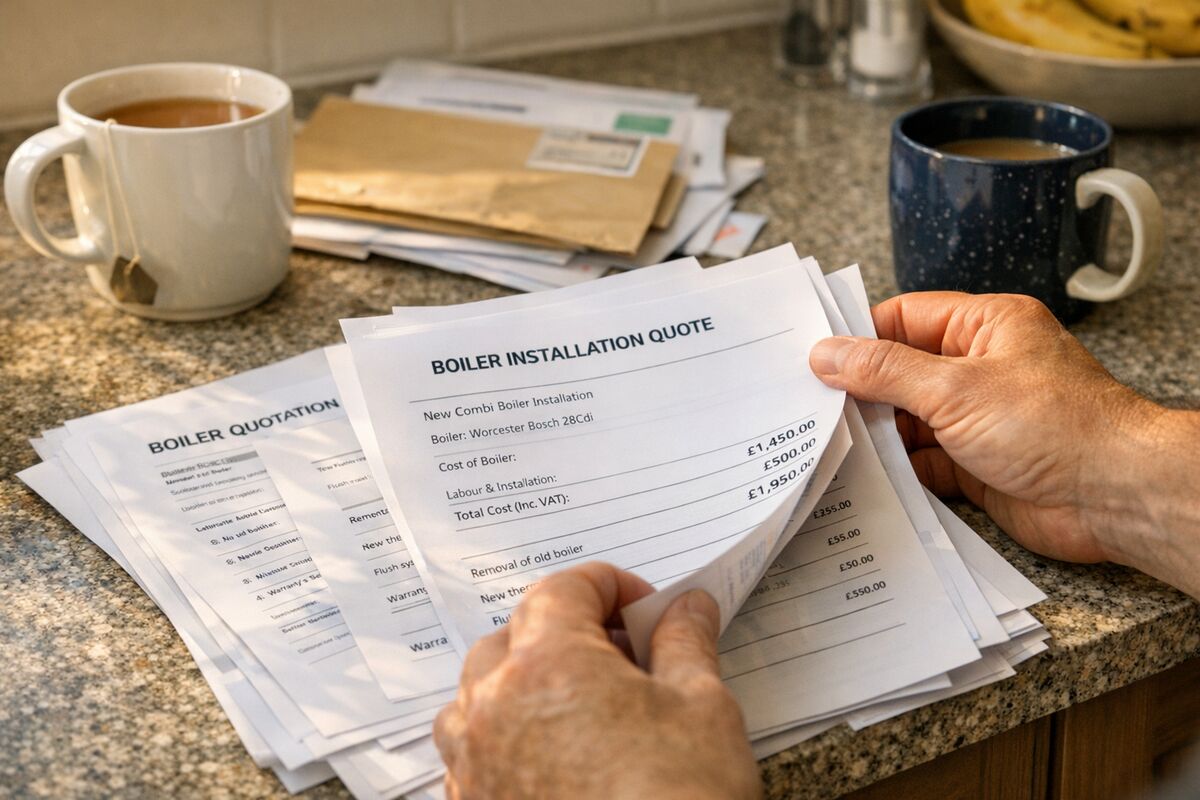
Right, so let me set the scene, because I see this every week in installer audits. Engineer goes to the survey, drinks the tea, measures the airing cupboard, comes back to the office and bashes out a quote in Word that night. PDF goes out. Then nothing. No phone call, no text, no nudge. Three days later they ring up, customer has gone with someone else, and the engineer chalks it up as "price-sensitive" and moves on.
It is not the price. For me, the boiler market is the most followable-up market in the country, do you know what I mean? Because boilers are not impulse buys. People have to talk to their partner, check their savings, decide between a combi and a system, and find the budget. That decision takes days. If you are not in the conversation while it is happening, you are not winning the job. You are just the quote that arrived first and got forgotten about second.
The data backs this up across every contractor study I have read. The 5-minute rule is well documented. Within 5 minutes of an enquiry you are at roughly a 70 percent qualification rate; by 30 minutes that drops to 50; by an hour you are at 20; by 24 hours it is round about 5 (The Centiverse). Most engineers I meet are running at 47 hours from enquiry to first proper conversation. That is not a sales process. That is a hope strategy.
The "we sent the quote" lie
I hear this on every coaching call: "We sent the quote, mate, they never came back." Sending is not following up. Posting a PDF and silently waiting is the trade equivalent of putting a card through a letter box and assuming the homeowner will phone you back. They will not. They are busy.
The five-minute rule and why most installers break it
Here is the thing. You do not have to answer every enquiry within 5 minutes personally. You have to acknowledge every enquiry within 5 minutes. Big difference. The customer does not need a full quote on the phone at 4pm on a Tuesday while you are halfway through a service. They need to know a real human, or at least your business, has seen the request and is on it.
That acknowledgment is what stops them filling out the next three forms on the next three websites. Research consistently shows that the first company to respond captures roughly 78 percent of the eventual sale in markets where customers are price-checking multiple installers (Kixie). In boiler installs, where customers routinely get 3 quotes (MyBuilder), being first to respond is the single most valuable thing your business does before lunch.
And no, you do not need a £40k call centre to do this. You need an AI receptionist plugged into your phone line and your WhatsApp, programmed to qualify the enquiry, capture the basics, book a call back, and tell the customer when a human will be in touch. Mine is called Alex. I named her Alex because of AI plus an X. Sounded clever at the time. She works while I drop the kids at school. That is what good tech looks like in 2026.
What "acknowledged" looks like at 4pm on a Tuesday
An auto-reply from your WhatsApp Business number that says, by name, "Hi Jenny, thanks for the boiler enquiry through the website. Tommy here from the office. I have it on the system. Quick question while you are there, what is the make and model of the current boiler? A photo helps if you have one. I will pick this up properly by 7pm tonight and we will have a price by tomorrow lunchtime." That is a sales platform doing the job your van cannot.
Building your WhatsApp follow-up stack
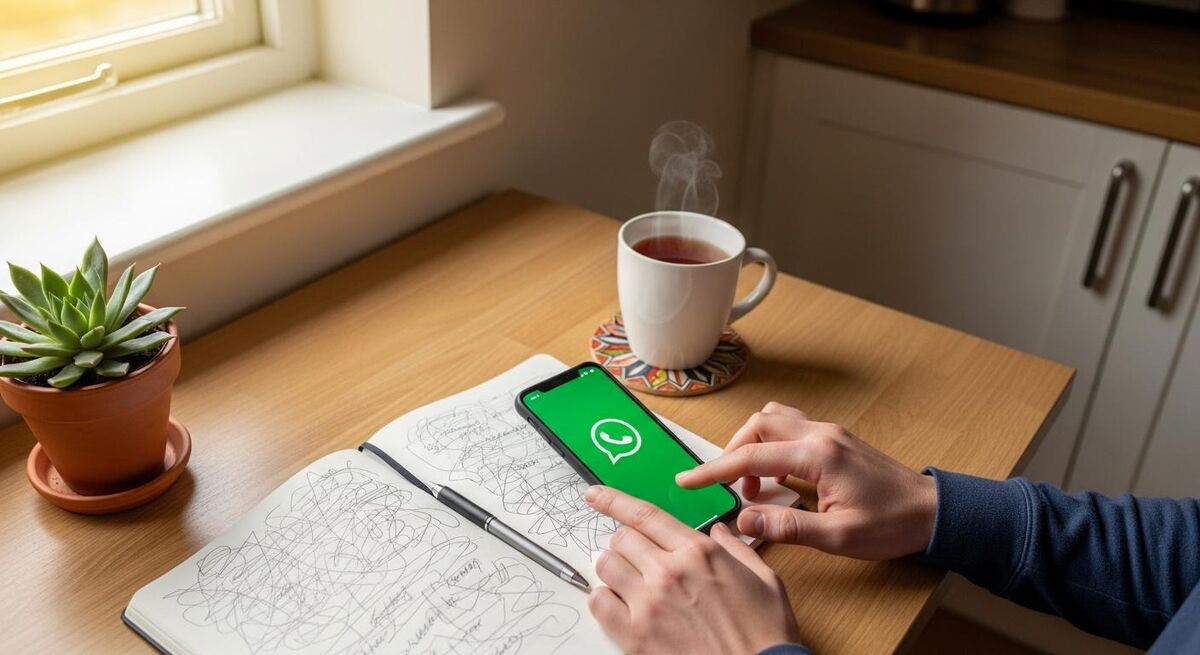
WhatsApp is the killer channel for heating because the customer can send you a picture of the fault code, a video of the dripping flue, a snapshot of the airing cupboard, and you can quote properly without driving across the city. 70 percent of homeowners are on their phone when they enquire, not sat at a keyboard. Make the channel match the customer, not the other way round.
The stack you actually need is short. There is no shiny silver bullet here, just bits that work together:
- WhatsApp Business app: the free one off the App Store. Set up your business profile, hours, address, and a tidy logo. Add a catalogue of your services (boiler install, boiler service, repair, landlord check) so the customer can see the menu before they message you.
- A click-to-WhatsApp button on every page of the website: top right corner of the header, sticky on mobile, and on the contact page. Use a wa.me link with a prefilled message: "Hi, I would like a boiler quote for…". Removes the typing friction.
- An AI receptionist on the front end: answers in seconds, qualifies the enquiry, captures name, postcode, current boiler make and model, fuel type, and the photo. Drops everything into a single inbox. We have one of these running on roughly 17 installer websites at the moment and the difference in enquiries-to-survey is mental.
- A central inbox that pulls in WhatsApp, Facebook, Instagram DMs, web chat and (optionally) Google Business Profile messages. The engineer never has to "remember" which platform the enquiry came from. It is all in one screen.
- A simple CRM or sales platform behind it that times your follow-ups for you, sends the recap message after the survey, sends the quote, sends the nudge two days later, and asks for the review three days after the install. We will come back to this.
That is your stack. None of it costs more than a tank of diesel a month. The compounding effect on close rate is enormous because every customer touchpoint suddenly has timing baked in, and timing is the part most engineers wing.
WhatsApp Business vs the regular WhatsApp
Use WhatsApp Business, not your personal app. The Business app gives you a separate number (or a parallel install on the same number), away messages, quick replies, broadcast lists, and a catalogue. It is free for sole traders and small teams. The big WhatsApp Business Platform with API access starts to make sense once you are processing more than a few hundred conversations a month.
The five-touch routine that closes 6 in 10
This is the bit that does the heavy lifting. Five touches, spread over ten days, mostly automated, all in WhatsApp. The first three are mechanical. The last two are where the engineer adds value. I have walked this routine through with installers across Yorkshire, the Midlands and the South West, and a 30 percent close rate becomes a 55 to 60 percent close rate inside the first quarter of using it. Same leads, same prices, just a system instead of a hope.
| Touch | When | Channel | Job to be done |
|---|---|---|---|
| 1. Acknowledge | Within 5 minutes of enquiry | WhatsApp auto-reply | Capture name, postcode, current boiler photo, fault code if relevant. Book the survey slot. |
| 2. Survey recap | Within 2 hours of leaving the property | WhatsApp voice note + photo | Recap what you saw, confirm the spec you will quote on, set expectation that the formal quote lands by tomorrow lunch. |
| 3. Quote delivery | Same day as promised, before 5pm | PDF + sales platform link via WhatsApp | Interactive quote with options the customer can tick. Logo, terms, finance link if used, Stripe deposit button. |
| 4. Two-day nudge | 48 hours after the quote | WhatsApp voice note (60 sec max) | "Just checking the quote landed, anything you want me to walk through, here is one thing other customers have asked." Not "have you decided yet?" |
| 5. The honest close | 7 days after the quote | WhatsApp text | Either a soft assumed-close ("happy to pop you in for next Tuesday?") or a clean release ("if it is not the right time, just say, no chasing"). You will be amazed how often the release prompts a yes. |

For me, the voice note at touch 2 is where most engineers turn a coin-toss quote into an 80 percent likely win. Customers do not just buy the boiler, they buy the bloke or the team they trust to fit it. A 60-second voice note from the engineer who has just been in their house, walking them through what they saw and what the next step is, builds more trust than any glossy PDF ever has. It is also five times faster to record than to type. Win on both sides.
Touch 4 is where I see most engineers panic and go silent. They do not want to "harass" the customer. So they do nothing. Customer interprets the silence as "they have moved on to better jobs, we are not important", picks one of the other quotes that has bothered to text them, and gone. The two-day nudge is not harassment. It is service. You are checking they got the quote, asking if anything needs explaining, and showing you actually want the job. That is professionalism, not pestering.
The maths on the same lead flow
Say you run 8 surveys a week at an average install of £3,200. At a 30 percent close you are billing roughly £7,680 a week from those jobs. At a 60 percent close on the same surveys, you are billing £15,360. Difference of £7,680 a week, or just under £400k a year, with no extra leads, no extra surveys, no extra advertising spend. That is what a working follow-up routine is worth.
Scripts you can copy today
I am giving you the actual WhatsApp scripts here because I am sick of seeing the same one-liner ("just checking in mate, did you get the quote?") losing engineers jobs. Edit the names, edit the tone to fit your business, but the structure works. Plain English, no jargon, no pressure. Same energy you would use stood in their kitchen.
Touch 1: acknowledgment auto-reply
"Hi {firstname}, thanks for the boiler enquiry. {Engineer name} here from {Business name}. I have it on the system already. Quick question while you are there, what is the make and model of your current boiler? A quick photo of it in the cupboard is even better. I will pick this up properly before {time} today and get a survey booked in."
Touch 2: post-survey recap voice note (script)
"Right, {firstname}, just left yours. Quick recap. We are looking at swapping the existing {brand} {kW} combi for a {brand} {kW} unit, moving the flue across by about 30cm to clear the soffit, fitting a magnetic filter, and a new programmable stat. Pipework all in good nick, no surprises in the loft. I will put the quote together tonight, you will have it by lunch tomorrow with a couple of options. Any questions in the meantime, just message me on this number. Cheers."
Touch 4: two-day nudge voice note (script)
"Hi {firstname}, just wanted to check the quote came through okay on Tuesday. No pressure either way, just two things I forgot to mention on the day. One, the parts and labour warranty is 12 years if we register it before the install. Two, if you want to spread the payment we have a finance option that does not affect the install price. Have a think, drop me a message when you are ready, no rush."
Touch 5: the honest close
"Hi {firstname}, last one from me on this. We have slots opening up the week of {date} if you want me to pencil yours in. If it is not the right time or you have gone with someone else, just say the word, no awkwardness, no chasing. Either way, thanks for considering us."
What not to send
"Did you get my quote?" "Just chasing this up." "Can you let me know either way?" These all read as needy. The customer's brain hears desperation and discounts the business. Always lead with value (a new piece of info, a slot opening up, a parts warranty point) rather than a demand for an answer.
Plugging the routine into a sales platform
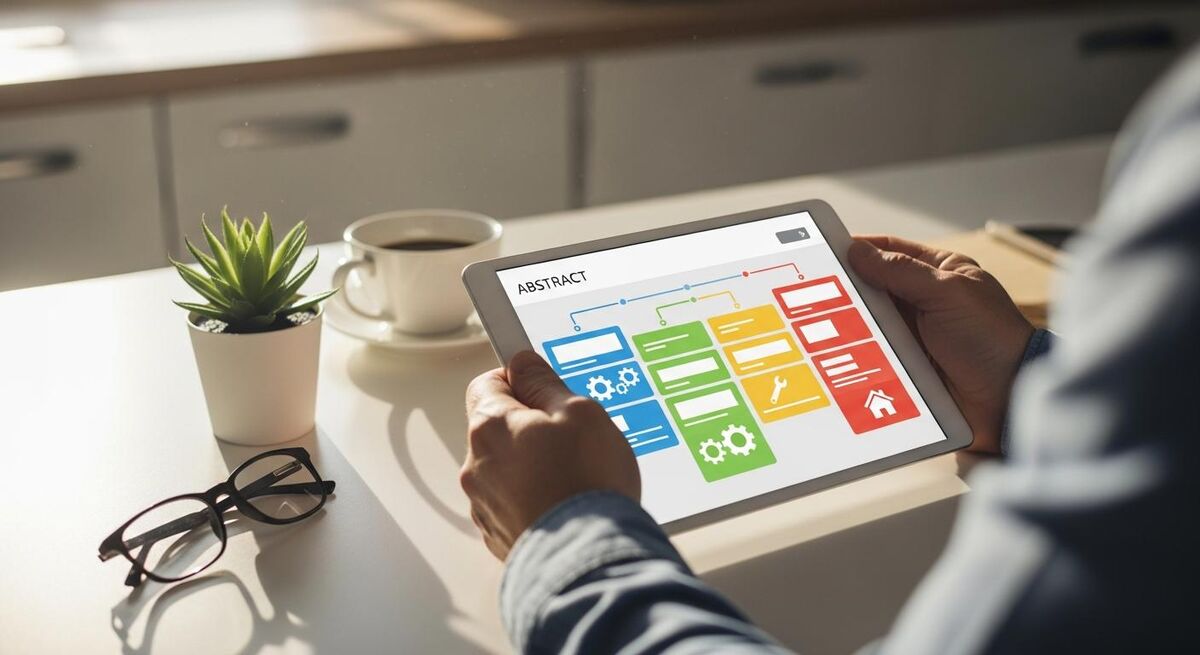
A website is not a sales platform. I have to keep saying this because installers keep thinking they are the same thing. A website attracts. A sales platform sells. The bit between the form fill and the deposit is where the money lives, and that bit is the sales platform. Attract, Sell, Keep. That is the framework. Most engineers obsess over Attract (SEO, Google Ads, leaflets) and then drop the ball on Sell (follow up) and Keep (service plans, referrals, repeat work). You can lose the same lead twice if you are not careful.
The minimum your sales platform needs to do for this routine:
- One central inbox pulling WhatsApp, Facebook, Instagram, web chat and email into a single thread per customer. No "which app did they message us on" guessing game.
- Automated timing on the nudges. You set the rule once ("48 hours after a quote is sent, fire WhatsApp template 4"), the system does it forever.
- Interactive quotes that the customer can read on their phone, tick options on, sign electronically, and pay a deposit through using something like Stripe for cards or a straight bank transfer. The phrase "your deposit is paid" appearing on the customer screen is a closer in itself.
- A pipeline view so you can see at a glance which quotes are unread, viewed but not actioned, accepted but unpaid, and so on. If you cannot see the pipeline you cannot manage it.
- A keep loop: post-install review request, 11-month service reminder, annual landlord certificate reminder. Set once, runs forever.
That is the engine. WhatsApp is the front door. The sales platform is the corridor between the front door and the cash drawer. If either one is missing, your close rate suffers. If both are running, you stop losing 4 in 10 quotes to silence.
Do not duct-tape this together
What you do not want is WhatsApp on one phone, the quotes in Word, deposits over the bank app, the calendar in Google, and the customer list in a notebook. Every tool is fine on its own, every tool falls over the second the engineer is on holiday or the office admin is off sick. Glue it all to one sales platform with one inbox and one pipeline. The compounding labour saving is real.
What to measure so you know it is working
If you are not measuring this stuff, you are guessing. And guessing is what got the industry to a 30 percent average close rate in the first place. Track these five numbers monthly. Not weekly. Weekly numbers are too noisy for boiler installs. Monthly tells you the truth.
| Metric | How to count it | Healthy target |
|---|---|---|
| Speed to first reply | Time from enquiry landing to a real reply going out (not just an auto-reply) | Under 30 minutes in business hours, under 2 hours out of hours |
| Survey-to-quote conversion | Quotes sent ÷ surveys done | 95 percent +. If lower, you are surveying jobs that should have been disqualified earlier. |
| Quote-to-job conversion | Jobs booked ÷ quotes sent | 55 to 65 percent on installs, higher on smaller repair jobs |
| Average days to close | Days between quote sent and deposit paid | 5 to 9 days for installs. If it is over 14, your nudges are too slow. |
| Review rate | Google reviews left ÷ jobs completed | 35 percent + when you ask via WhatsApp at the right moment |
The two most diagnostic numbers in that list are the speed-to-first-reply and the average days to close. Watch those two over three months. If speed drops to under 30 minutes and days-to-close drops below 10, your close rate will move on its own. You are re-engineering the whole thing without ever touching pricing.
Track it in a sheet, not in your head
Open Google Sheets, one tab per month, columns: enquiry date, first reply time, survey date, quote sent date, deposit paid date, job value. That is it. Five columns. Update it as you go, look at it on the first Monday of every month, decide what to fix. The act of measuring it pulls the numbers up before you have even changed the process.
What heating engineers and homeowners are saying
Recommended videos
Six episodes from my own YouTube channel that walk this whole routine end to end. Watch them in this order if you are setting the system up from scratch.

What is a sales platform (Part 2)
Tommy LeeZmuda · Digital Toolbag
Building CRMs and customer journeys for plumbing and heating
Tommy LeeZmuda · Digital Toolbag

LIVE automated boiler service sales
Tommy LeeZmuda · Digital Toolbag
4 key questions for boiler business development
Tommy LeeZmuda · Digital Toolbag

The Expansion Trap, John's story
Tommy LeeZmuda · Digital Toolbag
What is happening with your Google Service Area Business
Tommy LeeZmuda · Digital Toolbag
Frequently asked questions
Yes. WhatsApp is where 70 percent of homeowners are already sat. Sending a polished PDF quote through WhatsApp Business with your logo, terms and a clickable deposit link is more professional than a text estimate, and customers respond to it twice as fast as email. The PDF still does the heavy lifting on the formal proposal. WhatsApp just delivers it in the channel the customer prefers.
Write the system prompt in your own voice. Use the words you would use. Tell it the area you cover, the makes you fit, and the personality your business wants to project. Test it by enquiring on your own website at 11pm and reading the reply as if you were the customer. If it sounds like you wrote it, you have got it right. Mine took about 3 hours of tweaking to get there.
You will see the read receipt. If they have not opened it 24 hours later, that is your trigger to send a short follow-up: "Hi, just making sure the quote came through, my phone says it has not been opened, sometimes the link gets squashed by an over-eager filter." Half the time the link just got buried. The other half they were holiday-busy and needed the nudge.
The office. Always. The engineer's job is the survey, the recap voice note, and the install. The office sends the quote, sends the nudges, books the deposit and chases the slot. If your engineers are doing all of this in the van at 9pm, you have a labour problem dressed up as a sales process. Pay an admin to do it properly.
Honest answer: most are running 30 to 40 percent. The good ones running a proper routine are at 55 to 65. The really good ones with strong local reputation, instant response and a tight follow-up sequence are at 70 plus. Where you sit is mostly down to follow-up discipline, not pricing.
You will see speed-to-first-reply improve in week one. Quote-to-job conversion is a slower curve because boiler buying cycles run 5 to 14 days, so give it 6 to 8 weeks before you read into the close rate properly. After that, expect a 10 to 25 percentage point improvement if you are doing all five touches.
My verdict
Stop blaming the price. Fix the follow-up.
For me, the quote-stage drop-off is the single biggest leak in the UK heating industry, and it is almost entirely a follow-up problem. Build the WhatsApp stack, run the five-touch routine, plug it into a proper sales platform with one inbox and one pipeline, and measure the five numbers monthly. Do that, and 30 percent close rates become 60 percent close rates inside a quarter. Same engineer, same prices, same leads. Just a system instead of a hope. Right? Now go and do it.