

Quick Answer
If you started your trade business because you were brilliant at the work, stepping away from doing that work will feel like losing a piece of yourself. That is completely normal. Coming off the tools is the single hardest transition you will make as a business owner, but it is also the one thing that will determine whether your business grows or stays stuck. You need a plan, you need to know your numbers, and you need to trust the people around you. This guide walks you through exactly how to make that shift without losing your mind or your identity.
Table of Contents
- Why this transition matters more than you think
- The identity crisis nobody warns you about
- The typical tradesperson-to-MD timeline
- Know your numbers before you step back
- Letting go of the tools (and why it feels impossible)
- Building a team you can actually trust
- Systems and processes that set you free
- Your mental health through the transition
- What tradespeople are saying
- Recommended videos
- Frequently asked questions
- My verdict
Why this transition matters more than you think
I have been coaching tradespeople for over fifteen years now. Plumbers, electricians, glaziers, builders, decorators, gardeners. Hundreds of them. And the conversation I have more than any other starts with the same sentence: "I know I need to come off the tools, but..."
The "but" is always different. But I cannot afford to. But nobody does the work as well as me. But my customers expect me on site. But I would not know what to do with myself all day.
Every single one of those buts is valid. And every single one of them is keeping you stuck.
Here is the uncomfortable truth that I share in my book, Build and Grow. The trades and construction industry accounts for a disproportionate number of business insolvencies in the UK. In 2025, construction had the highest insolvency count of any sector, with nearly 4,000 companies failing. The pattern I see again and again is the same: a brilliant tradesperson starts a business, gets overwhelmed by the work, hires a few people too quickly or not at all, loses control of the finances, and the whole thing collapses.
The common thread in nearly every failure? The owner never learned to work ON the business instead of IN it.
Many trade businesses reach a ceiling where the owner physically cannot take on more work, but has not built the team or systems to delegate. Revenue flatlines, stress spirals upward, and the business becomes a prison rather than the freedom it was supposed to create.
The identity crisis nobody warns you about

This is the part that catches people off guard. You trained for years to become a skilled tradesperson. You take pride in doing excellent work. Your reputation was built on your hands, your skills, your eye for detail. And now someone is telling you to stop doing the thing that makes you, you.
I see this with almost every client I work with. Mark from Command Electrical told me something that I hear echoed by business owners across the country. He said that unless he was on the tools earning money, he did not feel like he was doing a proper day's work. That belief, that your value is only in your physical labour, is one of the biggest barriers to growth I encounter.
The mindset shift is this: a tradesperson sees the tools as the way to make money. A managing director recognises that sales, systems, and people are how money is generated. The tools are the cost of delivery.
That does not mean your trade skills become worthless. Far from it. Your technical knowledge gives you credibility, helps you train your team, and means you can quality-check work in a way that no non-trade manager ever could. But your role changes. You move from being the person who does the work to the person who ensures the work gets done properly.
When you are on the tools, you are worth whatever your day rate is. When you are running the business, you are multiplying that value across every person in your team. One brilliant tradesperson can serve perhaps three to four customers a day. One brilliant MD can build a company that serves thirty.
The identity piece takes time. Give yourself permission to grieve the loss of daily hands-on work. Some of my clients keep one day a week on site during the transition, gradually reducing it. Others go cold turkey. There is no right answer, only the one that works for you.
The typical tradesperson-to-MD timeline
Nobody goes from the tools to the boardroom overnight. In my experience, this transition takes most people between twelve and twenty-four months if they do it properly. Rush it and you will make expensive mistakes. Drag it out and you will never actually let go.
The reality check
Get under the skin of your numbers. Understand your profit and loss, your cash flow, your margins per job. You cannot delegate what you do not understand. This is where most of my coaching starts, and it is non-negotiable.
Build your systems
Document how jobs get done. Create processes for quoting, scheduling, invoicing, customer communication. The goal is that someone else can follow your standards without you standing over their shoulder.
Hire and train
Bring in the right people. Not just skilled tradespeople but someone to handle admin, finances, or customer service. Train them properly. Give them ownership. Start stepping back from site work, even if it is just two days a week at first.
Lead, do not do
Your diary should now be filled with planning, team development, customer relationships, and business development. You might still visit sites, but you are there to check, coach, and support, not to pick up a tool.
Full MD mode
The business can run without you for a week. Your team solves problems you never even hear about. You are thinking about the next twelve months, not the next twelve hours.
Know your numbers before you step back

This is the part where I put my serious face on. You cannot come off the tools if you do not know your numbers. Full stop. I cannot stress this enough.
When I begin working with a new client, the very first thing we do is get under the skin of their finances. How much are you turning over? What is your cost of sales? What are your overheads? What profit are you actually making per job? And the question that usually gets a blank look: how much working capital do you have in the bank to cover an emergency?
I worked with a garage owner called Lee who was convinced it was impossible to charge a fair price and make a profit. He was stressed, working ridiculous hours, and had almost given up. When we looked at his numbers properly, we discovered that his materials were running at 60% of sales. No wonder he was struggling. Six months after implementing proper pricing and financial tracking, he had grown sales by 24%, given himself a salary increase, and was making 7% profit compared to breaking even the year before.
The transformation was not in his trade skill. It was in understanding his numbers.
Before reducing your time on the tools, you need to know: your gross profit margin per job type, your monthly overhead figure, how many jobs per week cover your overheads, how much cash reserve you have (minimum three months of overheads recommended), and what additional revenue your freed-up time could generate through sales, quoting, and business development.
Here is a simple exercise. Calculate how many extra sales per week you would need to maintain your current profit if you hired one additional person. In most cases, it is only one or two extra jobs. When you see that number written down, the decision to hire suddenly looks far less terrifying. If pricing has been a challenge, understanding the right pricing model for your business can transform how you think about value and profitability.
Letting go of the tools (and why it feels impossible)
Letting go is often the biggest challenge for any business owner, regardless of the industry. When you have built a business from scratch, it is your baby and your name is above the door. But if you do not learn to let go, you will never be able to grow, and you may burn yourself out. I have seen many people make themselves ill trying to control everything.
Jacques from JP Air Conditioning described it perfectly. He told me it was tough to let go of the engineers and worrying about whether they would complete jobs properly. His solution was to train someone he trusted implicitly to be his eyes and ears on site. That gave him the confidence to step back, knowing jobs were being completed to standard even when he was not there.
For Kris Jamroz of Brush Strokes Decorating, it was about having the right systems and recruitment processes in place first. He told me something I will never forget: "I am no longer a painter whose task is to paint a wall. I am a business partner for my main contractors." That shift in how he saw himself changed everything.
And then there was Mark from Command Electrical, who went from believing he needed to make every minor decision to having conversations happen in his company that he did not even know about, because his team knew their roles. A problem would be reported, solved, and rectified without him being involved. He told me he could never have envisaged that before.
Three different trades. Three different businesses. The same pattern: trust your people, give them the tools and training to succeed, then get out of their way.
Building a team you can actually trust

Hiring the wrong person is expensive and demoralising. Hiring the right person and then micromanaging them is almost as bad. The key to building a team you can trust starts long before you place a job advert.
First, define exactly what you need. Not "another pair of hands" but a specific role with specific responsibilities. What tasks will this person do? What skills do they need? What values must they share with your business?
Second, invest in the selection process. I know it takes time you feel you do not have. But rushing to hire because you are drowning in work is the number one recruitment mistake I see in this industry. Panic hiring leads to the wrong people, which leads to more stress, which leads to them leaving, which leads to more panic hiring. Break the cycle.
Your first hire does not have to be another tradesperson. In fact, the smartest first hire for many business owners is someone to take the admin off your plate. A part-time office manager or virtual assistant who handles invoicing, scheduling, customer calls, and chasing payments. That frees you to focus on the higher-value work: winning new business, managing relationships, and training your team. Understanding what keeps good people in your business is equally important when building your team.
When your team makes mistakes, resist the urge to jump in and take over. Instead of telling them what they did wrong, ask coaching questions. "What do you think happened there?" and "What could you do differently next time?" builds a team that thinks for themselves, rather than one that waits for you to solve every problem.
I speak from experience on this one. The first people I brought into my own business were an assistant to manage the day-to-day admin and a marketing expert. Neither of them does what I do. They operate in their areas of strength, which are not mine. That freed me to do what I do best: working directly with clients.
Systems and processes that set you free
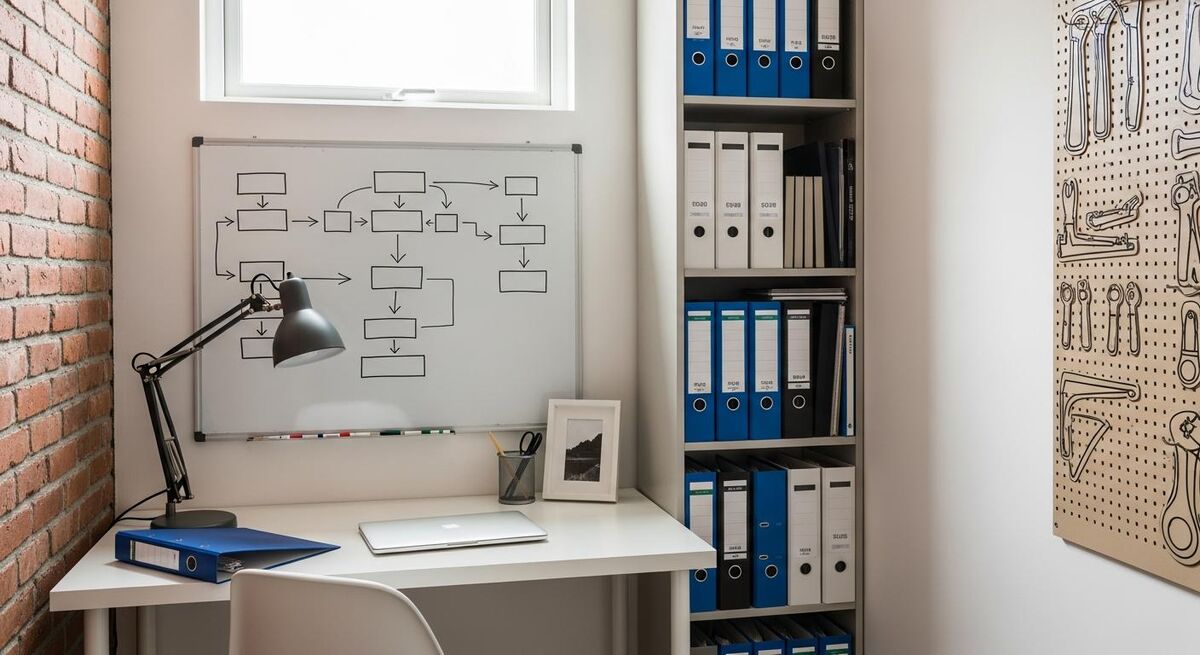
You cannot scale a business that runs on what is in your head. If the way jobs get done, quotes get written, and invoices get sent exists only in your memory, you are the bottleneck. And every time you are the bottleneck, growth stops. A digital transformation roadmap can help you identify which systems to prioritise first.
Systems do not have to be complicated. In my BUILD framework, the "I" stands for Implementing Systems and Processes. At its simplest, a system is just a written-down way of doing something so that anyone in your team can follow it and get the same result.
Start with the processes that cause you the most headaches. For many of my clients, that is quoting. Quotes done on the back of a fag packet, scribbled down quickly, with the price kept as low as possible because of the fear of losing the work. Sound familiar? A proper quoting system ensures every job is priced to cover materials, labour, overheads, AND profit. Every time.
Next, tackle your financial systems. If you are not running accounting software and tracking your profit and loss monthly, you are flying blind. I recommend setting up your finances so you can see exactly where you stand at any point. Good practice is to put 20% of your operating profit into a separate tax account every month so you are never caught short.
Then work on your customer management. A decent CRM system means enquiries do not fall through the cracks, follow-ups happen on time, and your team knows exactly where every job sits. This is not about technology for the sake of it. It is about never losing a potential customer because someone forgot to call them back.
Plan your ideal working week. Block out at least two half-days for non-chargeable work: admin, invoicing, planning. Too many business owners try to squeeze these tasks into evenings and weekends. That path leads straight to burnout. I can guarantee that booking this time is feasible in most businesses and will pay dividends relatively quickly.
Your mental health through the transition

I need to talk about this because it matters more than most people realise. The construction and trades industry has a mental health crisis, and business owners are right at the centre of it.
The statistics are stark. According to the Chartered Institute of Building's 2025 report, 96% of people in the industry report stress, and 26% have experienced suicidal thoughts. Self-employed workers are hit hardest, with financial insecurity, lack of sick pay, and isolation cited as the biggest risk factors. The Office for National Statistics reports that 355 construction workers died by suicide in 2024 alone.
I encounter tradespeople in severe overwhelm regularly. Their businesses grow quickly without adequate skills or resources to cope. Men in particular struggle with vulnerability and find it difficult discussing problems with partners or colleagues. The isolation of self-employment can be crushing when you are shouldering everything alone.
The transition period from tradesperson to MD can make all of this worse before it gets better. You are stepping out of your comfort zone, taking financial risks, and your sense of identity is shifting. If you are struggling, please talk to someone. The Lighthouse Construction Industry Charity runs a 24-hour helpline, and Mates in Mind provides free resources specifically for the construction sector.
If you are in crisis or having thoughts of suicide, contact the Lighthouse Construction Industry Charity helpline on 0345 605 1956 (24 hours, free, confidential) or the Samaritans on 116 123. Mental health support is one of the most important tools a tradesperson can have.
Looking after yourself is not optional. Block time in your diary that is just yours. Build a support network of other business owners who understand the pressure. Consider working with a coach or mentor who can provide perspective when you are too deep in it to see clearly. Your business needs you healthy and functioning. So does your family.
What tradespeople are saying
Recommended videos
The 10 Steps to get Off the Tools
Trade Mastermind
Financial Priorities With Alison Warner (Evolve and Grow)
Tradify
The Secret to Lasting Growth in Your Trades Business
Built for the Trades

Delegate! How Letting Go Helps Your Business Grow
Michael Ceely
How to Grow and Sell Your Trade Business for Maximum Profit
The Site Shed
Find Great People To Build A Successful Construction Company
The Time and Materials Podcast
Frequently asked questions
You are ready when the business cannot grow any further with you on the tools full-time, and you have the financial visibility to know what stepping back will cost. If you are turning away work, working evenings and weekends on admin, or feeling overwhelmed, those are strong signals. Get your numbers straight first, then start the transition gradually.
Start with your financial forecast. Calculate exactly how many additional jobs per week you would need to cover a new hire. It is usually less than you think. Consider starting with a part-time admin person or a virtual assistant rather than a full-time tradesperson. Many of my clients started with just a few hours a week of admin support and it transformed their capacity.
Introduce your team members personally. Visit the site at the start of each job to shake hands and explain who will be doing the work. Check in during the job. Customers want to feel looked after, and you can provide that reassurance without physically doing the work yourself. Most customers care about the result, not who held the spanner.
Systems and training. Document your standards clearly so everyone knows what "good" looks like. Do regular site checks. Use a coaching approach rather than micromanaging. If someone makes a mistake, help them understand why and how to fix it. Over time, your team will internalise your standards and you will find they sometimes spot things you would have missed.
Completely normal. Every business owner I work with goes through this. Your value has shifted from physical output to business leadership. Remind yourself that every hour you spend on business development, team coaching, or improving systems creates more value than an hour on the tools. It takes time for this to feel natural. Be patient with yourself.
I would say that, wouldn't I? But honestly, the transition from tradesperson to MD is one that most people have never been trained for. A good coach provides structure, accountability, and a different perspective. They have seen other businesses go through the same challenges and can help you avoid the most expensive mistakes. Whether you work with me or someone else, having a sounding board makes a real difference.
My verdict
You built your business because you are brilliant at what you do. The best way to protect that legacy is to build a company that carries your standards forward, long after you have put the tools down. Know your numbers. Build your systems. Trust your people. And please look after yourself through the process. The trades industry needs more people who make this transition successfully, not fewer. I have seen hundreds of tradespeople make this shift, and the ones who come out the other side all say the same thing: "I wish I had done it sooner." If you are standing at that crossroads right now, you have got this. And please do let me know how you get on.